

First registered in 2002, first owner, a summer car — and after more than twenty years, 31,200 kilometres. Sven drives an M3 from the E46 model line that you won’t find twice: Nachtblau Metallic from the Individual programme, manual gearbox, nearly full equipment. And underneath, an engine that is no longer quite standard — the dyno report shows 360 PS.
The Car
An M3 E46 with 31,200 kilometres is not a mileage figure, it’s an attitude. The car has been with its first owner since 2002 and has only ever been driven in summer. What would be the decisive question for other vehicles of this age doesn’t apply here: history, previous owners, standing periods, service book. There is only one owner, and he is the first.

The colour is the first point at which this car stands out from the rest. Nachtblau Metallic did not come from the standard colour palette but from the Individual programme. The effect is exactly what Individual colours are made for: in the car park, you’d take the car for black, and only when the sun hits it at the right angle does the blue become visible.
Manual gearbox — and why that matters today
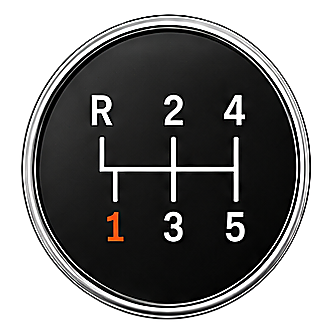
The M3 E46 was available with a six-speed manual gearbox or with the sequential SMG II. On the collector market, the question has long since been settled: the manual is the more sought-after variant. Not because the SMG is bad — a healthy, correctly adapted system shifts decisively and fits the technical character of the early 2000s. But because the manual is simpler, has fewer failure points, and leaves the work to the driver.

What KK Automobile did
Under the bonnet, the car is no longer standard. The engine conversion, suspension installation and subsequent tuning were carried out by KK Automobile — the photos were also taken in their yard. The list:
- Carbon airbox with matching software tuning
- Tubular exhaust manifold
- Titanium rear silencer
- Intrax suspension, installed and tuned
- BBS Le Mans as wheels

The result is on the dyno report: 360 PS, which is 17 more than the standard 343 PS. That sounds like little, and it isn’t — for a naturally aspirated engine with no forced induction, five percent from intake, exhaust routing and software is a solid gain. What’s remarkable, in any case, is less the figure than the consistency: intake side, exhaust side and control unit were worked on together, not individually. That is exactly the difference between a tuned vehicle and a collection of individual parts.
The same applies to the suspension. Installing a coilover suspension is a matter of hours; tuning it so that an M3 handles better afterwards than before is another matter entirely. That both came from a single source is the real point.
The Condition
31,200 kilometres over more than twenty years works out to around 1,500 a year. That is not much, and not much is not automatically good with these engines — the S54 dislikes cold starts even more than it dislikes mileage. A first-owner summer car does, however, have an advantage that no high-mileage car can match: it has never known winter, salt, or short trips in January.

Anyone who has read the buyer’s guide for this model line will know the four expensive items — rod bearings, VANOS, rear subframe mounts, SMG. On a car like this, three of them are defused from the outset: the SMG doesn’t apply, the rear subframe mounts look different at 31,200 kilometres than at 200,000, and the history rests entirely with one person. That leaves the rod bearings — the item that can’t simply be waited out, and one that becomes relevant even at low mileage.
Gallery


Bildnachweise
- Own photograph · MOTORSPORT24