

On 2 March 1987, the FIA registered a car under number 5327 in the Group A list: BMW M3, 2,302 cubic centimetres, rear-wheel drive, Germany. Nine years and forty-two supplements later, the homologation expired. What lay in between was the most productive era touring car racing has ever had — and the M3 was right in the middle of it.
A lot is told about these years, and a surprisingly large part of it is wrong. The M3 never won Bathurst. It did not win the 24 Hours of Spa five times in a row. And the figure of “over 1,500 race wins” that appears in almost every text does not belong to it alone. This article sorts out what is documented — and names where the sources contradict each other, rather than writing away the contradictions.
What Group A required — and why that suited the M3
From 1982, Group A was the FIA category for production-based touring cars. The decisive clause of the regulations concerned not the technology, but the production numbers: anyone wanting to homologate a car had to have built 5,000 units of it within twelve months. After that, one could only improve what was stated in a supplement to the homologation form — and each supplement itself had to be manufactured and sold in series again.
This was precisely the special feature of the M3. It was not a civilised race car, but a production car that had been designed as a homologation basis from the outset. The widened wings, the flatter rear window angle, the raised boot lid — none of this was a matter of styling. These were components that were needed on the racetrack and therefore had to go through series production five thousand times over.
The result was a system that the M3 played better than any competitor: Anyone wanting to get faster had to build a new special model. BMW built three.
Three evolution stages, three supplements
The FIA database lists forty-two supplements for homologation 5327 between March 1987 and January 1993. Most concern the chassis, brakes and drivetrain. Three of them are the special models every enthusiast knows — here with their official designation:
| Supplement | Date | Model | Quantity | Series output |
|---|---|---|---|---|
| Base homologation | 02.03.1987 | M3 | Base 5,000 in 12 months | 200 PS |
| 4/1ET | 02.05.1987 | Evolution I | 501 (other source: 505) | 200 PS |
| 14/1ES | 02.07.1988 | Evolution II | 500 (other source: 501) | 220 PS |
| 32/2ES | 02.03.1990 | Sport Evolution, 2,467 cm³ | 600 | 238 PS |
| 42/11ER | 02.01.1993 | last supplement | — | — |
The 1987 Evolution I brought no additional output, but a modified cylinder head — recognisable by the stamped “E” — and thus room for the race engine. The 1988 Evolution II raised series output to 220 PS, and received lighter windows and a lighter tailgate, a lower front splitter and a longer axle ratio. The 1990 Sport Evolution was the final step: 2,467 cubic centimetres instead of 2,302, three-stage adjustable wing edges on front and rear spoilers, 600 units between December 1989 and March 1990.
A curious detail on the side that causes dating disputes: the FIA database dates every supplement to the second of a month. The specialist literature consistently names the first for the same events. So anyone reading that the Sport Evolution was homologated “on 1 March 1990” is not wrong — the primary source just says one day later.
1987: One point, two disqualifications
In 1987 there was exactly one Touring Car World Championship in the history of the sport. It lasted eleven rounds, was never repeated afterwards, and Roberto Ravaglia won it in the M3 — with a single point to spare. The final standings read Ravaglia 269, followed level on points by Klaus Ludwig and Klaus Niedzwiedz with 268 each.
This season was decided by two disqualifications at its opposite ends — and the first hit BMW.
Monza, 22 March 1987
At the season opener, the works M3s from Schnitzer, CiBiEmme and Bigazzi were excluded: around 50 kilograms underweight due to bodywork parts made of Kevlar. It had been noticed by a privateer team, which had realised that its own M3 was fifty kilos heavier than the works cars, and lodged a protest. Overall victory went to a Holden Commodore, the championship points to an Alfa Romeo 75.
Bathurst, 4 October 1987
Seven months later it was Ford’s turn. The two Eggenberger Sierra RS500s of Soper/Dieudonné and Ludwig/Niedzwiedz crossed the line first and were disqualified for widened front wheel arches that allowed larger tyres. A total of four cars were thrown out, including an M3 with an illegal spoiler. Overall victory passed to Peter Brock in the Holden — his ninth and last Bathurst win, achieved from grid position 20 after switching to the spare car. But the forty championship points went to the CiBiEmme M3 of Brancatelli and Cecotto, because Holden was not entered in the World Championship at all.
These forty points were the title.
However, anyone who only tells the story this way is making it too easy for themselves. Klaus Niedzwiedz still disputes to this day that it was deliberate cheating — both BMW and Ford, he says, worked with parts that were in a grey area:
“They always work on the limit and sometimes they work over the limit.”
Klaus Niedzwiedz to carsales.com.au
There are three explanations side by side for why the World Championship disappeared again after a single season, and none rules out the others: the FIA and Bernie Ecclestone feared that money would drain away from Formula 1. Costs were spiralling, the fields were thin. And the general cost explosion also dragged down the European Championship in 1988. A silhouette formula with Formula 1 turbo engines planned for 1988 never got beyond a single prototype.
The record in numbers
Between 1986 and 1992, a combined total of 176 races were held in the DTM, ETCC and WTCC — 133 in the DTM, 32 in the European Championship, eleven in the one World Championship. National series, endurance racing and rallying come on top of that; the British championship alone had 13 to 15 rounds per season.
| Season | DTM rounds counted | Champion | Vehicle | M3 wins |
|---|---|---|---|---|
| 1986 | 9 | Kurt Thiim | Rover Vitesse | — |
| 1987 | 10 | Eric van de Poele | BMW M3 | 5 |
| 1988 | 22 | Klaus Ludwig | Ford Sierra RS500 | 5 |
| 1989 | 22 | Roberto Ravaglia | BMW M3 Evo | 7 |
| 1990 | 22 | Hans-Joachim Stuck | Audi V8 quattro | 9 |
| 1991 | 24 (20 DTM counted) | Frank Biela | Audi V8 quattro Evo | 7 (+1 ITR) |
| 1992 | 24 | Klaus Ludwig | Mercedes 190E Evo II | 7 |
In addition, the international titles: European Championship 1987 (Winfried Vogt) and 1988 (Roberto Ravaglia, last ETCC season), World Championship 1987 (Ravaglia). At the 24 Hours of Spa, the M3 won 1987, 1988, 1990 and 1992. At the Nürburgring it took four consecutive 24-hour wins: 1989 with Pirro/Ravaglia/Giroix for Schnitzer, 1990 with Heger/Winkelhock/Schmickler for Linder, 1991 again with Schnitzer, 1992 for FINA Motorsport.
And a result that hardly fits the touring car narrative: at the 1987 Tour de Corse, Bernard Béguin and Jean-Jacques Lenne won a round of the World Rally Championship. It remained the M3’s only WRC round win — and at the same time the last WRC win ever for a rear-wheel-drive, naturally aspirated car. For Prodrive it was the first WRC win in the company’s history.
What is told wrongly about the M3
The following claims appear in many texts, some of them printed. They are nevertheless wrong:
| Common claim | Actually |
|---|---|
| The M3 won Spa continuously from 1988 to 1992 | No — 1987, 1988, 1990 and 1992. In 1989 a Ford Sierra won, in 1991 a Nissan Skyline GT-R |
| The M3 won Bathurst | Never. Best results: fourth place 1988 (Crowe/Janson, plus class win) and fourth place 1992 (Longhurst/Cecotto) |
| Australian Touring Car Championship 1988 | In 1988 Dick Johnson won in the Ford Sierra. The M3 title fell 1987 — Jim Richards, JPS Team BMW, nine rounds |
| French Touring Car title 1991 | In 1991 Xavier Lapeyre won in the Audi 80 quattro |
| “Over 1,500 race wins” | This figure refers to all M3 generations combined, not to the E30 |
| “Most successful touring car of all time” | A statement from BMW itself — and explicitly based on five titles (2× ETCC, 2× DTM, 1× WTCC), not on a win statistic. No solid overall win count for the E30 exists |
None of this makes the M3 any lesser. Five international titles in six years, four wins at the 24 Hours of Spa, four at the Nürburgring and one WRC round are impressive enough without superlatives.
How a Group A M3 was built
The race car began as a seam-welded, prepared bodyshell. The works bodyshells came from the French company Matter and were sold as a kit; the fully welded-in cage tied in the front and rear strut towers and at the same time took up suspension points and the differential mount.
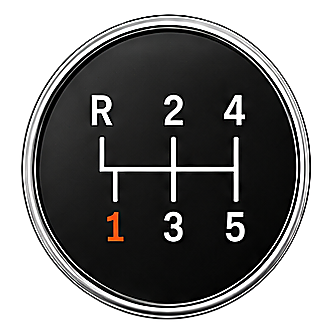
The gearbox remained remarkably close to series production: a Getrag 265/5 with dogleg shift pattern, meaning first gear bottom left — the same housing as in the road-going M3, fitted for racing with oil cooling and straight-cut gears. Behind it a ZF plate limited-slip differential in an aluminium housing, on the circuit cars centre-lock hubs and BBS wheels, from 1990 in seventeen inches.
The output development of the S14 over the years, as far as documented:
| Year | Stage | Output | Weight |
|---|---|---|---|
| 1987 | 2.3 l | up to 300 PS at 8,200/min | 960 kg or 1,040 kg — the sources contradict each other |
| 1988 | 2.3 l Evo | around 294–300 PS | not determined |
| 1989 | 2.3 l | 320 PS | not determined |
| 1990 | 2.5 l Sport Evo | 330 to 355 PS depending on source | 940 kg |
| 1992 | 2.5 l | up to 360 PS, rev limit up to 9,300/min | around 980–1,000 kg |
The brake figures also vary, presumably because the specification changed over the years: documented for the late stage are AP Racing six-piston calipers with 332 × 32 millimetres at the front and four-piston calipers with 304 × 25.4 millimetres at the rear — but on other vehicles also four-piston calipers with 330 at the front and 280 at the rear.
What this looks like today
Important for classifying the following images: The vehicle shown is not a historic works car, but a rebuild completed in 2021 to 1988/1989 Group A specification. This is precisely why it is suited to this purpose: on a freshly built car, you can see what disappears under paint and patina on the original.

The specification of this car also shows where historic rebuilds today deviate from the works specification — not out of carelessness, but because parts no longer exist or the safety requirements are different:
| Assembly | Specification |
|---|---|
| Engine | S14B23 in Group A specification, 284 PS (208.9 kW), MBE engine management |
| Gearbox | Getrag housing with Samsonas gear set |
| Differential | 75% locking value, ratio 4.45:1 |
| Suspension | Intrax Racing, four-way adjustable; Group A aluminium struts at the front |
| Brakes | AP Racing Pro 5000 R — front six-piston, 350 mm; rear four-piston, 330 mm; balance bar with adjustment |
| Miscellaneous | Centre-lock, electric power steering, FIA safety tank 60 l, quick jack system |


Why these years still have an effect today
Group A ended in the DTM after 1992 because Class 1 cars took over, and with them a cost level that no longer had anything to do with production relevance. Homologation 5327 formally continued until 1 January 1996, but the works entries had long since ended by then.
What remains is a principle that no longer exists in this form: The race car had to change the production car. Anyone driving a M3 E30 with Evolution features today is driving components that only exist because someone in Freilassing or Padua was searching for a tenth of a second. The Sport Evolution was not a special model for collectors — it was an application to the FIA that one could, incidentally, also buy.
This is the reason why these cars cost what they cost today. And the reason why the figures behind them deserve careful treatment.
Sources
- FIA Historic Database — homologation no. 5327, BMW M3, Group A (all 42 supplements)
- BMW Group PressClub — 25 Years of the M3 in Touring Car Racing
- Monza 500, 1987 and James Hardie 1000, 1987
- carsales.com.au — Klaus Niedzwiedz on Bathurst 1987
- supercarnostalgia.com — BMW E30 M3 Sport Evolution
- invelt collection — BMW M3 E30 DTM (Matter bodyshells, build details)
- Photographic material and vehicle specification of the rebuild: MOTORSPORT24
Contradictions between sources are marked in this article and not smoothed over. If you find an error or can document a figure listed here as “not determined”: Write to us — we will visibly mark corrections.
Bildnachweise
- Eigenes Foto · s14.de
- Eigenes Foto · MOTORSPORT24