

01 · Overview
The twelve-cylinder
The E32 is the model line with which BMW brought the twelve-cylinder back to Germany in 1987. The last German post-war V12 passenger car before it was the Maybach Zeppelin DS8 of 1939. Mercedes followed only four years later — the 600 of the W100 model line, often cited as a counterexample, ran with a V8, not a V12. Important for context: it was a German premiere, not a European one. Jaguar had been building twelve-cylinder sedans since 1971.
The rest of the model line was similarly ambitious. From 1991, xenon low-beam headlights were offered as a world first in series production, along with insulated double glazing, the electronic damper control EDC, and with ASC the first traction control system in a BMW. The E32 was also the first 7 Series generation with a long-wheelbase version: 114 millimeters more, entirely as rear legroom.
The E32 has no racing history — the model line was conceived as a flagship sedan and never competed factory-backed. On the sporting side, it remained with Alpina: the B11 based on six- and eight-cylinder engines, and the B12 5.0 with 350 PS from the V12, together fewer than 650 units. The often-drawn comparison to the McLaren F1 does not hold up technically, incidentally: its S70/2 shares cylinder count, bank angle and cylinder spacing with the M70, but is a new design with four valves per cylinder, two overhead camshafts per bank and dry sump — its cylinder heads derive from the four-valve six-cylinder S50, not from the two-valve V12 of the 750i.
02 · History
Eight years in seven data points
From the premiere to the E38.
- 1986 In September, BMW presents the second 7 Series generation to the press. Launch with the M30 inline-six 735i and 730i. Development began in 1979, the design was frozen in 1983.
- 1987 World premiere of the 750i in March at the Geneva Motor Show. The M70 is the first twelve-cylinder in a German post-war passenger car. Over 3,000 pre-orders are recorded before the premiere.
- 1988 The long versions arrive staggered: 750iL from May 1987, 735iL from September 1987, 730iL from October 1988. Plus 114 millimeters of wheelbase, entirely to the benefit of rear seat passengers. The 730iL remains a rarity with around 2,200 units.
- 1991 From November, the V8 models 730i, 730iL, 740i and 740iL run with the new M60 — BMW's first V8 since 1965. The same year brings xenon low-beam headlights as a world first in series production and insulated double glazing.
- 1992 Facelift in April: more wood in the interior, chrome door handles on request, five-speed automatic from ZF. The 735i is discontinued in July, the M30-730i remains in the lineup as the entry model alongside the V8 until the end.
- 1994 End of production. BMW Group Classic states July 1994, German Wikipedia June, English Wikipedia April — BMW's individual model pages explain the range but do not resolve it. Around 311,000 vehicles, plus over 6,000 CKD kits to Malaysia and South Africa.
- 1994 The E38 succeeds the E32, a recognizable continuation of the same line. The V12 carries on as the M73 with 5.4 liters, the M60 initially unchanged.
03 · Model overview
All engine variants
Six, eight and twelve cylinders — and no diesel. Notably, the M30 six-cylinder remained orderable even after the arrival of the V8, right up to the end of production; buyers could choose between six and eight cylinders until 1994.
Source: factory and literature data · verified
Technische Daten anzeigen — komplette Modellmatrix
| Modell | Motor | Hubraum | Leistung | Bauzeit |
|---|---|---|---|---|
| 730i | M30B30 · R6 | 2.986 cm³ | 188 PS (138 kW) | 1986–1994 |
| 730iL | M30B30 · R6 | 2.986 cm³ | 184 PS (135 kW) | 1988–1994 |
| 730i | M60B30 · V8 | 2.997 cm³ | 218 PS (160 kW) | 1991–1994 |
| 730iL | M60B30 · V8 | 2.997 cm³ | 218 PS (160 kW) | 1992–1994 |
| 735i | M30B34/B35 · R6 | 3.430 cm³ | 211 PS (155 kW) | 1986–1992 |
| 735iL | M30B34/B35 · R6 | 3.430 cm³ | 211 PS (155 kW) | 1987–1992 |
| 740i | M60B40 · V8 | 3.982 cm³ | 286 PS (210 kW) | 1991–1994 |
| 740iL | M60B40 · V8 | 3.982 cm³ | 286 PS (210 kW) | 1991–1994 |
| 750i | M70B50 · V12 | 4.988 cm³ | 300 PS (220 kW) | 1987–1994 |
| 750iL | M70B50 · V12 | 4.988 cm³ | 300 PS (220 kW) | 1987–1994 |
04 · Body variants
Body variants
Sedan

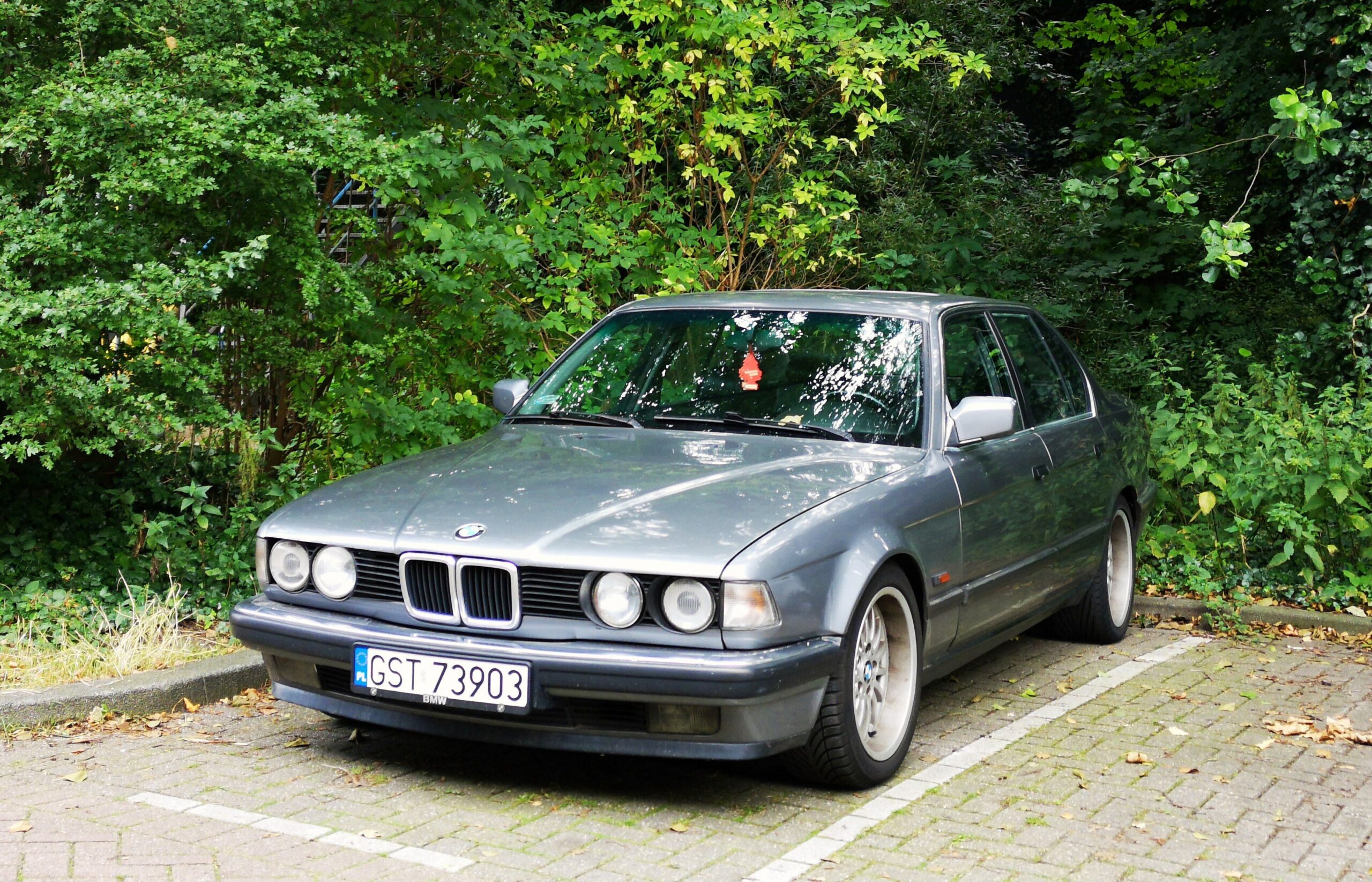
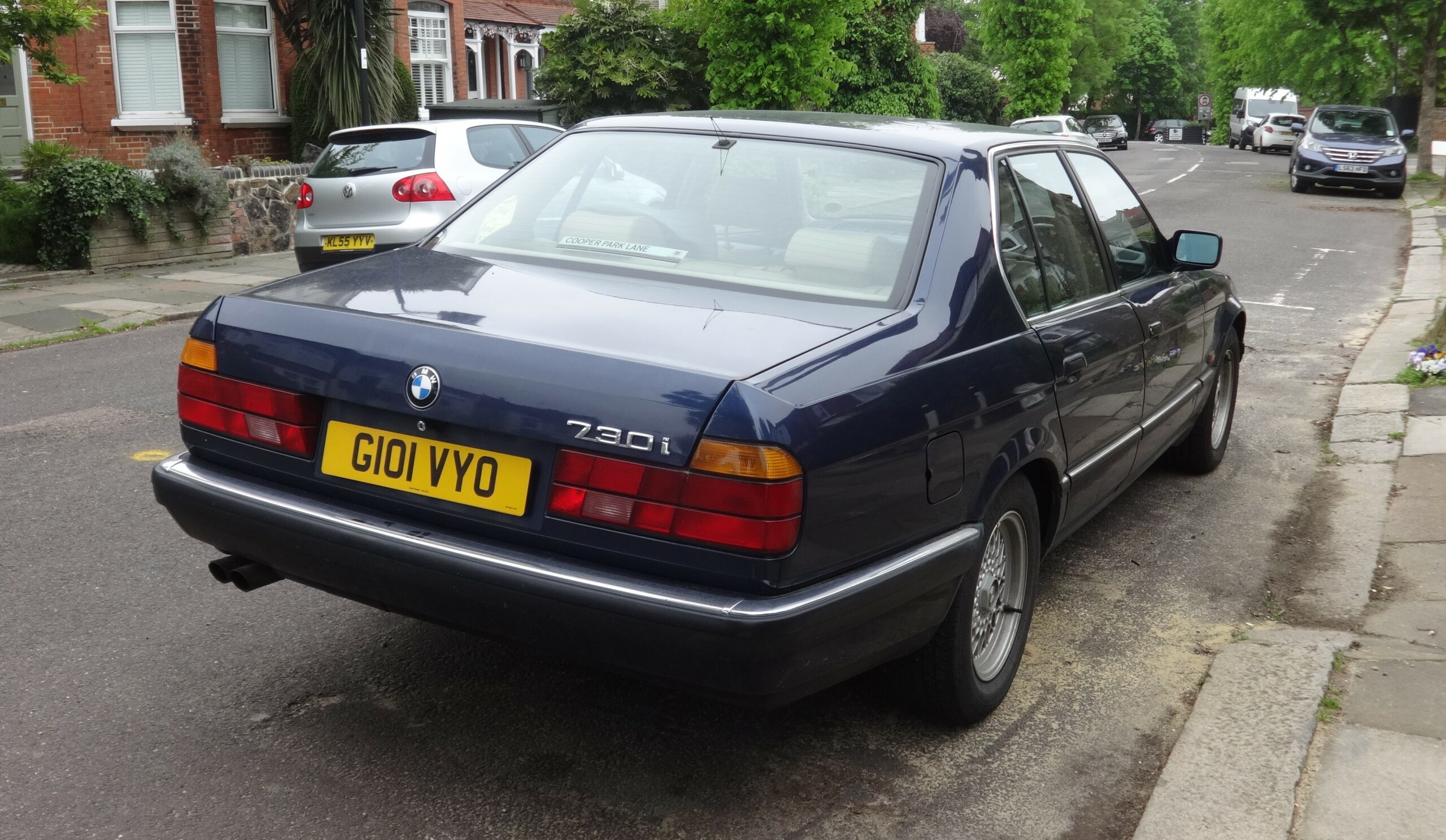
The only series body style over the entire production run: four-door notchback, unitized body, front longitudinal engine, rear-wheel drive. Wheelbase 2,832 mm, length 4,910 mm, width 1,845 mm, cd value 0.32. The E32 introduced L-shaped taillights at BMW. Six-cylinders carry the narrow kidney grille, V8 and V12 the wide one.
Long version iL

114 millimeters more wheelbase, entirely as rear legroom, overall length around 5.02 meters. Offered as 730iL, 735iL, 740iL and 750iL. The 750iL even reached the market in May 1987 before the short version. From 1989, the High Line equipment was also available, with a refrigerator, onboard telephone and nearly full leather trim.
Goldfish — the V16 test vehicle
Between summer 1987 and summer 1988, an E32 was built with a 6,651 cc sixteen-cylinder engine derived from the M70. The engine took up the entire engine bay, so the cooling system was moved to the trunk, fed by gill-like air intakes in the side panels — hence the name, along with the gold paintwork. Six-speed manual gearbox from the E31: of all things, the most powerful 7 Series ever was a manual. For a long time, the car was considered a one-off; in 2024, BMW showed a second V16 E32 from 1990 at the Techno Classica. This has since overturned the one-off narrative.
No coupe
A two-door E32 never existed, not even as a prototype — the occasionally repeated claim could not be verified in any source. The twelve-cylinder coupe segment was taken over from 1989 by the E31, which shared the M70 with the 750i. BMW had been building special protection vehicles based on the 7 Series since 1978; for the E32, armored 750iL models of class B6 are documented, though not confirmed with unit numbers by a primary source.
05 · Engines
Six, eight, twelve — and once sixteen
The E32 is the model line in which BMW placed three engine concepts side by side within five years.
M30 — the inline-six verified
The large six-cylinder from 1968 carried the E32 through its market launch and to the very end: 730i with 2,986 cc and 188 PS, 735i with 3,430 cc and 211 PS. Cast-iron crankcase, overhead camshaft via rocker arms, timing chain. Even after the arrival of the V8, the M30-730i remained orderable until 1994. It is the most durable and by far the most affordable engine in the model line. Classic weak point: camshaft and rocker arm wear when the oil spray bar clogs.
M60 — the V8 and the Nikasil question verified
From November 1991, BMW's first V8 since the 502 era: all-aluminum, four valves per cylinder, two overhead camshafts per bank, Bosch Motronic 3.3. M60B30 with 2,997 cc and 218 PS, M60B40 with 3,982 cc and 286 PS. The M60 was the first large-scale application of the nickel-silicon coating on the cylinder bores. Sulfur-containing fuel attacks this coating; damage occurred practically only in the USA, UK, Italy and South America. The switch to Alusil is consistently attributed only to the successor M62 from 1996 onward — no change is documented for the E32.
M70 — the V12 verified
4,988 cc, 300 PS at 5,200 rpm, 450 Nm, 240 kilograms, Alusil crankcase, seven-bearing crankshaft, one overhead camshaft with two valves per bank. The engine actually has two separate digital engine control units, one per cylinder bank, plus two throttle bodies, two distributors and two lambda sensors — synchronized via the EML control unit, BMW's first electronic accelerator pedal. BMW stated at the time that the car could still travel over 200 with six cylinders in the event of a bank failure.
Two ignition keys? Two M20s? Both wrong. verified
From the dual engine management has grown the story that the 750i is "two six-cylinders bolted together" and needs "two ignition keys." No source provides evidence for two ignition keys — the E32 has one ignition system and one ignition lock. And the M70 is not a combination of two M20s: it was newly designed from December 1982 as a twelve-cylinder, shares only bore and stroke with the M20B25, and has a single continuous crankshaft.
The V16 of the Goldfish plausibel
6,651 cc from sixteen cylinders at sixty degrees, derived from the M70 by lengthening it by two cylinder pairs, two Bosch control units. Output is given as 408 PS (German Wikipedia, auto motor und sport) or 414 PS (English Wikipedia), torque as 613, 625 or 608 Nm — nothing here is doubly confirmed. Zero to a hundred in six seconds, consumption between fourteen and twenty-four liters. Against series production spoke packaging space, consumption and the refusal to enter an arms race.
06 · Weak points
Reliability & weak points
- Nikasil on the M60: affected are V8s from markets with sulfur-containing fuel, especially the USA and UK. Consequences are loss of compression, rough running and poor starting behavior. Practically a non-issue on German vehicles, the first question to ask before buying an import.
- The oil pump screws on the V8 can come loose and fall into the oil pan; in the worst case they end up in the timing chain. Check and secure with thread locker — the repair is feasible via the front oil pan.
- On the V12, water pumps fail suddenly at the bearing. The major cost driver is the two-piece aluminum oil pan: its gasket becomes leaky, and for the rear screws BMW specifies removal of the transmission.
- Self-leveling suspension and EDC are the typical youngtimer trap: steel lines rust and leak, level sensors and pressure accumulators fail. Proper repair costs a four-figure sum; many vehicles have long since been converted to conventional struts.
- Pixel errors in the instrument cluster and onboard computer, broken shafts in the power seats (recognizable by a crooked backrest), faulty Servotronic relays (the steering stays permanently light), and on the V12 the EML throttle actuators with limp-home mode.
- Rust sits at the lower door edges from the inside, at sill ends, jack points and rear wheel arches. Additionally increased wear at the front axle — control arms, tie rods, track rods — as well as the rear trailing arm bearings.
07 · Engineering
Suspension, brakes, steering, transmission
Fahrwerk
Bremsen
Lenkung
Getriebe
Technical data — final drive ratios & gearboxes
- 730i with M30 manual
- five-speed gearbox
- 730i with M30 automatic
- four-speed torque-converter automatic from ZF
- 735i manual
- five-speed gearbox from Getrag
- 735i automatic
- four-speed torque-converter automatic ZF 4HP22
- 740i transmission
- five-speed automatic ZF 5HP30, no manual gearbox
- 750i and 750iL transmission
- four-speed automatic ZF 4HP24, no manual gearbox
- Drive type
- rear-wheel drive — an all-wheel-drive E32 never existed
- Wheelbase Sedan
- 2,832 mm
- Wheelbase long version iL
- 2,947 mm, i.e. 114 mm more
- Length Sedan
- 4,910 mm
- Width
- 1,845 mm
- Height
- 1,400 mm
- Drag coefficient
- cd 0.32
Axle ratios cannot be doubly confirmed for any E32 variant. BMW Group Classic and the PressClub publish no axle data for the model line; the figures in circulation come from parts catalogs and could not be cross-checked.
For the 730i with M60 V8, only German Wikipedia names the five-speed automatic ZF 5HP18. A second independent source is lacking.
For the length of the long version, sources state 5,024 to 5,029 mm. The figure is therefore not included in the list.
08 · Top models
Top models
Three models that define the model line.
740i
The most sensible route to the top: 3,982 cc, 286 PS, 400 Nm, 240 km/h electronically limited, 7.4 seconds to a hundred. The M60 is more modern than the V12 — four valves per cylinder, Motronic 3.3 — and it was the only top model to come with the durable five-speed automatic ZF 5HP30. New price 100,000 Marks, as the 740iL 110,000. Nikasil is only a concern with imports.
To the sub-page →
750i and 750iL
The first German post-war V12 — 300 PS, short or long.
To the sub-page →
09 · Buying guide
What matters: the most expensive good car, not the cheapest one that runs
The E32 is one of the last great cars that can still be bought for little money and maintained for a lot of money. The model line has no structural design flaws, but a great deal of technology that is thirty years old and, in case of failure, wants to be paid for at flagship-class prices.
History and service records — with the V12 and the V8, the maintenance history decides everything else; without documentation, the price advantage is just a deferred cost block
Rust at the lower door edges from the inside, sill ends, jack points and rear wheel arches — vehicles from low-salt regions are noticeably better
Front axle and rear axle bearings — control arms, tie rods and track rods suffer increased wear, check rear trailing arm bearings and track alignment at the back
Self-leveling and EDC — check lines for rust and moisture, measure ride height on both sides, cycle through the damper adjustment; a properly reverted vehicle is not a flaw
Engine-specific — on the M30, listen for camshaft and rocker arm wear, on the M60 check the oil pump screws and, on imports, clarify the Nikasil question, on the M70 inspect the oil pan from below for leaks
Electronics on cold start — instrument cluster, onboard computer, all seat adjustments, Servotronic and, on the V12, the behavior of the throttle actuators under load
The order is: history, then substance, then engine choice, then equipment. The M30-730i is the cheapest and most robust entry point, shares much technology with the E34 and, as a manual, is the most honest car in the model line. The 735i offers more composure with a similar parts situation, but demands attention to the valvetrain. The 740i is the best compromise of power, modern technology and durable five-speed automatic — but on an import vehicle, the Nikasil question belongs before the test drive. The 750i and the 750iL are collector’s cars, not daily drivers: two control units, two exhaust systems, one oil pan gasket for which BMW specifies removing the transmission. Anyone without the reserves for that is better off buying a very good six-cylinder than a mediocre twelve-cylinder. And generally: the less electronics an E32 has on board, the more relaxed life with it becomes.
10 · The competition
The competition
Mercedes-Benz S-Class (W126 and W140)
The W126 was the established benchmark in 1986 and remained in the lineup until 1991; the E32 competed against it without matching it technically, but with significantly more modern electronic systems. Its successor, the W140, arrived in 1991 and brought Mercedes' first post-war V12 with the M120 — four years after BMW, a lead that was recorded in Munich as a strategic victory.
Audi V8
Built from 1988 to 1993, with a 3.6-liter V8 and 250 PS, from August 1991 also with 4.2 liters. Its unique feature was the drivetrain: quattro all-wheel drive was the only available variant. This filled exactly the gap that BMW left open in the 7 Series — the model line only got all-wheel drive in 2009 with the F01.
Jaguar XJ (XJ40)
Built parallel to the E32 from 1986 to 1994, with AJ6 six-cylinders from 2.9 to 4.0 liters. The twelve-cylinder only arrived in the XJ40 in February 1993 — Jaguar had, however, been building V12 sedans since 1971, which is why BMW's 1987 premiere was not a European one, only a German one. The XJ40 was considered the more characterful, but electrically far less reliable car.
11 · Galerie
Bilder
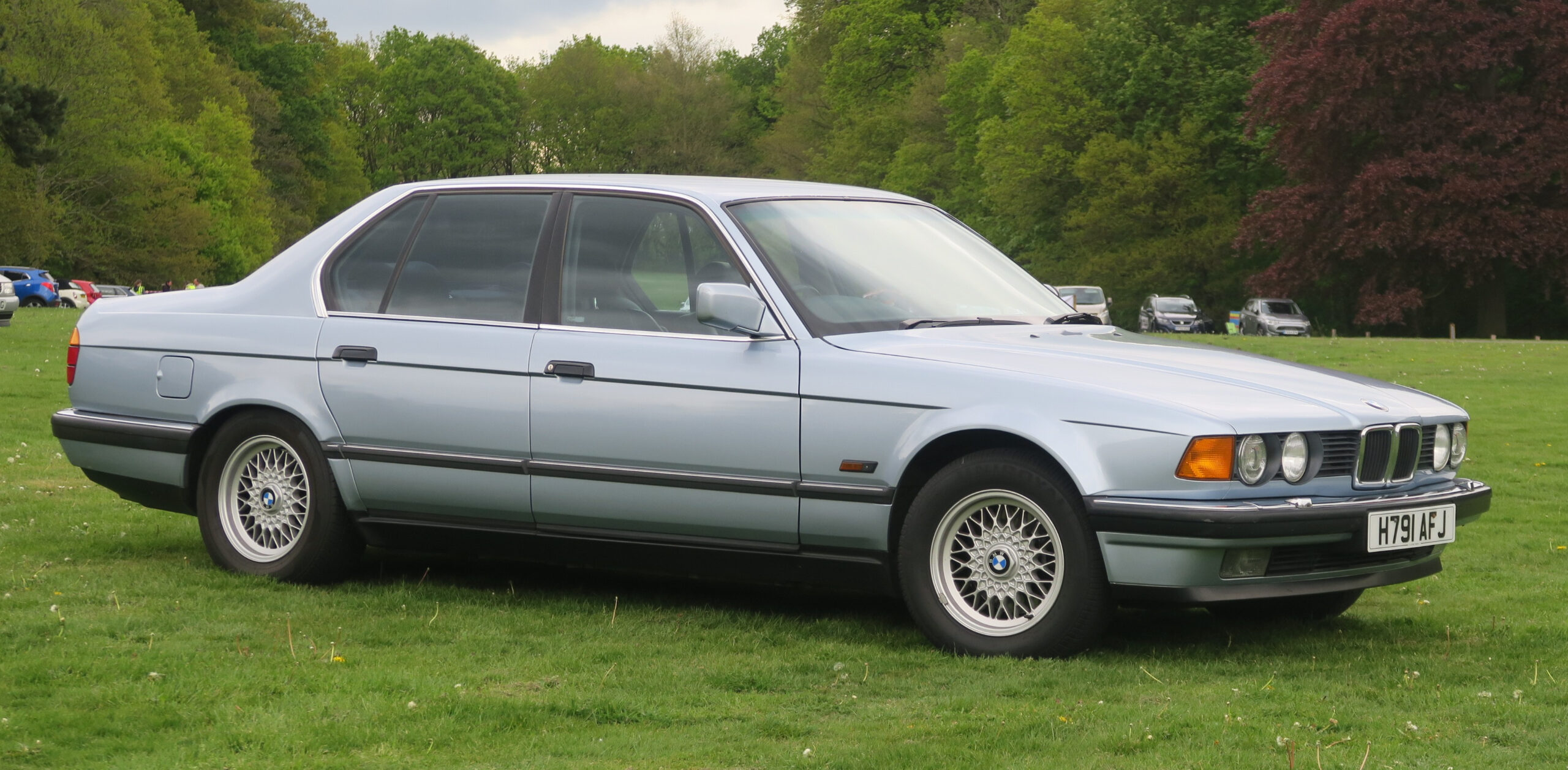
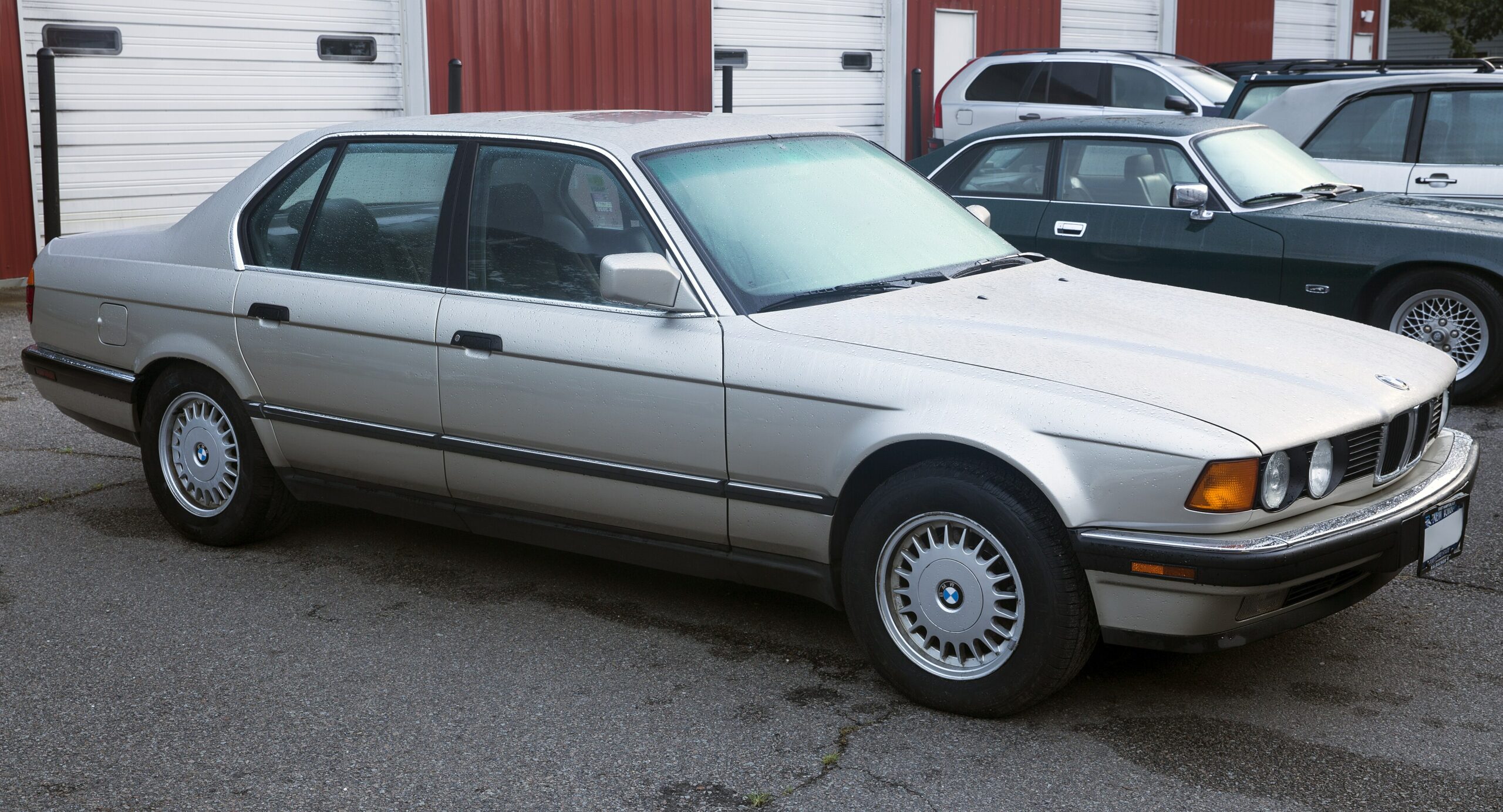
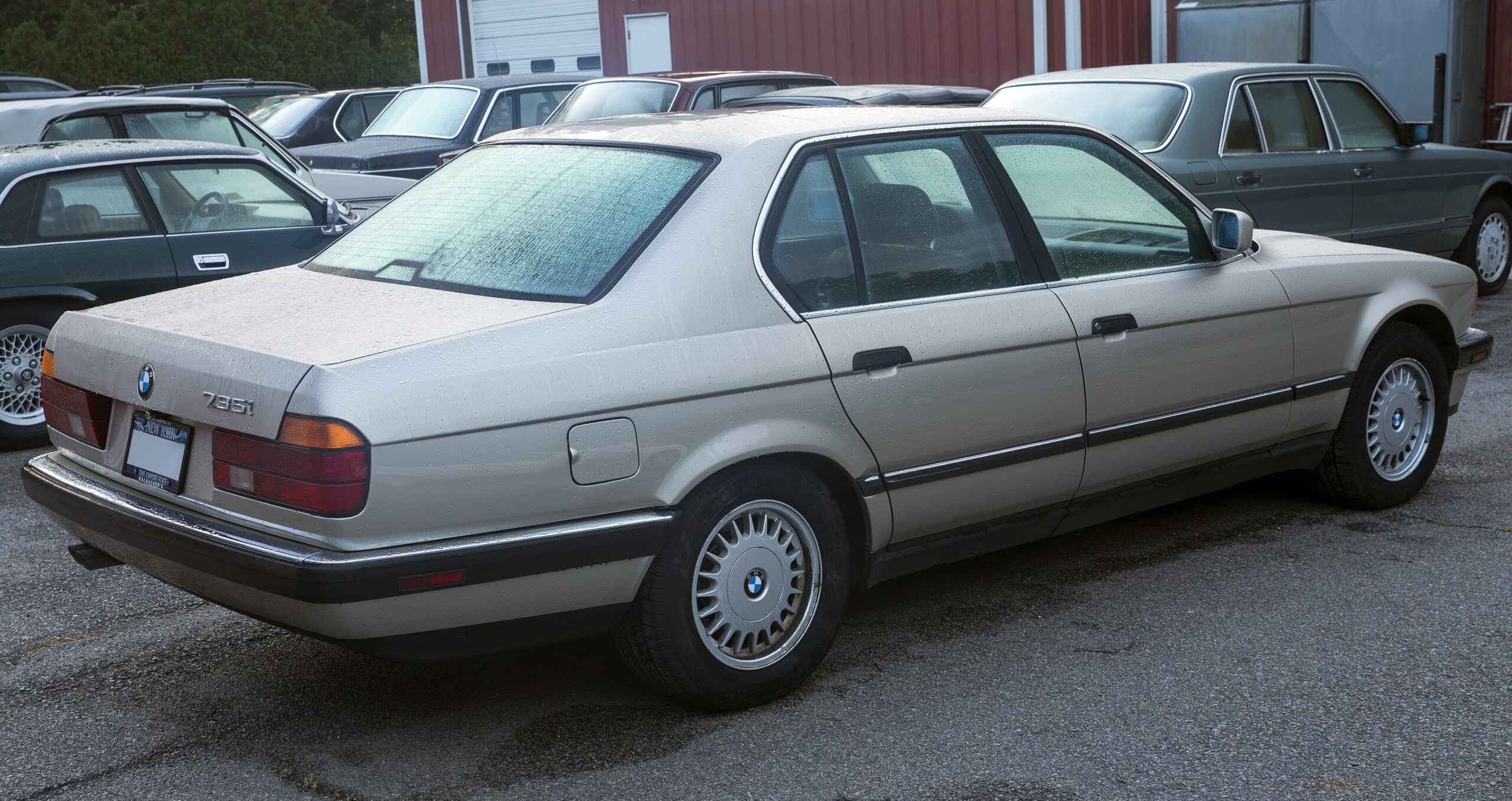
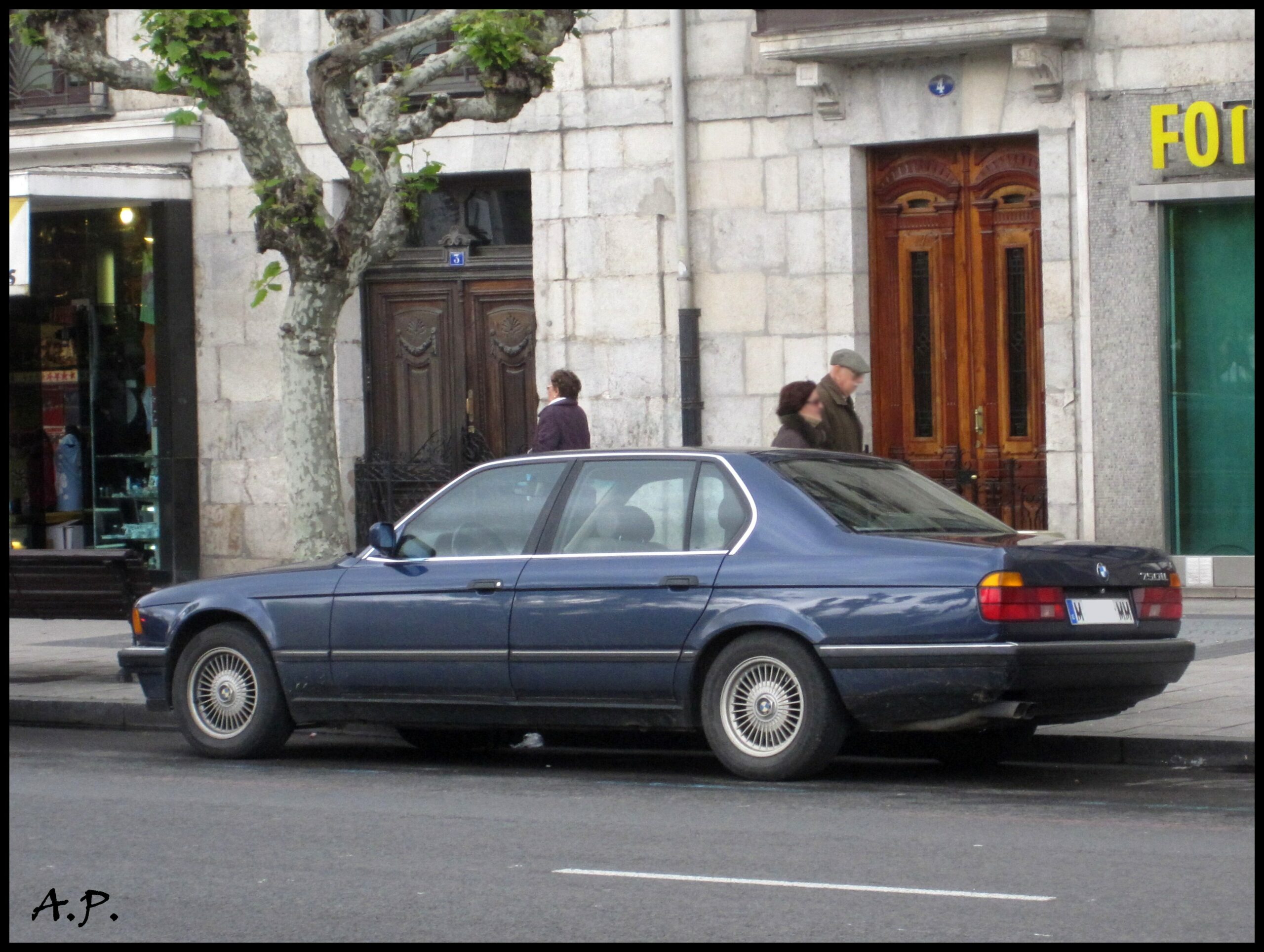
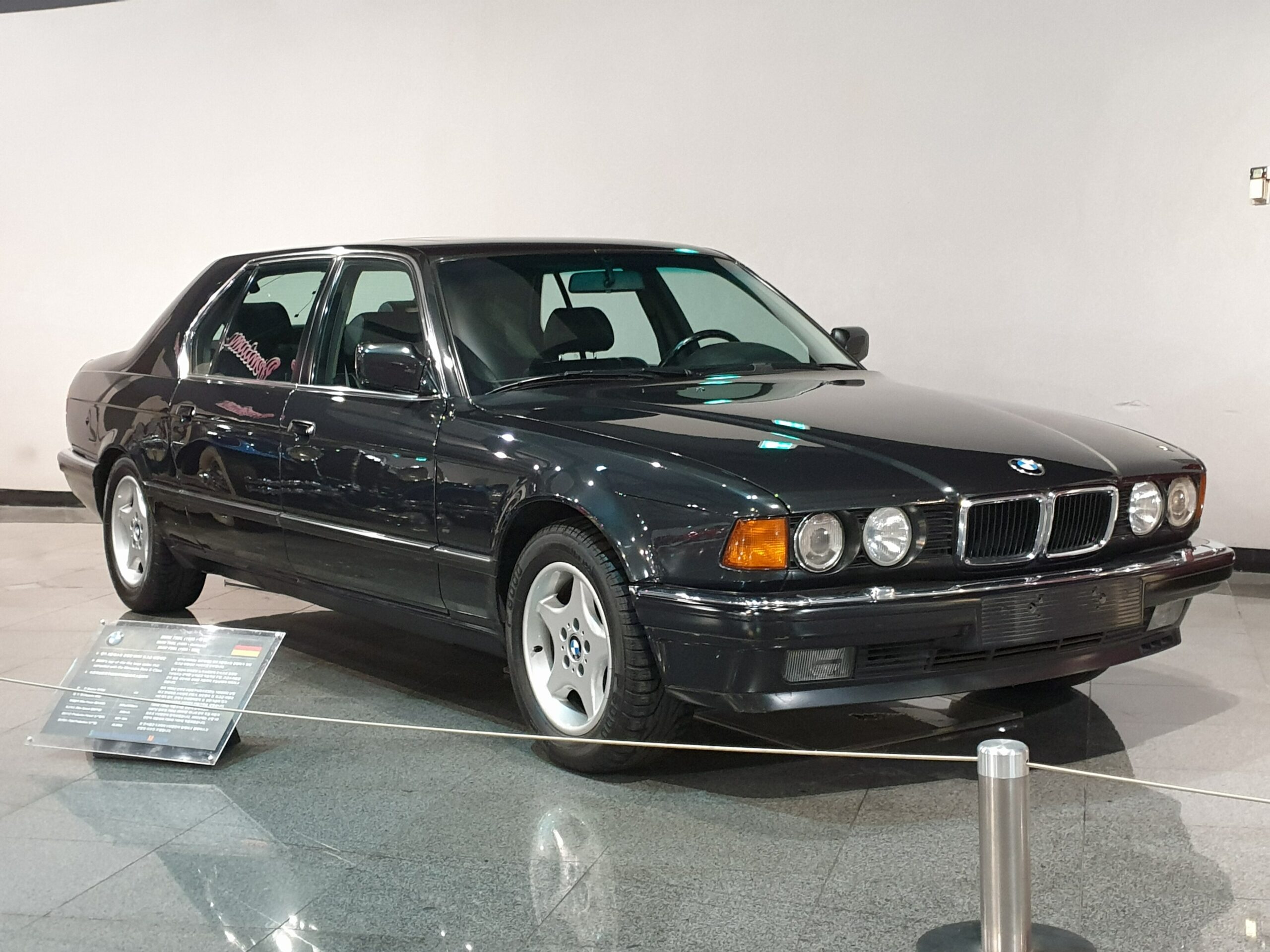
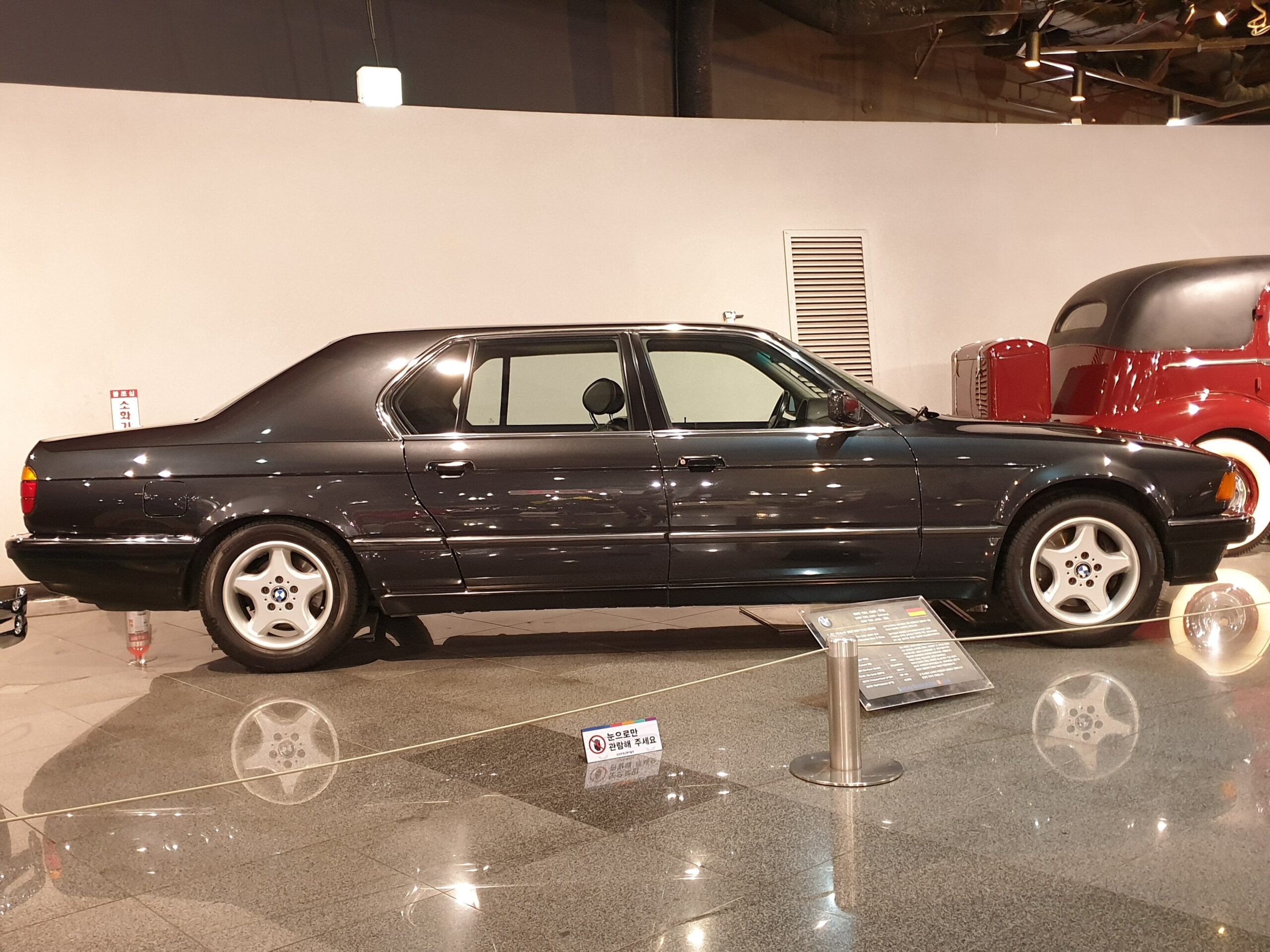
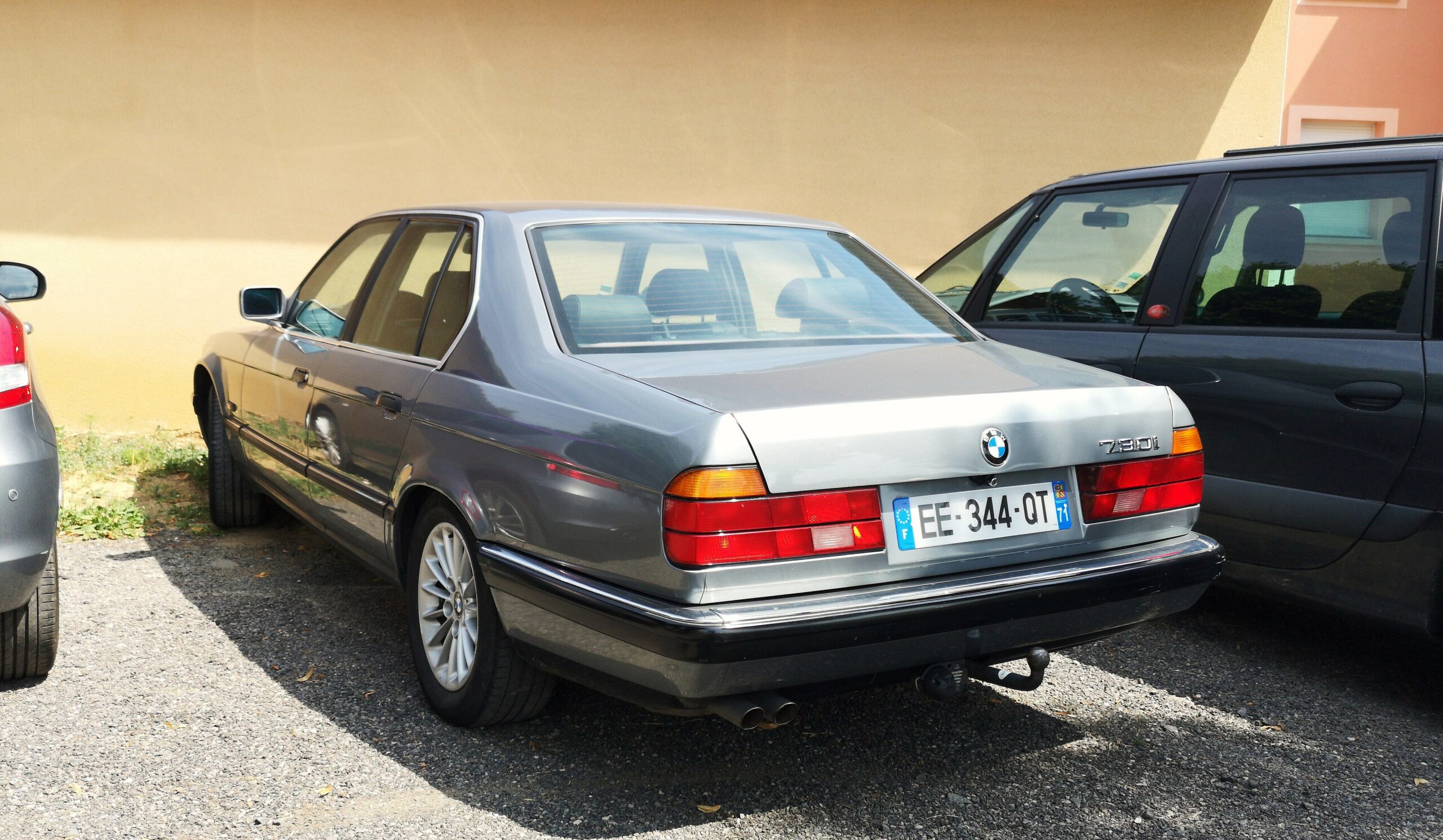
730i and 735i with the narrow kidney grille of the six-cylinders, plus the 750iL with the wide kidney grille of the V12.
Other BMW 7er generations
4 model lines with an E-number, from 1977 to 2008.


12 · Sources
Belege & Literatur
Primary sources are BMW Group Classic, the BMW PressClub and Wikipedia; everything else counts as verified only once two independent sources agree. Deliberately left open: the exact end of production (BMW states July 1994, German Wikipedia June, English Wikipedia April), the output of the 735i without catalytic converter (218 or 220 PS), and all figures for the V16 Goldfish, for which no figure could be doubly confirmed. Not claimed: that a two-door E32 existed, or an all-wheel-drive variant — neither could be verified in any source.
- BMW Group Classic — BMW 7 Series model line (E32)
- BMW Group Classic — BMW 750i and 750iL (E32)
- BMW Group Classic — BMW 735i and 735iL (E32)
- BMW Group Classic — BMW 730i (E32), six- and eight-cylinder
- BMW Group Classic — BMW 740i and 740iL (E32)
- BMW PressClub — New standards in the luxury class: 25 years of the BMW 750i
- BMW PressClub — BMW security vehicles
- Wikipedia (DE) — BMW E32
- Wikipedia (EN) — BMW 7 Series (E32)
- Wikipedia (DE and EN) — BMW M70, M60 and S70
- auto motor und sport — Secret project Goldfish: the E32 with V16
- auto motor und sport — BMW V8 engines M60 and M62 compared
- AUTO ZEITUNG — Buying a BMW 730i and 740i (E32): guide
- AUTO BILD KLASSIK — Buying advice BMW 730i (E32)
- AutoScout24 — BMW shows second V16 Goldfish prototype
- bimmerToday — BMW 750iL: first German post-war V12 turns 30