

When BMW showed the 850i at the IAA in September 1989, nothing had been decided since the E24 ran out. The E24 had filled the role of the large coupé for fourteen years, but at its core it was a 5 Series with a different roof. What came now was something different: a coupé without a B-pillar, with pop-up headlights, a twelve-cylinder engine and a drag coefficient of 0.29 — the best a full-fledged coupé in this performance class achieved at the time.
The base price was 135,000 Marks. No BMW had ever been more expensive.
Ten years later, production ended after 30,603 vehicles. The 6 Series had managed 86,216 in fourteen years. And it took almost twenty years afterwards before another 8 Series came.

No successor, but a new class
The most common misconception about the E31 is reading it as a successor to the E24. It was heavier, technically more elaborate and designed uncompromisingly for long-distance touring. Anyone who measures it against the 6 Series will never do it justice — and will subsequently be surprised by its weight and maintenance costs.
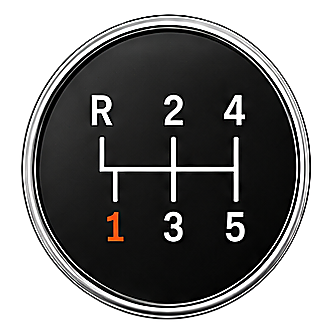
It also wasn’t BMW’s first twelve-cylinder engine; that had existed since 1987 in the 750i. But it was the world’s first production car in which a V12 was combined with a six-speed manual gearbox and it brought the newly developed Integral rear axle. Technically, the E31 was BMW’s showcase.
Commercially, it never became that. Recession, the Gulf War and rising energy prices hit the model line directly after launch. In 1993 BMW added the more affordable eight-cylinder 840Ci, withdrew from North America in 1997 and ended production in May 1999.
Six variants, two engine families — and two traps
| Model | Engine | Displacement | Power | Production period |
|---|---|---|---|---|
| 840Ci | M60B40 · V8 | 3,982 cm³ | 286 PS | 1993–1996 |
| 840Ci | M62B44 · V8 | 4,398 cm³ | 286 PS | 1995–1999 |
| 850i | M70B50 · V12 | 4,988 cm³ | 300 PS | 1989–1992 |
| 850Ci | M70B50 · V12 | 4,988 cm³ | 300 PS | 1993–1994 |
| 850Ci | M73B54 · V12 | 5,379 cm³ | 326 PS | 1994–1999 |
| 850CSi | S70B56 · V12 | 5,576 cm³ | 380 PS | 1992–1996 |
| 830i (development) | M60B30 · V8 | 2,997 cm³ | 218 PS | 1992 · 18 units, never sold |
Two designations regularly lead astray. First: “850Ci” stands for two different twelve-cylinder engines depending on the model year. Until 1994 it is the five-litre M70 with 300 PS, after that the 5.4-litre M73 with 326 PS. Second: the four-litre V8 is listed as 840i in parts catalogues, but was sold as 840Ci. Anyone searching for parts should know both.
A third oddity: No E31 engine has a timing belt. All run on a timing chain — not a given for a car of this vintage, and a real advantage in terms of upkeep.


The 850CSi — the flagship that wasn’t allowed to be called an M model
The 850CSi arrived in 1992: 5,576 cubic centimetres, 380 PS, manual transmission only, 180,000 Marks. The engine bears the designation S70B56 — at BMW, the S stands for engine development by M GmbH. It is a bored-out M70 with a lengthened stroke, higher compression and an electronic throttle, plus Active Rear-Axle Kinematics.
1,510 units were built. Anyone discussing the E31 should make this distinction: the CSi is not a trim variant, but a standalone vehicle whose engine came from a different house.

The M8 that never existed — and the McLaren legend
A production M8 never existed. Around 1990, M GmbH built a single drivable example: a body without pop-up headlights, carbon fibre parts, plexiglass windows, racing seats, under 1,450 kilograms — and a twelve-cylinder engine of around six litres, four valves per cylinder and individual throttle bodies. Recession and slumping sales ended the project; BMW brought out the less radical 850CSi instead. The prototype disappeared for around two decades and was only shown in 2010.
There are two figures for this car’s power output, and both come from BMW itself: the PressClub named around 550 PS in 2014, while bmw-m.com states 640 PS at 7,500 rpm. The higher figure corresponds exactly to the data set of the McLaren F1 engine — displacement, torque and rpm match to the decimal point. We therefore list both figures and consider neither confirmed.
Which brings us to the most persistent legend surrounding this model line.
The V12 of the McLaren F1 is not the engine of the 8 Series. The S70B56 of the 850CSi has 5,576 cm³ and two valves per cylinder. The McLaren’s S70/2 has 6,064 cm³, four valves per cylinder, a different compression ratio and a different rev range — a new design. What both share is the department, the engineer Paul Rosche, and the technology concept. Not the construction.
For those who prefer it even more exclusive: on the E31 base, Alpina built the B12 5.0 with 350 PS (97 units, 1990–1994) and the B12 5.7 based on the 850CSi with 416 PS and a carbon bonnet (57 units, from 1992).
Ten years in bullet points
- 1989 — World premiere of the 850i at the IAA in September, production start in May. Base price 135,000 Marks.
- 1990 — Series production begins at the Dingolfing plant; from spring, Electronic Damper Control becomes available.
- 1991 — Three convertible prototypes are built and rejected: too heavy, not stiff enough, too expensive. An open 8 Series never came to be.
- 1992 — The 850CSi arrives. In parallel, 18 development vehicles of the 830i are built, which are never sold.
- 1993 — From July, the 840Ci brings the eight-cylinder entry point for 129,000 Marks. The base model is henceforth called 850Ci.
- 1994 — The 5.4-litre M73 replaces the M70 in the 850Ci, 326 instead of 300 PS.
- 1995 — David Hockney designs the fifteenth BMW Art Car based on an 850CSi.
- 1996 — The 840Ci gets the 4.4-litre M62. The 850CSi ends production in November.
- 1997 — BMW withdraws the 8 Series from the North American market.
- 1999 — Production ends in May after 30,603 series-produced vehicles. Including development vehicles, BMW cites 30,621.
Buying: electronics before bodywork
The E31 reverses the usual classic-car logic. The bodywork is relatively rust-resistant; the risk lies in the electronics and hydraulics. And it is the textbook example of the cheap car becoming the most expensive one: vehicles at the lower end often need their purchase price again just to be put right.
The key points:
- Electronics are the core risk. The V12 has two separate engine control units complete with dual fuel pumps and sensors, plus body, climate, transmission and chassis control units. Individual components cost four figures, some are no longer available.
- Pixel failure in the instrument cluster and on-board computer is to be expected on practically every vehicle. Repair is significantly cheaper than replacement.
- Nikasil on the early eight-cylinder: The M60 in the 840Ci from 1993 to 1995/96 can lose compression with high-sulphur fuel. Mainly affected were the USA and the UK; continental Europe is considered largely spared. Detectable via a compression test and the block’s casting number.
- Cooling system on the twelve-cylinder: cracking expansion tanks, failing water pumps and viscous couplings. Overheating here leads to follow-up costs that can exceed the vehicle’s value.
- Hydraulic brake booster with a ball-type pressure accumulator on early vehicles. After thirty years the seals are worn, and the original part costs four figures.
- Suspension bushings are wear parts under nearly two tonnes of mass — six to seven joints per side. An overhaul beyond 150,000 kilometres is the norm.
- The Active Rear-Axle Kinematics of the 850CSi is expensive and partly no longer available; many vehicles have a deactivated system.
Rust does occur nonetheless, just in places other than expected: lower door edges and rear door corners, the floor of the battery box in the boot, rear wheel arches, windscreen frame and roof edge, sunroof frame. Not bodywork, but costly: corrosion on the high-pressure lines of the rear-axle steering.
Both major buyer’s guides — Classic & Sports Car and auto motor und sport — arrive at the same advice: buy the best car you can find, not the cheapest.
Why it deserves to be taken seriously today
For ten years, the E31 was the wrong car at the wrong time. That is exactly what makes it interesting today: it was never built in numbers that could flood the market, and it carries technology BMW never built again — pop-up headlights, frameless windows without a B-pillar, a twelve-cylinder with manual transmission.
That it took almost twenty years until another 8 Series arrived in 2018 with the G15 says more about the E31 than any value trend: there simply was no demand for what it was. Until, eventually, there was.
All data, variants and inspection points in detail can be found on the E31 model page. Anyone wanting to trace the lineage of the large coupés back further will find the predecessor with the 6 Series E24 and its forebear with the E9.
Sources
- BMW Group Classic — 8 Series model line (E31)
- BMW PressClub — Timelessly fascinating: 25 years of BMW 8 Series
- BMW M — The BMW 850 CSi (E31) and The BMW M8 (E31) Prototype
- Classic & Sports Car — Buyer’s guide BMW 8 Series
- auto motor und sport — Buyer’s guide BMW 8 Series (E31)
- Wikipedia — BMW E31
Where BMW contradicts itself — for example on the power output of the M8 prototype — we list both figures. Corrections and evidence are welcome.
Bildnachweise
- Eigenes Foto · MOTORSPORT24