

01 · Overview
The model line that invented the 3 Series
The E21 was launched in June 1975, replacing the 02 Series. It was the first model line to carry the name “3 Series” — laying the foundation for what remains the brand’s most important model to this day. Unlike its upright, angular predecessor, the E21 arrived as a wedge-shaped design with twin kidney grille, Hofmeister kink, and a centre console angled towards the driver — a feature that has since become a brand hallmark.
It was offered exclusively as a two-door sedan. There was no Touring as there had been with the 02, and a full convertible never existed — open-top driving was only possible with the Baur Topcabriolet, which had a fixed roll bar. The model line made its decisive leap in 1977: with the new M20 six-cylinder engine, the E21 became the first car in its class with six cylinders, and the 323i created a compact sports model for which there was hardly a direct rival at the time.
With 1,364,039 units built, the E21 was the first BMW model to pass the million mark.
02 · History
Eight years in ten steps
From launch in June 1975 to phase-out alongside the E30 — the key facts.
- 1975 Production start in June, launch in July. The E21 replaces the 02 Series, exclusively as a two-door sedan.
- 1975 Initial line-up 316, 318, 320 and 320i, all with four-cylinder M10. The top model is the fuel-injected 320i with 125 PS.
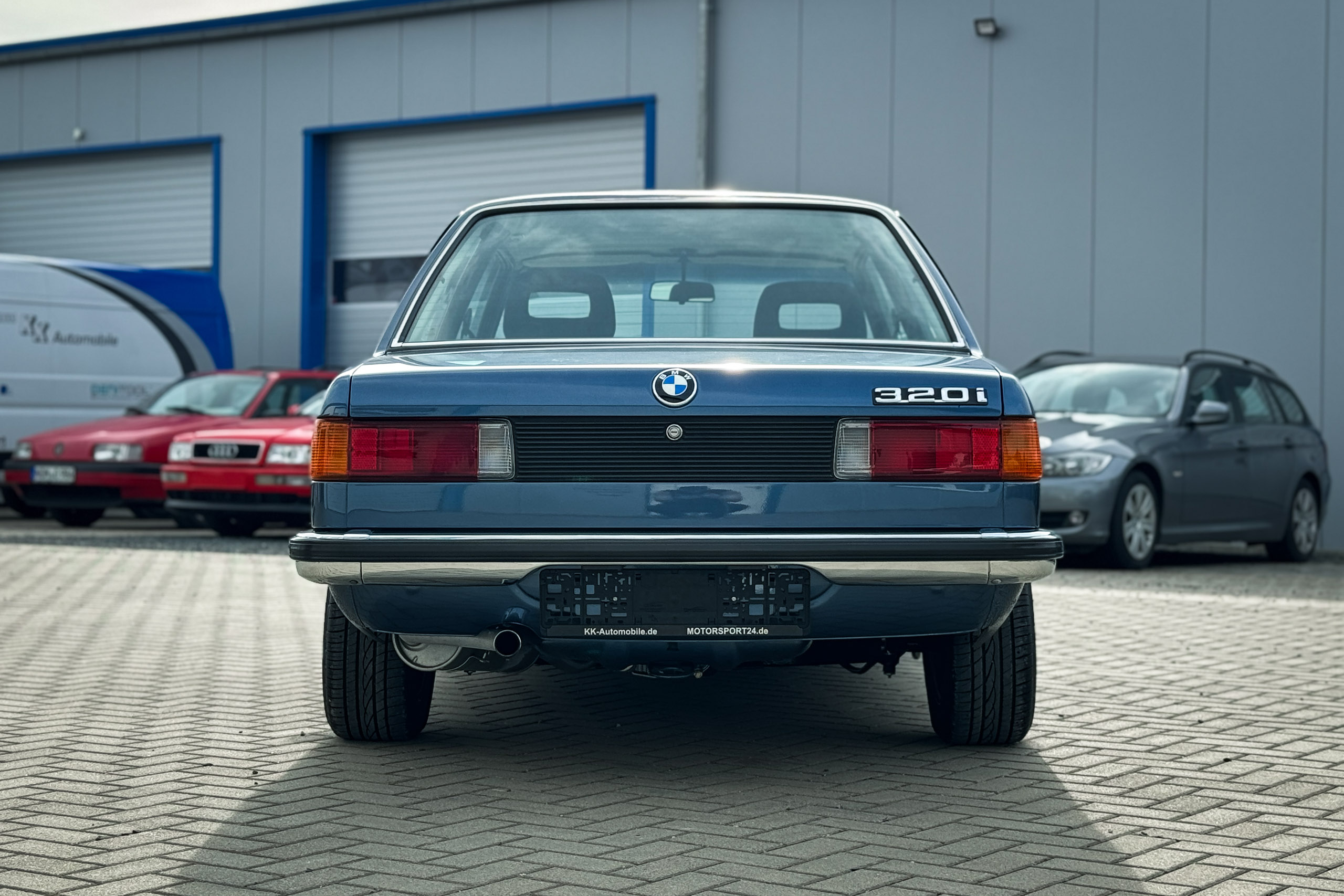
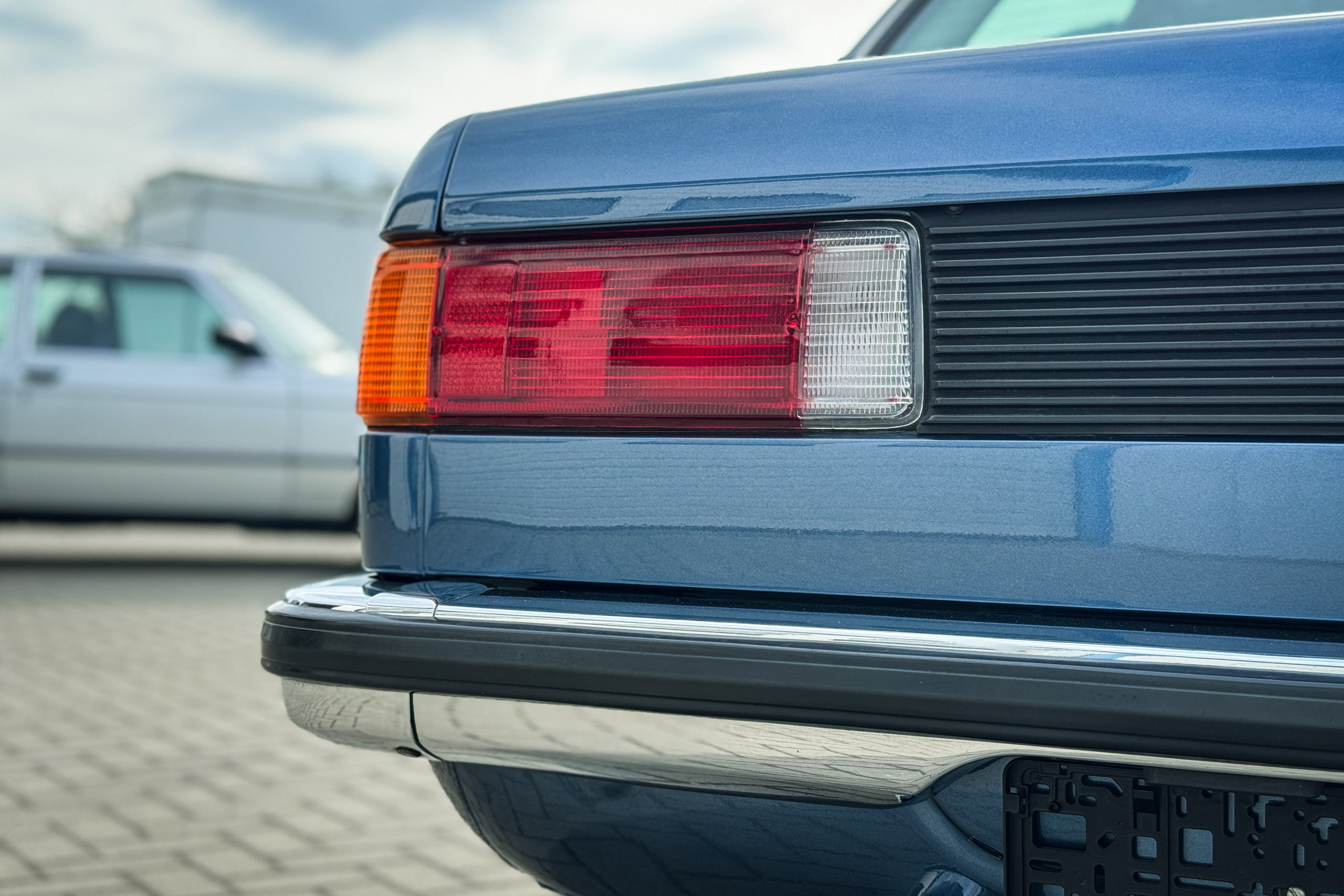
- 1976 Following customer criticism, the ribbed black panel between the tail lights is introduced; very early cars did not have it.
- 1977 Six-cylinder premiere in the class: from July, the 320 gets the new M20 with 1,990 cc and 122 PS, the four-cylinder 320 models are discontinued.
- 1978 The 323i arrives as the top model — 2,315 cc, 143 PS, K-Jetronic, disc brakes all round, twin-tailpipe exhaust.
- 1979 Facelift from August: newly divided tail lights with rear fog lamp, black plastic mirrors instead of chrome, larger front spoiler, new centre console.
- 1980 Four-cylinder reorganisation: the 316 receives the 1.8-litre engine while keeping its name, the 318 is replaced by the fuel-injected 318i with 105 PS.
- 1981 The economy model 315 becomes the entry-level variant: 1,573 cc from the 02 era, 75 PS, without chrome window trim — 1,350 Marks less than the 316.
- 1982 The six-cylinder models are discontinued, and the successor E30 launches in December. Special editions Edition E and Edition S mark the farewell.
- 1983 End of production. The 316 continues until September, the 315 until December, running alongside the E30.
03 · Model overview
From the 315 to the 323i
Nine sales variants in eight years — from the 75 PS economy model to the six-cylinder with 143 PS. Power figures are manufacturer data according to DIN.
Source: factory and literature data · verified
Technische Daten anzeigen — komplette Modellmatrix
| Modell | Motor | Hubraum | Leistung | Bauzeit |
|---|---|---|---|---|
| 315 | M10 | 1.573 cm³ | 75 PS (55 kW) | 1981–1983 |
| 316 (1.6) | M10 | 1.573 cm³ | 90 PS (66 kW) | 1975–1980 |
| 316 (1.8) | M10 | 1.766 cm³ | 90 PS (66 kW) | 1980–1983 |
| 318 | M10 | 1.766 cm³ | 98 PS (72 kW) | 1975–1980 |
| 318i | M10 · K-Jetronic | 1.766 cm³ | 105 PS (77 kW) | 1979–1983 |
| 320 (4-cyl.) | M10 | 1.990 cm³ | 109 PS (80 kW) | 1975–1979 |
| 320i (4-cyl.) | M10 · K-Jetronic | 1.990 cm³ | 125 PS (92 kW) | 1975–1977 |
| 320/6 | M20 | 1.990 cm³ | 122 PS (90 kW) | 1977–1982 |
| 323i | M20 · K-Jetronic | 2.315 cm³ | 143 PS (105 kW) | 1978–1982 |
04 · Body variants
Body variants
Sedan
Two-door, the only factory body style. A four-door sedan never existed for the E21 — that came only with the E30.
Baur Topcabriolet
Conversion by Baur in Stuttgart, 1977–1982, 4,595 units. Fixed roll bar, removable Targa roof at the front, retractable soft top at the rear.
05 · Engines
Four cylinders from the 02, six cylinders as a novelty
The four-cylinder engines come from the M10 family, which BMW had been building since 1961 — proven, chain-driven and durable. The M20, introduced in 1977, was an entirely new design: the brand’s first “small” six-cylinder engine and the first BMW engine ever to use a timing belt instead of a timing chain.
M10 — 315, 316, 318, 318i, 320, 320i verified
Inline four-cylinder with cast-iron block and aluminium crossflow head, mounted tilted 30 degrees to the right, with a single overhead camshaft driven by a roller chain. An engine built from 1961 to 1988, ranging from 75 to 125 PS in the E21.
Technische Daten anzeigen
| Bauart | Inline-4, OHC, 2 valves per cylinder |
| Steuertrieb | Rollenkette |
| Hubraum | 1.573 / 1.766 / 1.990 cm³ |
| Bore × stroke | 84 × 71 · 89 × 71 · 89 × 80 mm |
| Gemischaufbereitung | Solex carburettor, Bosch K-Jetronic from the 318i onwards |
| Leistung | 75–125 PS (55–92 kW) |
| Drehmoment | 110–175 Nm |
BMW Group Classic, factory data sheets · Dyno: verified
M20B20 — 320/6 verified
The small six-cylinder engine made its debut in the E21 in 1977 and was the first BMW engine with a timing belt. No competitor in this class had anything comparable in its line-up.
Technische Daten anzeigen
| Bauart | Inline-6, OHC, 2 valves per cylinder |
| Steuertrieb | Zahnriemen |
| Hubraum | 1.990 cm³ |
| Bore × stroke | 80 × 66 mm |
| Verdichtung | 9,2 : 1 |
| Gemischaufbereitung | Solex 4A1 dual carburettor |
| Leistung | 122 PS (90 kW) at 6,000/min |
| Drehmoment | 160 Nm at 4,000/min |
BMW Group Classic · factory data sheet · Dyno: verified
M20B23 — 323i verified
The 2.3-litre version with Bosch K-Jetronic made the 323i the top model and one of the brand's most sought-after youngtimers. It is not identical to the engine of the same name in the E30.
Technische Daten anzeigen
| Bauart | Inline-6, OHC, 2 valves per cylinder |
| Steuertrieb | Zahnriemen |
| Hubraum | 2.315 cm³ |
| Bore × stroke | 80 × 76,8 mm |
| Verdichtung | 9,5 : 1 |
| Gemischaufbereitung | Bosch K-Jetronic |
| Leistung | 143 PS (105 kW) at 5,800/min |
| Drehmoment | 190 Nm at 4,500/min |
BMW Group Classic, bmwe21.net factory data sheet, e21-board · Dyno: verified. The widely cited figure of "143 PS at 6,000/min" is incorrect.
06 · Weak points
Reliability & weak points
- Timing belt on the M20: the trade press cites 4 years or 40,000 km, club knowledge extends this to 6 years. When in doubt, go with the shorter interval — a break means valve-to-piston contact and catastrophic damage.
- Cylinder head cracks on the early M20 up to autumn 1979: the crack runs beneath the camshaft bearings into the coolant passage, causing oil and water to mix. Later heads are compatible as replacements.
- M10 four-cylinder engines are considered robust and run on a chain rather than a belt. Nevertheless, in the 2018 TÜV survey, roughly one in five E21s inspected had oil loss.
- Solex dual carburettors: complex, prone to needing repair, and reliant on specialist knowledge. Faulty automatic chokes are the classic issue, while rough running is usually caused by a vacuum leak.
- K-Jetronic on the 318i, 320i and 323i is technically durable, but parts supply is thinning and workshop expertise is becoming rare.
- Second gear: weak synchromesh is the standard finding. A fresh gearbox oil change often helps more than a repair.
07 · Engineering
Chassis, drivetrain, brakes, electrics
Fahrwerk
Antrieb
Bremsen
Elektrik
Technical data — final drive ratios & gearboxes
- Gearbox 315
- Getrag 242 four-speed as standard, Getrag 245 five-speed optional
- Gearbox 316, 318, 318i and the four-cylinder 320
- Getrag 242 four-speed as standard, Getrag 245 five-speed optional, ZF 3HP22 three-speed automatic optional
- Gearbox 320/6 and 323i
- Getrag 242 four-speed or Getrag 245 five-speed, available with overdrive or sport ratios, ZF 3HP22 automatic optional
- Final drive ratio 315
- 4.10
- Final drive ratio 316 from 1980 (1.8-litre)
- 3.91
- Final drive ratio 318i
- 3.91
- Final drive ratio 323i
- 3.45
- For the 320/6, sources disagree
- the factory data sheet from September 1979 states 3.64, while a model overview from the E21-Board states 4.10 instead.
The E21 still has a mechanical speedometer cable drive on the gearbox — later BMW gearboxes therefore do not fit without modification, and four- and six-cylinder gearboxes are not interchangeable with each other.
None of the primary sources list final drive ratios for the E21. The figures for the 316 with 1.6 litres, 318, 320 and 320i could only be verified from a single source and are therefore not included in the list; nor is there a distinction made between manual and automatic gearboxes.
08 · Top models
Top models
Each of these models gets its own subpage. Here are the short profiles.
323i
The top model: 143 PS from 2.3 litres, discs all round, twin exhaust — the compact sports model with no direct rival.
To the sub-page →
320/6
The first six-cylinder in its class. Refinement over power — for many, the most well-rounded E21.
To the sub-page →
320i (4-cyl.)
The fuel-injected model of the early years with 125 PS. Until 1977, the most powerful model in the line-up.
To the sub-page →
Alpina B6 2.8 (1978)
The first 200 PS 3 Series — 533 units built in Buchloe.
To the sub-page →
09 · Special Editions & Tuners
No M model — but Alpina, Hartge and three special editions
There was no M model for the E21. The role of top model was taken on by the tuners — and these could be ordered through a BMW dealer, with factory warranty.
Alpina built two six-cylinder versions based on the E21. The C1 2.3, from 1980, extracted 170 PS from the 323i’s M20, while the B6 2.8 fitted the larger M30 from the 528i into the small car — initially 200 PS, and from 1981 with L-Jetronic, 218 PS. Note on naming: for the E21, C denotes the smaller six-cylinder, B the larger one.
Hartge went further, fitting the 335i with the 3.5-litre M30 along with the gearbox from the 635 CSi — 240 PS in a car that had a maximum of 143 from the factory. The 323i RS, with 180 PS, stayed closer to the standard car.
As a send-off in 1982, three factory special editions arrived: the Edition E in Opal Green metallic with velour upholstery, the Edition S based on the 323i with Recaro seats, BBS wheels and Bilstein sport suspension, and the Edition M with front and rear spoilers from the Motorsport accessory range.
10 · Motorsport
The learning platform: from Junior Team to Formula 1 title
The E21 does not have a title collection like the later M3 — but its motorsport story had more far-reaching technical consequences. In March 1977, the BMW 320 Group 5 made its debut at the opening round of the German Racing Championship (DRM) in Zolder, built by BMW Motorsport GmbH under Jochen Neerpasch. Under the bonnet sat the M12/7, the four-cylinder engine from Formula 2, based on the production M10 block: around 300 PS, with later versions reaching about 330 PS at 10,000 rpm, at a weight of around 750 kilograms.
The car was also the vehicle of the newly founded BMW Junior Team, featuring Marc Surer, Manfred Winkelhock, and the then 19-year-old Eddie Cheever — all three later raced in Formula 1. Surer won the debut race straight from pole, BMW drivers took eight of ten Division II races in 1977, and Winkelhock, as the best driver in the smaller class, finished third overall.
Then came the turbo. BMW initially tried two litres and around 600 PS, which proved barely controllable, and dropped down to 1.4 litres — thanks to the 1.4 turbo factor, this kept it under the two-litre limit. The Schnitzer 320 Turbo produced around 410 PS in 1978, and 450 a year later. Harald Ertl won the DRM’s Division II with it in 1978. This very downsizing experience led to the M12/13 — the engine with which Nelson Piquet became Formula 1 World Champion in 1983.
In North America, McLaren North America entered the 320i Turbo with around 600 PS in the IMSA series. David Hobbs won four races with it in 1977, and in 1979 Derek Bell added an overall win at the Road America 500-mile race; Ronnie Peterson also drove the car. And at Le Mans in 1977, the third BMW Art Car took to the track, designed by Roy Lichtenstein — a 320 Group 5 with start number 50, which finished ninth.
The E21 didn't win the titles itself — it built the engine that BMW later won them with.
11 · Buying guide
What matters: rust, and everywhere at that
The E21 comes from an era of variable manufacturing quality and effectively had a shelf life of around ten years. Cars built up to 1977 require particular caution. Typical trouble spots — presented as a checklist rather than a staged photo:
Base of the A-pillar — several panels meet here, with constant spray from the front wheel
Windscreen frame, especially beneath the chrome trim and rubber seal
Sills, sill ends and jacking points (rusts from the inside)
Rear wheel arches and wheel wells, including the cavity behind the rear seat backrest
Rear strut mounts and the mounting points of the semi-trailing arm axle
Front chassis rails, inner wings and firewall panels
Boot floor, spare wheel well and welding points of the towing eye
Rear panel and transition to the side panel, hidden behind the bumper
Lower edge of the B-pillar and sunroof drainage channels
Rust above the waistline is normal on the E21, not the exception. Check the chassis number against the equipment and model year, and have the rear seat removed — what’s found behind it determines the price. For the 323i, a complete history is decisive for the purchase.
12 · The competition
What the E21 had to compete with
Audi 80 (B1/B2)
The most direct German rival and the sharpest contrast in concept: front-wheel drive and space efficiency versus standard drivetrain layout and driving dynamics.
Opel Ascona B
Launched at almost the same time and technically related, but a price class below as a volume model.
Ford Taunus TC
The second major rear-wheel-drive rival in the class, with more powerful engines via the Cologne V6, but deliberately conservative in its design.
Alfa Romeo Giulietta
The most technically ambitious rival, with a transaxle layout and twin-cam engine — a serious contender in driving dynamics, though inferior in build quality.
Saab 99 Turbo
The niche rival from Sweden, and with 145 PS the only alternative that could match the 323i on power.
Lancia Beta
Premium in aspiration, with DOHC and a five-speed gearbox as standard — its reputation damaged by the rust problems of the first series.
Ford Sierra
From October 1982, and thus only a rival to the E21's final model year — it marks the transition to the E30 era.
13 · Galerie
A 320i in Arctic Blue
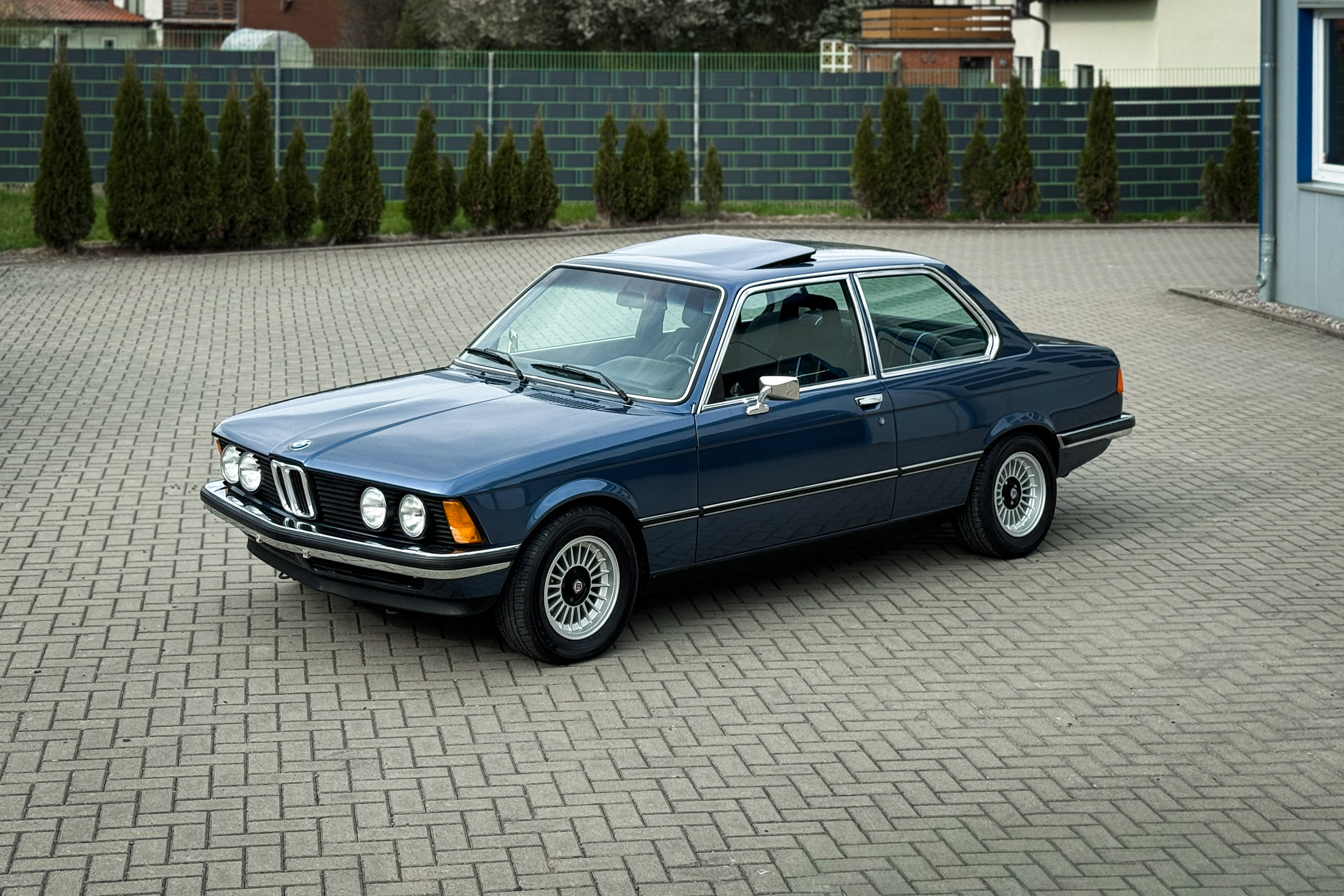
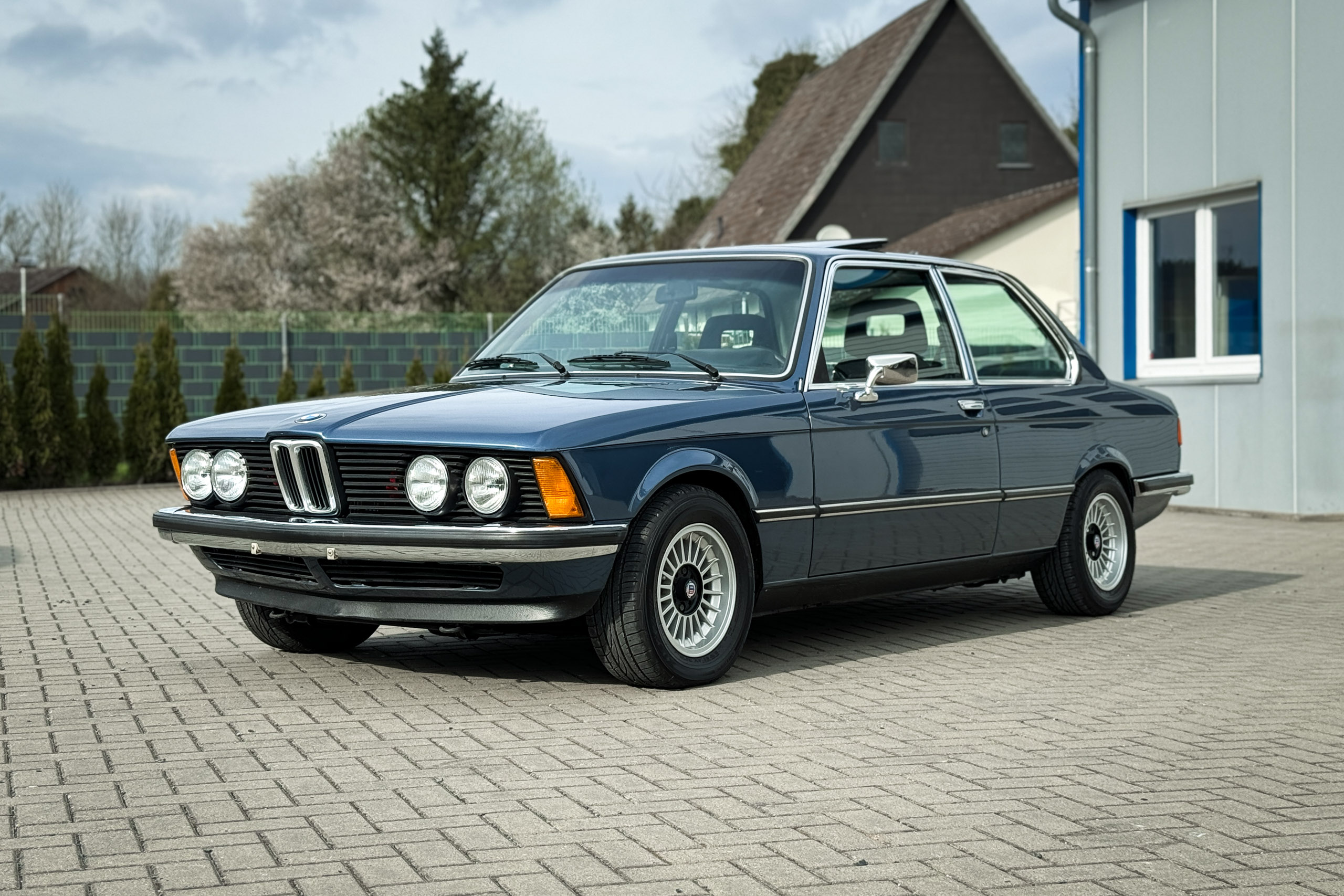
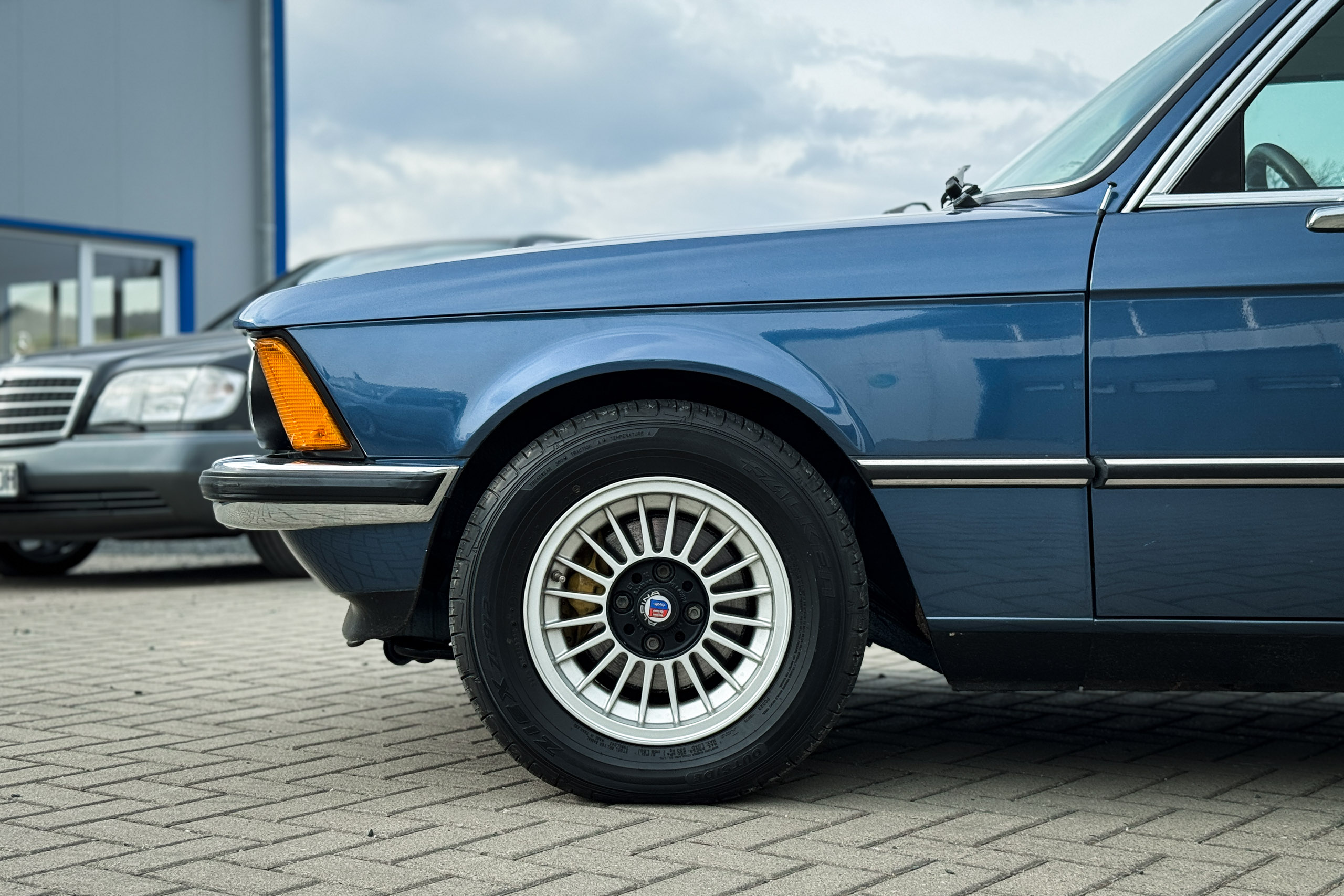
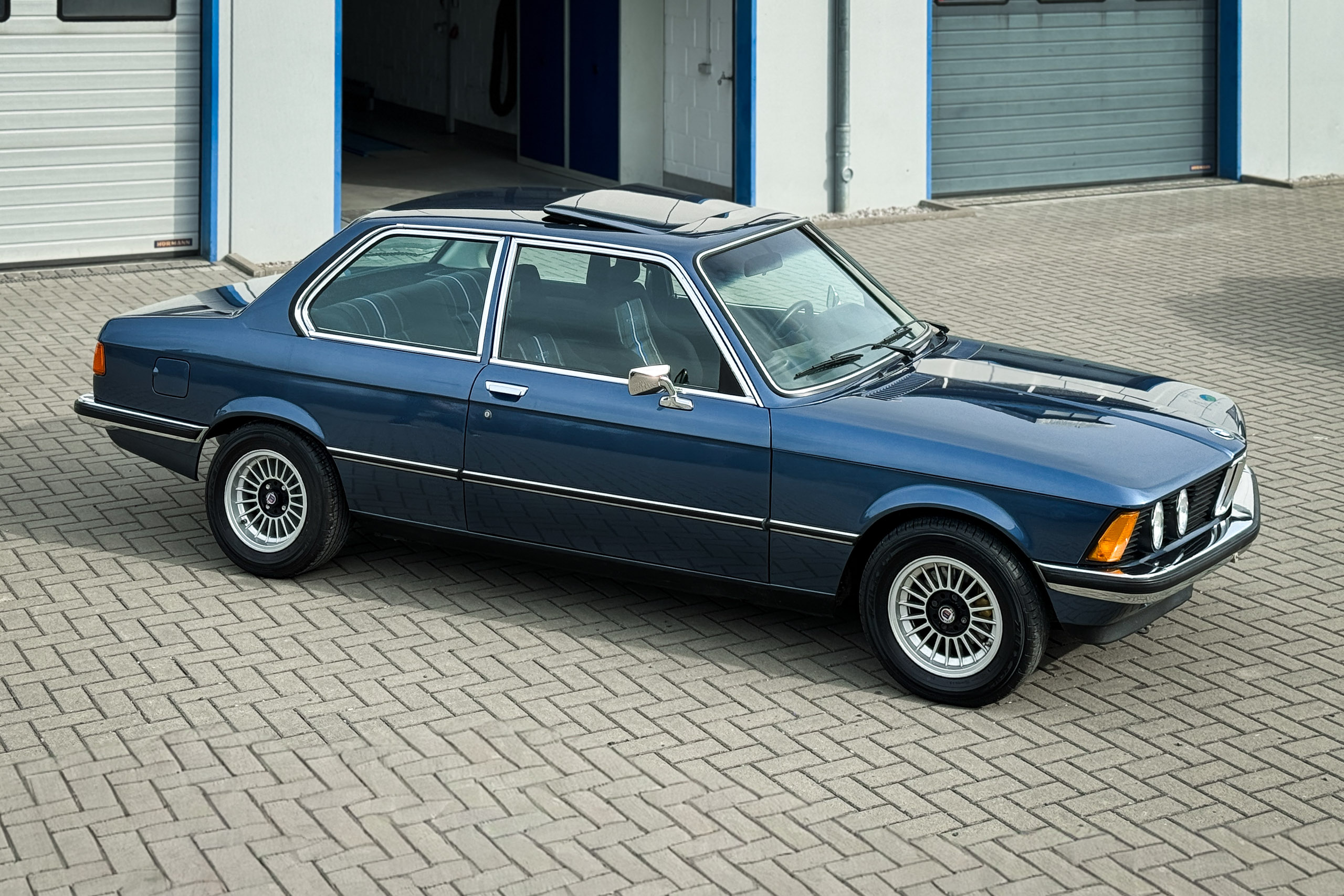
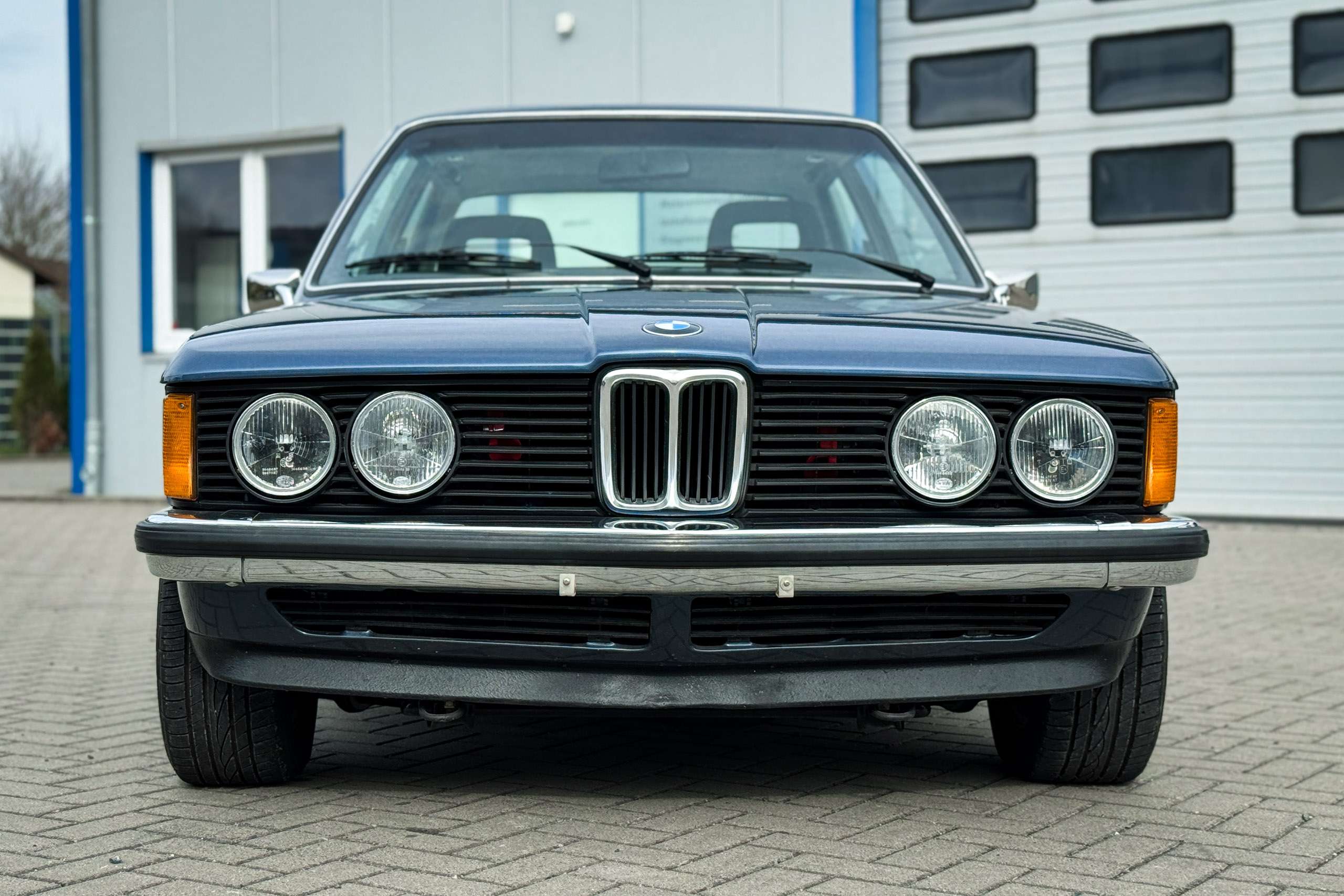
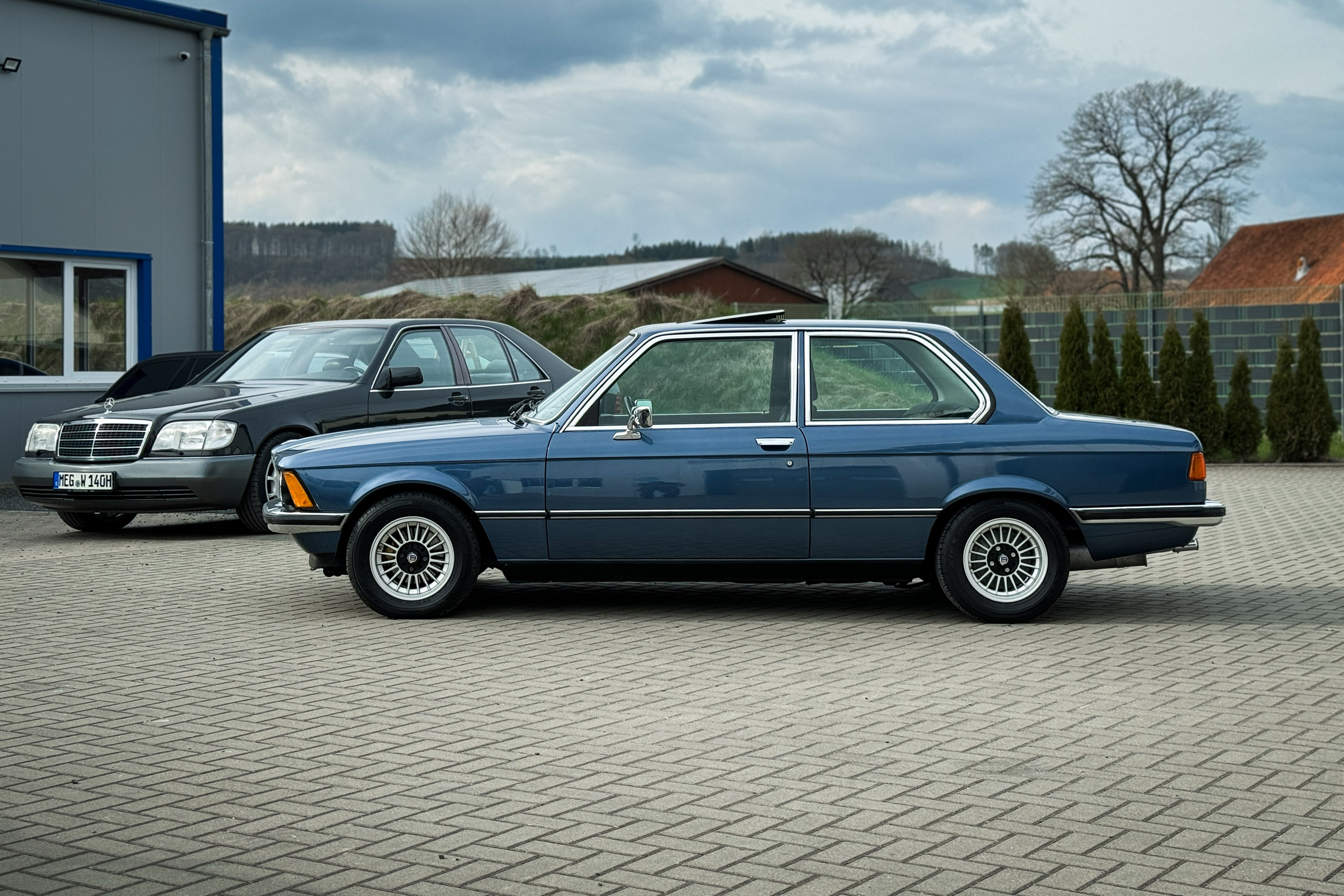
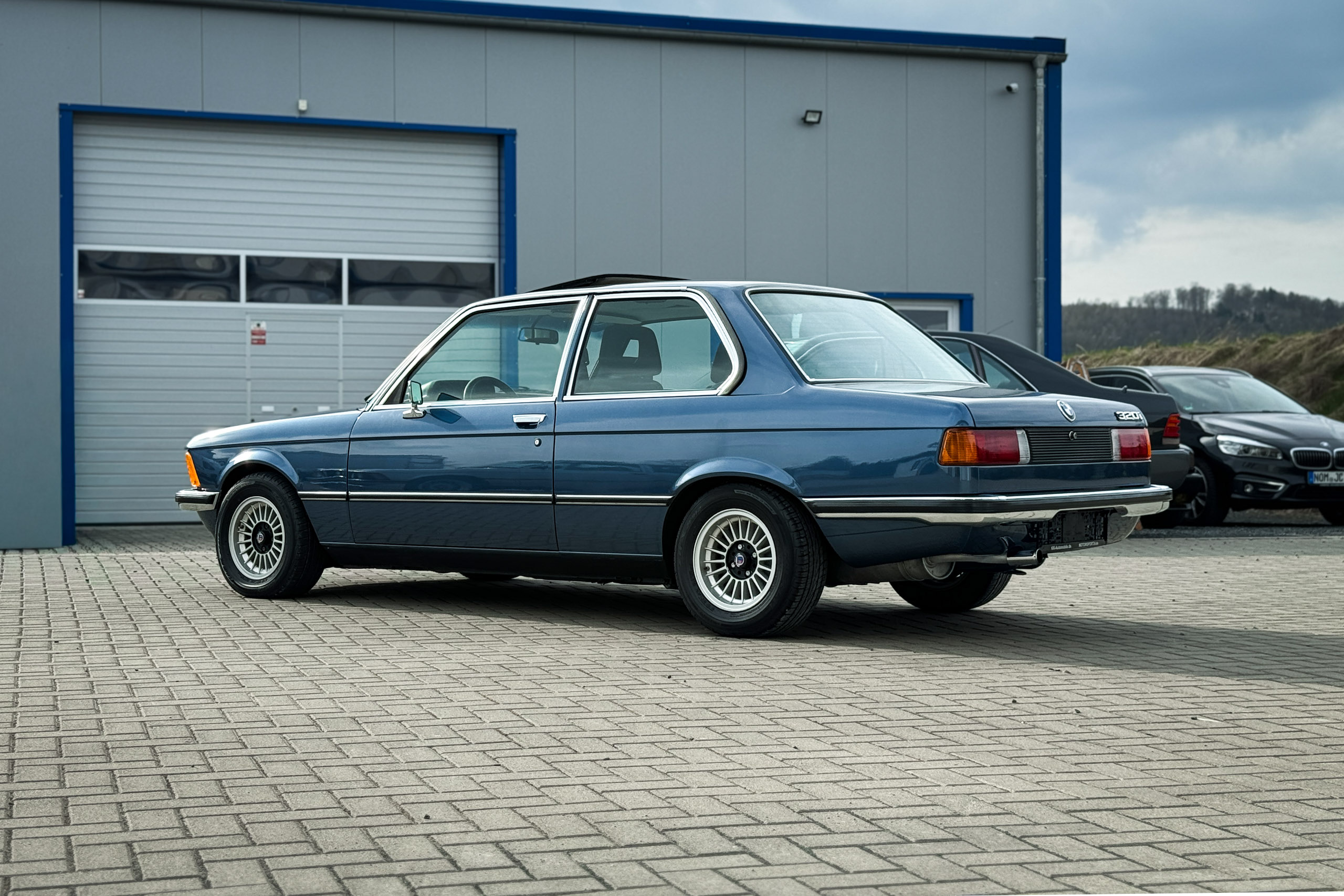
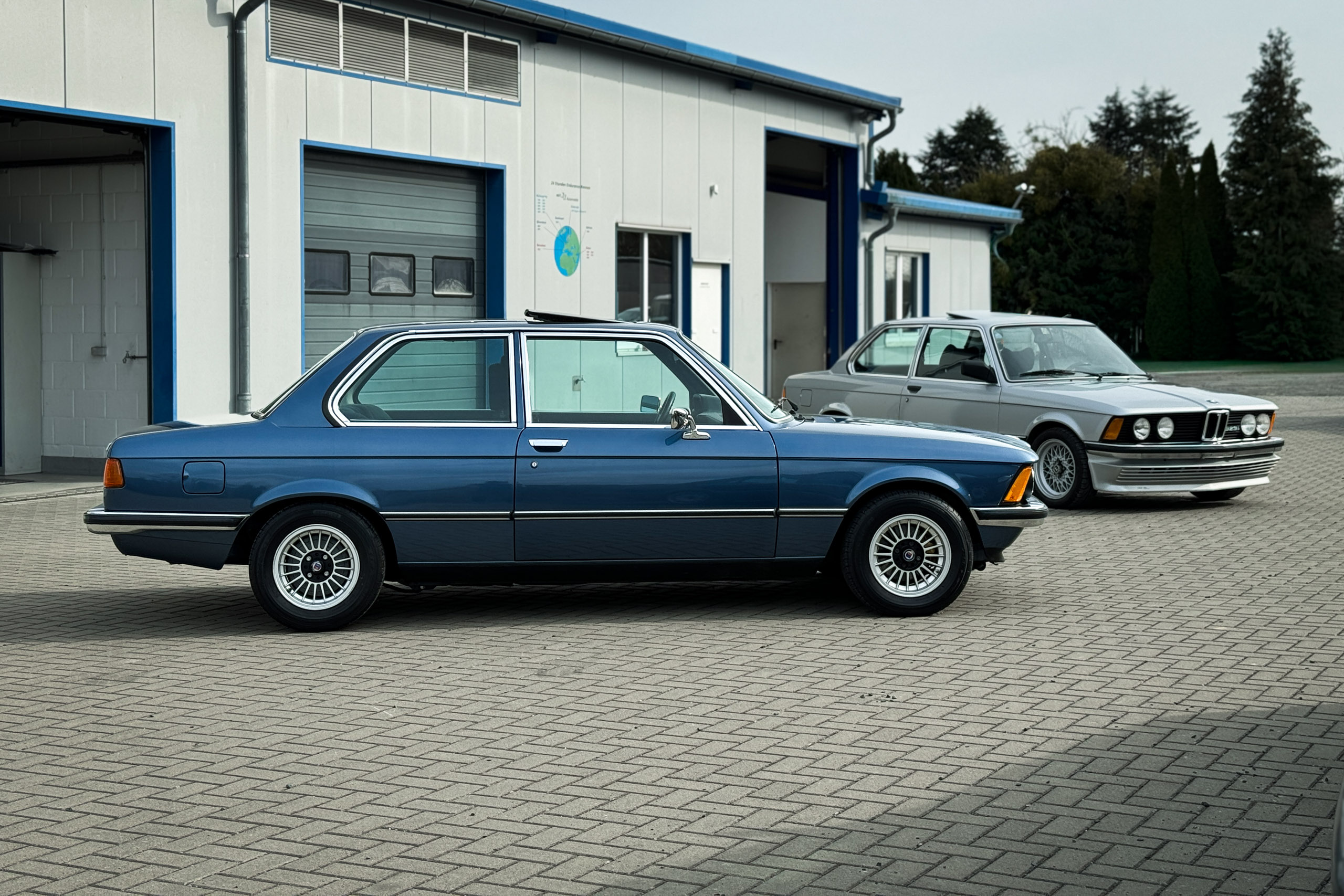
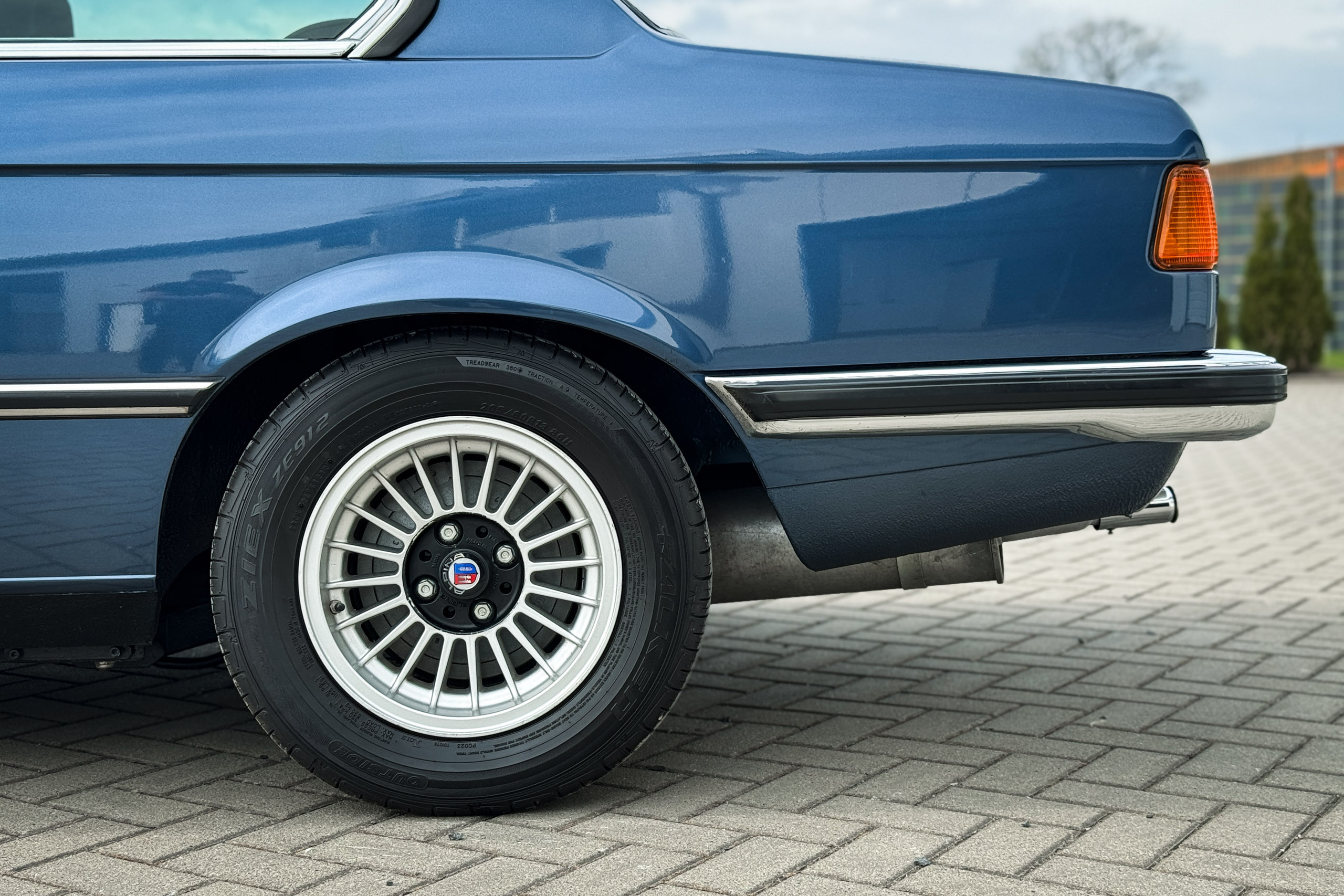
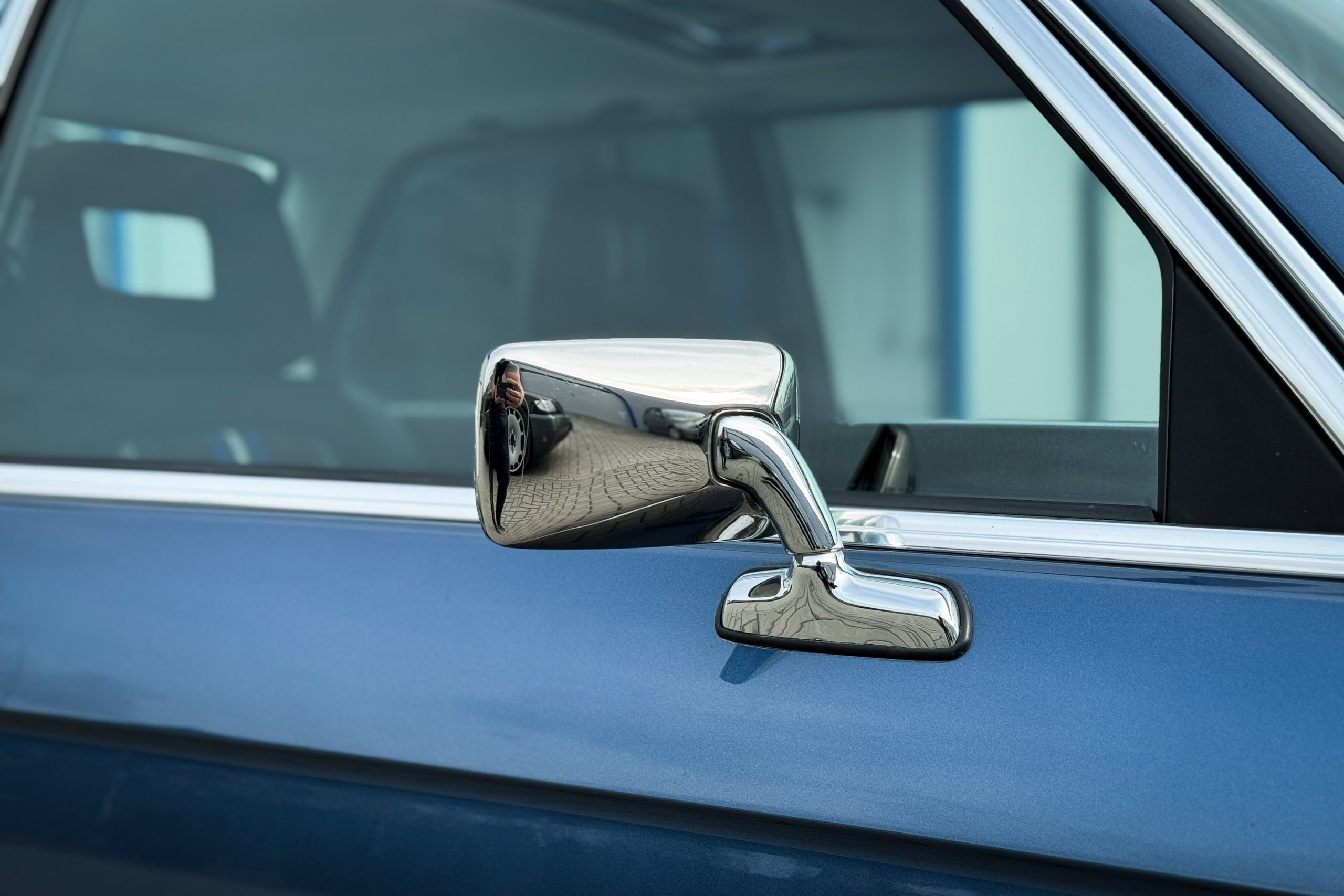
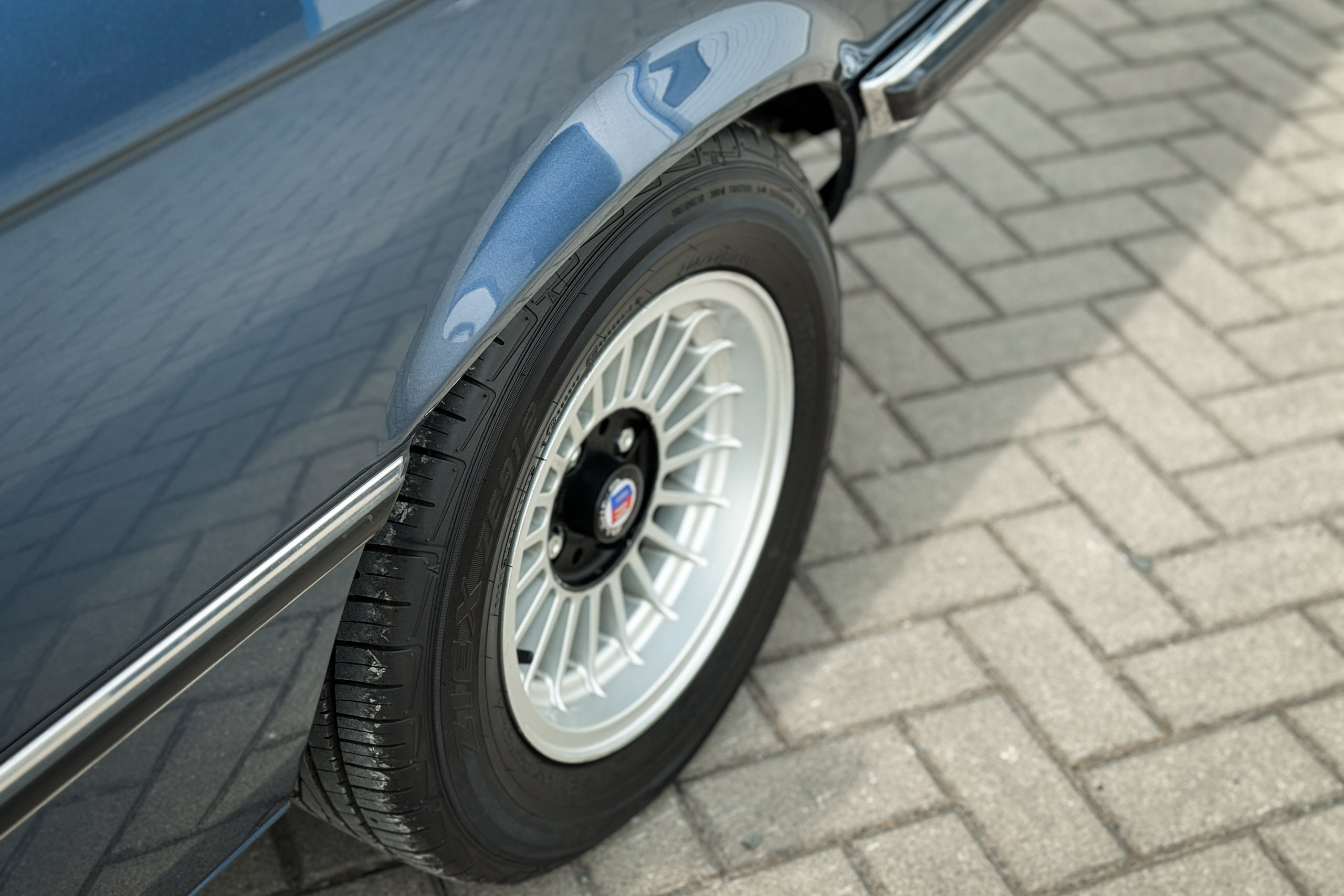
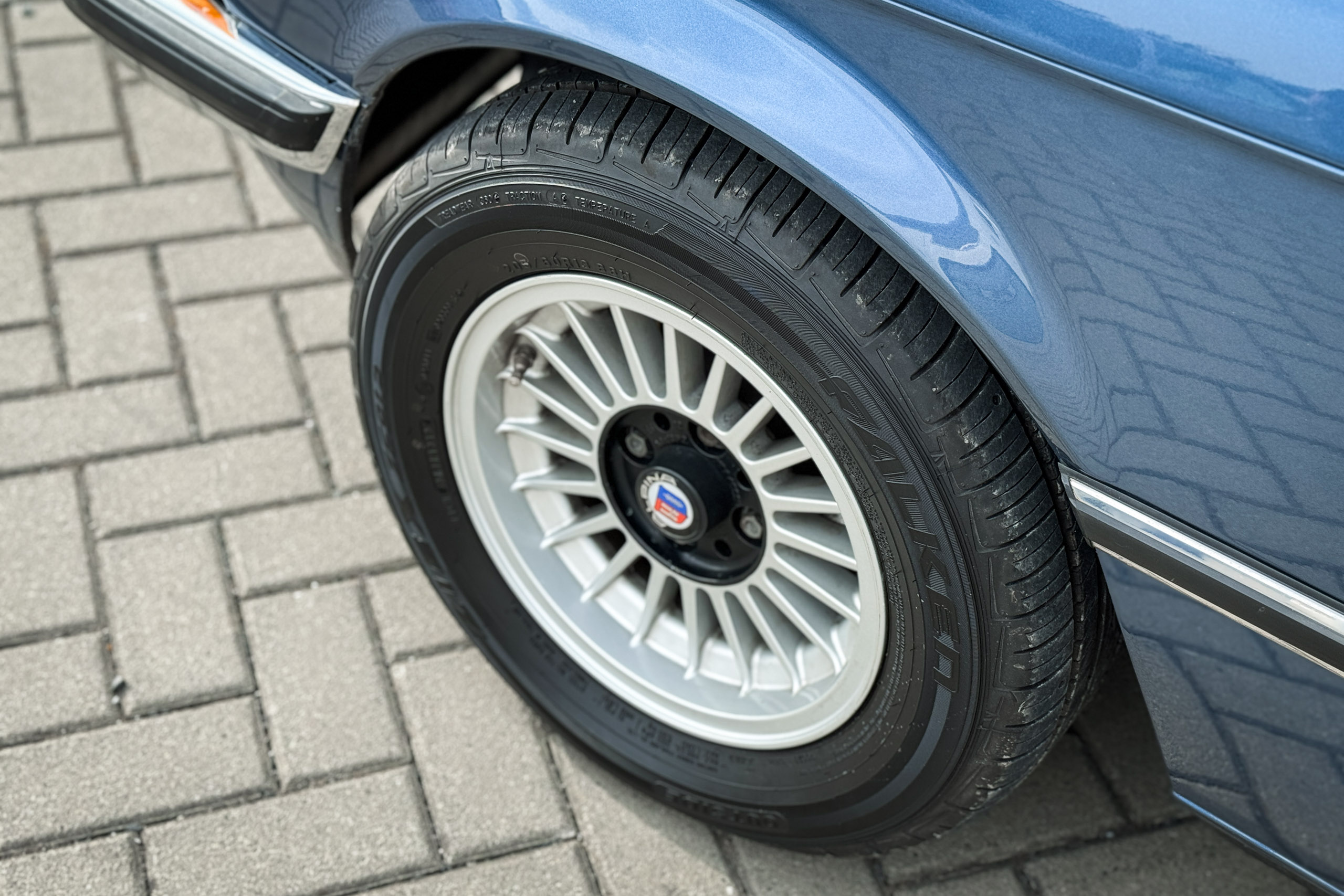
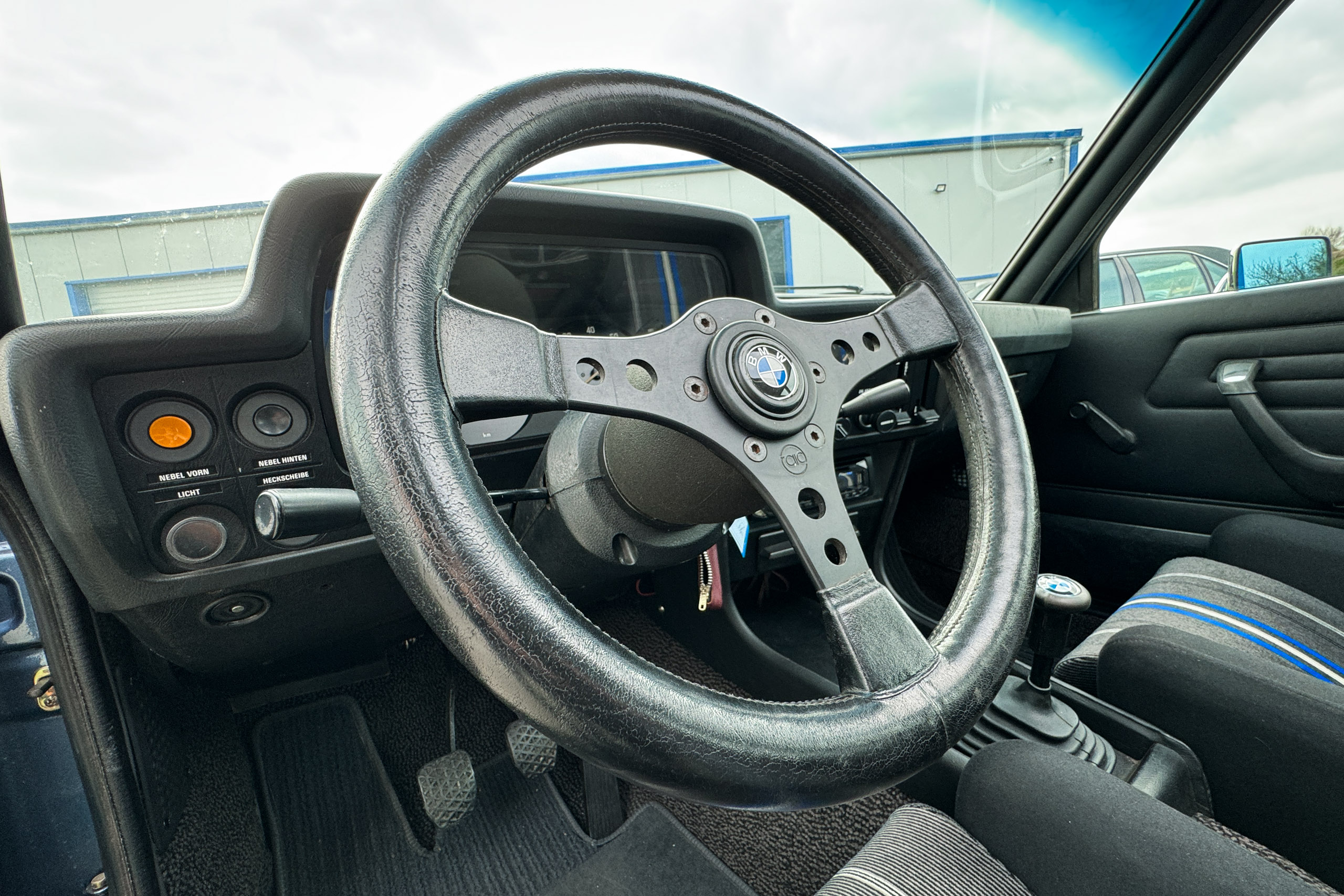
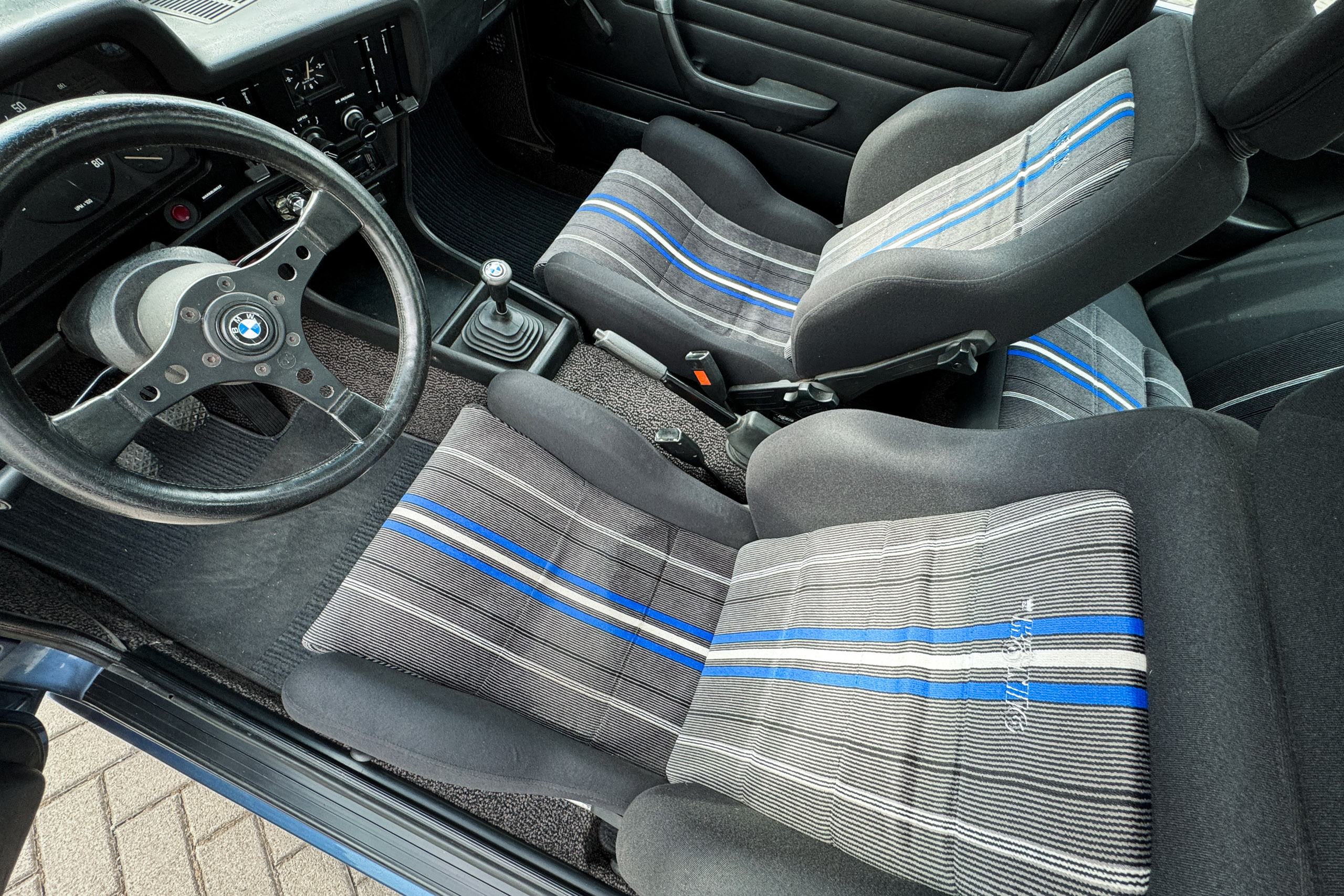
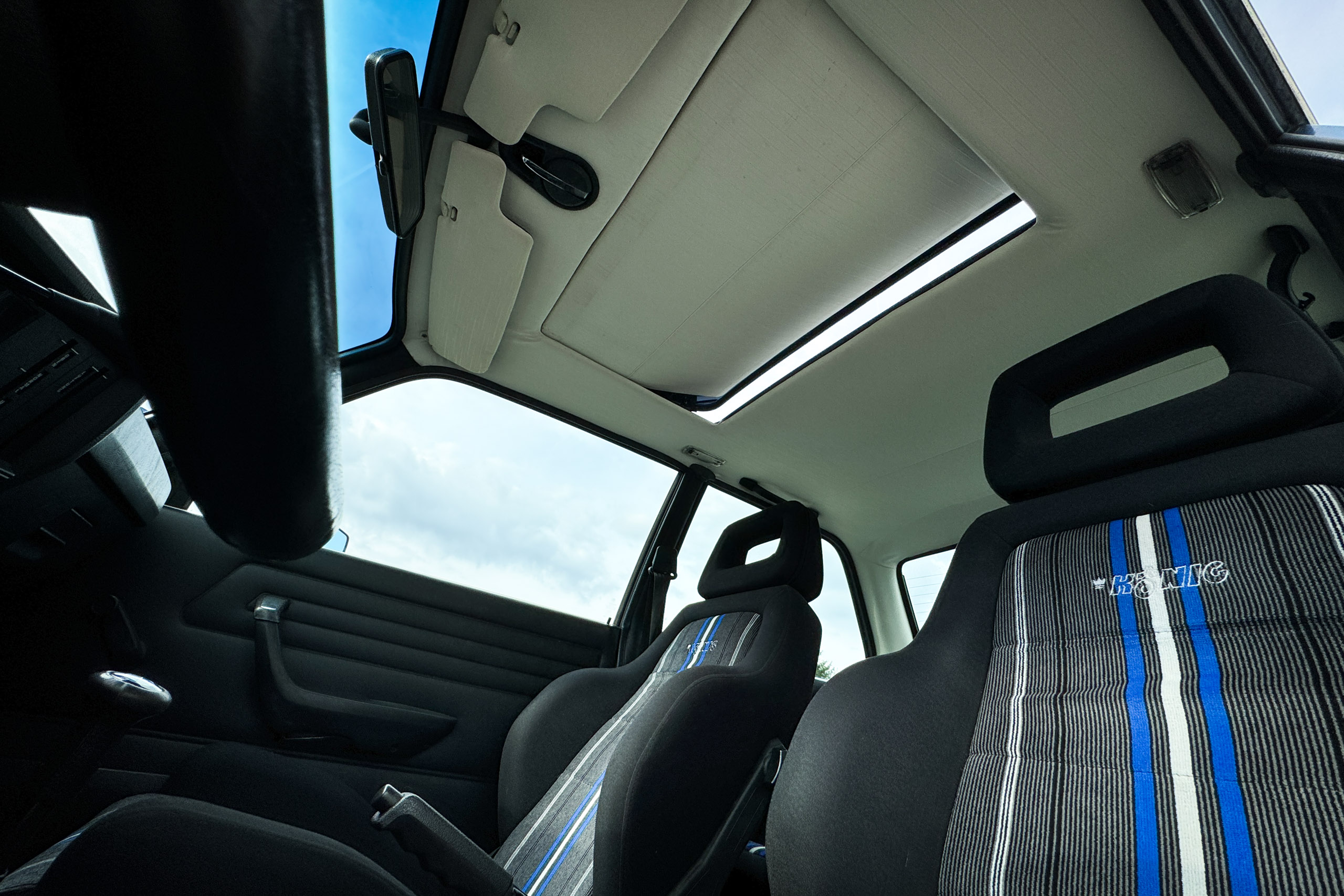
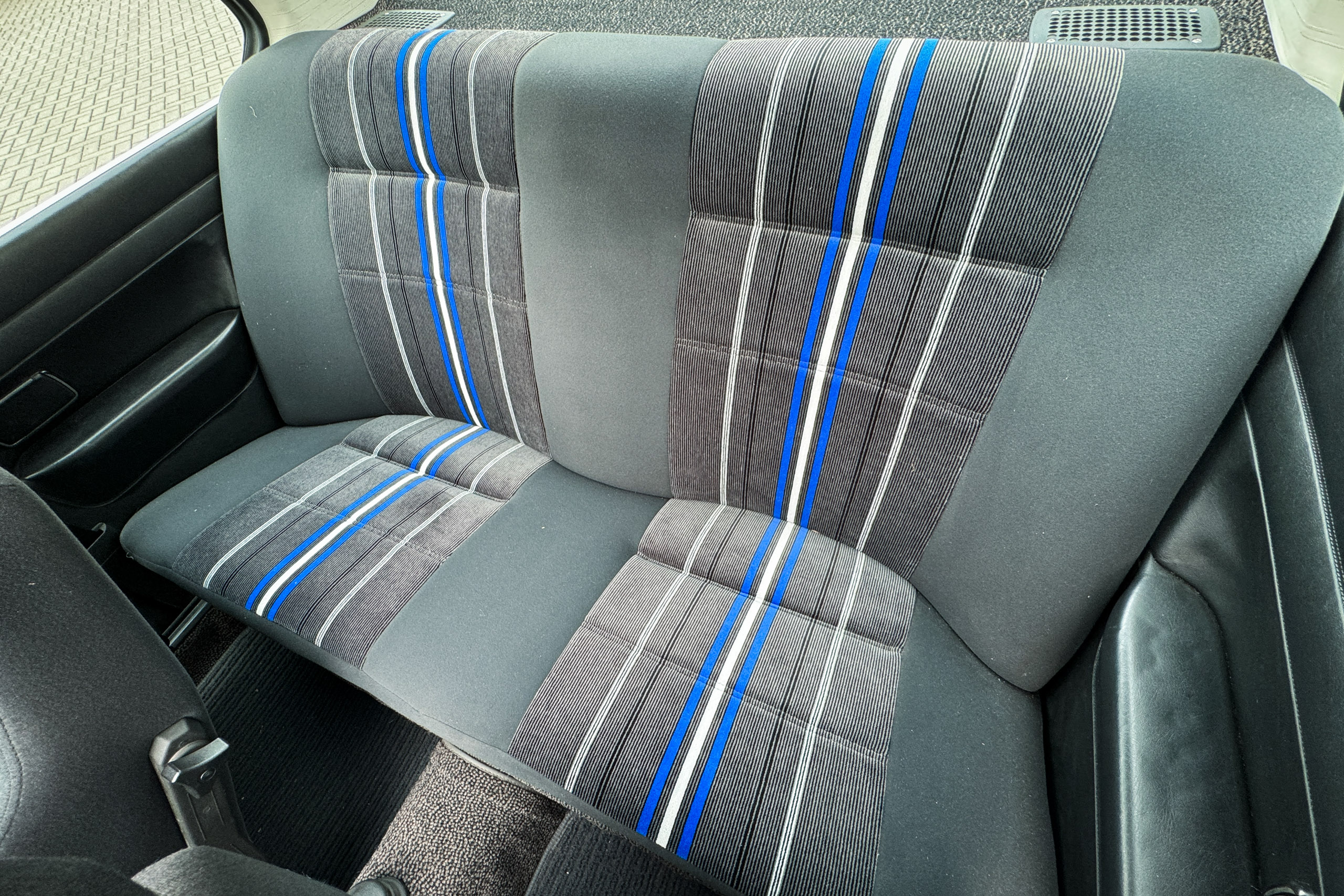
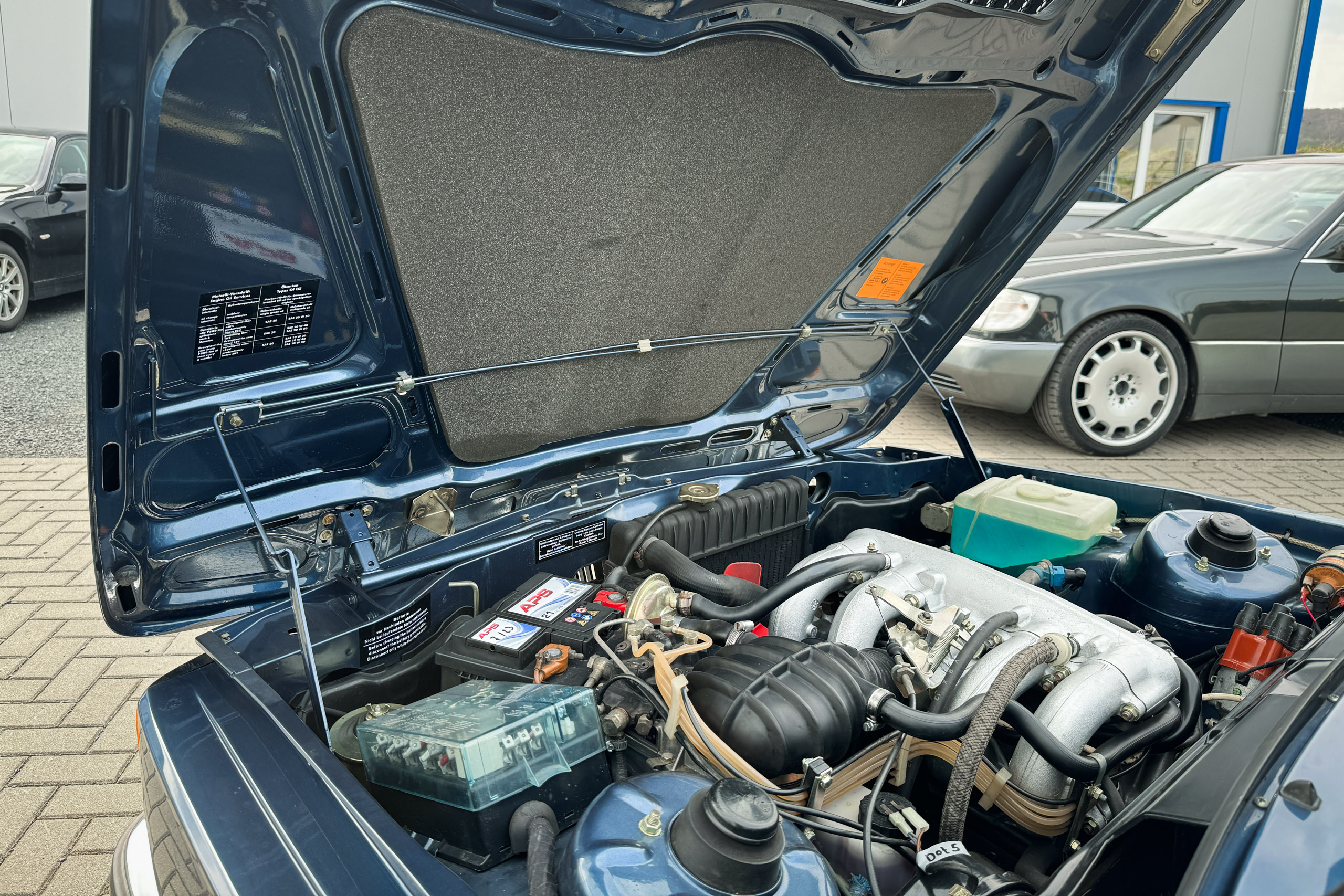
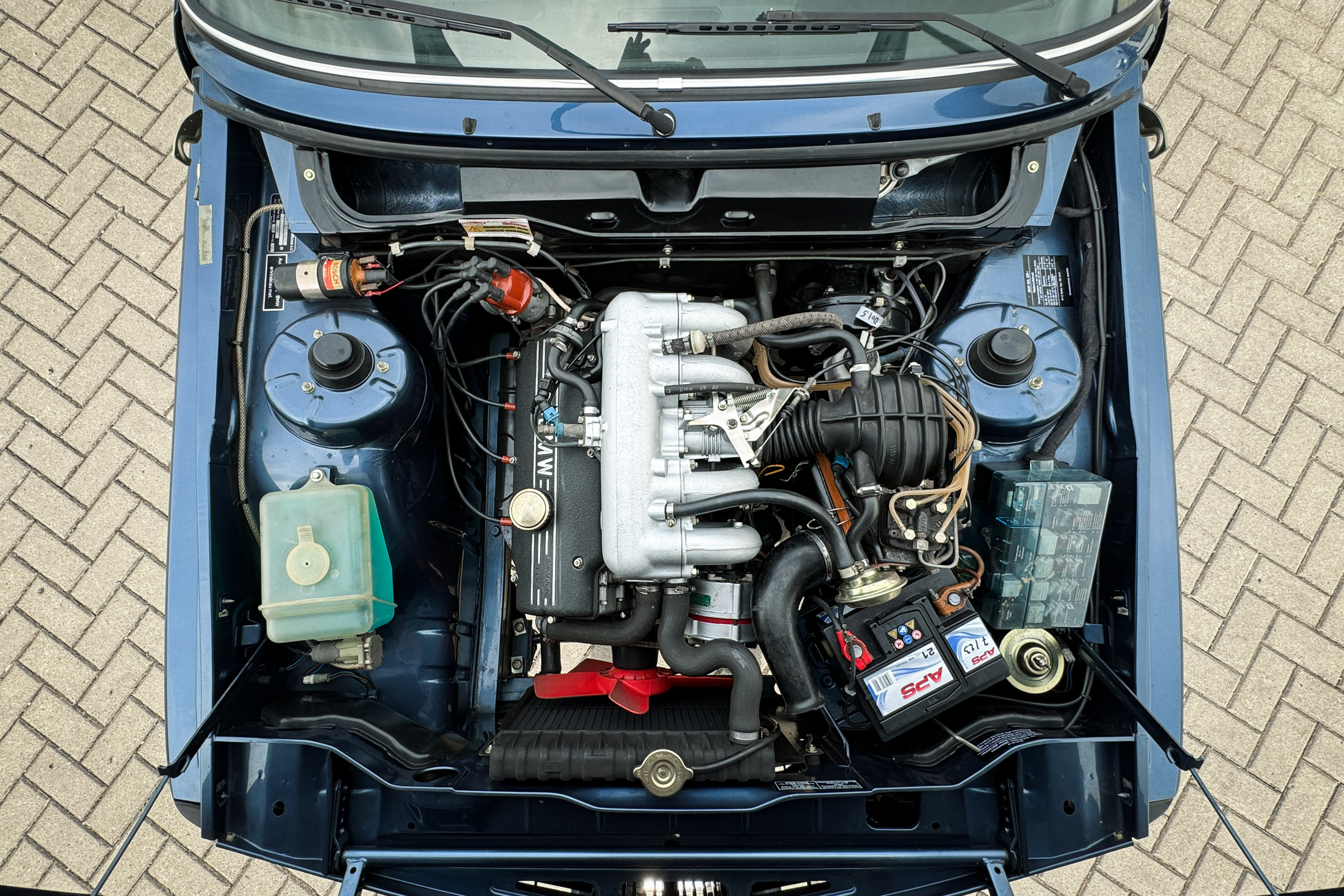
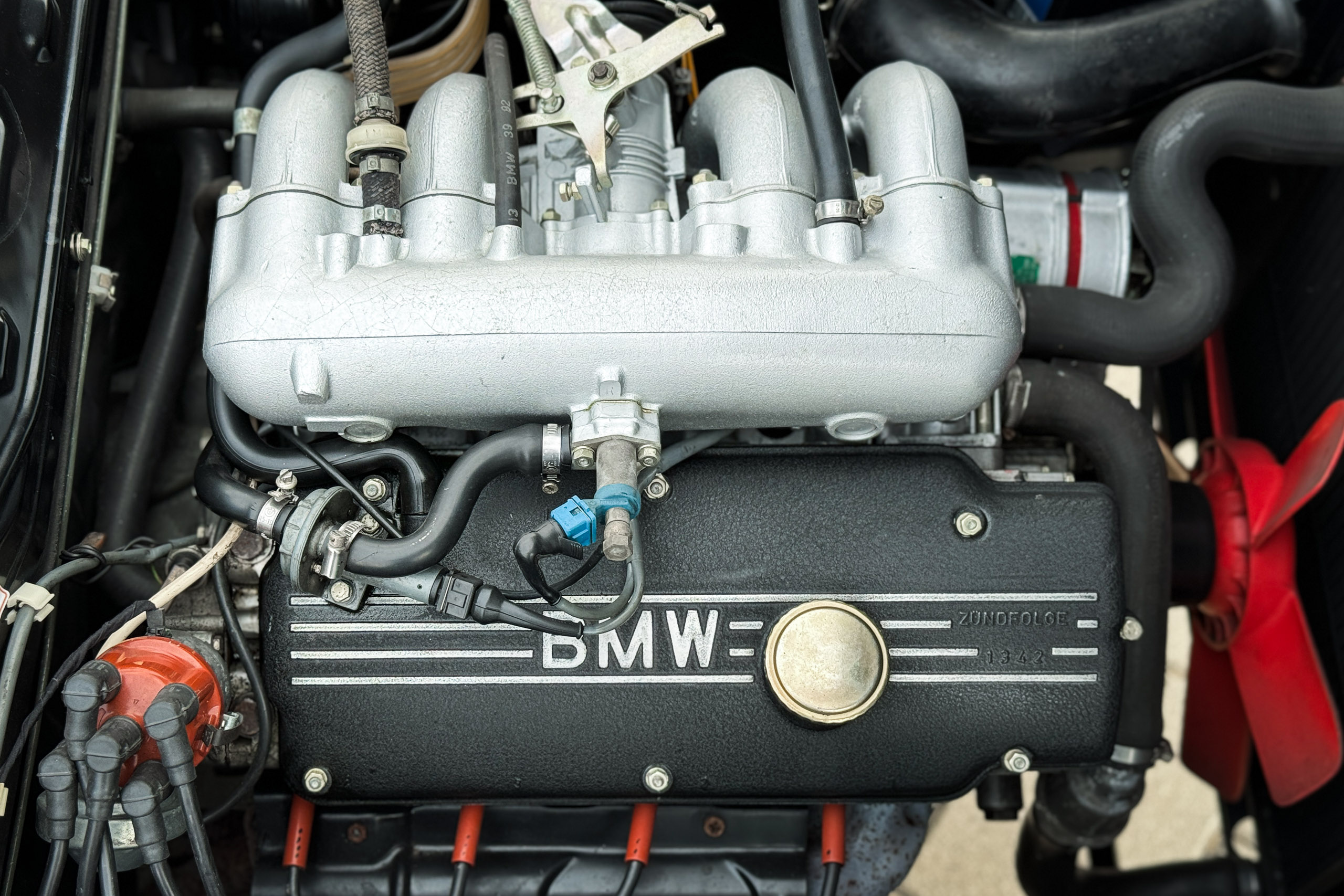
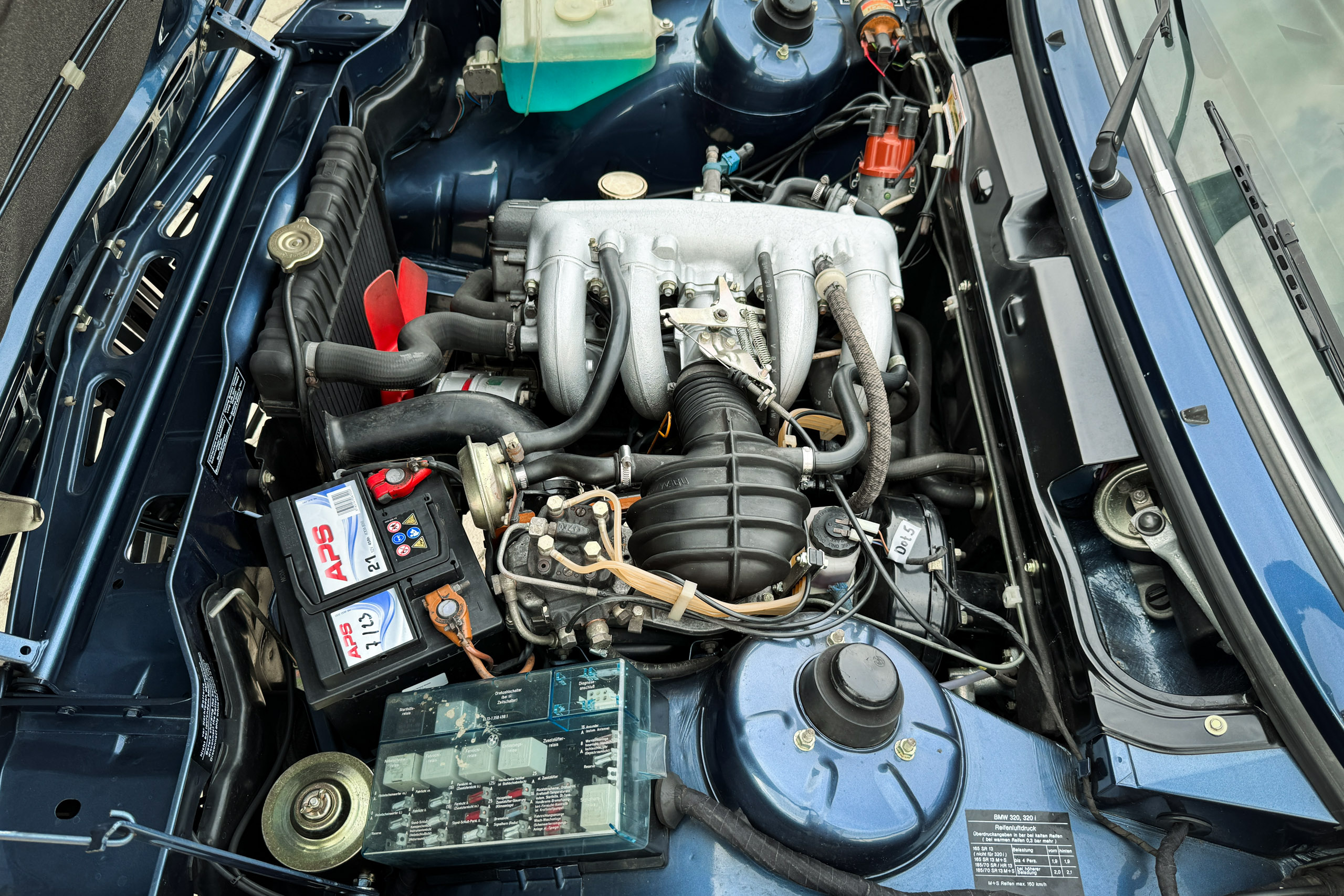
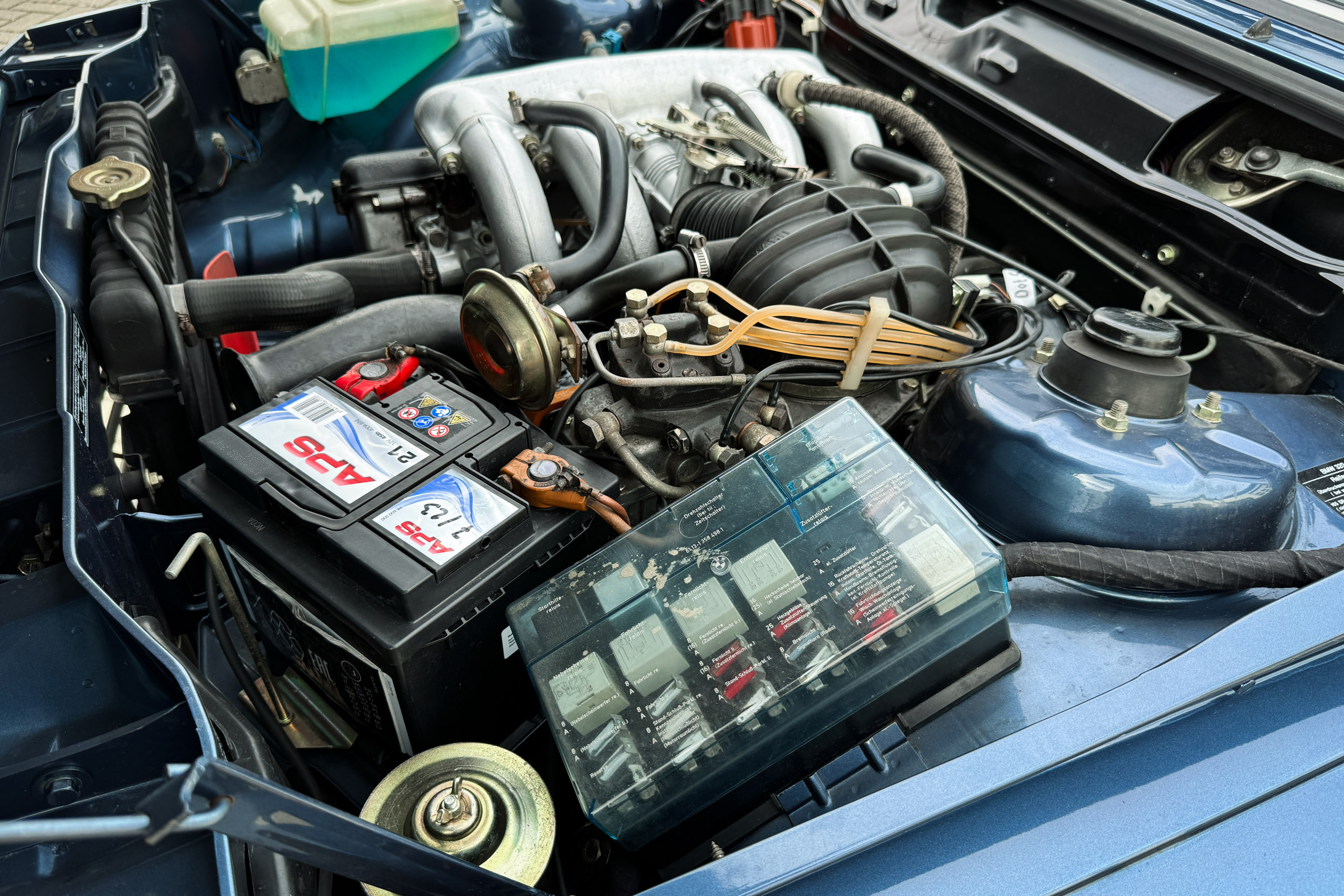
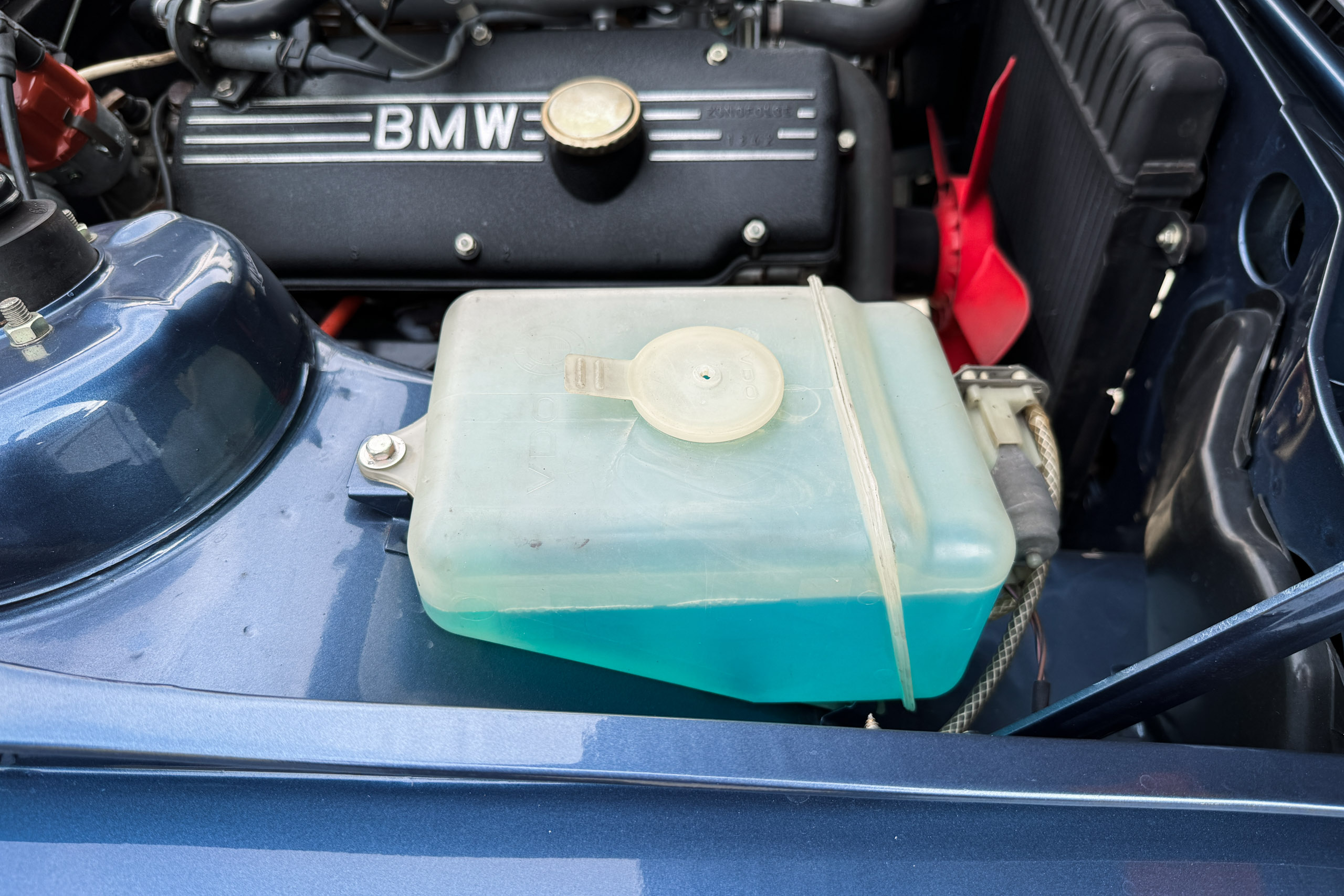
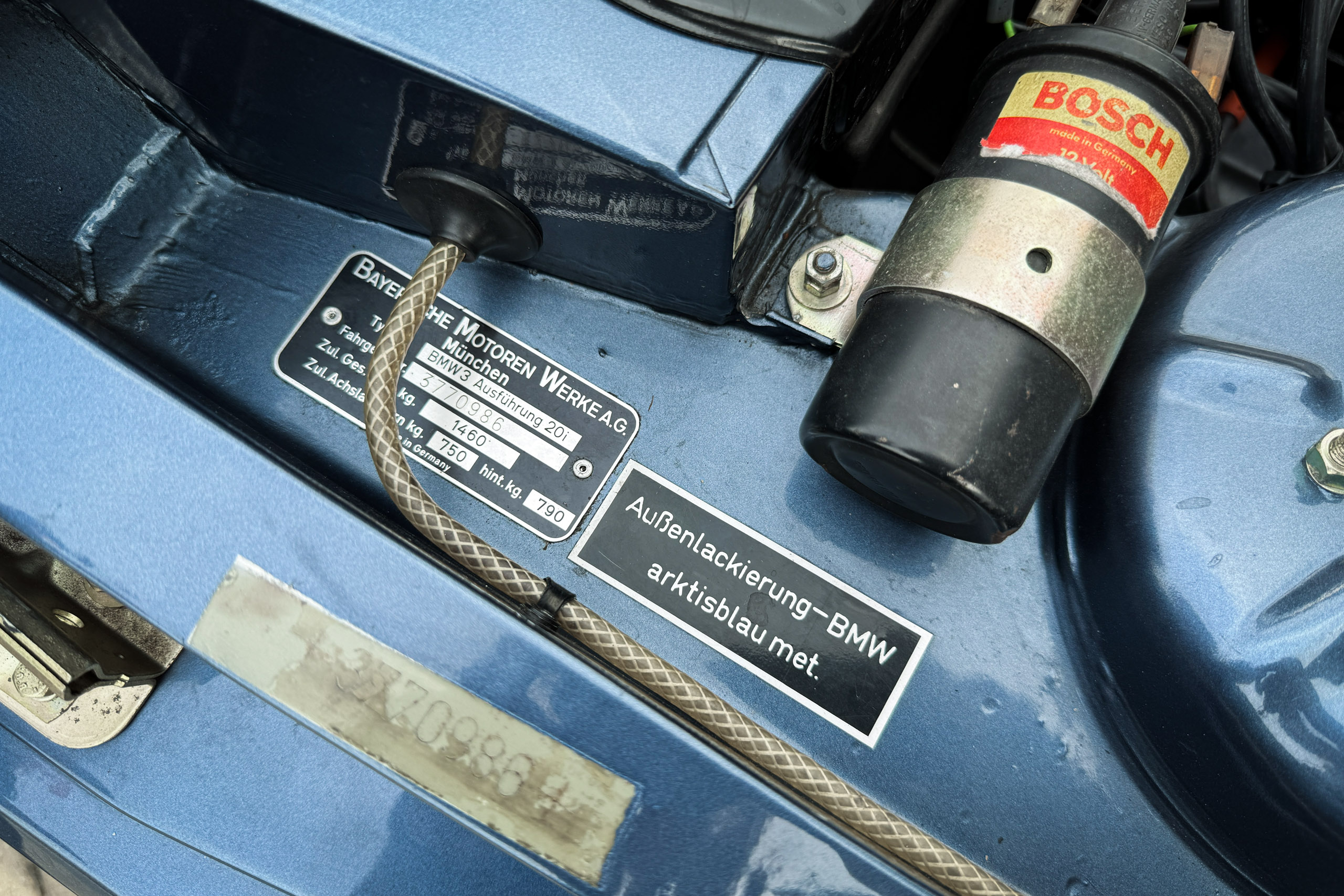
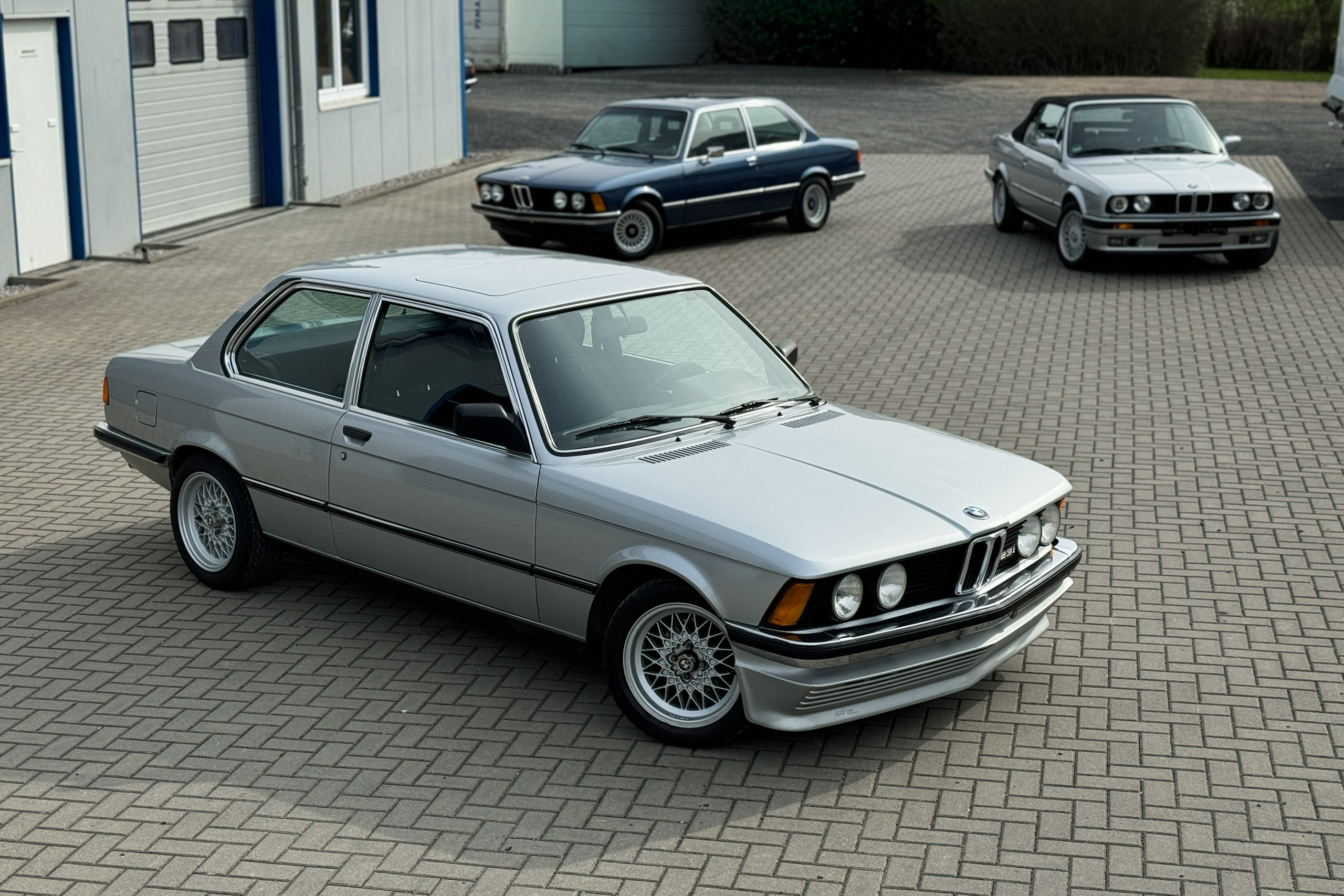
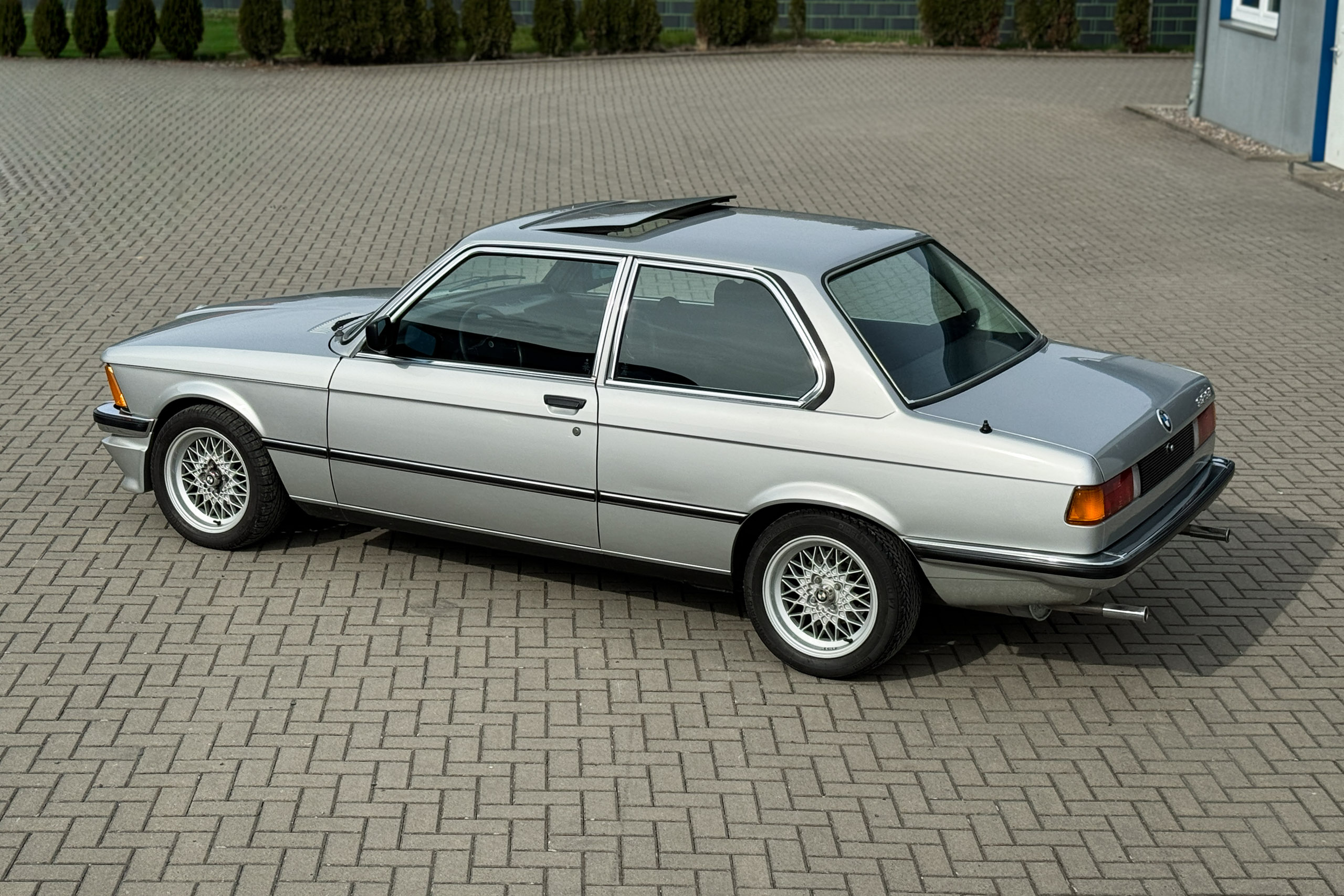
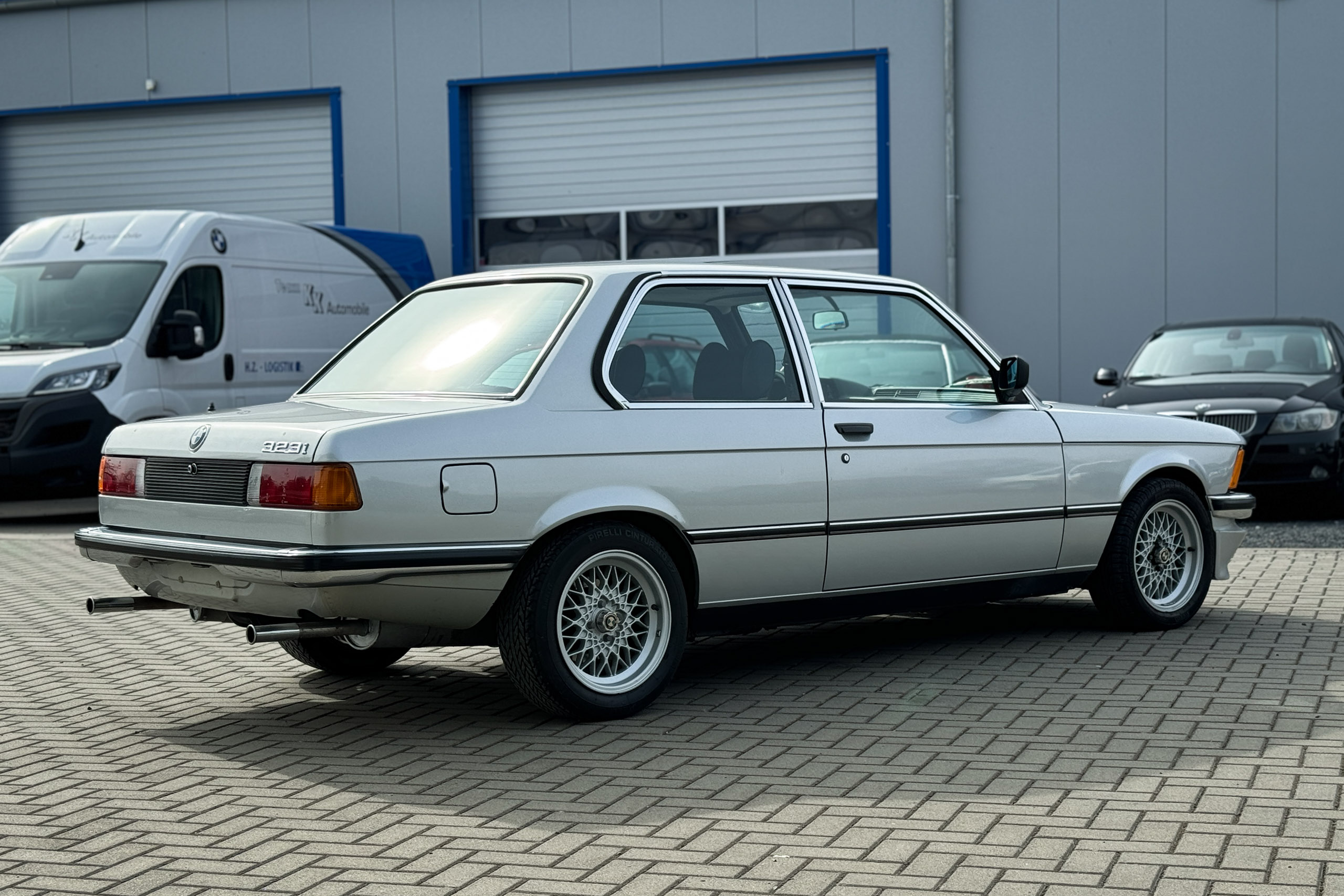
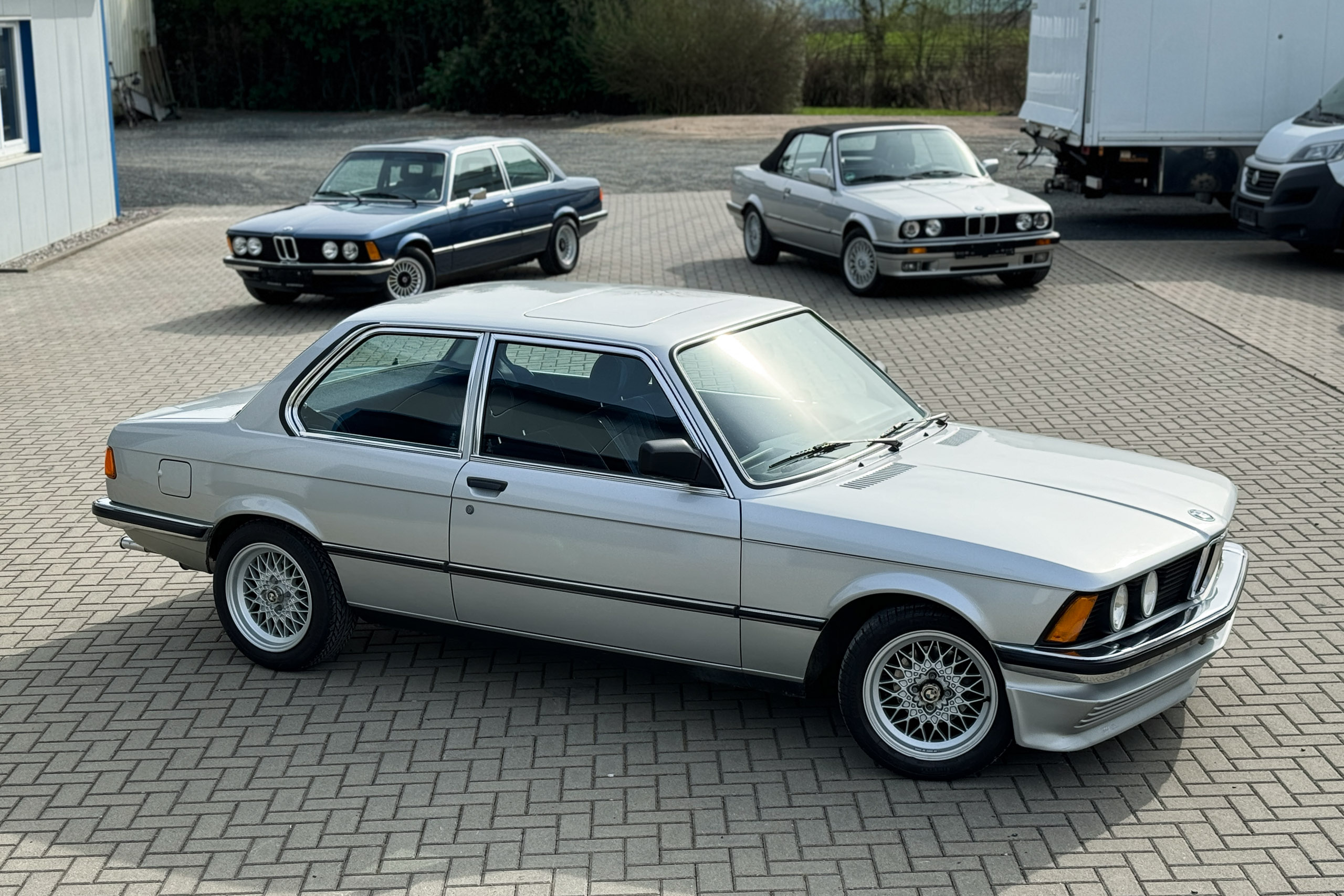
Original photographs of a BMW 320i with the four-cylinder M10 engine and Bosch K-Jetronic, finished in Arctic Blue metallic. The car runs on Alpina wheels and has aftermarket König sports seats fitted — neither available from the factory. The cover image above, by contrast, shows a 323i in Polaris Silver, the six-cylinder top model of the range.
Other BMW 3er generations
5 model lines with an E-number, from 1975 to 2013.


14 · Sources
Belege & Literatur
Transparency is part of the product. Every figure on this page is backed by a source and dyno verification. We flag conflicting values rather than smoothing them over.
- BMW Group Classic — model pages for 315, 316, 318, 318i, 320 (4- and 6-cyl.), 320i, 323i
- BMW Group — 50 years of the BMW 3 Series (production figures, design, Baur)
- BMW Group Classic — BMW 320 Turbo Group 5 "Jägermeister" (museum vehicle)
- BMW PressClub — The motorsport career of the 3 Series
- BMW Art Car Collection — Roy Lichtenstein, BMW 320i, 1977
- bmwe21.net — factory data sheets of the European models from 9/1979
- e21-board.de — club wiki, models and buying advice
- BMW 3 Series Club E21 and E30 e. V. — Baur TC1 and Alpina 3 Series
- auto motor und sport — buying advice and value trends for the E21
- AUTO BILD — BMW 3 Series (E21) inspection, 2018 TÜV survey
- Racing Sports Cars — results database for BMW 320 and 320i Turbo
- German Racing Championship (DRM) 1977 and 1978 — final standings