

01 · Overview
The model line that set the benchmark
The E46 replaced the highly successful E36 model line in 1998 and set the benchmark in the premium compact class for almost a decade. With classic rear-wheel drive, balanced weight distribution and a model range from the frugal 316i to the M3, it is still regarded as a milestone in BMW history today. Until production ended in 2007, the model line rolled off the line as Sedan, Coupé, Touring, Convertible and Compact.
Technically, the leap was greater than the design suggests: according to the factory, the body-in-white is around 70 percent stiffer in torsion than the E36’s, and around a fifth of the vehicle weight is made up of aluminium. With the 325xi and 330xi, all-wheel drive returned to the 3 Series from autumn 2000 for the first time since the 325iX.
The E46 has increasingly become a sought-after youngtimer — above all the M3 with 343 PS. Like its predecessor, it is mechanically easy to understand and parts supply is generally very good. This page places the model line in context across models, engineering, motorsport, buying and market — edited by the editorial team, with expandable technical data sheets.
02 · History
Nine years in ten steps
From the Sedan in spring 1998 to the discontinuation of the Convertible in February 2007.
- 1997 Presented in November, production start in December. The Sedan reaches dealers at the end of April 1998 — in parallel, the E36 continues as Coupé and Convertible.
- 1998 Market launch as a four-door Sedan with the 318i, 320i, 323i, 328i and the 320d diesel.
- 1999 Coupé in April and Touring in October round out the range. The 330d with 184 PS arrives in October.
- 2000 The Convertible launches in March, followed in July by the M3 with the high-revving six-cylinder S54 and 343 PS. From autumn, the 325xi and 330xi bring all-wheel drive to this model line for the first time.
- 2000 Engine change in September: the M52 six-cylinders give way to the M54 family, the 323i and 328i become the 325i and 330i.
- 2001 The M3 Convertible follows in March, and in June the Compact arrives with a body 21 centimetres shorter and its own face. Sedan and Touring receive their facelift in autumn.
- 2001 In motorsport, the M3 GTR with V8 engine wins the GT class of the American Le Mans Series — seven wins in ten races.
- 2003 The M3 CSL appears as a strictly limited lightweight Coupé: carbon roof, carbon airbox, SMG II exclusively, 360 PS. Coupé and Convertible receive their facelift.
- 2004 Andy Priaulx takes the drivers' title in the European Touring Car Championship with the 320i, BMW the manufacturers' title. The M3 GTR wins the 24 Hours of Nürburgring.
- 2005 First FIA World Touring Car Championship: Priaulx wins drivers' and manufacturers' titles with the 320i. Sedan and Touring are discontinued in February, the Coupé follows in 2006, the Convertible in February 2007.
03 · Model overview
From the 316i to the M3 CSL
Twenty-three engine variants in nine years. Power figures are factory figures, production periods refer to the respective engine, not to individual body styles.
Source: factory and literature data · verified
Technische Daten anzeigen — komplette Modellmatrix
| Modell | Motor | Hubraum | Leistung | Bauzeit |
|---|---|---|---|---|
| 316i | M43 B19 | 1.895 cm³ | 105 PS (77 kW) | 12/1998–02/2002 |
| 316i | M43 B16 | 1.596 cm³ | 105 PS (77 kW) | 04/2000–02/2005 |
| 316i | N40 B16 · N45 B16 | 1.596 cm³ | 116 PS (85 kW) | 06/2002–02/2005 |
| 316i | N42 B18 · N46 B18 | 1.796 cm³ | 116 PS (85 kW) | 02/2002–02/2005 |
| 318i | M43 B19 | 1.895 cm³ | 118 PS (87 kW) | 12/1997–09/2001 |
| 318i | N42 B20 | 1.995 cm³ | 136 PS (100 kW) | 09/2001–02/2005 |
| 318i | N42 · N46 B20 | 1.995 cm³ | 143 PS (105 kW) | 09/2001–02/2005 |
| 320i | M52 B20 | 1.991 cm³ | 150 PS (110 kW) | 03/1998–09/2000 |
| 320i | M54 B22 | 2.171 cm³ | 163 PS (120 kW) | 09/2000–02/2005 |
| 320i | M54 B22 | 2.171 cm³ | 170 PS (125 kW) | 09/2000–02/2005 |
| 323i | M52 B25 | 2.494 cm³ | 170 PS (125 kW) | 03/1998–09/2000 |
| 325i · 325xi | M54 B25 | 2.494 cm³ | 192 PS (141 kW) | 09/2000–02/2005 |
| 328i | M52 B28 | 2.793 cm³ | 193 PS (142 kW) | 02/1998–06/2000 |
| 330i · 330xi | M54 B30 | 2.979 cm³ | 231 PS (170 kW) | 06/2000–02/2005 |
| 318d | M47 D20 | 1.951 / 1.995 cm³ | 116 PS (85 kW) | 09/2001–02/2005 |
| 320d | M47 D20 | 1.951 cm³ | 129 PS (95 kW) | 02/1998–08/2001 |
| 320d | M47 D20 | 1.951 cm³ | 136 PS (100 kW) | 04/1998–09/2001 |
| 320d | M47TÜ D20 | 1.995 cm³ | 150 PS (110 kW) | 09/2001–05/2005 |
| 330d · 330xd | M57 D30 | 2.926 cm³ | 184 PS (135 kW) | 10/1999–02/2003 |
| 330d · 330xd | M57TÜ D30 | 2.993 cm³ | 204 PS (150 kW) | 03/2003–02/2005 |
| M3 Coupé | S54 B32 | 3.246 cm³ | 343 PS (252 kW) | 07/2000–05/2006 |
| M3 Convertible | S54 B32 | 3.246 cm³ | 343 PS (252 kW) | 03/2001–02/2007 |
| M3 CSL | S54 B32 HP | 3.246 cm³ | 360 PS (265 kW) | 05/2003–12/2003 |
04 · Body variants
Body variants
Sedan (E46/4)
Four-door with notchback, April 1998 to February 2005. The best-selling core model and the official starting point of the model line.
Coupé (E46/2)
Two-door, April 1999 to May 2006. Flatter windscreen, longer doors and a distinct, sportier line — it shares no body panels with the Sedan.
Touring (E46/3)
Five-door Touring, October 1999 to May 2005. The dynamic lifestyle Touring with a separately opening tailgate window for quick loading.
Convertible (E46/2C)
Open two-door, March 2000 to February 2007. A classic four-seater with a soft top that, as the longest-running model, brought the E46 era to a close.
Compact (E46/5)
Three-door hatchback, June 2001 to December 2004. Body 21 centimetres shorter with a completely distinct face featuring prominent round headlights.
05 · Engines
Four engine families, two fuel types
The E46 covers a wider spread than any 3 Series generation before it: from the 105-PS four-cylinder to the CSL’s 360-PS high-revving engine, from the frugal 318d to the 204-PS diesel with more torque than the M3. Exact power figures for each variant are in the model overview.
M43 · N40 · N42 · N46 — the four-cylinder petrol engines verified
The M43 from the E36 era carries the model line until 2001, after which the Valvetronic engines N40, N42, N45 and N46 with fully variable valve timing take over. The new engines are more economical and refined, but considered more demanding to maintain — the Valvetronic eccentric shaft and timing chain are the typical issues.
M52TU and M54 — the six-cylinder petrol engines verified
The M52TU with aluminium crankcase and double VANOS runs until September 2000, followed by the M54 with larger displacement and electronic throttle. The M54B30 in the 330i, with 231 PS and 300 Nm, is the regular flagship of the series and is considered the most mature engine of the model line.
M47 and M57 — the diesels verified
The M47 in the 318d and 320d was one of BMW's first four-cylinder common-rail diesels and made the 3 Series suitable for high-mileage drivers for the first time. The six-cylinder M57 in the 330d initially produced 184 PS, and from March 2003 as the M57TÜ, 204 PS — with 410 Nm it clearly exceeded the M3's torque.
S54 — the high-revving six-cylinder of the M3 verified
3,246 cm³, 343 PS at 7,900 rpm, an 8,000 rpm rev limit, individual throttle bodies and double VANOS. In the CSL, the same block with carbon airbox and sharper exhaust camshaft delivers 360 PS. The S54 is the last naturally aspirated straight-six of an M3 — and the engine that carries the model line today.
P60B40 — the M3 GTR's V8 verified
For racing, BMW built a 4.0-litre V8 with a flat-plane crankshaft that produced around 444 PS in race trim. It was used exclusively in the M3 GTR and is the first V8 in M3 history.
06 · Weak points
Reliability & weak points
- Rear subframe and floor panel: the subframe is bolted to the double-layer floor panel at four points. Up to spring 2000, the weld-in nuts were only triple-anchored and can pull through; even later vehicles develop cracks in the panel. This is the model line’s best-known weak point and the most expensive repair.
- Plastic cooling system: expansion tank, thermostat housing and the water pump impeller become brittle and fail — usually without warning. The result is overheating up to cylinder head damage. A preventive full replacement is considered standard.
- VANOS: leaking solenoid valves and worn sealing rings cause the oil pressure in the adjustment unit to collapse. Symptoms are a torque dip at low revs, rough idle and rattling.
- Crankcase ventilation on the M54: the oil separator clogs with oil sludge, and condensate freezes in winter. The rising crankcase pressure pushes oil past the seals and disrupts the VANOS oil supply — VANOS faults often originate here.
- DISA valve: the variable intake manifold’s switchover flap wears loose. The first sign is rattling from the intake manifold; if the flap breaks, parts can enter the combustion chamber.
- S54 connecting rod bearing shells in the M3: BMW responded with two service actions for engines up to May 2003. A preventive bearing shell replacement is common practice in the community, even for later engines.
- SMG hydraulics in the M3: the pump and accumulator fail, sometimes as early as 50,000 kilometres. If the pump runs continuously, the accumulator is worn out — the pump then fails as a consequential fault.
- Electrics and interior: window regulators typically fail between 100,000 and 150,000 kilometres, door handles break, and xenon ballasts and individual ignition coils give out.
07 · Engineering
Chassis, drivetrain, brakes, electronics
Fahrwerk
Body stiffness and materials
Bremsen
Allradantrieb
Transmission and electronics
Technical data — final drive ratios & gearboxes
- Transmission 316i and 318i
- five-speed manual or Steptronic with four or five speeds
- Transmission 320i
- five-speed, from 2003 partly six-speed
- Transmission 323i, 325i and 328i
- five-speed manual
- Transmission 330i
- five-speed until March 2003, then six-speed
- Transmission 318d and 320d
- five-speed, six-speed from 2003 with the M47TÜ
- Transmission 330d
- five-speed at 184 PS, six-speed at 204 PS
- Transmission M3 and M3 CSL
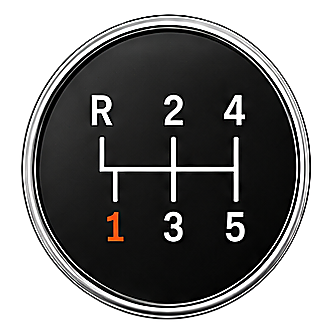
- six-speed manual or SMG II with identical gear ratios
- Gear ratios M3
- 4.227 / 2.528 / 1.669 / 1.226 / 1.000 / 0.828, reverse 3.746
- Final drive ratio 316i and 318i
- 3.23 or 3.38 with manual, 4.44 with automatic
- Final drive ratio 320i
- 3.45 with manual, 3.91 with automatic
- Final drive ratio 323i and 328i
- 2.93 with manual, 3.46 with automatic
- Final drive ratio 325i
- 3.15 with manual, 3.46 with automatic, 325xi 3.23
- Final drive ratio 330i
- 2.93 with manual, 3.38 with automatic, 330xi 3.07
- Final drive ratio 318d and 320d
- 2.35 or 2.47 with five-speed, 2.56 or 2.79 with six-speed, 3.07 with automatic
- Final drive ratio 330d
- 2.28 or 2.47, 2.81 with automatic, 330xd 2.35
- Final drive ratio M3
- 3.62 with variable M limited-slip differential
- Competition package
- no changes to engine or transmission, but a quicker steering ratio of 14.5:1 instead of 15.4:1, larger front brake discs and rear callipers with larger pistons.
08 · Top models
Top models
Five variants above the standard series. Each gets its own subpage; here are the short profiles.
330d and 330Cd
From March 2003, the torque monster: 204 PS and 410 Nm from the M57TÜ — more torque than the M3's 365 Nm. Available as Sedan, Touring, Coupé and Convertible.
To the sub-page →
330i and 330Ci
The regular flagship of the series from 2000: 231 PS and 300 Nm from the M54B30. From March 2003 with a six-speed gearbox, the technically most mature configuration in the model line.
To the sub-page →
M3 Coupé and Convertible
343 PS from 3.2 litres at 7,900 rpm, double VANOS, individual throttle bodies. The Coupé ran until May 2006, the Convertible until February 2007 — it ended the model line. From December 2004, a Competition package was available, sold in the UK as the M3 CS: Coupé only, with no power increase but 19-inch wheels, larger front brake discs and the quicker 14.5:1 steering ratio.
To the sub-page →
M3 CSL
Coupé Sport Lightweight, May to December 2003, 1,383 units. Carbon roof, carbon airbox, 360 PS, 1,385 kilograms, SMG II exclusively. Nürburgring Nordschleife in 7:50 — the sharpest production car of its time from Munich.
To the sub-page →
M3 GTR
Homologation vehicle with the 4.0-litre V8 P60B40, built to qualify for entry in the American Le Mans Series. Ten vehicles at €250,000 each; how many of them actually became road cars remains disputed to this day.
To the sub-page →
09 · M & special editions
M models, factory special editions and Alpina
With the E46, the M3 is for the first time since the E30 once again a car in its own right rather than just a more powerful Coupé: its own fenders, its own track widths, its own axle. The S54 produces 343 PS at 7,900 rpm. As a crowning achievement, the M3 CSL followed in 2003 with 1,383 units — carbon roof, carbon airbox, thinner rear window glass, 1,385 kilograms and 360 PS, exclusively with SMG II.
Alongside this, there were two factory special editions below the M3. The 330i ZHP Performance Package was intended exclusively for North America: 238 PS, rev limit raised from 6,500 to 6,800 rpm, close-ratio six-speed gearbox, shorter final drive, M sport suspension and M Technic II add-on parts. Around 8,600 units were built between 2003 and 2006. The 330Ci Clubsport, on the other hand, was a special edition for the UK, announced in May 2002: unchanged 231 PS, but with sport suspension, M rear spoiler, 18-inch wheels and 20 kilograms less sound insulation — according to BMW, explicitly to enhance the engine sound, not to reduce weight.
Alpina built the B3 3.3 on the E46 platform with 280 PS from 3.3 litres (1999 to 2002), and from 2002 the B3 S with 3,346 cm³ and 305 PS. The B3 S Coupé reached 271 km/h, while the Sedan, Touring and Convertible fell just short of that. Both were available as Coupé, Convertible, Sedan and Touring, some with all-wheel drive.
10 · Motorsport
A V8, two Nürburgring overall wins and the first World Touring Car Champion
The E46 is the most successful 3 Series generation in touring car racing — and the only one whose M3 received a V8. For the American Le Mans Series, BMW built the M3 GTR in 2001 with the 4.0-litre V8 P60B40 and around 444 PS. The result: seven wins in ten races, the last six in succession, plus the GT class drivers’ title for Jörg Müller as well as team and manufacturers’ titles. The car was entered as ‘Team BMW Motorsport’, run operationally by Schnitzer Motorsport, and supported in the US by BMW Team PTG.
The success had repercussions. The regulations merely required that the road version be offered on two continents within twelve months — ten vehicles counted as a series. BMW fulfilled this with ten V8 road cars at €250,000 each, while Porsche built the 911 GT3-R on a genuine production car. The competition subsequently pushed through a regulation change: from 2002, at least 100 vehicles and 1,000 engines were required. BMW considered this economically unviable and withdrew from the US after one season. How many of the ten cars actually exist as road vehicles remains unclear to this day — BMW sources cite both ten and six.
On the Nordschleife, the same car took two overall wins at the 24 Hours of Nürburgring: in 2004 with Dirk Müller, Jörg Müller and Hans-Joachim Stuck, and in 2005 with Pedro Lamy, Duncan Huisman, Andy Priaulx and Boris Said. Both times, the team secured a one-two finish.
But the longest success story was written by the humble 320i. Peter Kox won the Super Production class of the European championship in 2001, followed by the ETCC manufacturers’ title in 2003, and in 2004 Andy Priaulx won the drivers’ title with BMW taking the manufacturers’ title. And in 2005, in the first year of the revived World Touring Car Championship, Priaulx won both world titles with the 320i. After that, it was over: the WTCC titles in 2006 and 2007 were won by Priaulx already with the successor, the 320si based on the E90 — they no longer belong to the E46.
Seven wins in ten races, two Nürburgring overall victories and the first World Touring Car Championship title of the new era — no 3 Series generation was more successful in racing.
11 · Buying guide
What matters: look underneath the car first, then everything else
With the E46, it's not the mileage that matters but the rear subframe mounting. A vehicle that can't be inspected from below is not a purchase candidate — everything else can be repaired, but cracked floor panels cost four figures.
Rear subframe mounting: check all four points and the wheel arch seams for cracks, dents and split seam sealant — on a lift, wheels off
Rear wheel arches, inside and out; more pronounced on pre-facelift cars
Sills and jacking points
Türunterkanten
Bonnet leading edge and the area around the kidney grilles
Sunroof frame and its water drains
Kofferraumdeckelkante
Ask for invoices for the water pump, thermostat and expansion tank with date and mileage — if these are missing on a six-cylinder past 150,000 kilometres, factor in the replacement straight away. Start the car cold: rattling, rough idle and jerking in the first few minutes point to VANOS, rattling from the intake manifold between 2,000 and 3,500 rpm points to the DISA valve. Remove the oil cap with the engine running; strong vacuum and oil mist indicate a blocked crankcase ventilation system. On the M3, ask for proof of the connecting rod bearing replacement, otherwise budget €1,500 to €2,500; on the SMG, the hydraulic pump must run briefly on start-up and must not keep cycling continuously. Fresh underbody protection at the axle mounts is a cause for suspicion, not a mark of quality.
12 · The competition
What the E46 had to compete with
Audi A4 (B5 facelift, B6 from 2000)
The most direct volume rival. Better interior and genuine quattro all-wheel drive, plus a broader and earlier-maturing TDI range. Worse dynamics: front-heavy weight distribution instead of the E46's balanced axle load distribution.
Mercedes-Benz C-Class (W202, W203 from 2000)
Better long-distance comfort, seats and diesel refinement, with the broadest body range including a sport coupé. Worse handling; early W203s suffered from electronics and SBC issues.
Alfa Romeo 156
1998 Car of the Year, unbeatable in design, steering feel and the sound of its V6 and JTD engines. Worse build quality, electrics, corrosion protection and resale value — and, with front-wheel drive, a different concept altogether.
Volvo S60
From 2000, the safety-focused counter-design with very good seats and powerful turbo five-cylinders. Worse chassis and with noticeable driveline influence in the steering.
Lexus IS (XE10)
The Japanese rear-wheel-drive rival with excellent build quality and smooth-running six-cylinders. Worse in terms of space and tuning; the IS 200 lacked power at 155 PS, and the range lacked a Touring and a competitive diesel.
13 · Galerie
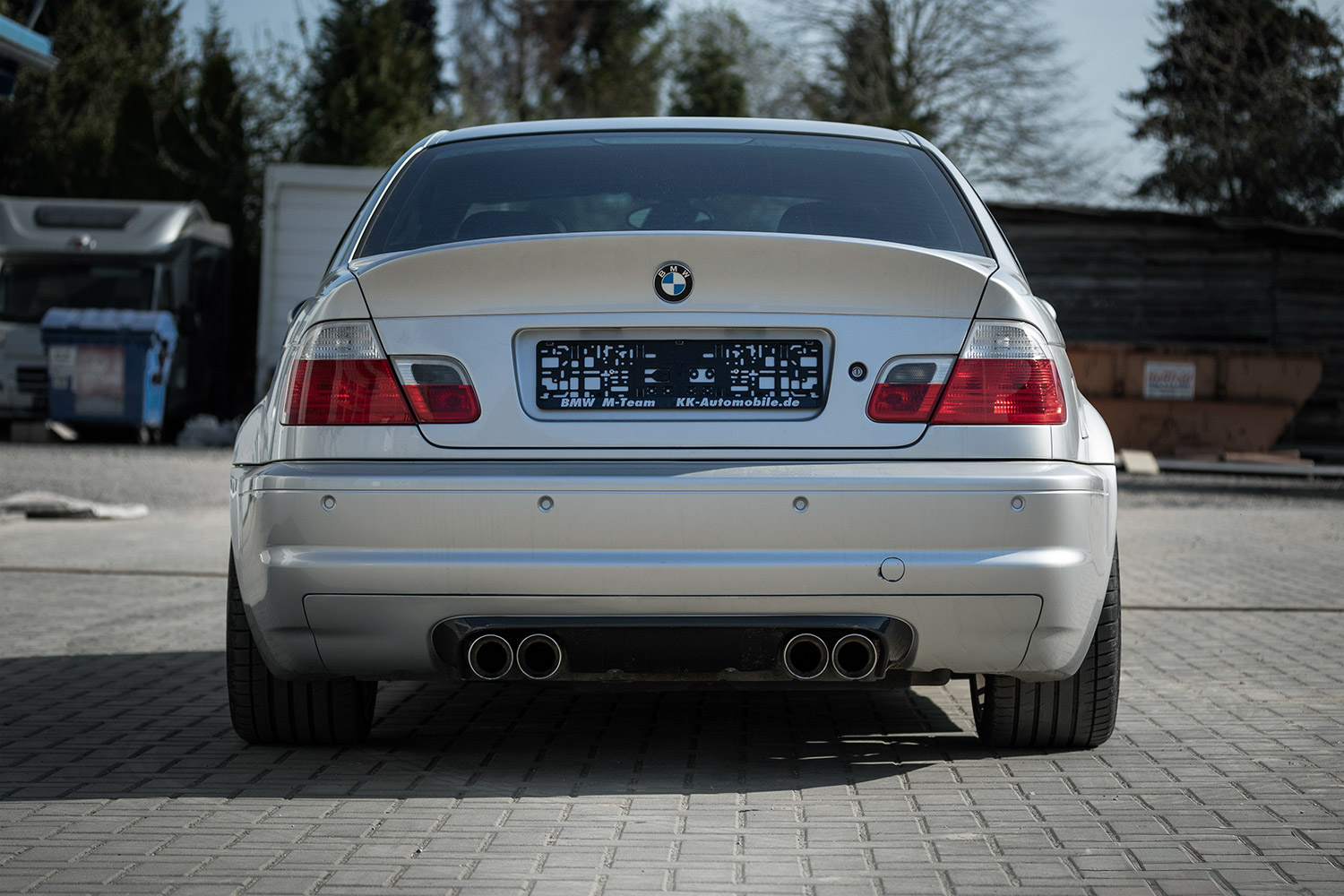
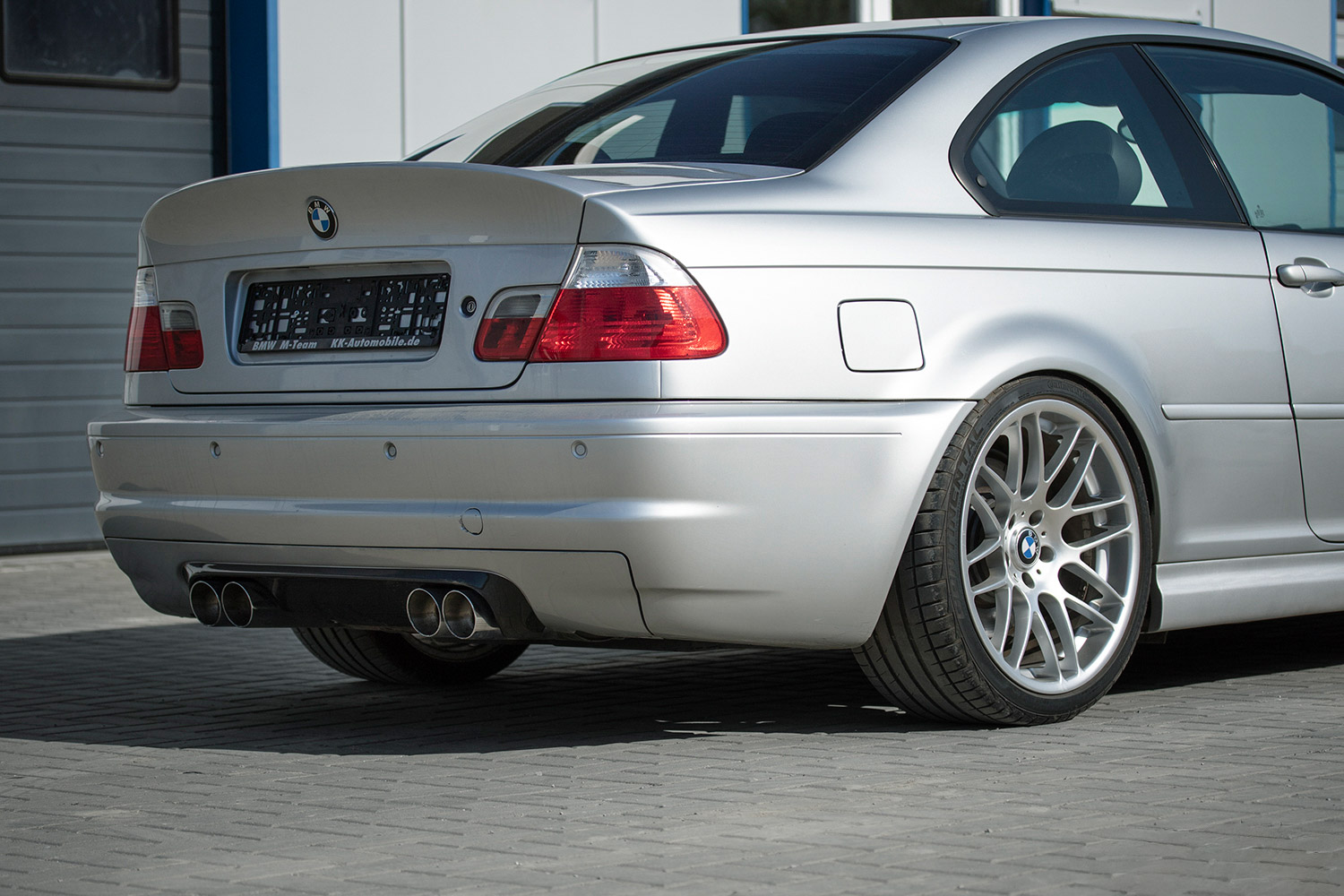
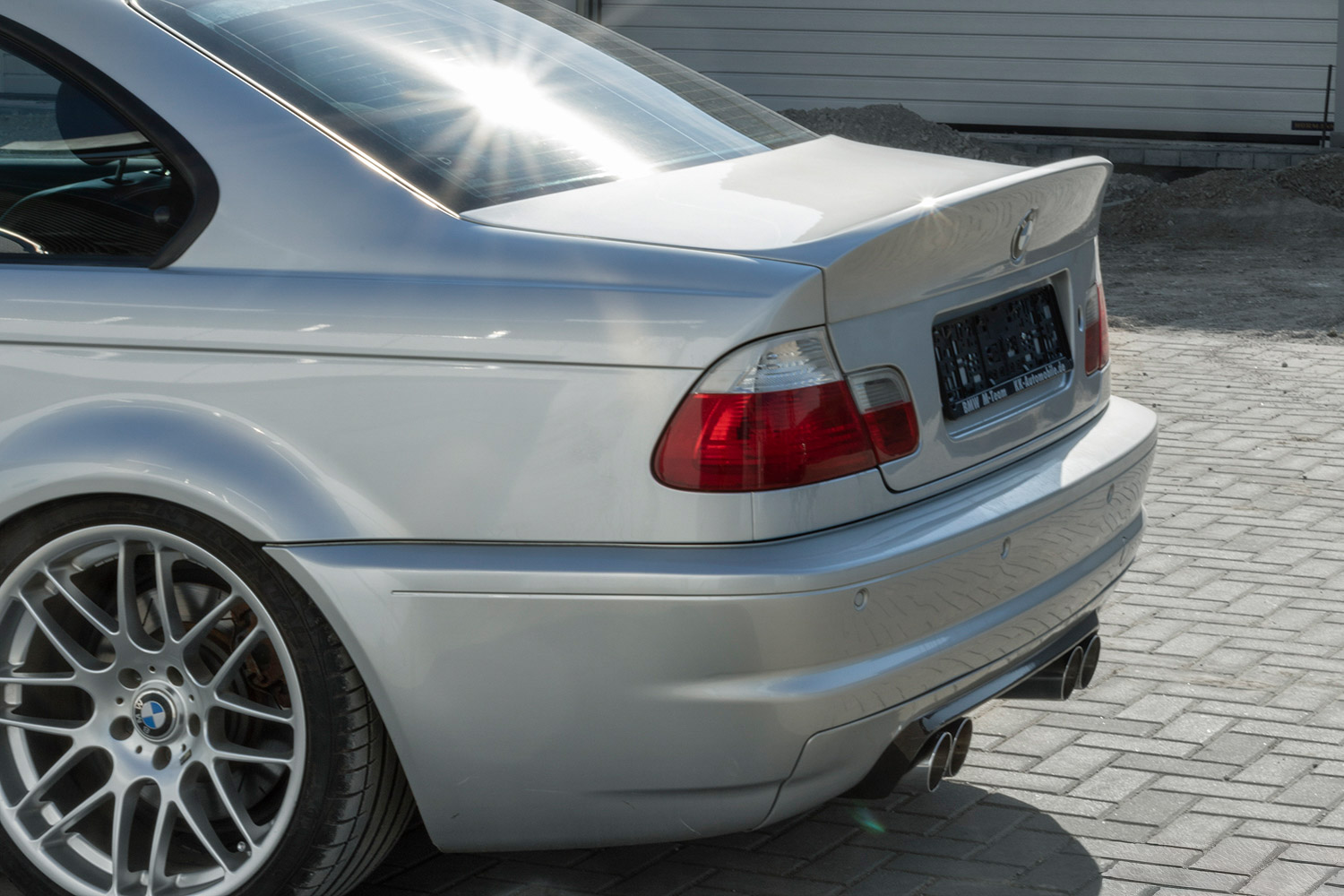
An M3 Coupé in silver
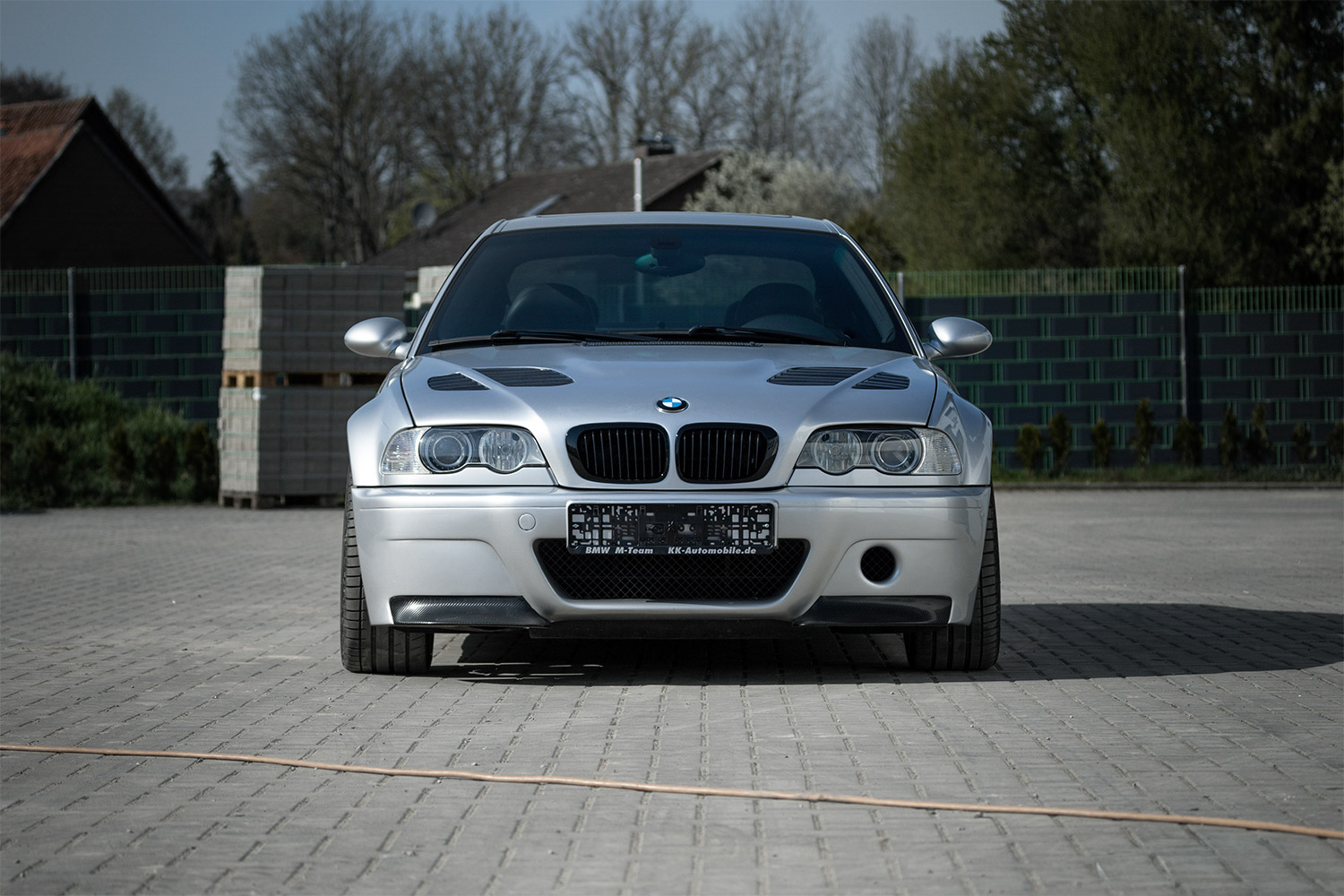
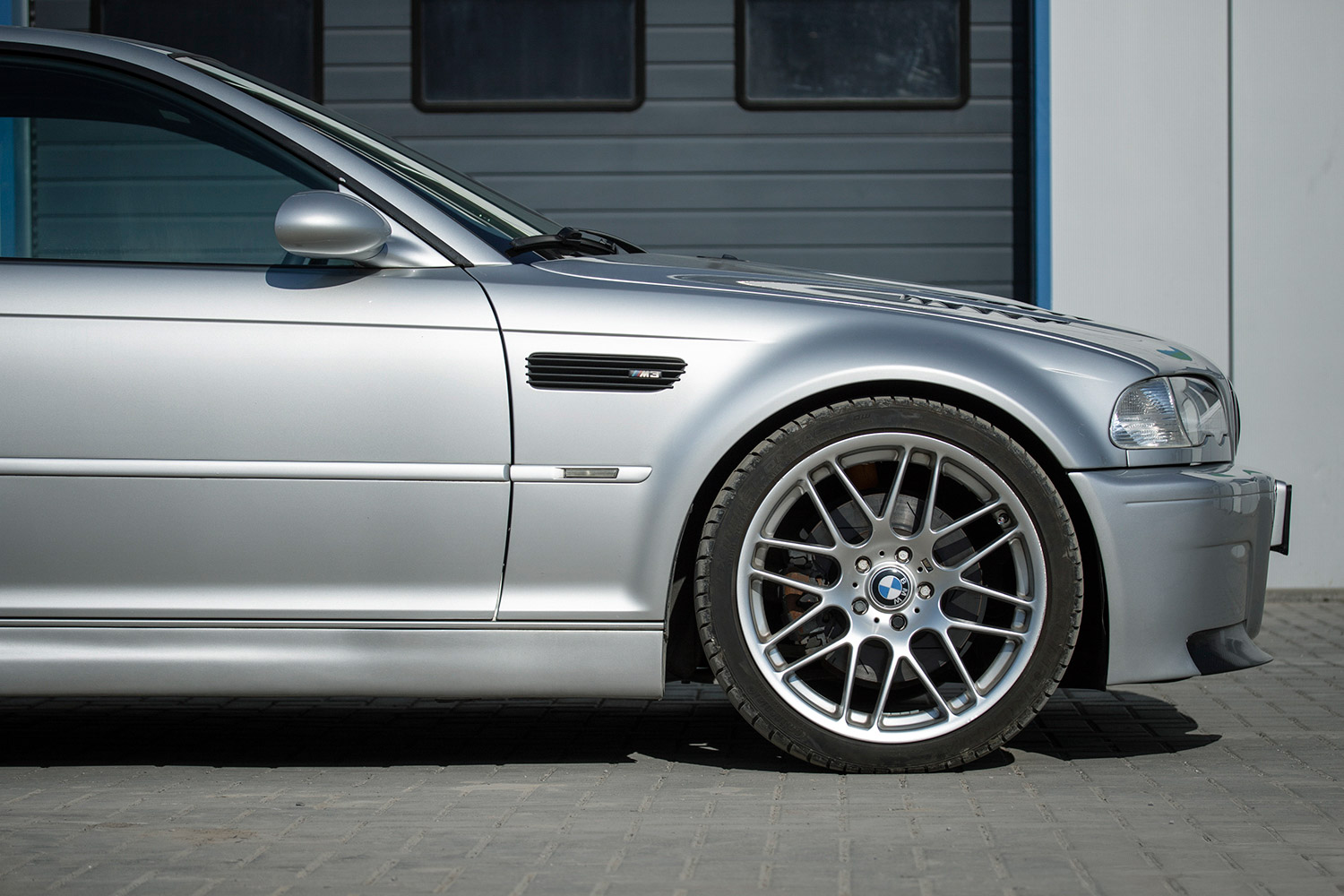
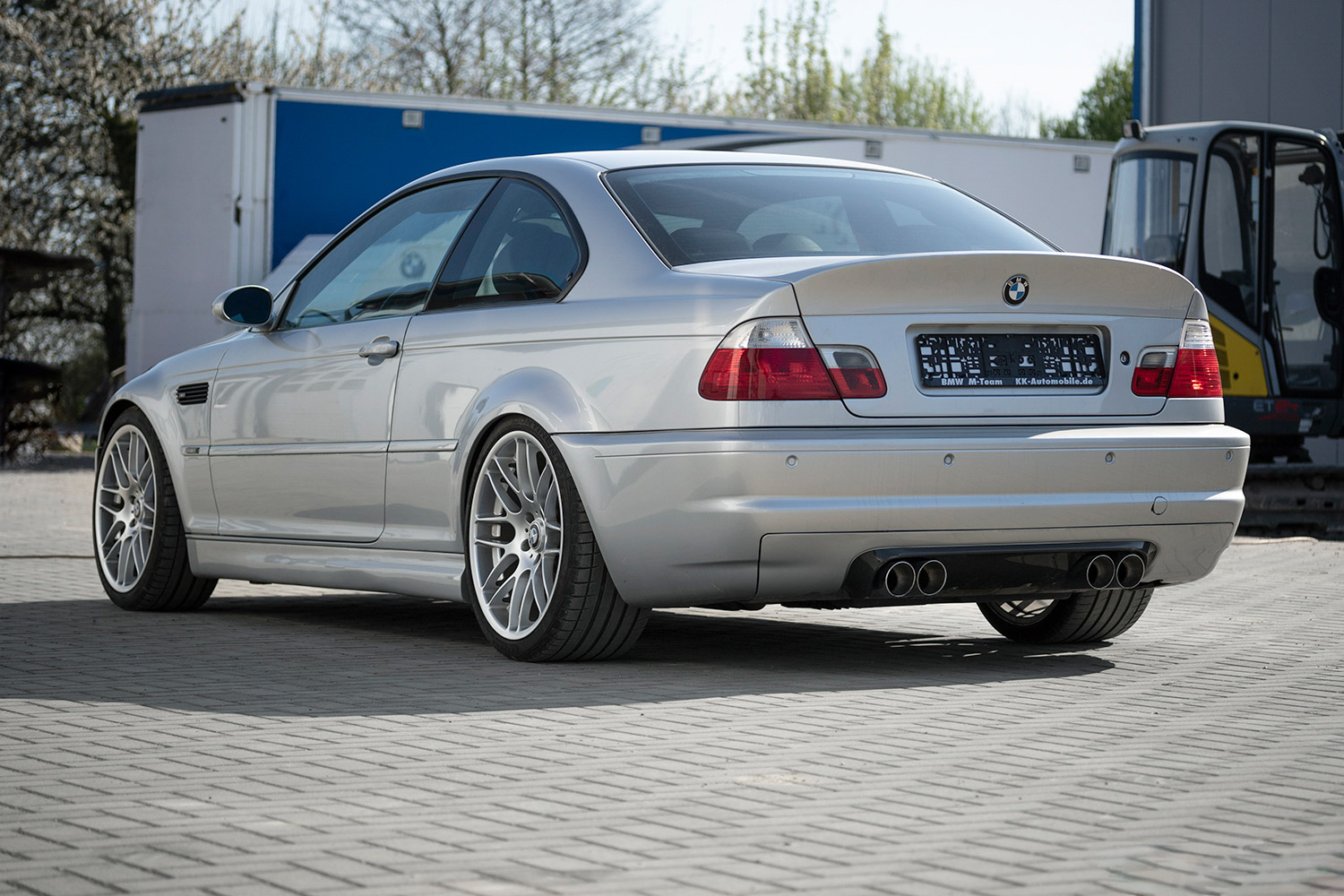
Own photographs of a BMW M3 from the E46 model line, converted to CSL appearance: M3 GTR bonnet, front bumper and tailgate from the M3 CSL, wheels in CSL design and a carbon roof. This does not make the car an original CSL — the parts are retrofitted, and under the bonnet works the regular S54 with 343 PS.
Other BMW 3er generations
5 model lines with an E-number, from 1975 to 2013.


14 · Sources
Belege & Literatur
The editorial basis of this page comes from Sven Kroll; research, verification and additions were carried out editorially. Primary sources are BMW Group Classic, the BMW PressClub and Wikipedia; anything else is only considered verified once two independent sources agree. Corrected from the initial version: the Sedan's market launch (April 1998, not February), an unverifiable 163-PS version of the 323i, the M3 CSL's production period (from May 2003) and the assignment of the 330Ci Clubsport (UK, not Europe). No verifiable factory figure exists for the model line's total production; it is therefore not given.
- BMW Group Classic — BMW 3 Series (E46) model line, model pages 323i, 325xi and 330i
- BMW PressClub — The BMW 3 Series compact
- BMW PressClub UK — BMW 330Ci Clubsport Coupé
- BMW PressClub — Victory and titles for BMW in the American Le Mans Series final, 2001
- BMW PressClub — 24 Hours of Nürburgring, race reports 2004 and 2005
- BMW PressClub — FIA ETCC 2004, Champion Andy Priaulx, and WTCC 2005/2006
- BMW M — E46's finest: the BMW M3 CSL
- Wikipedia (DE) — BMW E46 and BMW E46 (M3)
- Wikipedia (EN) — BMW 3 Series (E46), BMW P60B40, Alpina B3 (E46)
- auto motor und sport — Buying guide BMW 3 Series E46
- RM Sotheby's — Auction result BMW M3 CSL, Munich, October 2025
- AUTO BILD — BMW M3 E46 for less than €30,000, July 2026
- Wikipedia (EN) — BMW M3, section E46 Competition Package