

Andy Priaulx won the touring car world championship three times in a row — 2005, 2006 and 2007. Many texts, including the English Wikipedia, state that he did this “with his BMW 320i”. That is true for exactly one year.
Because in 2006 BMW switched to the E90. So the E46 did not win three world titles, but one — and before that the 2004 European title. That sounds like nitpicking, but it isn’t: between the two cars lies an engine change that forced BMW to launch a dedicated road model. Anyone who confuses the cars loses exactly the story that makes this era interesting.
Super 2000 — a regulation that played into BMW’s hands
The preceding Super Touring regulations had failed due to their costs. Super 2000 was the answer: two litres of displacement, no forced induction, no electronic driving aids — no ABS, no traction control —, MacPherson suspension front and rear, and a cost cap of 168,000 euros per vehicle. The production base had to have been built at least 2,500 times in the preceding twelve months.
And then there was a provision that almost everyone overlooks: Super 2000 did not prescribe a number of cylinders. It merely staggered the permitted maximum engine speed.
| Number of cylinders | Permitted maximum engine speed |
|---|---|
| four | 8,500/min |
| five | 8,750/min |
| six | 9,000/min |
BMW was the only manufacturer with a two-litre inline-six in production. This meant BMW alone was allowed to rev to 9,000 — and did not need to build a special model for it, because the 2.0-litre six-cylinder in the E46 was already a regular production engine anyway. In addition, Super 2000 only prescribed two-wheel drive, not front-wheel drive. BMW’s production architecture fit without modification.
For the sake of completeness: whether rear-wheel drive was an advantage or a disadvantage under this regulation cannot be answered cleanly from sources. What is documented is only that the FIA later explicitly named the drive type as a technical difference to be compensated for — more on that below.
The P54 — 270 PS from two litres, without a turbo
BMW released the technical data of the race car in 2004 on the occasion of the Macau Grand Prix. They show a car that remained remarkably close to its production origins — with a rear axle that BMW itself describes as a “production rear axle with mechanical locking differential.”
| Feature | BMW 320i ETCC, as of 2004 |
|---|---|
| Engine designation | BMW P54 |
| Type | Inline six-cylinder, four valves per cylinder |
| Displacement | 1,990 cm³ |
| Bore × stroke | 80 × 66 mm |
| Power | around 270 PS at approximately 8,800/min |
| Torque | around 230 Nm at approximately 7,000/min |
| Rev limit | 9,000/min |
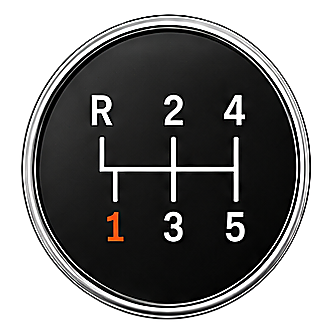
| Transmission | 5-speed racing gearbox, straight-cut, unsynchronised |
| Clutch | Single-plate carbon clutch, hydraulic |
| Weight | 1,140 kg with driver |
| Brakes | front 295 mm, four-piston; rear 280 mm, two-piston |
| Wheels | Aluminium 9 × 17 inch, Michelin Renn 24/61-17 |
One detail remains open and is therefore stated as such here: whether the gearbox was shifted sequentially is unclear. BMW’s own data sheet only says “straight-cut, unsynchronised.” Ultimatecarpage calls it sequential. For Alessandro Zanardi’s car, however, an H-pattern gearbox is explicitly documented — which, at least for this car, argues against a sequential gearbox.
From Europe to the world
The European Championship ran under Super 2000 regulations from 2002. In 2005 the FIA elevated it to World Championship status — at the request of the participating manufacturers and with races outside Europe. It was the first touring car world championship since 1987, that is, since that one single season Roberto Ravaglia had won in the M3 E30. The European championship continued as the European Touring Car Cup; the WTCC’s promoter became a Eurosport subsidiary.
The 2005 format: ten events, each with two races over 50 kilometres.
Which title belongs to which car
This is the table that is hardly stated correctly in any text:
| Year | Series | Drivers’ title | Car | Manufacturers’ title |
|---|---|---|---|---|
| 2003 | ETCC | Gabriele Tarquini (Alfa Romeo) | — | disputed, see below |
| 2004 | ETCC | Andy Priaulx | BMW 320i E46 | BMW |
| 2005 | WTCC | Andy Priaulx | BMW 320i E46 | BMW |
| 2006 | WTCC | Andy Priaulx | BMW 320si E90 | BMW |
| 2007 | WTCC | Andy Priaulx | BMW 320si E90 | BMW |
The 2004 ETCC title was as close as it could be: Priaulx and Dirk Müller were tied with 111 points each , the decision was made on the higher number of wins. Exactly how many that was depends on the source — the Priaulx Wikipedia page states five, counting the season page yields six.
Then in 2005 the world title, decided of all places in Macau: Priaulx secured it with two second places and 101 points, Dirk Müller became runner-up world champion with 86 points after a gearbox failure in the first race. BMW won the manufacturers’ title with 273 points, 37 ahead of Alfa Romeo. This made Priaulx, after Ravaglia, only the second BMW touring car world champion ever.
A title the sources disagree on
For 2003, BMW claims the manufacturers’ title in its own season review — the BMW teams had been “unassailable in the Manufacturers’ standings,” the title secured in Monza. Other sources attribute it to Alfa Romeo. And Mario Theissen himself referred to the 2006 manufacturers’ title as the “third time in a row,” which arithmetically means 2004, 2005 and 2006 — and rules out a BMW title in 2003. Two BMW statements that contradict each other. We do not resolve this here, but state both readings.
What is undisputed, however, is BMW’s record for that season: ten wins in twenty races, five of them by Jörg Müller, three by newcomer Priaulx.
Zanardi
In 2001, Alessandro Zanardi lost both legs in an accident in the CART series. In 2003 he sat in a race car again — in a BMW 320i E46, the first person with leg amputations in this series. He crashed in the first race and finished in the points in the second. Whether this guest appearance took place in Monza or at Donington Park is stated differently by sources.
He himself described the first solution for operating the car like this:
“I was braking with a ring on the steering wheel. I used another ring to accelerate and operated the H gearbox with my right hand.”
Alessandro Zanardi, BMW Group PressClub
The further development was based on his own proposal and is technically remarkable: a brake pedal to which his prosthesis was firmly fixed and which he operated using hip and leg pressure. Throttle continued to be operated via the ring on the steering wheel, steering via the thumbs on the rim. The system remained in use in BMW touring cars until 2009.
In 2004 Zanardi drove a full season for BMW Team Italy-Spain and scored eight points. Then in 2005, in the seventh round of the WTCC season, he won the second race at the Motorsport Arena Oschersleben — ahead of Priaulx and Jörg Müller. It was his first win since the accident, on a track not far from the one where he had lost his legs four years earlier.
“It is difficult to find the right words. I had such a nice career and whenever a driver comes to an end of their career the young people think that he should retire.”
Alessandro Zanardi after the win in Oschersleben, Autosport
The dispute over success ballast
Whoever was in front had to carry additional ballast. In 2005 the BMWs in the title fight faced weight penalties of up to 60 kilograms. In 2007 the FIA lowered the maximum ballast; Mario Theissen explained it like this:
“Maximum ballast weights … previously stood at 80 kg. Regulations now stipulate a new upper limit of just 60 kg to add to the cars.”
Mario Theissen, BMW Media Information WTCC 2007
More interesting than the figure is what became of it in 2009. The results-based success ballast was replaced by model-related compensation weights — following the DTM model, determined via a rolling average of the fastest laps over three events. As justification, the FIA stated that technical differences between the models had required several exemptions — and explicitly named the drive type.
This is the most solid evidence that the rear-wheel-drive question was not a legend in the paddock, but a recognised regulatory issue. A source quantifying concrete changes “to the detriment of rear-wheel drive,” however, does not exist — anyone reading such a claim should ask for the evidence.
Why the E46 had to go
With the E90, the two-litre six-cylinder disappeared from the lineup. For the first time, BMW therefore needed something the E46 had never needed: a homologation model. The 320si arrived in December 2005 in a limited run, 2,600 units, with a hand-built N45 instead of the production N46 — 173 PS instead of 150, rev limit 7,300/min, carbon valve cover, Valvetronic removed.
The race car behind it, the 320si WTCC, had a four-cylinder P45 with 1,999 cm³ and around 275 PS. It was 45 millimetres longer and 36 millimetres wider than the E46. For power and weight, BMW states three different figures across three documents — 275 PS at 8,400/min and 1,140 kg, 275 PS at 8,300/min and 1,125 kg, plus “around 280 PS at 8,500” in the trade press.
Incidentally, one figure shows how widely the E46 era was embedded in customer racing: before 2006, BMW sold over a hundred racing kits based on the E46 to teams. The private cars from Wiechers, Engstler, Proteam or Carly Motors were built from these kits — Marc Hennerici won the Independents’ classification with one in 2005.
Theissen summed up in one sentence why BMW was involved at all, at the unveiling of the 320si:
“Touring cars without BMW is unthinkable — and BMW is equally unthinkable without touring cars.”
Mario Theissen, IAA 2005
What remains open
In the interest of honesty: a solid overall tally of the E46 320i across all ETCC and WTCC years does not exist. Officially documented is only the 2003 season with ten wins from twenty races. For 2005, at least nine BMW wins can be reconstructed from the season reports; there is no official figure. Anyone reading a total sum should be sceptical.
Also unresolved: whether the works cars were built at BMW Motorsport in Munich or at Schnitzer, RBM and Ravaglia. And whether the P54 race engine is indeed a derivative of the production two-litre six-cylinder — the displacement matches exactly, but evidence is lacking.
The model line itself is described in detail on the E46 model page . Anyone wanting to follow the line further will find the origin of the BMW touring car world championships at the E30 — 1987, with Ravaglia.
Sources
- BMW Group PressClub — Technical data BMW 320i ETCC 2004
- BMW Group PressClub — Unveiling of the BMW 320si, IAA 2005
- BMW Group PressClub — Development of Alessandro Zanardi’s control systems
- Autosport — Zanardi takes first WTCC win
- Wikipedia — 2004 European Touring Car Championship (points tie Priaulx/Müller, entry list)
- The Checkered Flag — Super 2000 regulations
- Crash.net — Compensation weight to replace driver ballast (2008)
Contradictions between sources are marked in this article and not smoothed over. We welcome corrections and evidence — write to us.
Bildnachweise
- Eigenes Foto · MOTORSPORT24