

01 · Overview
The first 7 Series
With the E23, BMW gave its executive class its own name in 1977. Previously the large sedans were called 2500, 2800 or 3.0 Si — from May 1977 the large BMW was called the 7 Series. Paul Bracq drew a deliberately restrained three-box sedan, and it remained a single body style: no Coupé, no long-wheelbase version, no Touring.
The car was BMW’s attack on the S-Class, and it was not fought with displacement but with electronics. In 1979 the 732i became the first European production car with the digital Bosch Motronic, which controls ignition timing and injection from a shared map. ABS, Check Control, service interval display and an on-board computer were added. In 1985 there was the first driver’s airbag in a BMW.
The top model was the 745i: 3.2 litres, KKK turbocharger, intercooler, 252 PS — faster than the Mercedes 500 SEL and thus exactly the argument BMW needed. There was no works motorsport programme with the E23; the activities lay with the Group 5 320i, the M1 with the Procar series, and from 1982 with the Formula 1 turbo engine. The only sporting connection is indirect, but a nice one: the name ‘745i’ comes not from the displacement but from the FIA turbo factor of 1.4 from the racing regulations — 3,210 cm³ times 1.4 equals 4,494.
02 · History
Nine years in seven data points
From the replacement of the E3 sedans to the E32.
- 1977 In May the E23 replaces the large sedans of the E3 model line. At launch there are the 728, 730 and 733i; only the 733i has fuel injection. It remains a single body style.
- 1979 The engine lineup is revised: 728i, 732i and 735i replace the carburettor models. The 732i becomes the first European production car with digital Bosch Motronic. ABS is added to the price list.
- 1980 In April the 745i arrives: 3.2 litres, KKK turbocharger, intercooler, 252 PS, ABS as standard, automatic only. In the same year an E23 becomes the first BMW to run on liquid hydrogen.
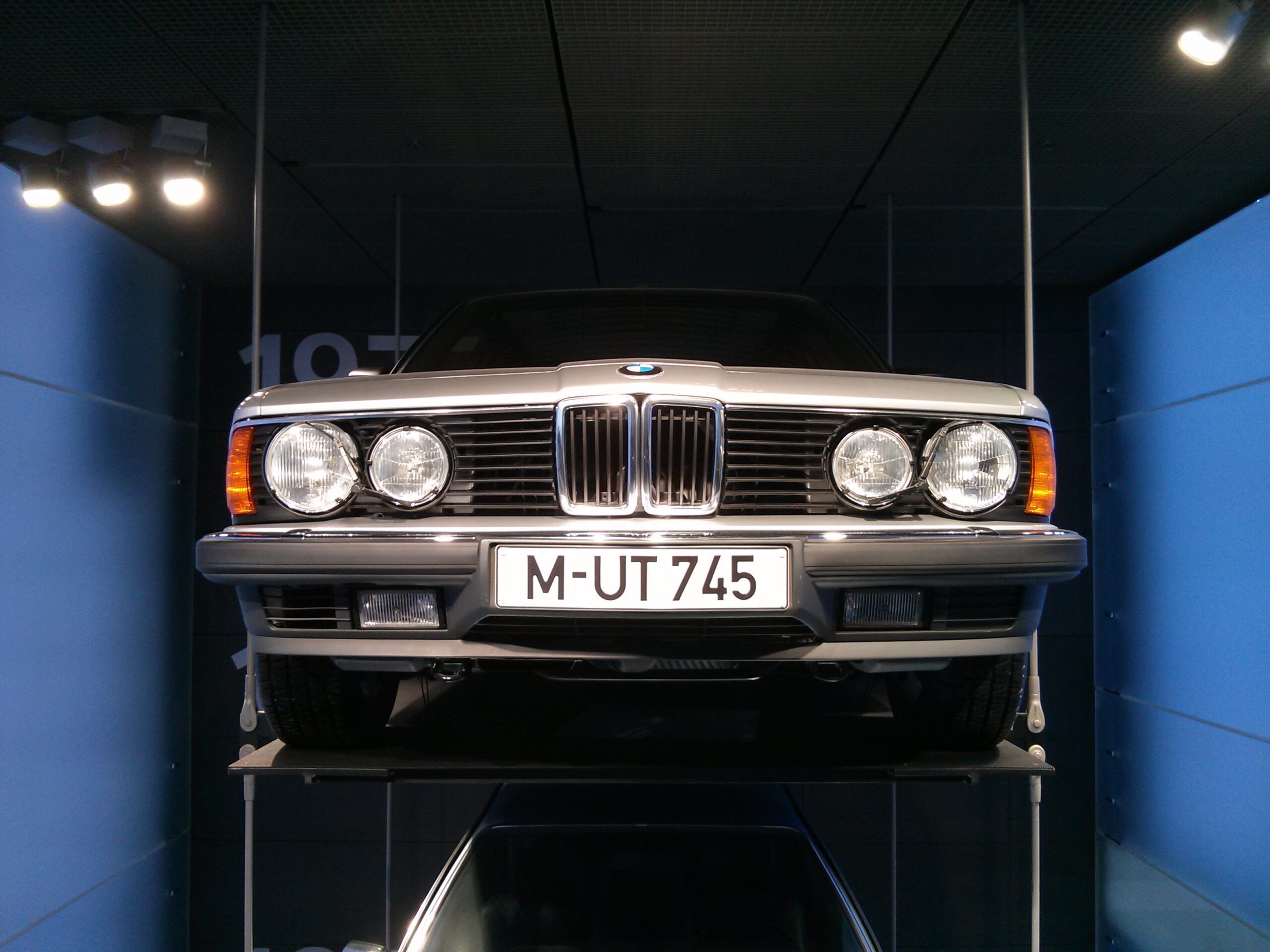
- 1982 In September comes the major facelift: flatter kidney grille, aerodynamically revised front end, improved rust protection, tauter suspension. Active Check Control and the service interval display are added.
- 1983 The 745i receives the 3.4-litre M106 with full Motronic, higher compression and the ZF 4HP22 four-speed automatic. Output remains at 252 PS, torque arrives earlier. In South Africa the M745i begins with the four-valve M88/3.
- 1985 From April there is a driver's airbag, the first in a BMW. In the US the L7 appears as a luxury version of the 735i. The regulated catalytic converter has been available to order since 1984.
- 1986 In summer, production ends after nine years. In September the E32 follows — for the first time also with a long wheelbase, and from 1987 with the V12 in the 750i.
03 · Model overview
All engine variants
One engine family for the entire model line: the M30 straight-six in five displacement stages, plus the two turbo stages of the 745i and the South African special path with the M88.
Source: factory and literature data · verified
Technische Daten anzeigen — komplette Modellmatrix
| Modell | Motor | Hubraum | Leistung | Bauzeit |
|---|---|---|---|---|
| 725i | M30B25 | 2.494 cm³ | 150 PS (110 kW) | 1981–1986 |
| 728 | M30B28 · Solex carburettor | 2.788 cm³ | 170 PS (125 kW) | 1977–1979 |
| 730 | M30B30 · Solex carburettor | 2.986 cm³ | 184 PS (135 kW) | 1977–1979 |
| 733i | M30 · Bosch L-Jetronic | 3.210 cm³ | 197 PS (145 kW) | 1977–1982 |
| 728i | M30B28LE | 2.788 cm³ | 184 PS (135 kW) | 1979–1986 |
| 732i | M30 · Bosch Motronic | 3.210 cm³ | 197 PS (145 kW) | 1979–1986 |
| 735i | M90, ab 1982 M30B34 | 3,453 or 3,430 cm³ respectively | 218 PS (160 kW) | 1978–1986 |
| 745i | M102 · turbo with intercooler | 3.210 cm³ | 252 PS (185 kW) | 1980–1983 |
| 745i | M106 · turbo with Motronic | 3.430 cm³ | 252 PS (185 kW) | 1983–1986 |
| M745i (South Africa) | M88/3 · four-valve | 3.453 cm³ | 286 to 290 PS (210 to 213 kW) | 1983–1986 |
04 · Body variants
Body variants
Sedan

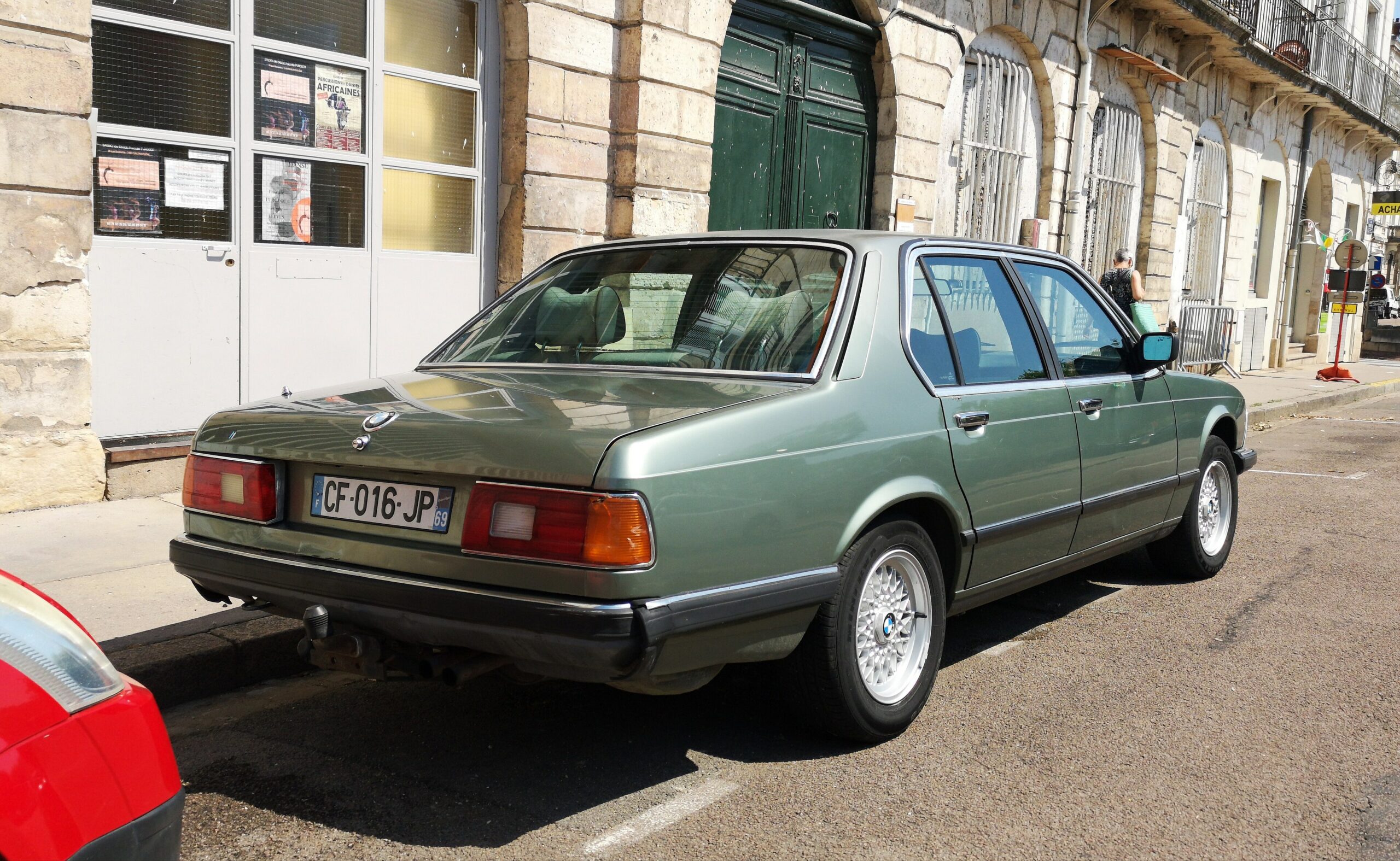
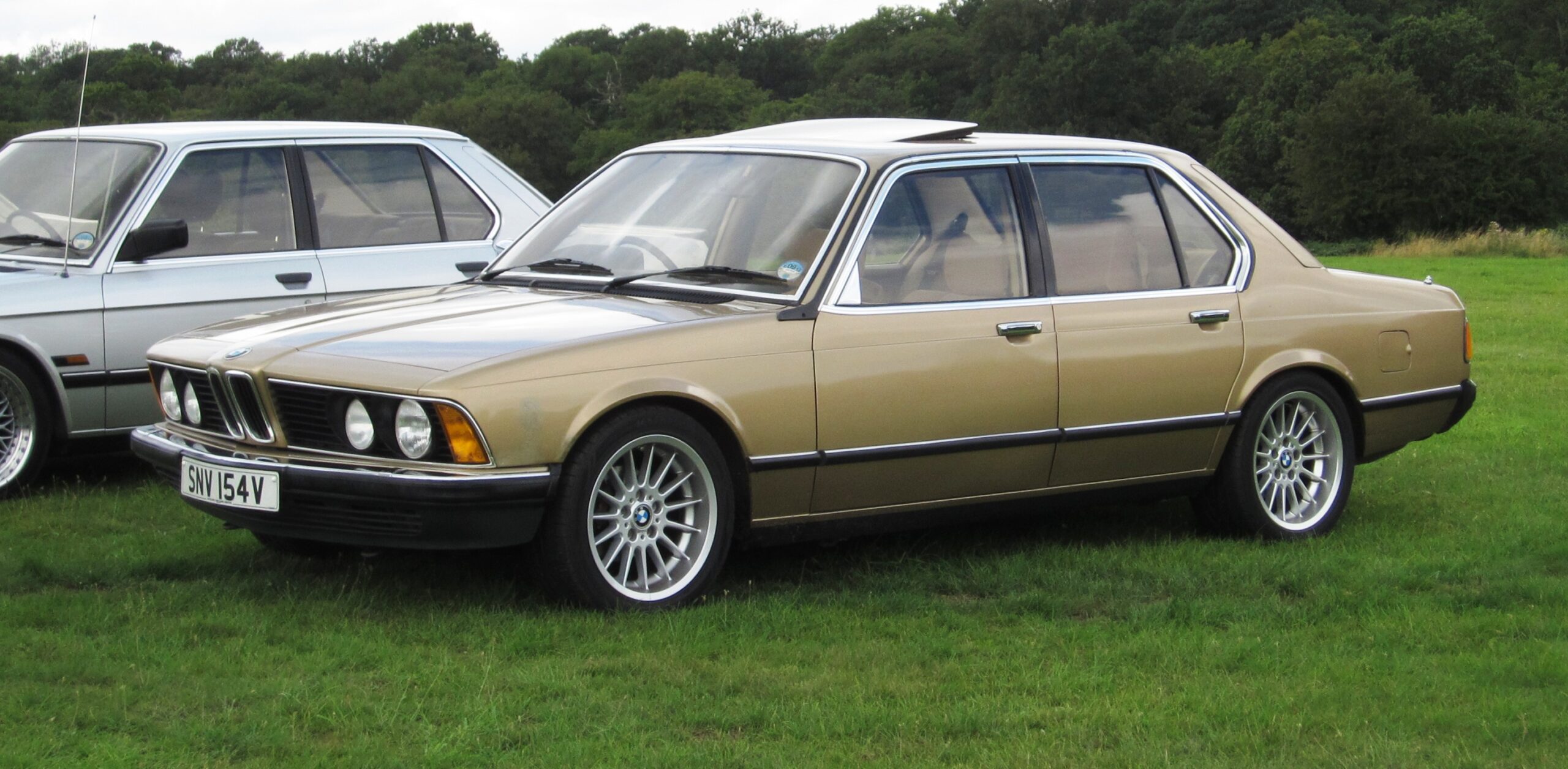
Paul Bracq drew the E23 as a deliberately restrained three-box sedan with Hofmeister kink, a wide flat kidney grille and the BMW-typical wedge in the side line. The dimensions correspond roughly to those of the long E3 version — so the E23 did not grow larger, it simply made better use of its space. There was never a Coupé, because the 6 Series Coupé E24, presented in 1976, had already anticipated the same design language and continued to run in parallel. On the basis of the E23, the 733i High Security also emerged in 1978 as the first factory special-protection vehicle in the 7 Series.
05 · Engines
One engine, five displacements — and one turbo
The entire model line runs on a single engine family. It gets interesting at the margins: at the switch from carburettor to digital engine electronics, and at the forced-induction top model.
M30 — the backbone verified
Grey cast-iron block, light-alloy head, overhead camshaft, timing chain. The M30 was laid out from the 2.5-litre unit of the 725i to the 3.5-litre unit of the 735i in five displacement stages and produced 150 to 218 PS. It is regarded as one of the most durable German engines of its era — no timing belt, moderate engine speeds, large bearings. BMW varied bore and stroke instead of developing new engines.
Carburettor, L-Jetronic, Motronic verified
In 1977 the 728 and 730 still start with Solex twin carburettors; only the 733i has the electronic Bosch L-Jetronic. In 1979 the carburettor disappears entirely. The 732i becomes a technical milestone in the process: according to BMW Group Classic it is the first European production car with digital engine electronics — the Bosch Motronic, which controls ignition timing and injection together from a shared map.
The turbo in the 745i (M102) verified
From April 1980 the 745i is fitted with the M102: 3.2 litres, one KKK turbocharger, compression lowered to 7.0:1 and — contrary to a widespread assumption — an air-to-air intercooler from the outset, which cools the intake air by up to 40 degrees. Result: 252 PS and 380 Nm. Mixture formation is still handled by the L-Jetronic, ignition by a separate control unit. Reinforced conrod bearings and Nimonic exhaust valves absorb the thermal load.
The M106 from 1983 verified
For the 1983 model year the turbo engine grows to 3.4 litres, compression rises to 8.0:1, intercooling becomes more effective and full Bosch Motronic takes over ignition and injection. Nominal output remains at 252 PS, torque at 380 Nm — but it arrives earlier, from 2,200 rather than 2,600 rpm. The car does not become more powerful, but more tractable. Consequently it should really have been called a '748i'; BMW kept the name nonetheless.
The South African M88/3 verified
The turbo engine could not be converted for right-hand drive: the turbocharger and exhaust routing sit on the right side of the engine, exactly where the steering column would need to run. BMW South Africa therefore fitted the four-valve M88/3 from the M1, M635CSi and M5 into the E23 at the Rosslyn plant — here with Bosch Motronic instead of Kugelfischer injection. The naturally aspirated engine draws 286 to 290 PS from 3,453 cm³, making the M745i faster than any turbo 745i from Munich. It is the only works 7 Series with an M engine ever.
06 · Weak points
Reliability & weak points
- Rust on the front closing panel, especially on early cars with the sheet-metal nose. Also wheel arch edges, the transition to the wheel well including the drain hole in the recessed floor, and the splash-water area of the inner fenders.
- Rust on window frames and sills: water collects under the rubber seals, blocked sunroof drains push rust from the inside. Jacking points are often rotted through — for lifting, use only the reinforcements behind the sills.
- The front cam lobes wear in when the oil pump loses pressure gradually or the oil pipe to the camshaft is worn. From 1982 BMW installed only simplex instead of duplex timing chains.
- Control arm ball joints, the upper strut mounts on all four wheels, the trailing arm bushings of the rear axle mounting, and the flex disc and centre bearing suffer under the roughly 1.6 tonnes of unladen weight.
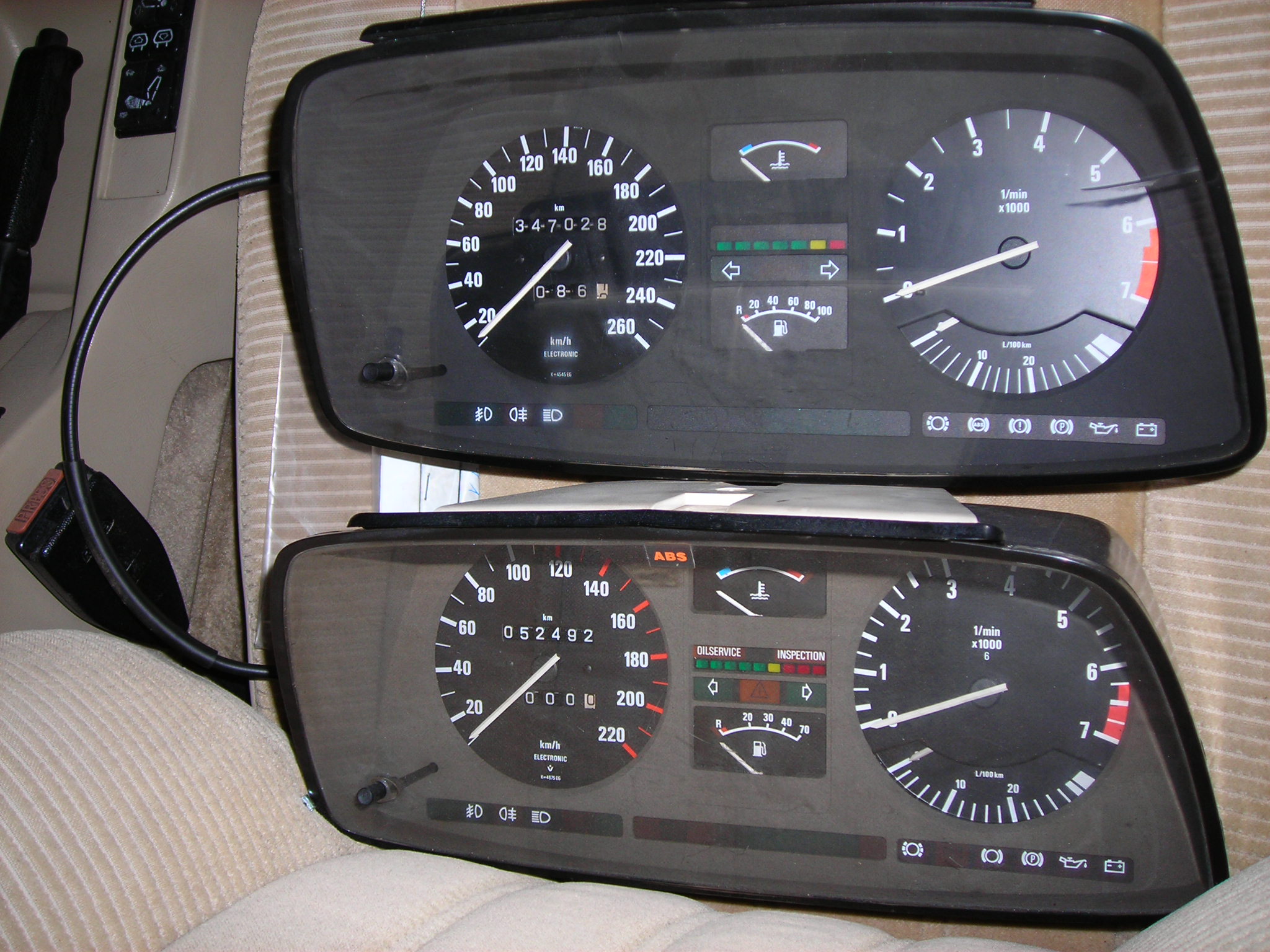
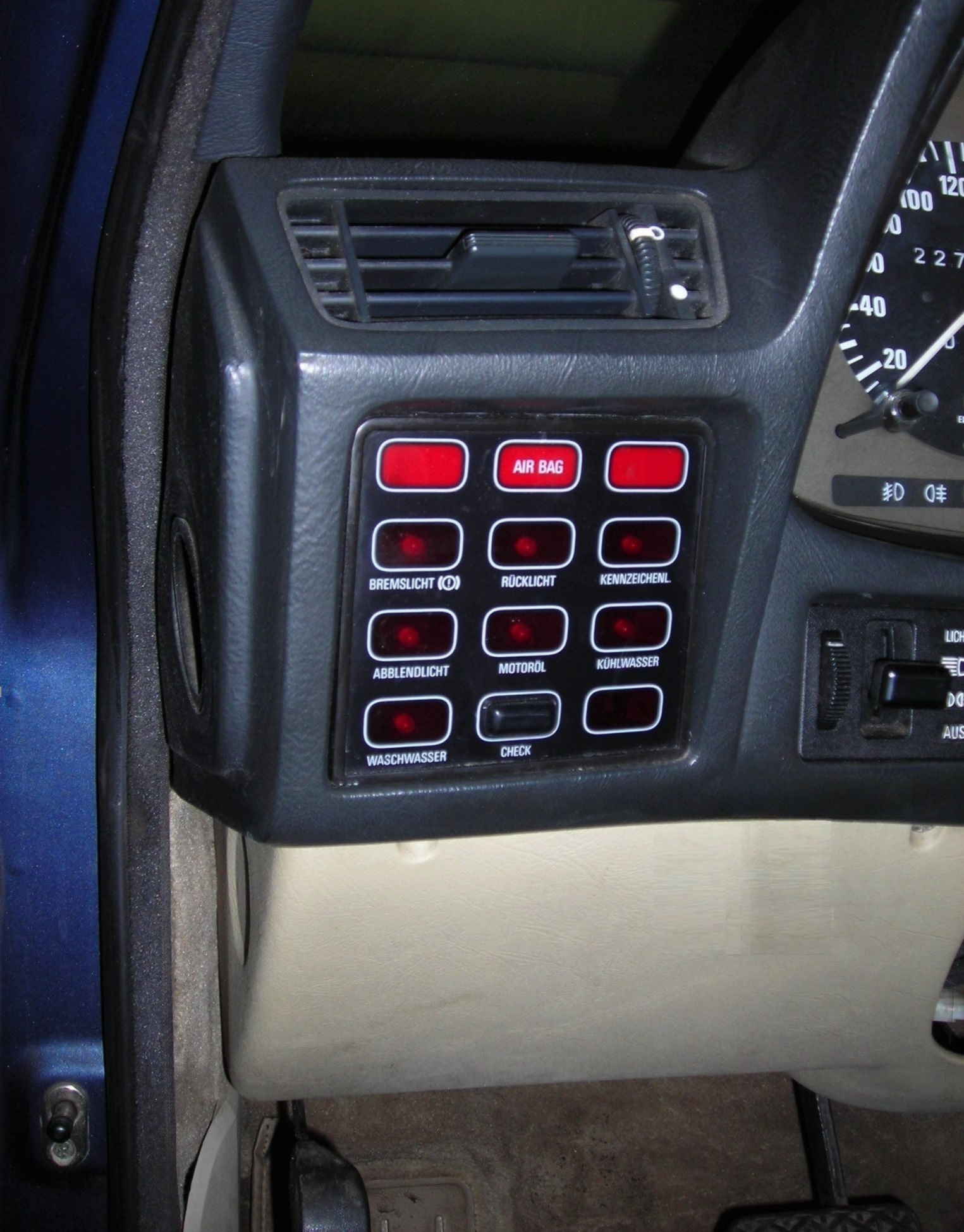
- The speedometer almost always needs reworking, and on later cars the rev counter and service interval display too. Test Check Control thoroughly before purchase — repairs are costly.
- Only on the 745i: a sticking wastegate, faulty boost-pressure solenoid valves and a failing temperature sensor on the thermostat housing, which causes misfires above 3,500 rpm. Also the Motronic control unit, crankshaft sensor and the hydraulic brake booster.
07 · Engineering
Suspension, brakes, steering, transmission
Fahrwerk
Bremsen
Lenkung
Getriebe
Technical data — final drive ratios & gearboxes
- 745i up to 1983 transmission
- ZF 3HP22, three-speed automatic, no manual gearbox
- 745i from 1983 transmission
- ZF 4HP22, four-speed automatic, no manual gearbox
- 745i final drive ratio up to 1983
- 3.07
- 745i final drive ratio from 1983
- 2.93
- 735i transmission
- five-speed gearbox standard, three-speed automatic optional
- 728 transmission
- four-speed manual gearbox or three-speed automatic
- Manual gearbox across the model line
- four-speed at launch, five-speed from the early 1980s
- Automatic across the model line
- three-speed at launch, ZF four-speed automatic from 1983
- Drive type
- rear-wheel drive, all models
- Front axle
- MacPherson strut axle with anti-roll bar
- Rear axle
- semi-trailing arm axle, independent suspension
- Brakes
- internally vented discs front, solid discs rear
- Steering
- hydraulically assisted recirculating ball steering
- Wheelbase
- 2,795 mm
- Dimensions
- 4,860 mm long, 1,800 mm wide, 1,430 mm high
The final drive ratios of 3.64 for the 728 and 728i, and 3.45 for the 733i, are only singly attested and are therefore not included in the list. For the 725i, 730, 732i and 735i no reliable figures are available at all.
Individual gear ratios of the manual and automatic transmissions could not be doubly confirmed in any source. BMW Group Classic and the PressClub do not publish axle and gearbox data for the E23.
The E23 did not have Servotronic — this claim occasionally appears, but is a mix-up with the E32 or E34.
08 · Top models
Top models
Three models: the strongest naturally aspirated model, the turbo, and the South African special path.
735i
From 1979 the new top model with the 3.5-litre six-cylinder from the 635 CSi: 218 PS, 212 km/h, 43,750 Marks. The first E23 with a standard five-speed gearbox, from 1982 with the revised M30B34. In the US it ran from 1985 as the L7 with full leather. With 60,746 units, the second most successful variant after the 728i — and the most balanced E23, considering performance, durability and running costs together.
To the sub-page →
745i
The prestige model: first 3.2 litres, from 1983 3.4 litres, always 252 PS and 380 Nm, 221 km/h — faster than the Mercedes 500 SEL. Zero to a hundred in 7.8 seconds. ABS standard, automatic with no alternative, right-hand drive structurally impossible. The name comes from the FIA turbo factor of 1.4, not from the displacement. 16,031 units.
To the sub-page →
M745i (South Africa)
The secret M7. Because the turbo engine could not be converted for right-hand drive, BMW South Africa fitted the four-valve M88/3 from the M1, M635CSi and M5 into the E23 at Rosslyn — with Bosch Motronic instead of mechanical injection. 286 to 290 PS from 3,453 cm³, making it the fastest 7 Series of its time. Only 192 vehicles, of which 17 with a five-speed manual gearbox. Estimates suggest around twenty still exist today.
To the sub-page →
09 · Buying guide
What matters: the bodywork first, then the electronics
The E23 is today the rarest classic 7 Series: of around 285,000 cars built, only a few hundred remain. The mechanicals are robust, the body is not — and for the early model years the supply of sheet-metal parts is practically nonexistent.
Front closing panel and inner fenders, especially on early cars with the sheet-metal nose — have the splash-water area behind the fenders exposed for inspection
Wheel arches, recessed floor and drain holes — the inspection should absolutely also be carried out under the spare wheel
Sills, jacking points and window frames — lift the window seal rubbers to inspect
Oil supply to the cylinder head — check the camshaft for worn front cam lobes, measure oil pressure, verify oil pump and oil pipe
Cycle through the electronics completely — test Check Control, on-board computer, service interval display and speedometer individually
Only on the 745i: check the wastegate for freedom of movement, boost pressure under load, solenoid valves, temperature sensor on the thermostat housing and the function of the hydraulic brake booster
For entry level the 728i is the sensible choice: with 62,908 units built it is the most common variant, adequately modern with L-Jetronic and without the sensitivities of the top-of-the-range engines. Those wanting more authority should take the 735i — 218 PS, standard five-speed gearbox, the same M30, just larger. The 732i sits in between and, with Motronic on board, carries a piece of technical history that is easy to explain. With the 745i it gets serious: it is the most sought-after model and at the same time the most expensive to maintain, because turbo peripherals, boost pressure control and the brake booster demand specialist knowledge and parts are scarce. The later M106 cars from 1983 are the more mature ones here: better intercooling, full Motronic, four-speed automatic. The early 728 and 730 with Solex carburettors are best avoided — they are rare because they were less well preserved, and that is exactly why the sheet-metal parts are missing today. So the order is: bodywork condition first, then the history and completeness of the electronics, then the engine. A well-kept 728i beats any cheap rusty 745i.
10 · The competition
The competition
Mercedes-Benz S-Class (W116 and W126)
The benchmark against which the E23 was measured from the outset. The W116 had already been on the market for four years in 1977 and in 1978 became the first production car ever to receive Bosch ABS as an option. In 1979 the W126 followed, which again took the technical lead with better aerodynamics, lower weight and, from 1981, a driver's airbag. BMW did not counter with displacement, but with electronics and the turbo — the 745i was faster than the 500 SEL.
Audi 200 (Type 43)
The challenger from below: from autumn 1979 as an executive-class offshoot of the Audi 100, exclusively as a four-door sedan with front-wheel drive. The 200 5T drew 170 PS from 2,144 cm³ with a five-cylinder engine, KKK turbocharger and K-Jetronic — a technical relative of the turbo idea in the 745i, just two classes smaller. With 51,282 units it remained a niche product, but it defined Audi's rise into the premium segment.
Jaguar XJ Series III
From April 1979 the third development stage of the XJ sedan, gently reworked by Pininfarina, built until 1992 in 132,952 units. With 3.4- and 4.2-litre straight-sixes as well as the 5.3-litre V12, it offered the engine lineup that BMW lacked at the time — the twelve-cylinder only arrived at Munich with the successor E32. Ride comfort and prestige were first-class, build quality and rust protection were not.
11 · Galerie
Bilder
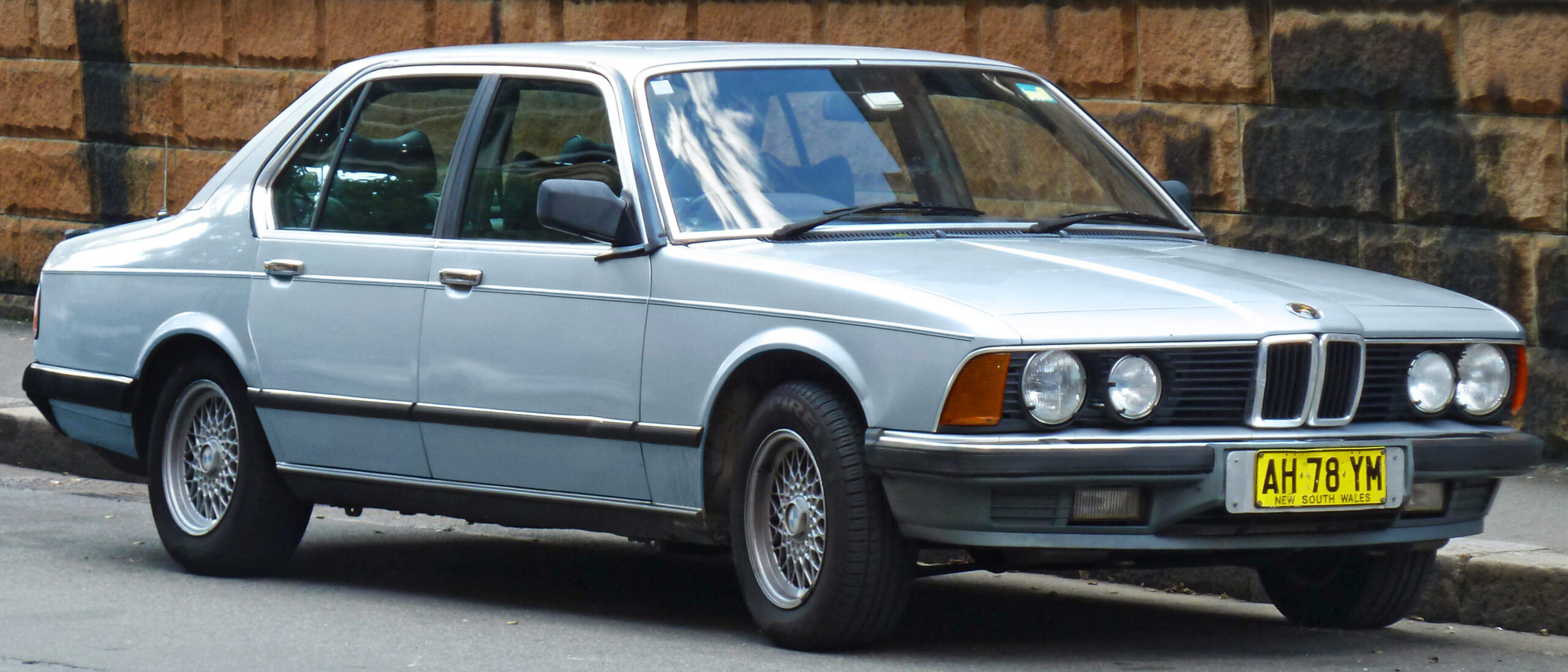
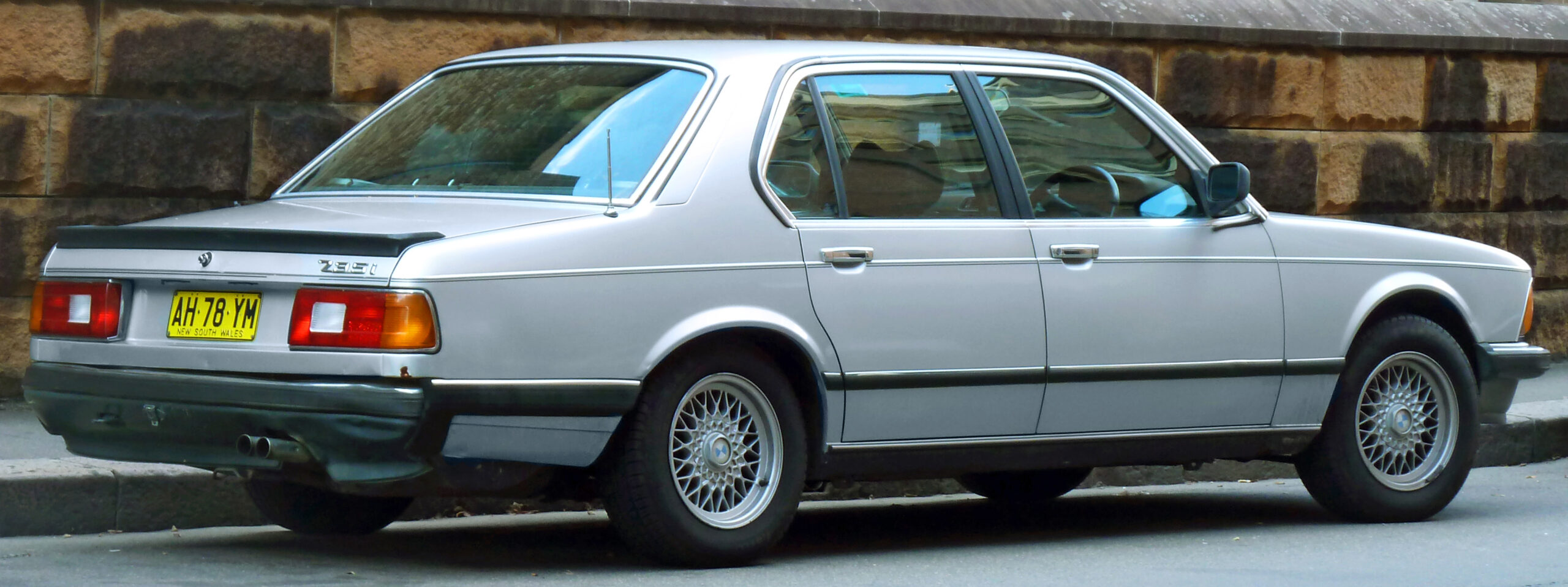
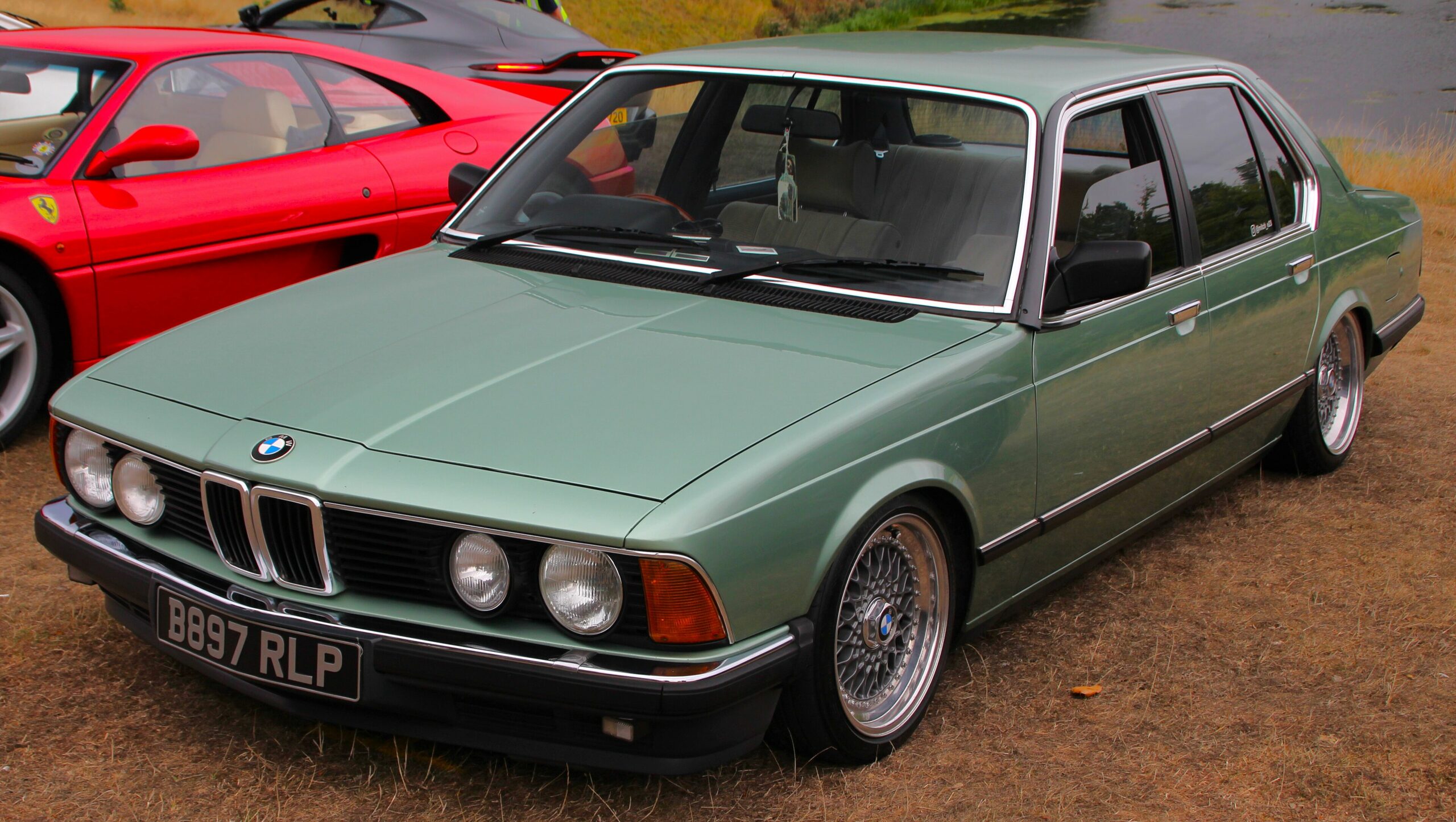
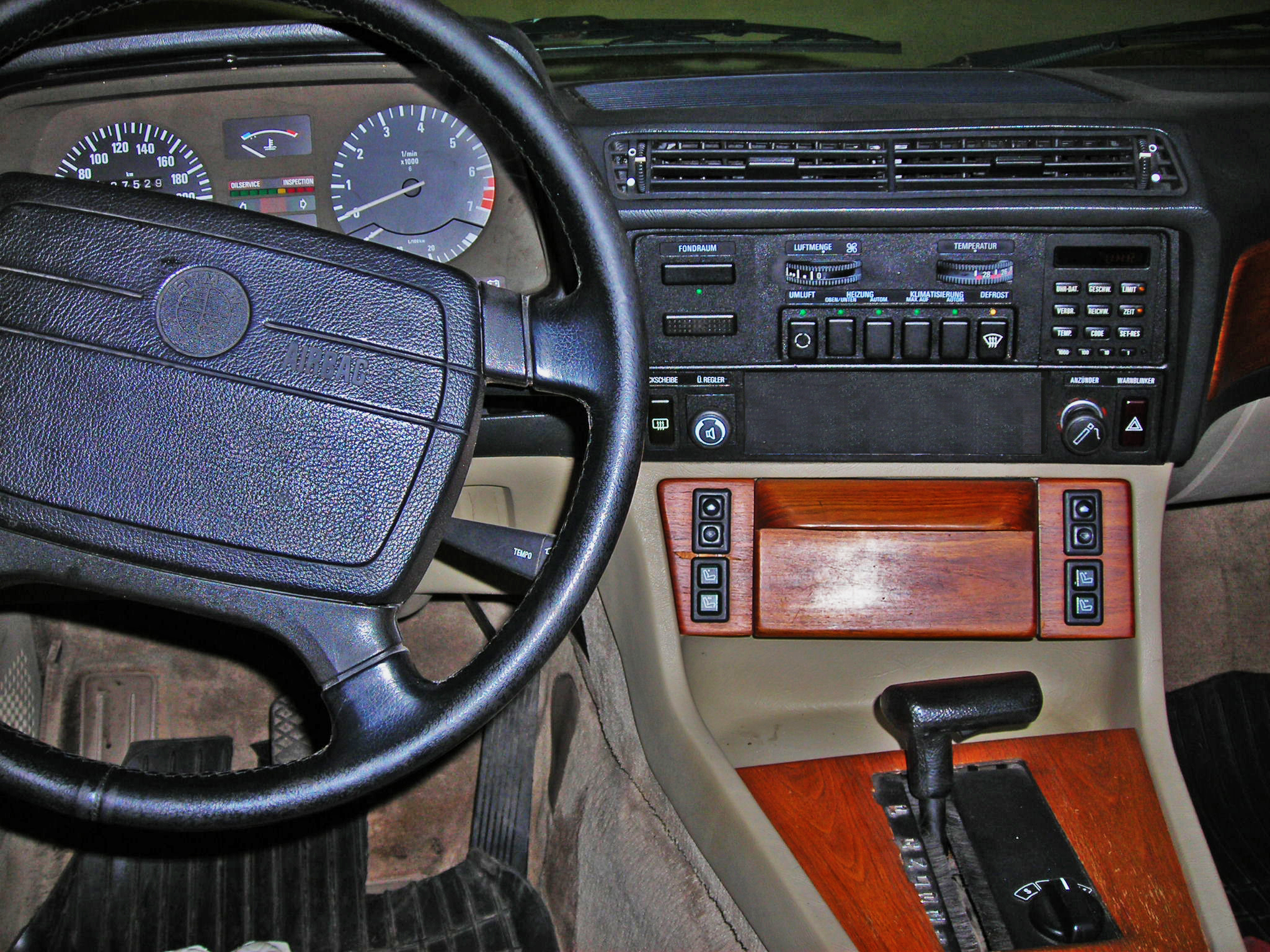
735i, 728i and 745i, plus instrument cluster, Check Control and interior.
Other BMW 7er generations
4 model lines with an E-number, from 1977 to 2008.


12 · Sources
Belege & Literatur
Primary sources are BMW Group Classic, the BMW PressClub and Wikipedia; everything else is considered verified only once two independent sources agree. Two points remain unresolved: the total production figure of 285,029 is attested multiple times, but the German Wikipedia's summed individual figures only add up to 270,185 — the difference of 14,844 is unexplained. And regarding Check Control and the on-board computer, contrary to some accounts, the E23 was not the first to use them, but a further development stage: Check Control debuted in 1976 in the E24 Coupé, with the active version arriving only with the 1982 model year in the E23. The E23 did not have Servotronic.
- BMW Group Classic — BMW 7 Series Sedan (E23)
- BMW Group Classic — BMW 745i (E23)
- BMW Group Classic — BMW 732i (E23)
- BMW Group Classic — BMW 735i (E23)
- BMW PressClub — Media Information BMW Security Vehicles
- BMW Group — Pioneer in Hydrogen Research
- Wikipedia (DE) — BMW E23
- Wikipedia (EN) — BMW 7 Series (E23)
- Wikipedia (EN) — BMW M30
- Ate Up With Motor — Turbo Before Its Time: 1980–1986 BMW 745i (E23)
- paultan.org — The M102/M106 in the BMW 745i Turbo
- The Autopian — The South African BMW 745i
- auto motor und sport — ABS, the History of the Anti-Lock Braking System
- AUTO ZEITUNG — BMW 7 Series (E23), Classic Cars and Buying Guide
- AUTO ZEITUNG — Why the BMW 745i SA Was the First M7
- 7-forum.com — E23 Model Overview, ABS, Check Control and On-Board Computer
- bimmertoday.de — BMW 7 Series: Production Figures of All Generations