

01 · Overview
A road car as an entry ticket
The M1 is not a sports car BMW wanted to build. It’s one BMW had to build. BMW Motorsport GmbH, founded in 1972 under Jochen Neerpasch, needed a car for Group 5 once the 3.0 CSL was phased out — and the only route there was homologation in Group 4. That required, as the BMW PressClub states verbatim, “at least 400 examples within 24 consecutive months,” with two seats and external similarity to the production car. To be allowed to race, a road-going sports car had to exist.
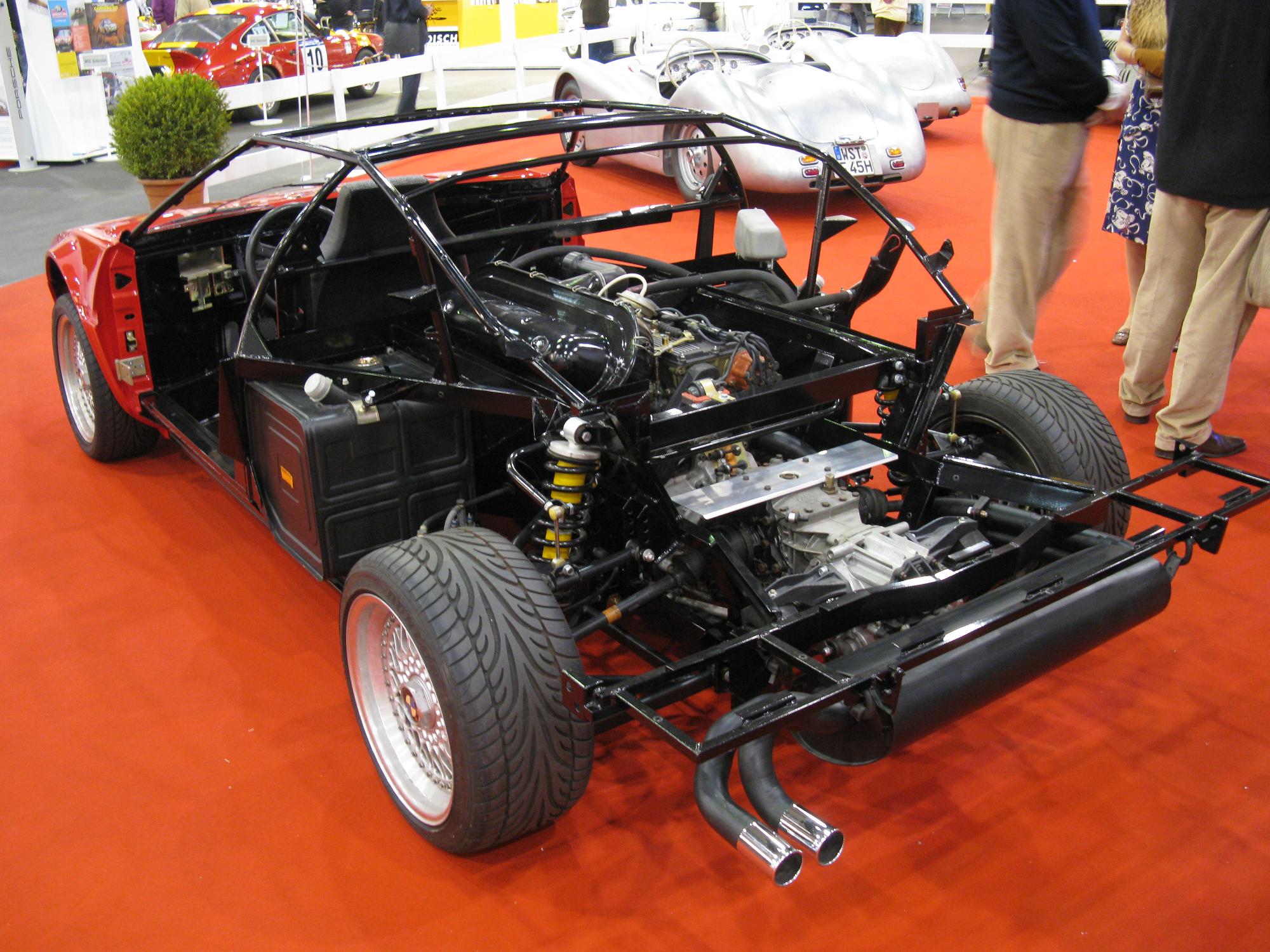
The styling derives from the BMW Turbo Concept of 1972, drawn by Paul Bracq; Giorgetto Giugiaro toned it down for series production. Technically, almost everything was new for BMW: the first mid-engine layout, the first tubular space frame, the first plastic outer skin, the first rack-and-pinion steering. The M88 was the first four-valve straight-six in a BMW production car, derived from the M49 racing engine of the 3.0 CSL — with the same dimensions of 93.4 × 84.0 mm, but chain drive instead of gears. Dry-sump lubrication and mechanical Kugelfischer fuel injection with six individual throttle butterflies were racing technology in a road car.
It was built along a chain that forms the actual core of the problem. Originally, Lamborghini was to handle development and production; according to the BMW M1 Club, the contract was signed in April 1976 for 2,000 vehicles, reduced to 800 in October 1976, and cancelled by BMW in April 1977. Lamborghini went bankrupt in 1978. After that, Marchesi in Modena welded the frame, T.I.R. supplied the plastic skin, ItalDesign in Turin joined the two together, Baur in Stuttgart assembled the mechanicals, and BMW Munich signed off. Five companies in two countries for one car.
The purpose was never fulfilled. According to the PressClub, Group 4 homologation did not arrive until 1 April 1981 — after production had ended — and nine months later the regulations changed. The English Wikipedia dates the homologation differently, to 1 December 1980; both are principal sources, and the contradiction remains unresolved. In 1979, Neerpasch solved the waiting-period problem in his own way: he had the race cars compete against each other in a series of their own, the Procar Championship, run as a support race for Formula 1.
02 · History
From Sant'Agata to Munich
The genesis in seven stages.
- 1972 BMW Motorsport GmbH is founded. At the Turin Motor Show stands the BMW Turbo Concept by Paul Bracq — the styling template for the M1.
- 1976 Contract with Lamborghini for development and production. According to the BMW M1 Club, for over 2,000 vehicles in April, reduced to 800 in October.
- 1977 BMW cancels the contract. Between June and December, Lamborghini still delivers seven prototypes.
- 1978 Lamborghini goes bankrupt in August. In October, the M1 stands at the Paris Motor Show, priced at 100,000 Marks.
- 1979 First customer delivery in February. In May, the Procar Championship starts at Zolder; Niki Lauda wins the title. At Le Mans, the Art Car by Andy Warhol finishes sixth overall.
- 1980 Second and final Procar season, Nelson Piquet becomes champion. Afterwards, funds flow into the Formula 1 turbo engine programme for Brabham.
- 1981 End of production. In April, FISA grants Group 4 homologation — for a car no longer in production. In the USA, Cowart and Miller win the IMSA GTO championship.
03 · Model overview
Road and race track
One engine in three states of tune. The production figures for the racing versions cannot be cleanly separated.
Technische Daten anzeigen — komplette Modellmatrix
| Modell | Motor | Hubraum | Leistung | Bauzeit |
|---|---|---|---|---|
| M1 road version | M88 | 3.453 cm³ | 277 PS (204 kW) | 1978–1981, 399 units |
| M1 Procar and Group 4 | M88/1 | 3.500 cm³ | 470 PS (345 kW) | 1979–1981 |
| M1 Group 5 with turbocharger | M88 with exhaust turbocharger | around 3,200 cc | up to 850 PS (625 kW) | ab 1981 |
04 · Body variants
Body variants
Coupé

Two-seater with a tubular space frame made from rectangular steel sections and an outer skin of glass-fibre-reinforced plastic, bonded and riveted. Wheel carriers front and rear made of light alloy. Length 4,360 mm, width 1,824 mm, height 1,140 mm, wheelbase 2,560 mm, track 1,550 mm front and 1,576 mm rear. Kerb weight 1,300 kg, centre of gravity 460 mm above the road surface. Neither BMW nor any other reliable source states a drag coefficient.
The production figure question
There are four figures from principal sources: 445 according to BMW PressClub, 453 according to English Wikipedia, 456 according to Classic Driver, 460 according to German Wikipedia and bmw-m.com. Only the 399 road cars are undisputed. The most plausible resolution comes from the BMW M1 Club: BMW is said to have issued 460 chassis numbers, of which five were test frames and two vehicles were never built — leaving 453 built. However, this is a single source and contradicts BMW's own figure of 445. We state the range and the different counting methods rather than choosing one number.
Prototypen

Lamborghini delivered seven prototypes, P1 to P7, to BMW between June and December 1977. This figure is stated independently by both the BMW M1 Club and English Wikipedia.
05 · Engines
Der M88
The first four-valve straight-six in a BMW production car, derived from the M49 racing engine of the 3.0 CSL. It later became the M88/3 of the M635CSi and the M5.
M88 · 3,453 cc · 277 PS — road version verified
Bore 93.4 mm, stroke 84.0 mm, compression ratio 9.0:1 — the same dimensions as the M49 racing engine, but with chain drive for the camshafts instead of gears. 277 PS at 6,500 rpm and 330 Nm at 5,000 rpm. Mixture preparation via mechanical Kugelfischer fuel injection with three twin-throttle bodies and six throttle butterflies of 46 mm each, contactless ignition by Magneti Marelli, fuel 98 RON. Lubrication is dry-sump with a triple scavenge pump, fuel capacity 116 litres in two tanks. German Wikipedia states a differing rated-power speed of 6,600 rpm, contradicting all other sources. Top speed figures also vary: 264.7 km/h is the factory value, while 262 and 265 km/h are presumably roundings.
Technische Daten anzeigen
| Bauart | Straight-six M88, four valves per cylinder, two overhead camshafts |
| Einbaulage | longitudinally behind the passenger cell |
| Hubraum | 3.453 cm³ |
| Bore × stroke | 93,4 × 84,0 mm |
| Verdichtung | 9,0:1 |
| Leistung | 277 PS (204 kW) at 6,500 rpm |
| Drehmoment | 330 Nm at 5,000 rpm |
| Gemischaufbereitung | mechanical Kugelfischer fuel injection, six throttle butterflies of 46 mm each |
| Schmierung | dry sump with triple scavenge pump |
| Tankinhalt | 2 × 58 litres |
| Höchstgeschwindigkeit | 264.7 km/h according to factory figures |
| Acceleration 0–100 km/h | 5,6 s |
| Leistungsgewicht | 4,7 kg/PS |
| Units built | 399 road cars |
Sources: BMW PressClub, media release "Icon for Connoisseurs — 30 Years of BMW M1" with complete factory data sheet; Wikipedia DE and EN; bmw-m.com. Sources disagree on whether the camshafts are driven by a single- or double-row chain — for that reason it is not included in the list.
M88/1 · 3,500 cc · 470 PS — Procar and Group 4 verified
For racing, BMW increased the bore to 94.0 mm and raised the compression ratio to 11.2:1. 470 PS at 9,000 rpm, 390 Nm at 7,000 rpm, weight reduced to 1,020 kg, top speed around 310 km/h. Marc Surer lapped the Nordschleife in 7:55.9 minutes with it. Classic Driver states a differing figure of 490 PS, and English Wikipedia states 4.3 rather than 4.5 seconds to 100 km/h.
Technische Daten anzeigen
| Hubraum | 3.500 cm³ |
| Bore × stroke | 94,0 × 84,0 mm |
| Verdichtung | 11,2:1 |
| Leistung | 470 PS (345 kW) at 9,000 rpm |
| Drehmoment | 390 Nm at 7,000 rpm |
| Gewicht | 1.020 kg |
| Höchstgeschwindigkeit | around 310 km/h |
| Nordschleife lap time | 7:55.9 min (Marc Surer) |
Sources: BMW PressClub, BMW M1 Club, Wikipedia EN.
M88 with exhaust turbocharger · around 3,200 cc · up to 850 PS — Group 5 plausibel
For Group 5, BMW reduced the four-valve engine back to 3.2 litres and added forced induction. Up to 850 PS at 9,000 rpm at 1.2 to 1.4 bar boost pressure and up to 800 Nm — hence a Hewland gearbox instead of the ZF unit. Later bi-turbo variants are said to have produced up to 1,000 PS. No source states how many Group 5 cars were built.
Technische Daten anzeigen
| Hubraum | around 3,200 cc |
| Leistung | up to 850 PS (625 kW) at 9,000 rpm |
| Ladedruck | 1.2 to 1.4 bar |
| Drehmoment | up to 800 Nm |
| Getriebe | Hewland FG 400 with five speeds |
| Sperrwirkung | 75 to 100 percent depending on the track |
Source: BMW PressClub. Single source for the detailed figures.
06 · Weak points
Reliability & Weak Points
- The available literature is thin — with around 450 cars built, there is hardly any buying advice available. Only two points are corroborated by two sources, and we only write about those two.
- Spare parts. Special parts such as the Kugelfischer injection or the Campagnolo wheels are extremely expensive and rare; much has to be custom-made. Autocar and Chromradar both state this independently.
- Corrosion. Both sources cite rust as an issue, but locate it differently — Autocar describes it creeping into the wiring harnesses, Chromradar places it at the sills and engine tunnel. Reliable as a category, but not as to the exact location.
- Only single-sourced and therefore not listed as a weak point: timing chain elongation, stiffness of the rack-and-pinion steering after long periods of standing, high fuel consumption.
07 · Engineering
Chassis, brakes, steering, gearbox
Aufbau
Radaufhängung
Bremsen
Steering and gearbox
Technical data — final drive ratios & gearboxes
- Length
- 4,360 mm
- Width
- 1,824 mm
- Height
- 1,140 mm
- Wheelbase
- 2,560 mm
- Track front
- 1,550 mm
- Track rear
- 1,576 mm
- Kerb weight
- 1,300 kg
- Centre of gravity height
- 460 mm above road surface
- Ground clearance
- 125 mm
- Turning circle
- 13.0 m
- Front axle
- double wishbones, Bilstein gas-pressure dampers
- Rear axle
- double wishbones, lower arms as trailing links
- Anti-roll bars
- 23 mm front, 19 mm rear
- Front brakes
- internally vented discs 300 × 32 mm
- Rear brakes
- internally vented discs 297 × 26 mm
- Steering
- rack-and-pinion without power assistance, steering wheel 360 mm
- Gearbox
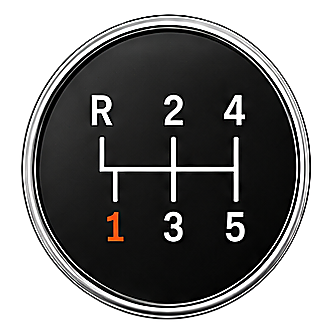
- ZF five-speed, twin-plate dry clutch
- Gear ratios
- 2.42 / 1.61 / 1.14 / 0.846 / 0.704, reverse 2.86
- Final drive ratio
- 4.22 with 40 percent limited-slip value
- Wheels
- 7 × 16 front, 8 × 16 rear
- Tyres
- 205/55 VR 16 front, 225/50 VR 16 rear
- Not verifiable and therefore not listed
- the drag coefficient — it appears in no factory documentation and no principal source. Likewise the type number of the ZF gearbox.
08 · M GmbH
The M GmbH's first own car
Before the M1, BMW Motorsport GmbH had refined production models and built race cars. The M1 is the first vehicle it was responsible for from the ground up — concept, engine, chassis, body. That this became a logistical disaster involving five companies in two countries is part of the story. The engine outlived the project: the M88 became the M88/3 of the M635CSi and the E28 M5.

09 · Motorsport
Procar — a racing series as a stopgap
Because homologation was slow in coming, Jochen Neerpasch invented a series of his own in 1979. The Procar Championship ran as a support race for European Formula 1 events, and the format was its real idea: the five fastest Formula 1 drivers from Friday practice against 15 touring car specialists, all in technically identical M1s. Max Mosley secured the series its place on the support programme via FOCA, and Bernie Ecclestone was involved through Brabham.
In 1979, Niki Lauda won the title with three wins from eight races; Hans-Joachim Stuck took the final two rounds, ending up five points short. In 1980, Nelson Piquet won through victories in the last three races, ahead of Alan Jones and, again, Stuck. After that it was over: the funds flowed into the Formula 1 turbo engine programme for Brabham, and the homologation purpose had been fulfilled.
At Le Mans 1979, the Art Car painted by Andy Warhol, driven by Hervé Poulain, Manfred Winkelhock and Marcel Mignot, finished sixth overall and second in its class. Warhol is the only Art Car artist to have painted the vehicle himself rather than have a model transferred onto it. His verdict, in the German BMW account: “The car turned out better than the artwork.” The commonly cited claim that it took him 23 or 28 minutes is not found in any BMW source.
In 1981, Dave Cowart and Kemper Miller won the IMSA GTO championship in the USA. In 1983, the M1 was retroactively homologated for Group B and competed at Le Mans until 1986.
10 · Buying guide
What matters: history above all
With around 450 cars built, every M1 is a documented individual example. Buying one means buying a history first — and only then a car.
Vehicle history and chassis number. With this production run, every car is known; an unbroken chain of previous owners is the basis of any valuation.
Corrosion of the steel tubular space frame. The plastic skin does not protect it, it only conceals it.
Condition of the plastic outer skin and its bonding to the frame.
Completeness of the special parts: Kugelfischer injection, Campagnolo wheels, interior trim. If something is missing, it has to be custom-made — at prices that blow any budget.
Have the engine and dry-sump system checked by a specialist workshop. There are few who truly know the M88.
The order is: papers and history first, then the frame, then the mechanicals. Given this production run, an M1 without verifiable provenance is not a bargain but a question mark.
11 · The competition
The competition
Ferrari 512 BB
The direct rival in price and prestige, built in 929 examples from 1976 to 1981. A twelve-cylinder boxer of 4.9 litres against the M1's six-cylinder — and in independent testing, virtually the same top speed. The M1 was the more efficient car, the Ferrari the more famous one.
Lamborghini Countach LP400 S
Ironically, the car Lamborghini built instead of building the M1. Produced from 1978 to 1982 in 237 examples, with a 3.9-litre V12 producing 350 PS. More extroverted, less well built, in a similarly small production run.
Porsche 911 Turbo 3.3 (930)
The reality check from Germany: cheaper, more everyday-usable, built in far greater numbers and backed by a functioning dealer network. The 930 is the reason the M1 remained a niche car in its home market.
12 · Galerie
Bilder
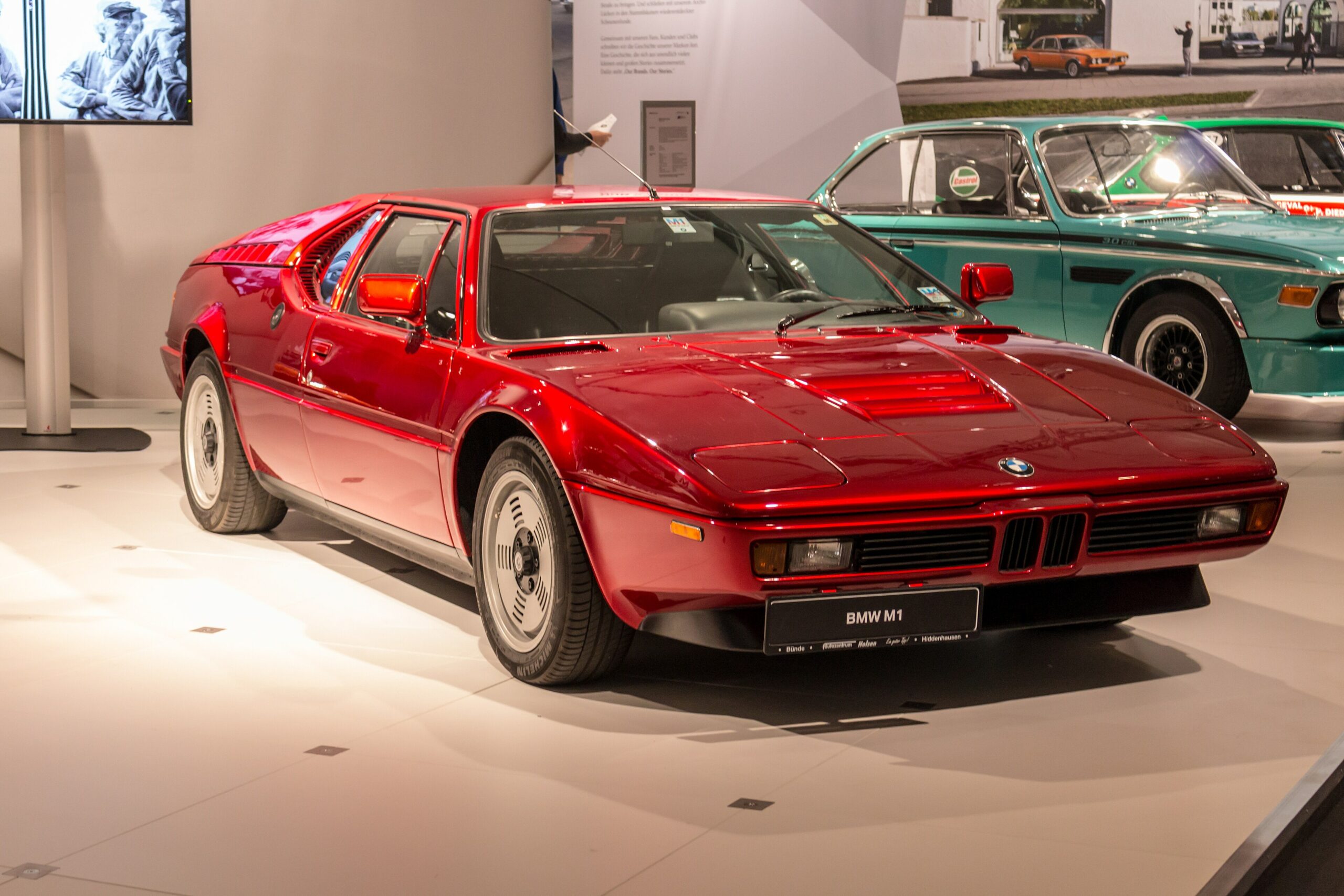
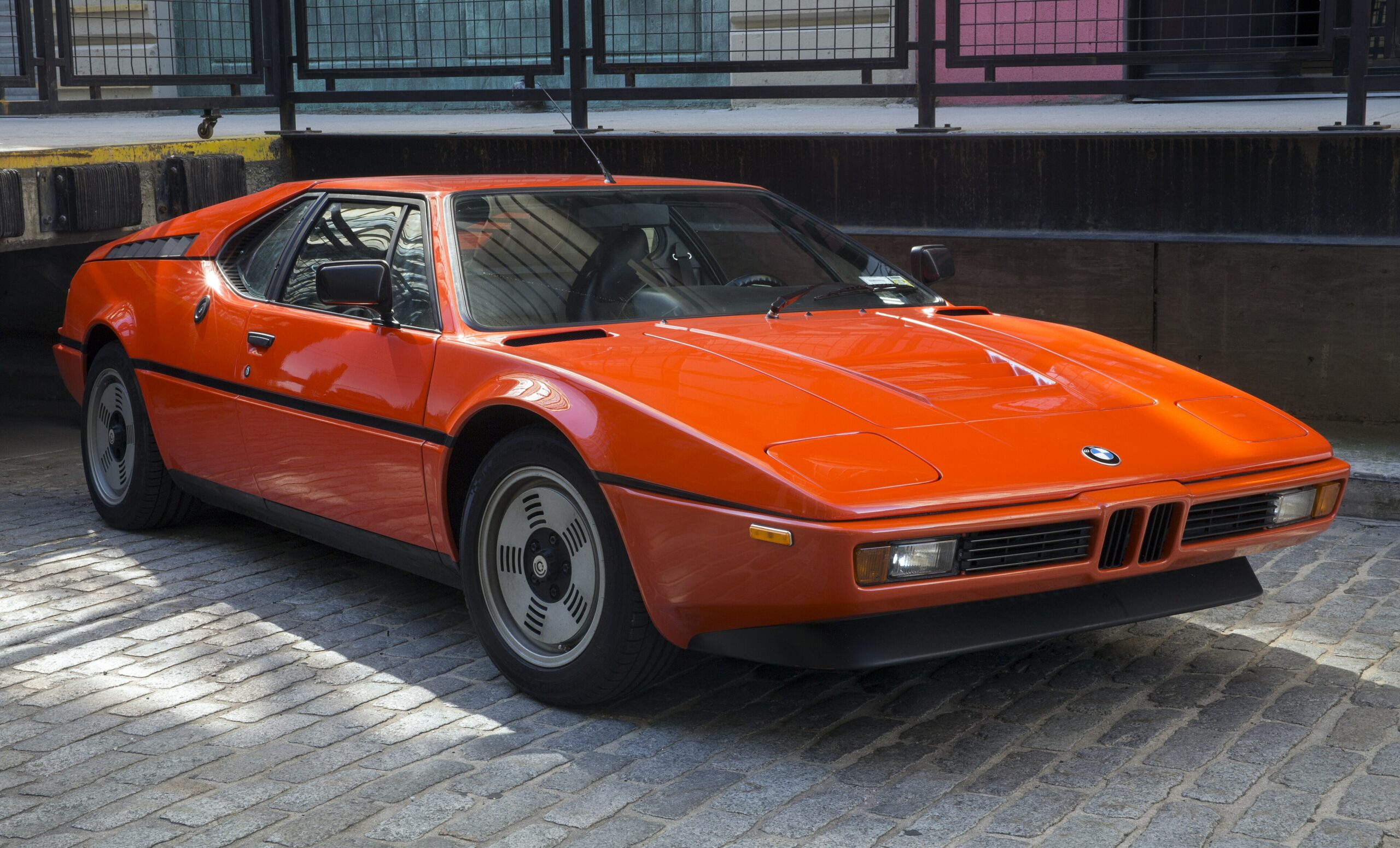
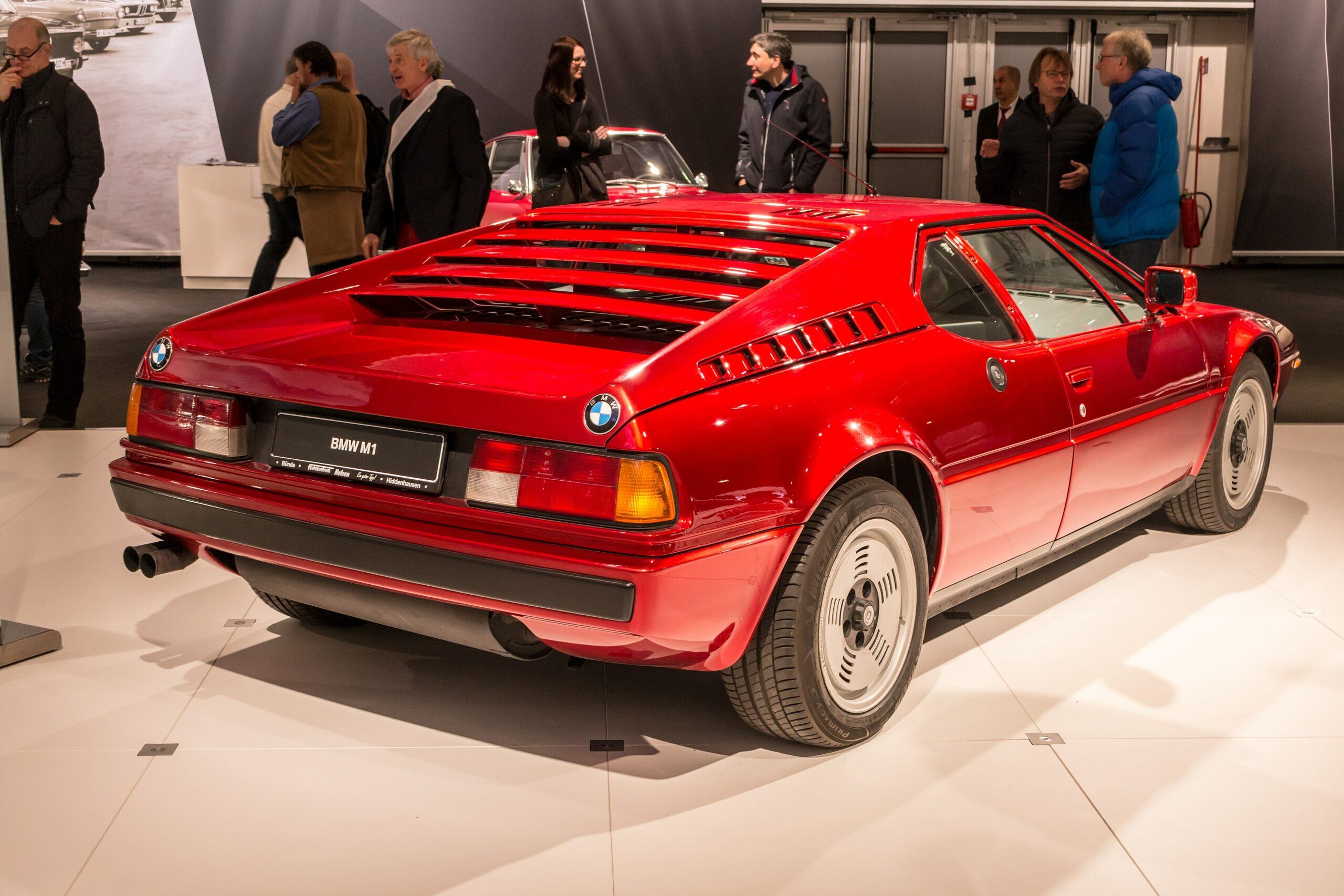
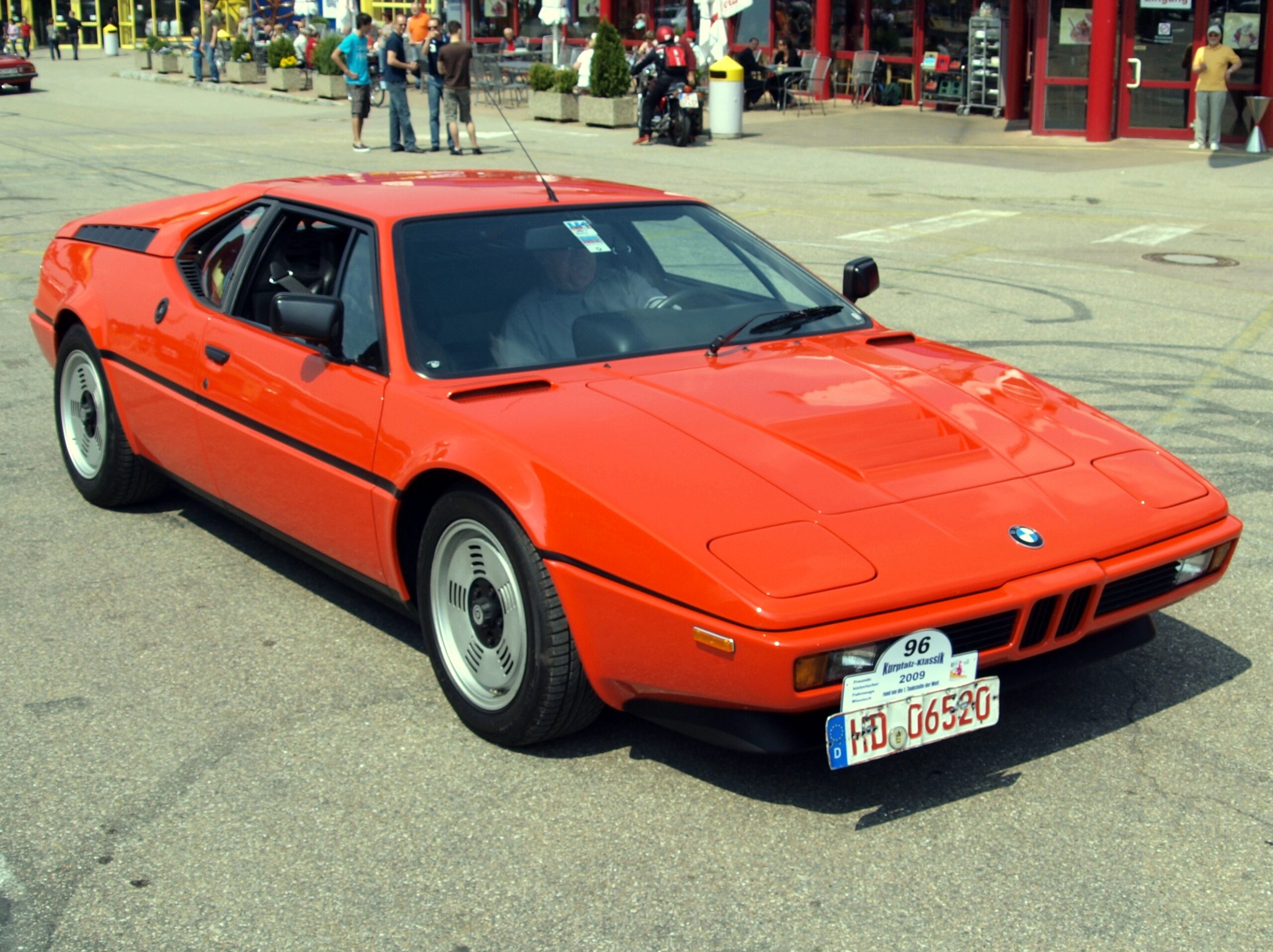
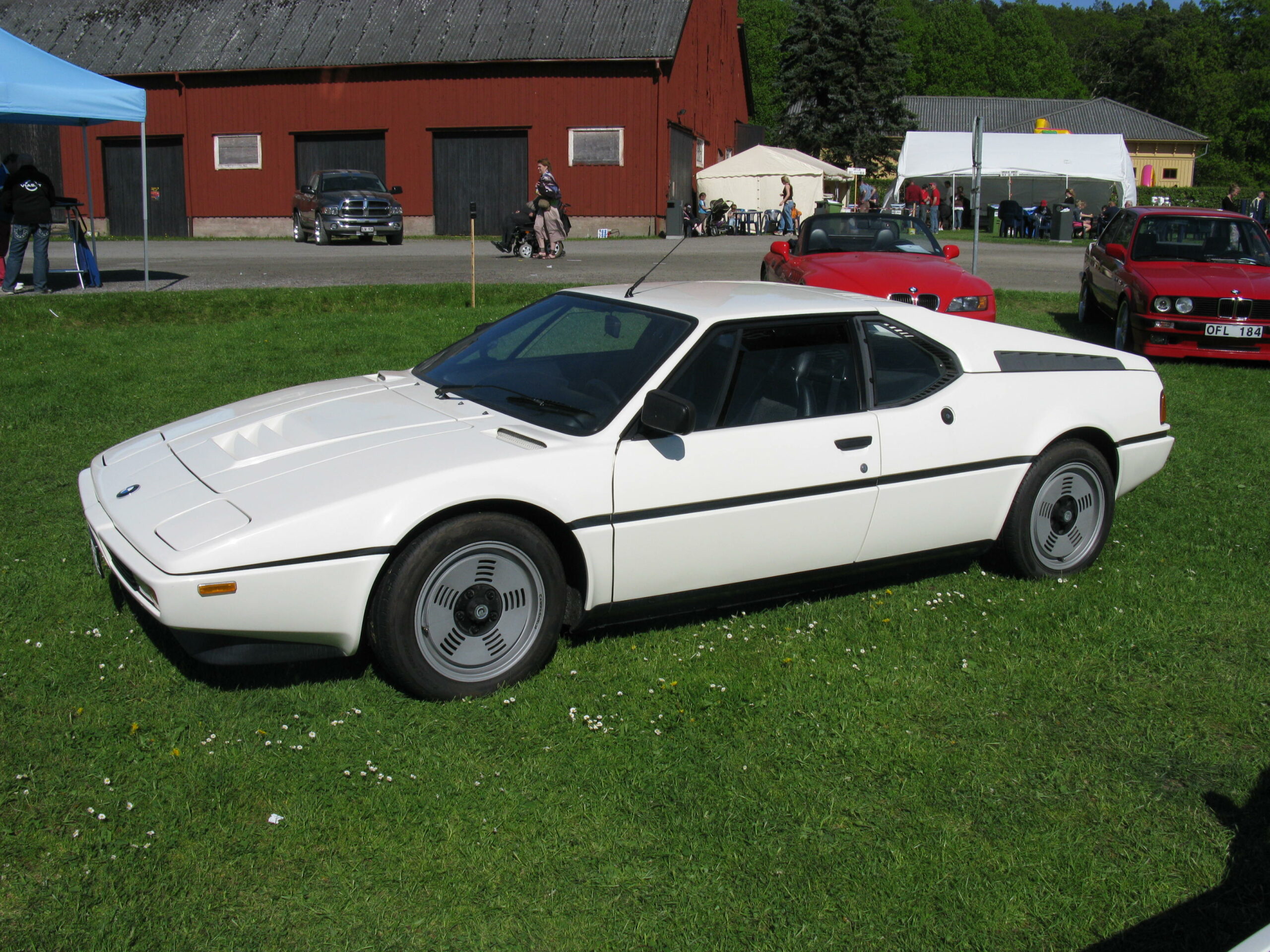
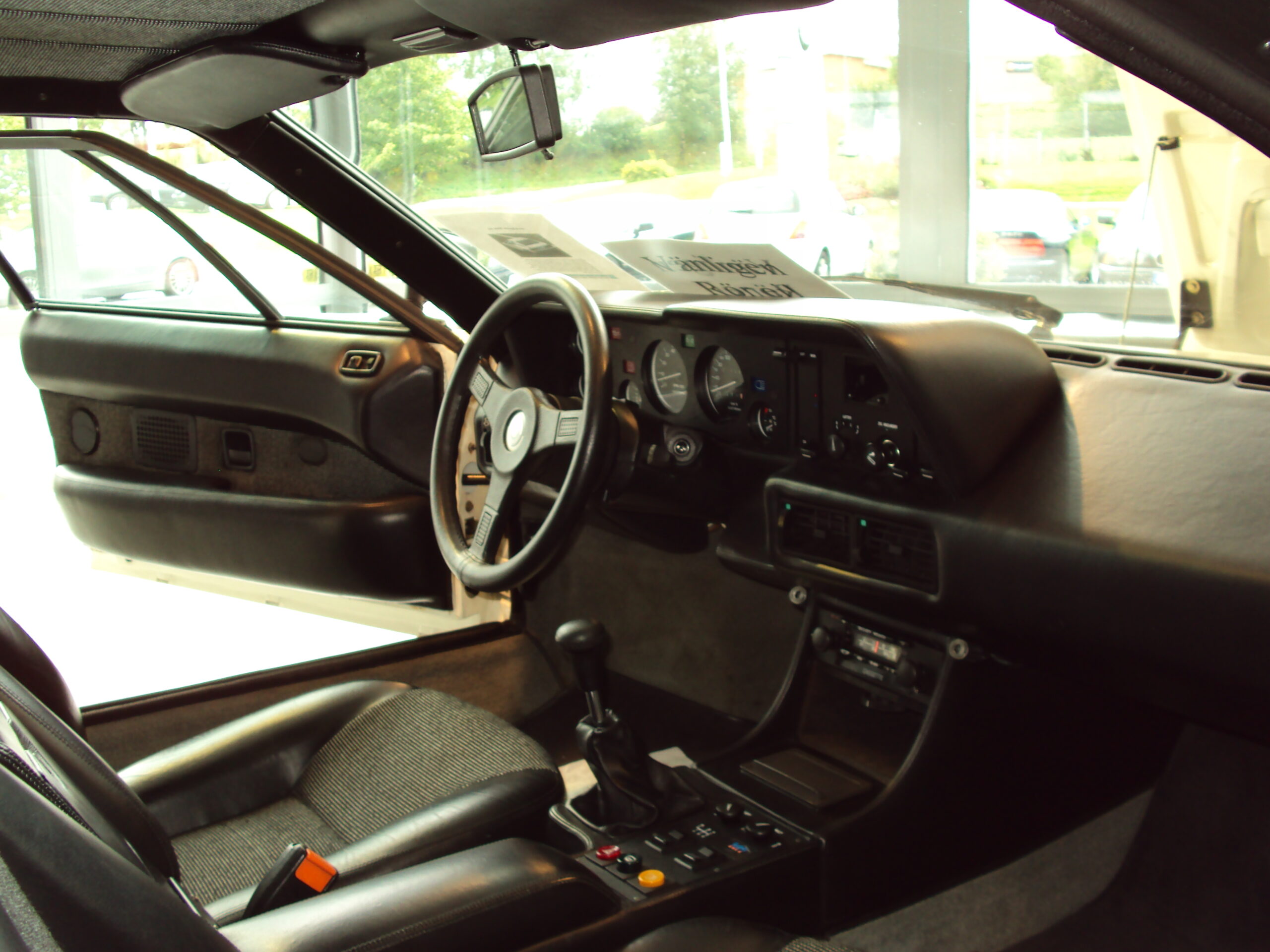
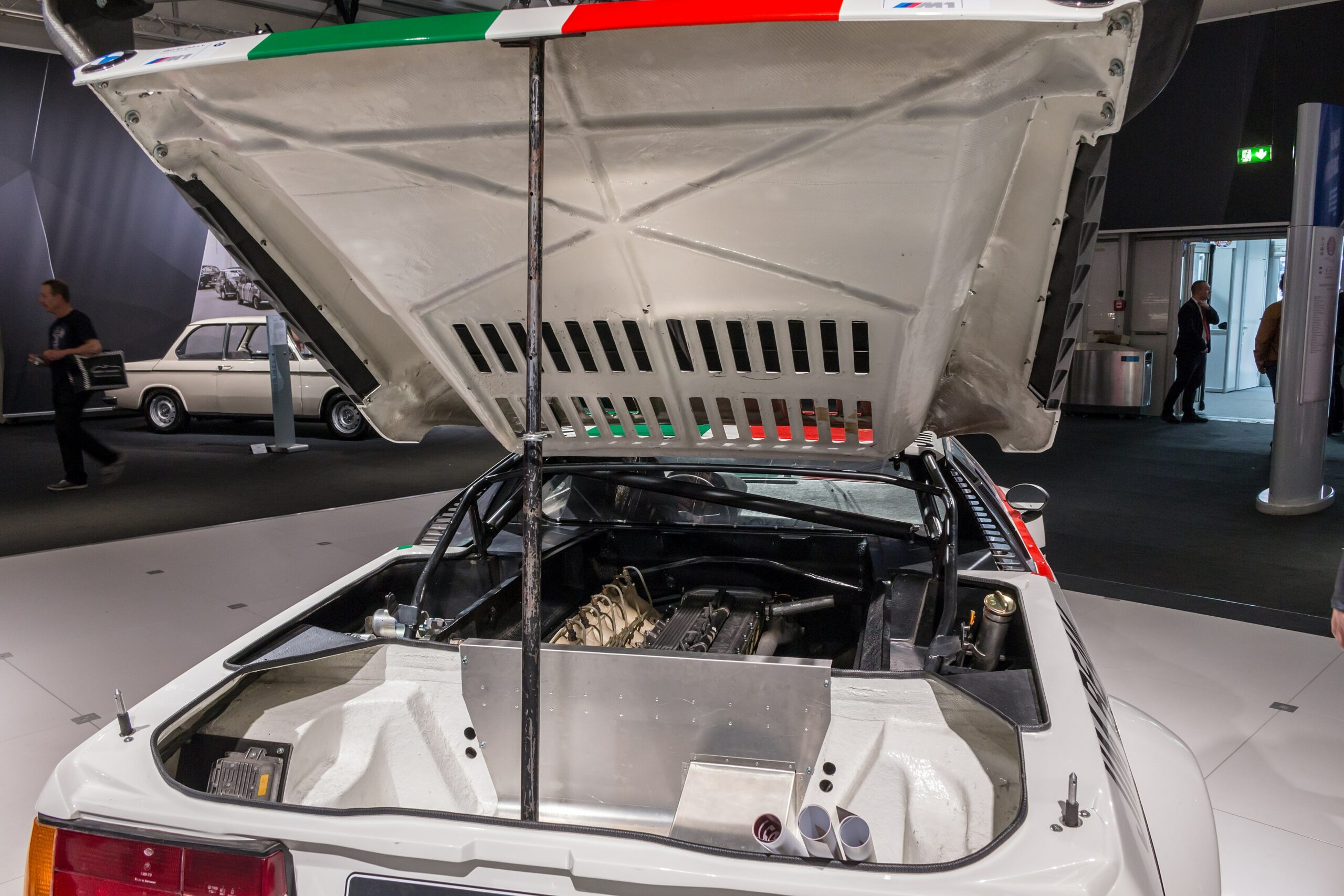
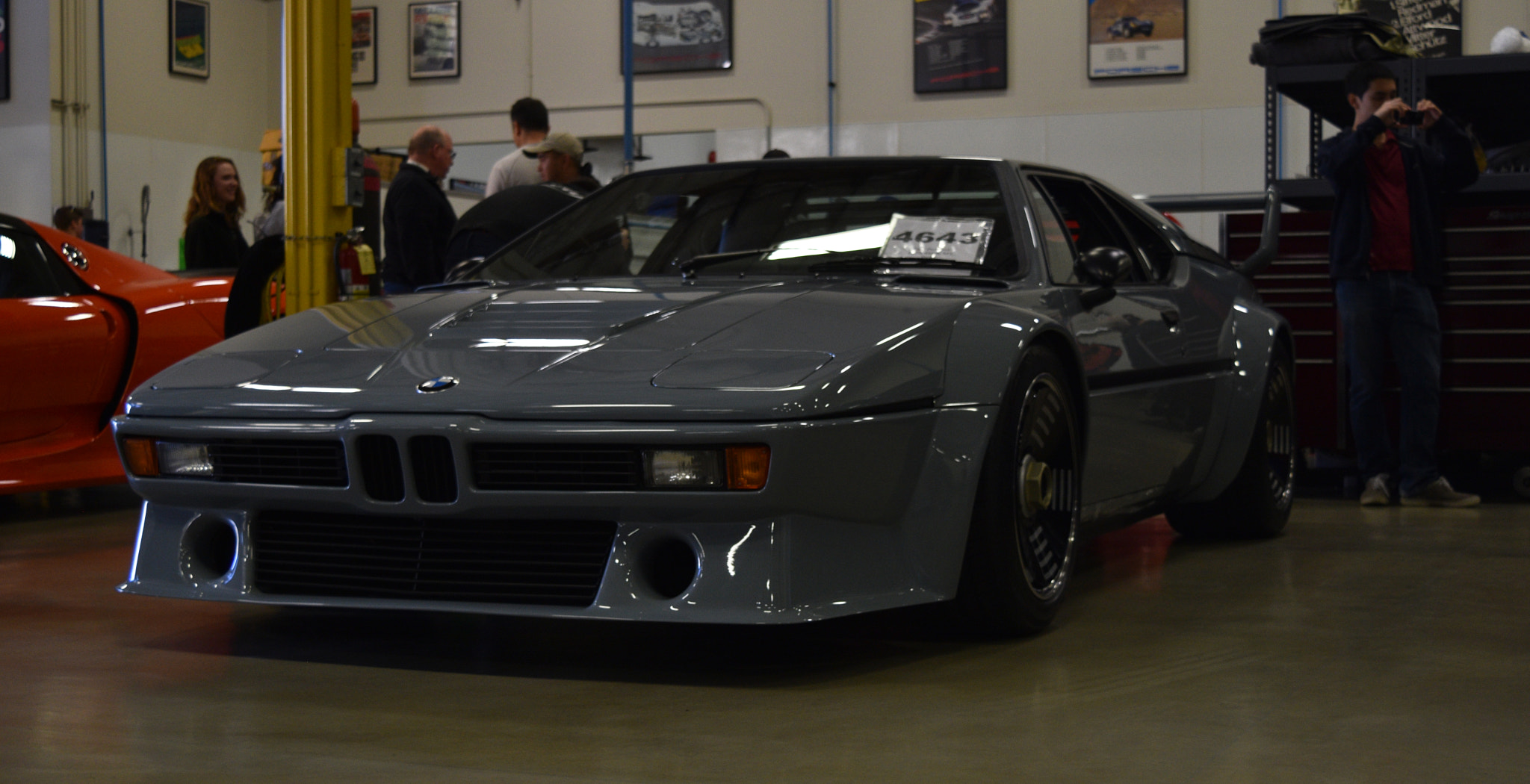
Road version in four colours, plus the engine bay, the bare tubular space frame and a racing body.
13 · Sources
Belege & Literatur
The principal source is the BMW PressClub media release "Icon for Connoisseurs — 30 Years of BMW M1," which includes a complete factory data sheet. In addition, bmw-m.com and Wikipedia. Statements from the BMW M1 Club are marked as such, as they are detailed but only singly sourced. Contradictions are noted in the text.
- BMW PressClub — Icon for Connoisseurs, 30 Years of BMW M1 (with factory data sheet)
- bmw-m.com — BMW M1: from Procar to icon
- BMW Art Car Collection — Andy Warhol, 1979
- Wikipedia (DE) — BMW M1
- Wikipedia (EN) — BMW M1
- Wikipedia (EN) — BMW M1 Procar Championship
- BMW M1 Club e.V. — The Production of the BMW M1