

01 · Overview
The last step
For the 1990 season BMW needed more displacement, and so the S14 grew one final time: 2,467 cubic centimetres, 238 PS at 7,000 rpm. The Sport Evolution — listed by BMW Group Classic with the addition “Evolution III” in quotation marks, referred to simply as Sport Evolution in the BMW press text — is the most radical road-going version of the E30 M3.
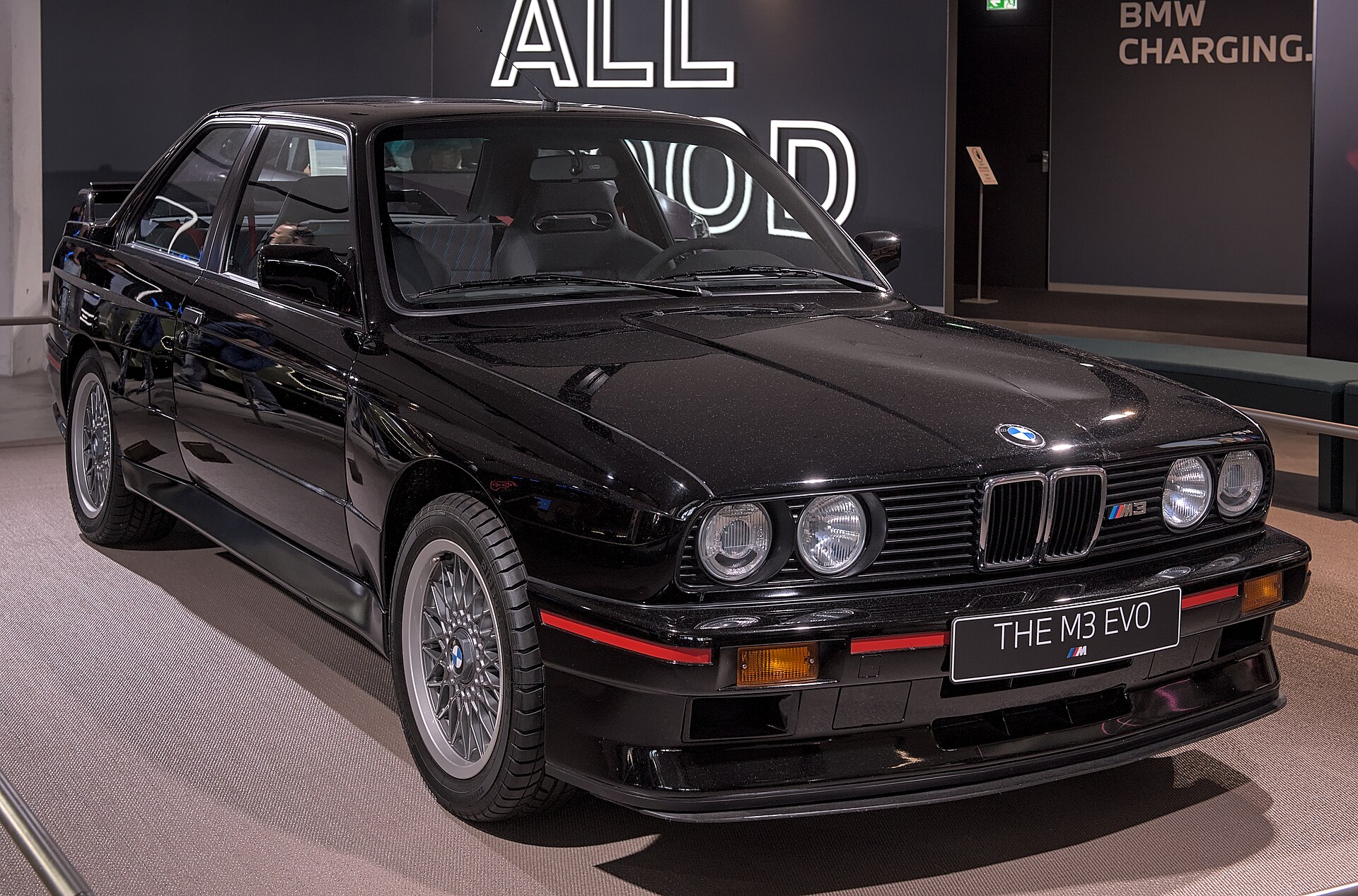
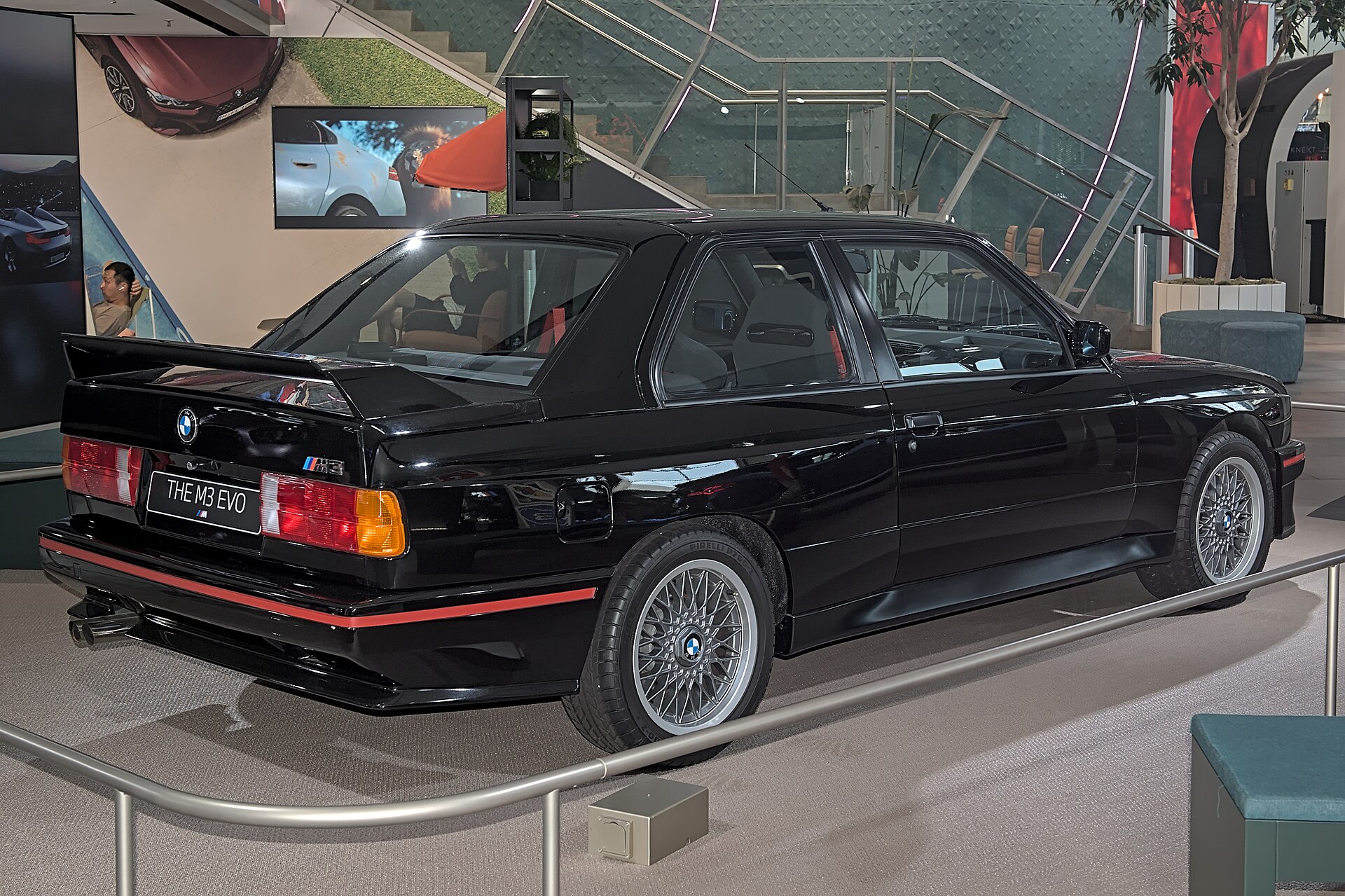
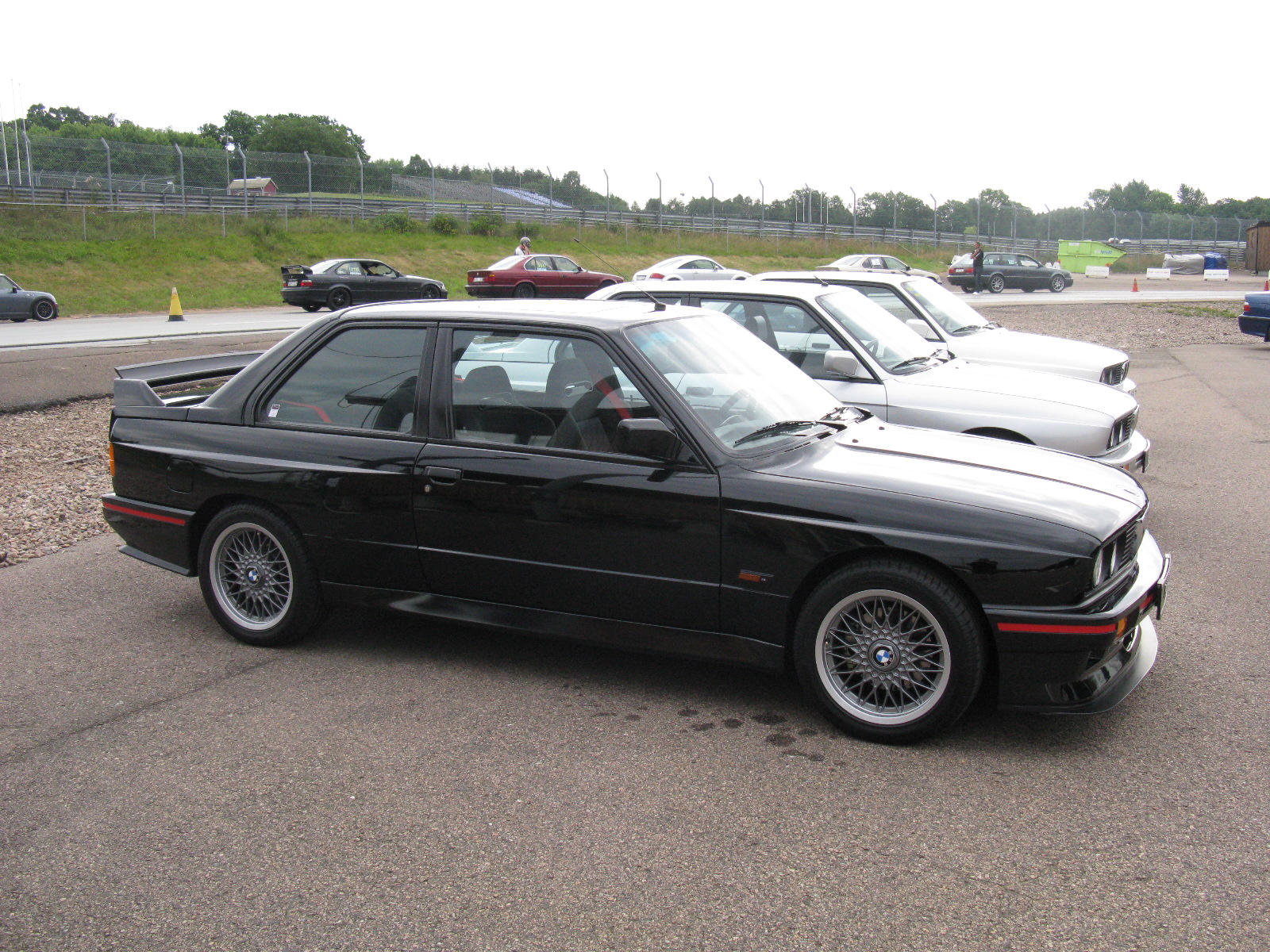
Its hallmark is the front and rear spoilers, adjustable in three stages: Monza, Normal and Nürburgring are the settings. Inside sit Recaro bucket seats with red seatbelts, along with a numbered plaque. Compared with the Evolution II, BMW saved a further 25 kilograms. It was painted exclusively in Gloss Black or Brilliant Red.
Sources disagree on compression — 10.2:1 versus 11.0:1 — and on top speed, BMW’s 248 km/h stands against the English Wikipedia’s 250. We leave both questions open.
02 · History
Four months
- 1989 Start of production in December.
- 1990 End of production in March after 600 vehicles. In the 1990 DTM season, the M3 competed with the 2.5-litre engine.
03 · Model overview
Classification within the Evolution series
Technische Daten anzeigen — komplette Modellmatrix
| Modell | Motor | Hubraum | Leistung | Bauzeit |
|---|---|---|---|---|
| M3 with Evolution engine | S14B23, revised | 2.302 cm³ | 200 PS (147 kW) | 02–05/1987 |
| M3 Evolution II | S14B23, 11,0:1 | 2.302 cm³ | 220 PS (162 kW) | 04–06/1988 |
| M3 Sport Evolution | S14B25 | 2.467 cm³ | 238 PS (175 kW) | 12/1989–03/1990 |
04 · In detail
In detail
Coupé

Only Gloss Black or Brilliant Red. Adjustable spoilers front and rear, Recaro seats, numbered plaque. The Japanese Wikipedia counts a single Convertible as part of the series — there is no second source for this.
05 · Engines
The engine
S14B25 · 2.467 cm³ · 238 PS verified
The 2.5-litre stage of the four-cylinder, built to homologate the same displacement for the racing version. 238 PS at 7,000 rpm. Sources cite compression ratios of 10.2:1 and 11.0:1 — the discrepancy cannot be resolved, as no BMW source gives a value.
Technische Daten anzeigen
| Hubraum | 2.467 cm³ |
| Leistung | 238 PS (175 kW) at 7,000 rpm |
| Achsübersetzung | 3,15:1 |
| Höchstgeschwindigkeit | 248 km/h (BMW) or 250 (Wikipedia EN) |
| Gewicht | around 25 kg less than the Evolution II |
BMW Group Classic
06 · Engineering
Engineering
The adjustable spoilers
Innenraum
Distinction from the scene name
07 · Identifikation
Identifikation
The Sport Evolution is the easiest special model to identify — if everything is original.
- Spoiler
- adjustable front and rear (three settings)verified
- Farben
- only Gloss Black or Brilliant Redverified
- Motor
- S14B25 with 2,467 cc — the only 2.5-litreverified
- Innenraum
- Recaro bucket seats, red seatbelts, Alcantara, numbered plaqueverified
- Details
- Brake air ducts instead of fog lights, thinner glass, lighter bumpersverified
- Fahrgestellnummern
- AC79000–AC79599 — closed range, 600 vehicles; listed as "Evolution III" in BMW M GmbH's service documentationverified
08 · Motorsport
Motorsport
The Sport Evolution homologated the 2.5-litre displacement for Group A. In the 1990 DTM season, the M3 competed with this engine; the model line’s racing record is on the main page.
09 · Buying guide
What to look out for when buying
600 vehicles, two colours, numbered plaque — identification is significantly easier than with the early Evolution stages.
The Sport Evolution is today the most valuable production model in the model line. Conversions to Sport Evolution appearance are widespread — the plaque and the vehicle information decide.
10 · Market & Values
Value development
Preisentwicklung
Für diese Baureihe liegen 1 dokumentierte Auktionsergebnisse vor.
Die Preisentwicklung ist nur für angemeldete Nutzer sichtbar.
11 · The competition
The competition
Mercedes-Benz 190 E 2.5-16 Evolution II
The rival with the most famous rear wing of the era, also from 1990, also a homologation special.
12 · Galerie
Galerie
13 · Sources