

01 · Overview
A BMW from South Carolina
On 20 September 1995, the first Z3 rolled off the line in Greer near Spartanburg — the first BMW ever built entirely and exclusively outside Germany. Over sixty percent of the parts came from North America. Two months later it was Bond’s company car in “GoldenEye”, and the entire Roadster production run of model year 1996 was sold out before the first customer had driven it.
Technically, the Z3 is not an independent design but a shortened floorpan of the E36 Compact — with its semi-trailing arm rear axle, the very principle BMW had already replaced in the 3 Series itself with the central link axle. That explains both things: the affordable price and the chassis criticism levelled at the early four-cylinders.
The second body was an engineering response, not a marketing product. The Roadster is torsionally soft — creaking and rattling are built in by design. Burkhard Göschel therefore had a fixed roof fitted outside the official programme and presented the finished prototype. The result from January 1998: the Coupé, still called the “clown shoe” in the USA today, and “Turnschuh” (sneaker) here — and around 2.6 times more torsionally rigid than the Roadster.
02 · History
Seven years in ten steps
From the video press release in June 1995 to the last car on 28 June 2002 at 12:34.
- 1995 In June, BMW announces the Z3 via a video press release — an unusual approach for the time.
- 1995 On 20 September, production starts in Spartanburg, South Carolina. The first BMW built exclusively outside Germany; over 60 percent of the parts come from North America.
- 1995 On 13 November, world premiere of "GoldenEye" at Radio City Music Hall. The Z3 1.9 is Bond's company car, but only on screen for a few minutes. BMW paid no placement fee, instead integrating the film into the launch campaign and securing script input.
- 1995 In December, the "James Bond Edition" appears in the Neiman Marcus catalogue: Atlanta Blue, beige Nappa leather, 007 badge. Over 200 orders in the first five minutes, 100 built.
- 1996 In May, the first customer deliveries. The entire Roadster production run of the model year — over 15,000 units — was sold before market launch.
- 1997 In March, the first six-cylinder arrives: Z3 2.8 with 192 PS. In parallel, the M Roadster launches with the S50B32 from the European M3 — 321 PS.
- 1997 In September, world premiere of the Z3 Coupé at the IAA in Frankfurt. The reactions are as divided as for almost no other BMW.
- 1998 In January, Coupé production starts, initially as the 2.8 and as the M Coupé.
- 1999 In April, the facelift: new rear end with flared wheel arches and L-shaped tail lights, new centre console, DSC instead of ASC — and above all, all models receive the reinforced six-cylinder rear axle with a wider track.
- 2001 In February, the M models switch to the S54B32. On 28 June 2002 at 12:34, the last Z3 rolls off the line in Spartanburg; the Z4 (E85) follows in the autumn.
03 · Model overview
From the 1.8 to the M Coupé
Factory figures. Note on the M models: North America received a different engine until 2000, not just a detuned version — details in the M & Special Editions section. The 2.3 and 2.5i types were exclusive to North America, while the 1.8, 2.0 and 2.2i were never offered there.
Source: factory and literature data · verified
Technische Daten anzeigen — komplette Modellmatrix
| Modell | Motor | Hubraum | Leistung | Bauzeit |
|---|---|---|---|---|
| Z3 1.8 | M43 B18 | 1.796 cm³ | 115 PS (85 kW) | 10/1995–08/1998 |
| Z3 1.9 | M44 B19 | 1.895 cm³ | 140 PS (103 kW) | 10/1995–04/1999 |
| Z3 1.9i | M43TÜ B19 | 1.895 cm³ | 118 PS (87 kW) | 09/1998–07/2002 |
| Z3 2.0 | M52TÜ B20 | 1.991 cm³ | 150 PS (110 kW) | 04/1999–10/2000 |
| Z3 2.2i | M54 B22 | 2.171 cm³ | 170 PS (125 kW) | 10/2000–07/2002 |
| Z3 2.3 (North America) | M52TÜ B25 | 2.494 cm³ | ca. 170 PS (125 kW) | 1999–2000 |
| Z3 2.5i (North America) | M54 B25 | 2.494 cm³ | ca. 192 PS (141 kW) | 2001–2002 |
| Z3 2.8 | M52 B28 | 2.793 cm³ | 192 PS (141 kW) | 03/1997–09/1998 |
| Z3 2.8i | M52TÜ B28 | 2.793 cm³ | 193 PS (142 kW) | 02/1999–06/2000 |
| Z3 3.0i | M54 B30 | 2.979 cm³ | 231 PS (170 kW) | 06/2000–07/2002 |
| M Roadster · M Coupé (Europe) | S50 B32 | 3.201 cm³ | 321 PS (236 kW) | 03/1997–07/2000 |
| M Roadster · M Coupé (North America) | S52 B32US | 3.152 cm³ | 240 hp (179 kW) | 1998–2000 |
| M Roadster · M Coupé (Europe) | S54 B32 | 3.246 cm³ | 325 PS (239 kW) | 02/2001–06/2002 |
| M Roadster · M Coupé (North America) | S54 B32 | 3.246 cm³ | 315 hp (235 kW) | 02/2001–06/2002 |
04 · Body variants
Body variants
Roadster (E36/7)

September 1995 to June 2002, 279,273 units. Two-seater with a fabric top, long bonnet, short tail and a seating position set well to the rear. The boot holds 160 litres, and the body is only moderately torsionally rigid — creaking, rattling and loud wind noise are inherent to the design and are mentioned in every buyer's guide.
Coupé (E36/8)

January 1998 to June 2002, 17,815 units. Created as a response to the Roadster's stiffness deficit. Because most of the sheet metal had to be shared with the Roadster, a short shooting-brake cabin sits on the unchanged Roadster front end — hence the silhouette that earned the car the nickname "clown shoe" in the USA. The window frames, door struts and window area are reinforced.
05 · Engines
Four- and six-cylinder, three M engines
The Z3 covers an unusual range: from the plain two-valve M43 to the S54 revving to 8,000 rpm. Between base and top-of-the-range there are 210 PS — and two completely different cars.
M43 — Z3 1.8 and 1.9i verified
Grey cast-iron block, a single overhead camshaft, two valves per cylinder, no variable valve timing. Undemanding and durable by design, but reluctant to rev and unrefined in sound. The base engine — 115 PS as the 1.8, 118 PS as the 1.9i after the facelift.
M44 — Z3 1.9 up to 1999 verified
Four-valve engine with two overhead camshafts from the E36 318is. With 140 PS, the noticeably livelier four-cylinder option, eager to rev and robust. Not carried over after the facelift — the weaker 1.9i is considered a step backwards in the scene.
M52 — Z3 2.8 up to 1998 verified
Inline six-cylinder with an aluminium crankcase and single VANOS. The core issue is the Nikasil coating of the cylinder bores: sulphur-containing fuel attacks it and caused bore wear with compression loss on early engines. BMW switched to steel cylinder liners. The US market therefore mostly received grey cast-iron blocks — with the notable exception of the Z3 2.8, which retained the aluminium block there too.
M52TÜ — Z3 2.0 and 2.8i verified
Revision from 1998: double VANOS, aluminium block throughout with grey cast-iron liners, electronic throttle. This resolved the Nikasil issue, and torque at the lower end increases noticeably.
M54 — Z3 2.2i, 2.5i and 3.0i verified
The facelift six-cylinders from 2000: aluminium block with grey cast-iron liners, double VANOS, electronic throttle pedal. The 3.0i with 231 PS is regarded as the best engine in the model line below the M models — powerful, refined and without the S54's maintenance demands.
S50B32 — M Roadster and M Coupé Europe verified
The M engine from the European E36 M3 3.2: 3,201 cc, double VANOS, individual throttle bodies, 321 PS at 7,400 rpm, 350 Nm. High-revving, characterful, with an excellent reputation. The shorter exhaust system in the Z3 costs no notable power compared with the M3.
S52B32US — M models North America up to 2000 verified
Not a detuned S50, but a different engine: grey cast-iron block, 3,152 cc, single VANOS, 240 hp at just 6,000 rpm. Technically closer to the M52 than to the S50. Rated significantly lower in the collector scene, but considered the most trouble-free M engine in the model line for everyday use.
S54B32 — M models from February 2001 verified
3,246 cc, grey cast-iron block, finger-type rocker arms, sharper cams, an oil scavenge pump against oil starvation in fast corners, 8,000 rpm rev limit. 325 PS in Europe, 315 hp in North America. Technically the best engine in the model line — but with the well-known S54 conrod bearing issue: short oil change intervals and bearing checks are mandatory.
06 · Weak points
Reliability & weak points
- The differential mount in the rear floor panel is the Z3 topic par excellence. The right-hand differential mount is not bolted to the subframe but directly to the boot floor. Under load, the differential rotates around the driveshaft axis and channels force at a single point into a panel that is too weak for it. The result: cracks in the boot floor, torn spot welds, and in extreme cases the mount tears out completely. All Z3 models are affected, especially the six-cylinders and M models.
- Rust occurs moderately overall, but reliably at specific points: lower door edges, the transition from sill to wheel arch, boot floor, battery tray, and on the Coupé the tailgate and lock area as well as the aluminium mirror housings and their brackets.
- The plastic rear window of the fabric top yellows, clouds over and cracks — especially if the top is folded back in cold weather or without being folded properly. The electric top is heavier, more expensive and more prone to faults than the manual one.
- The cooling system typically fails abruptly between 150,000 and 160,000 kilometres: expansion tank, thermostat housing, radiator necks and the water pump impeller are made of plastic. On the six-cylinders, overheating risks head gasket damage. A complete preventive replacement is standard practice among connoisseurs.
- VANOS wear affects both single and double VANOS. Symptoms: rattling at idle, a power dip below 3,000 rpm, jerking. On the S50 and S54 with a noticeable loss of power. Repair kits are available.
- Water ingress into the boot and footwell caused by a leaking top, aged seals and blocked drains. The car is sensitive to car washes and pressure washers. Consequential damage includes rust on the boot floor and failure of the yaw rate sensor for the dynamic stability system under the carpet — indicated by a permanently lit warning lamp.
- The plastic slide inserts of the seat rails wear out, and the adjustment spindle seizes. The driver’s seat wobbles and jerks noticeably under acceleration and braking. Repair kits are standard aftermarket items.
- Other documented issues: faulty window regulators (more complex geometry on the Coupé), fuel level sender, overheating tail light sockets, yellowing headlights, front control arms and ball joints, rear axle and subframe mounts, DISA valve and porous intake boots on the M52, fading dashboard top surface.
07 · Engineering
Floorpan, axles, brakes, rigidity
Bodengruppe
Vorderachse
Hinterachse
Two rear axles up to 1999
Bremsen
Chassis of the M models
Karosseriesteifigkeit
Technical data — final drive ratios & gearboxes
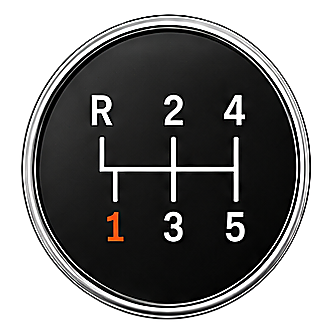
- Transmission 1.8 and 1.9
- five-speed manual gearbox from Getrag as standard, four-speed automatic as an option
- Transmission 2.0 and 2.8
- five-speed manual gearbox ZF S5D 320Z as standard, four-speed automatic as an option
- Transmission 2.2i
- five-speed manual gearbox from Getrag as standard, five-speed Steptronic as an option
- Transmission 3.0i Roadster and Coupé
- five-speed manual gearbox ZF S5D 320Z as standard, five-speed Steptronic as an option
- Transmission M Roadster and M Coupé
- exclusively a five-speed manual gearbox from ZF, no automatic, 25 percent limited-slip differential as standard
- Gear ratios M Roadster and M Coupé
- 4.21 / 2.49 / 1.66 / 1.24 / 1.00, reverse gear 3.85
- Final drive ratio 1.8i from September 2000
- 3.38
- Final drive ratio 2.2i
- 3.38 with manual gearbox, 3.45 with automatic
- Final drive ratio 3.0i
- 3.07 with manual gearbox
- Final drive ratio M Roadster and M Coupé
- 3.15 with S50B32 and S54B32, 3.23 with the US engine S52
For the early models 1.8, 1.9 and 2.0, no final drive ratio could be verified. The figures for the 2.8 come solely from the US data sheet.
For the 3.0i with automatic, the factory figures contradict each other: the German data sheet states 3.15, the American one 3.46. Likely a market difference, but it could not be resolved.
08 · Top models
Top models
Four variants above the standard range and one special series available only through a catalogue.
M Coupé (S50/S52, from 2001 S54)
The "bread van" — initially 321 PS, from 2001 with the S54 from the M3 E46. Both stages on one page.
To the sub-page →
M Roadster
From March 1997, 15,322 units — more than double the number of Coupés. Technically identical, but rated significantly lower in the market. The M Roadster was excluded from the visual facelift of 1999.
To the sub-page →
Z3 3.0i
From June 2000, 231 PS from the M54B30. The most powerful non-M Z3 and, for many, the most sensible: near-M performance in everyday use, without the S54's maintenance demands.
To the sub-page →
James Bond Edition
December 1995, available exclusively through the Neiman Marcus catalogue: Atlanta Blue, beige Nappa leather, 007 badge. Over 200 orders in the first five minutes, 100 built.
To the sub-page →
09 · M & special editions
M Roadster and M Coupé — and why the American one was a different car
In March 1997 the Z3 received the S50B32 from the European E36 M3 3.2: 3,201 cc, double VANOS, individual throttle bodies, 321 PS at 7,400 rpm. The same technology followed in the Coupé a year later. From February 2001, the S54B32 with 3,246 cc and 325 PS took over — though weaker in the Z3 than in the E46 M3 with 343 PS, because the exhaust system is noticeably shorter for reasons of space.
Important for buyers: North America never received the European engine until 2000. The S52B32US is not a detuned S50, but a different engine entirely — grey cast-iron block, 3,152 instead of 3,201 cc, single VANOS instead of double VANOS, a significantly lower rev limit. 240 hp versus 321 PS, a difference of around 78 PS. From February 2001, the S54 standardised the model line, but remained 6 kW weaker in North America for emissions reasons.
All M models were available exclusively with a five-speed manual gearbox and limited-slip differential, limited to 250 km/h. A total of 21,613 Z3 M were built — 15,322 Roadsters and 6,291 Coupés.
10 · Buying guide
What matters most: differential mount, water, cooling system
The Z3 is mechanically manageable and well supplied with parts. Two things nevertheless determine whether to buy or walk away: the condition of the differential mount in the boot floor and whether water has entered the car over the years. Everything else is a matter of negotiation.
Lower door edges
Transition from sill to wheel arch
Boot floor — consequential damage from a leaking top
Batteriekasten
Aluminium mirror housings and their brackets
On the Coupé, additionally the tailgate and lock area
First on stage: check the right-hand differential mount and the boot floor above it for cracks and raised spot welds. Reinforcement plates already welded in are a plus point, not a flaw — an M model without reinforcement should either be priced down or passed on. Then empty the boot, check the spare wheel well and side compartments for moisture and water marks, and lift the footwell carpet: wet insulation endangers the yaw rate sensor of the dynamic stability system, which costs around a thousand dollars new. Open and close the top fully several times, checking the folding, tension and clarity of the plastic window. Ask for evidence of cooling system work — water pump, thermostat, expansion tank, hoses. Listen for VANOS rattle at warm idle and rev out from 1,500 rpm in third gear; a dip below 3,000 rpm is a warning sign. On the pre-facelift 2.8 with the aluminium block, request a compression loss test due to the Nikasil history; on the S54, ask about oil change intervals and conrod bearing history. And pay attention to the equipment: only around a third of all Z3s had DSC, and an automatic is regarded in the collector scene as a clear value deduction.
11 · The competition
What the Z3 had to compete with
Porsche Boxster (986, from 1996)
The rival above it: mid-engine roadster with a six-cylinder boxer, clearly superior in dynamics and significantly more expensive. The Boxster is the reason the Z3 was never positioned as a serious sports car, but as a lifestyle roadster.
Mercedes-Benz SLK (R170, from 1996)
The commercially most important competitor in the home market. With its Vario folding hardtop, it offered coupé comfort and roadster freedom in one car — the answer BMW only delivered later with the Z4. Worse in driving fun and without the six-cylinder emotion of the M models.
Mazda MX-5 (NB, from 1998)
The benchmark for lightness and value for money: cheaper, lighter, for many the more honest choice. Worse in prestige, engine range and presence — a six-cylinder was never offered there.
Audi TT Roadster (8N, from 1999)
Design icon with front-wheel drive or quattro and a turbocharged four-cylinder. The conceptual counter-model that took customers away from the Z3, particularly among younger, design-conscious buyers. Worse in weight distribution and chassis balance.
Honda S2000 (from 1999)
The true rival of the M models in character: a two-litre naturally aspirated engine with 240 PS and 9,000 rpm, uncompromisingly sporty. Worse in torque and composure — for buyers who valued revs over pull.
12 · Sources
Belege & Literatur
Key sources are BMW Group Classic, the BMW PressClub and Wikipedia; everything else is only treated as verified once two independent sources agree. Not verifiable and therefore not stated here: confirmed power figures for the North American 2.3 and 2.5i types and the exact number of Coupés with the 2.8 engine. There was never a factory motorsport programme for the Z3 — neither BMW Motorsport nor BMW M homologated a racing or GT version; only private entries are documented, including at the Nürburgring 24 Hours from 2004 to 2006. For this reason, this page does not include a motorsport section.
- BMW Group Classic — Z3 Roadster (E36)
- BMW PressClub USA — Last Z3 Roadster Rolls Off Line at BMW Manufacturing
- BMW PressClub Canada — The BMW Z3 Roadster: Entering the New Millennium with a Fresh New Look (Facelift 04/1999)
- BMW PressClub USA — 50 Stories for 50 Years, Chapter 20: The Z3 Roadster Phenomenon
- BMW M — The BMW Z3 M Coupé
- Wikipedia (EN) — BMW Z3, BMW M Coupé and Roadster, BMW M52, BMW S54
- Wikipedia (DE) — BMW Z3
- ASC Fabrics — Understanding the Z3 Rear Subframe/Trunkfloor Issue
- Classic Motorsports — BMW Z3 and M Roadster Buyer's Guide
- AutoScout24 — Used Car Buyer's Guide BMW Z3 (1996–2002)
- CLASSIC.COM — Z3 M Coupé and Z3 Roadster, accessed August 2026
- Classic Trader — Listing observation BMW Z3, accessed 5 Aug 2026
- BMW — Factory data sheet technical specifications Z3 roadster 1.8i, 2.2i and 3.0i
- BMW PressClub USA — BMW Z3 Specifications, model year 2000