

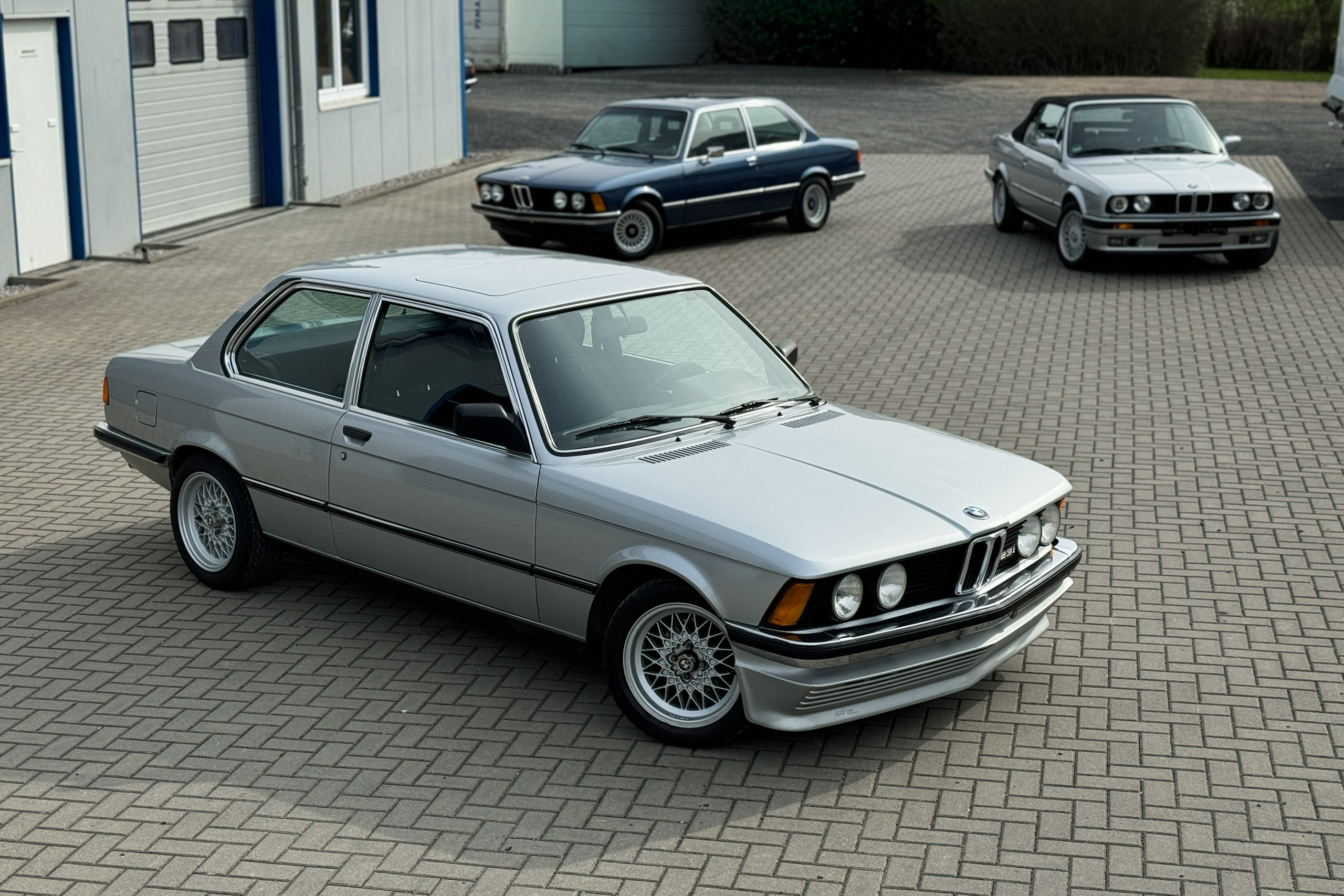
Some cars tell their story through invoices, stamps, and an odometer that hasn’t even reached 70,000 in 46 years. This BMW 323i from the E21 model line is one such case: handed over to its first owner on 17 July 1980 at the Dingolfing plant, documented without gaps ever since — and today, with 66,132 kilometres, in a condition that for once truly deserves the term “time capsule.”
One folder tells 46 years
Its history comes with a folder just as any classic car owner would wish for: the vehicle registration document, service book, original owner’s manual, and invoices reaching into the recent past. The BMW service book begins with the free handover inspection on 17 July 1980 at zero kilometres, stamped upon vehicle delivery at Plant 2.4 in Dingolfing. As early as 29 August 1980, the first inspection followed at 1,780 kilometres — carried out by the factory workshop directly in Dingolfing.
After that, stamp follows stamp: an oil service in March 1981 at 7,455 kilometres, inspections at 15,648 and 30,950 kilometres, oil services at 19,929 kilometres and — with the safety test checked off — on 20 May 1987 at 52,147 kilometres. Over the years, the Coupé was maintained first in the Rosenheim area, then for many years at Karl Schanzer GmbH in Übersee am Chiemsee, and later at the BMW branch in Munich on Ingolstädter Straße. Documentation from more recent times also survives, from a compact check at the Munich branch to a partial invoice from the BMW branch in Kassel. In short: this car was never lost, it was simply always kept maintained.

Six cylinders in a compact car
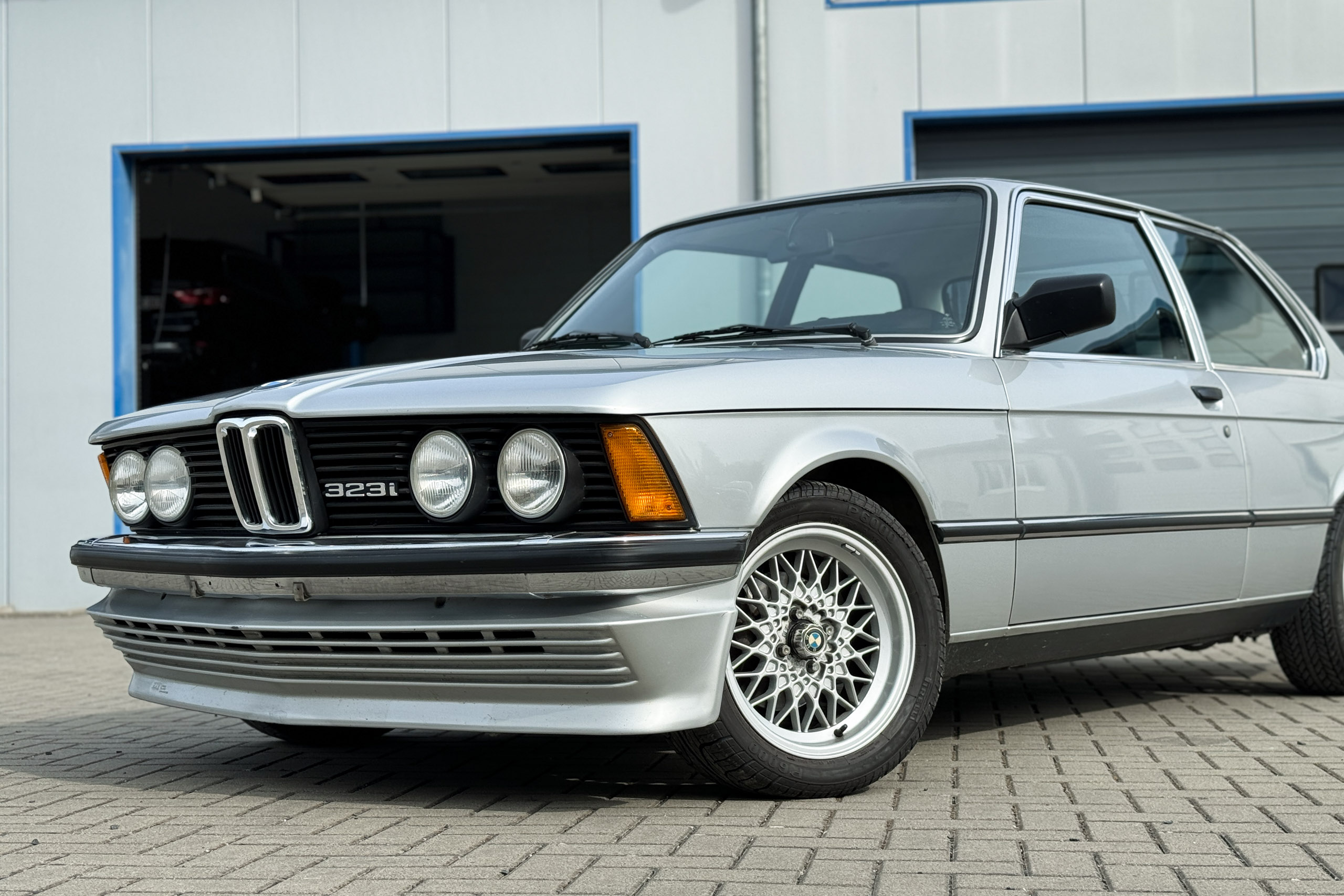
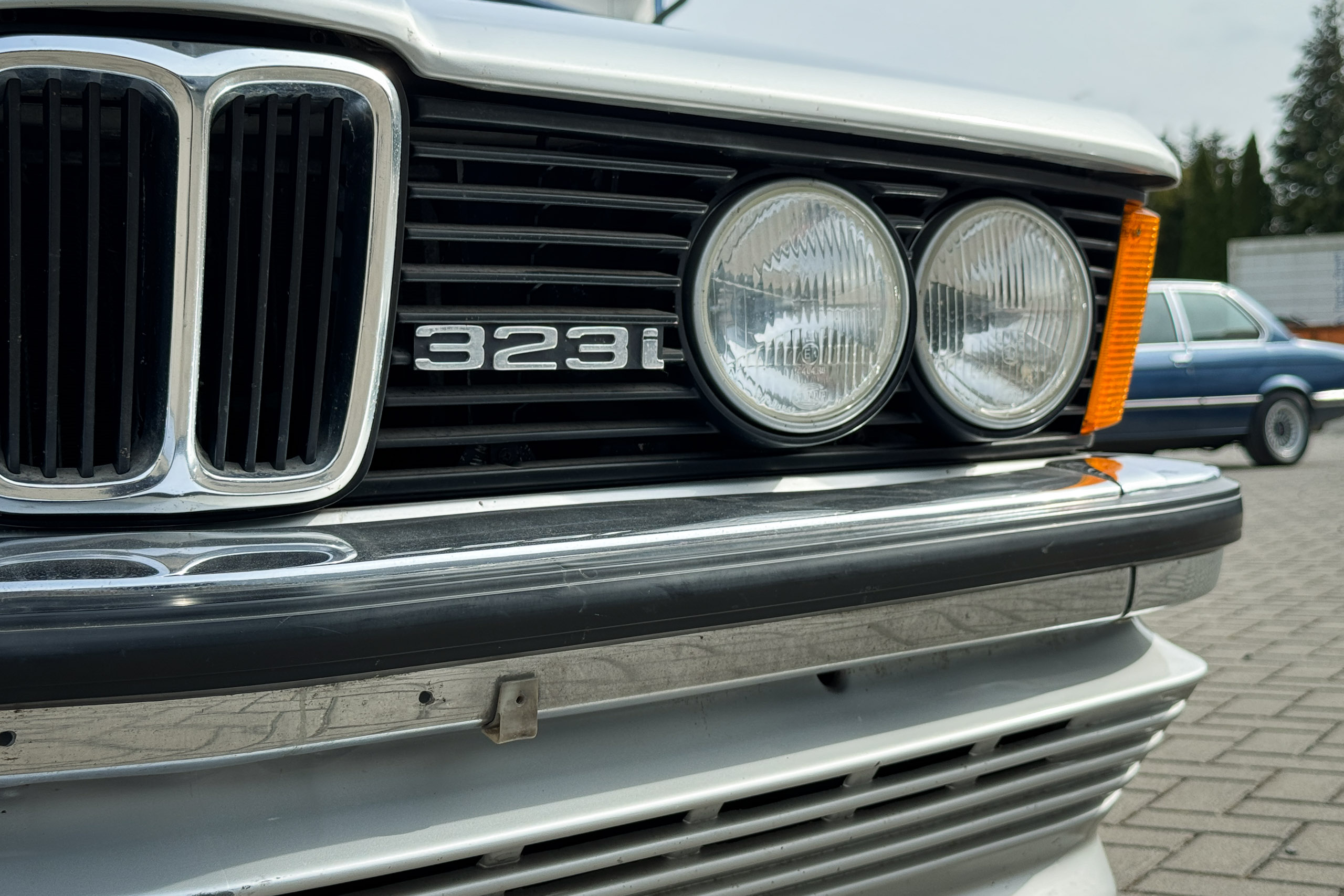
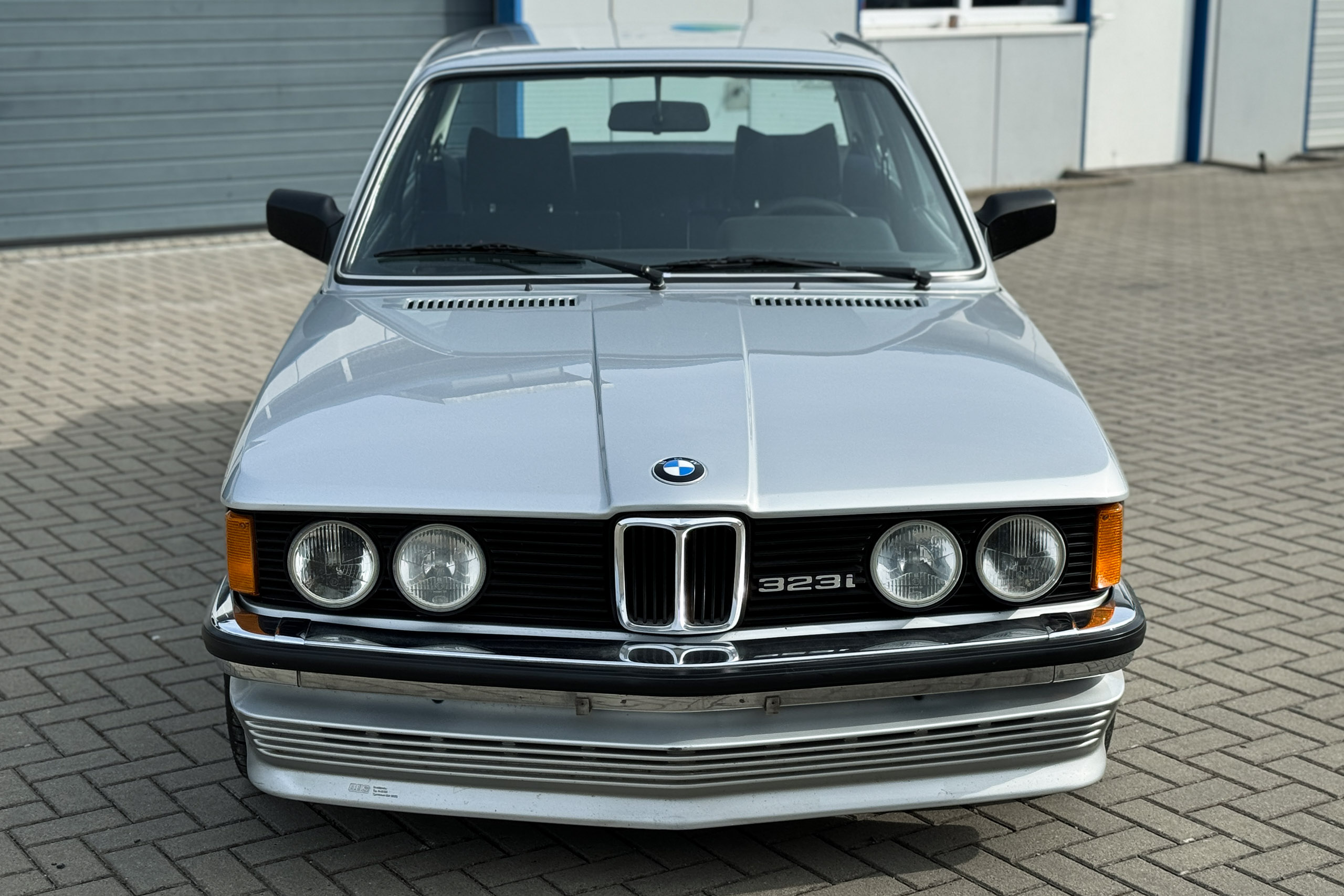
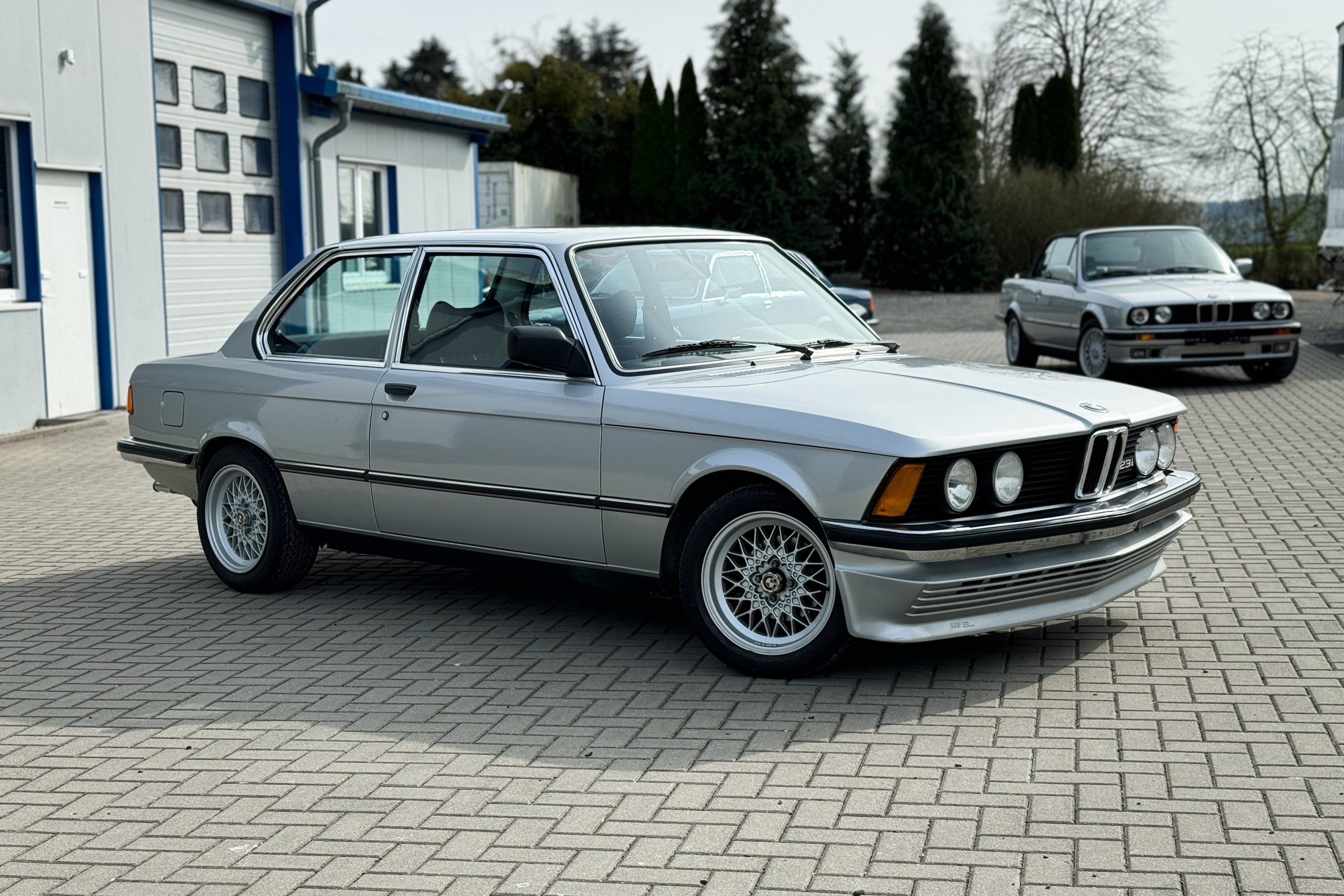
From 1978, the 323i was the top of the first 3 Series — and the first time BMW placed a six-cylinder engine in the compact class. Its 2.3-litre M20 with K-Jetronic fuel injection produces 143 PS, revs smoothly, and thanks to the mechanical injection, responds directly to throttle input. From the outside, six-cylinder E21 models can be identified by two details, both of which this car carries: twin headlights and — exclusive to the 323i — disc brakes on all four wheels.

How the model line fits into the picture can be found in the archive: the model page on the BMW 323i E21 brings together key figures, identification features and engine specifications, while the overview of the E21 model line provides the broader context of the years 1975 to 1983.
Substance over patina
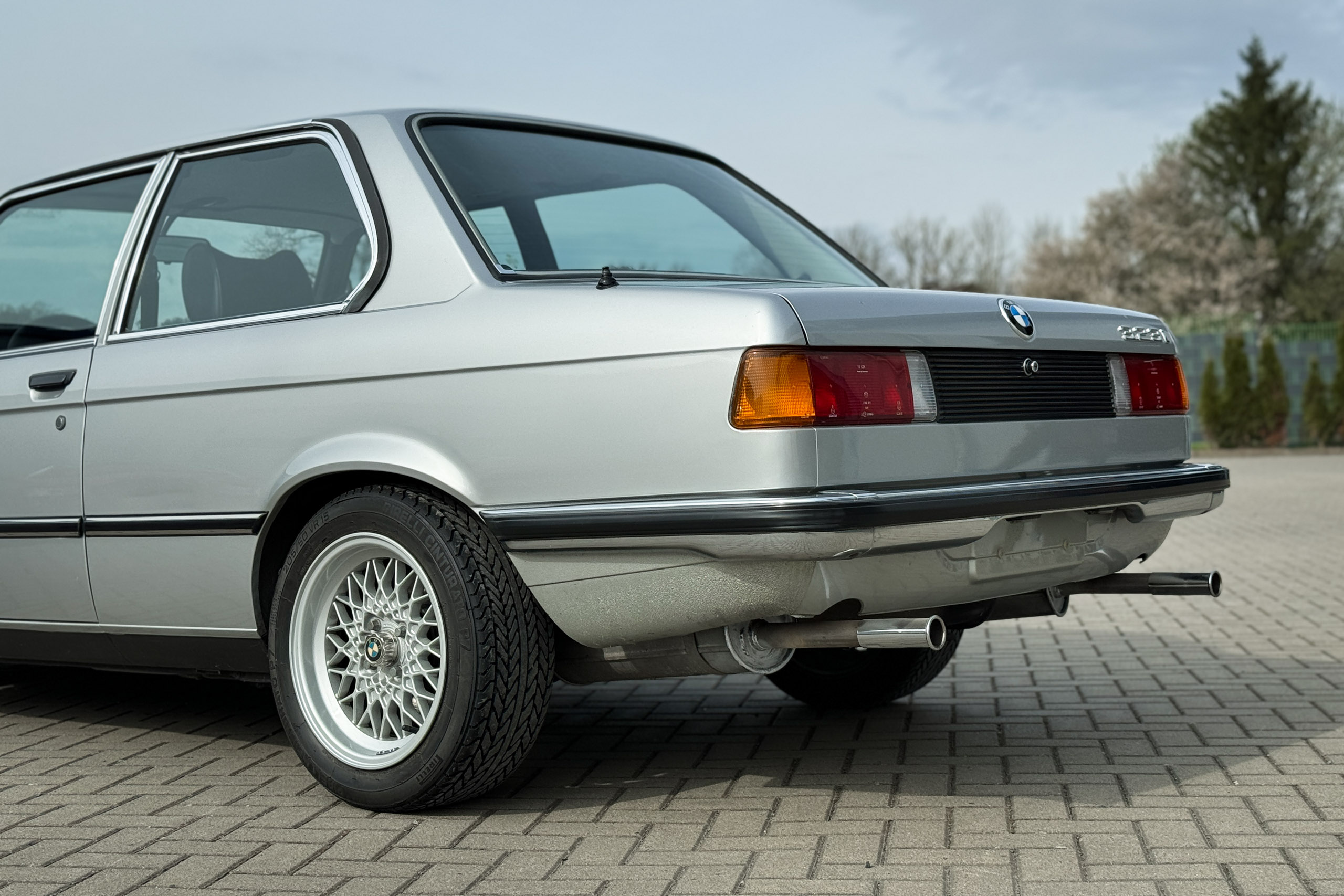
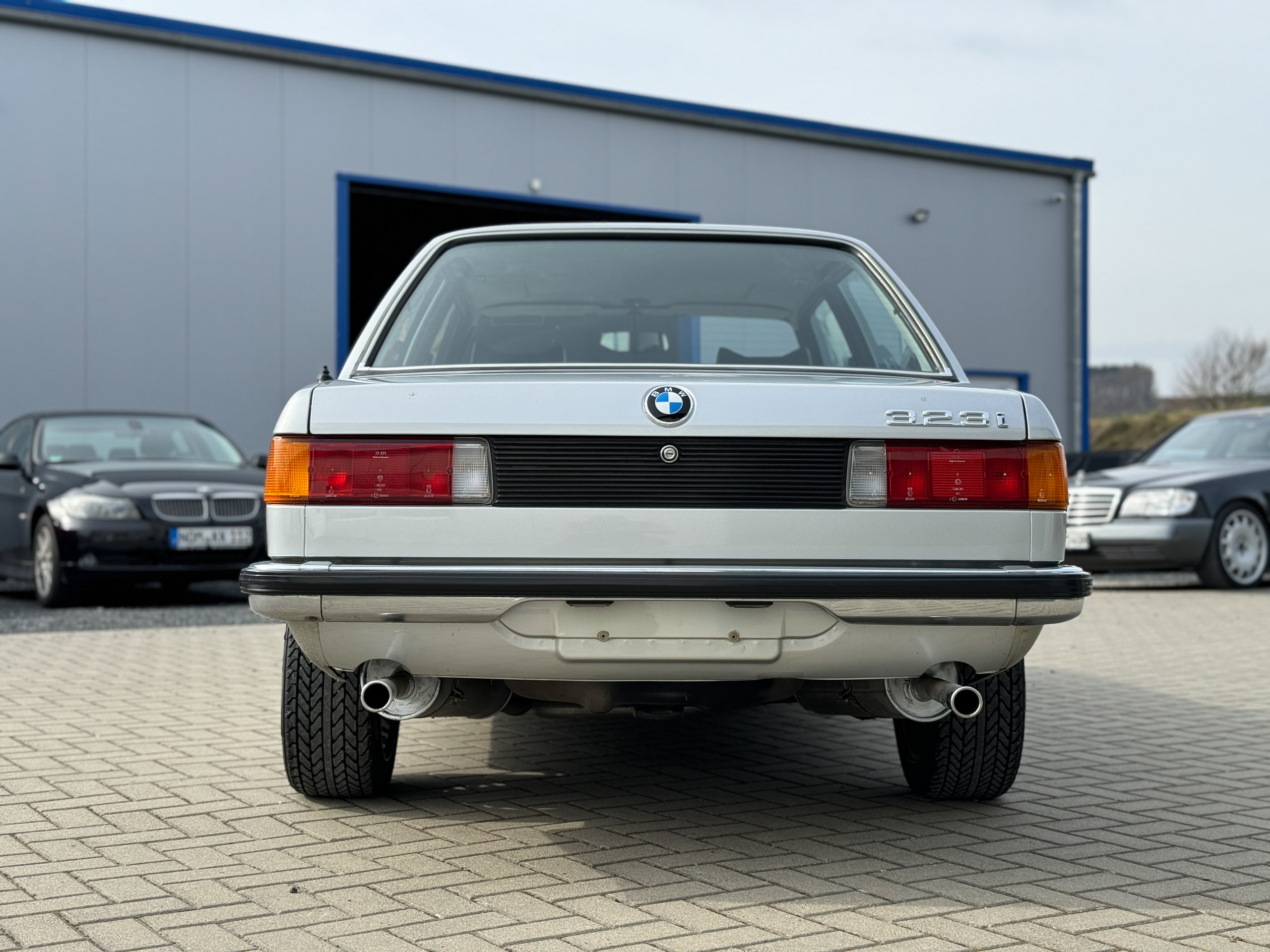
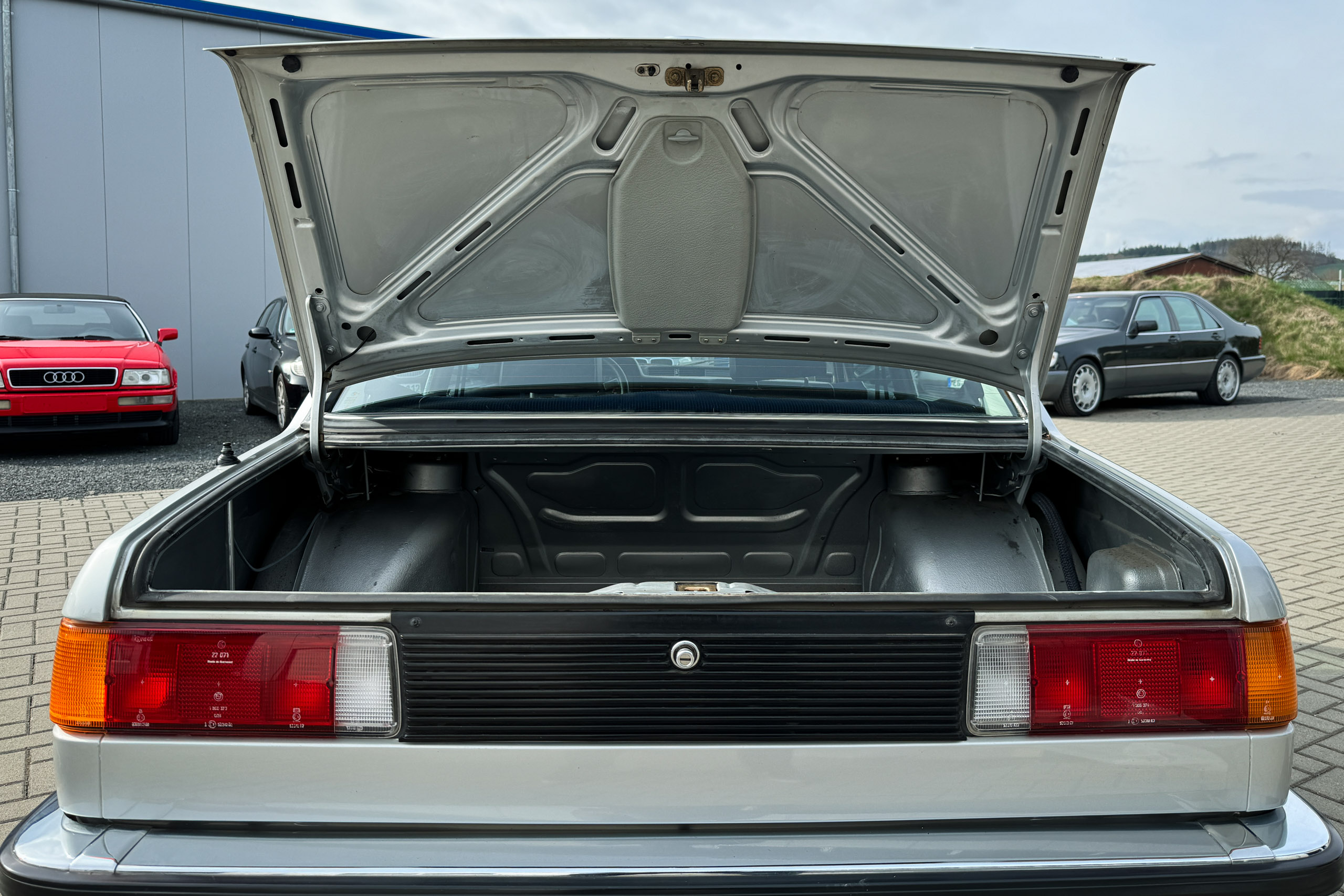
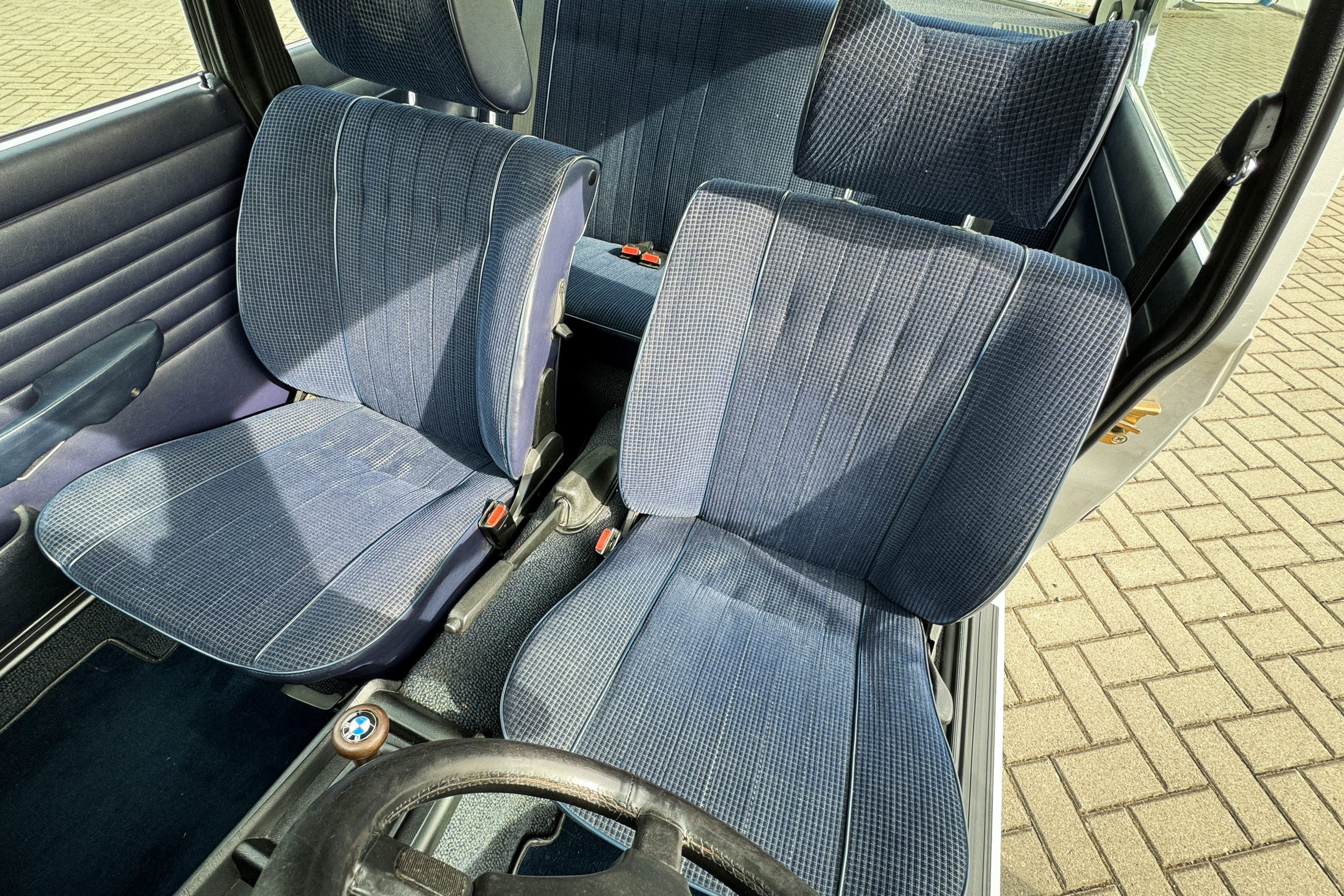
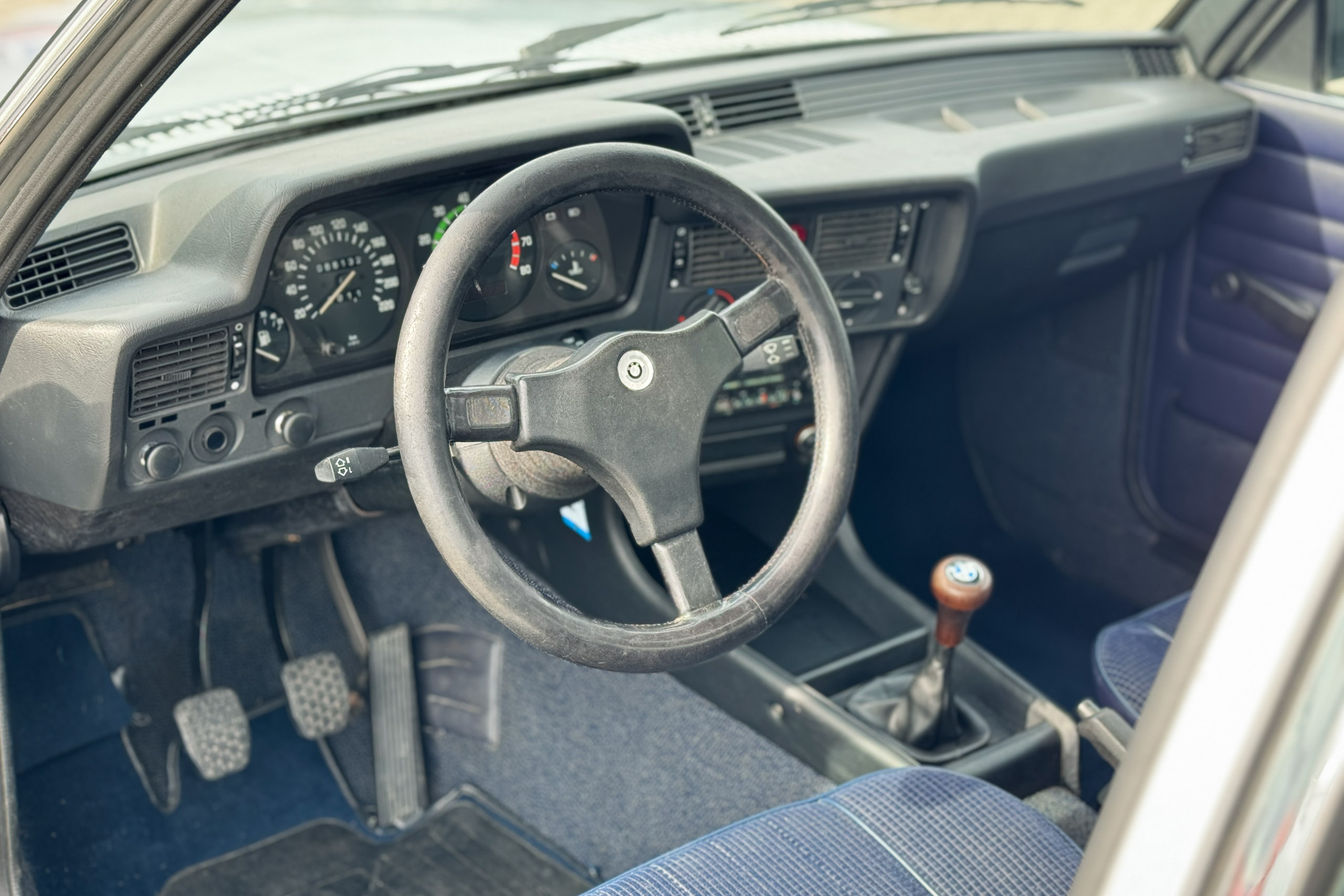
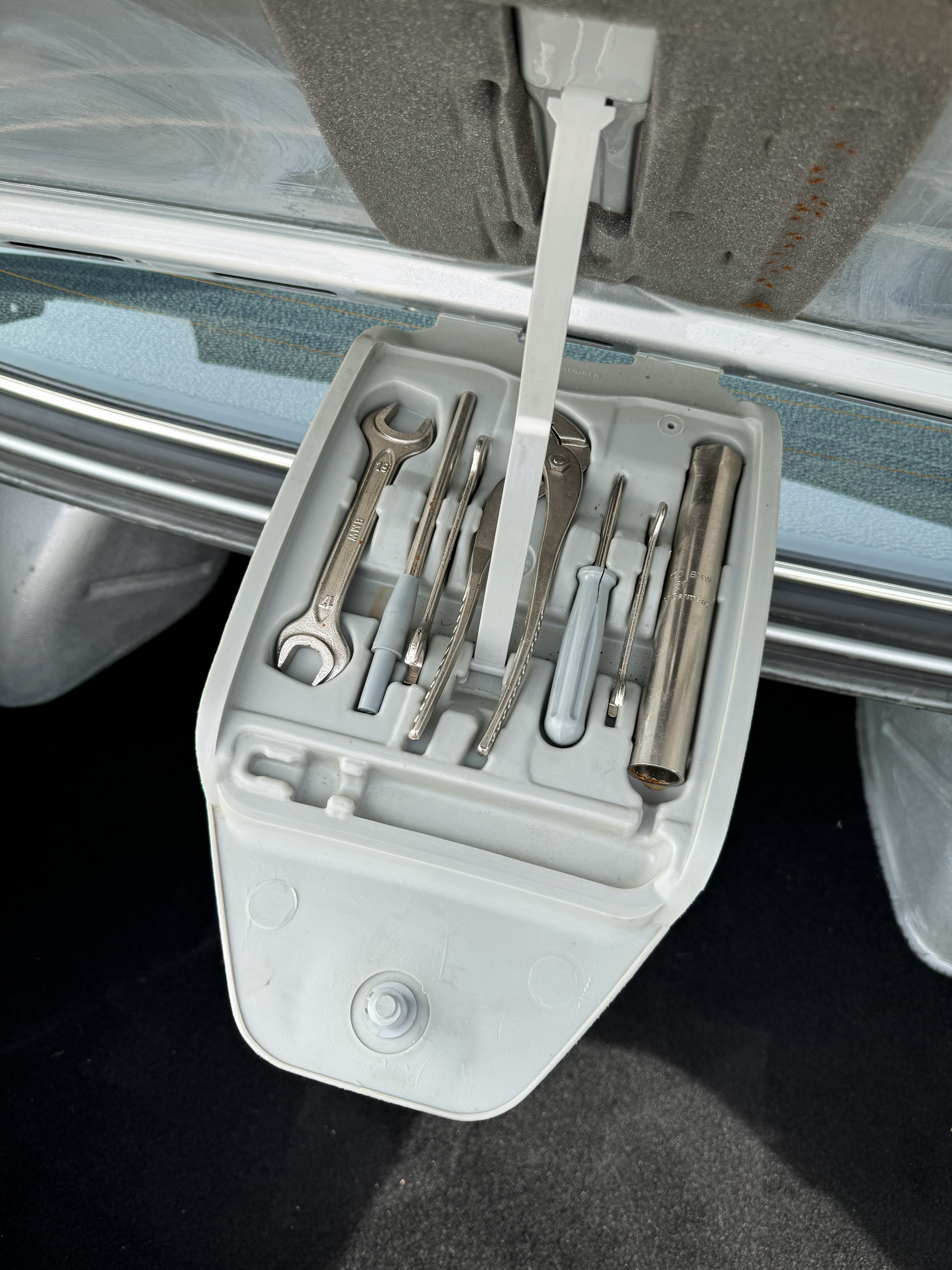
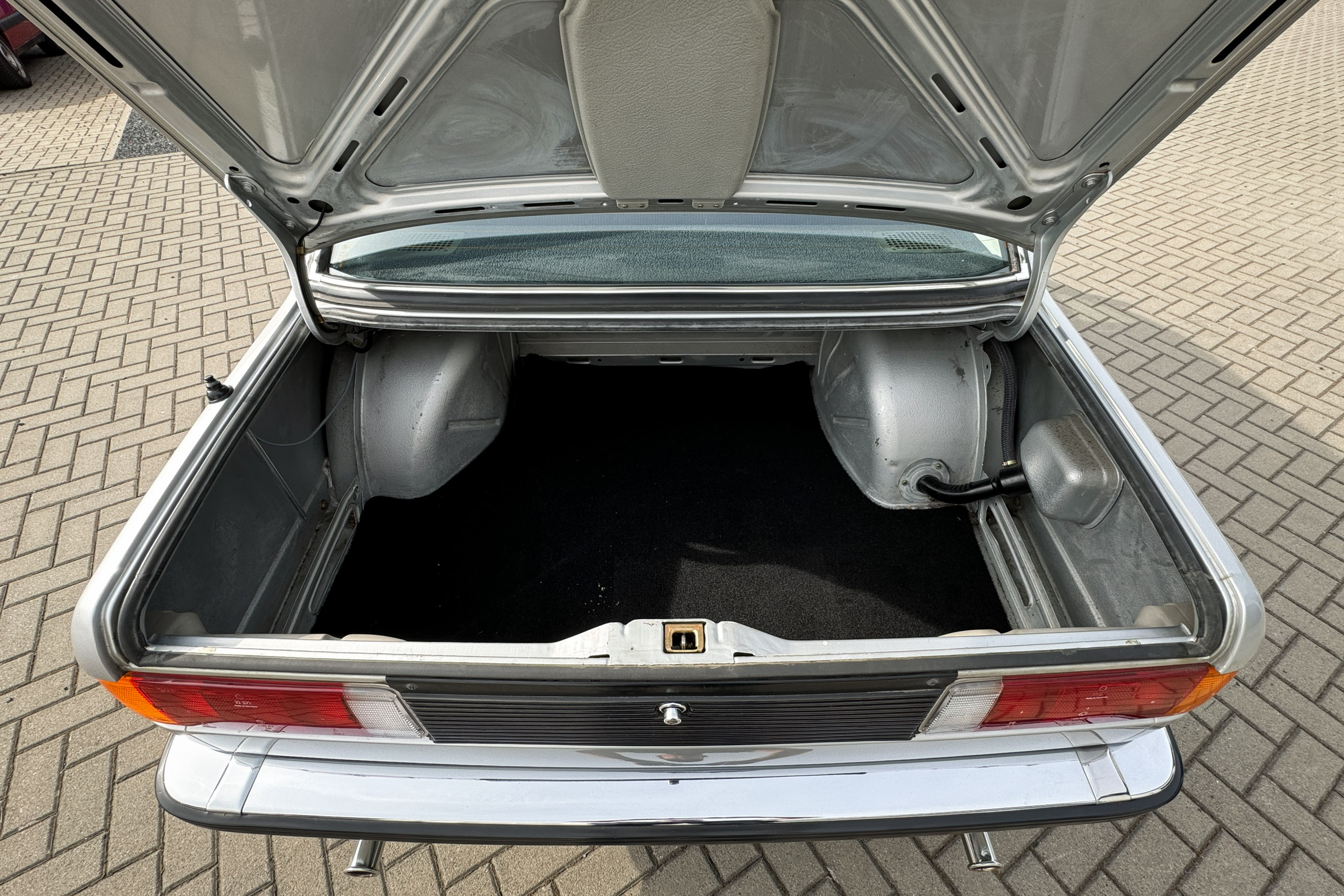
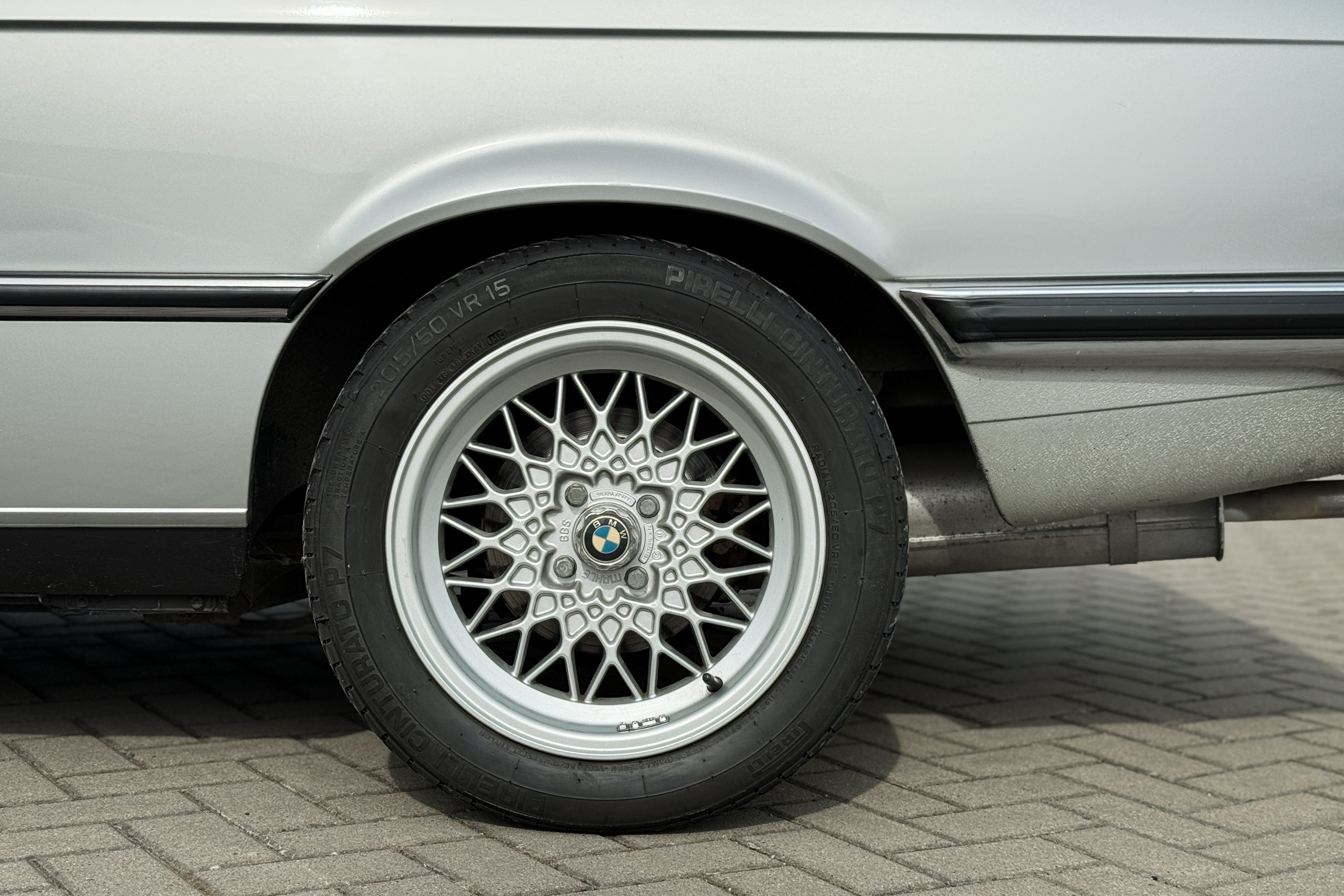
The paint in Polaris metallic, the blue interior with intact seat upholstery, the headliner, the door panels — everything looks as if cast from a single mould rather than assembled after the fact. The complete onboard tool kit is tucked into the boot lid, and the original service stickers are still in place in the engine bay. Add to that contemporary BBS cross-spoke wheels and a subtle front spoiler, exactly as one would have ordered them in the early Eighties.

Especially with the E21, unmodified six-cylinder cars with a solid history have become rare: many cars lost their substance to rust, modifications, or simply everyday use. This example shows what a 323i looks like when it has been spared all of that — a reference piece for the model line.
Photo gallery
Photos: MOTORSPORT24. History according to the vehicle’s service book and documentation.