

My story with the E31 begins in 2003.
At the time, I was working for the BMW dealer Bavaria in Stavanger, and for quite a while an Eight had stayed on my mind. The shape, the presence — more than a decade after its introduction, this car still looked as if it came from the future.
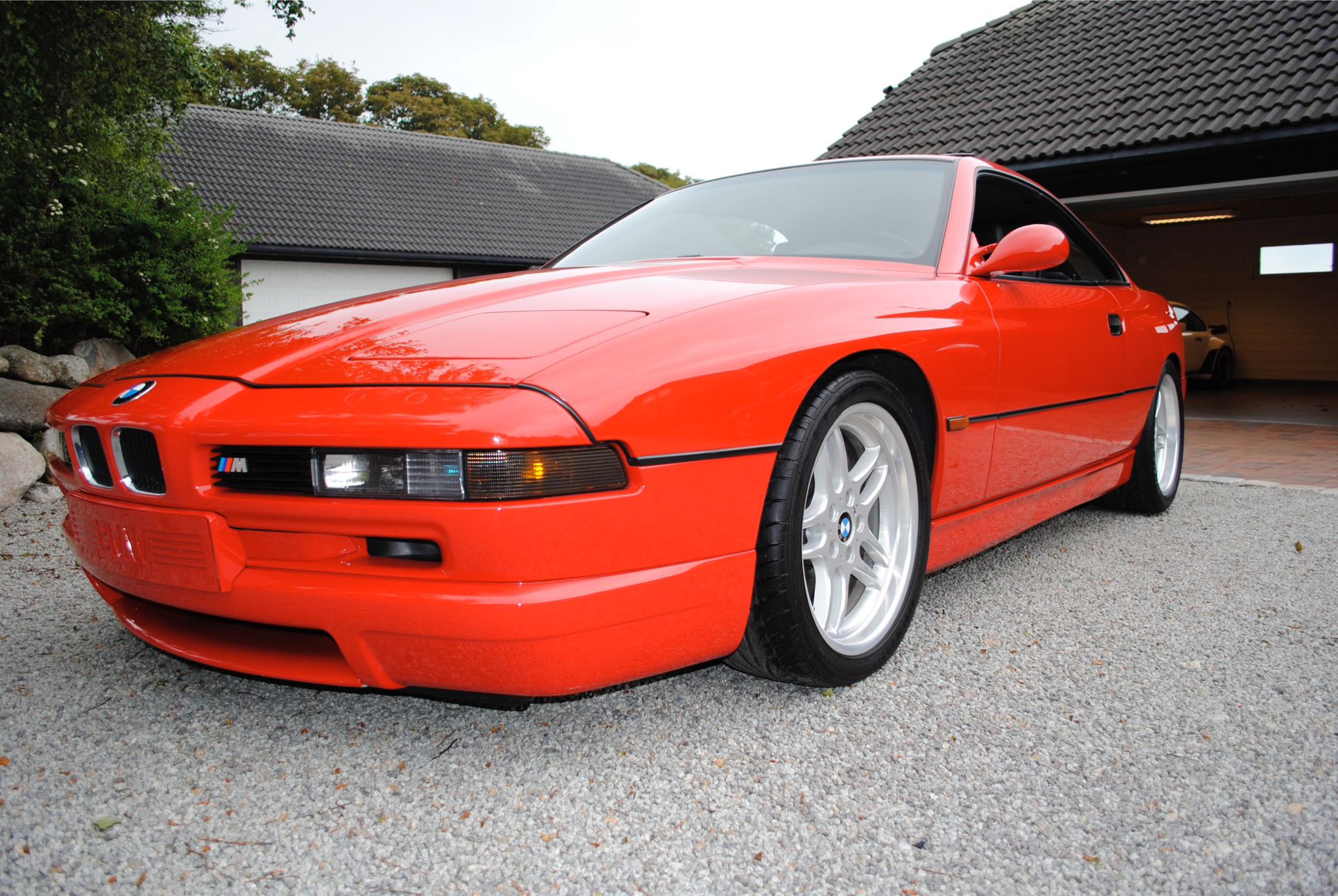
Finding the right example back then meant: evenings on Mobile.de, keeping an eye on the German market. I knew exactly what I wanted, and one condition was non-negotiable — Special equipment 481, BMW sports seats. For me, an E31 had to have these seats, otherwise it wasn’t the one.
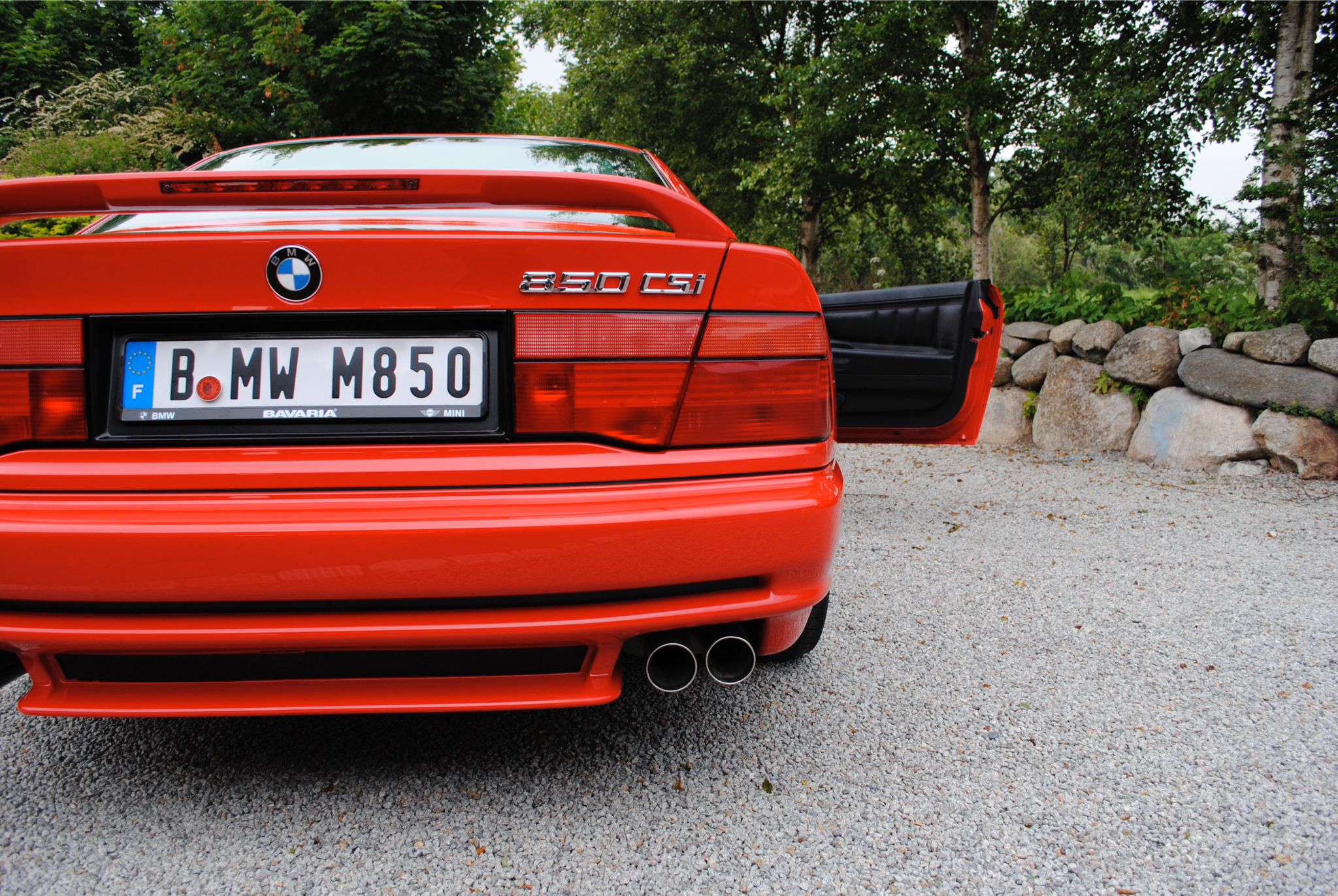
Then a car turned up in Offenbach. It had the sports seats. And it had more: front bumper and rear apron from the 850CSi, plus wheels and mirrors from AC Schnitzer. Exactly the E31 I had been looking for. I flew there and drove it back to Norway.
The detour via Aachen
The fact that AC Schnitzer parts were fitted to this particular car fit well, since I had a visit to Aachen planned on the way back anyway. Arriving there in an E31 that already carried several of their parts had something fitting about it.
This visit turned into far more than I expected. We got along right away, and in the end that first meeting turned into the Norwegian import business for AC Schnitzer. So buying that first E31 incidentally established an entire business relationship.
Back in Norway, the car immediately drew attention. Several people wanted to buy it. I didn’t want to sell — but one person wouldn’t let it go. He wanted the car almost regardless of price, and at some point he made an offer I couldn’t refuse.
The sale did have one very pleasant consequence, though: I could finally search for the E31 I had actually always wanted. An 850CSi.
Why the CSi specifically
Here too, the search was tedious. Again I wanted the 481 sports seats, and surprisingly few of the cars I found had them.
The 850CSi was extremely rare to begin with. Between 1992 and 1996, only 1,510 examples were built worldwide — one of the rarest BMW performance models of its time. But the number only tells half the story.
The CSi was a completely different machine from the rest of the E31 line. It was developed with heavy involvement from BMW Motorsport GmbH, and perhaps the finest detail lies in the chassis number. Normal E31s carry a VIN beginning with WBA — vehicles from BMW AG. On the 850CSi, it reads WBS. That is the code for BMW Motorsport GmbH, later BMW M GmbH. These three letters say quite a lot about what the CSi really was.
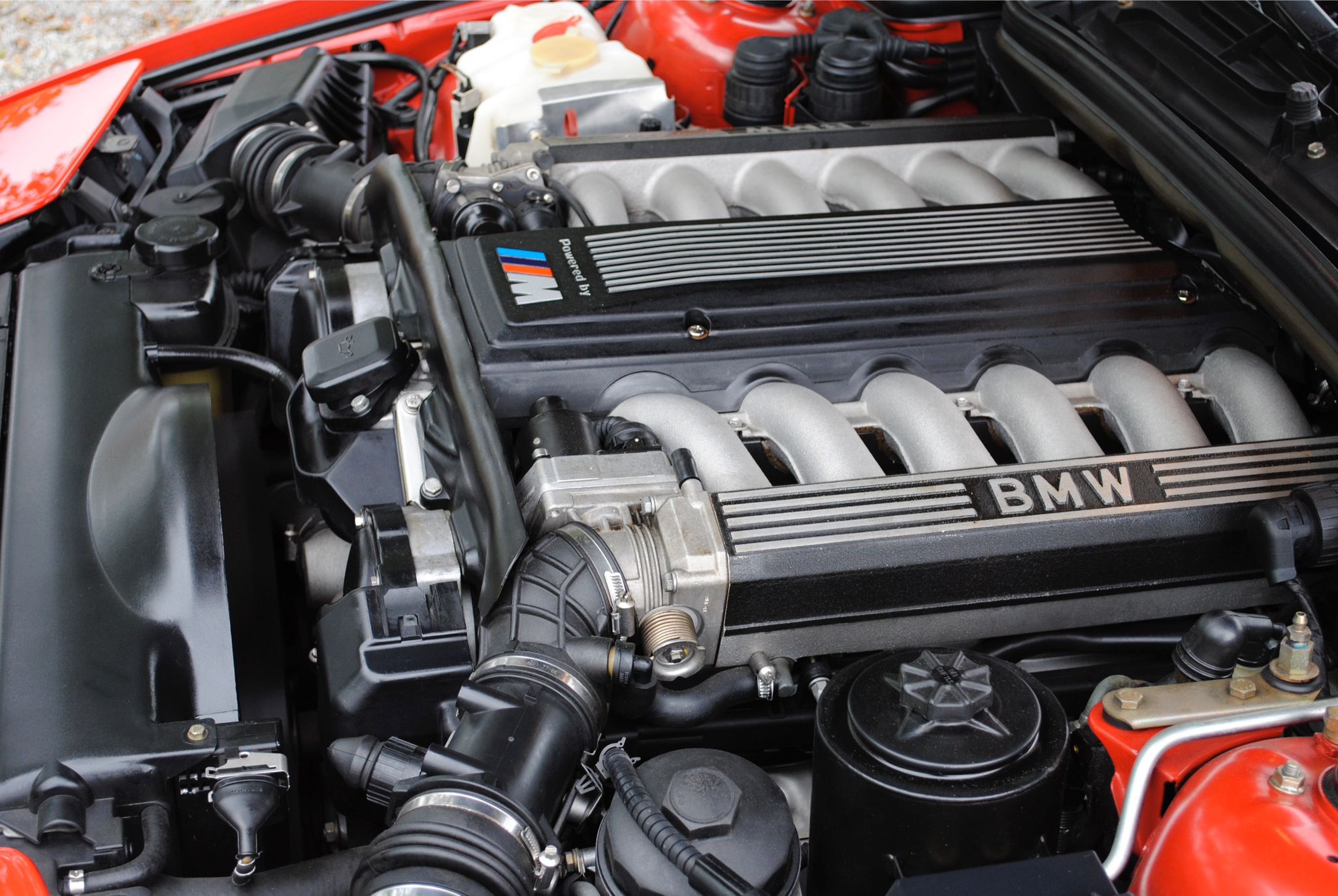
Under the bonnet works the S70B56, a 5.6-litre V12 developed by BMW Motorsport, 380 PS at 5,300/min and 550 Nm at 4,000/min. Power goes through a six-speed manual gearbox — there was no automatic.
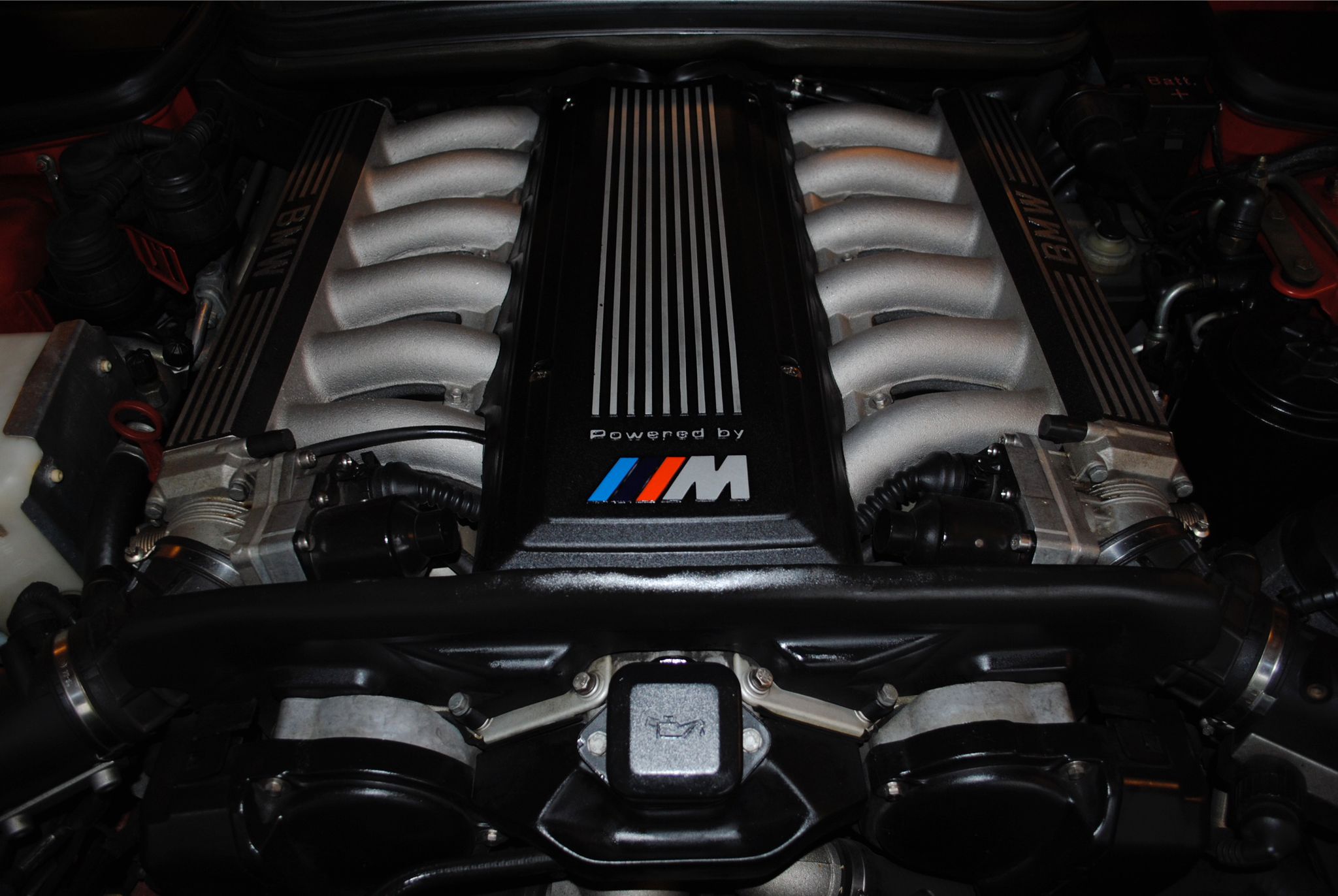
The European CSi was special in yet another way. It featured the distinctive aerodynamic M exterior mirrors and had the AHK on board, the Active Rear Axle Kinematics: an electrohydraulic rear-wheel steering system that subtly steers along at higher speeds and noticeably improves the car’s stability. For a road car developed in the early Nineties, this was extraordinary technology.
S70 V12, six-speed manual gearbox, chassis derived from motorsport development, WBS number, rear-steering axle — the 850CSi was far more than just the most powerful version of the Eight. It was the M8 that BMW never officially called an M8. And that was exactly what I wanted.
St. Gallen
I kept searching until suddenly the perfect car turned up. This time not in Germany, but in St. Gallen, Switzerland.
An 850CSi, built on 24 September 1993, exceptionally well equipped from the factory — and, most importantly, with my special equipment 481. It wasn’t a car that had ended up in Switzerland by chance. The factory build record lists code 804, country variant Switzerland: this car was ordered for the Swiss market from the very beginning. This fits with the auxiliary heater, which is also listed on the order.
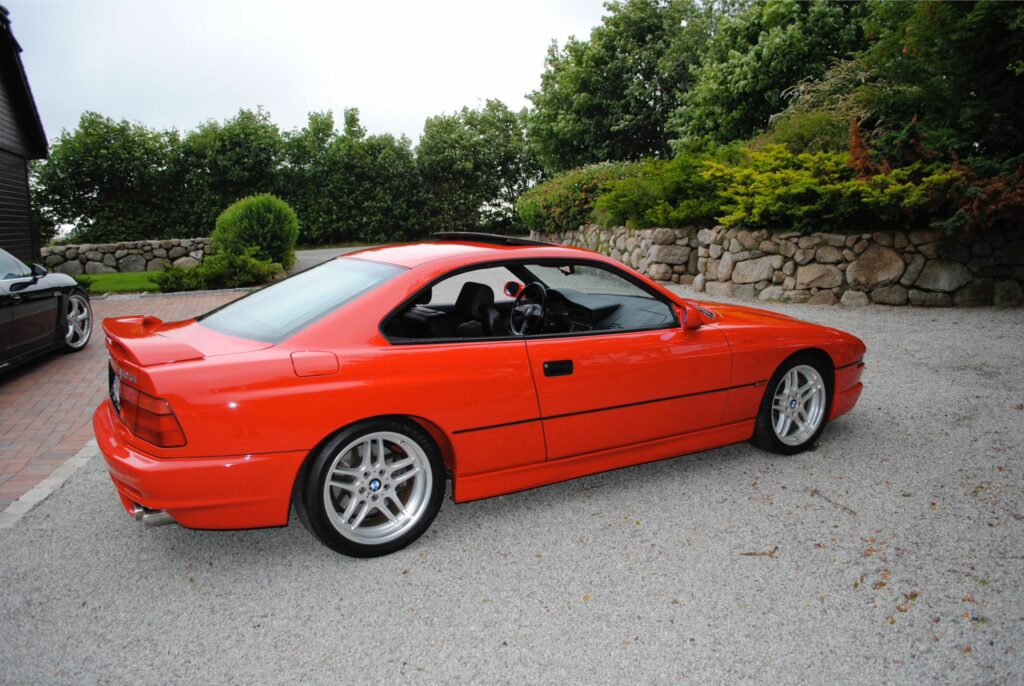
Then the colour. Bright Red, colour code 314 — a solid paint, not metallic. For me, that is the colour of the 850CSi. It’s the colour of the BMW press photos and brochures that I associate the car with. Whenever I imagined an 850CSi, it was bright red.
The previous owner was a genuine BMW enthusiast, and the car had been cared for accordingly. At the time of purchase, it had around 112,000 kilometres on the clock. I knew: this is it.
The delivery drive that nearly went wrong
I couldn’t drive to Switzerland myself, so I asked an acquaintance to bring the car to Norway. That nearly caused a problem.
On the drive through Germany, he fell in love with the car. Above all, the performance and that unshakeable calm at high speed on the Autobahn had won him over. By the time he delivered the car in Norway, his decision was already made: he wanted to buy it.
My answer was short. No. This one was not for sale. The drive must have left a strong impression, because about two weeks later he drove to Germany himself and bought an 850CSi of his own. His was black and also a beautiful car. With just one difference: without the 481 sports seats.
Seven years
Then something happened that had never happened to me before. I kept the red 850CSi for seven years. A personal record — I had never driven the same car for that long before.
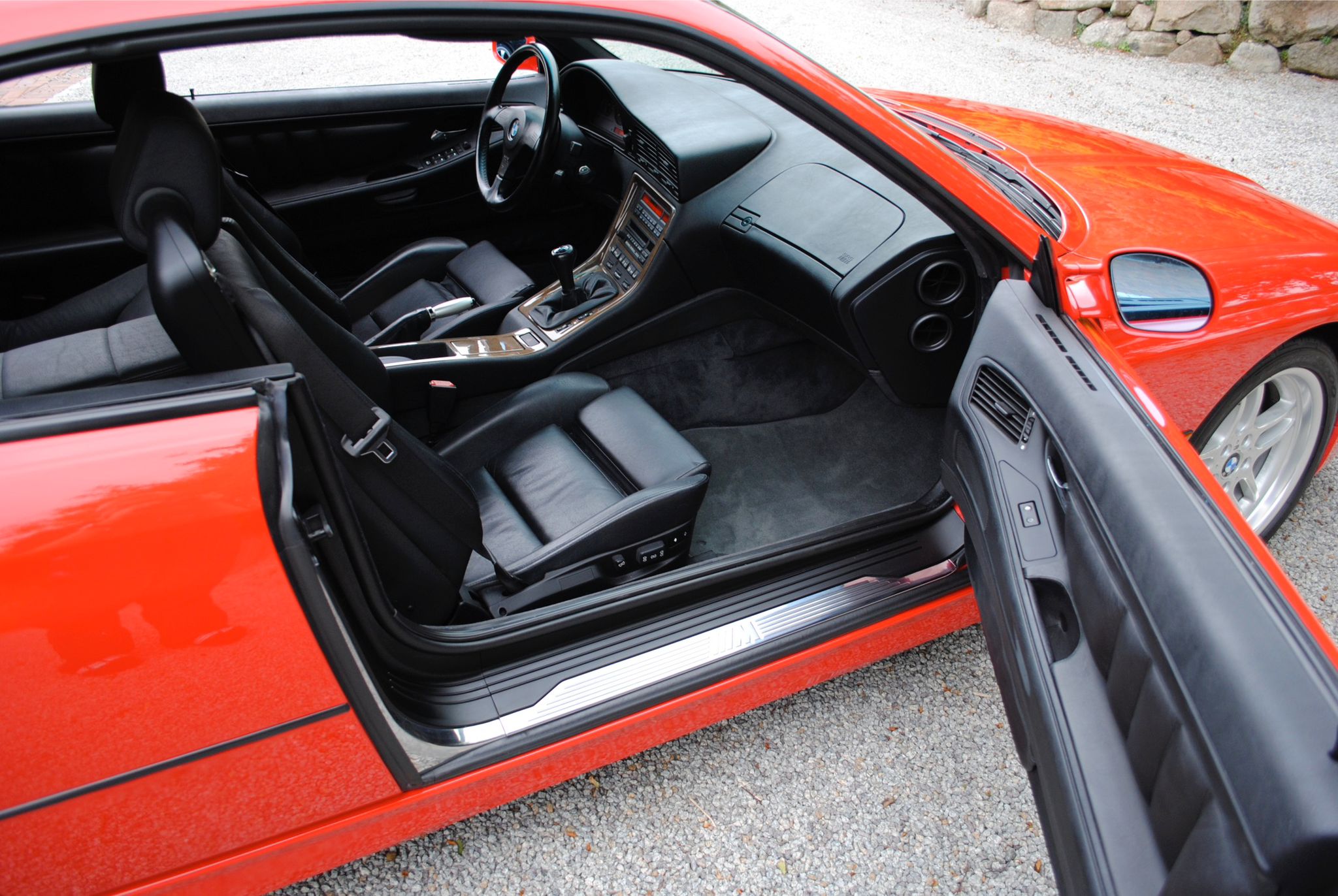
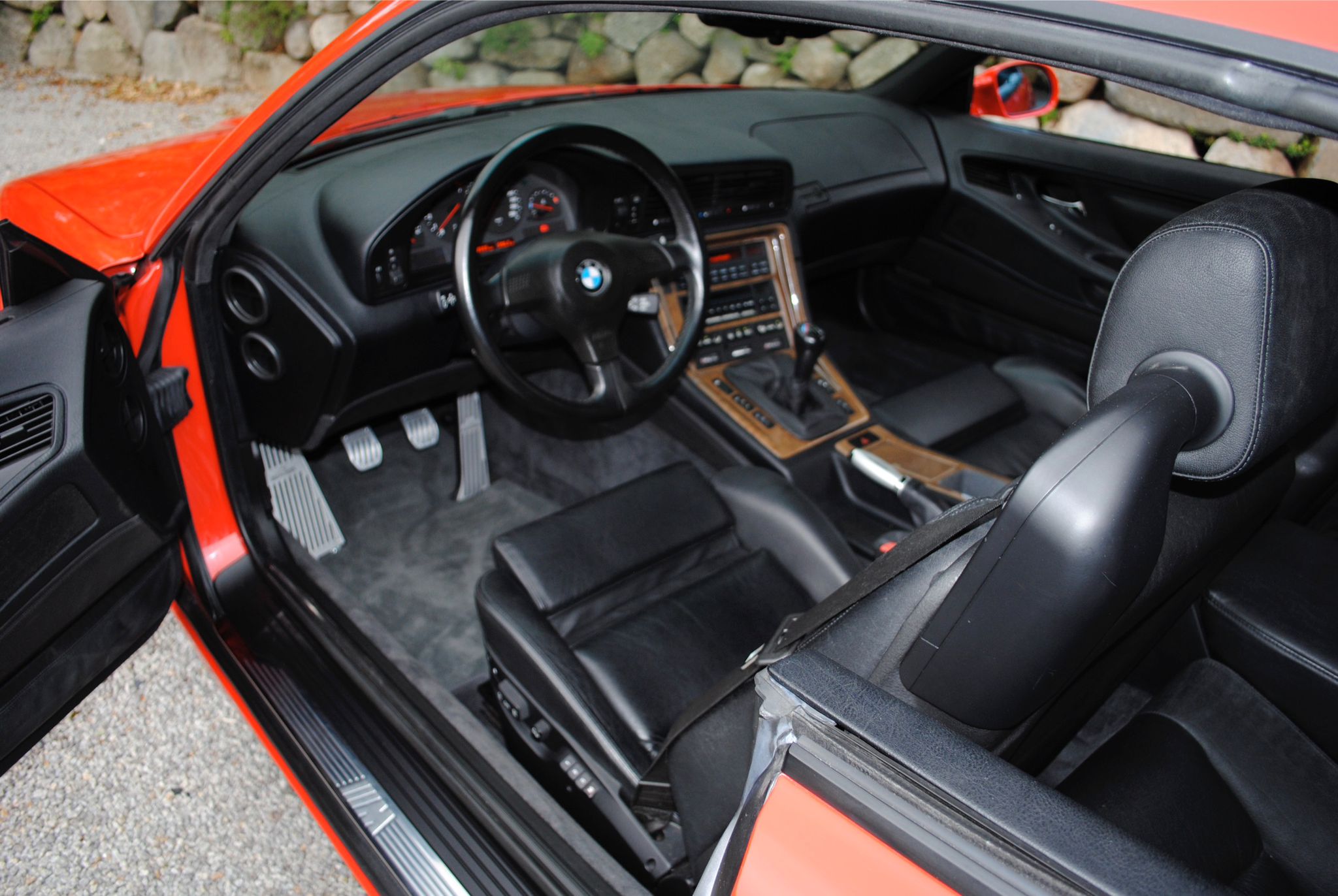
It wasn’t just the performance. It was the whole package: the twelve-cylinder engine, the manual gearbox, the chassis, the steering, and the effortless way the car covered enormous distances at very high speed. A true grand tourer — but with a very distinct motorsport character beneath the elegant E31 body.
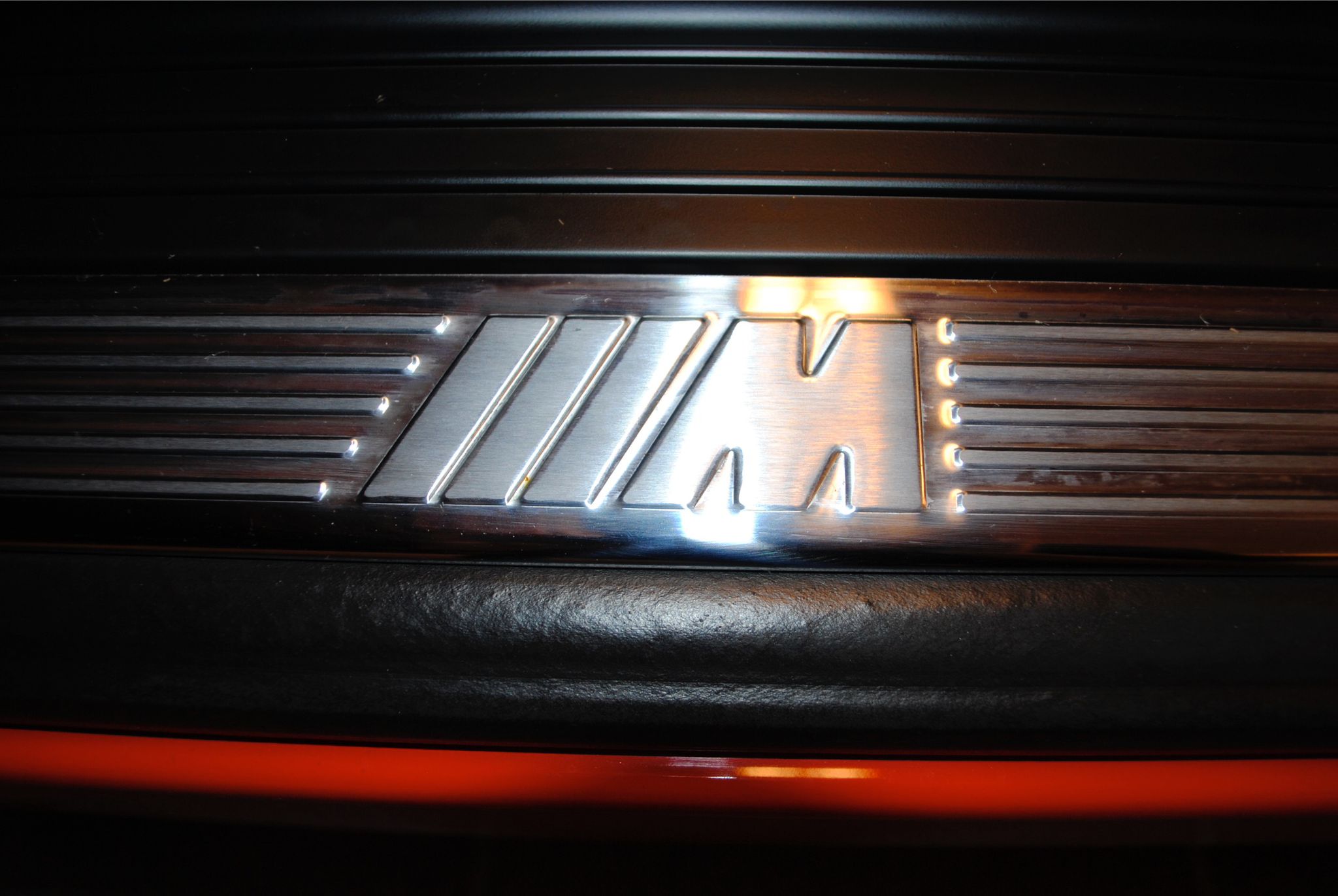
Eventually, though, the time came regardless.
Where it stands today
The car went to a new owner in northern Norway and stayed there for about three years. After that, it found its way back south, to Rogaland — not far from where my own story with it had begun. It stayed there for many years.
About two years ago, a request came that I hadn’t expected. The BMW dealer in Førde knew about the car and asked whether I could help track it down. They wanted to buy it. I found it, and they got it. That’s where my old 850CSi stands to this day.
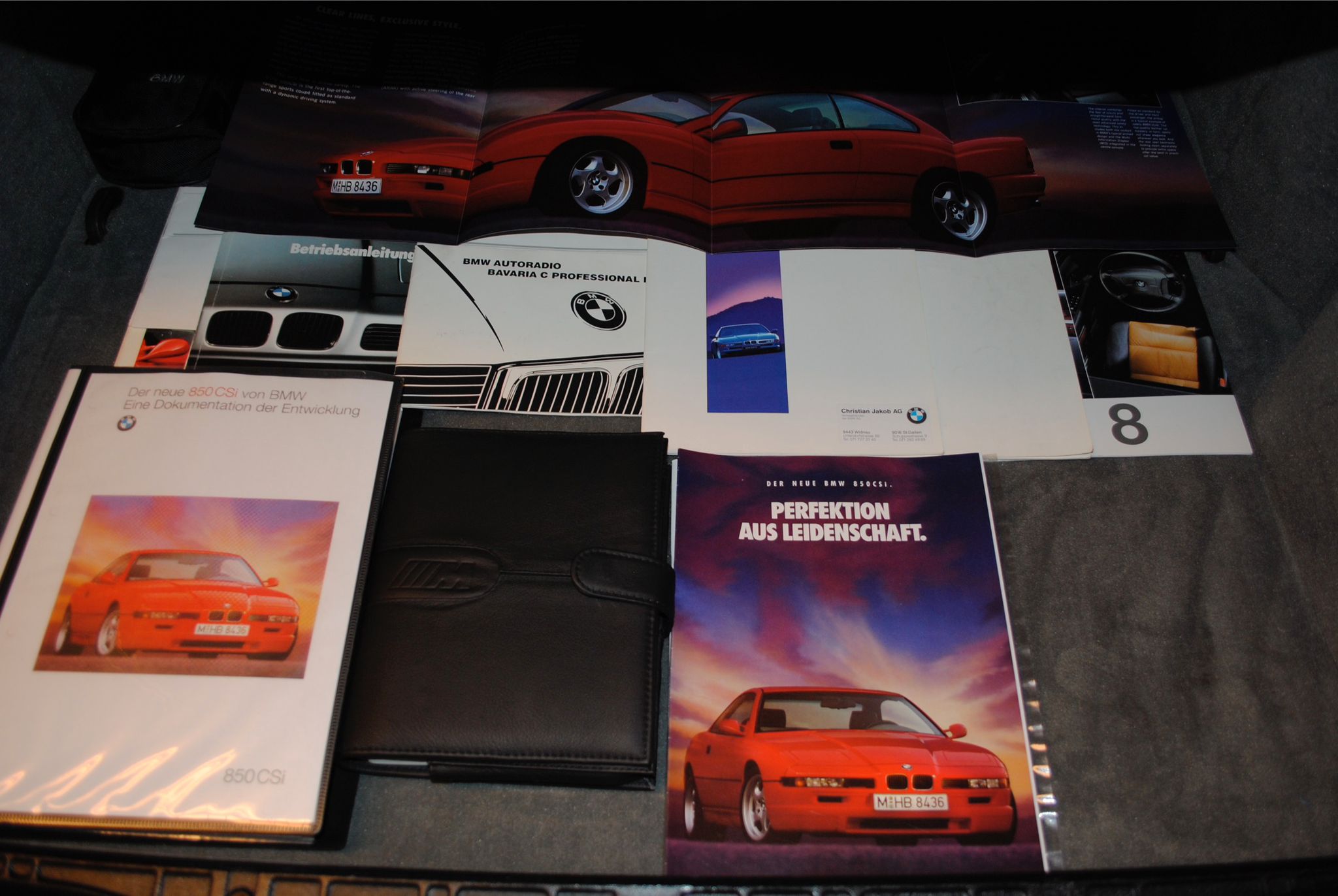
More than three decades after it left the factory, and more than twenty years after I discovered it in Switzerland, it is in perfect condition. For me, that makes the story even better.
It started in 2003 in Stavanger, in front of a screen, searching for an E31 with code 481. It led via a first Eight in Offenbach to a visit in Aachen, from there to the Norwegian AC Schnitzer import business — and finally to St. Gallen, to the bright red 850CSi I had been looking for the whole time.
It became the car I owned longer than any other before it. And even after I sold it, it kept crossing my path. Knowing where it stands today, and seeing that it is still cared for after more than thirty years, makes me very content.
Of all the cars I’ve owned, some are remembered more vividly than others. My bright red 1993 BMW 850CSi is definitely one of them.
The car as delivered from the factory
| Model | BMW 850CSi, type EG91 |
| Production date | 24 September 1993 |
| Engine | S70B56, 5,576 cm³, 280 kW (380 PS) |
| Transmission | Six-speed manual |
| Drive | Rear |
| Body | Coupé, 2 doors |
| Paint | Bright Red, colour code 314 (solid) |
| Upholstery | Buffalo leather, anthracite |
| 243 | Passenger airbag |
| 255 | Sport leather steering wheel |
| 353 | Front and rear windscreen tinted green, with shade band |
| 401 | Electric sliding/tilting sunroof |
| 416 | Roller sun blinds, rear and side |
| 423 | Velour floor mats |
| 431 | Interior mirror, auto-dimming |
| 438 | Fine wood trim |
| 459 | Electric seat adjustment with memory |
| 481 | Sports seats |
| 494 | Seat heating, driver and passenger |
| 500 | Headlight washer system, intensive cleaning |
| 528 | Automatic climate control |
| 536 | Auxiliary heater |
| 662 | Radio BMW Business CD |
| 672 | Six-disc CD changer |
| 676 | HiFi speaker system |
| 686 | Antenna diversity |
| 690 | Cassette holder |
| 804 | Country variant Switzerland |
| 860 | Additional indicator light |
For context — editorial note
We have cross-checked the technical details in this article:
- Production: 1,510 units, August 1992 to November 1996 in Dingolfing — 1,125 left-hand-drive for Europe, 160 right-hand-drive, 225 US vehicles. The BMW Group Archive states “around 1,500”.
- Engine: S70B56, 5,576 cm³, 280 kW (380 PS) at 5,300/min, 550 Nm at 4,000/min, limited to 250 km/h. List price 180,000 DM.
- Transmission: exclusively six-speed manual. There was no automatic available for the CSi.
- Special equipment 481: “BMW sports seats”, listed at 855 DM in the German E31 price list of 1993 and explicitly not combinable with the electric lumbar support.
- Chassis number: The 850CSi does indeed carry the world manufacturer code WBS (BMW M GmbH) instead of WBA (BMW AG).
- AHK: The Active Rear Axle Kinematics was standard on the 850CSi, not optional — unlike on the 850i. The contemporary BMW brochure advertised the CSi as the first top-class sports coupé with a standard-fit dynamic handling system, and accordingly, the AHK does not appear among the special equipment in this car’s factory build record. We have adjusted Rune’s original wording accordingly.
- Colour code 314: Bright Red is a solid paint. The build record lists it four times for the various paint positions.