Frequently searched:Popular searches: E30 M3 Alpina 2002 turbo CSL

Models · Engineering · Flagship of the E31 range

BMW 850CSi

The quiet M8 — 380 hp, six speeds, 1,510 built.

Hellroter BMW 850CSi in der Seitenansicht von hinten rechts
Lizenziert · Rune Haaland · Freigabe des Einsenders

Built

1992 to 1996

August 1992 to November 1996, Dingolfing

Cars built

1,510

1,125 left-hand drive Europe · 160 right-hand drive · 225 USA

Engine

S70 V12 · 380 hp

5,576 cc, 550 Nm at 4,000 rpm — developed by BMW M

Gearbox

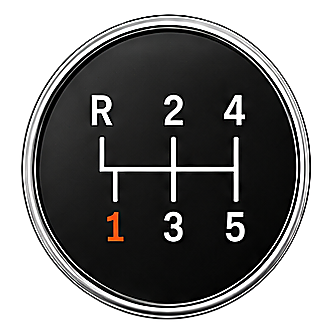
six-speed manual only

no automatic was offered

VIN

starts with WBS

BMW M GmbH code instead of the BMW AG code WBA — many papers say M8

01 · Overview

What was left of the M8

After BMW halted the real M8, the 850CSi became the fastest series production form of the 8 Series: the S70B56 — developed at M GmbH, identified by the “S” in the engine code — extracts 380 PS and 550 Nm from 5.6 litres of V12, available exclusively with a six-speed manual gearbox.

This was joined by a firmer suspension, lower aprons, four tailpipes and, on request, active rear-axle steering. With 1,510 units, the CSi is the rare collector’s item of the model line — prices have long since decoupled from the rest of the E31.

Front eines hellroten BMW 850CSi mit ausgefahrenen Klappscheinwerfern
Lizenziert · Rune Haaland · Freigabe des Einsenders

02 · History

Where it fits

The 850CSi is not an upgraded 850i. It is what remained of a project BMW stopped. The timeline shows how the planned M8 turned into the flagship of the range — and why it ended in 1996.

  1. 1989 The 8 Series arrives as the 850i with the M70 V12, 300 hp, optionally with a six-speed manual. The first twelve-cylinder ever offered with a manual gearbox.
  2. 1990 BMW M builds one running M8 prototype with the S70/1 engine — lightweight construction, well over 500 hp. It remains a single car; the project is stopped.
  3. August 1992 Production of the 850CSi begins in Dingolfing. The S70B56 makes 380 hp, and the six-speed manual is the only choice.
  4. Late 1992 ALPINA launches the B12 5.7 Coupé based on the 850CSi. 57 cars are built through 1996.
  5. 1993 From the S70, BMW Motorsport and McLaren develop the S70/2 for the McLaren F1 — 6,064 cc, 627 hp.
  6. 1994 The 850Ci receives the 5.4-litre M73 with 326 hp, automatic only. The CSi remains the only 8 Series with a manual gearbox and more than 350 hp.
  7. November 1996 Production ends after 1,510 cars. Tighter emissions and noise rules from January 1997 would have forced further development that could not pay for itself at these numbers.

03 · Model overview

The S70 family

The engine code S70 covers a small family reaching from a production coupé to the fastest road car of the nineties. Only the first line went into series production.

Technische Daten anzeigen — komplette Modellmatrix
Modell Motor Hubraum Leistung Production
BMW 850CSi S70B56 5,576 cc 380 hp 1992–1996
BMW M8 (prototype) S70/1 approx. 6,000 cc approx. 550 hp 1990, one car
ALPINA B12 5.7 Coupé S70-based 5,700 cc 416 hp 1992–1996, 57 built
McLaren F1 S70/2 6,064 cc 627 hp from 1993
McLaren F1 GTR S70/3 6,064 cc 635 hp from 1996

04 · In detail

In detail

Coupé

A two-door coupé without a B-pillar, with frameless windows that drop slightly as the door opens. Lowered by 15 mm against the other 8 Series cars, with a revised front spoiler section, a changed rear diffuser and M mirrors. There was never a convertible E31.

05 · Engines

The S70B56

Not a new engine, but a thoroughly reworked M70. What makes it an M unit is in the detail — and in the letter S of the engine code.

S70B56 — the only engine the 850CSi ever had verified

A larger bore and a longer stroke turned the 5.0-litre M70 into a 5.6-litre. Add higher compression, revised valve timing and lighter pistons. The exhaust system received downpipes enlarged in cross-section and two metal catalytic converters that reduce back pressure. As on the M70, two separate engine management units work bank by bank — the engine is essentially two straight-sixes. Two valves per cylinder, timing chain, Alusil bores.

Technische Daten anzeigen
LayoutV12, 60 degrees, OHC, 2 valves per cylinder
Displacement5,576 cc
Bore × stroke86.0 × 80.0 mm
Compression9.8 : 1
Fuel system2 × Bosch DME 1.7, one per bank
Power380 hp (280 kW) at 5,300 rpm
Torque550 Nm at 4,000 rpm
Firing order1-7-5-11-3-9-6-12-2-8-4-10
GearboxGetrag six-speed manual, no automatic
Rear axle2.93 : 1 final drive, 25 % limited slip

e31.net, bimmerarchiv.de, auto motor und sport — power and torque consistent across all three

Where the sources disagree

Two figures for this engine appear in two versions. Power is usually given as 380 hp, but the model archive bimmerarchiv.de states 381 — most likely a rounding question from 280 kW. For kerb weight the data sheets give 1,865 kg to DIN and 1,955 kg to the EU standard; both are correct and simply follow different measuring rules. Auto Bild weighed 1,970 kg in a 1993 road test.

06 · Weak points

Reliability and weak points

  • The engine is not the problem. The S70 is considered robust and covers high mileages with regular servicing. One known issue: the bolts of the camshaft bearing caps can work loose — accessible once the valve covers are off.
  • Throttle bodies and ignition. Twelve cylinders means everything twice over. Throttle bodies are expensive, and the EML warning light reports faults in the electronic throttle control. Plugs, leads and distributors all come in pairs.
  • Clutch. Premature wear is a known CSi topic — and replacing it on a twelve-cylinder is involved.
  • AHK hydraulics. If the rear-axle steering warning light comes on, it gets expensive. After thirty years the pressure accumulators for brakes and steering often no longer work reliably, and specialists for the system are rare.
  • Rubber bushings. The many bushes of the elaborate suspension are at the end of their life on most cars. Vague steering or knocking noises usually start here.
  • Electrics and interior. Pop-up headlamps with scorched wiring, failing window lifts and central locking, dead matrix displays in the on-board computer and radio, climate control panels, electric seat adjustment. The headlining comes loose and there is no off-the-shelf replacement.
  • Sunroof. The optional tilt-and-slide roof likes to jam in the open position with age.

07 · Engineering

Chassis, brakes, four-wheel steering

Active Rear Axle Kinematics (AHK)

Suspension

Wheels and brakes

Cooling

Interior and markers

Technical data — final drive ratios & gearboxes

geprueft

08 · Identifikation

How to spot a real CSi

The 850CSi has become valuable enough that converting an 850Ci pays. Five markers cannot be retrofitted, or only at considerable cost.

VIN
It begins with WBS, not WBA. WBS is the manufacturer code of BMW M GmbH — the CSi was not built by BMW AG. Many registration documents therefore list the type as M8.verified
Engine code
S70B56 on the engine. The S marks it as an M unit; the 850i and 850Ci carry M70 or M73.verified
No automatic
The CSi was only ever built with the six-speed manual. An 8 Series with a torque converter is not a CSi, whatever the boot lid says.verified
Instruments
Red needles and a dial face of its own, plus the „BMW Motorsport" lettering on the door handles and the M badge in the lower door frame.verified
Brakes and hubs
The uprated brakes with their wider discs require CSi-specific hubs. A cosmetic conversion usually leaves them out.plausibel
US cars
US versions lack the AHK, the M mirrors, the engine oil cooler and the differential cooling, and use the smaller 850i brakes. A US import is technically not the same car.verified

09 · Special models and tuners

The M8 that never came — and what ALPINA made of it

In 1990 BMW M built a single running M8: a lightweight body and the S70/1 engine with roughly six litres and well over 500 hp. Ferrari and Porsche were the intended targets. The project was stopped before it could reach production — the market for supercars collapsed at the start of the nineties.

More than a museum piece came out of that work. The engine of the McLaren F1, the S70/2 with 6,064 cc and 627 hp, traces back to the same line and made the F1 the fastest road car of its time.

The 850CSi is the part of it you could buy: the same engine family, the same WBS manufacturer code, but clearly reined in. Anyone driving a CSi today has M8 in the registration document and the car that was built in its place in the garage.

At ALPINA in Buchloe the CSi became the B12 5.7 Coupé: 5.7 litres, 416 hp, six-speed manual only. 57 were built — they are included in the 1,510 CSi and do not add to the total.

10 · Motorsport

What remains

1,510 cars in four years, 1,125 of them left-hand drive for Europe. Until the range ended, the CSi was the most expensive model in the entire BMW line-up — DM 180,000, around 99,000 euros. It remains the only BMW twelve-cylinder with a manual gearbox and more than 350 hp.

The registration document says M8. What was built is the 850CSi.

11 · Buying guide

Buying in brief

The CSi is not a car for a tight budget. It is not the engine that costs money but everything around it — suspension, hydraulics, electronics. A well-kept car with unbroken history is almost always cheaper than a bargain with an open past.

Rust is a secondary concern on this Dingolfing-built body. Where it does appear: jacking points, edge rust on the front wings, the upper windscreen frame, the lower door edges and around the sunroof.

More common than corrosion are badly repaired accident damage and lost originality. Both hurt the value more than a little edge rust.

Check the papers first: WBS number, service book, a traceable chain of owners. Then the AHK — a test drive with an eye on the warning light and on how the car steers at speed. Only then the bodywork. A car without history can demand a five-figure sum for suspension, hydraulics and electronics.

12 · Ersatzteile

Parts supply

Much of the 8 Series is shared with the 7 Series E32 and is still available through BMW channels — better supplied than average, and more expensive than average too. It gets tight with anything unique to the CSi: brake discs with their hubs, parts of the AHK hydraulics, the M interior, the two-piece forged wheels. For 8 Series body and interior parts a small remanufacturing market has grown up. Owners who plan to keep a car tend to build a stock of spares early.

13 · The competition

What the CSi was up against

Mercedes-Benz SL 600 (R129)

The other German twelve-cylinder of the period, 394 hp from 6.0 litres — but a roadster, automatic only and tuned for comfort.

Porsche 928 GTS

The direct rival in concept: a large front-engined GT with a manual gearbox, 350 hp from a 5.4-litre V8. It ended in 1995, a year before the CSi.

Jaguar XJS V12

The twelve-cylinder GT of the old school — a much older design, cheaper, but without the CSi engineering.

Ferrari 456 GT

From 1992 the benchmark for a fast two-door with room for four: 442 hp from a 5.5-litre V12, six-speed manual — at a distinctly higher price.

Aston Martin V8 Vantage

It even shares the CSi fate: there too, tighter regulations ended production rather than a lack of demand.

14 · Galerie

An 850CSi in detail

Photographs of a Hellrot 850CSi built in 1993 and first delivered to Switzerland — body, interior, the S70B56 and the document folder. The images are by Rune Haaland, who owned the car for seven years; his story is in the magazine.

Hellroter BMW 850CSi in der Seitenansicht von hinten rechts
Lizenziert · Rune Haaland · Freigabe des Einsenders
Front eines hellroten BMW 850CSi mit ausgefahrenen Klappscheinwerfern
Lizenziert · Rune Haaland · Freigabe des Einsenders
Motorraum des BMW 850CSi mit dem V12-Motor S70B56
Lizenziert · Rune Haaland · Freigabe des Einsenders

15 · Sources

Sources & Further Reading

The technical figures on this page come from the sources below. Where they contradict each other, the text says so.

The Friday Mail

Once a week, without the noise.

One quiet email on Friday: the best articles, a car from the garage, one event. No newsletter theatrics.

Unsubscribe any time. No spam, promised.