

01 · Overview
The car for which there was no segment yet
The idea dates back to the mid-1960s, developed by Paul Bracq. The car was presented in 1971 at the Brussels Motor Show. The concept: the driving dynamics of the 02 with a tailgate and variable load space. By today’s understanding, a compact sports estate — at the time, a car without a market segment.
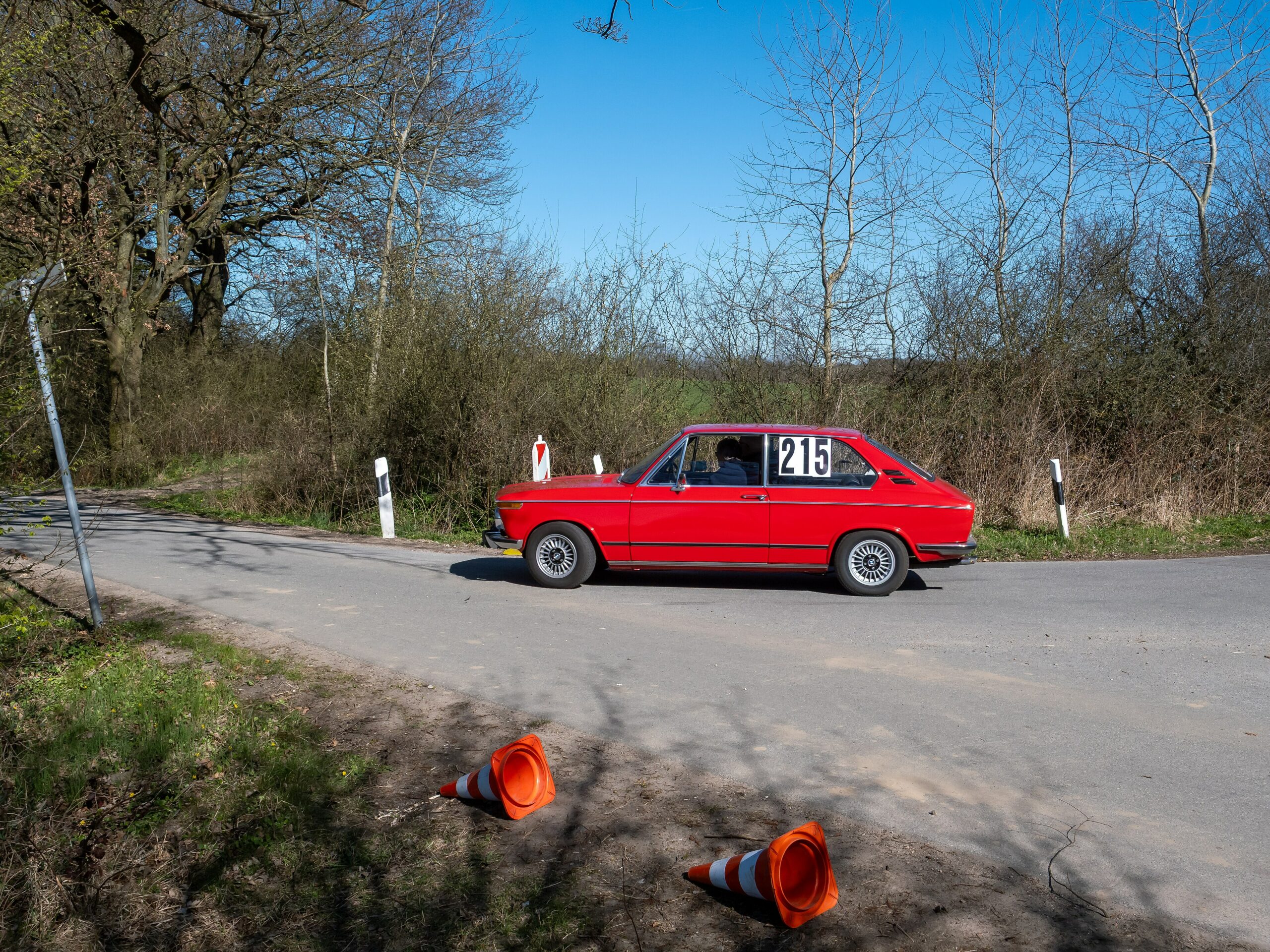
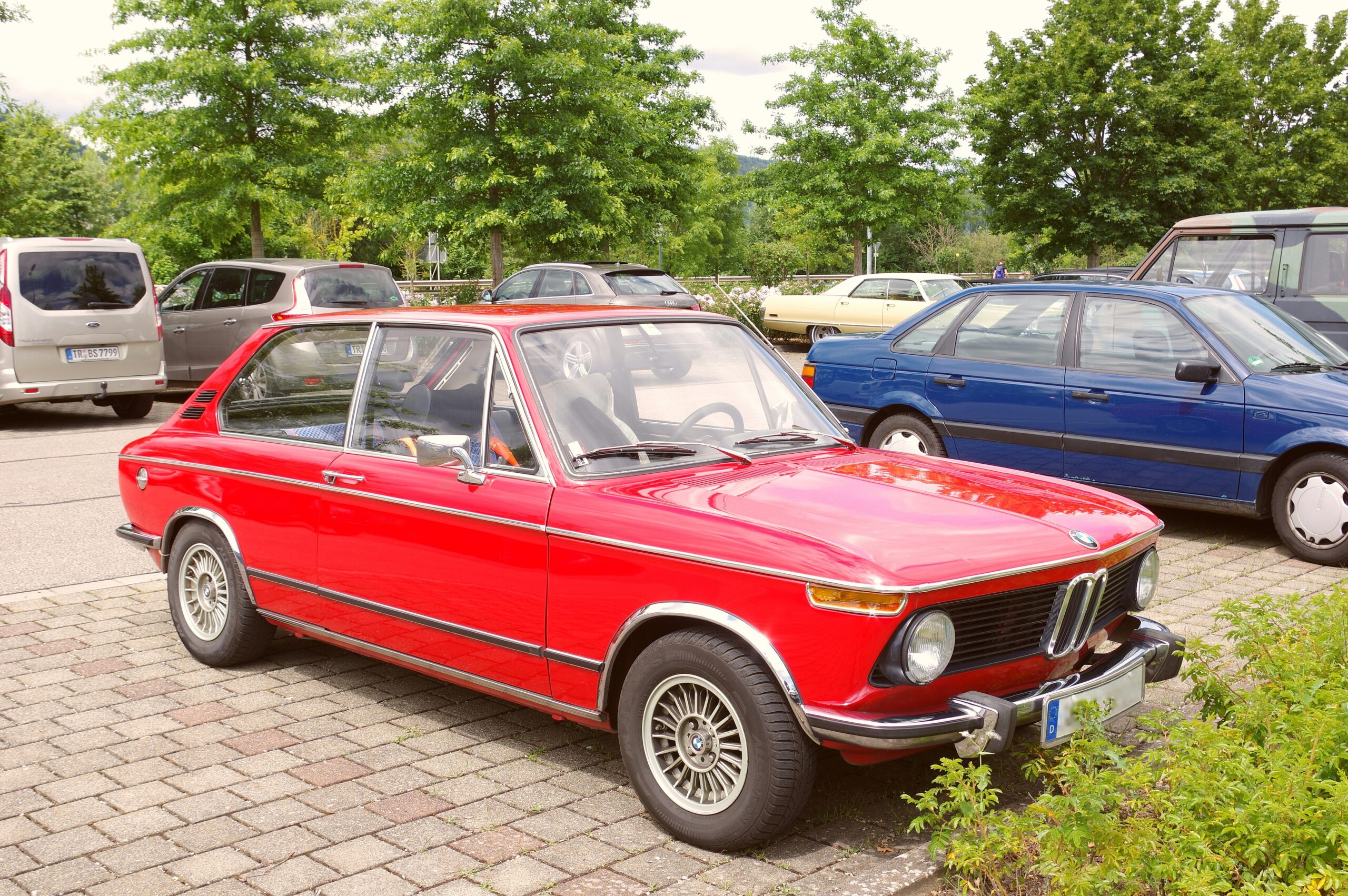
The touring is not a bolted-on estate but a body of its own. The windscreen is steeper, and the rear is 12 centimetres shorter than on the sedan. The car was therefore smaller, not larger — a point many texts still get wrong today. Because the windscreen angle differs, the doors are not interchangeable between the two bodies either.
The agency SP-X sums up the market position: the touring sat in a niche between exorbitantly expensive shooting brakes and conventional estates. After three years, it was over; BMW gave preference to the more lucrative two-door business. The concept itself only became a success in 1987 with the E30 touring — though as an estate with a tailgate, not as a hatchback like this one.
02 · History
Three years, two naming systems
The main source of confusion around the touring is the renaming in August 1973.
- Mid-1960s The concept idea originates within BMW. Paul Bracq develops it.
- 1971 Premiere of the 2002 tii Touring at the Brussels Motor Show.
- 04/1971 Start of production for touring 1600, touring 2000 and touring 2000 tii.
- 05/1971 The automatic version of the touring 2000 is added. By September 1972, 989 units had been built — BMW calls it a genuine rarity.
- 10/1971 The touring 1800 rounds out the range at the lower end.
- 04/1973 End of the 1600 touring after 4,379 cars. Wikipedia DE dates the end differently, to early 1972 — here we follow BMW Group Classic.
- 08/1973 Renaming: touring moves to the back of the name. touring 2000 becomes 2002 touring, touring 2000 tii becomes 2002 tii touring, touring 1800 becomes 1802 touring.
- 04/1974 End of production for all touring models.
03 · Model overview
Four engine variants
All four variants carried touring at the front of the name until August 1973, and at the back afterwards. These are the same cars in each case, not parallel models.
Source: factory and literature data · verified
Technische Daten anzeigen — komplette Modellmatrix
| Modell | Motor | Hubraum | Leistung | Production |
|---|---|---|---|---|
| touring 1600 / 1602 touring | M10 | 1.573 cm³ | 85 PS (63 kW) | 04/1971–04/1973, 4,379 units |
| touring 1800 / 1802 touring | M10 | 1.766 cm³ | 90 PS (66 kW) | 10/1971–04/1974, 4,075 units |
| touring 2000 / 2002 touring | M10 | 1.990 cm³ | 100 PS (74 kW) | 04/1971–04/1974, 15,969 units |
| touring 2000 tii / 2002 tii touring | M10 with Kugelfischer injection | 1.990 cm³ | 130 PS (96 kW) | 04/1971–04/1974, 5,783 units |
04 · Body variants
Body variants
Three-door hatchback

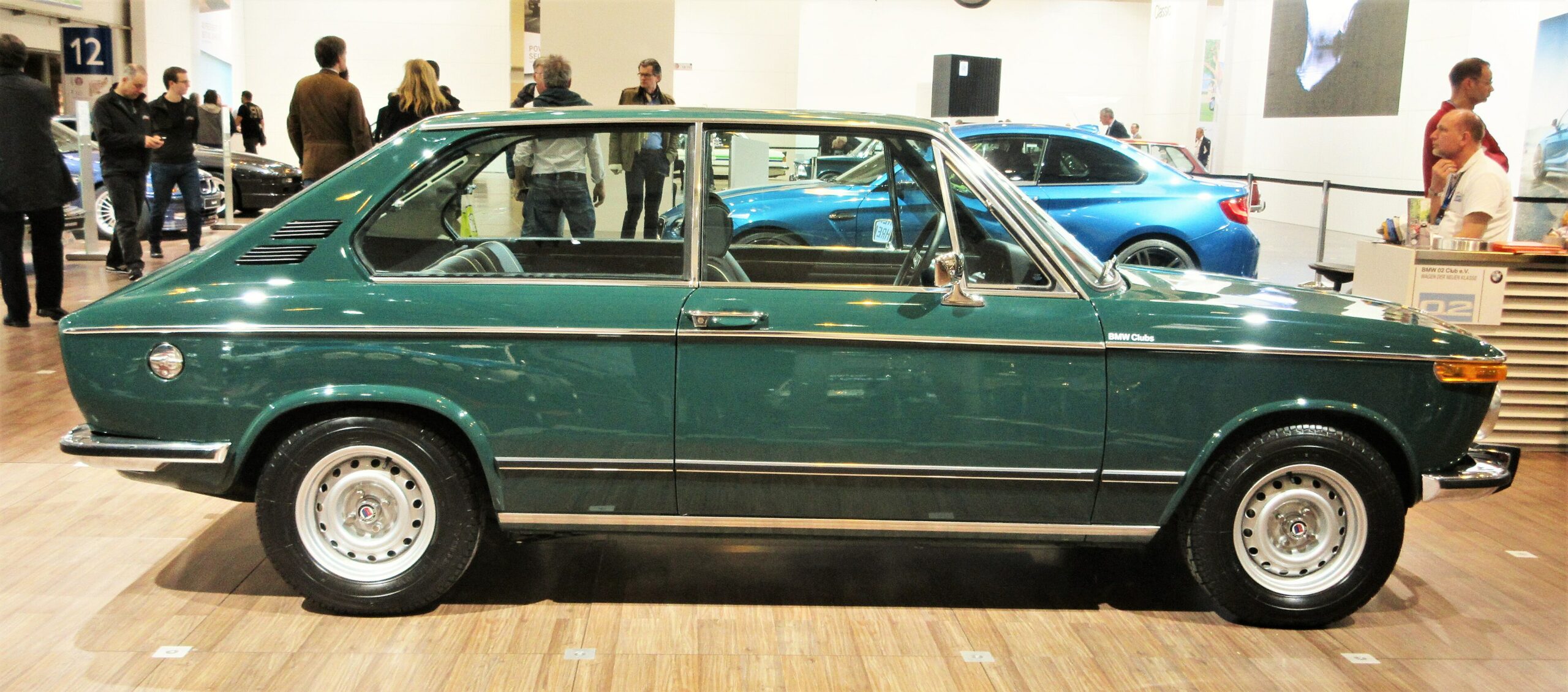
The only body style. Compared to the sedan, the windscreen is steeper and the rear is 12 centimetres shorter: 4,110 instead of around 4,230 millimetres with the same 2,500 millimetre wheelbase. The height also differs, 1,380 versus 1,410 millimetres.
05 · Engines
The engines
All M10 four-cylinders from the 02 series’ shelf. We have no solid evidence for the bore, stroke and compression ratio of the smaller displacements; we therefore do not list them.
1,573 cm³ · 85 PS — touring 1600 / 1602 touring verified
The entry-level engine with a carburettor. 85 PS at 5,700 rpm, top speed 160 km/h. With 4,379 cars, the smallest production run of the four variants — and precisely the car missing from the often-cited total of 25,827.
Technische Daten anzeigen
| Hubraum | 1.573 cm³ |
| Leistung | 63 kW (85 PS) at 5,700/min |
| Gemischaufbereitung | Carburettor, type not documented |
| Höchstgeschwindigkeit | 160 km/h |
| Units built | 4.379 |
| Preis | 10.656 DM |
BMW Group Classic
1,766 cm³ · 90 PS — touring 1800 / 1802 touring verified
For the 1.8-litre, BMW explicitly names the transmission of the 1602. 90 PS at 5,250 rpm. Sources differ slightly on top speed and acceleration: BMW states 165 km/h and 11.8 seconds, Autozeitung 171 km/h and 11.6 seconds. Both figures are given here side by side.
Technische Daten anzeigen
| Hubraum | 1.766 cm³ |
| Leistung | 66 kW (90 PS) at 5,250/min |
| Drehmoment | 143 Nm at 3,000/min |
| Höchstgeschwindigkeit | 165 km/h (BMW) or 171 km/h (Autozeitung) |
| 0–100 km/h | 11.8 s or 11.6 s |
| Units built | 4.075 |
| Preis | 11.460 DM |
BMW Group Classic, supplemented by Autozeitung's buying guide for the 1802 touring
1,990 cm³ · 100 PS — touring 2000 / 2002 touring verified
The most-produced variant with 15,969 cars. Solex downdraught carburettor, 100 PS at 5,500 rpm, 170 km/h. This figure includes the 989 automatic cars with the ZF three-speed transmission, built between May 1971 and September 1972.
Technische Daten anzeigen
| Hubraum | 1.990 cm³ |
| Leistung | 74 kW (100 PS) at 5,500/min |
| Gemischaufbereitung | Solex-Fallstromvergaser |
| Höchstgeschwindigkeit | 170 km/h |
| 0–100 km/h | 10,9 s |
| Units built | 15,969, of which 989 with automatic |
| Preis | 11.544 DM |
BMW Group Classic for power and top speed, SP-X and Wikipedia EN for the unit count
1,990 cm³ · 130 PS — touring 2000 tii / 2002 tii touring verified
The flagship model with mechanical Kugelfischer injection, 130 PS at 5,800 rpm and 190 km/h. BMW cites an optional rally package for the tii touring with light-alloy wheels and Recaro sports seats. Wikipedia EN states in one place that only 422 cars were built under the designation 2002 tii touring — that would be the period after the renaming. This figure is singly sourced and is not treated as fact here.
Technische Daten anzeigen
| Hubraum | 1.990 cm³ |
| Leistung | 96 kW (130 PS) at 5,800/min |
| Gemischaufbereitung | mechanical Kugelfischer injection |
| Höchstgeschwindigkeit | 190 km/h |
| Units built | 5.783 |
| Preis | 13.653 DM |
BMW Group Classic, unit count SP-X and Wikipedia EN
06 · Weak points
Reliability & weak points
- Rust at the rear strut towers. Autozeitung names them explicitly for the touring, Hagerty and Classics World for the entire model line. Documented in three sources and the most costly finding.
- Rust at the sills, inside and out. Also documented in three sources.
- Rust at the wings and wheel arches, front and rear alike.
- The tailgate is an elaborate and expensive replacement part once it has rusted through. This detail comes from a single source but is practically relevant.
- Weak synchro rings in second gear and a sensitive Kugelfischer injection pump on the tii — both inherited from the 02 series.
07 · Engineering
The unit count — and an error that travels through the literature
The names
Chassis, brakes, transmission
No motorsport
Technical data — final drive ratios & gearboxes
- Length
- 4,110 mm (sedan: around 4,230 mm)
- Width
- 1,590 mm
- Height
- 1,380 mm (sedan: 1,410 mm)
- Wheelbase
- 2,500 mm
- Kerb weight
- 1,030 kg (figure for the 1802 touring)
- Fuel tank capacity
- 51 litres
- Transmission
- four-speed manual
- Automatic
- ZF 3HP12, three-speed, only for the touring 2000
- Front axle
- MacPherson struts with wishbones
- Rear axle
- semi-trailing arms with coil springs
- Brakes
- discs front, drums rear; diameter not documented
- Tyres
- 165 R 13 (1802 touring)
- Final drive ratios
- not documented
- Limited-slip differential
- not documented
- Steering
- not documented
08 · Karosserie
Why the touring is shorter than the sedan
BMW Group Classic describes two structural differences: a steeper windscreen and a rear shortened by 12 centimetres. Together, these result in a body of its own, not an estate variant.
The figures confirm each other: 4,230 millimetres in length for the sedan minus 120 gives exactly the touring’s 4,110 millimetres. Two independent figures that add up mathematically — that’s rare and therefore worth noting. The steeper windscreen has a practical consequence known to restorers: the doors of the two bodies are not interchangeable.

09 · Buying guide
What matters: sheet metal and tailgate
Autozeitung estimates the surviving population of the 1802 touring at around 150 vehicles. This is an estimate and only singly sourced — but it shows the order of magnitude. The touring is rare, and so are its body parts.
Check the rear strut towers from the inside. Remove the rear seat, lift the carpet.
Sills inside and out, plus the bumper mounts.
The tailgate all around, especially the lower edge and hinge areas. Replacements are hard to come by.
Check the doors and compare if in doubt: sedan doors don't fit but are occasionally fitted anyway.
On the tii, test the injection pump cold and warm. An overhaul is noticeably costly.
The touring is not an expensive car, but it is an expensive restoration project. Whoever buys one buys the sheet metal — the mechanicals are 02 standard and available everywhere.
10 · The competition
The competition
Renault 16 TS / TX
The hatchback sedan with a tailgate was the European benchmark for the concept during the touring's time — but with front-wheel drive and positioned in a distinctly more mainstream way. The market accepted the hatchback form, just not at BMW prices.
Reliant Scimitar GTE
The shooting brake that SP-X describes as the expensive counterpart to the touring's niche. Sporty and practical like the BMW, but built in small series.
Volvo 1800 ES
From 1971, the same idea, a similar production run, similarly short-lived. The most fitting comparison: Volvo, too, failed in the same non-existent segment.
11 · Galerie
Bilder
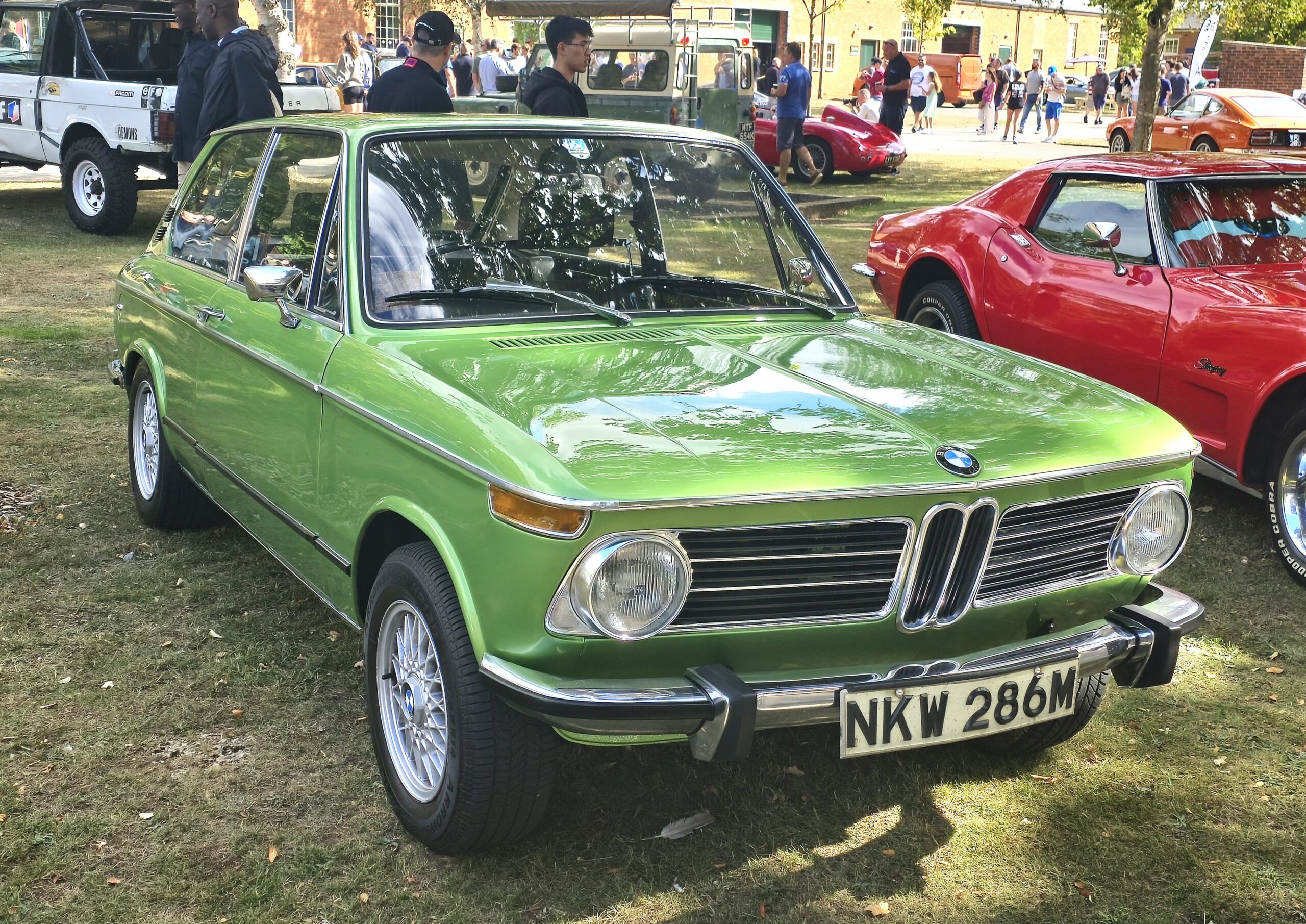
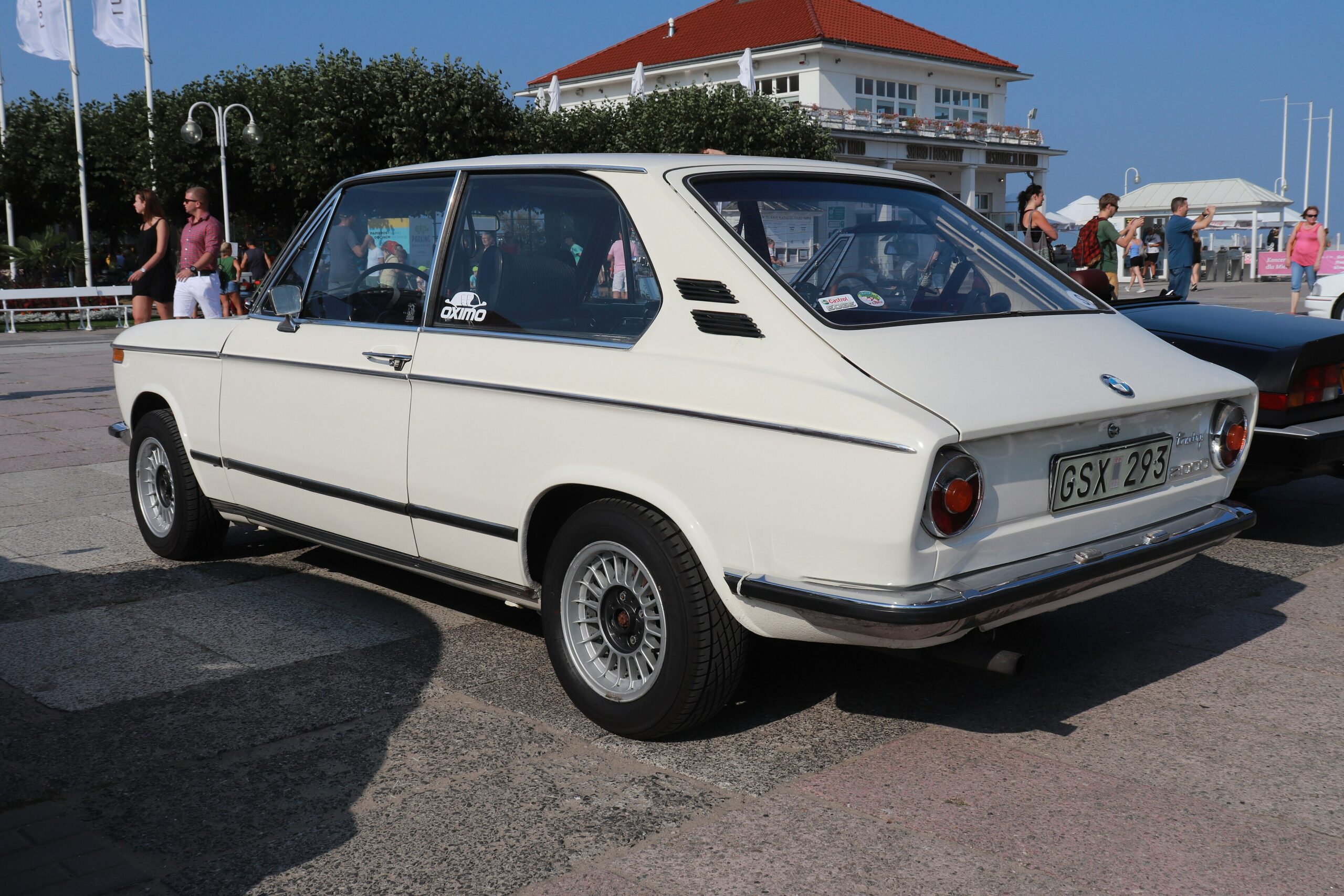
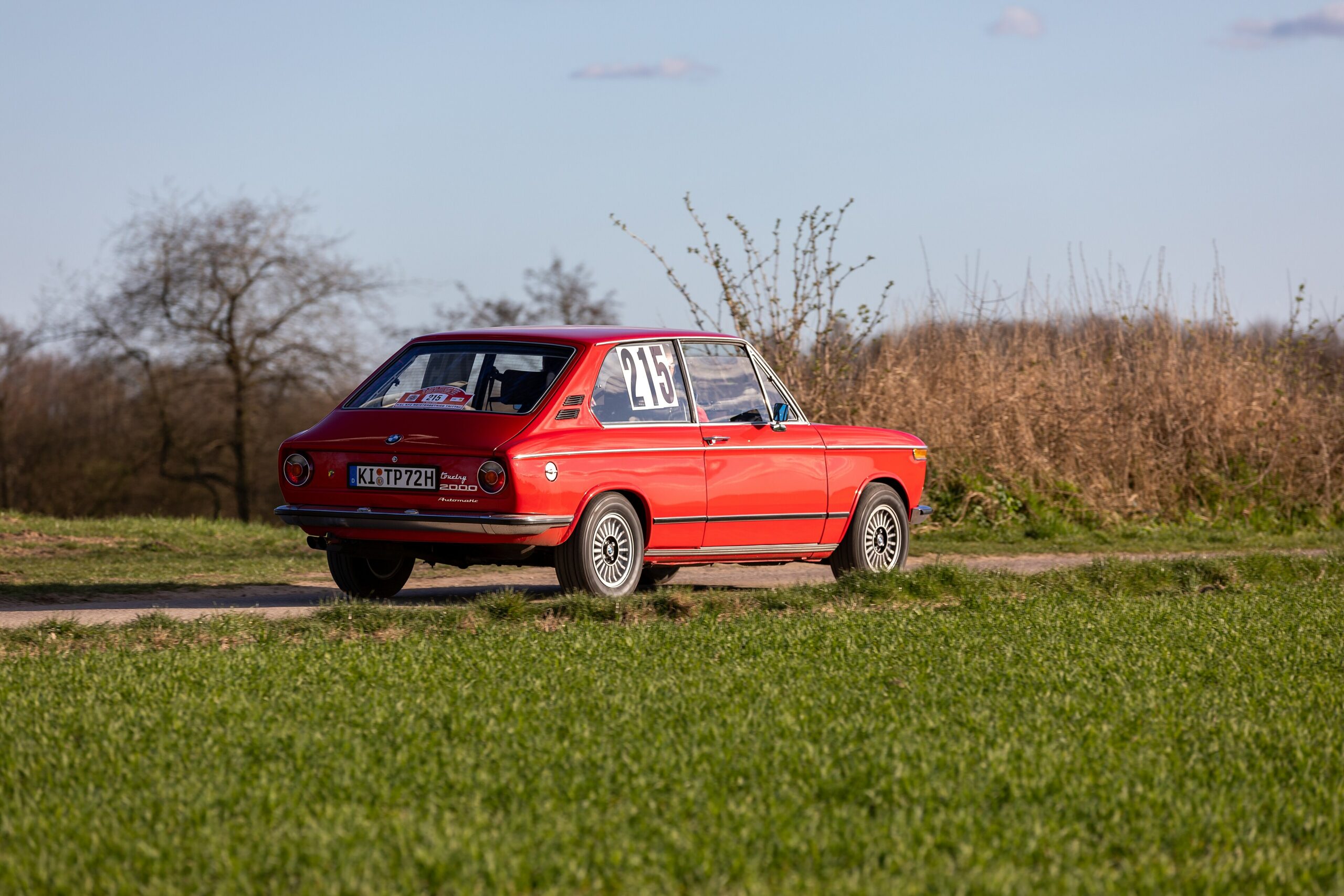
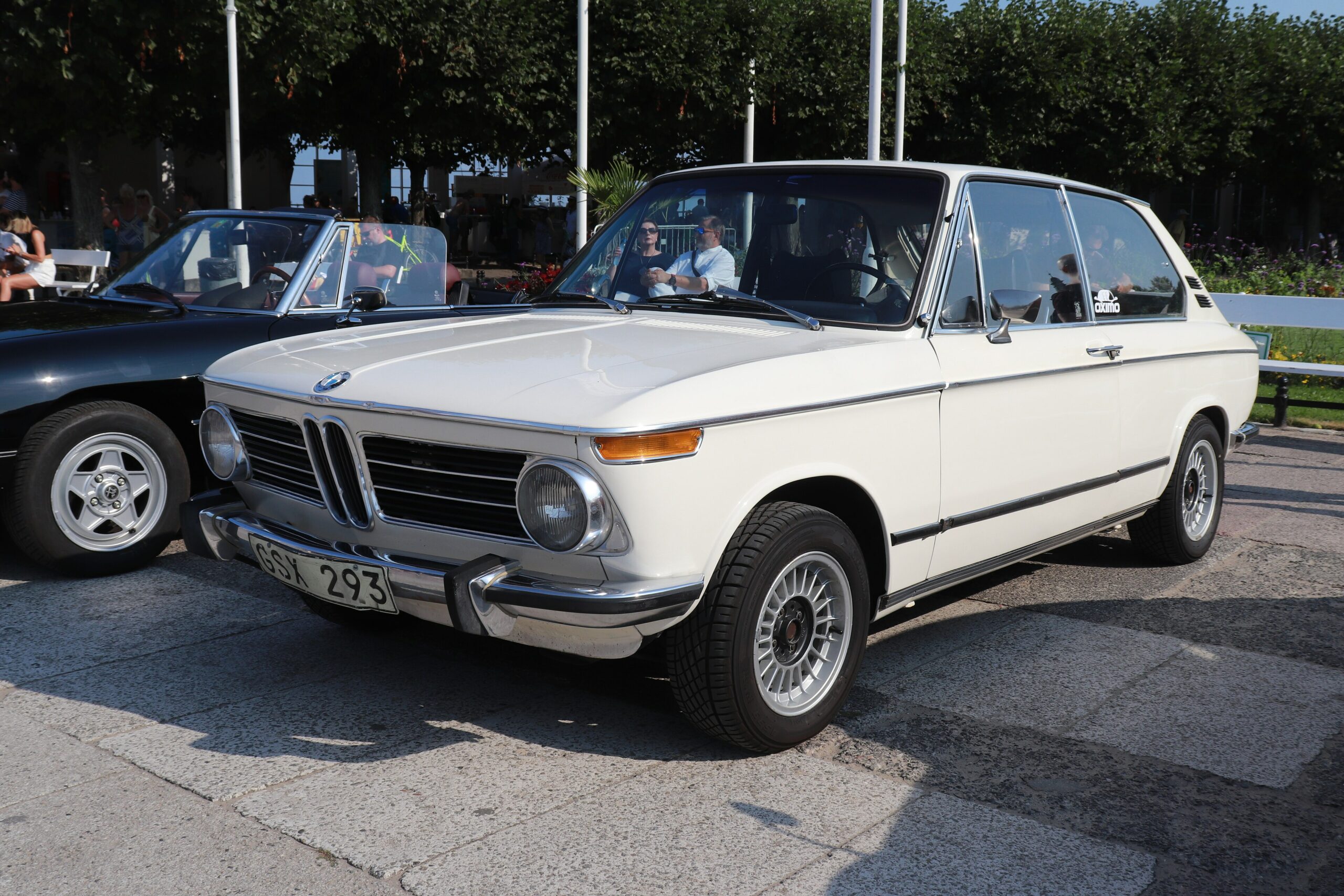
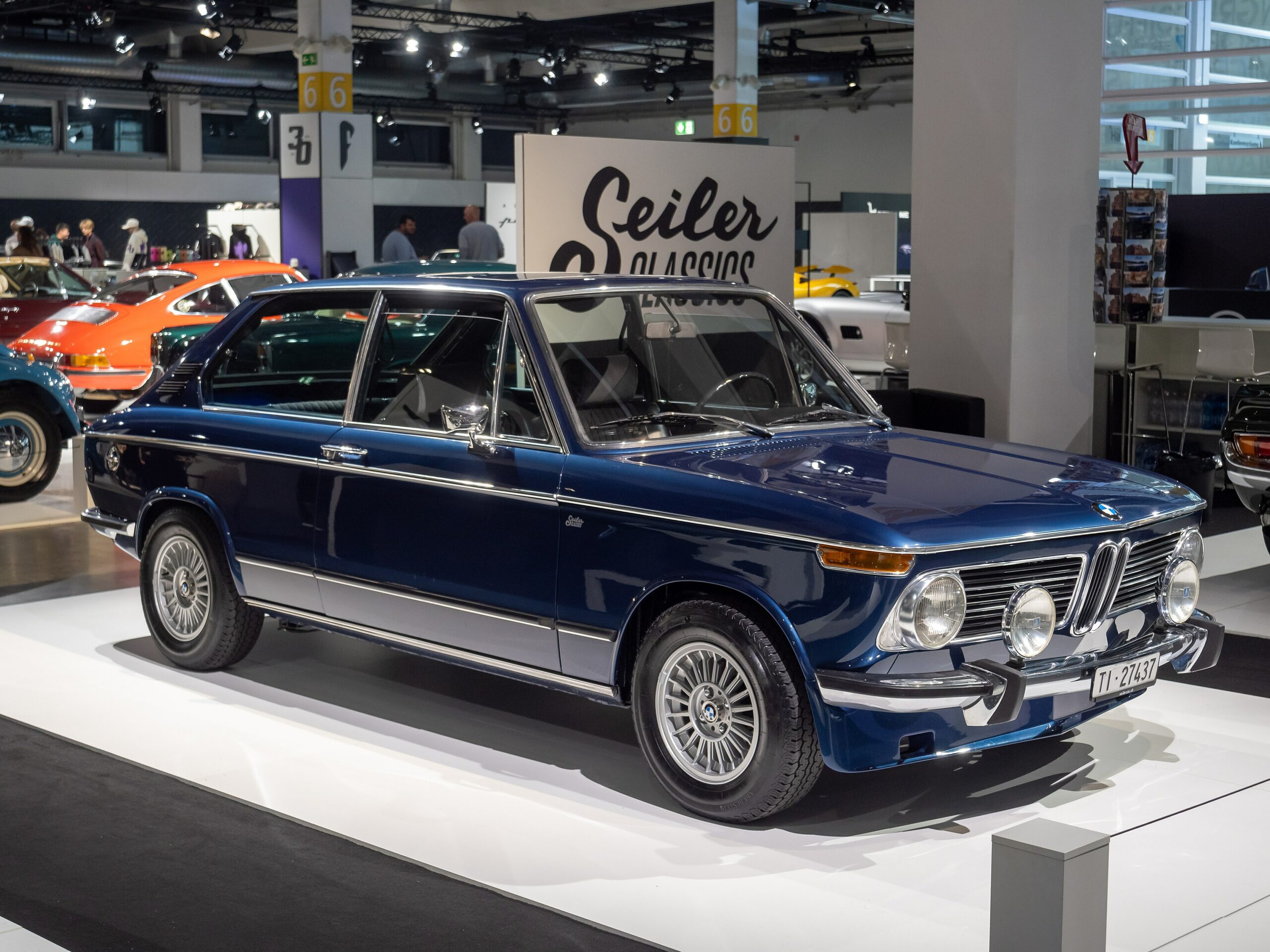
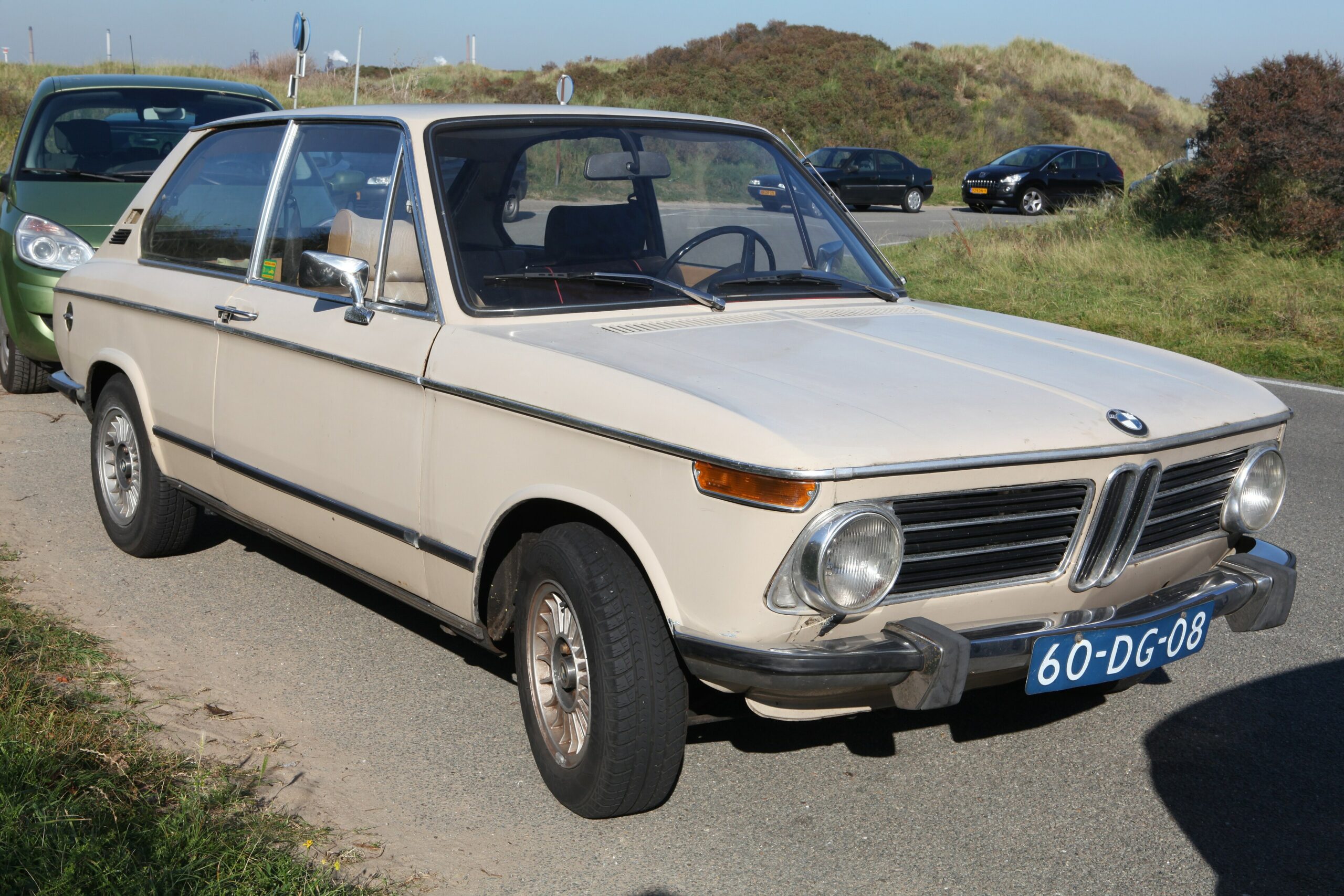
The distinctive body in four colours — and the side view, which best shows the short rear.
12 · Sources
Sources & Further Reading
The lead source is BMW Group Classic with its four model pages on the touring. Unit numbers have been cross-checked against SP-X and Wikipedia; where the figures diverge, the calculation is given in the text. The German-language Wikipedia was consulted in preliminary research via a mirror and should be treated here as unverified against the original.
- BMW Group Classic — model pages BMW 1600 Touring/1602 Touring, 1800/1802, Touring 2000/2002 and 2000 tii/2002 tii Touring
- Wikipedia — BMW 02 (renaming 08/1973, dimensions, unit numbers)
- Autozeitung — buying guide BMW 1802 touring (dimensions, torque, population estimate)
- Wikimedia Commons — image sources and licences