

01 · Overview
The fuel-injected one
In 1971 the 3.0 CS replaced the 2800 CS, and that same year BMW placed the 3.0 CSi alongside it. The difference lies in the letter: instead of two Zenith carburettors, the CSi runs Bosch D-Jetronic, the first electronically controlled manifold injection in a BMW coupé. From the same 2,985 cc, this yields 200 instead of 180 PS.
More important than the twenty PS is what they made possible. The CSi is the technical basis of the 3.0 CSL — the second CSL stage from 1972 adopts exactly this injection system and, at 3,003 cc, likewise reaches 200 PS, only in a bodyshell from which BMW had cut roughly two hundred kilograms. No CSi, no CSL; no CSL, no six European Touring Car Championship titles.
In everyday use, the CSi is the most balanced coupé in the model line: the performance of the CSL, but with insulation, wind-up glass windows, full-size rear seats, and a bodyshell not assembled from aluminium and Plexiglas. Anyone looking for an E9 to drive rather than to display is looking for this one.
02 · History
The CSi within the model line
Four facts that explain where the 3.0 CSi stands in E9 history.
- 1968 The E9 model line starts as the 2800 CS with 170 PS from 2,788 cc and carburettors. The bodyshell is built by Karmann at the Rheine plant, with final assembly in Munich.
- 1971 The 3.0 CS replaces the 2800 CS: 2,985 cc, 180 PS — and, far more importantly, disc brakes on all four wheels instead of rear drums. Alongside it comes the 3.0 CSi with Bosch D-Jetronic and 200 PS.
- 1972 The second CSL stage adopts the CSi's injection system. At 3,003 cc it reaches the same 200 PS — the additional eighteen cubic centimetres were pure regulatory arithmetic for the racing class over three litres.
- 1975 In November, production of the model line ends after 30,546 coupés. A direct successor doesn't arrive until 1976 with the E24 — which, unlike the E9, has a B-pillar.
03 · Model overview
The CSi compared
All variants of the model line side by side. It’s easy to see where the CSi stands: the same displacement as the 3.0 CS, but twenty PS more — and the same output as the second CSL stage, just without its lightweight construction.
Source: factory and literature data · verified
Technische Daten anzeigen — komplette Modellmatrix
| Modell | Motor | Hubraum | Leistung | Production |
|---|---|---|---|---|
| 2800 CS | M30 · carburettor | 2.788 cm³ | 170 PS (125 kW) | 1968–1971 |
| 2,5 CS | M30 · carburettor | 2.494 cm³ | 150 PS (110 kW) | 1974–1975 |
| 3.0 CS | M30 · carburettor | 2.985 cm³ | 180 PS (132 kW) | 1971–1975 |
| 3.0 CSi | M30 · Bosch D-Jetronic | 2.985 cm³ | 200 PS (147 kW) | 1971–1975 |
| 3.0 CSL (stage 1) | M30 · carburettor | 2.985 cm³ | 180 PS (132 kW) | 1971–1972 |
| 3.0 CSL (stage 2) | M30 · D-Jetronic | 3.003 cm³ | 200 PS (147 kW) | 1972–1973 |
| 3.0 CSL "Batmobile" | M30 · D-Jetronic | 3.153 cm³ | 206 PS (151 kW) | 1973–1975 |
04 · Body variants
Body variants
Coupé (E9)

Two-door coupé without a B-pillar — with the windows down, this creates the unbroken glass area that distinguishes the E9 from its successor, the E24. The bodyshell was built by Karmann at the Rheine plant, not in Osnabrück; Osnabrück is the company's headquarters. The high proportion of hand work explains both the panel fit and the price: in 1972, a 3.0 CSi cost roughly twice as much as a well-equipped 2002 Sedan.
05 · Engines
M30 with Bosch D-Jetronic
The CSi has the same base engine as every E9 — the large six-cylinder M30. The difference lies in the fuel mixture preparation.
M30 — 2.985 cm³, 200 PS verified
Cast-iron block, aluminium head, a single overhead camshaft, timing chain instead of a belt. The M30 is considered one of the most durable engines BMW ever built, and variants of it remained in production until 1994. In the CSi it produces 200 PS from 2,985 cc — twenty more than the carburettor CS at identical displacement.
Bosch D-Jetronic verified
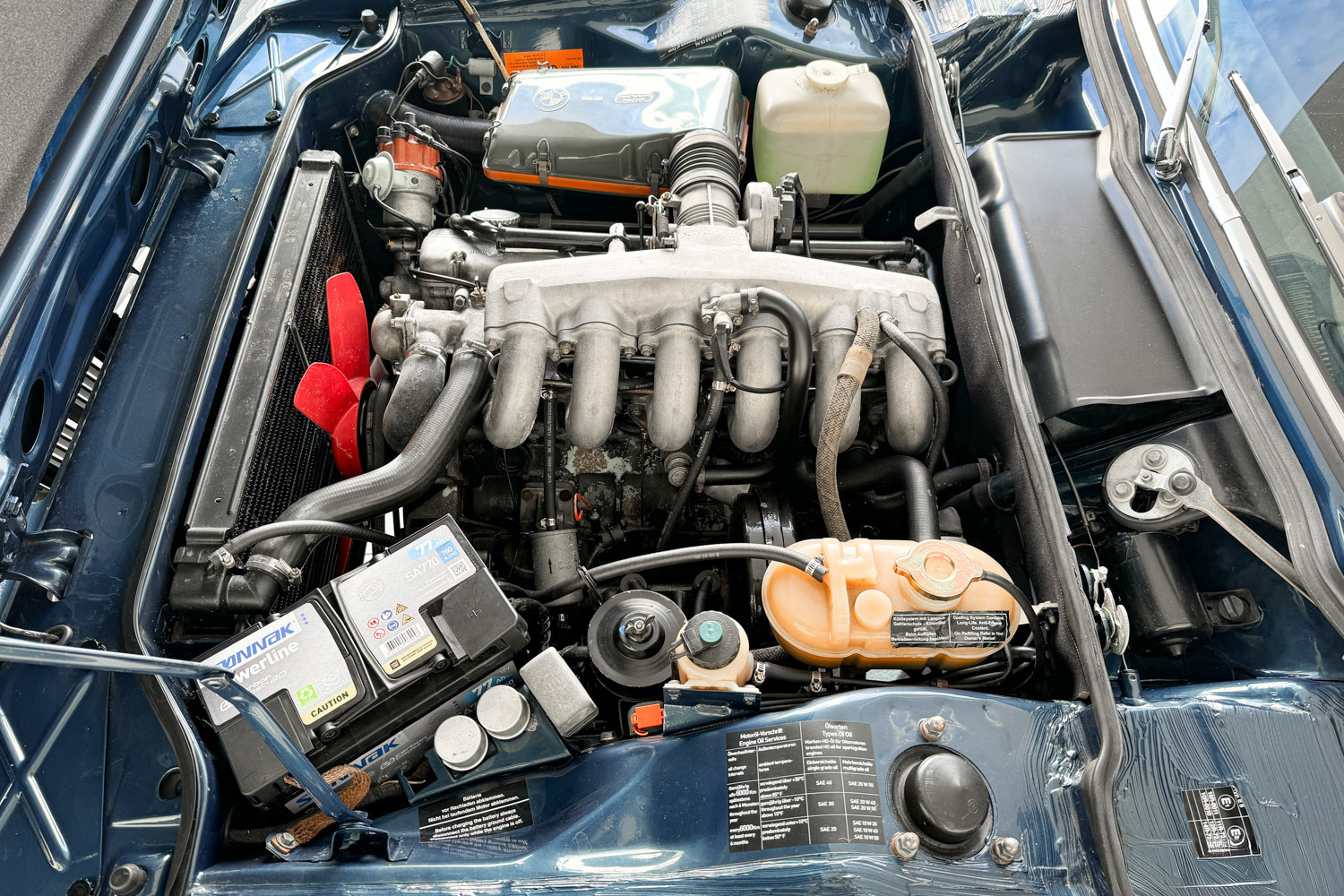
The first electronically controlled manifold injection in a BMW coupé, recognisable by the intake manifold with individually triggered injectors. The "D" stands for Druck (pressure): the control unit measures the vacuum in the intake manifold and derives the injection quantity from it. For the early seventies this was high technology — and today it's the point where a CSi can become expensive, because control units, pressure sensors and injectors are only available through specialists.
What this meant for the CSL verified
The second CSL stage from 1972 onward adopted this injection system. At 3,003 cc it likewise reached 200 PS — the eighteen-cubic-centimetre increase in displacement served solely to reach the racing class over three litres. The CSi is thus, technically, the father of the Batmobile.
06 · Weak points
Reliability & weak points
- Rust is the issue that determines whether an E9 is worth buying at all. Factory cavity protection was inadequate, and the bodyshell has many spots where water collects.
- The D-Jetronic is the weak point unique to the CSi. Control unit, pressure sensor, temperature sensors and injectors age; the parts are only available through specialists and priced accordingly. A car with a documented, overhauled system is worth considerably more than one that merely “runs”.
- On the M30 itself, leaking valve stem seals are typical, recognisable by blue smoke on lift-off, along with piston ring wear and the head gasket. The most common cause of failure, however, is the cooling system.
- Parts for the body and trim are the real hurdle: chrome trim, bumpers and add-on parts are barely obtainable anymore. On a car in poor condition, restoration costs regularly exceed the vehicle’s value.
07 · Engineering
Suspension, brakes, transmission
Fahrwerk
Bremsen
Lenkung
Getriebe
Technical data — final drive ratios & gearboxes
- Transmission
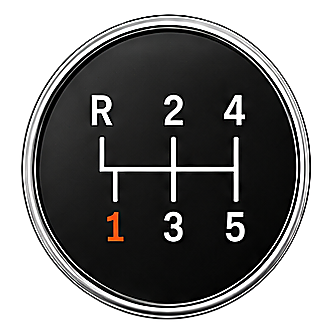
- Getrag 262 with four gears as standard, Getrag 265/5 with five gears on request, automatic at extra cost (3.0 CSiA)
- Final drive ratio
- 3.25 (39:12)
- Limited-slip differential
- available with 25 or 40 percent lock value
- Displacement
- 2,985 cc — the 3,003 cc belongs to the second CSL stage, the 3,153 cc to the Batmobile
- Brakes
- discs on all four wheels, since the 3.0 CS of 1971
- Steering
- ZF recirculating ball steering, usually with power assistance
- Type designation
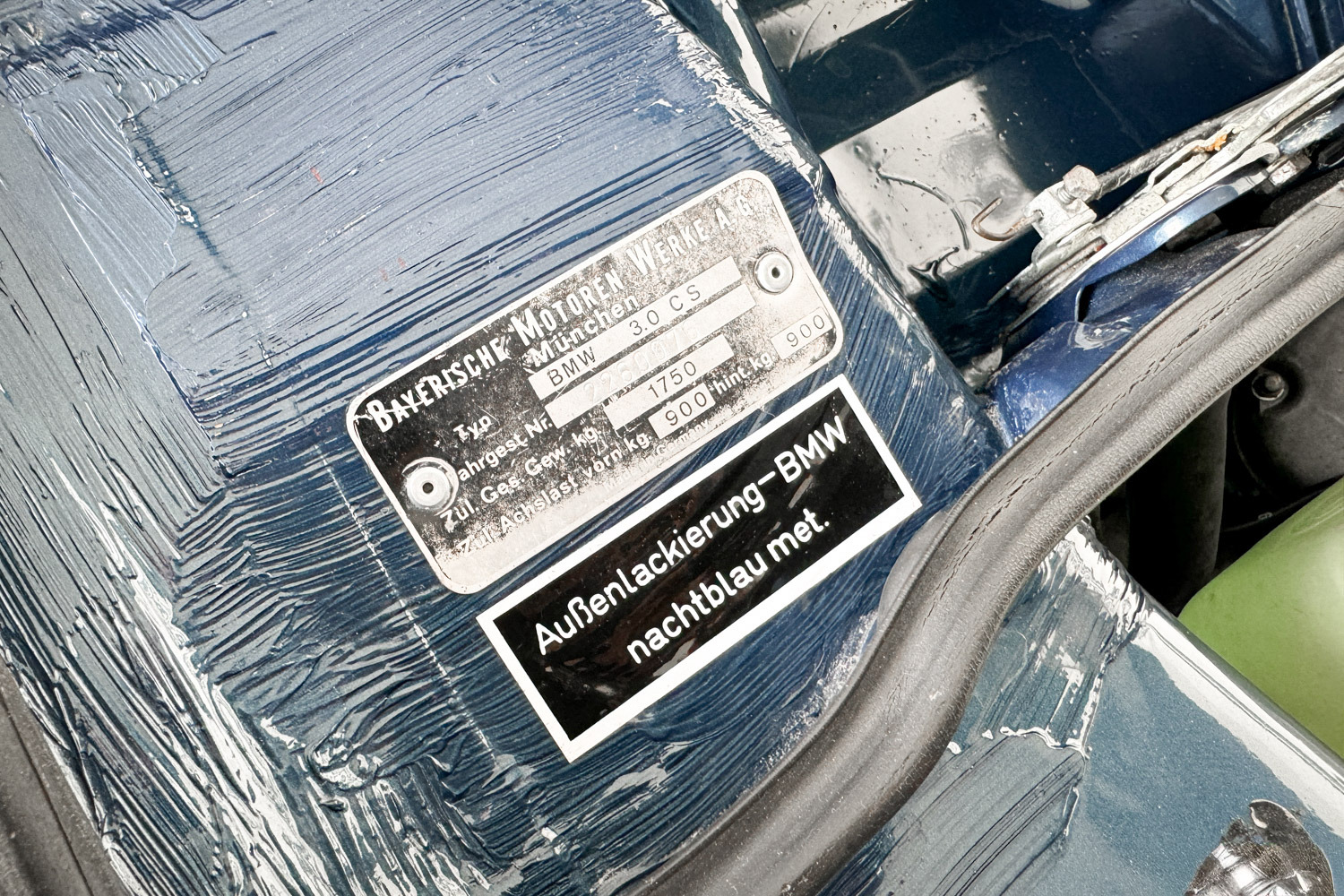
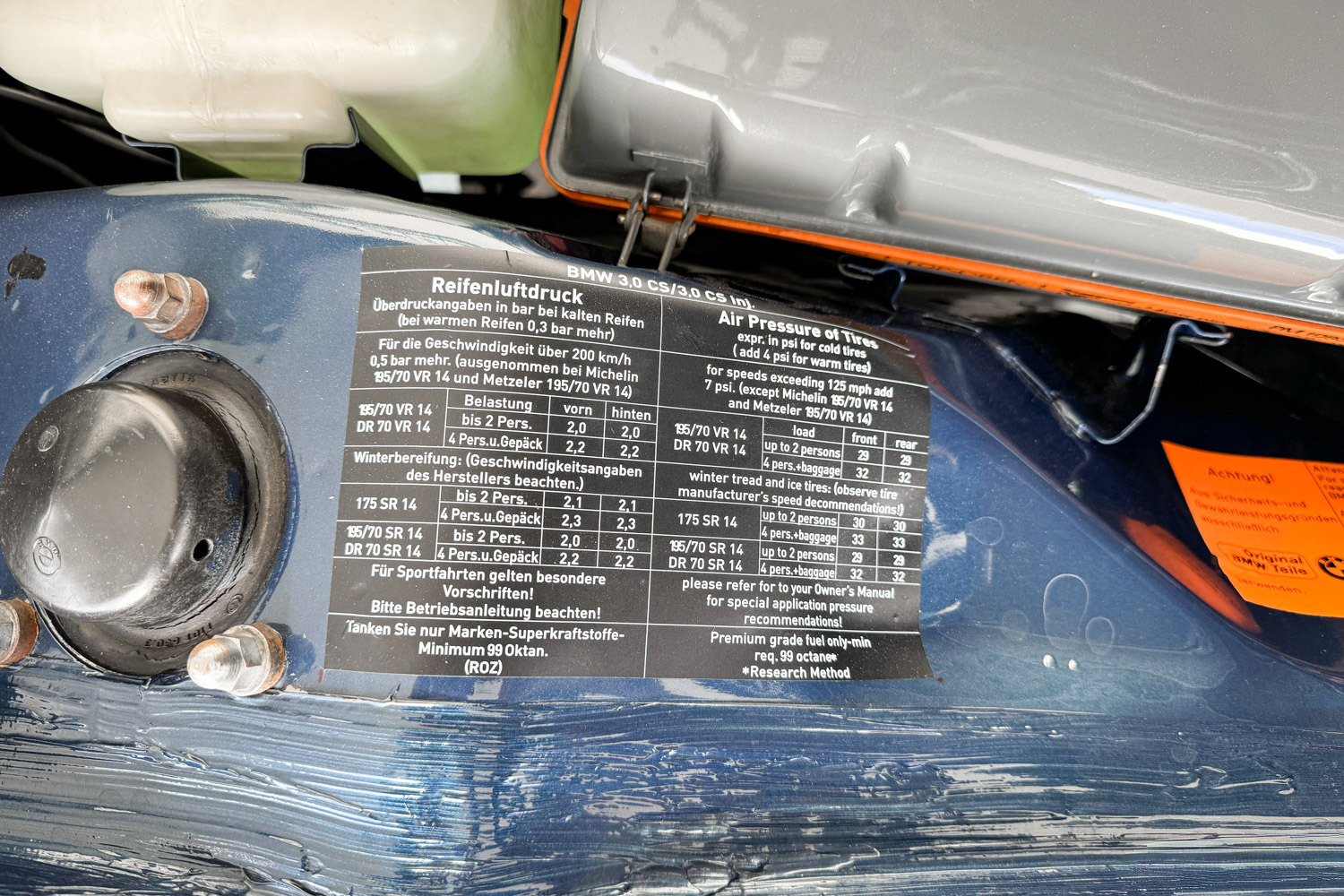
- BMW sometimes used shared stickers and plates for the CS and CSi — the tyre pressure sticker in the engine bay carries the label for both variants. Whether a car is a CSi is determined by the intake manifold with D-Jetronic, not the badge on the rear.
Gear ratios for the Getrag transmissions cannot be verified from permissible sources; BMW Group Classic and the PressClub do not list transmission data for the E9.
08 · Buying guide
What matters: rust, D-Jetronic, paperwork
With the CSi, a second issue joins the E9’s rust question: the condition of the injection system. Together, the two determine the price — and both can be roughly assessed in half an hour, if you know where to look.
Front fenders and their mounting areas — the classic first point of attack
Sills, inside and out, and the jacking point mounts
Base of the A-pillar and the transition to the cowl panel
Windscreen and rear window frames beneath the trim
Rear wheel arches and the corners of the boot floor
Floor pan, seat cross-member and the rear axle mounts
First the bodyshell: fenders, sills, A-pillar base and the window frames beneath the trim. An E9 with soft window frames is a restoration project, not a car. Then the injection system: start it cold, watch the idle, let it warm up, and listen for hesitation under partial load. Evidence of an overhauled D-Jetronic — control unit, pressure sensor, injectors, temperature sender — is worth real money. Without it, budget for a four-figure reserve. Then the engine: blue smoke on lift-off points to valve stem seals; check the cooling system thoroughly. And finally, the paperwork. The difference between a CS and a CSi is a four-figure sum today, so the details are worth checking: have matching numbers verified, check the chassis number against the engine number, and look under the bonnet to confirm the D-Jetronic intake manifold is genuinely fitted. A carburettor engine fitted later turns a CSi back into a CS.
09 · Galerie
The 3.0 CSi shown here
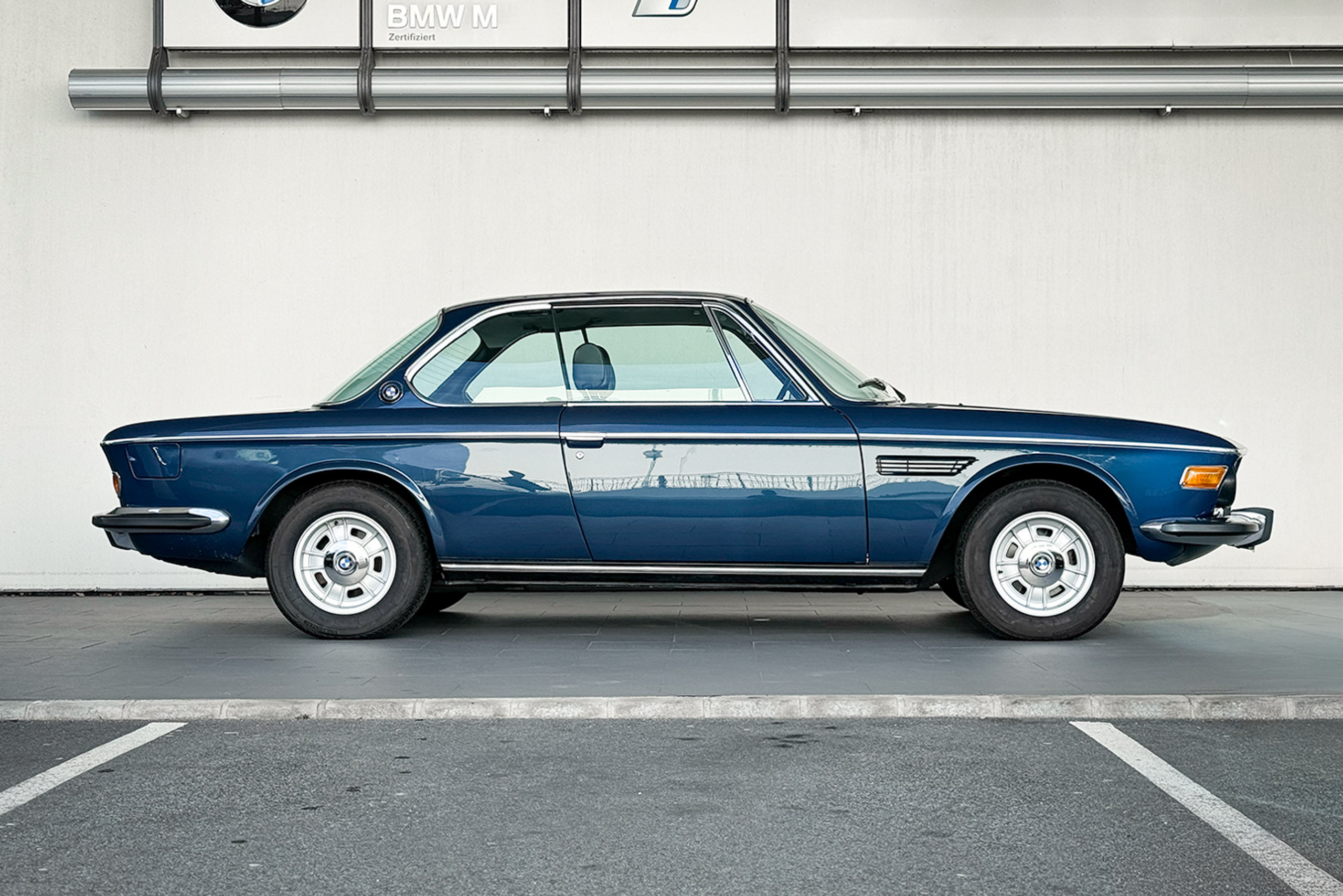
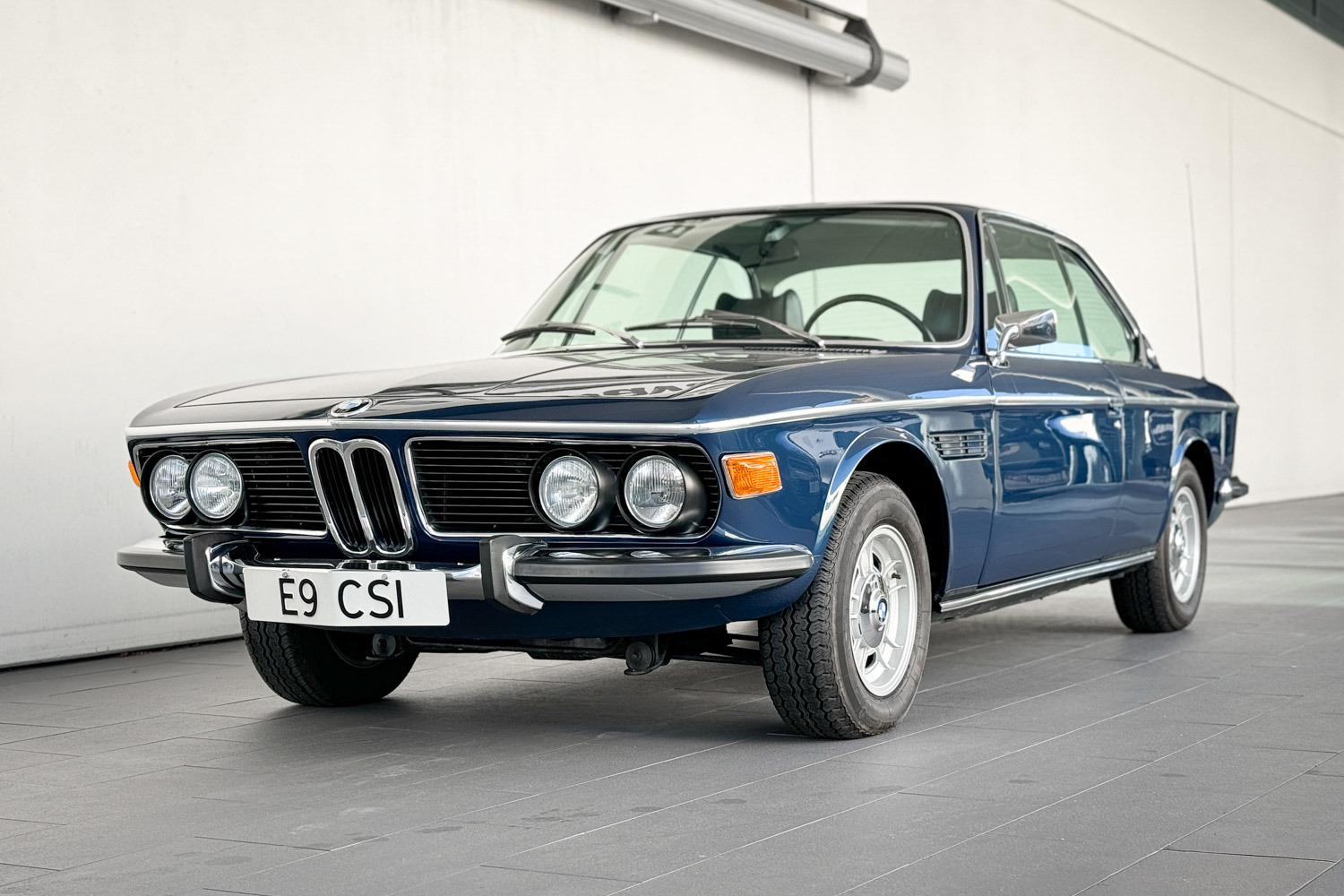
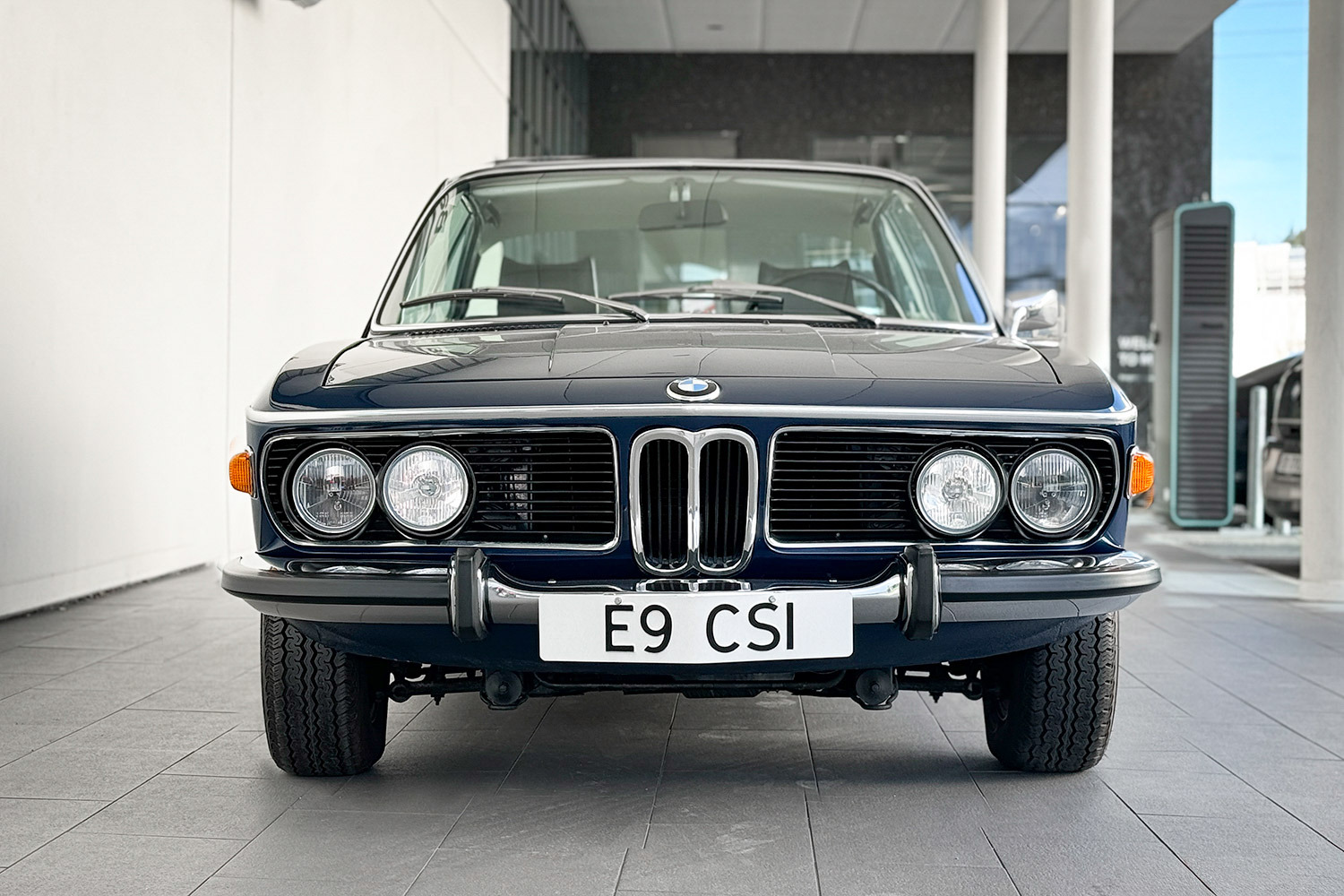
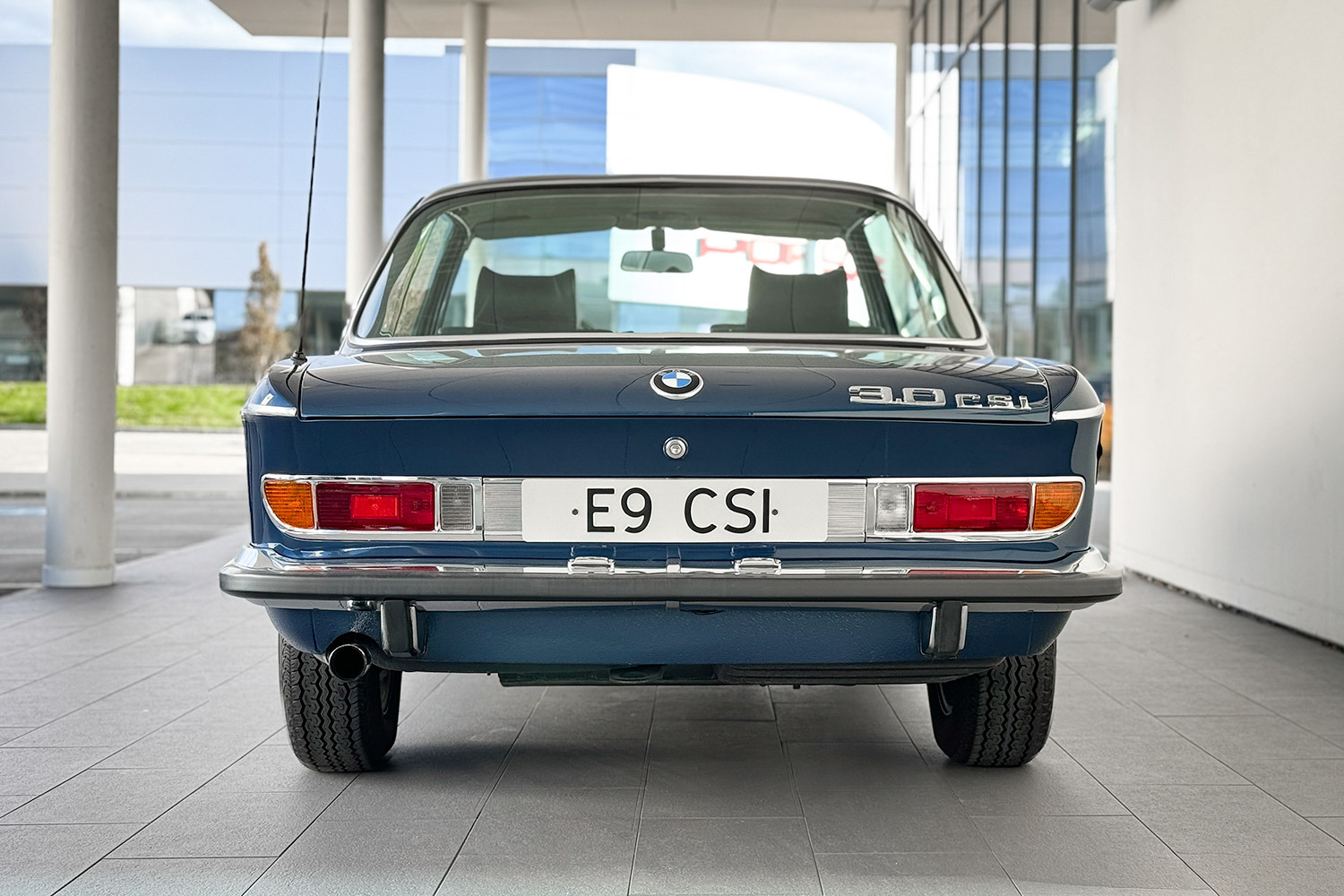
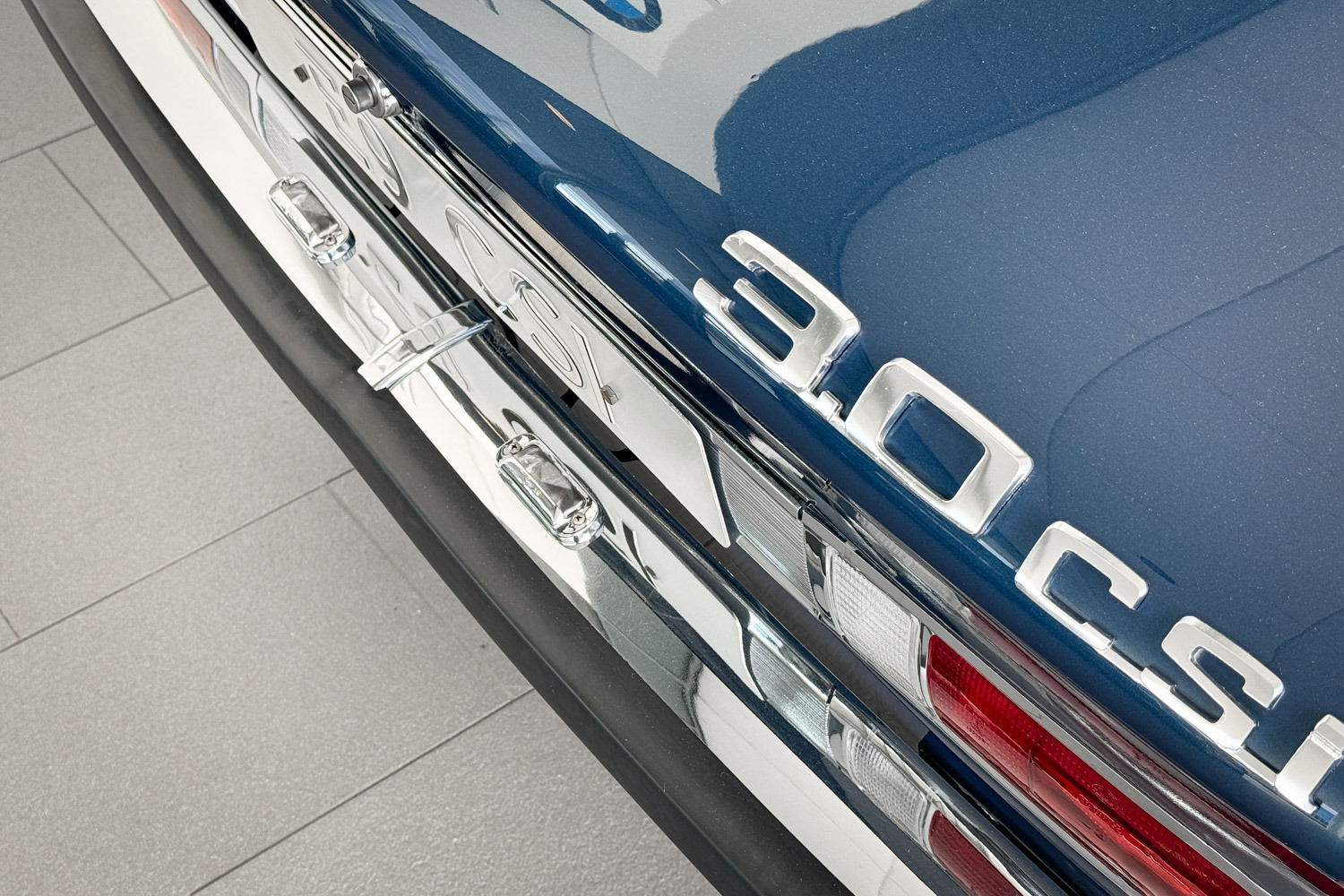
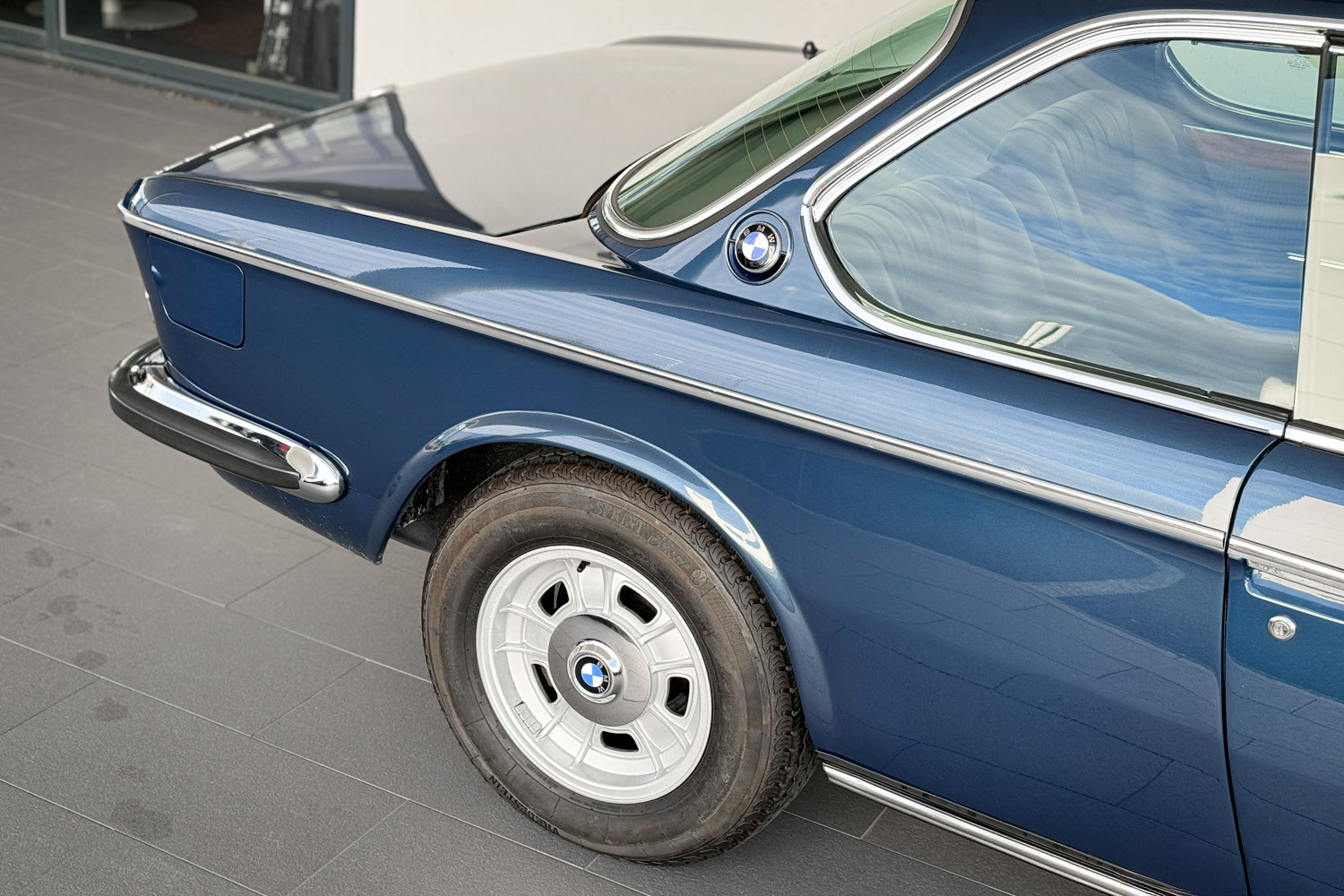
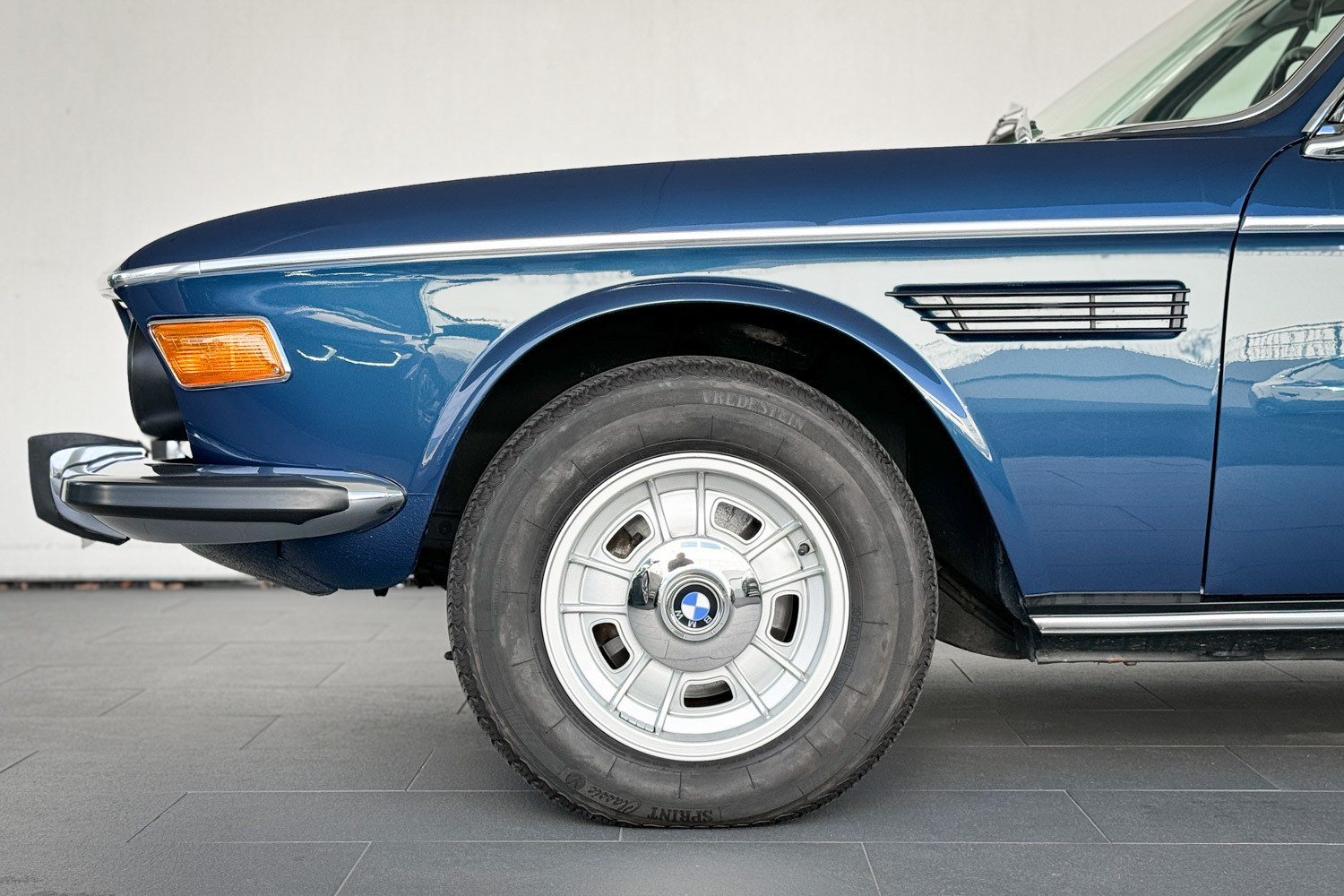
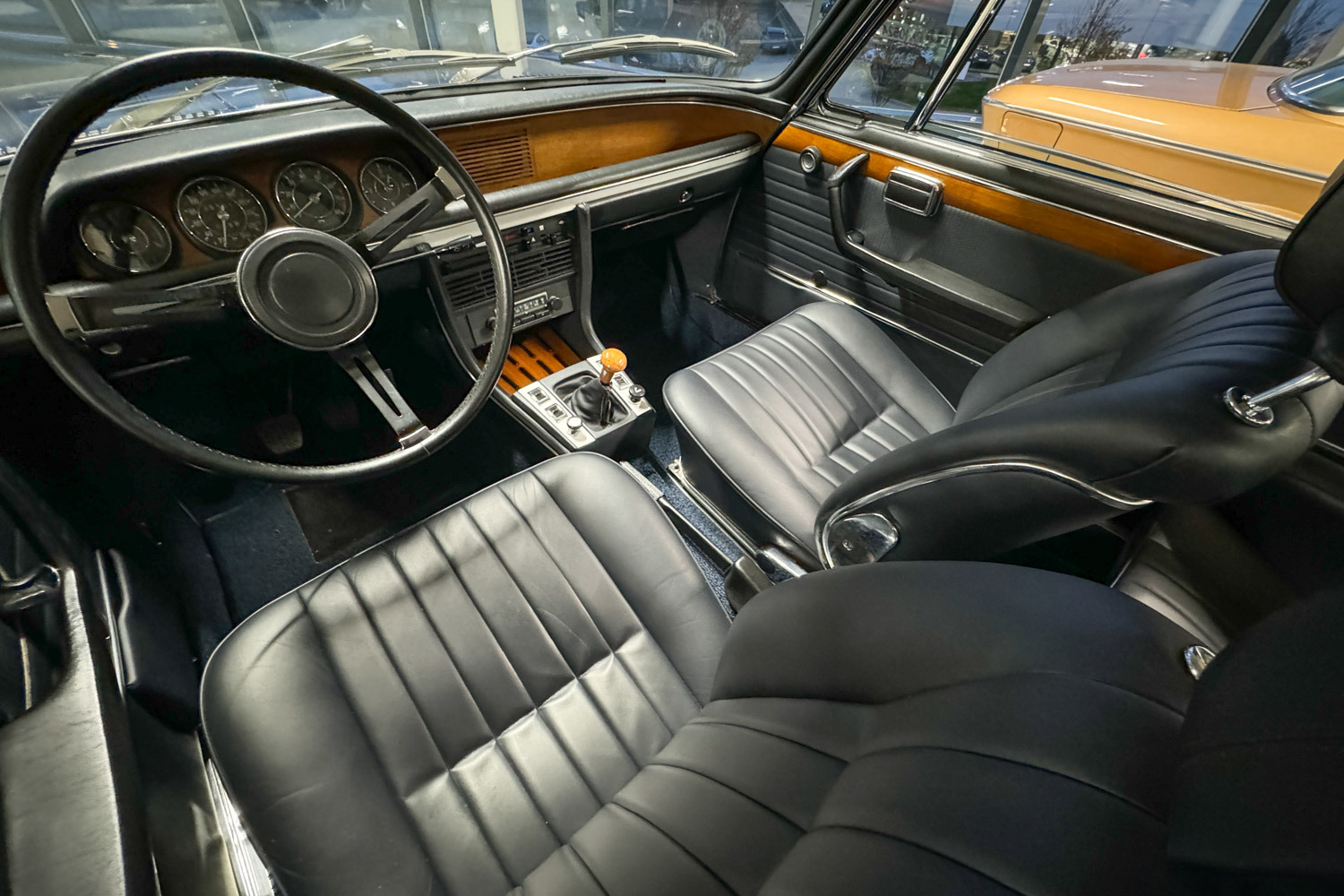
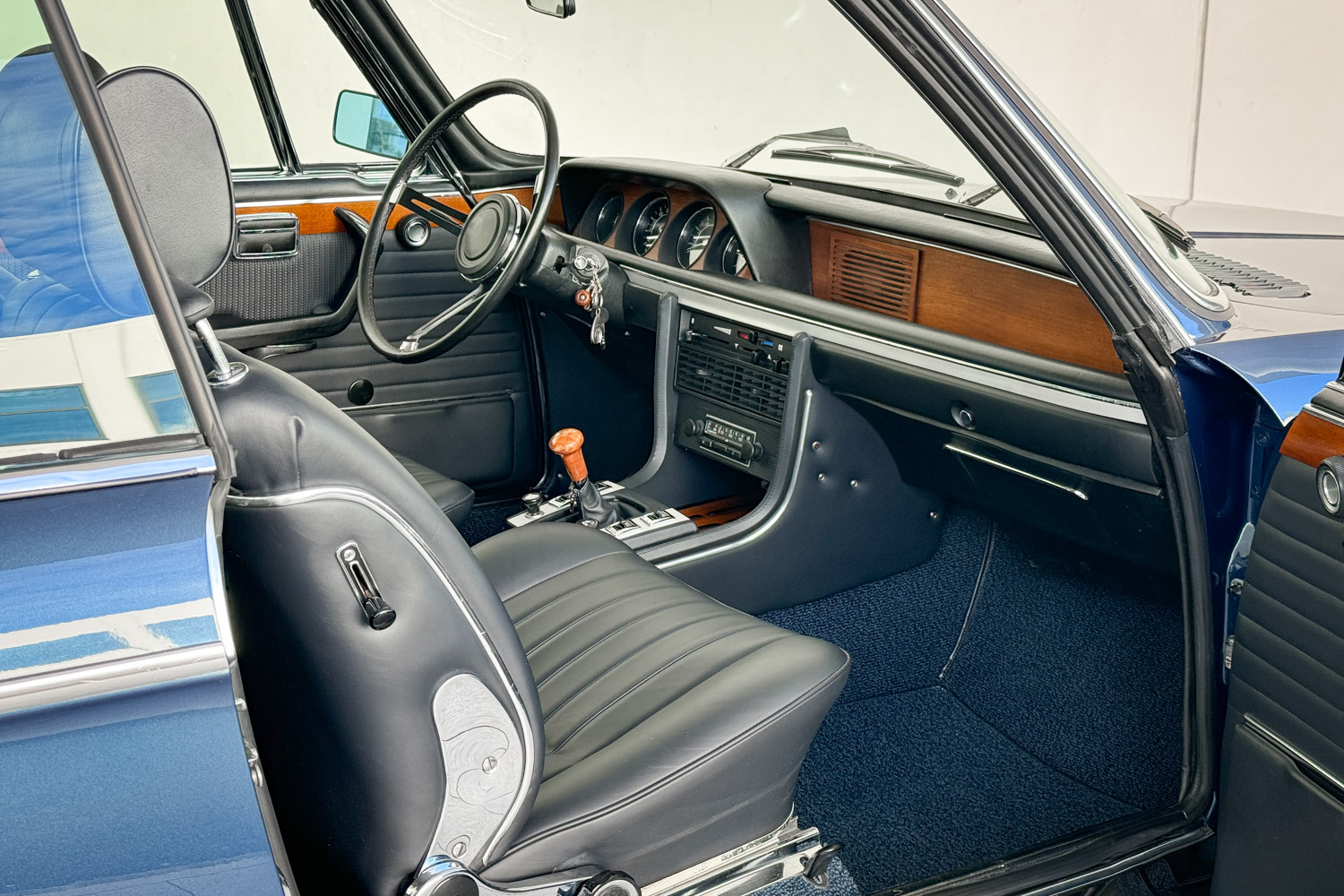
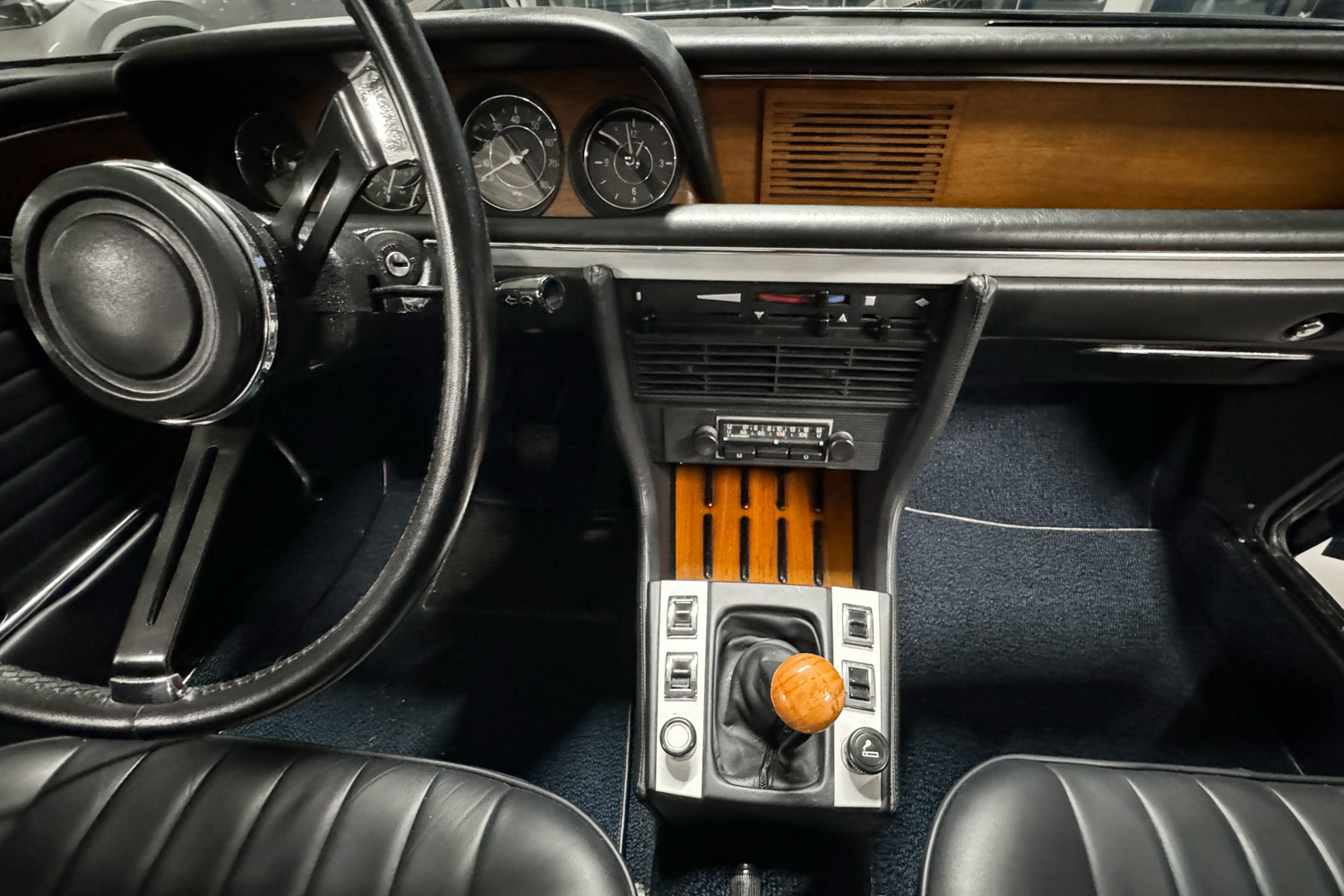
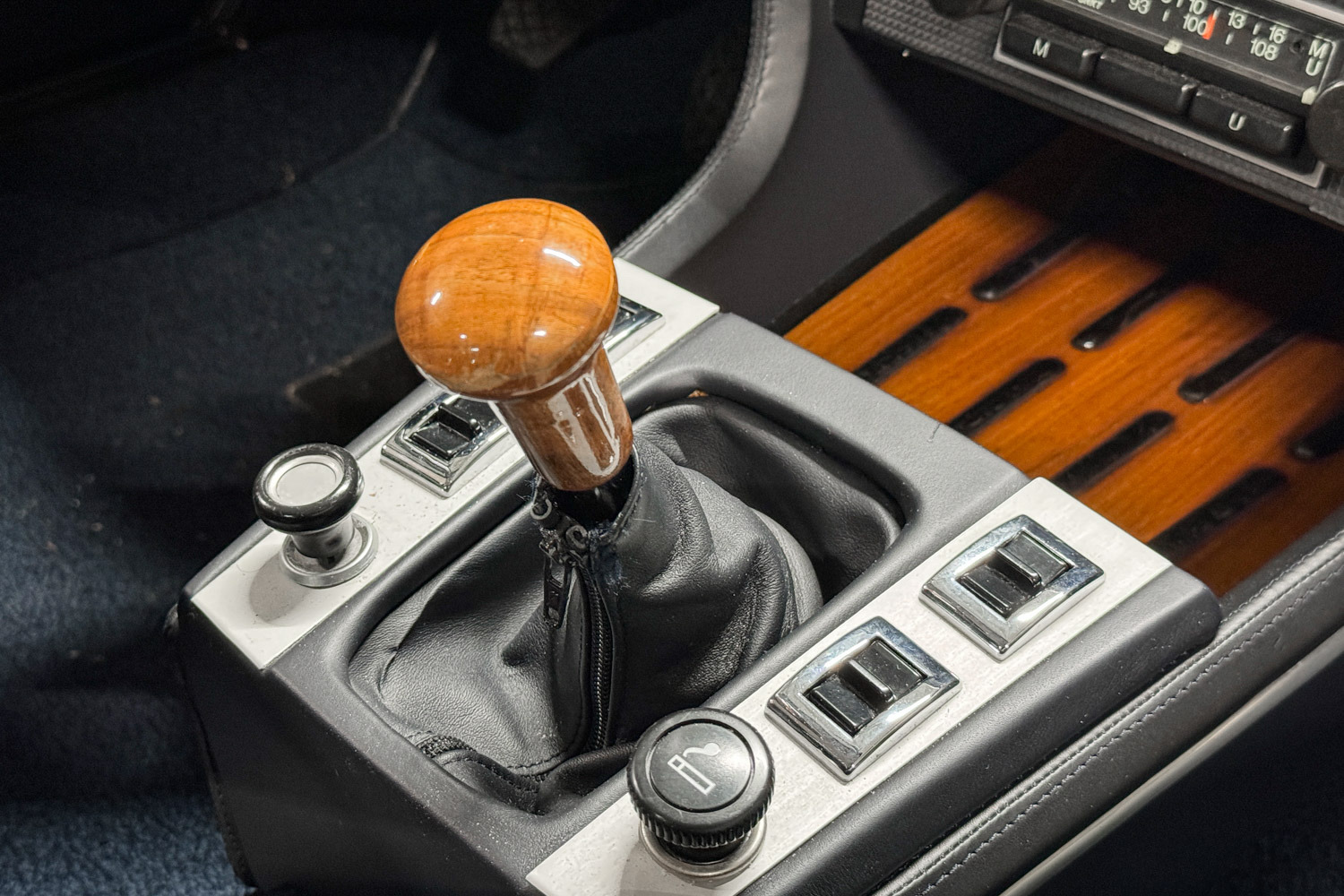
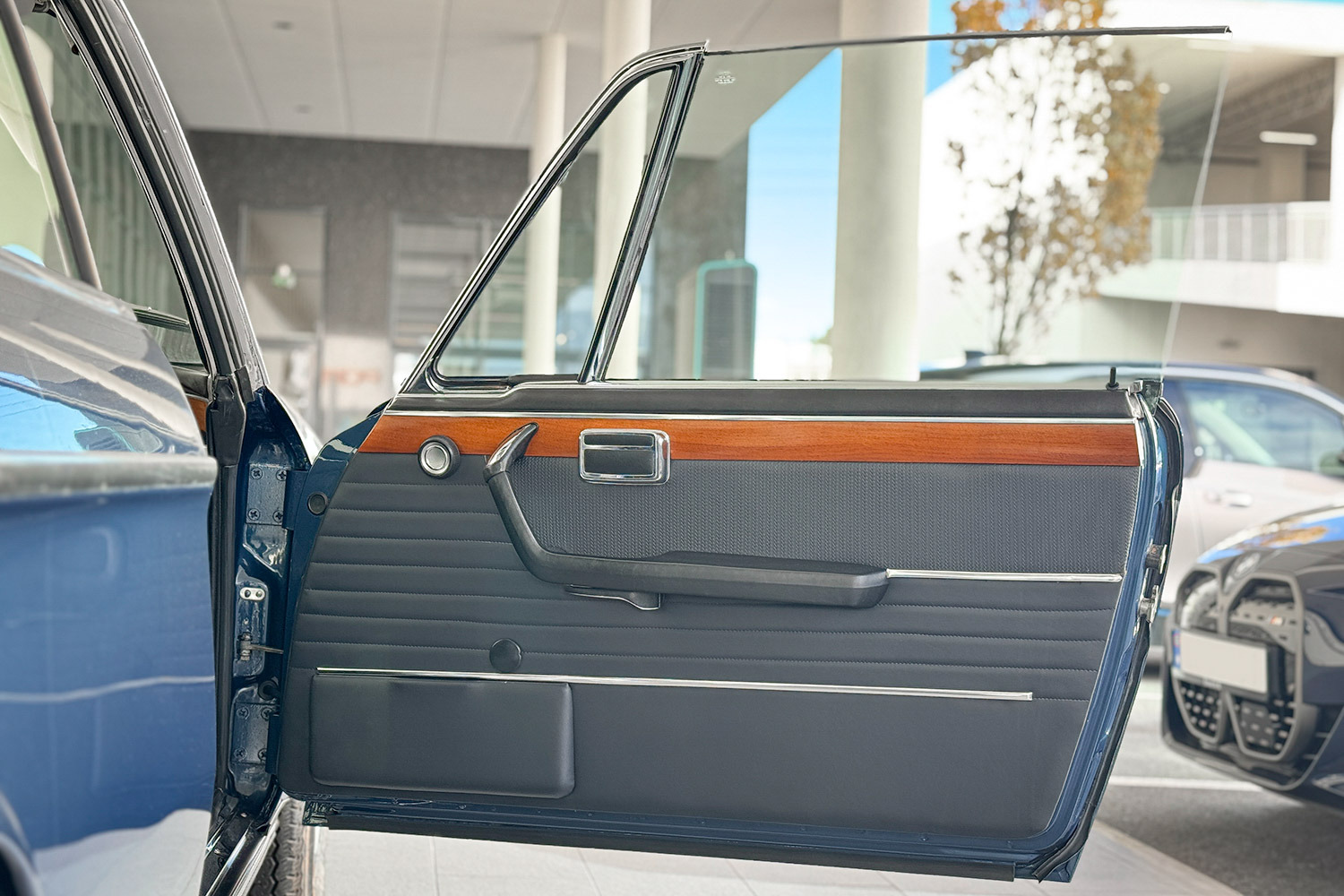
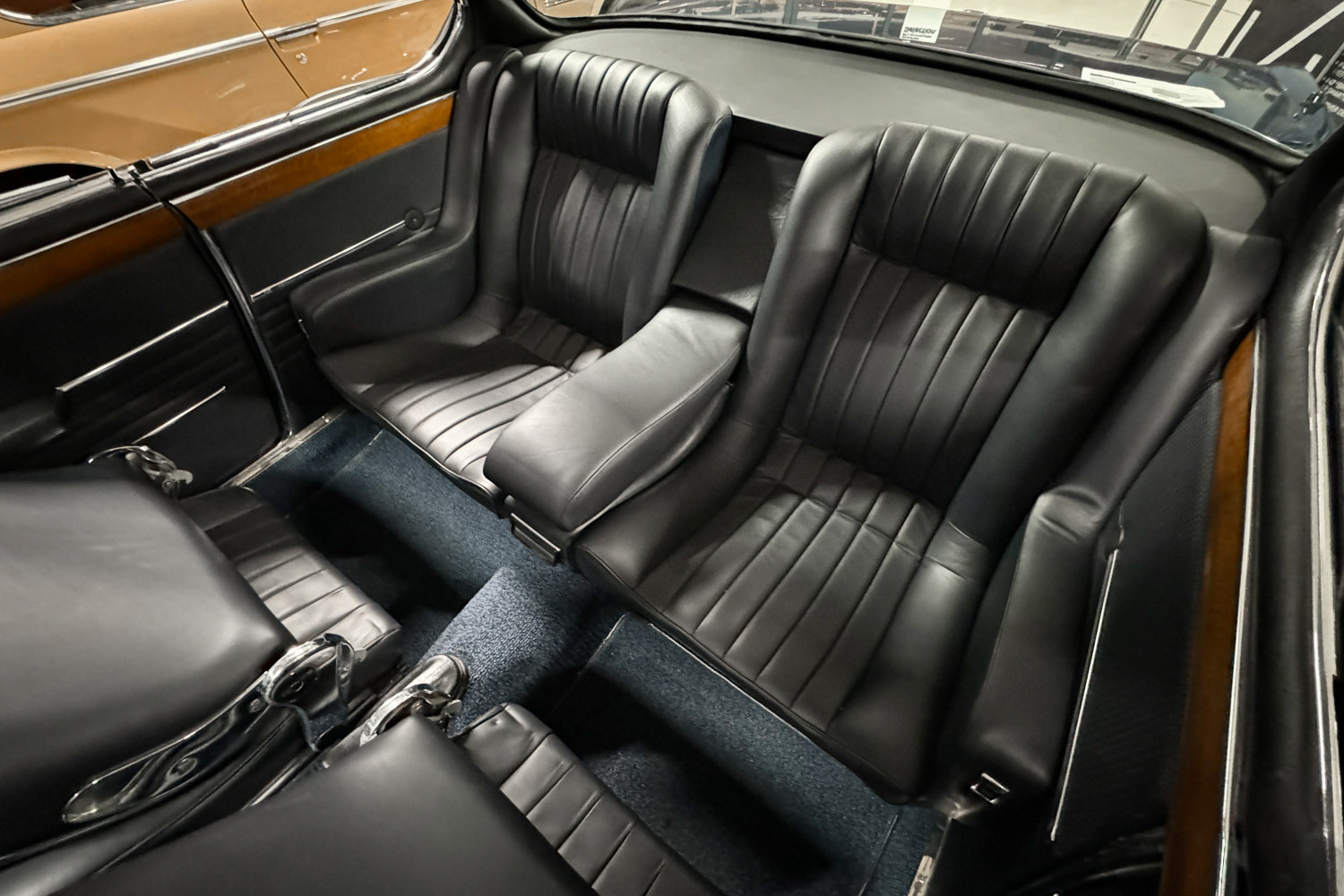
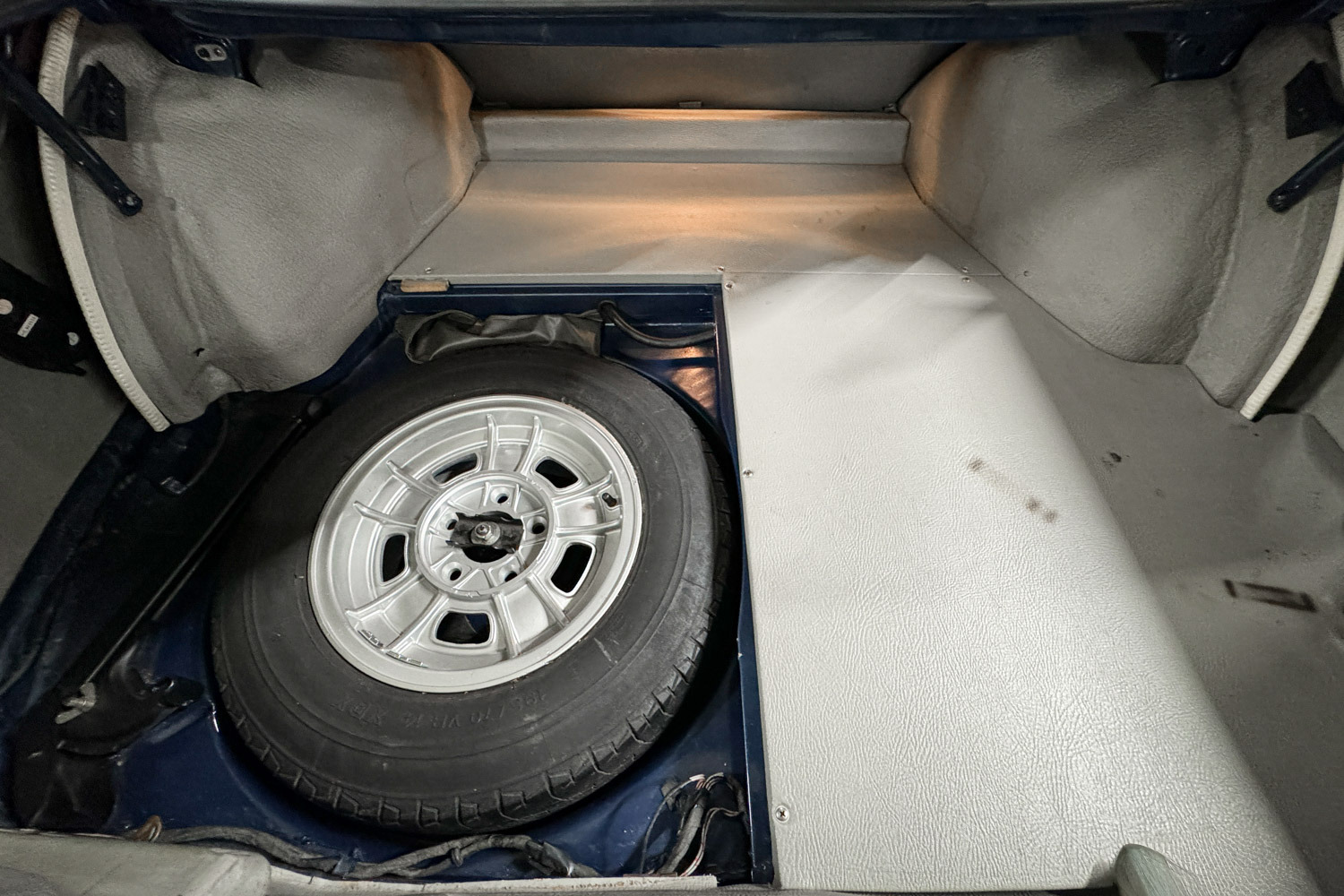
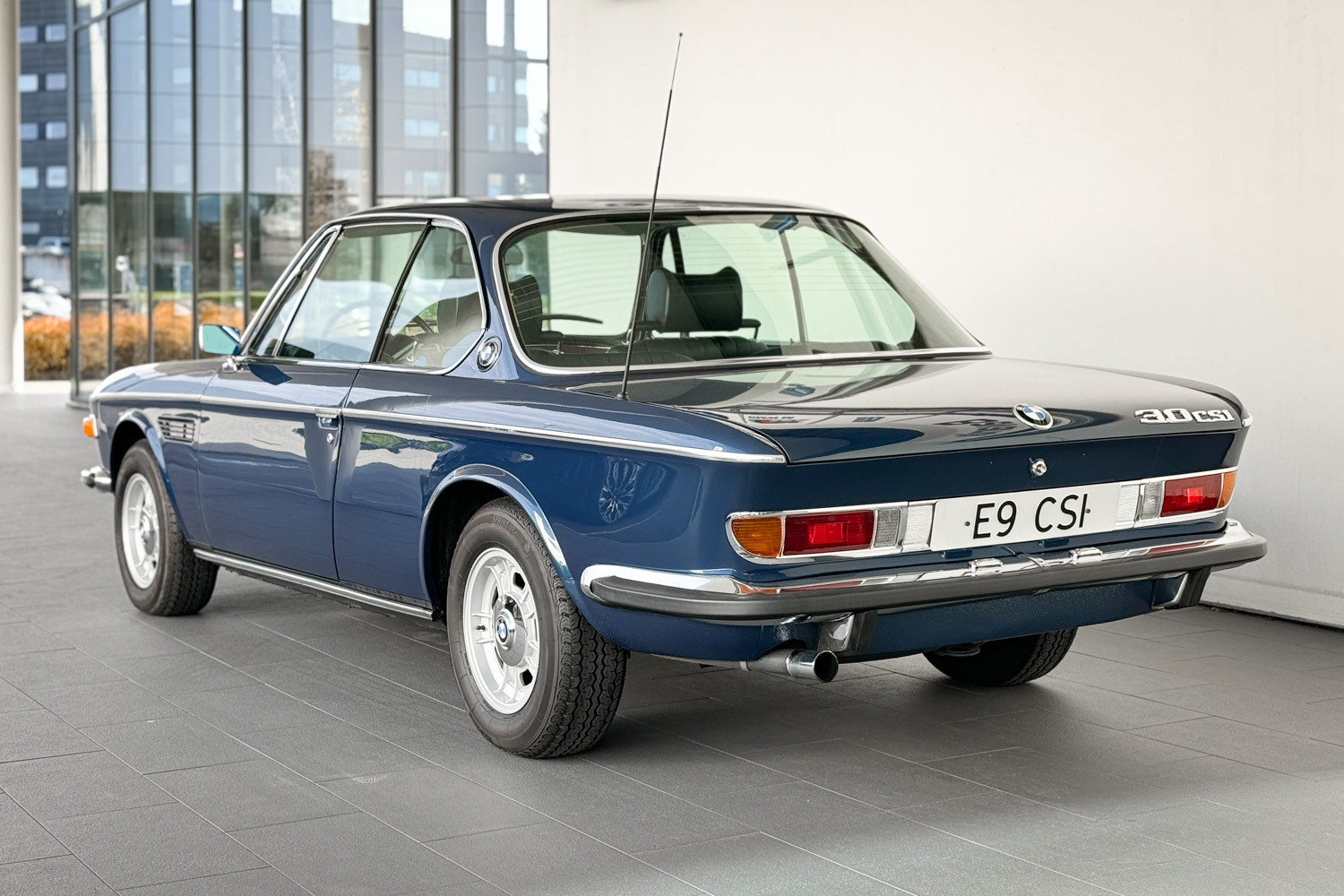
Built in 1971, chassis number 2260076, first registered in Italy on 12 June 1972, first owner in Verona, licence plate VR 308428. The original BMW Italia service booklet documents the pre-delivery inspection on 13 June 1972, the 1,000 km programme check on 14 July 1972 at 1,589 km, and the services up to 90,000 km in January 1978 — initially at the BMW dealership in Verona, later at Motocar Verona, whose 1981 workshop invoice carries the same chassis number. One detail remains contradictory and is left unresolved here: the service booklet and registration document name 12 June 1972 as the first registration date, the pre-delivery stamp is dated 13 June, and the 1981 invoice states 10 June. Further in its history: 1972 press car for an Italian car magazine, in first ownership until 2014 — the service booklet and vehicle registration document name two owners with the same surname during this period —, to Germany in 2018 and afterward into a Norwegian collection, repainted in 2018 in the original colour Nachtblau metallic, leather interior renewed, the car was fitted with velour from the factory, matching numbers, BMW condition report from October 2023. The images were taken at a BMW dealership in Norway; the gold-coloured coupé visible in the background of some photos is a different vehicle.
10 · Sources
Sources & Further Reading
Primary sources are BMW Group Classic, the BMW PressClub and Wikipedia; everything else is treated as verified only once two independent sources agree. The details on the vehicle shown are taken from the vehicle documentation of MOTORSPORT24 GmbH and refer exclusively to this one car, not to the variant as a whole. The chassis number, first registration and service history of the car shown are documented by the original BMW Italia service booklet, the Italian registration certificate, and workshop invoices from 1977 to 1981. The images were taken at a BMW dealership in Norway; the gold-coloured coupé visible in the background of some photos is a different vehicle.
- BMW Group Classic — E9 model line and the individual pages on the 2800 CS, 3.0 CS, 3.0 CSi and 3.0 CSL
- BMW Classic Blog — Leicht zum Sieg: BMW 3.0 CSL
- Wikipedia (DE) — BMW E9
- Wikipedia (EN) — BMW E9
- MOTORSPORT24 — vehicle documentation of the BMW 3.0 CSi shown, from a collection
- Walloth & Nesch — parts catalogue BMW E9, sections on manual transmission, automatic transmission and rear axle
- Classic & Sports Car — Buyer's guide BMW E9 coupés