





 Spotlight


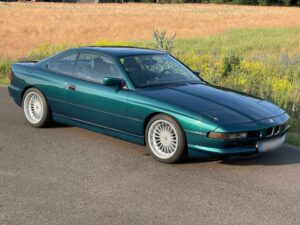 Spotlight




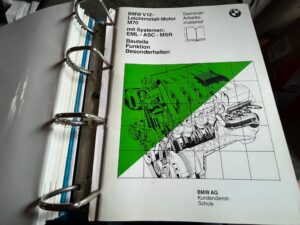


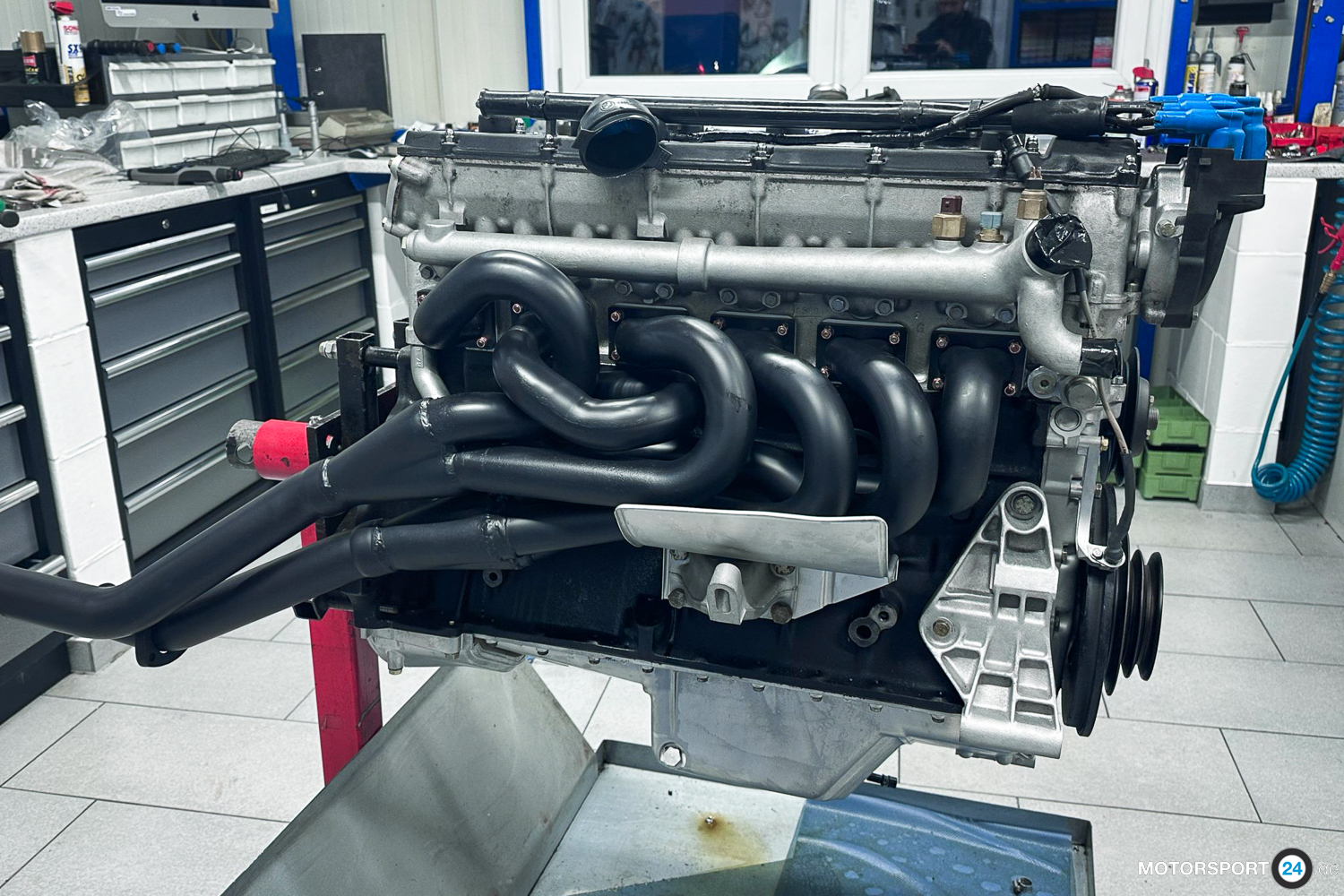
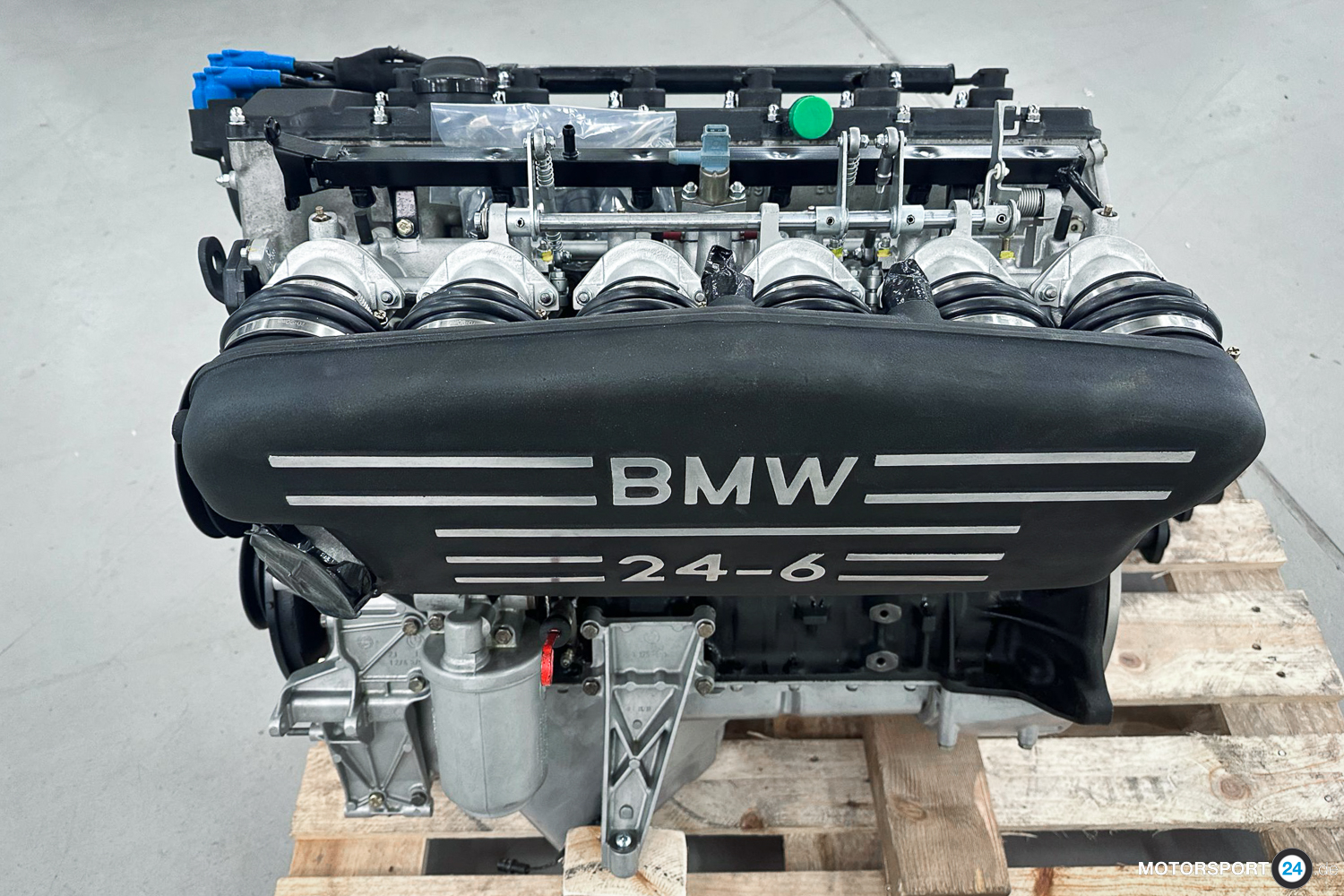
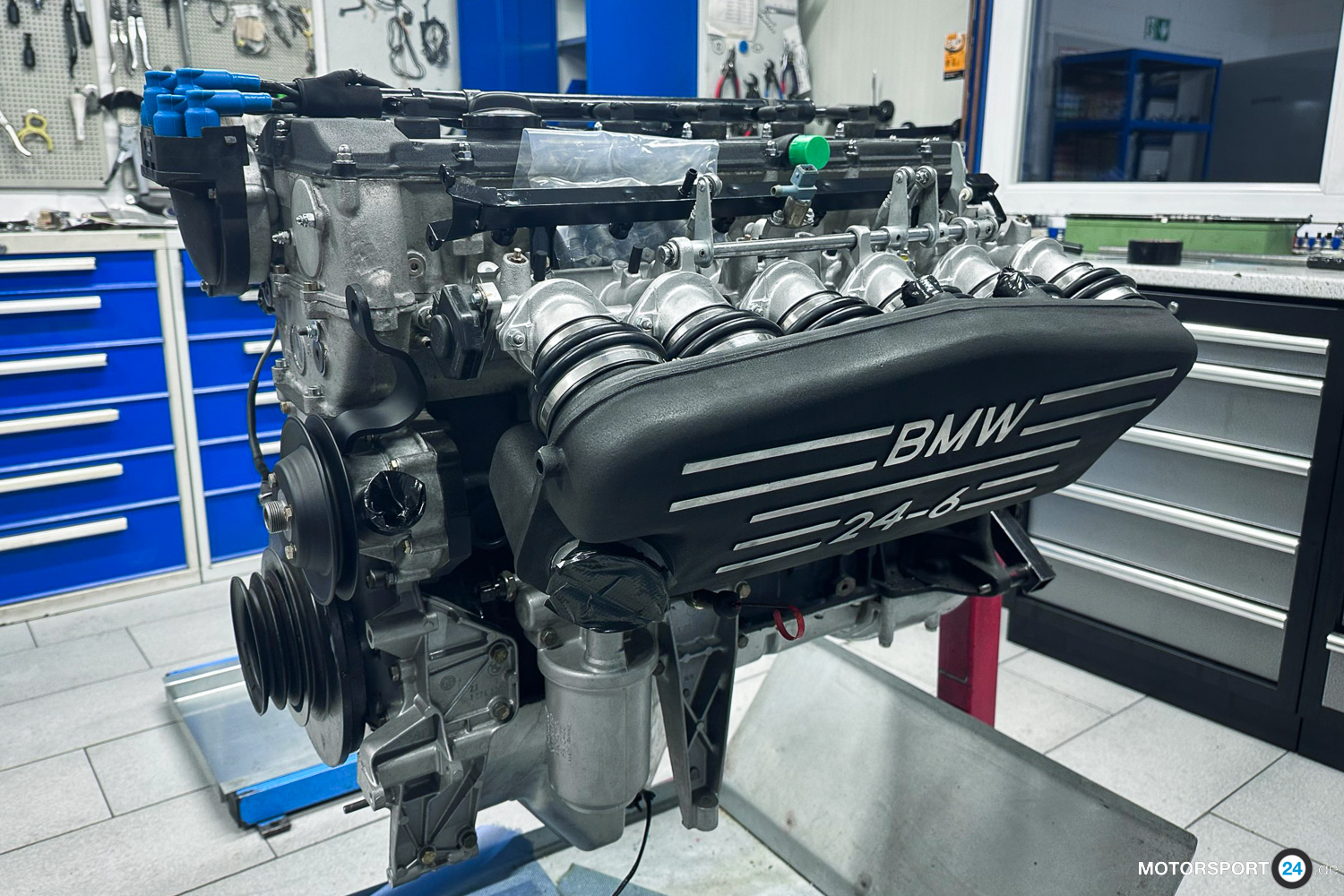
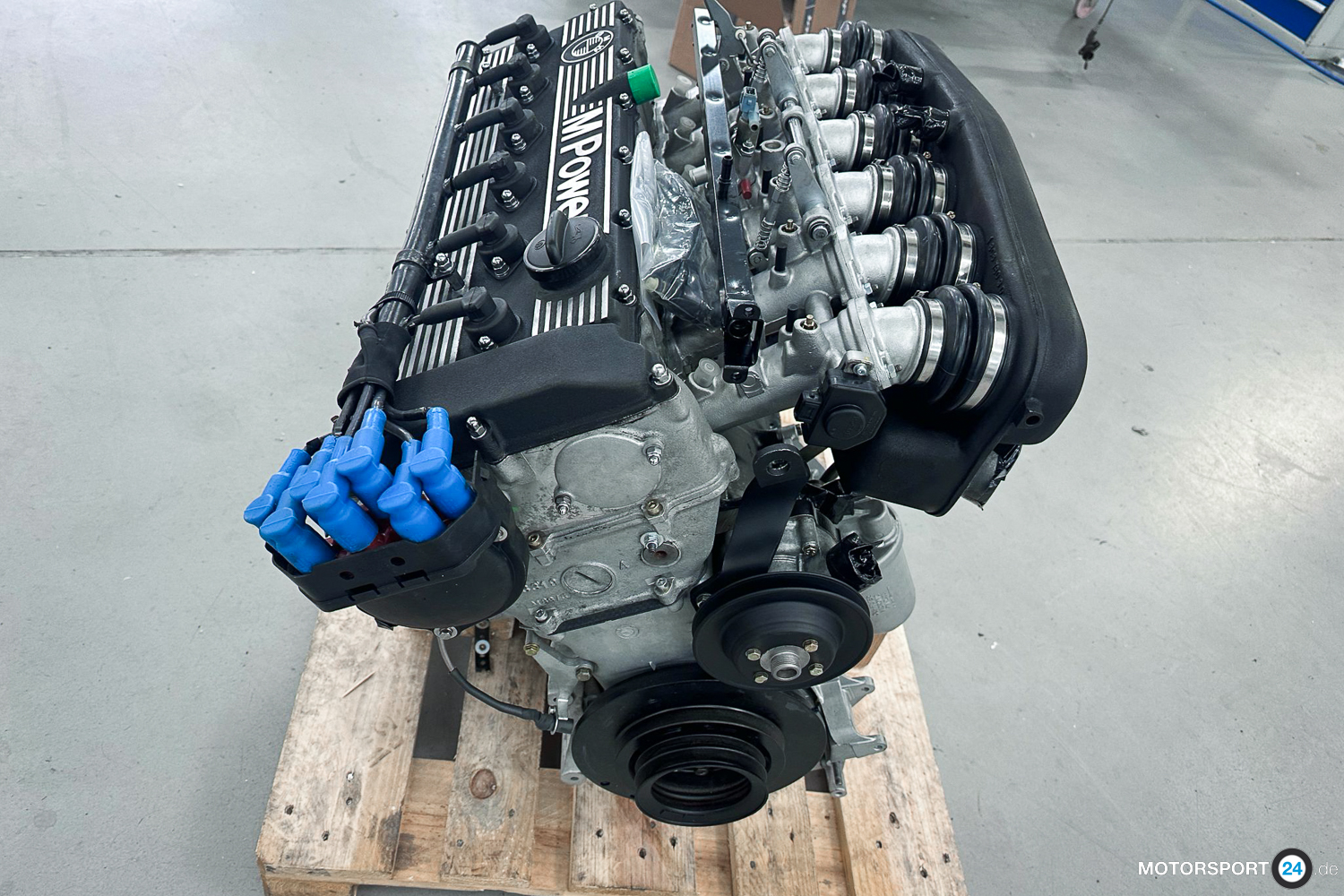
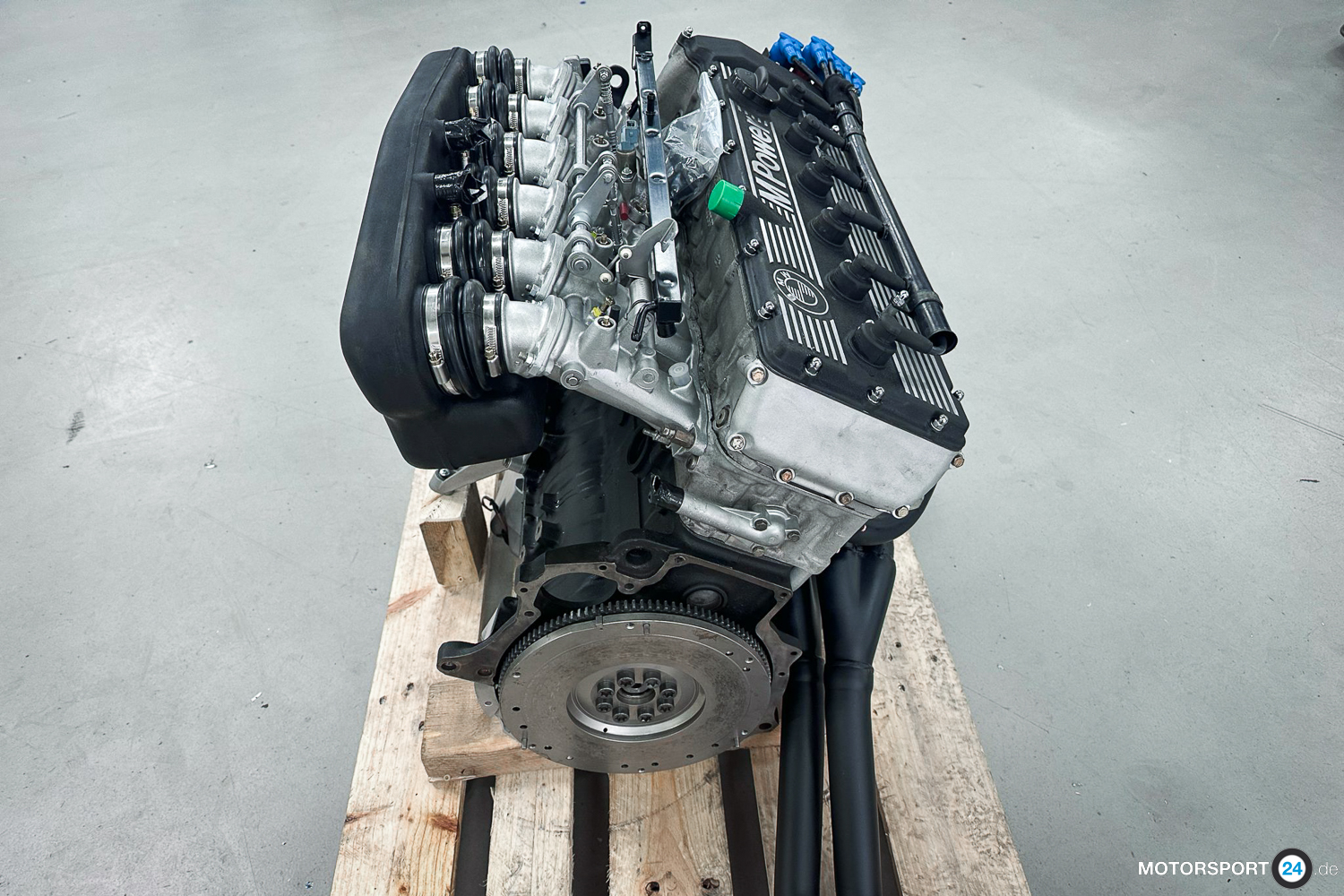
Zero kilometres, six individual throttle bodies, a freshly painted block: in the MOTORSPORT24 workshop stands a completely overhauled BMW M88/3 from an M5 of the E28 model line — stripped down to the last screw and rebuilt as it would have left the factory in 1985.
From the M1 to the road: where the M88 comes from
The story of this engine does not begin in a Sedan, but in a mid-engine sports car. For the M1 the young BMW Motorsport GmbH developed the M88 in the late Seventies: 3.5 litres of displacement, two overhead camshafts, four valves per cylinder, six individual throttle bodies — racing technology that BMW had previously tested in the four-valve racing engines of the 3.0 CSL era, appearing for the first time in a production car from the brand. The six-cylinder produced 277 PS in the M1, while the racing versions of the Procar series lay far above that. [1]
When the M1 was discontinued in 1981, the engine was too good to disappear with it. BMW M reworked the engine for front-mounted installation: the dry-sump lubrication of the mid-engine sports car became a wet-sump system, peripherals and intake were relocated — the M88 became the M88/3. [1]
The engine that invented the M5
Its second life began in 1983 in the M635 CSi — and from 1984 in that car which founded an entire category: the first M5. 286 PS at 6,500/min and 340 Nm at 4,500/min are the factory figures; the engines were assembled by hand at BMW M. Upon its release, the M5 E28 was regarded as the fastest production Sedan in the world — an unassuming business Sedan with the heart of the M1. For markets with mandatory catalytic converters, the milder sister S38B35 was later developed, from which in turn the S38B36 of the E34 M5 emerged: the architecture of the M88 carried on at BMW M into the Nineties. [1][2]
What happened during the overhaul
The engine shown here was completely disassembled, measured, and rebuilt with reconditioned or new components: head overhauled, valve train newly adjusted, peripherals revised from the oil system through the water pump to the fuel rail, block and ancillary parts reconditioned. The counter is back to zero — a state that only a few examples of these engines still achieve.
How to recognise an M88/3
Standing before the open engine bay, one recognises the M88/3 by three things: by the row of six individual throttle bodies beneath the black airbox bearing the lettering “BMW 24-6” — 24 valves, 6 cylinders —, by the ribbed M-Power valve cover, and by the tubular exhaust manifold that covers the exhaust side like a web. Exactly these features are shown in detail in the gallery below — from the overall assembly to the flywheel.
Gallery
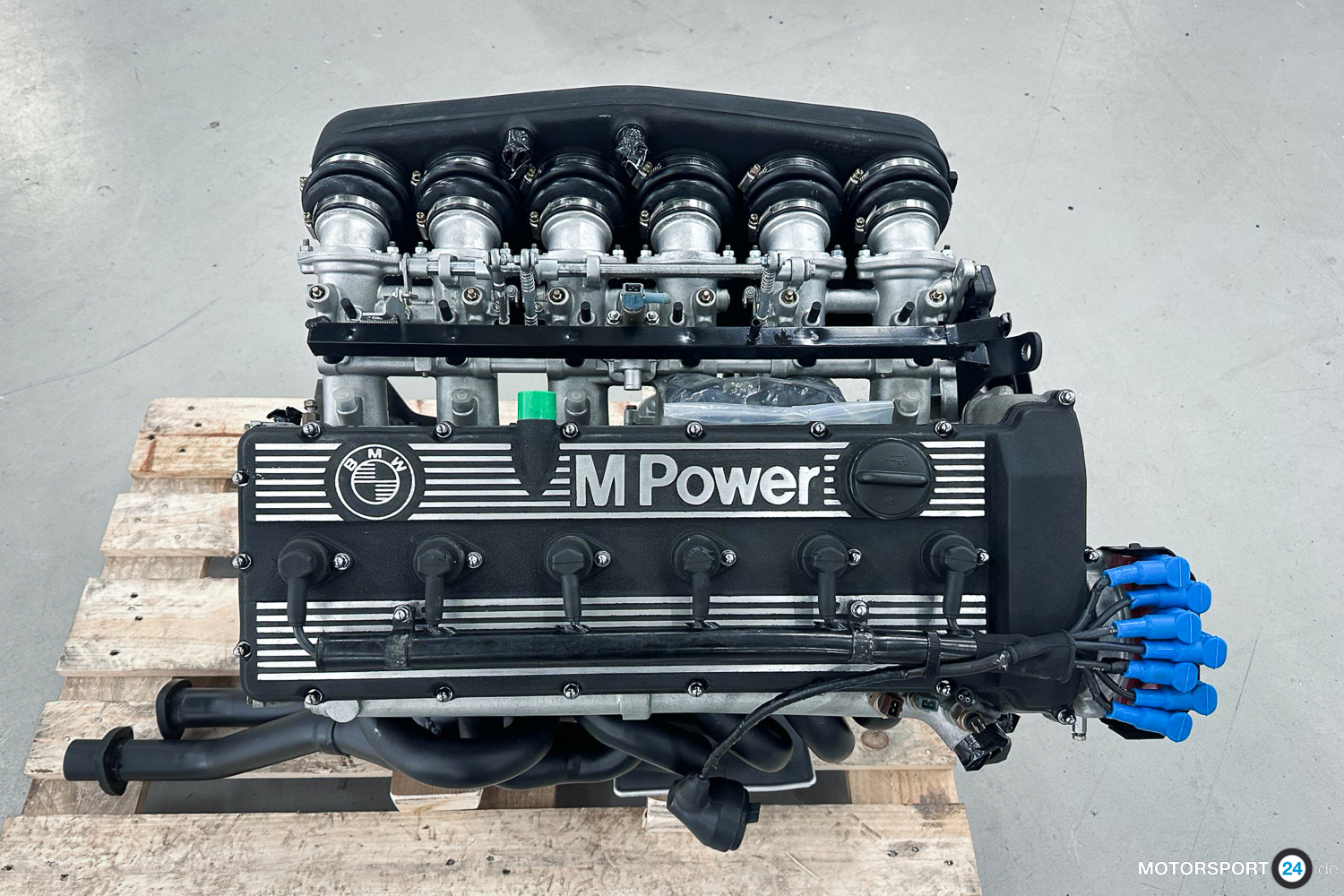
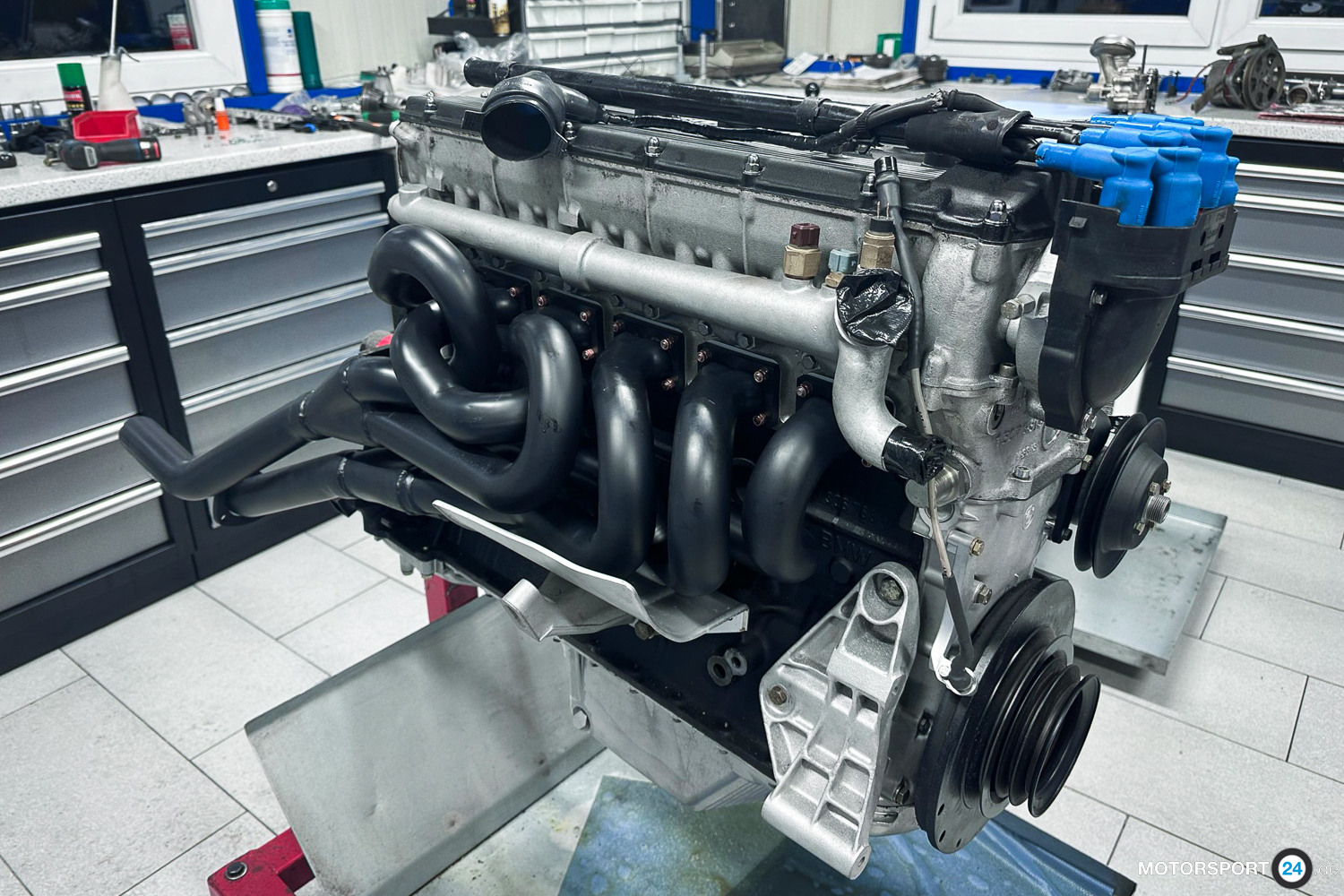
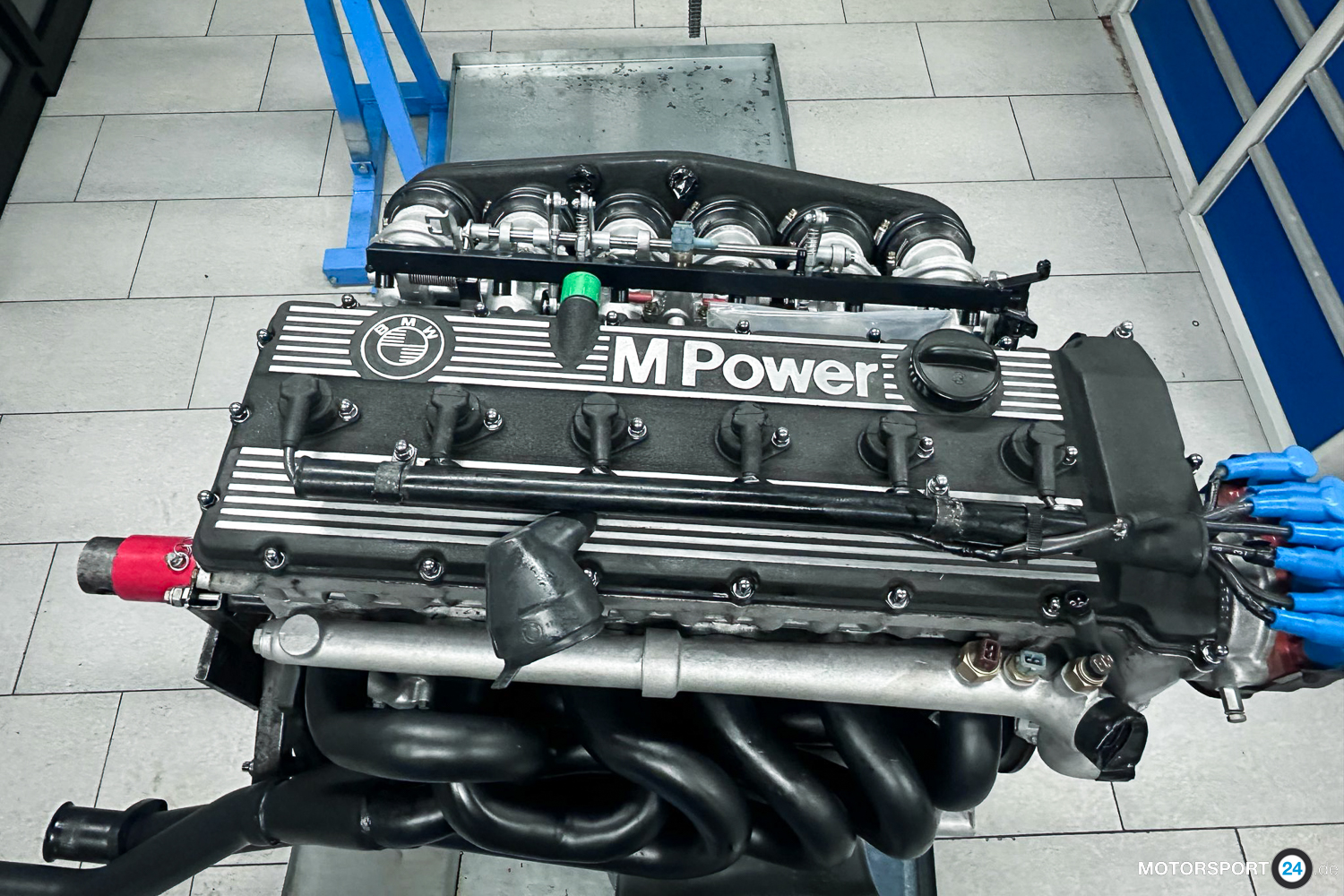
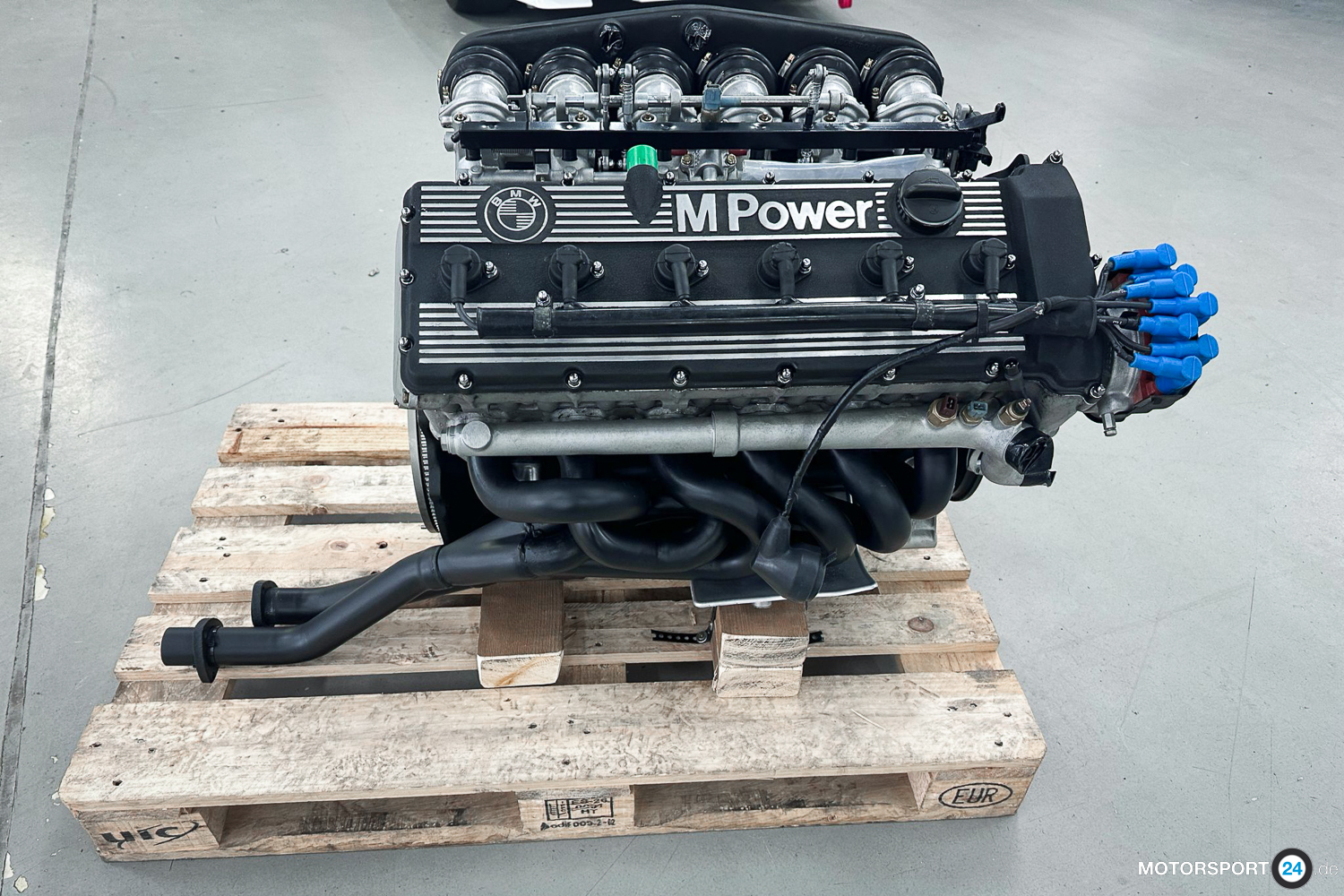
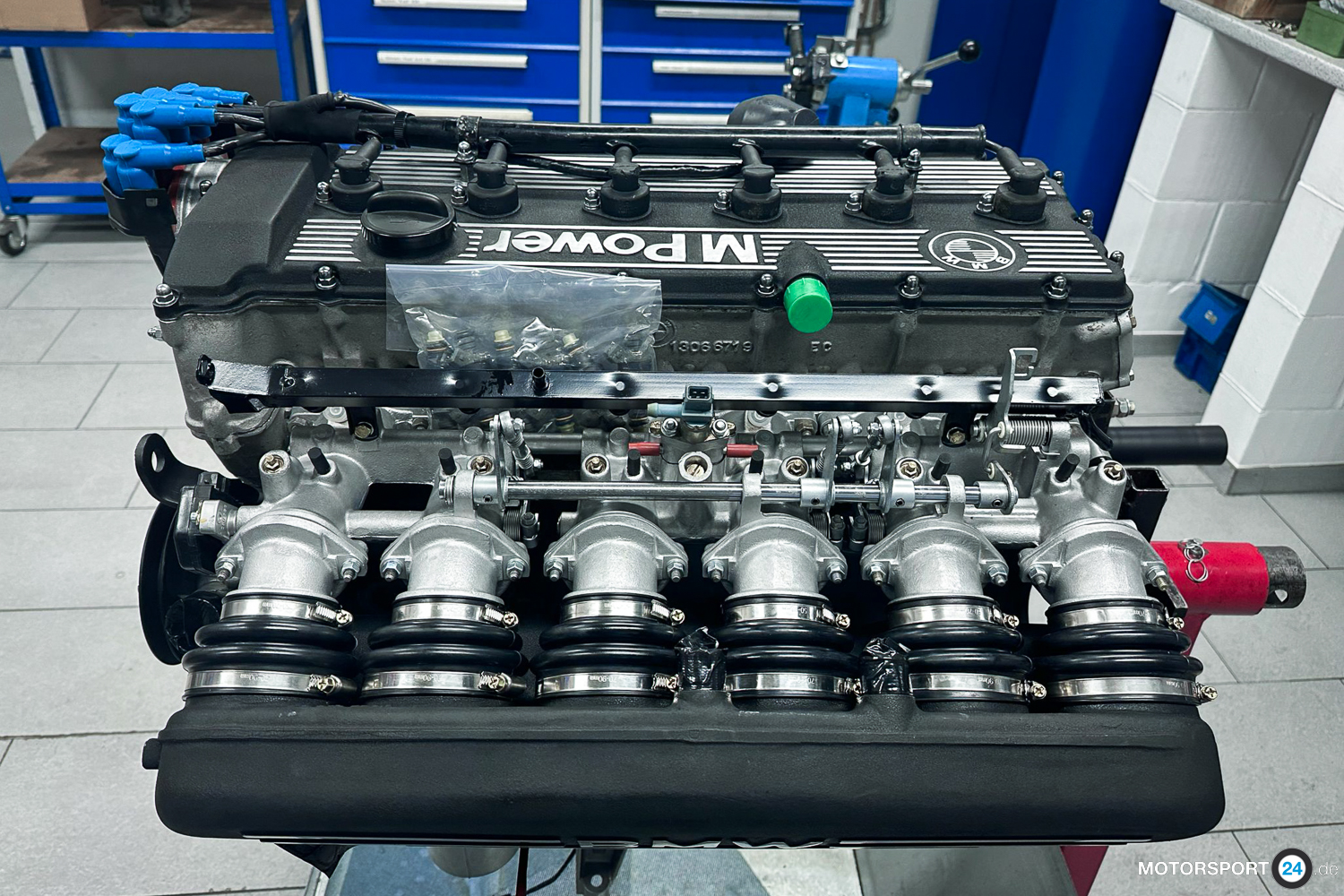
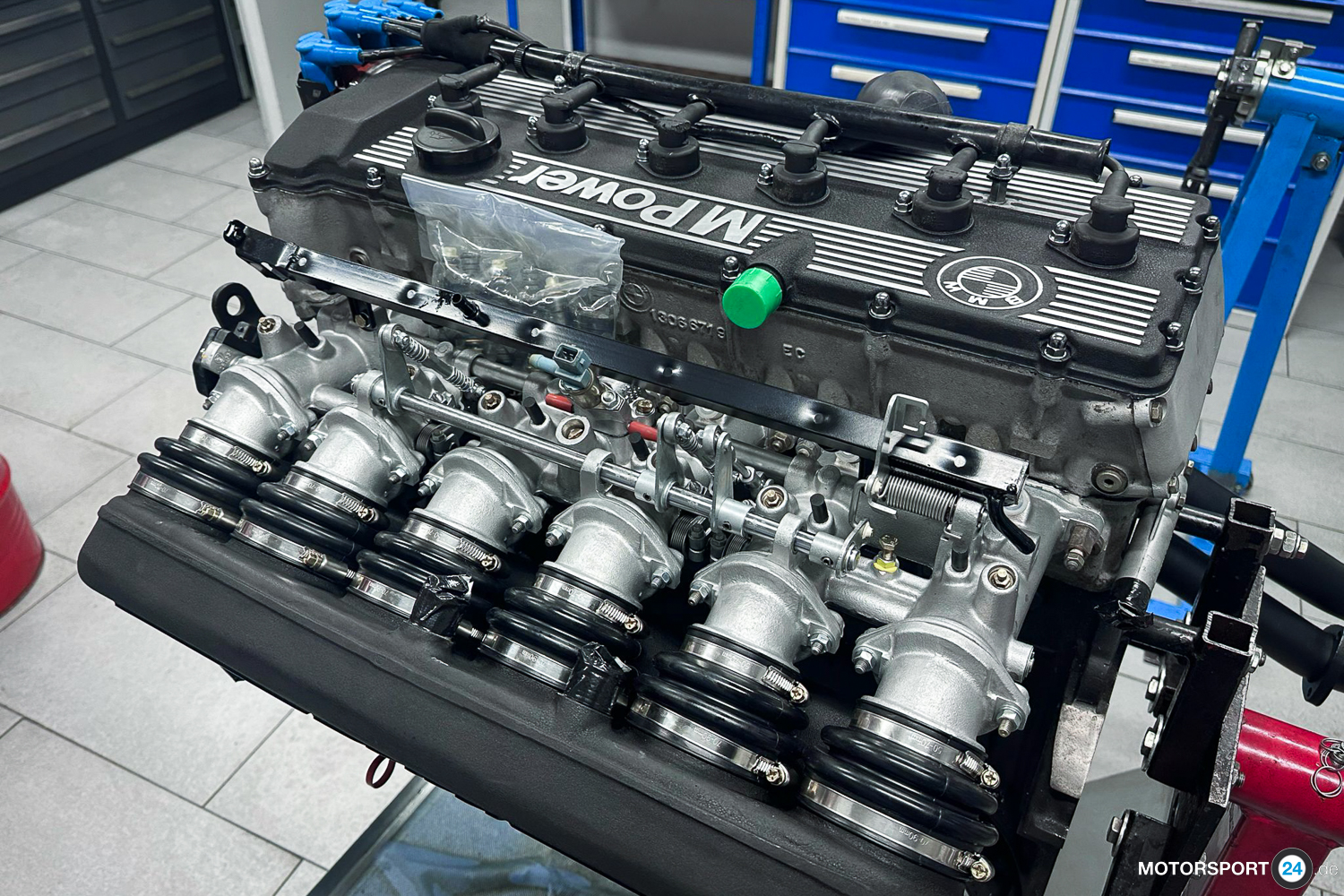
Why the effort is worthwhile is shown by a look at the role of this engine in M history: the M88 is the blueprint of the M road engine — the entire line from the camshaft to the individual throttle body is told in our portrait of Paul Rosche, in whose era this engine was created.
Sources: [1] bmw-m.com (“Legendary Engines”), [2] BMW Group PressClub. Overhaul details and photos: MOTORSPORT24.
Bildnachweise
- Own photograph · MOTORSPORT24