





 Spotlight

 Spotlight




Carbon-Kevlar instead of comfort upholstery, three racing shells instead of a rear seat, 320 PS instead of 286: the ACS3 CLS was not a dressed-up M3, but Aachen’s answer to the question of how much touring car could fit inside a road-legal E36.
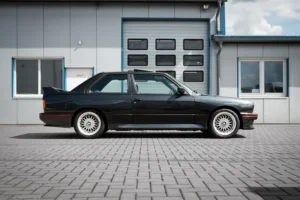
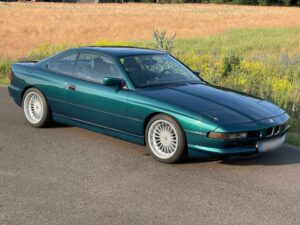
On the title image: shown is the base vehicle, a BMW M3 E36. Hardly any freely usable images exist of the rare ACS3 Sport CLS itself.
Feature article · Editorial version
Fact check and market status: 12 August 2026
You can add power. Or you can rethink a car. AC Schnitzer did both with the ACS3 Sport CLS: the S50 six-cylinder was sharpened, the body was lightened, the chassis was tuned to racetrack logic. The result, in 1993, was a counter-proposal to the cultivated factory M3 – and an anticipation of the lightweight M3s that BMW itself would only consistently realise years later.
THE CAR IN ONE SENTENCE
The ACS3 Sport CLS was a lightweight conversion built in Aachen from BMW M3 Coupés, with a 3.0-litre S50, 320 PS, around 1,300 kilograms, Carbon-Kevlar body panels, adjustable suspension and a racing cockpit; the often-cited small series of 14 vehicles is plausibly documented but not confirmed by an accessible factory production list.[1, 5, 6, 7, 15]
The idea: not faster equipment, but lighter thinking
The BMW M3 E36 was deliberately different in 1992 from its angular, homologation-driven predecessor, the E30. The new M3 combined a high-revving engine and rear-wheel drive with significantly more comfort and everyday usability. This is exactly where AC Schnitzer stepped in. The CLS was not meant to paint over this civil basic character with a spoiler package, but to bring the E36 closer again to a touring car: less mass, greater reserves in chassis and brakes, more direct feedback, and an engine allowed to rev more freely.[3, 4, 5]
CLS stands for Coupé Lightweight Silhouette; German-language sources also use the equivalent form Coupé Leichtbau Silhouette. The occasionally used spelling CSL is incorrect. It confuses the Schnitzer name with the later BMW M designation Coupé Sport Leichtbau. This very similarity in lettering explains the car’s reputation as a spiritual precursor to the E46 M3 CSL, but it must not obscure its own independent origin.[1, 5, 6]
Schnitzer and motorsport: related, but not identical
AC Schnitzer was founded in 1987 in Aachen as a business division of the KOHL Group, established by Willi Kohl and Herbert Schnitzer. Economically, the brand was not simply the Schnitzer Motorsport racing team from Freilassing; the two structures were separate. Yet name, people and experience connected them. The official chronicle practically begins with the transfer from the track: in 1988, ACS3 Sport models of the E30 generation raced in Group N and DTT, followed in 1989 by a road-legal variant. The E36 CLS continued this line of thinking.[1, 12]
The motorsport connection of the first CLS does not lie in a formal homologation role as with the E30 M3. It lies in the components and priorities: adjustable suspension, adjustable anti-roll bars, harder mounts, drilled brakes, lightweight multi-piece wheels, extensive composite material, and Stack instrumentation from the touring car world. With the CLS II presented in 1995, the connection became even clearer: AC Schnitzer itself stated that numerous components had previously been tested in the Group A M3 and at the 24-hour race at the Nürburgring.[2, 5, 7]
“a Group A touring car for the road”
Car and Driver on the ACS3 CLS, December 2025 [9]
Made in Aachen: conversion, not assembly line
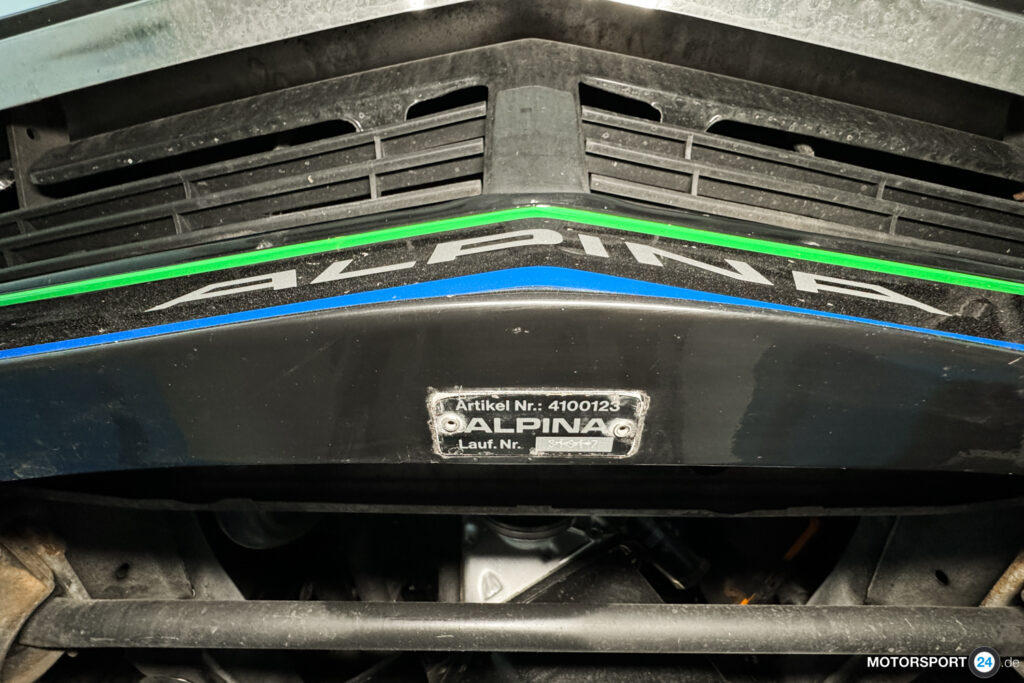
The CLS was not a separate BMW factory model or a normal equipment line. The starting point was a European M3 E36 with the S50B30. AC Schnitzer disassembled and transformed the finished vehicle in Aachen. The effort went far beyond fitting off-the-shelf tuning parts: body elements, interior, engine peripherals, chassis, brakes, wheels and instrumentation formed a coordinated overall vehicle. A numbered plaque on the well-known chassis 007 documents the individual build in February 1995.[5, 7, 11]
Bonnet, front and rear aprons, wings, side skirts and spoiler elements were made from Carbon-Kevlar. The material not only saved weight but also allowed the wider, more angular silhouette. Inside, the rear seat, large parts of the trim, and heavy standard seats were removed. Thin carpets, composite door panels, centre console and parcel shelf, plus lightweight Recaro shells, turned the luxuriously usable M3 into a deliberate 2+1 car: two seats up front, a third shell centred at the rear.[5, 7, 18]
The engine: classic naturally aspirated tuning instead of capacity magic
The heart remained the 2,990 cm³ S50B30: inline six-cylinder, 24 valves, individual throttle bodies and intake VANOS. AC Schnitzer did not change the basic concept, but its breathing. Sharper camshafts, Carbon-Kevlar intake, tubular exhaust manifold, sport exhaust system and revised Motronic raised the nominal output from 286 to 320 PS and the maximum torque from 320 to 340 Nm. The character remained typically S50: not a low-rev turbo punch, but an ever more urgent response up to 7,000/min.[3, 4, 5, 7]
The additional power alone does not explain the CLS. What matters is the relationship to mass. At around 1,300 kilograms, that worked out to about 4.1 kg per PS; on the 1,460-kilogram production M3 it was around 5.1 kg/PS. It was precisely this combination of nearly twelve percent more power and around eleven percent less weight that shifted the car more than the mere 34 extra PS would suggest.[5, 6]
Technical highlights
Table 1 · Where the M3 became a CLS
| Area | ACS3 Sport CLS solution |
|---|---|
| Engine | S50B30 with sport camshafts, modified intake, tubular manifold, exhaust system and Motronic; 320 PS/340 Nm. |
| Lightweight construction | Carbon-Kevlar for bonnet, aprons, wings, sills and spoiler; reduced interior, lightweight seats and carpets. |
| Suspension | Height- or damping-adjustable sport suspension, adjustable anti-roll bars and harder mounts. |
| Brakes | Reinforced system with drilled discs; designed for repeated high loads. |
| Wheels | Multi-piece AC Schnitzer Type I racing wheels, 9 inches wide at the front and 10 inches at the rear, in 18-inch format. |
| Aerodynamics | Wider Carbon-Kevlar silhouette, front splitter, rear and roof spoiler, plus streamlined mirrors. |
| Cockpit | Stack digital instrument from the touring car world, small steering wheel, aluminium pedals and gear knob. |
| Seating concept | Three lightweight racing shells; the third centred behind driver and passenger instead of a rear seat. |
Source comparison: AC Schnitzer, BMW M, AUTO BILD, Motor1 and auction documentation [2–7].
Numbers compared: CLS versus factory M3
Table 2 · Manufacturer or contemporary nominal figures
| Feature | BMW M3 E36 3.0 | AC Schnitzer ACS3 CLS |
|---|---|---|
| Base year | 1992–08/1995 | Debut 1993; known cars up to 1995 |
| Engine | S50B30, 2,990 cm³ | S50B30, 2,990 cm³, modified |
| Power | 286 PS at 7,000/min | 320 PS at 7,000/min |
| Torque | 320 Nm at 3,600/min | 340 Nm at 3,600/min |
| Gearbox/drive | 5-speed manual, rear-wheel drive | 5-speed manual, rear-wheel drive, limited-slip differential |
| Weight | approx. 1,460 kg DIN | approx. 1,300 kg; around 160 kg less |
| Power-to-weight ratio | approx. 5.1 kg/PS | approx. 4.1 kg/PS |
| 0–100 km/h | 6.0 s | 5.5 s |
| Top speed | 250 km/h, limited | 276 km/h, nominal value |
| Price | 80,000 DM according to BMW Classic | approx. 148,000 DM reported |
BMW factory data and repeatedly published Schnitzer nominal figures; the CLS price is not a documented original price-list record [3–6].
How it likely drove: less velvet, more feedback
A well-preserved CLS would probably have felt familiar at first, and then increasingly unfamiliar. The seating position remained E36, as did the view over the low bonnet. But composite material, thin insulation and rigid shells removed the car’s acoustic distance from its mechanics. The suspension would likely have transmitted small bumps more harshly, but built confidence earlier on clean asphalt. Wide rear tyres and the limited-slip differential turned traction into a strength; the unchanged basic architecture nonetheless kept the rear end part of the steering.[5, 7, 9]
Below 4,000/min, the S50 remained refined enough for the road. Above that, camshafts, intake and exhaust had to make the difference audible: a sharper intake note, less filtering, more immediate throttle response. Car and Driver summed up the car in 2025 as a Group A touring car for the road; AUTO BILD called it a racetrack animal. These are modern retrospectives, not period test drives. They nonetheless capture the technical concept: the CLS was meant to keep the driver occupied, not relieve them.[5, 9]
Production numbers: fourteen – with a large asterisk
The most frequently cited figure is 14. In 2021, AUTO BILD explicitly wrote that a total of 14 vehicles were said to have been built, but that the number was unconfirmed. Later market sources also describe chassis 007 as one of 14. Contradicting this is a conflicting auction metadata entry of 75; even within reporting on the same car, 14 and 75 alternate. The publicly accessible AC Schnitzer chronicle names the debut and model, but no production figure.[1, 5, 7, 10, 11, 15]
Stated responsibly, the result is therefore: an extremely small, numbered conversion run, most often cited in the literature as 14 examples; an unambiguous factory confirmation is lacking. For collectors, this is not a minor detail. A genuine CLS plaque, a continuous vehicle history, old invoices, photographic documentation of the conversion, and traceability of the Carbon-Kevlar parts are more important than an often-copied production figure in a sales listing.[5, 7, 15]
The CLS II: the idea becomes a technology carrier
In 1995, AC Schnitzer radicalised the concept with the CLS II. The official company chronicle lists it as a concept study, not a regular follow-up series. The engine was comprehensively rebuilt: balanced connecting rods, finely balanced crankshaft, a large airbox and special control electronics produced 350 PS and 355 Nm. AC Schnitzer quoted 5.1 seconds to 100 km/h and a top speed of 290 km/h. An electrically adjustable rear wing, panelled underbody sections, 18-inch wheels up to 10.5 inches wide at the rear, and the RS suspension made it a rolling development programme.[2, 19]
The CLS II is therefore not simply a more powerful equipment variant of the ACS3 CLS honoured here. It is its public epilogue and proof of concept: AC Schnitzer wanted to show how far the E36 could be stretched between road registration, everyday usability and racing technology. That AC Schnitzer itself called it a thoroughbred racing touring car for road use was unusually precise.[2]
Alpina and Hartge: three other answers to the same E36
The market of the nineties was rich in BMW specialists, but poor in direct CLS rivals. Alpina and Hartge also built fast E36s, but pursued different philosophies. Alpina understood its cars more as refined high-speed Gran Turismos; Hartge offered a wide range of engine, chassis and complete conversions. None of these concepts copied the combination of an M3 base, extensive Carbon-Kevlar, a 2+1 racing cockpit and consistent lightweight construction.[13, 14, 20]
Table 3 · Contemporary E36 specialists compared
| Model | Technology | Character compared to the CLS |
|---|---|---|
| Alpina B3 3.0 | 3.0-litre inline six, 250 PS/320 Nm; 1993–1996 depending on body style. | Faster, more luxurious everyday GT; no radical lightweight build and less powerful than the M3/CLS. |
| Alpina B8 4.6 | 4.6-litre V8, 333 PS/470 Nm, 6-speed; 221 vehicles across all body styles. | Similarly exclusive and fast long-distance GT, but achieved through displacement and torque rather than a weight diet. |
| Hartge H3-3.0 | 3.0-litre inline-six engine kit with 250 PS for the 325i; chassis and accessories modularly combinable. | Individual tuner alternative, but no documented lightweight small series comparable to the CLS. |
| BMW M3 GT | Factory special model: 295 PS, aluminium doors, aerodynamic package; 350 units according to BMW M. | The closest BMW-internal counterpart, but significantly closer to series production, heavier and less powerful. |
Alpina archive, technical data collection, Hartge product documentation and BMW M; production figures are not directly comparable across model families [3, 13, 14, 20].
Price at launch: almost two M3s
BMW Group Classic states a base price of 80,000 DM for the M3 3.0. For the ACS3 CLS, no original German price list can be found in accessible sources. AUTO BILD reported, on the sale of chassis 007, a contemporary list price converted to 75,670 euros. At the fixed euro conversion rate, this corresponds to around 148,000 DM. That was roughly 1.85 times an M3 – plausible given the hand-built nature, but to be treated as reported vehicle history rather than an archivally confirmed price-list entry.[4, 5]
This placed the CLS outside the normal M3 purchase decision. In price terms, it competed less with a special equipment package than with hand-built sports cars. Whoever ordered one paid twice: first for one of the best naturally aspirated sixes of its time – and then for AC Schnitzer removing many of its civil qualities again.[5, 6]
Price development 2021 to 2026: one car does not yet make a market
For a car with a presumed production run only in the low double digits, no robust price statistics exist. The last five years essentially concern chassis 007: offered in Hong Kong in 2021, later brought to the USA, auctioned in 2025, and listed again in dealer feeds at the auction price in 2026. The following overview is therefore not an index curve, but a documented market chronicle. Years without a publicly traceable transaction are not filled in with estimates.[5, 7, 10, 11, 16]
Table 4 · Public market observations of the last five years
| Year | Observation | Assessment |
|---|---|---|
| 2021 | Chassis 007 offered: approx. €126,648; around 48,300 km. | Asking price, no published hammer price; AUTO BILD explicitly states 14 examples as unconfirmed. |
| 2022 | No verified public CLS transaction found. | At this production volume, market silence is normal and not a signal of value loss. |
| 2023 | No verified public CLS transaction found. | MOT documents for chassis 007 confirm use, but not a market price. |
| 2024 | Sale to the later US seller reported; price not published. | A change of ownership without disclosed consideration is not a market value data point. |
| 2025 | BaT hammer price $188,000; Hagerty records $195,500 including fees. | Rare, international auction result for chassis 007; 30,000 miles. |
| 2026 | Dealer feed listing $188,000 for apparently the same vehicle. | Listing matches the hammer price; no second independent transaction. |
Currencies and price types remain separate. Hammer price, all-in result and asking price must not be equated [5, 7, 8, 10, 11, 16].
Collector’s car: extremely rare – and therefore hard to value
The CLS is undoubtedly collectible, but not automatically liquid. Its buyer pool is smaller than for the factory M3 GT or the E46 M3 CSL: one must appreciate the E36, nineties tuning, Schnitzer history and non-factory conversions all at once. In return, it offers something a production special model cannot – the signature of an era in which a tuner built a complete car as a technical thesis.[5, 9, 15]
The high 2025 hammer price shows willingness to pay for a well-documented example, but not a general valuation benchmark. A different paint finish, retrofitted suspension, missing Stack instruments, damaged Carbon-Kevlar parts, undocumented engine modifications, or an untraceable plaque could massively alter the value. With the CLS, originality is not just a question of whether a BMW part is correct – but whether the condition matches the original Schnitzer conversion.[7, 10, 11]
Brief inspection plan for a genuine CLS
| Inspection area | What matters |
|---|---|
| Identity | Cross-check BMW chassis number, Schnitzer plaque, conversion date, old invoices and an unbroken chain of ownership. |
| Bodywork | Check Carbon-Kevlar structure, fixings, repairs, paint build-up and fit of the wide wings. |
| Engine | Document sport camshafts, intake, exhaust system and period Motronic specification; test compression and VANOS. |
| Suspension/brakes | Check period-correct Schnitzer components, wear, parts availability and registration entries. |
| Cockpit | Check Stack display, three Recaro shells, composite trim panels, carpets and control components for authenticity. |
| Registration | Verify conversions, noise, wheels, brakes and seating concept against national papers and inspection reports. |
Editorial purchase check derived from the documented conversions; inspection by marque and composite material specialists remains essential.
The legacy: lightweight construction before the CSL badge
The ACS3 CLS did not directly force BMW into a production model. Its legacy is more subtle. It proved that the more comfort-oriented E36 generation could withstand the same radical treatment as a homologation-close coupé: composite material, fewer seats, more engine response, stronger brakes, and a body whose shape arose from function. The 1995 BMW M3 GT remained closer to series production; it was only the E46 M3 CSL that once again made lightweight construction and the M3 a widely known factory formula.[3, 5, 6]
In 2026, this story gains additional finality: the KOHL Group has announced that it will cease AC Schnitzer’s business operations as a manufacturer of tuning parts by the end of the year; warehouse sales and service are to continue beyond that. Whether the brand lives on in another form remains open. For the CLS, this does not mean an automatic increase in value – but it does mean that its place as an early, complete Aachen-built vehicle stands out even more clearly.[12]
Conclusion: the rarest form of consistency
The AC Schnitzer ACS3 Sport CLS is not the best E36 for everyday use, not the most cleanly documented small-series BMW, and perhaps not even the rarest E36 conversion. But it is one of the clearest. Everything about it follows the same idea: mass out, feedback in. The engine remained an S50, yet it breathed more freely; the body remained recognisable as an E36, yet it partly consisted of racing material; the interior remained usable, yet only for three people who accepted that every kilogram was a question.[2, 5, 6]
Its market valuation must remain sober. A hammer price of $188,000 is a strong signal, but not yet a price curve. The production figure of 14 is well documented, but not conclusively proven. It is precisely these gaps that make the CLS no less fascinating; they make careful provenance the most important component. As a tribute, it therefore deserves not a legend without footnotes, but admiration with open eyes. It was the M3 that BMW didn’t build – and one that a small team in Aachen could only build because reason did not write the specification sheet.[5, 7, 8, 15]
Sources
[1] AC Schnitzer: company chronicle – founding, motorsport milestones, IAA debut of the ACS3 CLS in 1993.
[2] AC Schnitzer: CLS II – official technical and motorsport documentation.
[3] BMW M: BMW M3 E36 – engine, VANOS, performance figures and M3 GT.
[4] BMW Group Classic: BMW M3 Coupé E36, 286 PS – production period, engine, price and top speed.
[5] AUTO BILD KLASSIK, 05 March 2021: ACS3 Sport CLS chassis 007 – technology, weight, price and production figure note.
[6] Motor1, 2026: AC Schnitzer ACS3 CLS – retrospective with 320 PS, 160 kg weight saving and performance figures.
[7] Bring a Trailer, 19 Dec 2025: auction of chassis WBSBF91000JC39743, hammer price $188,000.
[8] Hagerty Valuation Tools: chassis 007, all-in result $195,500, 19 Dec 2025.
[9] Car and Driver, 14 Dec 2025: ACS3 CLS – technology and classification as a touring car for the road.
[10] The Classic Valuer: auction result, vehicle history and reported 14 conversions.
[11] Sports Car Digest: market documentation of chassis 007 and 2024 change of ownership.
[12] AC Schnitzer, 2026: statement on the discontinuation of manufacturing operations by the end of 2026.
[13] Alpina Archive: BMW Alpina B8 4.6 E36 – 333 PS, 470 Nm, 221 vehicles and construction.
[14] Hartge product documentation E36: H3 engine programmes, including the H3-3.0 with 250 PS.
[15] BMWBLOG, 15 Dec 2025: assessment of the conflicting production figures for the ACS3 CLS.
[16] JamesEdition, 2026: dealer feed for an ACS3 CLS at $188,000.
[17] AC Schnitzer Japan: company chronicle – ACS3 CLS 1993 and CLS II as a concept study in 1995.
[18] TopGear Nederland: ACS3 CLS – lightweight construction, three seats and performance figures.
[19] auto motor und sport: AC Schnitzer CLS II – 350 PS and contemporary price assessment.
[20] Auto-Data: BMW Alpina B3 3.0 E36 – 250 PS, 320 Nm and production period.
Bildnachweise
- Lizenziert · Charles from Port Chester, New York · CC BY 2.0