

01 · Überblick
The BMW that never saw a BMW plant
The X3 was BMW’s first attempt at cooking up the X5 recipe one size down. Shown at the IAA in September 2003, at dealers from January 2004, end of production on 31 August 2010. In between lie six and a half years, during which the X3 helped invent a segment that every manufacturer now serves.
The most interesting figure is not on the spec sheet: not a single E83 was built by BMW. Magna Steyr designed the car and manufactured it at its own plant in Graz. For today’s buyers, that’s a detail worth knowing when talking about “the Bavarian”.
Technically, the X3 is a raised 3 Series with xDrive. The all-wheel-drive system celebrated its premiere in autumn 2003 together with the revised X5: an electronically controlled multi-plate clutch in the transfer case, with a basic torque split of 40 to 60 in favour of the rear axle. What’s missing is everything an off-road vehicle would need — there is no gear reduction and no differential locks. The X3 is a road car with a traction reserve, no more and no less.
02 · Historie
Six and a half years in Graz
The key milestones of the model line.
- 2003 Premiere at the IAA in September. At the same time xDrive launches — in the X3 and in the revised X5.
- 2004 Market launch in January with 2.5i, 3.0i and 3.0d.
- 2005 BMW shows the Concept X3 EfficientDynamics with hybrid drive at the IAA, which the company called Active Hybrid at the time. It does not go into production.
- 2006 Facelift in autumn. The N52 six-cylinders replace the M54, and the 3.0sd diesel with two-stage turbocharging is added.
- 2009 In June the xDrive18d arrives as a new entry-level model with 143 PS.
- 2010 On 31 August the last E83 rolls off the line in Graz. The successor F25 is built by BMW in Spartanburg.
03 · Modellübersicht
The models at a glance
All series engines of the E83 with engine code and production period.
Technische Daten anzeigen — komplette Modellmatrix
| Modell | Motor | Hubraum | Leistung | Bauzeit |
|---|---|---|---|---|
| 2.0i / xDrive20i | N46B20 | 1.995 cm³ | 150 PS (110 kW) | 09/2005–08/2010 |
| 2.5i | M54B25 | 2.494 cm³ | 192 PS (141 kW) | 09/2003–08/2006 |
| 2.5si / xDrive25i | N52B25 | 2.494 cm³ | 218 PS (160 kW) | 09/2006–08/2010 |
| 3.0i | M54B30 | 2.979 cm³ | 231 PS (170 kW) | 09/2003–08/2006 |
| 3.0si / xDrive30i | N52B30 | 2.996 cm³ | 272 PS (200 kW) | 09/2006–08/2010 |
| xDrive18d | N47D20 | 1.995 cm³ | 143 PS (105 kW) | 06/2009–08/2010 |
| 2.0d | M47D20 | 1.995 cm³ | 150 PS (110 kW) | 09/2004–08/2007 |
| 2.0d / xDrive20d | N47D20 | 1.995 cm³ | 177 PS (130 kW) | 09/2007–08/2010 |
| 3.0d | M57D30 | 2.993 cm³ | 204 PS (150 kW) | 09/2003–02/2006 |
| 3.0d / xDrive30d | M57D30 | 2.993 cm³ | 218 PS (160 kW) | 03/2006–08/2010 |
| 3.0sd / xDrive35d | M57D30 bi-turbo | 2.993 cm³ | 286 PS (210 kW) | 09/2006–08/2010 |
04 · Karosserievarianten
Karosserievarianten
Five-door body

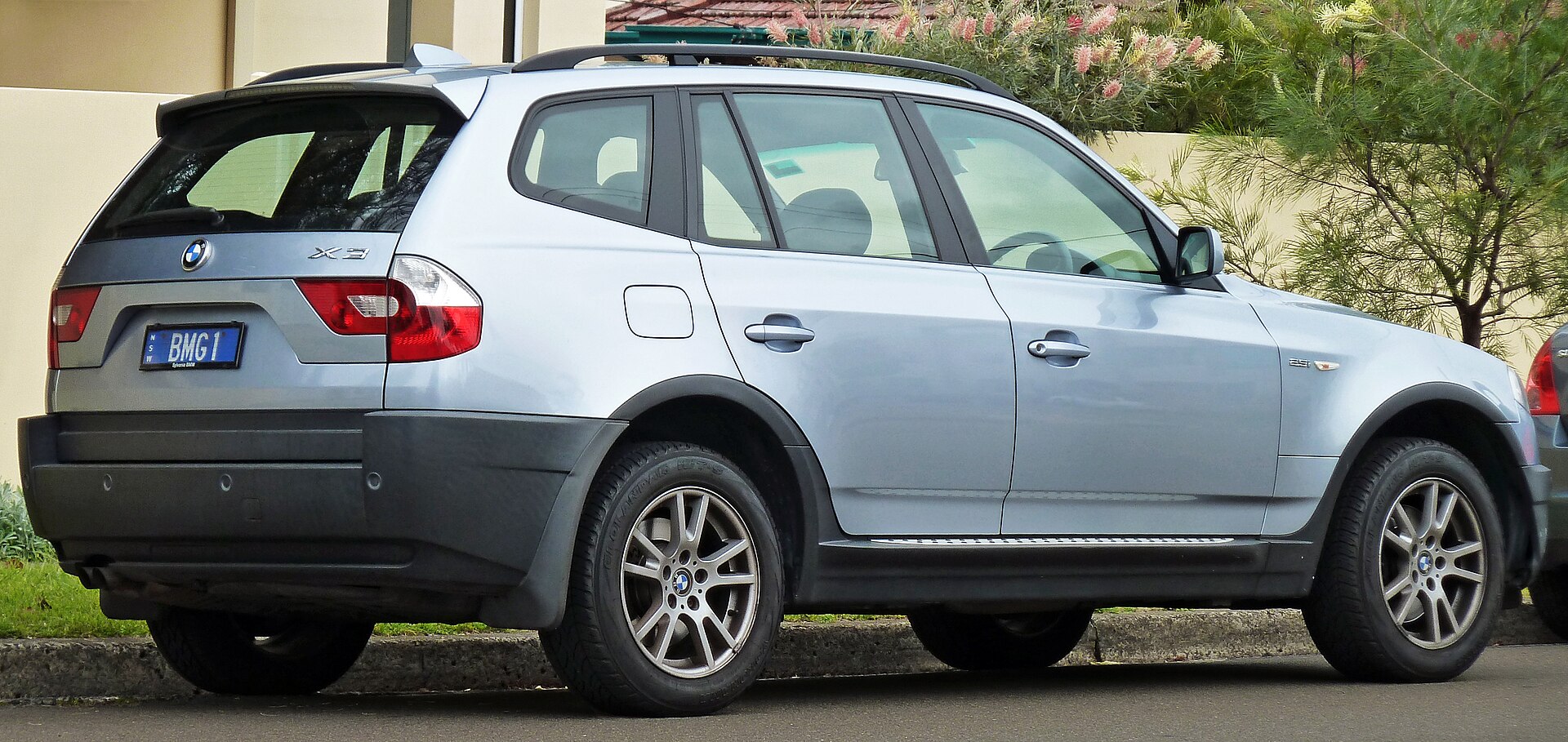
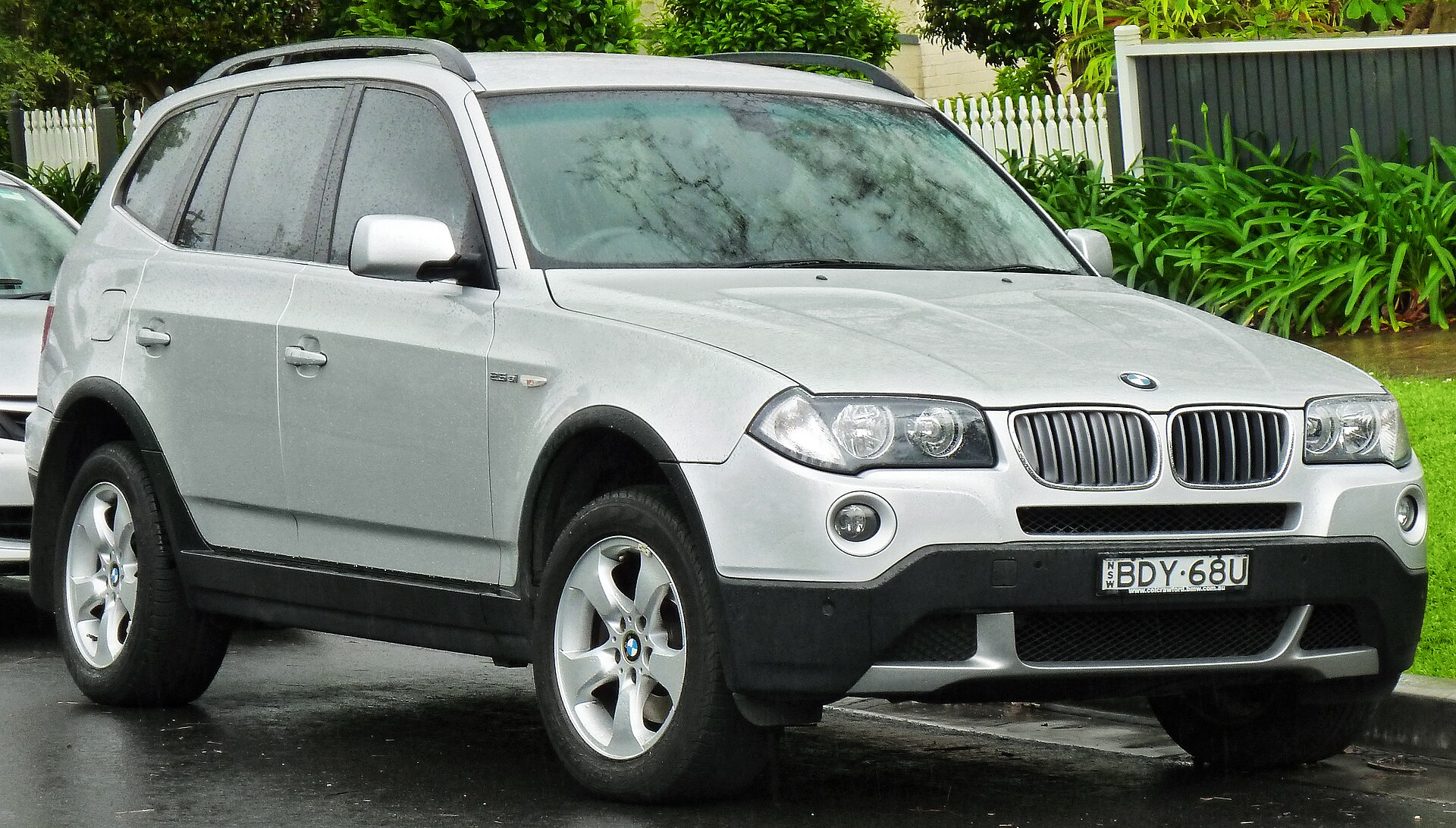
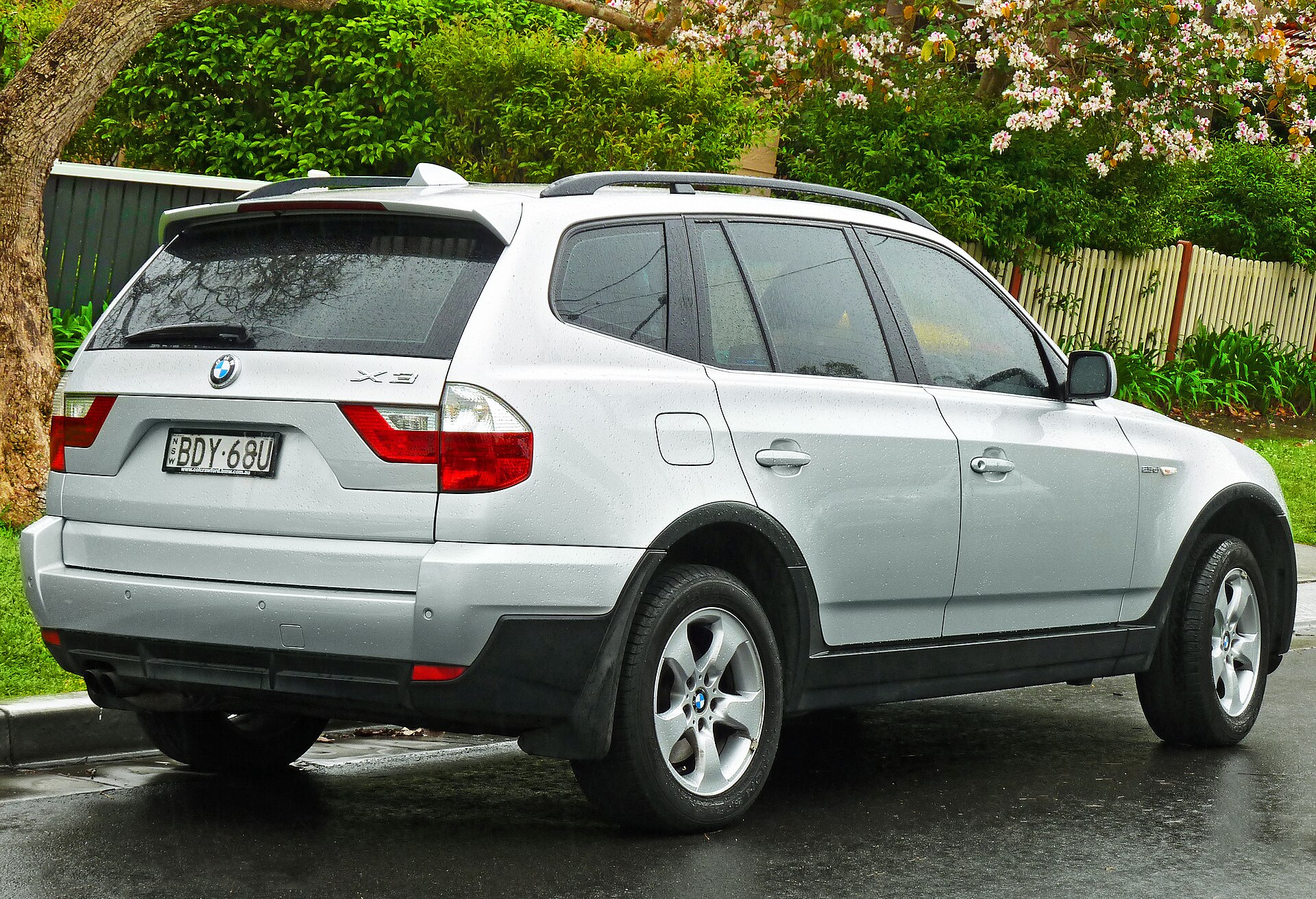
The only body style in the model line. 4,565 mm long, 1,853 mm wide, 1,674 mm high, wheelbase 2,795 mm. This puts the X3 only slightly below the X5 E53, but it offers proportionally more interior space. After the facelift in autumn 2006, the bumpers were redesigned and the lights changed.
05 · Motoren
The engines in detail
Four units that explain the model line.
N52B30 · 2.996 cm³ · 272 PS — X3 3.0si geprüft
The most powerful petrol model, from September 2006. The N52 replaces the M54 and brings the magnesium-aluminium crankcase that BMW highlighted at the time as a lightweight-construction advance. 272 PS at 6,650 rpm is a high engine speed for a car of this body style — the engine wants to be revved, and that fits poorly with the character of the car. It was mainly the diesel that sold.
Technische Daten anzeigen
| Hubraum | 2.996 cm³ |
| Leistung | 272 PS (200 kW) at 6,650/min |
| Drehmoment | 315 Nm at 2,750/min |
| Bauzeit | 09/2006–08/2010 |
| Getriebe | Six-speed transmission as standard |
Wikipedia — BMW E83
M57D30 bi-turbo · 2,993 cm³ · 286 PS — X3 3.0sd geprüft
The only X3 with two turbochargers. While all other diesels in the model line use a single turbocharger with variable turbine geometry, the 3.0sd gets two-stage sequential turbocharging. 286 PS at 4,400 rpm makes it the most powerful engine the E83 ever had — more powerful even than any petrol engine in the model line.
Technische Daten anzeigen
| Hubraum | 2.993 cm³ |
| Leistung | 286 PS (210 kW) at 4,400/min |
| Aufladung | two-stage sequential turbocharging |
| Bauzeit | 09/2006–08/2010 |
| Einspritzung | Common rail |
Wikipedia — BMW E83, BMW M57
M54B30 · 2.979 cm³ · 231 PS — X3 3.0i geprüft
The engine of the early years and the last naturally aspirated six-cylinder in the model line before the N52. The same engine works in the X5 E53 3.0i and in the 3 Series E46 330i. Anyone looking for an early X3 with the more classic engine character will find it here — model years 2004 to summer 2006.
Technische Daten anzeigen
| Hubraum | 2.979 cm³ |
| Leistung | 231 PS (170 kW) at 5,900/min |
| Drehmoment | 300 Nm at 3,500/min |
| Bauzeit | 09/2003–08/2006 |
| Verwandtschaft | identical to X5 E53 3.0i and E46 330i |
Wikipedia — BMW E83
N47D20 · 1,995 cm³ · 177 PS — X3 2.0d and xDrive20d geprüft
The best-selling engine of the later years — and the one you need to look at most closely when buying. The N47 replaced the M47 in September 2007 and is the engine family whose timing chain later made headlines. The chain sits at the rear of the engine, towards the transmission; a replacement is correspondingly labour-intensive.
Technische Daten anzeigen
| Hubraum | 1.995 cm³ |
| Leistung | 177 PS (130 kW) at 4,000/min |
| Drehmoment | 350 Nm at 1,750–3,000/min |
| Bauzeit | 09/2007–08/2010 |
| Vorgänger | M47D20 with 150 PS |
Wikipedia — BMW E83, BMW N47
06 · Schwachstellen
Known weak points
- Timing chain of the N47 diesels. From September 2007 BMW fitted the N47 instead of the M47 in the X3. The chain of this engine family sits at the rear of the engine, on the transmission side; a replacement requires separating the engine and transmission. Production between March 2007 and January 2009 is most affected, but reports extend into later model years. BMW ran a goodwill programme for some vehicles and later discontinued it. There is no reliable failure rate — a vehicle with a documented chain replacement is therefore worth more than one without.
07 · Technik
Technik
Built at Magna Steyr
xDrive's premiere
What the X3 lacks off-road
The renaming
08 · Motorsport
Motorsport
There isn’t one. The X3 E83 had neither a factory racing programme nor a customer sport variant.
09 · Kaufberatung
What to look out for when buying
The E83 is a cheap car today — and that’s exactly the problem. At these prices, a major repair quickly stops being worthwhile, which is why many cars are on the road with deferred maintenance.
Here we deliberately only mention what can be verified. What circulates in forums about the transfer case, panoramic roof and steering, we did not find confirmed in two independent sources and have therefore left out.
10 · Die Konkurrenz
Die Konkurrenz
Land Rover Freelander
The rival that came from the other direction — more off-road, less on-road. With the X3 the balance was exactly reversed.
Audi Q5
Not until 2008, four years after the X3 reached the market. Audi initially left the segment to the X3.
Mercedes-Benz GLK
Also not until 2008. The late competition is the best proof that BMW was early with the X3.
11 · Galerie
Galerie
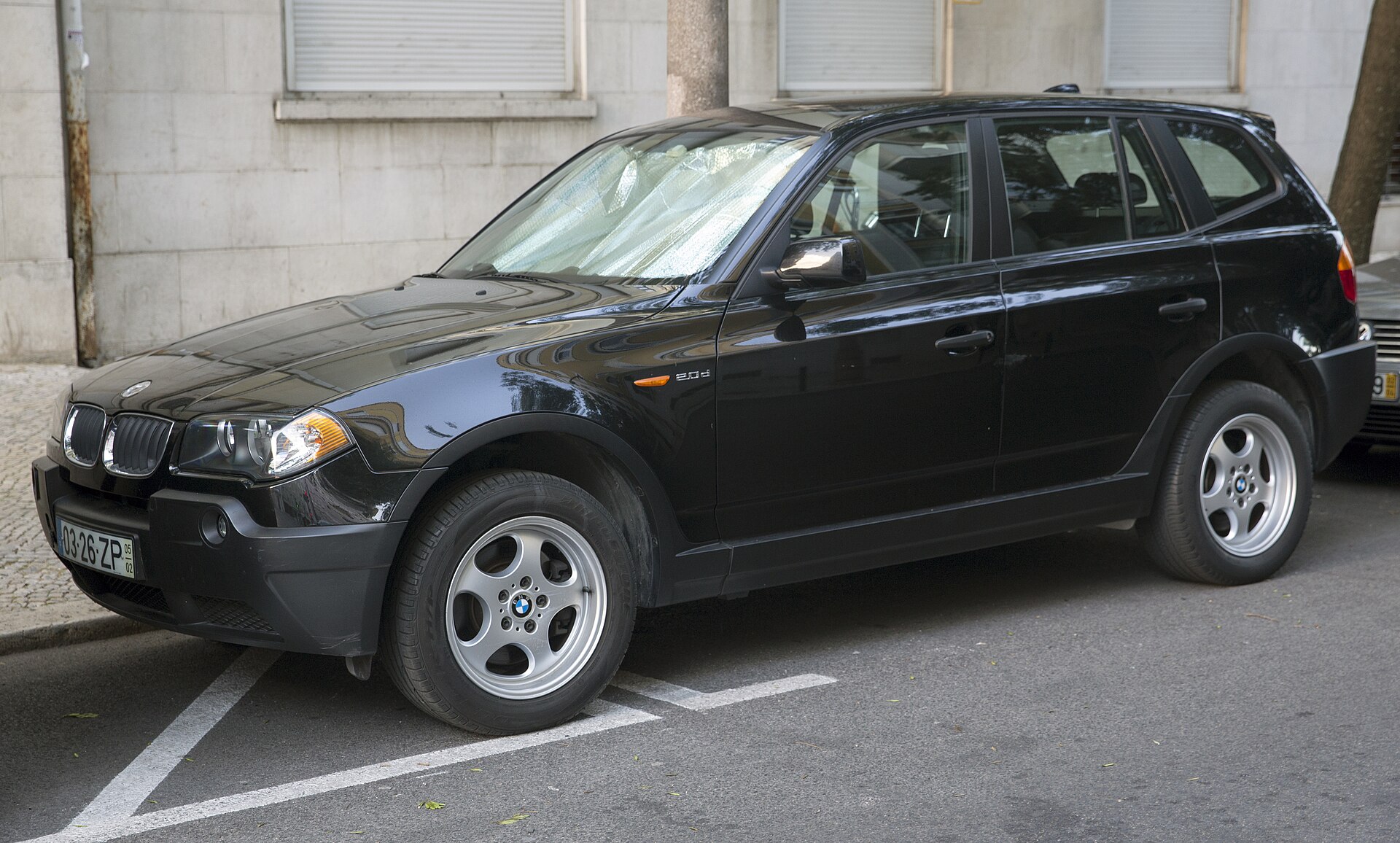
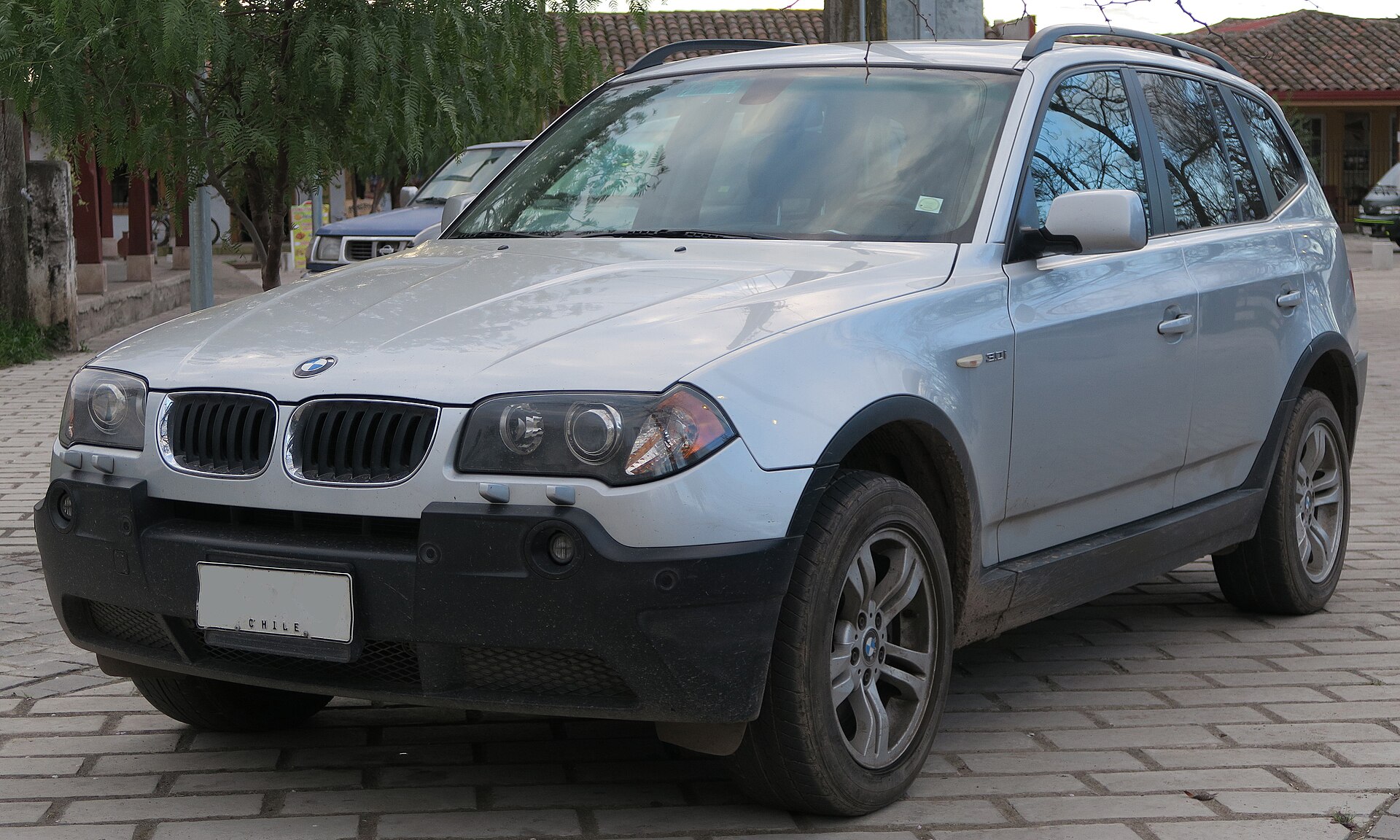
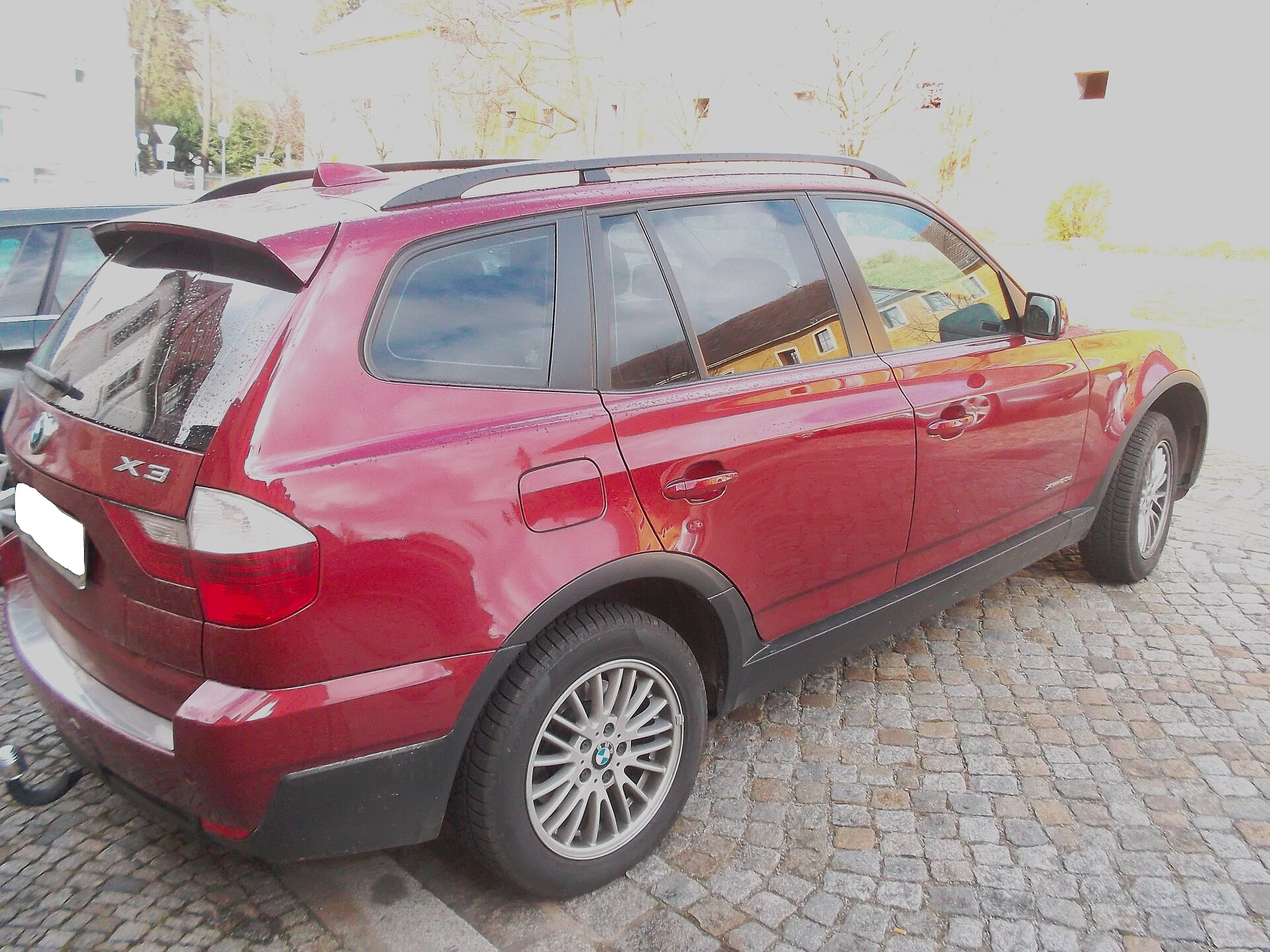
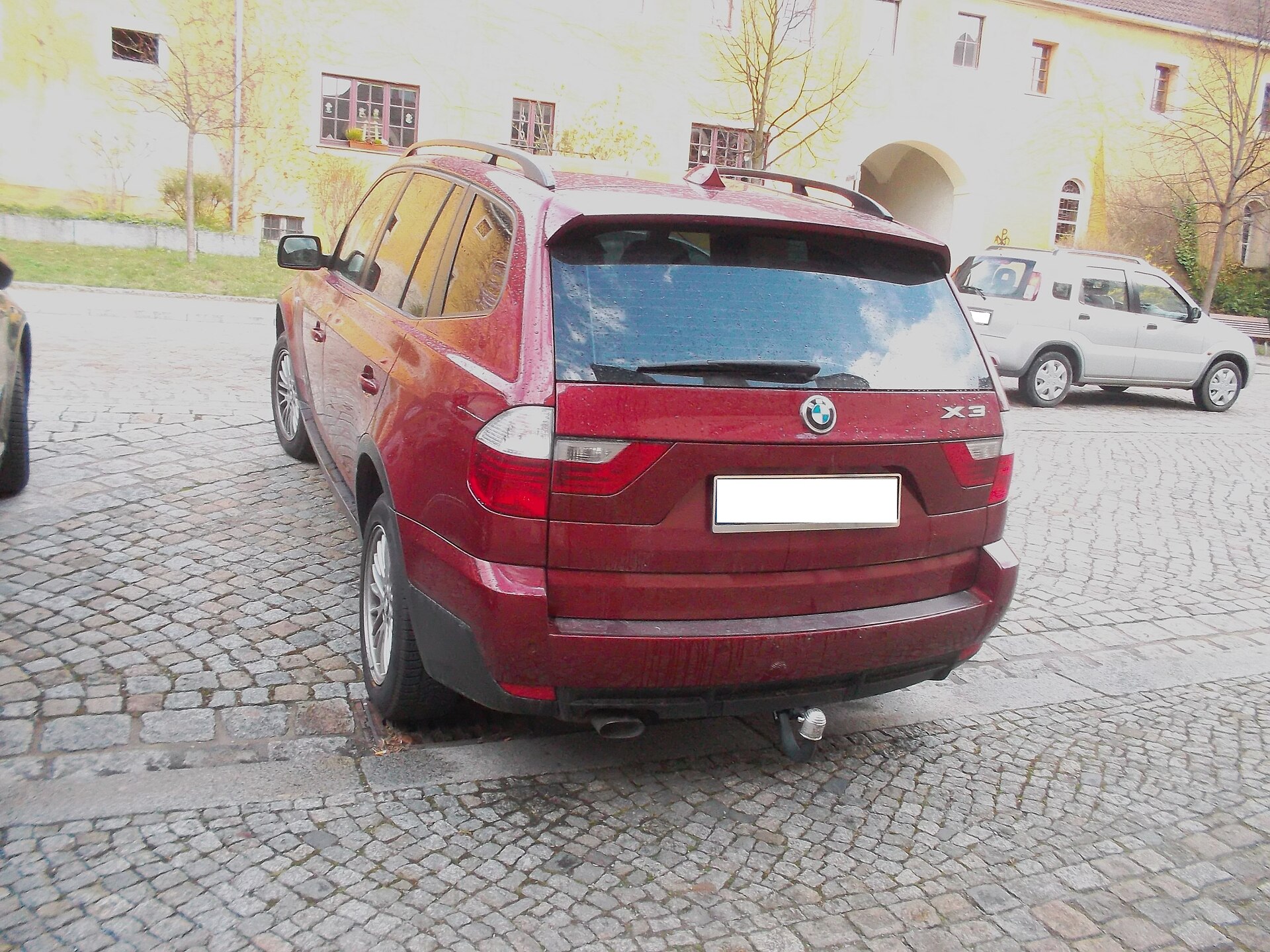
Images from all production phases of the model line.


12 · Quellen
Belege & Literatur
All figures on this page have been checked against the following sources.