

01 · Überblick
The Return to the Executive Class
After the near-bankruptcy of 1959 and the rescue by the Neue Klasse, BMW lacked a model line above the 2000. The last large cars, 501 and 502, had ended production in 1964. The E3 was the claim to a return — BMW Group Classic calls the 2500 the first vehicle of the Große Limousinen model line.
The most important thing about the E3 is the engine. The M30 — six-cylinder, overhead camshaft, chain drive, rocker arms — debuted here and carried BMW into the 1990s. In addition came a chassis that was modern for 1968: MacPherson struts at the front, semi-trailing arms at the rear, recirculating ball steering, and disc brakes on all four wheels. On the 2800, Nivomat shock absorbers, a limited-slip differential, and a heated rear window were part of standard equipment.
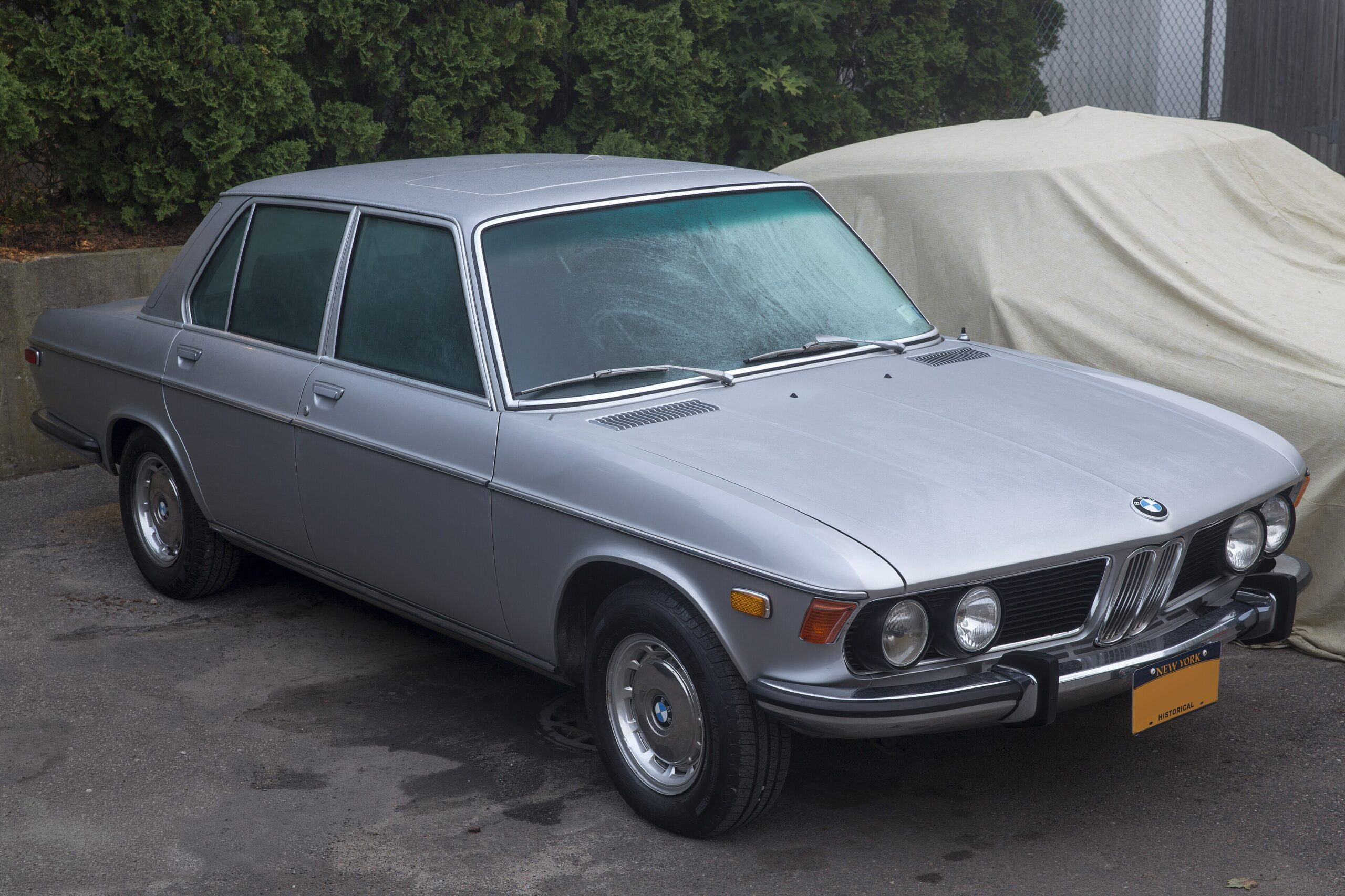
In the USA, the E3 was BMW’s volume model in the executive class as the Bavaria. Max Hoffman, the American importer, convinced BMW to combine the body and equipment of the 2500 with the larger engine of the 2800 — more power without the price and weight of the luxury equipment. 37,144 Bavaria were built.
From 1974, the long version with 100 millimetres more wheelbase moved up, and in 1974 and 1975 the 3.3-litre top models arrived. Production ended in February 1977, and in May the E23 took over. The 7 Series emerged from the E3.
02 · Historie
Nine Years of Executive Class
From the return in 1968 to being replaced by the first 7 Series.
- 08/1968 Start of production of BMW 2500 and 2800. BMW is back in the executive class.
- 1971 For the 1971 model year, at the instigation of Max Hoffman, the Bavaria is created for the USA: body of the 2500, engine of the 2800.
- 05/1971 The 3.0 S arrives with 2,985 cm³ and 180 PS.
- 09/1971 The 3.0 Si with manifold injection and 200 PS. The injected M30 debuts practically simultaneously in the E3 and in the E9 Coupé.
- 01/1974 The 3.3 L with a wheelbase extended by 100 millimetres. BMW dates it to January, Wikipedia DE to March.
- 08/1974 The long version is now also available as 2.8 L and 3.0 L.
- 09/1975 The 3.3 Li with Bosch L-Jetronic. At 42,960 Mark, the most expensive BMW of its time.
- 02/1977 End of production. In May 1977 the E23 takes over as the first 7 Series.
03 · Modellübersicht
The Model Programme
Eight models in nine years. The production periods differ between BMW Group Classic and Wikipedia DE in four places; when in doubt, we follow BMW. A note for the precise: the 3.3 Li has less displacement than the 3.3 L — 3,210 vs 3,295 cm³. This is confirmed in two sources and is often depicted incorrectly.
Quelle: Werks- und Literaturangaben · geprüft
Technische Daten anzeigen — komplette Modellmatrix
| Modell | Motor | Hubraum | Leistung | Bauzeit |
|---|---|---|---|---|
| 2500 | M30B25V | 2.494 cm³ | 150 PS (110 kW) | 08/1968–02/1977, 93,363 units |
| 2800 | M30B28V | 2.788 cm³ | 170 PS (125 kW) | 08/1968–12/1974, 40,160 units |
| 2.8 L | M30B28V | 2.788 cm³ | 170 PS (125 kW) | 01/1975–02/1977, 5,036 units |
| 3.0 S | M30B30V | 2.985 cm³ | 180 PS (132 kW) | 05/1971–02/1977, 51,544 units |
| 3.0 L | M30B30V | 2.985 cm³ | 180 PS (132 kW) | 01/1975–01/1977, 22,310 units |
| 3.0 Si | M30B30 with injection | 2.985 cm³ | 200 PS (147 kW) | 09/1971–07/1975, 6,565 units |
| 3.3 L | M30B33V | 3.295 cm³ | 190 PS (140 kW) | 01/1974–07/1975, 1,622 units |
| 3.3 Li | M30, code not documented | 3.210 cm³ | 197–200 PS (145–147 kW) | 09/1975–02/1977, 1,401 units |
| Bavaria (USA) | M30, 2,8 l, ab MJ 1972 3,0 l | 2.788 / 2.985 cm³ | 170 / 180 PS | 1968–1977, 37,144 units |
04 · Karosserievarianten
Karosserievarianten
Four-door Sedan

Wheelbase 2,692 mm, length 4,700 mm, width 1,750 mm, height 1,450 mm. Boot capacity 600 litres, fuel tank 75 litres. For the USA, length grew to 4,953 mm due to the bumpers.
Long version (L and Li)

From January 1974, wheelbase extended by 100 mm to 2,792 mm, length 4,800 mm. Confirmed in three sources: BMW states ten centimetres, Wikipedia DE and the E3 Club state 2,792 mm. Wikipedia EN gives 2,794 mm instead, presumably an inch-based back-conversion. Equipment included automatic transmission, an electric steel sliding roof, and leather upholstery.
05 · Motoren
Der M30
The engine with which BMW returned to the executive class — and which carried the brand for two decades afterwards. Valve actuation in all variants: overhead camshaft with chain drive and rocker arms.
M30B25V · 2,494 cm³ · 150 PS — BMW 2500 geprüft
Bore 86.0 mm, stroke 71.6 mm, compression 9.0:1. 150 PS at 6,000 rpm, 190 km/h. Twin Zenith carburettors. With 93,363 cars, the most-produced model of the model line. Price 15,485 Mark.
Technische Daten anzeigen
| Hubraum | 2.494 cm³ |
| Bore × Stroke | 86,0 × 71,6 mm |
| Verdichtung | 9,0:1 |
| Leistung | 110 kW (150 PS) at 6,000/min |
| Drehmoment | 210 Nm at 3,700/min (Wikipedia EN states 211 Nm) |
| Gemischaufbereitung | Doppel-Zenith-Vergaser |
| Höchstgeschwindigkeit | 190 km/h |
| Preis | 15.485 DM |
BMW Group Classic for power, top speed and price; Wikipedia DE and EN for bore, stroke, compression and torque
M30B28V · 2,788 cm³ · 170 PS — BMW 2800 and 2.8 L geprüft
Bore 86.0 mm, stroke 80.0 mm, compression 9.0:1. 170 PS at 6,000 rpm. BMW highlights a particular feature: the 2.8-litre met the strict US emissions regulations through a special combustion chamber design, i.e. without additional equipment. A note on our own account: BMW Group Classic's page on the 2800 lists this engine as M30B25 — which is incompatible with the displacement. The correct designation is M30B28. Here the lead source is mistaken.
Technische Daten anzeigen
| Hubraum | 2.788 cm³ |
| Bore × Stroke | 86,0 × 80,0 mm |
| Verdichtung | 9,0:1 |
| Leistung | 125 kW (170 PS) at 6,000/min |
| Drehmoment | 233 Nm at 3,700/min (Wikipedia EN states 235 Nm) |
| Höchstgeschwindigkeit | 200 km/h (the E3 Club states 207 km/h) |
| Serienausstattung | Nivomat shock absorbers, limited-slip differential, heated rear window |
| Preis | 17.250 DM |
BMW Group Classic, Wikipedia DE and EN
M30B30V · 2,985 cm³ · 180 PS — BMW 3.0 S and 3.0 L geprüft
Bore 89.0 mm, stroke 80.0 mm, compression 9.0:1. 180 PS at 6,000 rpm, 205 km/h. With a combined total of around 73,800 cars, the most-produced engine variant after the 2500.
Technische Daten anzeigen
| Hubraum | 2.985 cm³ |
| Bore × Stroke | 89,0 × 80,0 mm |
| Verdichtung | 9,0:1 |
| Leistung | 132 kW (180 PS) at 6,000/min |
| Drehmoment | 255 Nm at 3,700/min (the E3 Club states 260 Nm) |
| Gemischaufbereitung | Doppel-Zenith-Vergaser |
| Höchstgeschwindigkeit | 205 km/h |
| Preis | 19.980 DM |
BMW Group Classic, Wikipedia DE and EN
M30B30 with injection · 2,985 cm³ · 200 PS — BMW 3.0 Si geprüft
The first BMW six-cylinder with injection. 200 PS at 5,500 rpm, 211 km/h, Bosch D-Jetronic. Sources differ on compression: Wikipedia DE states 9.5:1, Wikipedia EN 9.2:1. Whether the 3.0 Si sedan or the 3.0 CSi coupé came first cannot be determined — both arrived in autumn 1971. We therefore do not claim it either way.
Technische Daten anzeigen
| Hubraum | 2.985 cm³ |
| Bore × Stroke | 89,0 × 80,0 mm |
| Verdichtung | 9.5:1 or 9.2:1 depending on source |
| Leistung | 147 kW (200 PS) at 5,500/min |
| Drehmoment | 272 Nm at 4,300/min |
| Gemischaufbereitung | Bosch D-Jetronic |
| Höchstgeschwindigkeit | 211 km/h |
| Preis | 22.690 DM |
BMW Group Classic, Wikipedia DE and EN (M30 article)
M30B33V · 3,295 cm³ · 190 PS — BMW 3.3 L geprüft
The largest displacement in the model line. Bore 89.0 mm, stroke 88.4 mm (Wikipedia EN states 88 mm), compression 9.0:1. 190 PS at 5,500 rpm. Only 1,622 cars. Price 35,600 Mark.
Technische Daten anzeigen
| Hubraum | 3.295 cm³ |
| Bore × Stroke | 89,0 × 88,4 mm |
| Verdichtung | 9,0:1 |
| Leistung | 140 kW (190 PS) at 5,500/min |
| Drehmoment | 289 Nm at 3,500/min (the E3 Club states 300 Nm) |
| Höchstgeschwindigkeit | 205 km/h |
| Stückzahl | 1.622 |
| Preis | 35.600 DM |
BMW Group Classic, Wikipedia DE and EN
3,210 cm³ · 197 to 200 PS — BMW 3.3 Li plausibel
The top model with Bosch L-Jetronic. Bore 89.0 mm, stroke 86.0 mm — so less displacement than the 3.3 L despite the same name. On power output, Wikipedia DE states 197 PS, BMW itself 200 PS. We were unable to find a documented engine code for this variant and therefore do not include one. At 42,960 Mark according to BMW, the most expensive model of its time.
Technische Daten anzeigen
| Hubraum | 3.210 cm³ |
| Bore × Stroke | 89,0 × 86,0 mm |
| Verdichtung | 9,0:1 |
| Leistung | 197 PS (Wikipedia DE) or 200 PS (BMW) at 5,500/min |
| Drehmoment | 280 Nm at 4,300/min |
| Gemischaufbereitung | Bosch L-Jetronic |
| Höchstgeschwindigkeit | 205 km/h |
| Stückzahl | 1.401 |
| Preis | 42.960 DM |
BMW Group Classic and Wikipedia DE; engine code not documented
06 · Schwachstellen
Reliability & Weak Points
- The M30 is considered robust. The typical issues are the timing chain and chain tensioner as well as leaking valve covers — both well manageable if attended to.
- The D-Jetronic of the 3.0 Si and the L-Jetronic of the 3.3 Li are electronics that aged early. Control units and sensors are today’s bottleneck, not the engine.
- Rust on the wheel arches, sills, tail ends, and around the windscreen area is the model line’s main issue. Body panels are hard to source.
- The Boge Nivomat struts at the rear are expensive and rare. Many cars run with conventional dampers, which noticeably changes the driving behaviour.
- Chrome and trim are elaborate to restore. For a car that ranked below Mercedes when new and today trades well below it, restoration can quickly exceed the vehicle’s value.
07 · Technik
The Total Production Figure — a Solid Contradiction
Suspension, Brakes, Steering
Getriebe
Relationship to the E9 Coupé
The 3.3 Li Has Less Displacement Than the 3.3 L
A Side Note
Technische Daten — Achsübersetzungen & Getriebe
- Length
- 4,700 mm (long version 4,800 mm, US version 4,953 mm)
- Width
- 1,750 mm
- Height
- 1,450 mm
- Wheelbase
- 2,692 mm (long version 2,792 mm)
- Kerb weight
- 1,334 to 1,360 kg (long version 1,470 to 1,515 kg)
- Fuel tank capacity
- 75 litres
- Boot capacity
- 600 litres
- Transmission
- four-speed manual gearbox, three-speed automatic optional
- Transmission type numbers
- not documented
- Final drive ratios
- not documented
- Front axle
- MacPherson struts, coil springs
- Rear axle
- semi-trailing arms, coil springs; on the 2800 Boge Nivomat with self-levelling
- Brakes
- discs on all four wheels; diameter not documented
- Steering
- recirculating ball, power steering optional
- Limited-slip differential
- standard on the 2800
08 · USA
Bavaria — the Model Max Hoffman Invented
For the 1971 model year, Max Hoffman, BMW’s importer in the USA, convinced the factory to build the 2500 but fit the engine of the 2800: more power without the weight and price of the 2800’s luxury equipment.
The calculation worked out. In 1971 the Bavaria cost around 6,000 dollars compared to 6,874 for the 2800 and became BMW’s American value-for-money model in the executive class. From the 1972 model year it received the three-litre M30. By 1976, 37,144 cars had been built; after that the E12 took over the role in the USA.

09 · Kaufberatung
What Matters: Bodywork and Completeness
The E3 is a large, heavy car with very good engineering and difficult parts supply for the body. The condition of the bodywork decides, not the engine.
Wheel arches front and rear, sills, tail ends, and the area under the windscreen. Body panels are hard to come by.
Check the floor pan and boot floor from underneath, especially around the rear axle mounts.
On the injected models, test the electronics both warm and cold. A cleanly running 3.0 Si is worth more than a cleanly painted one.
Check completeness: chrome parts, trim strips, instruments, and the Nivomat struts. Missing parts are the real cost factor.
On a long-wheelbase version, check the papers against the wheelbase. 2,792 millimetres instead of 2,692 — this can be measured.
The order is: first the bodywork, then completeness, then the engineering. The M30 is the part of the car one needs to worry about the least.
10 · Die Konkurrenz
The Competition
Mercedes-Benz S-Class (W108/W116)
The benchmark of the class and the reason the E3 existed. More solid, more conservative, more expensive to run — and always the safe choice.
Opel Diplomat and Admiral (KAD)
The German alternative with more displacement and less prestige. Wikipedia DE explicitly names them as competitors of the E3.
Jaguar XJ6
Contemporary from 1968 and in the same class. Ride comfort and power delivery were its argument, build quality its problem.
11 · Galerie
Bilder
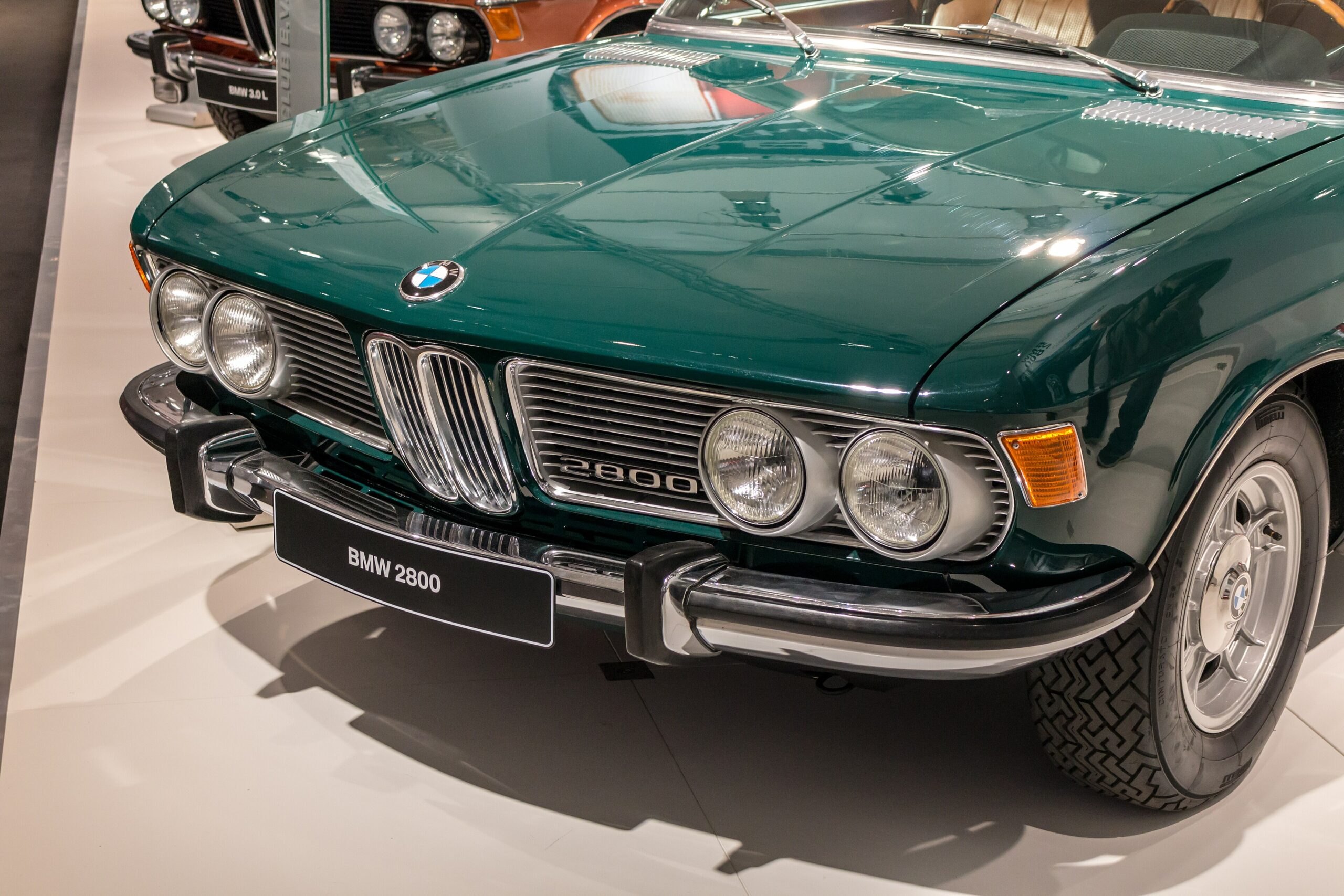
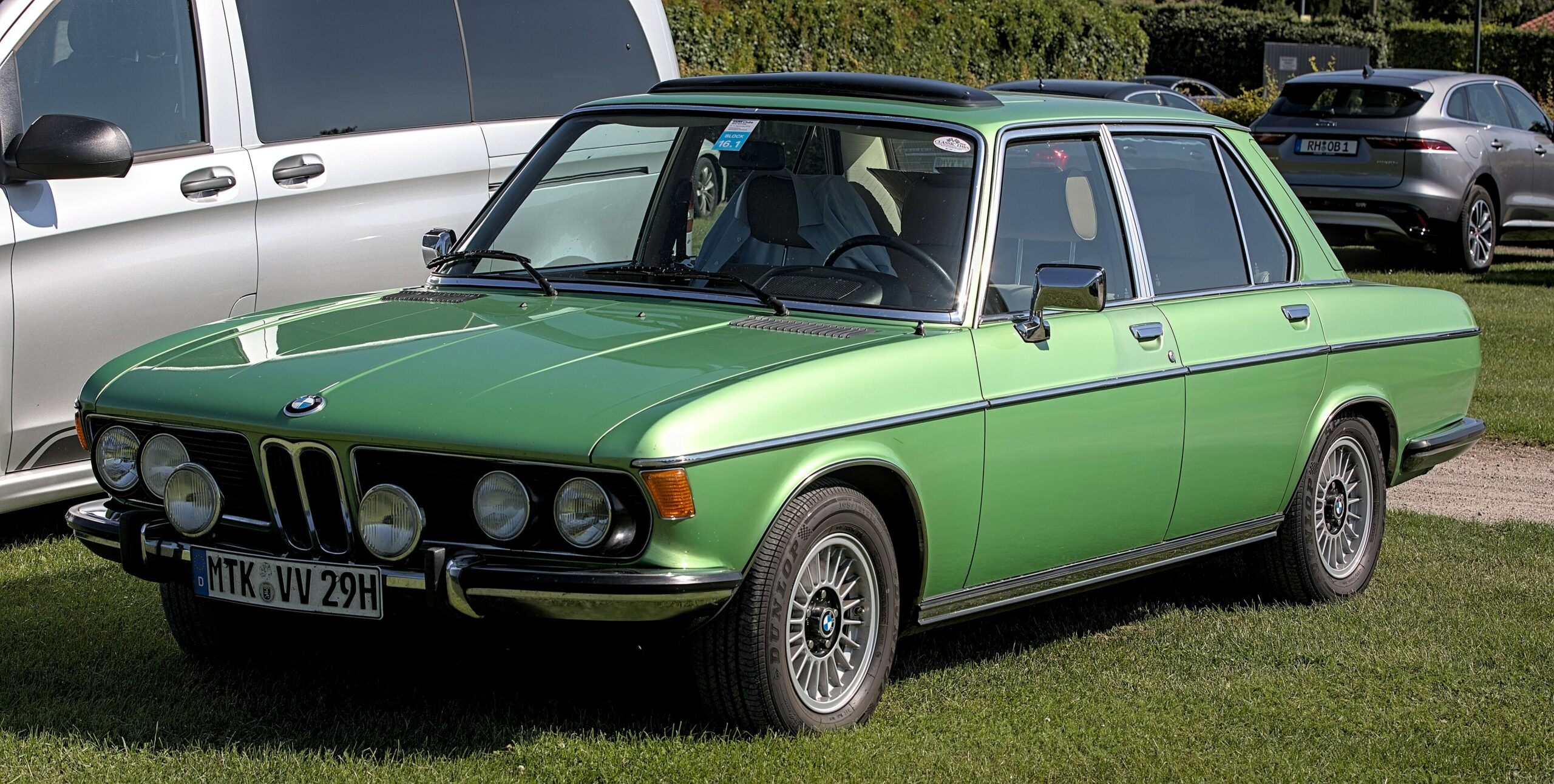
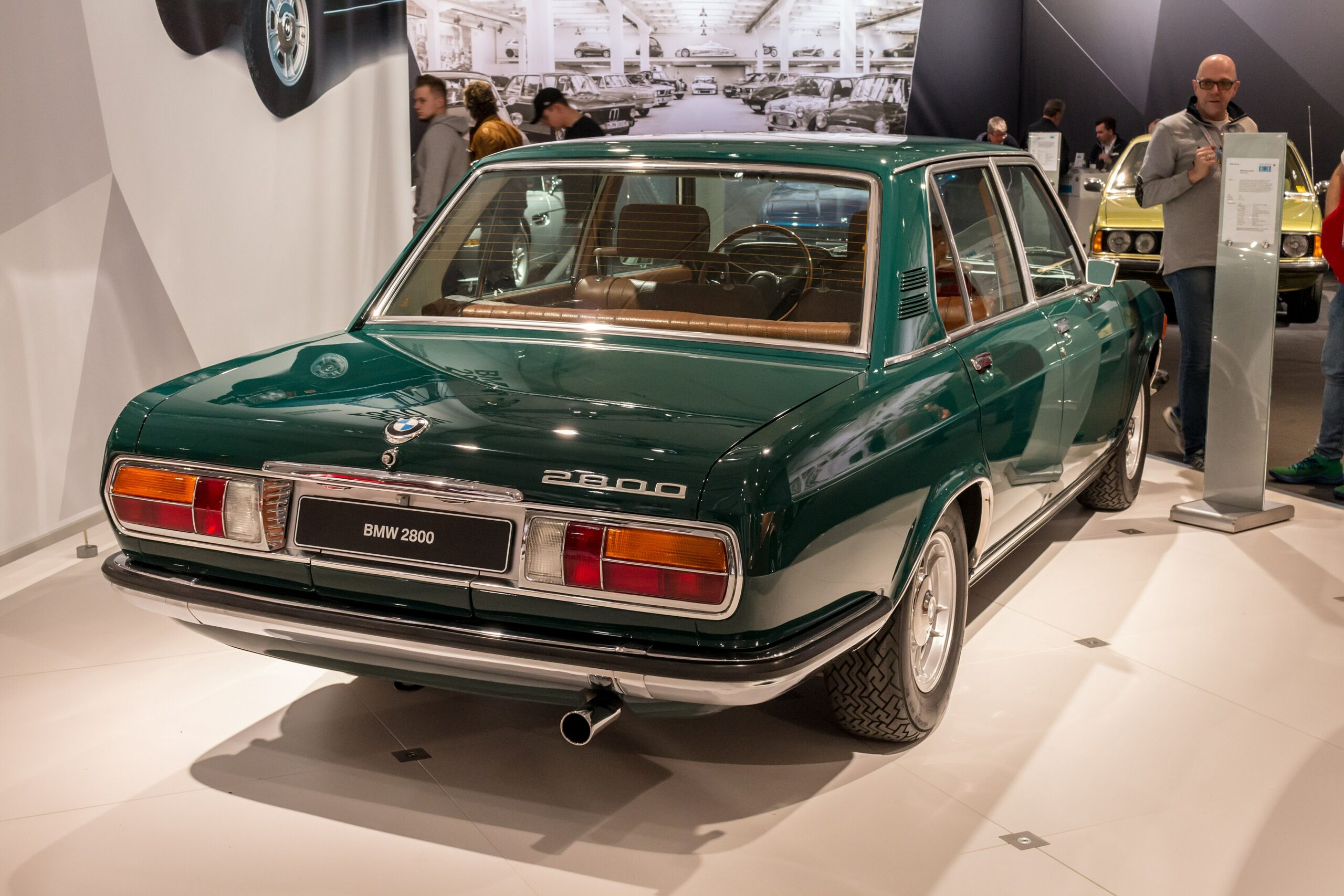
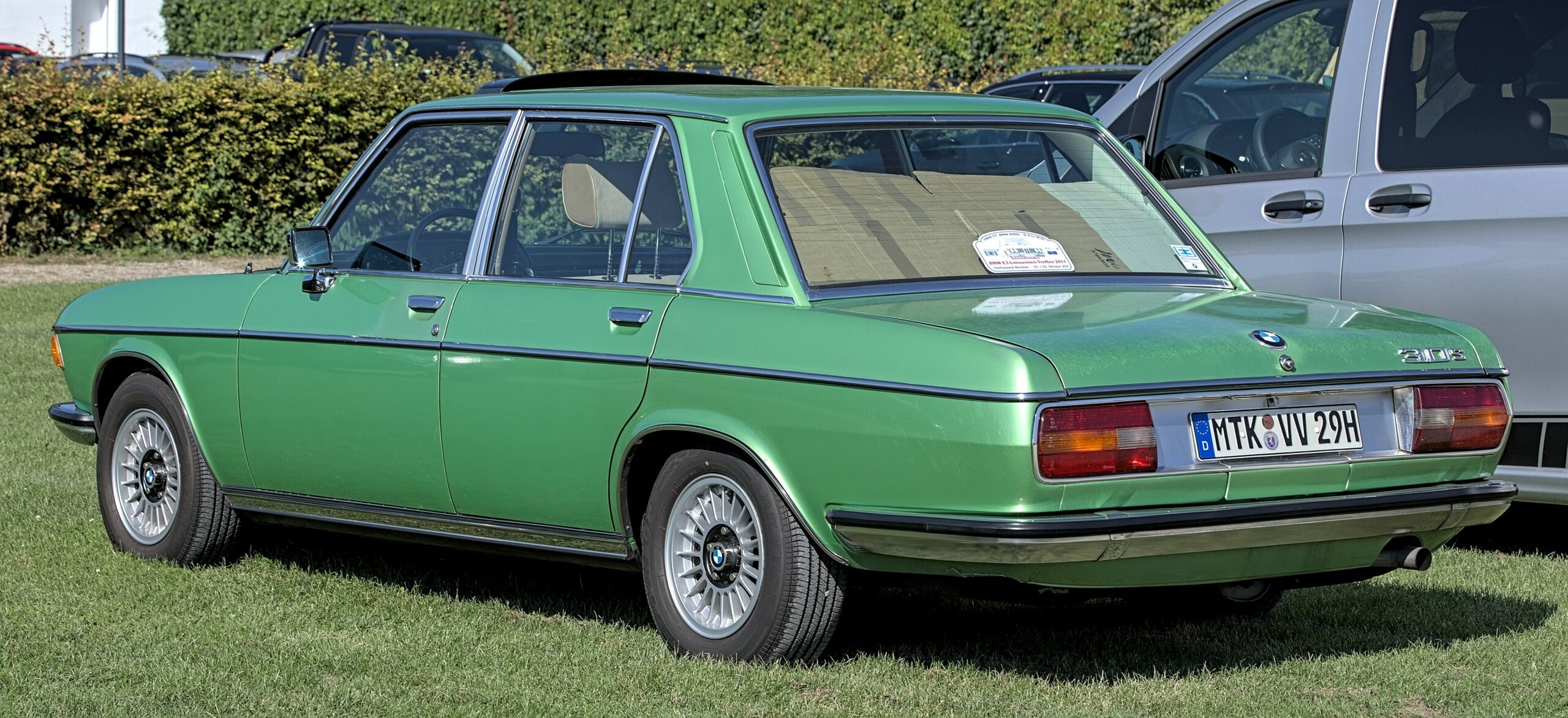
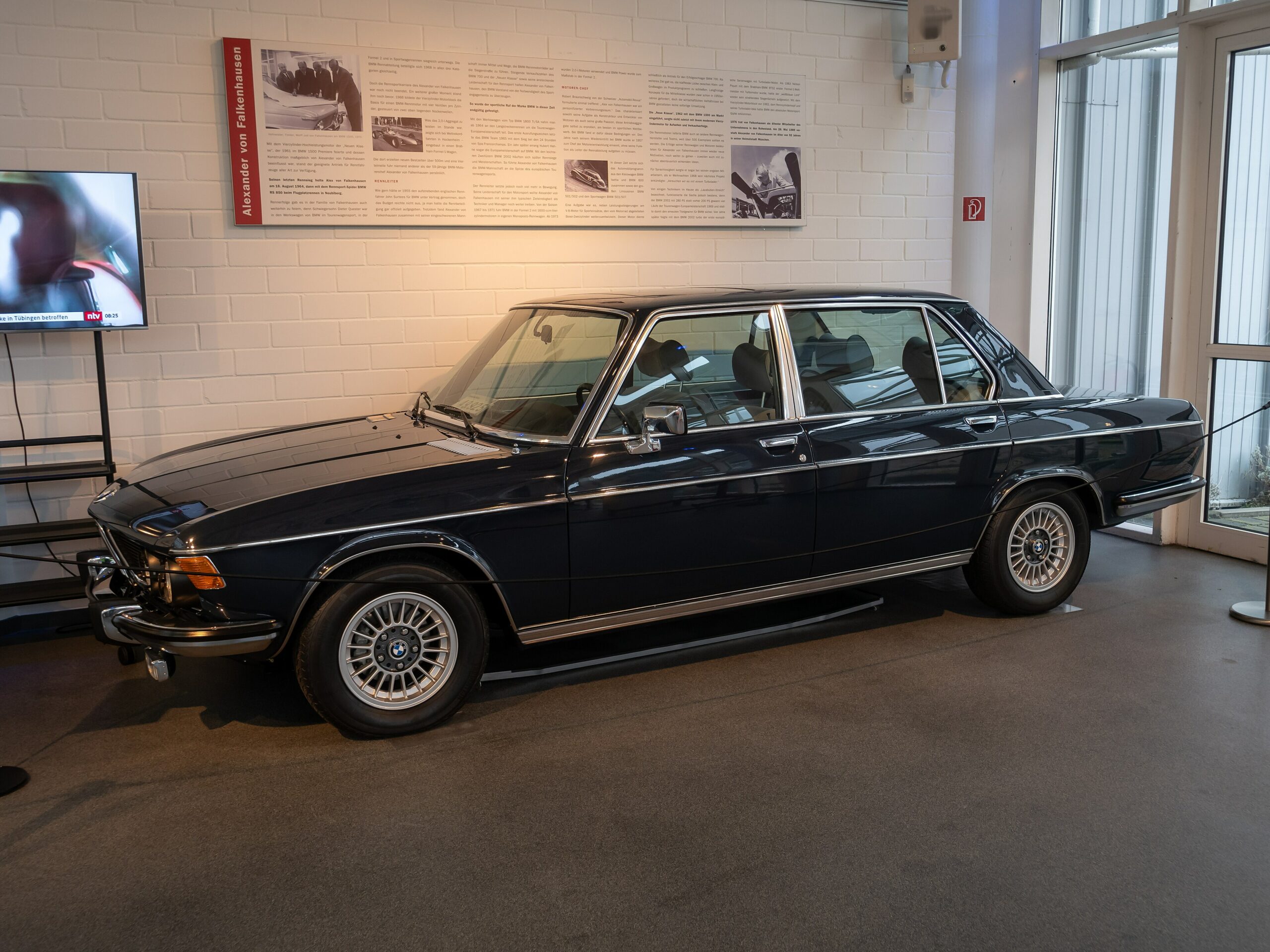
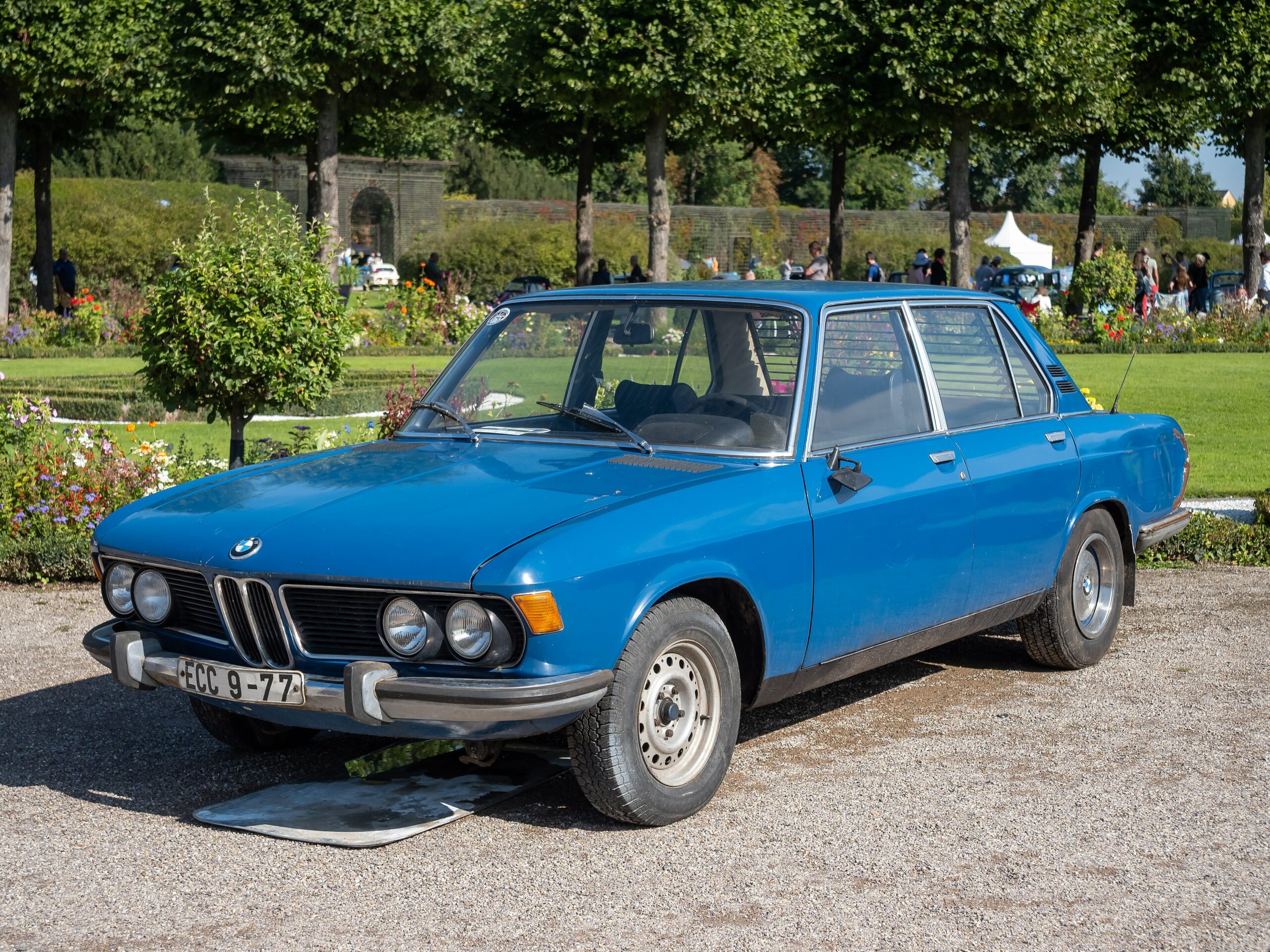
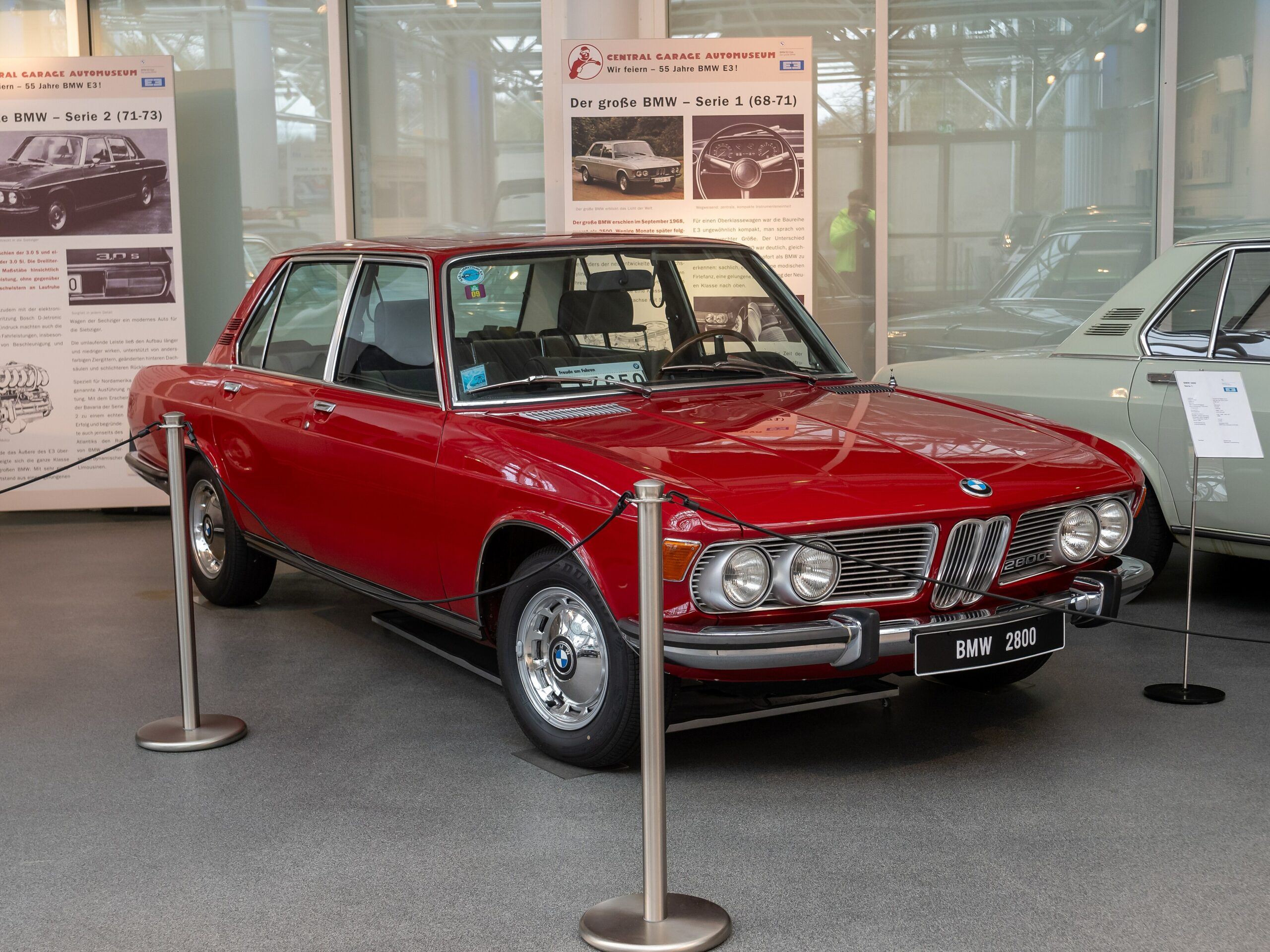
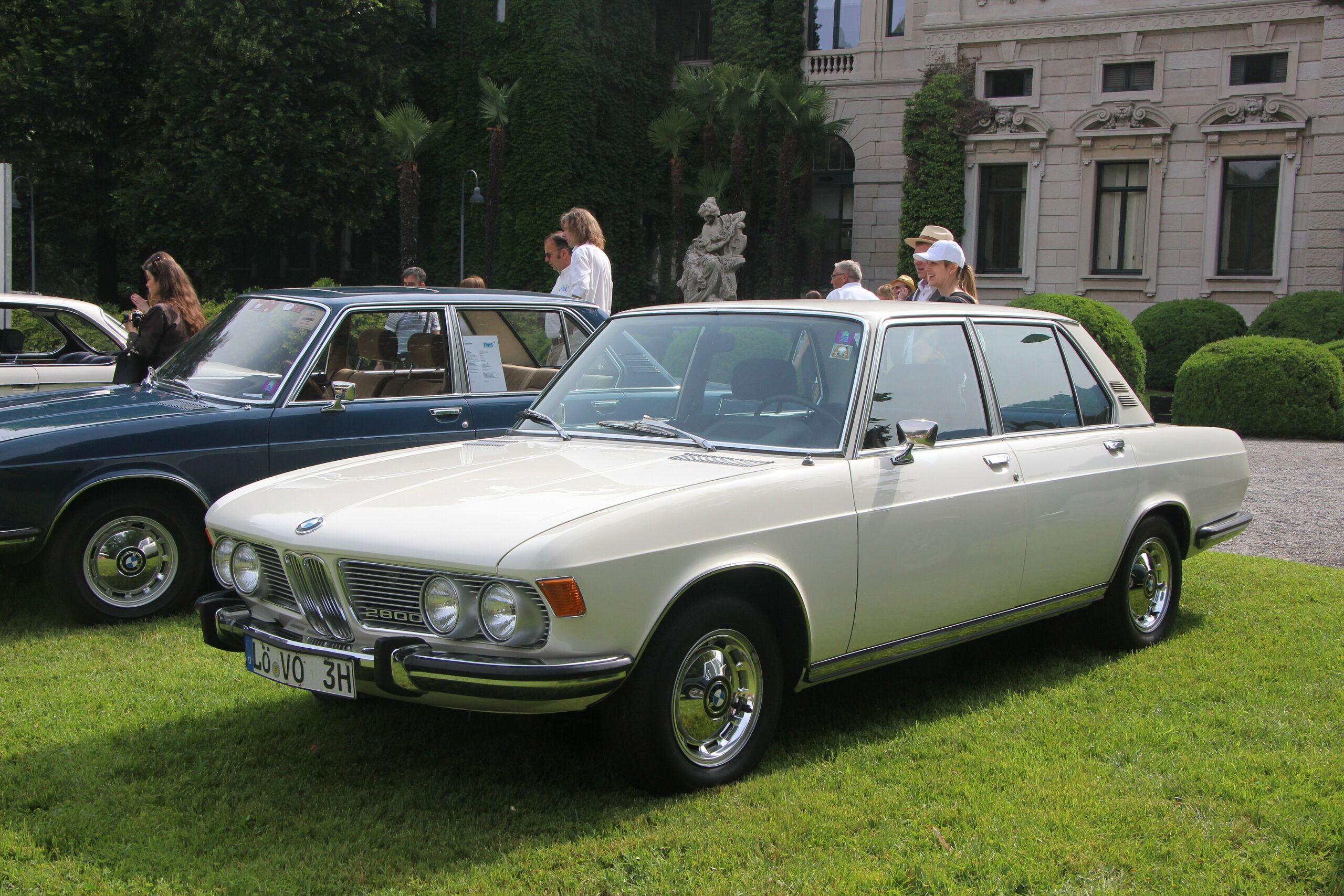
From the first-series 2800 to the American Bavaria.
12 · Quellen
Belege & Literatur
The lead source is BMW Group Classic with the model pages for 2500, 2800, 3.0 S, 3.0 Si, 3.3 L and 3.3 Li. Production figures and engine data have been cross-checked against Wikipedia DE and EN as well as the E3 Club. Where BMW itself is mistaken — regarding the engine code of the 2800 — this is noted in the text. The German-language Wikipedia was read via a mirror during preliminary research and should be treated here as unverified against the original.
- BMW Group Classic — model pages for the Große Limousinen model line (production periods, outputs, prices)
- Wikipedia — BMW E3 (model programme, production figures, dimensions, suspension)
- Wikipedia — BMW M30 (engine codes, bore, stroke, compression, valve actuation)
- Wikipedia — BMW New Six (Bavaria, Max Hoffman, US production figures)
- Wikimedia Commons — image sources and licences