

01 · Überblick
The Reference
The E39 is the 5 Series generation that stayed longest in the rearview mirrors of the competition. It launched in December 1995, grew by 68 millimetres of wheelbase compared to the E34, and gained around forty percent in torsional rigidity. Around 77 percent of the sheet metal surfaces were galvanised — a statement in a decade in which the direct competitor from Stuttgart lost precisely at this point a reputation it still carries today.
Technically, the big point is the suspension. At the front a double-joint spring strut axle, at the rear the multi-link integral rear axle, and on the six-cylinders the steering knuckles, outer strut tube and spring plate are made of aluminium. That saves around 21 kilograms of unsprung and sprung mass. BMW marketed this at the time as a “suspension almost entirely of light alloy”; for the V8 models this is only partially true, as they have heavier steel subframes.
Add to that an engine range that spans from the 115 PS diesel to the 400 PS M5, and with the 530d the first common-rail six-cylinder in a 5 Series. Anyone looking for an E39 today is usually not looking for the fastest car in the model line, but the most balanced. This search often ends with the 525i Touring: six-cylinder with 192 PS, Touring bodystyle, manageable running costs.
02 · Historie
Nine years in seven dates
From the IAA premiere to the last Touring.
- 1995 World premiere in September at the IAA in Frankfurt, delivery of the Sedan from December. At launch, six-cylinders producing 150 to 193 PS are available.
- 1996 The V8 models 535i and 540i come with the new M62, alongside the diesel 525td and 525tds with the M51. The 540i comes with a six-speed gearbox as standard.
- 1997 Market launch of the Touring in March, though production had already started in November 1996. New features are the separately opening tailgate window and air suspension with self-levelling at the rear axle.
- 1998 Production of the M5 with the 400 PS S62 begins in October. At the same time, the six- and eight-cylinders receive the Technical Update: M52TÜ with double VANOS, M62TÜ with VANOS and electronic throttle.
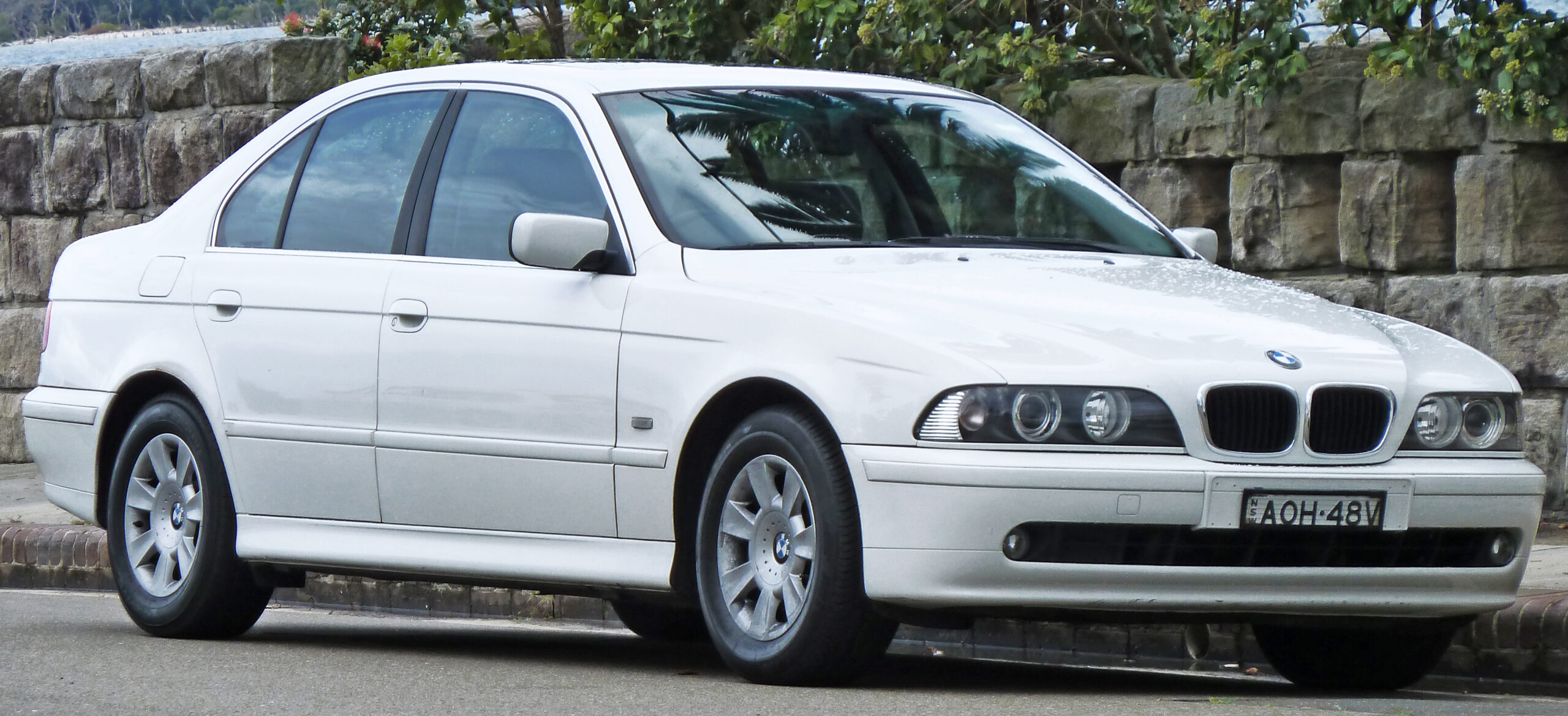
- 2000 Facelift in September. The twin headlights receive fibre-optic sidelight rings, the angular fog lights give way to round ones and become standard, and the tail lights get light strips. The six-cylinders switch from the M52TÜ to the M54.
- 2003 The Sedan is discontinued mid-year, the M5 ends in June after around 20,500 units. The successor E60 is unveiled in July.
- 2004 The Touring continues in production until spring, when the E61 takes over in April. BMW Group Classic cites May 2004 as the end of the model line.
03 · Modellübersicht
All engine variants
Petrol and diesel side by side. Notable: with the 2000 facelift, model designations shifted — the 520i became the 2.2-litre, the 523i gave way to the 525i, and the 530i became the new range-topping six-cylinder.
Quelle: Werks- und Literaturangaben · geprüft
Technische Daten anzeigen — komplette Modellmatrix
| Modell | Motor | Hubraum | Leistung | Bauzeit |
|---|---|---|---|---|
| 520i | M52B20 / M52TÜB20 | 1.991 cm³ | 150 PS (110 kW) | 1995–2000 |
| 520i | M54B22 | 2.171 cm³ | 170 PS (125 kW) | 2000–2003 |
| 523i | M52B25 / M52TÜB25 | 2.494 cm³ | 170 PS (125 kW) | 1995–2000 |
| 525i | M54B25 | 2.494 cm³ | 192 PS (141 kW) | 2000–2003 |
| 528i | M52B28 / M52TÜB28 | 2.793 cm³ | 193 PS (142 kW) | 1995–2000 |
| 530i | M54B30 | 2.979 cm³ | 231 PS (170 kW) | 2000–2003 |
| 535i | M62B35 | 3.498 cm³ | 235 PS (173 kW) | 1996–1998 |
| 535i | M62TÜB35 | 3.498 cm³ | 245 PS (180 kW) | 1998–2003 |
| 540i | M62B44 / M62TÜB44 | 4.398 cm³ | 286 PS (210 kW) | 1996–2003 |
| M5 | S62B50 | 4.941 cm³ | 400 PS (294 kW) | 1998–2003 |
| 525td | M51D25 | 2.497 cm³ | 115 PS (85 kW) | 1996–2000 |
| 525tds | M51D25TÜ | 2.497 cm³ | 143 PS (105 kW) | 1996–2000 |
| 520d | M47D20 | 1.951 cm³ | 136 PS (100 kW) | 2000–2003 |
| 525d | M57D25 | 2.497 cm³ | 163 PS (120 kW) | 2000–2004 |
| 530d | M57D30 | 2.926 cm³ | 184 PS (135 kW) | 1998–2000 |
| 530d | M57D30 | 2.926 cm³ | 193 PS (142 kW) | 2000–2004 |
04 · Karosserievarianten
Karosserievarianten
Limousine

The four-door notchback sedan was the basis of the model line and was produced from December 1995 to mid-2003. Compared to the E34, the wheelbase grew by 68 millimetres and the length by 55 millimetres, torsional rigidity increased by around forty percent. Around 77 percent of the sheet metal surfaces were galvanised.
Touring

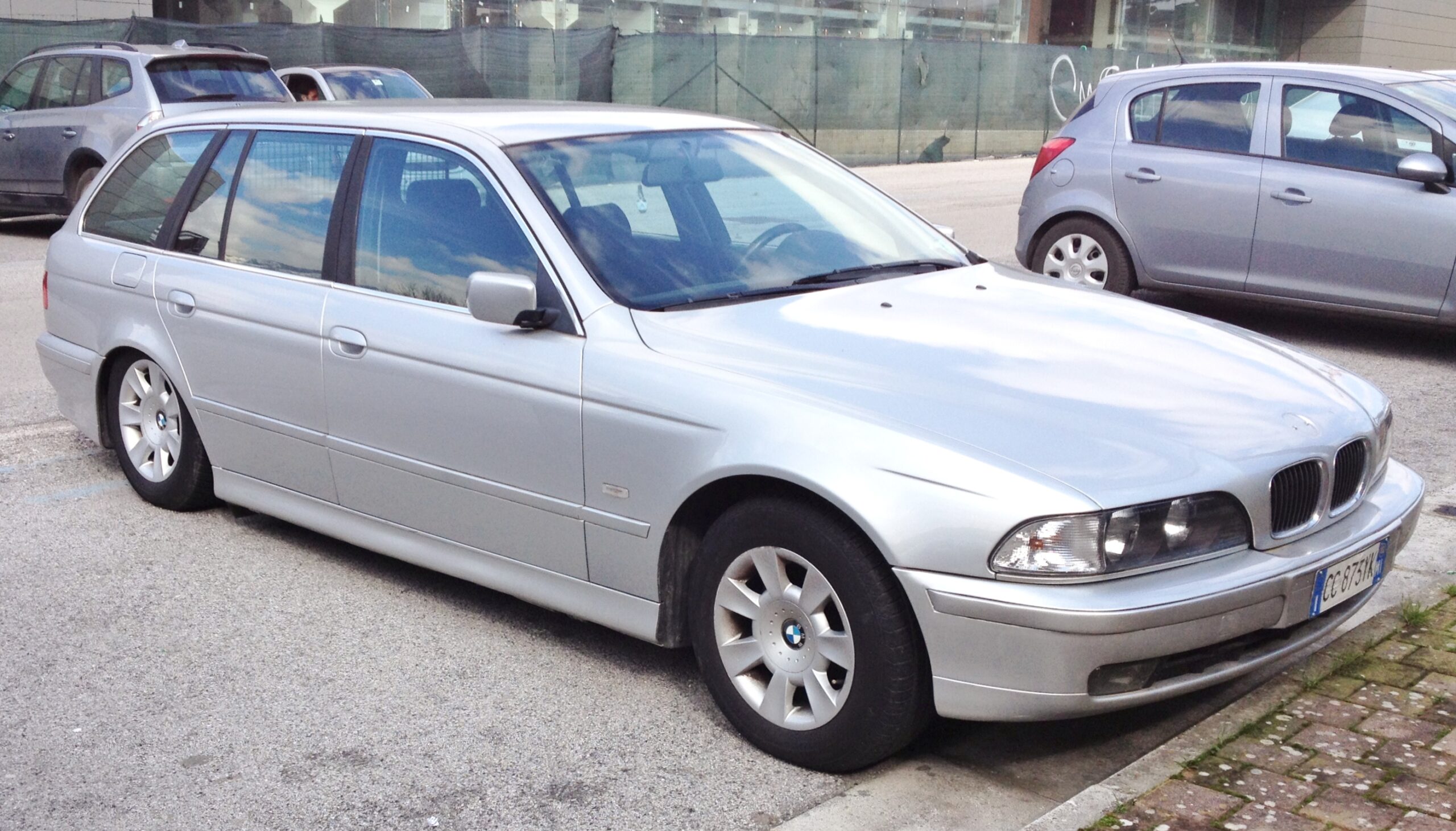
The Touring went into production from November 1996 and reached the market in March 1997. Distinguishing features are the L-shaped tail lights and the separately opening tailgate window, which allows small items to be loaded without swinging open the whole tailgate. The 528i, 530i and 540i Touring had self-levelling air suspension at the rear axle as standard. There was no M5 Touring in the E39 — that only returned with the E61.
05 · Motoren
Six-cylinders, V8s and the first common-rail 5 Series
From the 2.0-litre six-cylinder to the 5.0-litre V8 of the M5 — and in between the diesel that defined the model line in everyday use.
M52 and M52TÜ — 2.0 to 2.8 litres geprüft
The M52 launched in the 520i, 523i and 528i with 150, 170 and 193 PS: aluminium head, intake VANOS. With the Technical Update in September 1998 it became the M52TÜ with double VANOS, an electric coolant pump for the heating system, and revised crankcase ventilation. Rated outputs stayed the same, but peak torque now arrived earlier — at 3,500 instead of 3,950 rpm.
M54 — 2.2 to 3.0 litres geprüft
With the facelift in September 2000, the M54 replaced the M52TÜ, and the model designations shifted accordingly: 520i with 2.2 litres and 170 PS, 525i with 2.5 litres and 192 PS, and at the top the 530i with 2,979 cc and 231 PS. Double VANOS and electronic throttle are standard. The 530i reached 250 km/h, making it the fastest six-cylinder in the model line.
M62 and M62TÜ — V8 with 3.5 and 4.4 litres geprüft
The M62 debuted in 1996 in the 535i with 3,498 cc and 235 PS and in the 540i with 4,398 cc and 286 PS, both blocks made of aluminium. From September 1998, the Technical Update brought VANOS for the intake camshaft and an electronically controlled throttle: the 535i rose to 245 PS, the 540i kept its 286 PS but gained torque from 420 to 440 Nm.
S62 — the V8 in the M5 geprüft
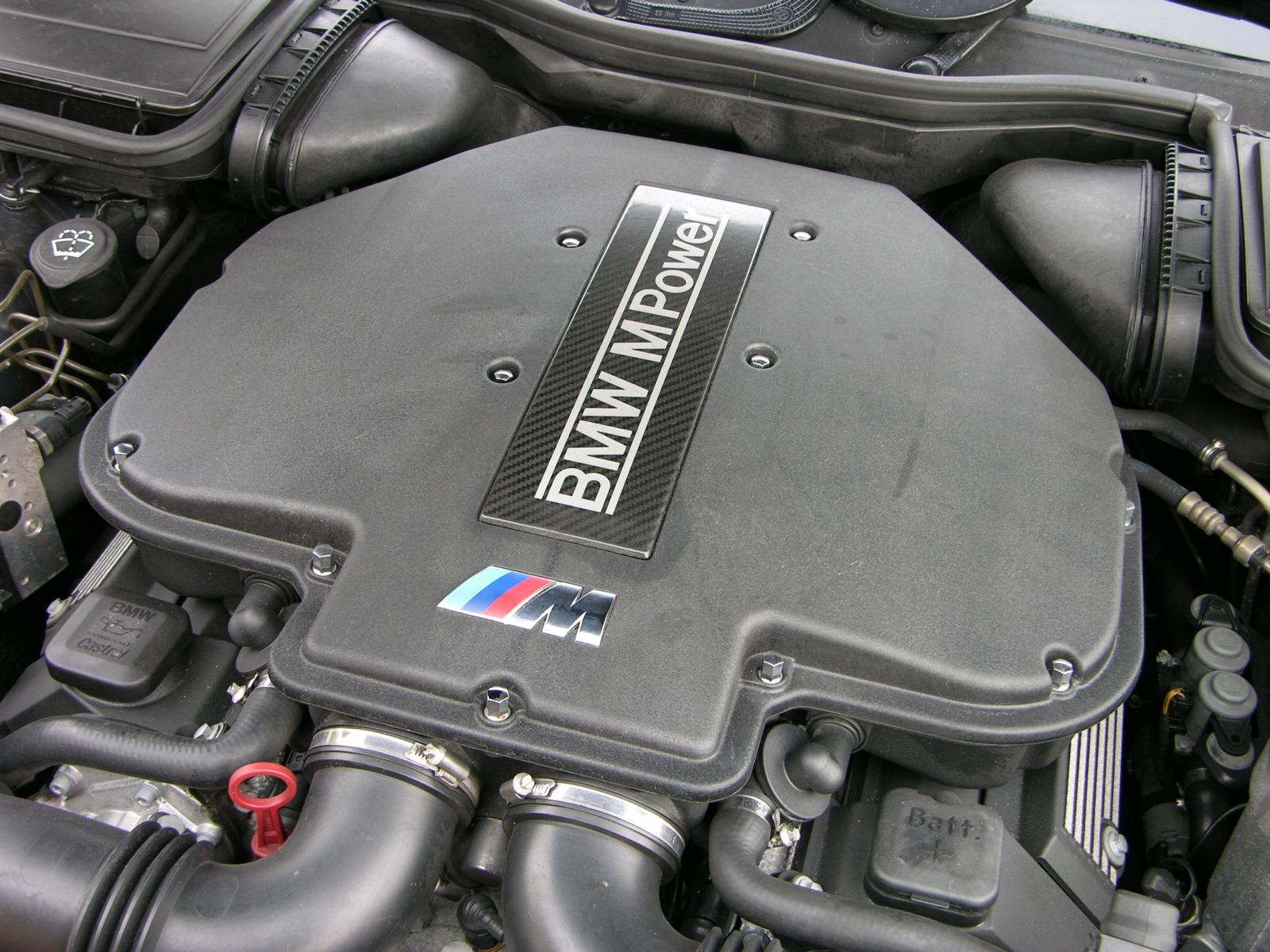
The S62B50 produces exactly 294 kW, or 400 PS, from 4,941 cc at 6,600 rpm and delivers 500 Nm at 3,800 rpm. Aluminium block and heads, electronically controlled individual throttle bodies, double VANOS, and an oil supply that delivers reliably even under sustained lateral acceleration. Six-speed gearbox from Getrag, top speed limited to 250 km/h.
M51 and M57 — the diesels geprüft
The older M51 with swirl chamber injection served from 1996 to 2000 in the 525td with 115 PS and the 525tds with 143 PS. In 1998, the M57 followed as the first common-rail six-cylinder in the 530d, initially with 184 PS and 390 Nm, from September 2000 with 193 PS and 410 Nm. In 2000, the four-cylinder 520d with 136 PS and the 525d with 163 PS were added.
Nikasil — what's true and what isn't geprüft
The Nikasil story concerns the M60, the predecessor V8 — and that was never fitted in the E39. With nickel-coated cylinder bores, high sulphur content in the fuel, especially in the US and UK, led to nickel sulphide forming at grain boundaries and subsequently to loss of compression. For the M62 used from 1996, auto motor und sport states that it uses Alusil and that the problem was thus resolved; the English Wikipedia is more cautious and states that some early M62 units still had Nikasil. The contradiction cannot be resolved from the accessible sources.
06 · Schwachstellen
Reliability & weak points
- The cooling system is the classic weak point: radiator, thermostat housing, expansion tank and water pump age, and a failure quickly ends with an overheated aluminium head. Don’t just check the condition — have the age of the parts verified.
- Loud ticking points to worn VANOS units. On the M54, chain rattle from chain tensioners and guide rails is reported from around 150,000 kilometres onwards; the V8s show similar timing chain problems at this mileage.
- The crankcase ventilation with oil separator is a wear item on the M52TÜ and M54. Blocked separators and porous hoses cause oil consumption and idling problems.
- Control arms, tie rods, track rods and rubber mounts wear out, especially at the rear from around 150,000 kilometres. A complete set of control arms costs around a thousand euros, porous power steering hoses a similar amount.
- Failed pixels in the instrument cluster’s on-board computer display and in the on-board monitor are so common that a dedicated repair market exists for them. Not a safety issue, but a bargaining point.
- Rust appears at the rear wheel arches, on the sills and jack points, on the front fenders, the lower door edges, and on the Touring at the tailgate. Broken jack points when lifting the car are a known nuisance.
07 · Technik
Suspension, brakes, steering, transmission
Fahrwerk
Bremsen
Lenkung
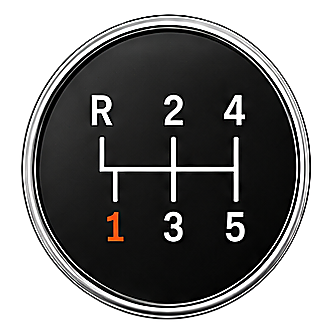
Getriebe
Technische Daten — Achsübersetzungen & Getriebe
- 520i, 523i, 525i, 528i, 530i
- five-speed manual gearbox standard, automatic available at extra cost
- 535i
- five-speed manual gearbox standard
- 540i
- six-speed manual gearbox standard, in Europe also available as a manual transmission
- M5
- six-speed manual gearbox from Getrag, no automatic
- 525td, 525tds, 520d, 525d, 530d
- five-speed manual gearbox standard
- Automatic
- from autumn 1998 with five gears and Steptronic, shift direction reversed with the 2000 facelift
- Steering four- and six-cylinder
- rack-and-pinion steering, first time in the 5 Series
- Steering V8
- recirculating ball steering as in previous generations
Axle ratios could not be verified for any engine variant from two independent sources and are therefore not listed. BMW Group Classic and the PressClub do not publish axle data for the E39.
The gearbox type designations (Getrag 250G, ZF 320Z, Getrag 420G, ZF 5HP19, ZF 5HP24) are only named by the English Wikipedia and are therefore only singly sourced.
For the M5, the English Wikipedia states a rear axle ratio of 3.15 with 25 percent limited-slip effect; a second independent source for this is lacking.
08 · Topmodelle
Topmodelle
The models that define the model line — each with its own subpage.
525i
From autumn 2000, M54B25 with double VANOS: 192 PS from an unchanged 2,494 cc. Successor to the 523i and one of the most-produced E39 models overall. Our subpage covers it under the Touring bodystyle.
Zur Unterseite →
530d
The first common-rail six-cylinder in a 5 Series: from 1998 with 184 PS and 390 Nm, after the facelift with 193 PS and 410 Nm. It combines range and torque with the handling of the six-cylinders and is regarded today as the most everyday-usable E39. As a Touring, it also comes with standard self-levelling suspension.
Zur Unterseite →
540i
With 4,398 cc and 286 PS, the most powerful production model below the M5, also available in Europe with a six-speed gearbox. After the 1998 Technical Update, torque rose to 440 Nm. Unlike the six-cylinders, it has recirculating ball steering and steel subframes — it drives both heavier and more confidently.
Zur Unterseite →
M5
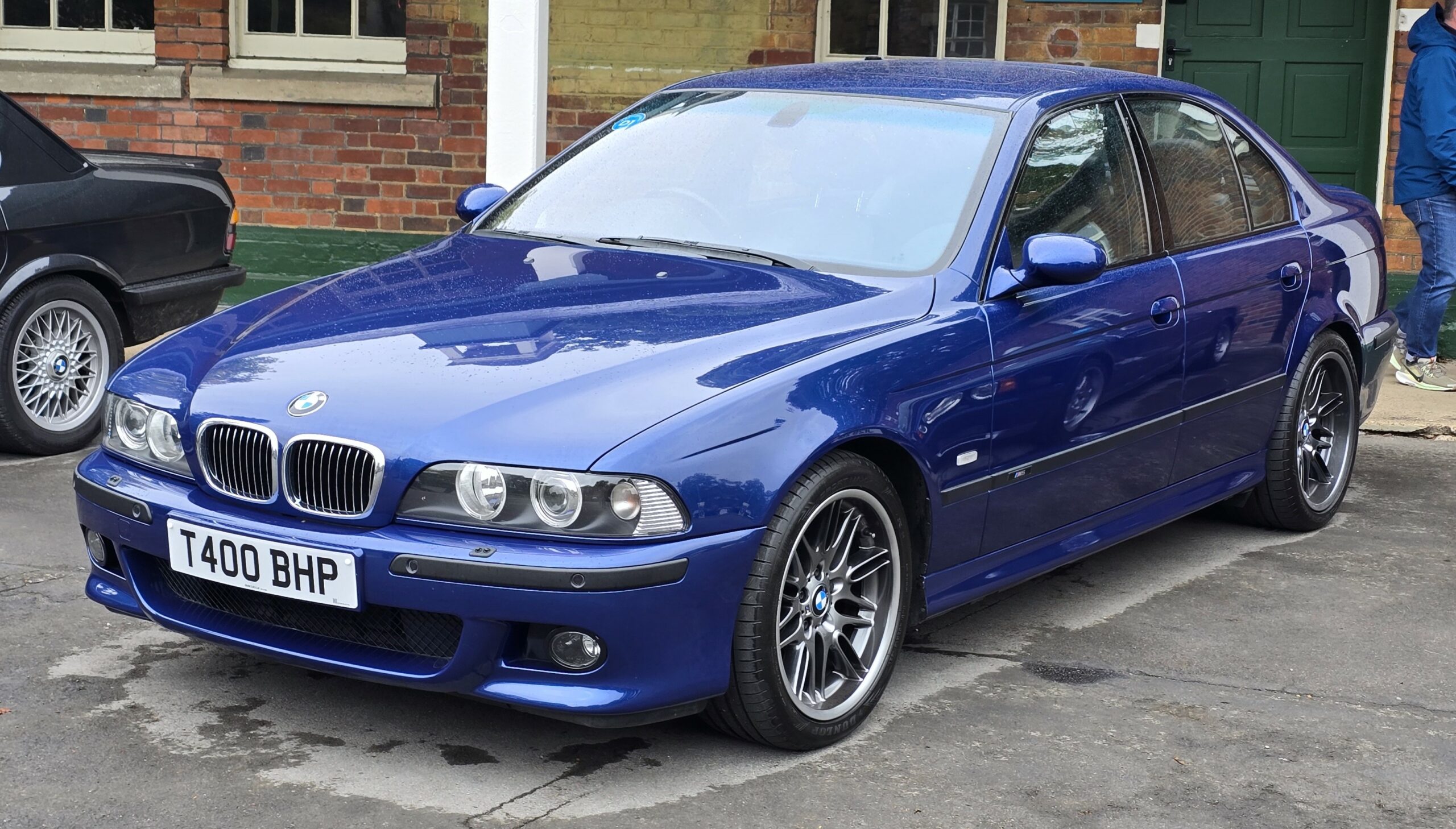
Built from October 1998 in Dingolfing on the same line as the production models. The S62 with 4,941 cc produces 294 kW, or 400 PS, and 500 Nm, paired with a six-speed gearbox. Around 20,500 units were built until June 2003, exclusively as a Sedan. At market launch, BMW asked 140,000 Marks.
Zur Unterseite →
09 · Kaufberatung
What matters: substance, cooling system, history
The E39 is no longer a cheap car, but it is a well-documented one. Substance determines everything else: a cheap car with rust in structural areas will end up costing more than an expensive car with a complete history.
Rear wheel arches, inside and out, including the seams
Sills and jack points — the jack points can break when lifting
Tailgate, on the Touring around the window frame and handle strip
Front fenders and lower door edges
Cooling system: have the age of the radiator, thermostat housing, expansion tank and water pump verified
Suspension: check control arms, tie rods, track rods and rear rubber mounts for play, power steering hoses for porosity
Proceed in a fixed order. First the body on the lift, because rust on the sills and jack points determines whether to buy or walk away. Then the history: have the cooling system and, for automatics, the transmission fluid changes documented in writing. Only after that the test drive — start cold and listen for VANOS ticking and chain rattle, and during warm-up watch coolant temperature and oil consumption. Check the suspension for clunking, the steering for play; with the V8’s recirculating ball steering, somewhat more tolerance is normal than with the six-cylinders’ rack-and-pinion. Pixel errors in the instrument cluster and on-board monitor are repairable and serve as a bargaining point, not a reason for exclusion. The safest buys are the 530d and the 528i or 530i; the 540i and M5 demand a maintenance budget close to the purchase price. A car with a complete history and higher mileage is always preferable to an apparent bargain without paperwork.
10 · Die Konkurrenz
The competition
Mercedes-Benz E-Class (W210)
The direct rival, built from 1995 to 2003 and, with 1,653,437 units, even produced in higher numbers than the E39. The 1999 facelift covered more than 1,800 modified components. The W210 has a considerably worse reputation for corrosion — all model years were affected, which Mercedes had to offset with goodwill for years.
Audi A6 (C5)
From mid-1997, the Avant from 1998, and from 1999 also the allroad quattro. Longitudinally mounted front engine with front- or all-wheel drive, positioned on interior quality and quattro rather than rear-wheel drive. At the top, the 4.2-litre V8 with 300 PS, and from 2002 the RS6 with 450 PS — more rated output than the M5, but a different character.
Jaguar S-Type
From 1999, Ford's attempt to break into this segment with a retro sedan on the DEW98 platform. Rear-wheel drive and V6 as well as V8 engines were present, but in build quality and handling it fell behind the E39 and W210. It mattered more for the brand than for the market.
11 · Galerie
Bilder
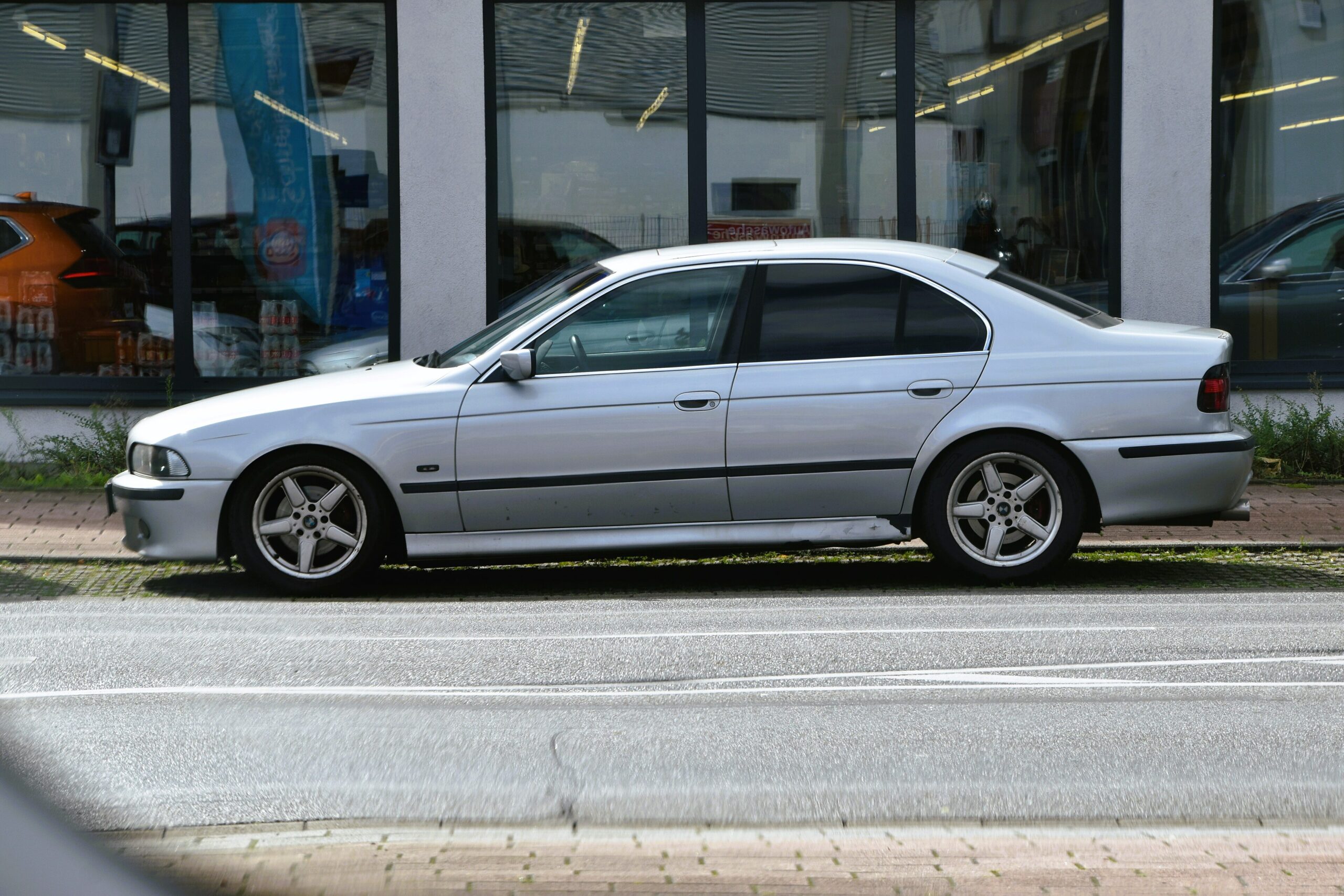
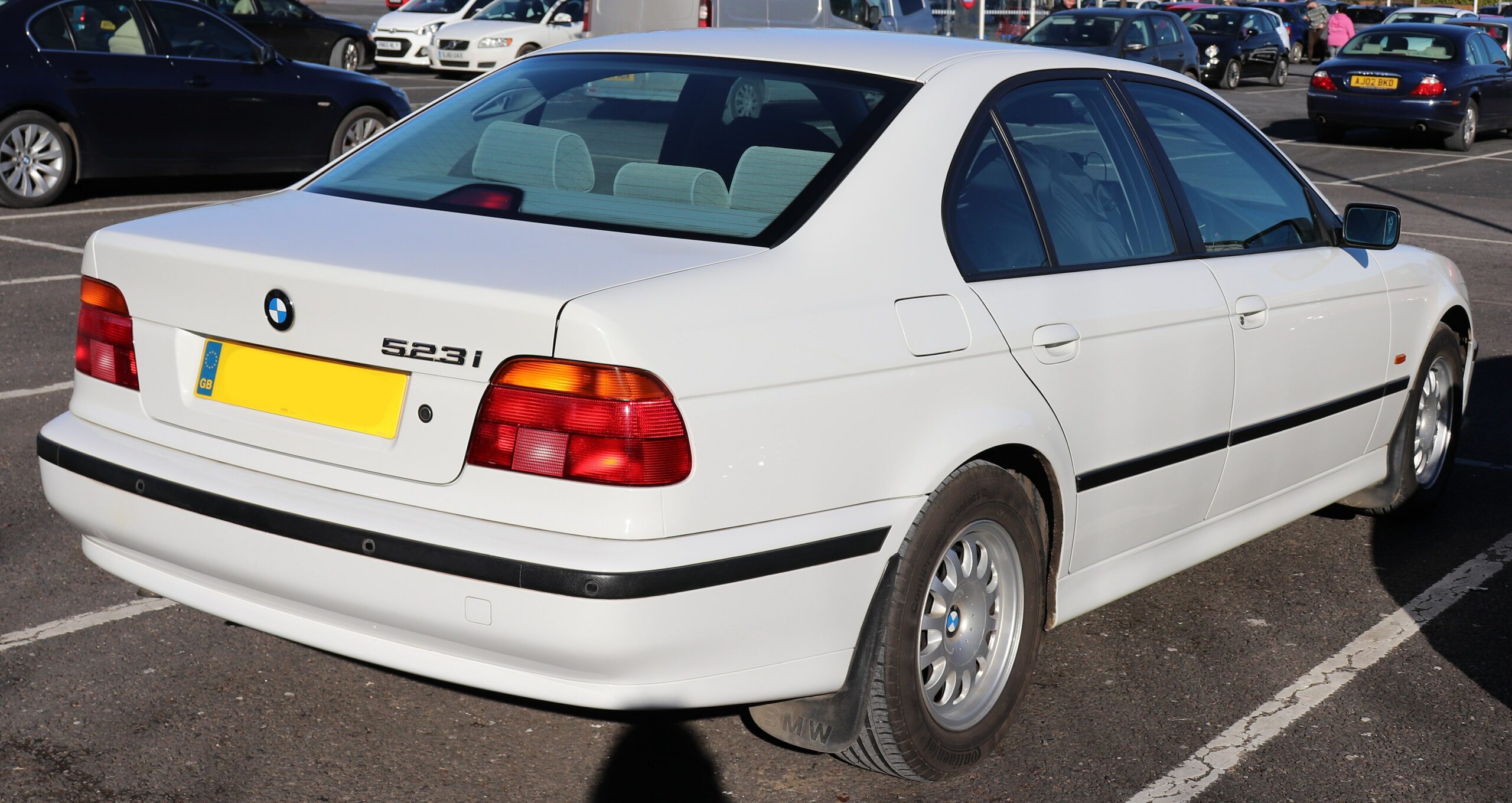
Sedan before and after the facelift, Touring, M5, and the details that distinguish the model years.




Andere BMW 5er Generationen
5 Baureihen mit E-Nummer, von 1972 bis 2010.

12 · Quellen
Belege & Literatur
Primary sources are BMW Group Classic, the BMW PressClub, and Wikipedia; everything else is only considered verified once two independent sources agree. Three points are deliberately left open: the exact production figure (BMW states "more than 1.47 million" and "just under 1.5 million", the English Wikipedia 1,488,038), the question of whether early M62 units still had Nikasil, and the M5's acceleration time, for which the three primary sources give three different figures — 5.3, 4.8 and 4.7 seconds. A change of steering gear with the 2000 facelift could not be verified and is therefore not claimed here.
- BMW Group Classic — BMW 5 Series model line (E39)
- BMW Group Classic — BMW M5 (E39)
- BMW PressClub — Tradition under the sign of the 5: The model generations of the BMW 5 Series
- BMW PressClub — The BMW M Story. 40 Years of BMW M GmbH
- Wikipedia (DE) — BMW E39
- Wikipedia (EN) — BMW 5 Series (E39)
- Wikipedia (EN) — BMW M5, BMW M60, BMW M62
- Wikipedia (DE) — BMW M62 and BMW M60
- auto motor und sport — BMW V8 engines: M60 and M62 compared
- auto motor und sport — BMW M5 (E39), driving report and buying guide
- motor1.de — BMW 5 Series (E39) 1995–2004: Future classic?
- mobile.de Magazine — BMW 5 Series E39, used car tip
- Wikipedia (EN) — Mercedes-Benz E-Class (W210) and Audi A6
- Wikipedia (EN) — The Hire