

01 · Überblick
The 3 Series that defined the brand
The E30 replaced the E21 in 1982 and defined what a compact BMW should be for a decade: rear-wheel drive, balanced, and taken seriously in every trim level from the economical 316 to the uncompromising M3. Until 1994, it was built as a Sedan, Touring, Convertible, and Baur top convertible.
Today, the E30 is a cornerstone of the youngtimer scene — robust, well supplied with parts, and mechanically comprehensible. This page provides a complete overview: models, engineering, motorsport, buying & market, and technical data sheets.

02 · Historie
Twelve years of model updates
From its launch as a two-door Sedan to the end of Convertible production, the production run spanned two model updates. The key milestones:
- 1982 Market launch as a two-door Sedan (316, 318i, 320i, 323i).
- 1983 Four-door Sedan; 323i as the sporty six-cylinder flagship.
- 1985 M3 introduced (S14); 325i replaces 323i, all-wheel-drive 325iX follows.
- 1987 Model update: revised front and rear, new four-cylinder M40.
- 1988 Touring concept goes into production; Convertible becomes established.
- 1990 M3 Sport Evolution (2.5 l, 238 PS) as the homologation highlight.
- 1994 End of production — Touring and Convertible are the last off the line.
03 · Modellübersicht
From the 316 to the M3
Over the entire production run, the line-up ranged from the economical four-cylinder 316 to the 238 PS M3 Sport Evolution.
Quelle: Werks- und Literaturangaben · geprüft
Technische Daten anzeigen — komplette Modellmatrix
| Modell | Motor | Hubraum | Leistung | Bauzeit |
|---|---|---|---|---|
| 316 | M10B18, carburettor | 1.766 cm³ | 90 PS (66 kW) | 1982–1988 |
| 316i | M10B18 with fuel injection | 1.766 cm³ | 102 PS (75 kW) | 1987–1988 |
| 316i | M40B16 | 1.596 cm³ | 100 PS (73 kW) | 1988–1994 |
| 318i | M10 / M40 | 1,8 l | 102–113 PS | 1982–1993 |
| 318is | M42 | 1,8 l 16V | 136 PS | 1989–1991 |
| 320i | M20 | 2,0 l R6 | 125–129 PS | 1982–1991 |
| 323i | M20 | 2,3 l R6 | 139–150 PS | 1982–1985 |
| 325e | M20 "eta" | 2,7 l R6 | 122–129 PS | 1983–1988 |
| 325i / iX | M20 | 2,5 l R6 | 170 PS | 1985–1991 |
| 320is | S14 | 2,0 l 16V | 192 PS | 1987–1990 |
| M3 / Sport Evo | S14 | 2,3–2,5 l 16V | 195–238 PS | 1986–1991 |
04 · Karosserievarianten
Karosserievarianten
Limousine
2- and 4-door; the classic volume model of the model line.
Touring
Touring from 1987 — particularly sought-after today.
Cabrio
Full convertible with retractable soft top; built until 1994.
Baur TC
Targa and top convertible conversion with roll bar.
05 · Motoren
Four- and six-cylinder, 90 to over 230 PS
The engine line-up ranges from the frugal four-cylinder M10 to the smooth-running small sixes of the M20 series to the high-revving S14 in the M3. Three engines are presented here as representatives: the M42 from the 318is as BMW’s first four-cylinder with chain drive and two camshafts, the M20 as the bread-and-butter six-cylinder, and the S14 as the engine after which this page is named.
M42B18 — 318is geprüft
BMW's first four-cylinder with two chain-driven overhead camshafts and hydraulic valve clearance compensation. Its predecessor, the M40, still had a timing belt — the M42 came with a double roller chain. It debuted in 1989 in the 318is, which was only available as a two-door, and turned the entry-level 3 Series into a serious driver's car. A known weak point of early engines is the profile gasket between the lower timing chain case and the underside of the cylinder head: if it leaks, coolant enters the chain case.
Technische Daten anzeigen
| Bauart | R4, DOHC, 16V |
| Hubraum | 1.796 cm³ |
| Bore × stroke | 84,0 × 81,0 mm |
| Verdichtung | 10,0:1 |
| Leistung | 100 kW / 136 PS at 6,000 rpm |
| Drehmoment | 172 Nm at 4,600 rpm |
| Ventiltrieb | double roller chain, hydraulic valve clearance compensation |
| Gemischaufbereitung | Intake manifold injection, Bosch Motronic M 1.7 |
| Production period in the E30 | 1989–1991 |
Sources: BMW Group Classic (318is E30) as well as Wikipedia DE and EN (BMW M42, BMW M40). Only Wikipedia states the torque figure — BMW does not list one for the M42.
M20B25 — 325i / 325e geprüft
The smooth-running small six-cylinder is the heart of the upper-range E30 — cultivated, durable, and for many the ideal bread-and-butter engine.
Technische Daten anzeigen
| Bauart | R6, SOHC, 12V |
| Hubraum | 2.494 cm³ |
| Bore × stroke | 84,0 × 75,0 mm |
| Gemischaufbereitung | Bosch Motronic |
| Leistung | 125 kW / 170 PS (325i) |
Source: factory data · individual values unverified.
S14 — M3 and 320is geprüft
The engine after which this page is named. The cylinder block comes from the mass-production four-cylinder, the cylinder head from the M88 six-cylinder in the M1 — this was possible because both share the same 100 millimetre cylinder spacing. Paul Rosche himself described the origin: two combustion chambers were sawn off the M88's four-valve head and a plate was bolted over the hole at the rear. Important for accuracy: that was the test mule. The production heads followed this concept but are not the shortened component itself. BMW cites low weight and high rev capability as the reason for the four-cylinder — the longer crankshaft of a six-cylinder begins to vibrate sooner at high revs.
Technische Daten anzeigen
| Bauart | R4, DOHC, 16V, duplex chain, five-bearing crankshaft |
| Gemischaufbereitung | Intake manifold injection with individual throttle bodies, Bosch Motronic |
| Displacement S14B23 | 2,302 cm³ · bore × stroke 93.4 × 84.0 mm |
| Displacement S14B25 (Sport Evolution) | 2.467 cm³ |
| Displacement S14B20 (320is) | 1.990 cm³ |
| Verdichtung | 10.5:1 in standard production, 11.0:1 in the Evolution II |
| M3 with catalytic converter | 143 kW / 195 PS at 6,750 rpm |
| M3 without catalytic converter | 147 kW / 200 PS at 6,750 rpm · 240 Nm at 4,750 rpm |
| M3 from September 1989 | 158 kW / 215 PS at 6,750 rpm |
| M3 Evolution II | 162 kW / 220 PS at 6,750 rpm |
| M3 Sport Evolution | 175 kW / 238 PS at 7,000 rpm · 240 Nm at 4,750 rpm |
| 320is (Italy and Portugal) | 141 kW / 192 PS at 6,900 rpm |
| Stückzahlen | Evolution 505, Evolution II 500, Sport Evolution 600, Convertible 786 · M3 total 17,970 up to the end of 1991 |
Sources: BMW Group Classic (M3 E30, Evolution II, Sport Evolution, Convertible, 320is), BMW PressClub (20 and 30 years of the BMW M3), bmw-m.com (Legendary Engines, with the Rosche quote), Wikipedia DE and EN. Not listed because they cannot be confirmed by two sources: the compression ratio of the Sport Evolution (10.2:1 versus 11.0:1), the torque of the Evolution II (240 versus 245 Nm), the Motronic version, and the rev limit. The 10,000 rpm figure cited in BMW press materials describes the load capacity of the crank assembly, not the rev limit of the production engine. The English Wikipedia derives the head from the S38 — BMW's own sources unanimously cite the M88.
06 · Schwachstellen
Reliability & weak points
- Uncomplicated: M20 (320i/325i) and M40 are considered robust; parts are readily available.
- Watch the timing belt: M20 and M40/M42 use belt drives — observe the interval, or risk major damage.
- Typical oil leaks: valve cover and front cover gaskets; on the M20 often the oil cooler and sender area.
- It gets expensive with the S14 (M3): special parts, adjustment work, high spare parts prices — a service history is essential.
07 · Technik
Suspension, drivetrain, brakes, electrics
Fahrwerk
Antrieb
Bremsen
Elektrik
Technische Daten — Achsübersetzungen & Getriebe
- Transmission 316 and 318i with M10
- Getrag 242 four-speed as standard, Getrag 240 five-speed optional, ZF automatic at extra cost
- Transmission 316i, 318i with M40 and 318is
- Getrag 240 five-speed
- Transmission 320i
- Getrag 240 five-speed, ZF 3HP22 three-speed automatic
- Transmission 323i, 325e, 325i and 325ix
- Getrag 260 five-speed, ZF 4HP22 four-speed automatic
- Transmission M3
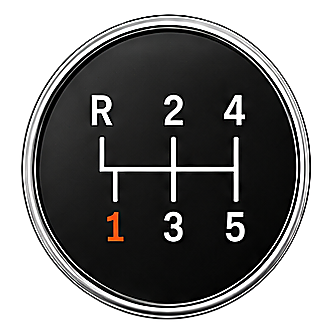
- Getrag five-speed gearbox — in Europe with dogleg shift pattern, close ratios and a direct fifth gear, in the USA with H-pattern and overdrive
- Gear ratios M3 Europe
- 3.72 / 2.40 / 1.77 / 1.26 / 1.00, reverse gear 4.23
- Gear ratios M3 USA
- 3.83 / 2.20 / 1.40 / 1.00 / 0.81, reverse gear 3.46
- Final drive ratio M3 Europe
- 3.25 with limited-slip differential, 25 percent lock value
- Final drive ratio M3 USA
- 4.10
- Final drive ratio M3 Evolution II
- 3.15
- The M3's gearbox type is also disputed
- Wikipedia names the Getrag 265 for all markets, other sources the Getrag 260 for the USA.
The final drive ratios of the standard production models are not reliable: for the 325i, 3.73, 3.64, 3.46 and 3.25 are all cited alongside one another, for the 325e 3.64 versus 2.79 and 2.93. No leading source publishes an E30 final drive table, so only figures confirmed by two sources are listed here.
08 · Topmodelle
Topmodelle
Each of these models gets its own subpage. Here are the short profiles.
318is
Light 16V four-cylinder (M42), 136 PS — agile and eager to rev, the entry point into the sporty E30s.
Zur Unterseite →
325i
The balanced six-cylinder — for many the best bread-and-butter flagship of the model line.
Zur Unterseite →
320is
Special model for Italy and Portugal with the S14 reduced to 2.0 litres — the "little M3".
Zur Unterseite →
M3
The homologation basis for Group A: S14 with 2.3 litres, a distinct body with wide fenders and a flatter rear window. The most successful touring car of its era.
Zur Unterseite →
09 · M & Sondermodelle
Homologation with consequences
The M3 was created to homologate the E30 for touring car racing — and became an icon. Through the Evolution, Evolution II, up to the Sport Evolution (2.5 l) and editions such as the Cecotto and Ravaglia, power and aerodynamics grew progressively. Detailed engineering specifications and production numbers follow on the M3 subpage.

10 · Motorsport
Group A, DTM and the touring car era
With the M3, the E30 dominated Group A touring car racing in the late 1980s — from the DTM through the ETCC and WTCC to numerous national championships. To this day, it remains a fixture in historic racing series.
The most successful touring car of its era — and a car you can still drive today.
11 · Kaufberatung
What matters: rust first
Typical rust zones on the E30 — as a checklist rather than a fabricated photo:
Front strut towers (engine bay)
Sills and jacking points
Boot floor & spare wheel well
Rear wheel arches and end sections
A-pillar / windscreen frame
Battery tray and side members
Check the chassis number and match equipment and model year. For M models, a complete history is decisive for the purchase.
12 · Markt & Werte
Wertentwicklung
Reliable market data will be added separately — deliberately no fabricated figures or value index appear here.
Preisentwicklung
Für diese Baureihe liegen 20 dokumentierte Auktionsergebnisse vor.
Die Preisentwicklung ist nur für angemeldete Nutzer sichtbar.
13 · Die Konkurrenz
What the E30 had to measure up against
Mercedes 190 (W201)
The "Baby-Benz" — a solid, comfort-focused counterpart; 190E 2.3-16 as the M3's rival.
Audi 80
Front-wheel drive, later quattro; a rational engineering approach.
Alfa Romeo 75
Transaxle, character — the emotional alternative.
Saab 900
Idiosyncratic, safe, turbo tradition.
Volvo 240
The indestructible pragmatist.
Ford Sierra
From economy Touring to Cosworth — a wide range.
Opel Ascona
Volume mid-range model, Ascona 400 in motorsport.
Andere BMW 3er Generationen
5 Baureihen mit E-Nummer, von 1975 bis 2013.
14 · Quellen
Belege & Literatur
Transparency is part of the product. Data is marked with its source and test method. On the 316i: the output of the M40B16 is usually given as 100 PS, one parts catalogue states 102 PS. We follow the majority. The early 316i from 1987/88, by contrast, still carries the injected M10 with 102 PS — the same designation, two different engines.
- BMW AG — factory and press kits (references to follow)
- Contemporary trade press and brochures (to be licensed)
- The editorial team's own measurements and workshop data
- Community and register data — marked as unverified only
- 7-forum.com — Technical data BMW M3 (E30) 1985 to 1991
- m3-klassik.de — Data sheet BMW M3 (E30) with gear and final drive ratios