

01 · Überblick
A technology demonstrator that went into series production
The Z1 was not planned as a product. The BMW Technik GmbH, founded in 1985, was meant to work free of series production deadlines and develop solutions for the future — the Z in the name stands for Zukunft, German for ‘future’. Under Ulrich Bez, a rolling test vehicle emerged, containing so many new ideas that BMW showed it at the IAA in September 1987. The reaction was so intense that the demonstrator became a limited series.
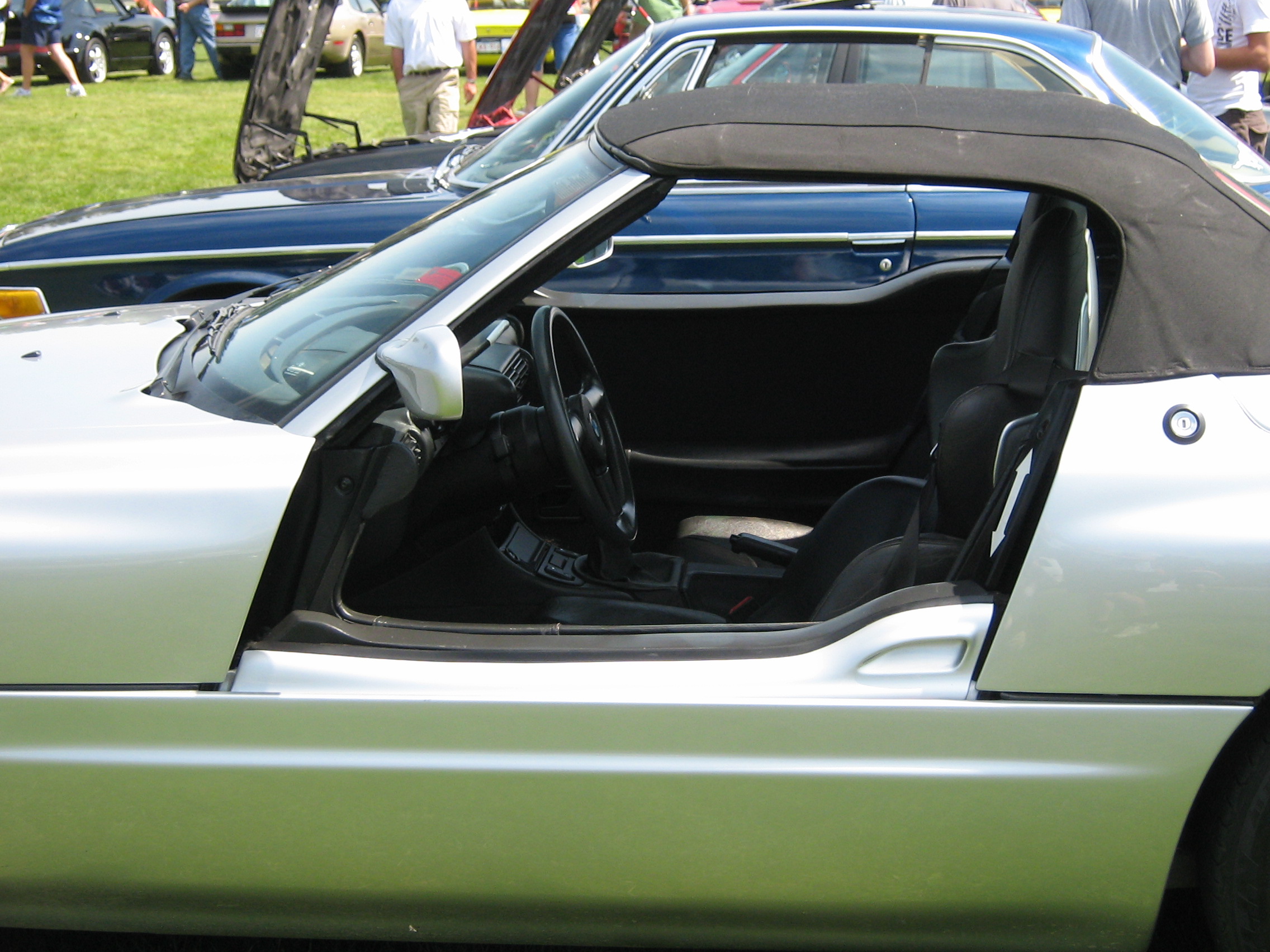
Under the plastic skin sits technology from the E30: the six-cylinder M20B25 with 170 PS, the Getrag gearbox, the front axle. The factory code is accordingly E30 (Z). New are the steel chassis hot-dip galvanised as a single unit, the smooth underbody with diffuser effect, the central-arm rear axle — and the doors, which retract electrically into the sills.
Built by hand, initially no more than six cars a day. After 8,000 units, production ended in June 1991. The Z1 was never a fast sports car: 170 PS for 1,250 kilograms is enough for 225 km/h. It was never intended as one either.
02 · Historie
From think tank to series production
The origin story in seven stages.
- 1985 BMW founds BMW Technik GmbH in Munich. Around a hundred employees are to work on vehicle concepts free of series production deadlines. Head of the division is Ulrich Bez.
- 1986 The first drivable prototype is built. Harm Lagaay is responsible for the design.
- 1987 Unveiled at the IAA in Frankfurt in September. The car is declared a technology demonstrator, not a production model.
- 1988 Following high demand, BMW decides on a limited series. Pre-production cars are built; sources date the start differently.
- 1989 Series production by hand, initially no more than six cars a day. Sale price around 80,000 marks.
- 1990 Alpina launches the Roadster Limited Edition: 2,693 cm³, 200 PS, 116,000 marks.
- 1991 The last Z1 rolls off the line in June. 8,000 vehicles in total.
03 · Modellübersicht
Z1 and Alpina RLE
Two variants, no more than that. The unit count for the Alpina RLE comes from Alpina literature and is not confirmed by the factory.
Technische Daten anzeigen — komplette Modellmatrix
| Modell | Motor | Hubraum | Leistung | Bauzeit |
|---|---|---|---|---|
| BMW Z1 | M20B25 | 2.494 cm³ | 170 PS (125 kW) | 1989–1991, 8,000 units |
| BMW Alpina RLE | Alpina C2/6 | 2.693 cm³ | 200 PS (147 kW) | 1990–1991, 66 units |
04 · Karosserievarianten
Karosserievarianten
Roadster

There was only one body: the two-seat roadster with a soft top. The non-load-bearing exterior panels made of thermoplastic are bolted to the chassis and can be removed. This makes a complete change of the outer skin possible — BMW spoke of theoretically under an hour.
05 · Motoren
The M20B25
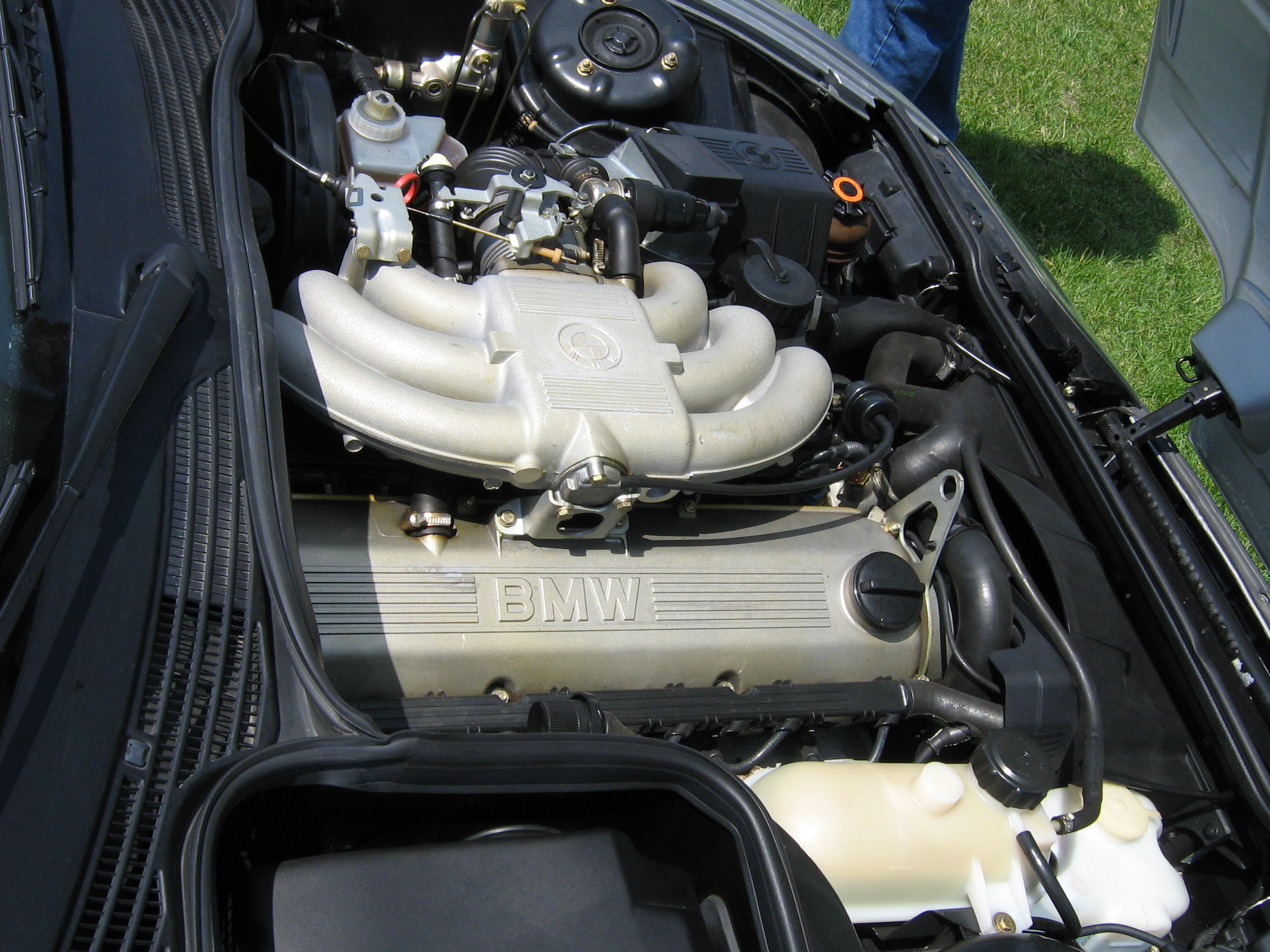
Not a bespoke engine, but the familiar small six-cylinder from the 325i — however mounted entirely behind the front axle.
M20B25 · 2.494 cm³ · 170 PS geprüft
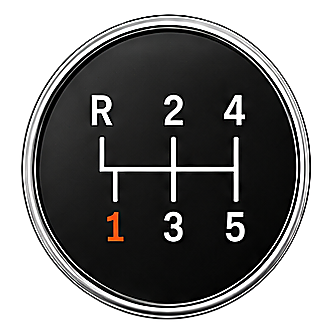
Bore 84.0 mm, stroke 75.0 mm, compression 8.8:1. 170 PS at 5,800/min and 222 Nm at 4,300/min. Bosch Motronic with regulated catalytic converter. The engine sits entirely behind the front axle, giving a weight distribution close to 50:50. Power is transmitted via a Getrag five-speed gearbox to the rear axle. A limited-slip differential was not part of the standard equipment — anyone who finds one in the car has a retrofitted unit.
Technische Daten anzeigen
| Bauart | Inline six-cylinder M20, two valves per cylinder, overhead camshaft, timing belt drive |
| Einbaulage | longitudinal, entirely behind the front axle (front-mid engine) |
| Hubraum | 2.494 cm³ |
| Bore × stroke | 84,0 × 75,0 mm |
| Verdichtung | 8,8:1 |
| Leistung | 125 kW (170 PS) at 5,800/min |
| Drehmoment | 222 Nm at 4,300/min |
| Gemischaufbereitung | Bosch Motronic, regulated catalytic converter |
| Getriebe | Getrag five-speed gearbox, final drive ratio 3.64:1 |
| Höchstgeschwindigkeit | 225 km/h |
| 0–100 km/h | 7,9 s |
| Verbrauch | 9.2 l/100 km per standard rating, Super 91 RON |
Wikipedia DE data table on the BMW Z1, cross-checked with M20 factory data
Alpina C2/6 · 2,693 cm³ · 200 PS plausibel
For the Roadster Limited Edition, Alpina bored out the M20 to 2,693 cm³: 84.0 mm bore at 81.0 mm stroke. 200 PS at 6,000/min and 261 Nm at 4,900/min, 231 km/h, 0 to 100 in 7.1 seconds. The surcharge was considerable — 116,000 marks compared to around 80,000 for the series Z1. The circulating figure of 66 cars comes from Alpina literature and is not confirmed by the factory.
Technische Daten anzeigen
| Hubraum | 2.693 cm³ |
| Bore × stroke | 84,0 × 81,0 mm |
| Leistung | 147 kW (200 PS) at 6,000/min |
| Drehmoment | 261 Nm at 4,900/min |
| Höchstgeschwindigkeit | 231 km/h |
| 0–100 km/h | 7,1 s |
| Verbrauch | 10.5 l/100 km per standard rating, Super 91 RON |
| Sale price 1989 | 116.000 DM |
Wikipedia DE data table on the BMW Z1, BMW-Alpina RLE column
06 · Schwachstellen
Reliability & Weak Points
- The door mechanism is the most elaborate component on the car. Timing belts, pulleys and electric motors wear out, and moisture in the sill accelerates this. A door that sticks or does not close fully is a cost item, not a detail.
- The plastic panels do not warp, but the paint on them reacts differently than on sheet metal. Stress cracks and differing gloss between the flaps and side panels are typical and not accident damage.
- The M20’s timing belt is a maintenance item with a fixed interval. If it is missed, engine damage is the result.
- The electrics around door control and soft top are a bespoke design. Parts for this do not come from the E30 shelf and are correspondingly harder to source.
07 · Technik
Chassis
Außenhaut
Türen
Aerodynamics and Suspension
The Six Paint Finishes
Contradictions in the Sources
Technische Daten — Achsübersetzungen & Getriebe
- Length
- 3,921 mm
- Width
- 1,690 mm
- Height
- 1,277 mm
- Wheelbase
- 2,400 mm
- Kerb weight
- 1,250 kg
- Fuel tank capacity
- 58 litres
- Gearbox
- Getrag five-speed gearbox
- Final drive ratio
- 3.64:1
- Limited-slip differential
- not available
- Front axle
- struts with wishbones, based on E30
- Rear axle
- central-arm axle, so-called Z-axle
- Brakes front
- 260 mm, internally vented
- Brakes rear
- 258 mm, solid
- Chassis
- steel sheet, hot-dip galvanised as a single unit
- Outer skin
- thermoplastic, bolted; flaps made of GRP
08 · BMW Technik GmbH
The department that invented the Z1
The BMW Technik GmbH was founded in 1985 as a subsidiary and deliberately located outside series development: its own site, its own budget, no model deadlines. Around a hundred people were to build concepts, not sell cars.
The Z1 was the first project to leave this workshop. Much of it remained within the group: the central-arm axle found its way into the E36, the hot-dip galvanised chassis became standard. And the Z became part of the name of an entire model range — Z3, Z4, Z8.

09 · Kaufberatung
What matters: the doors
With 8,000 cars built, the Z1 is not a rare car, but a technically idiosyncratic one. Condition hinges on three points: door mechanism, sills, soft top. The engine is the least problematic part.
Run both doors fully open and closed several times. Juddering, delayed movement or a stop that is not reached cleanly indicates the timing belt or pulley system. This is the most expensive point on the car.
Check the interior of the sills. Water collects there if the drain channels are blocked — and that is where the door mechanism runs.
The chassis is hot-dip galvanised and hardly rusts. Where the galvanising has been damaged, after accidents or at re-drilled holes, it goes fast, however. Look closely at repair points on the chassis.
Check the soft top and soft-top compartment. Replacement tops are available, but expensive.
Ask for proof of the last timing belt change. Without evidence, the change should be factored into the price.
The order is: first the doors, then the chassis, then the engine. Anyone who skimps on the door mechanism on a Z1 pays double later.
10 · Die Konkurrenz
The Competition
Porsche 944 S2 Cabriolet
From 1989, in a similar price range and, with 211 PS, clearly faster. Conventionally built — and precisely for that reason the more pragmatic sports car.
Mercedes-Benz SL (R129)
From 1989, the new benchmark for open-top cars: roll bar, hardtop, a lot of weight, a lot of comfort. The counter-design to the Z1 in every respect.
Mazda MX-5 (NA)
Launched at the same time, for a third of the price. The MX-5 met the market that the Z1 never intended to serve.
11 · Galerie
Bilder
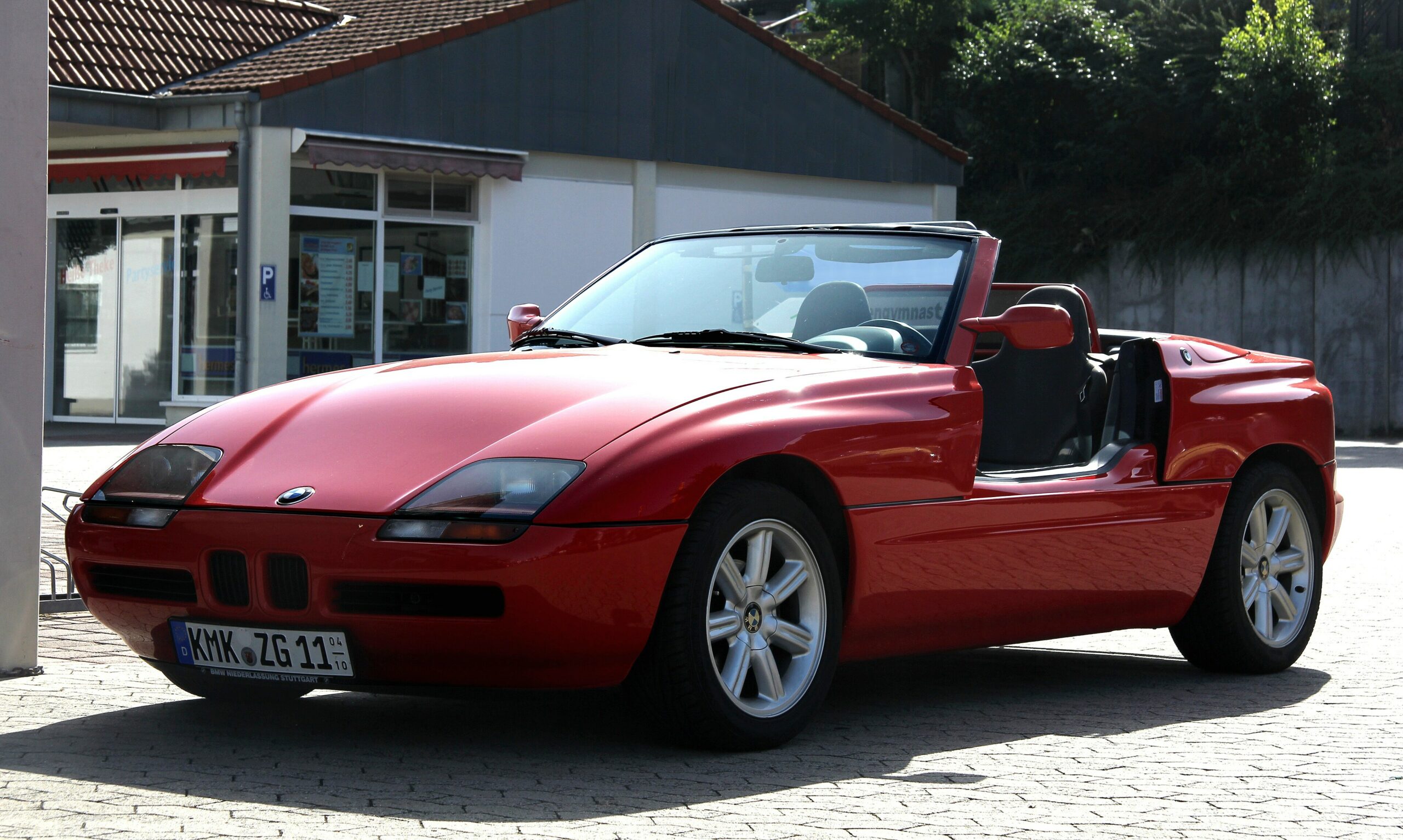
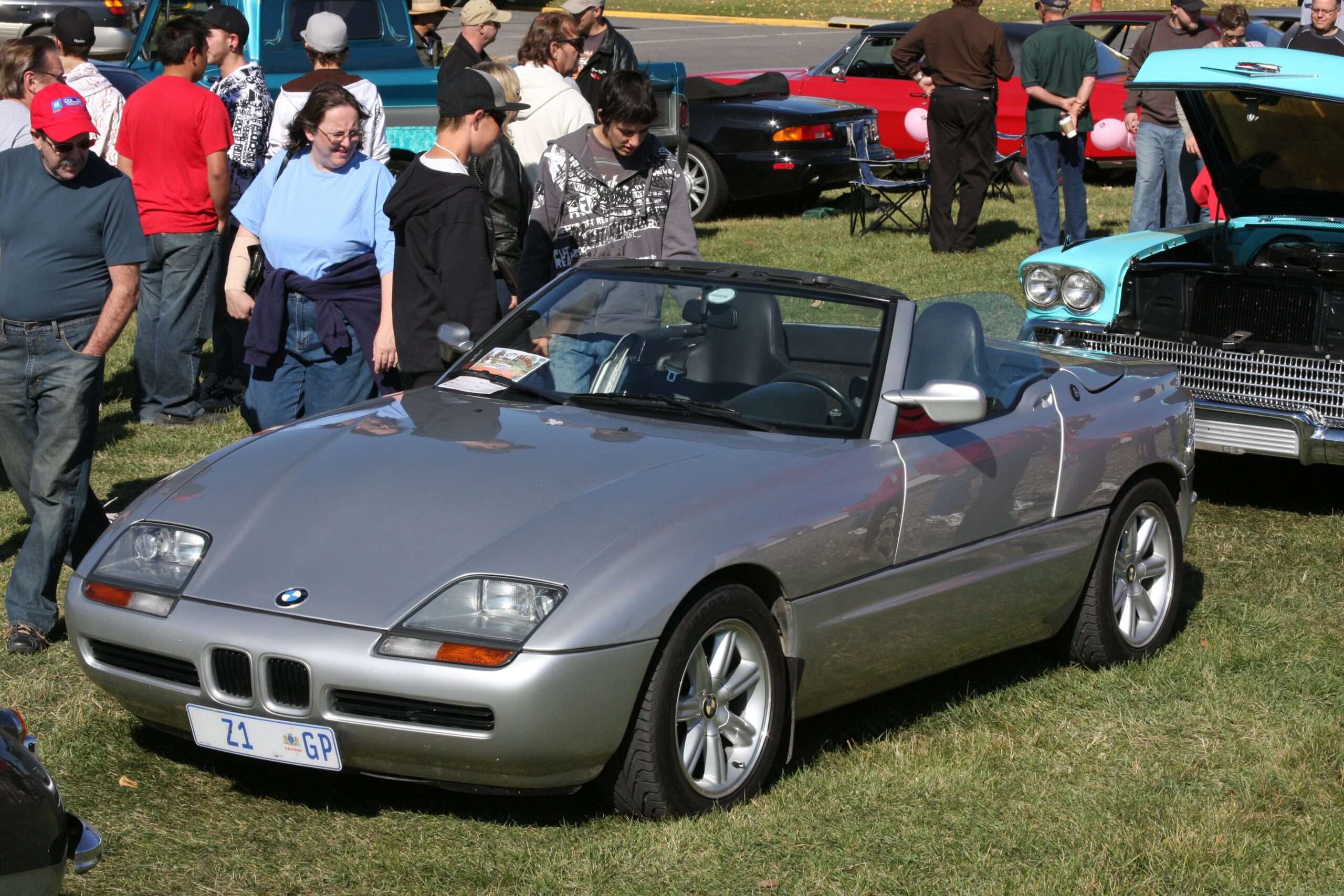
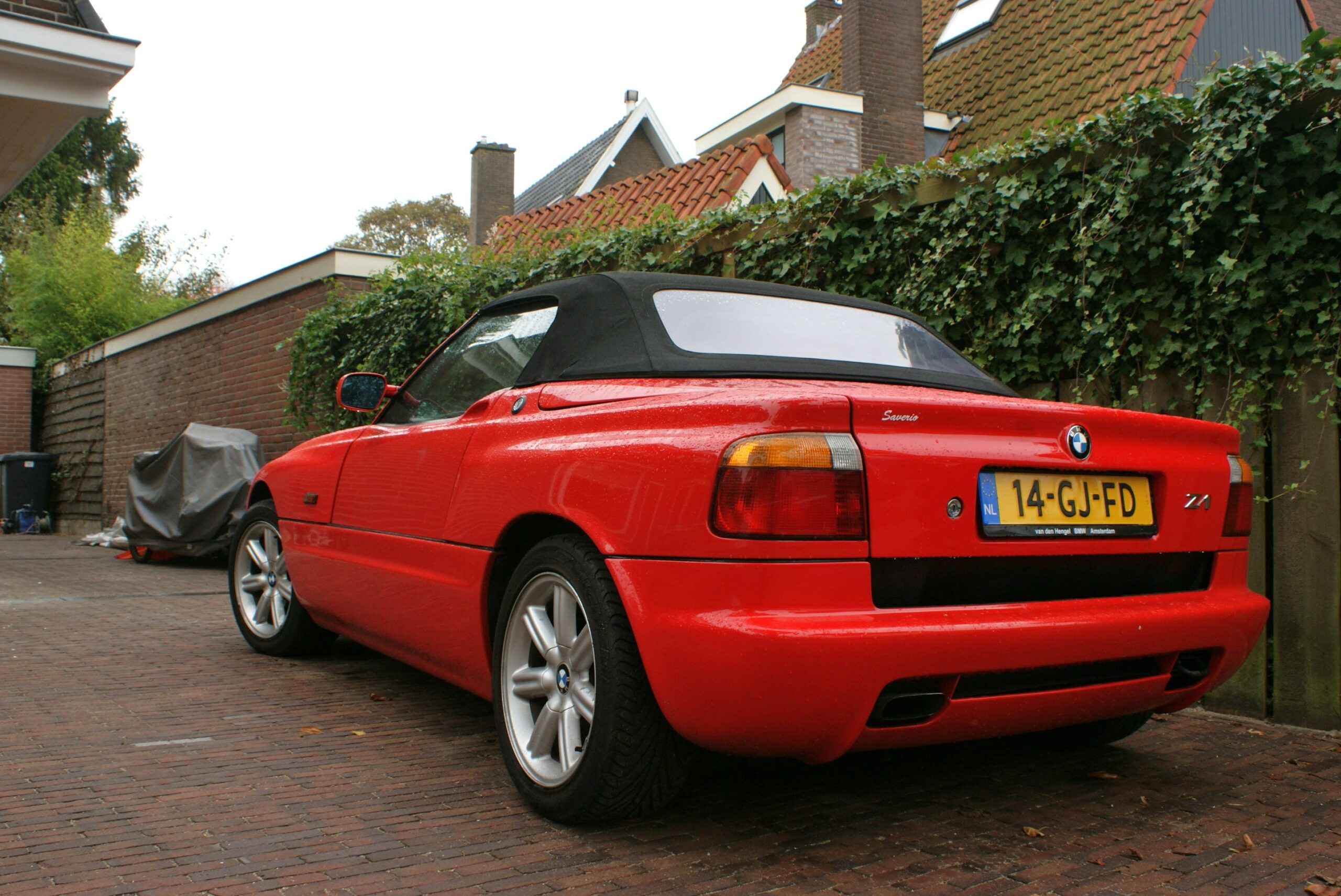
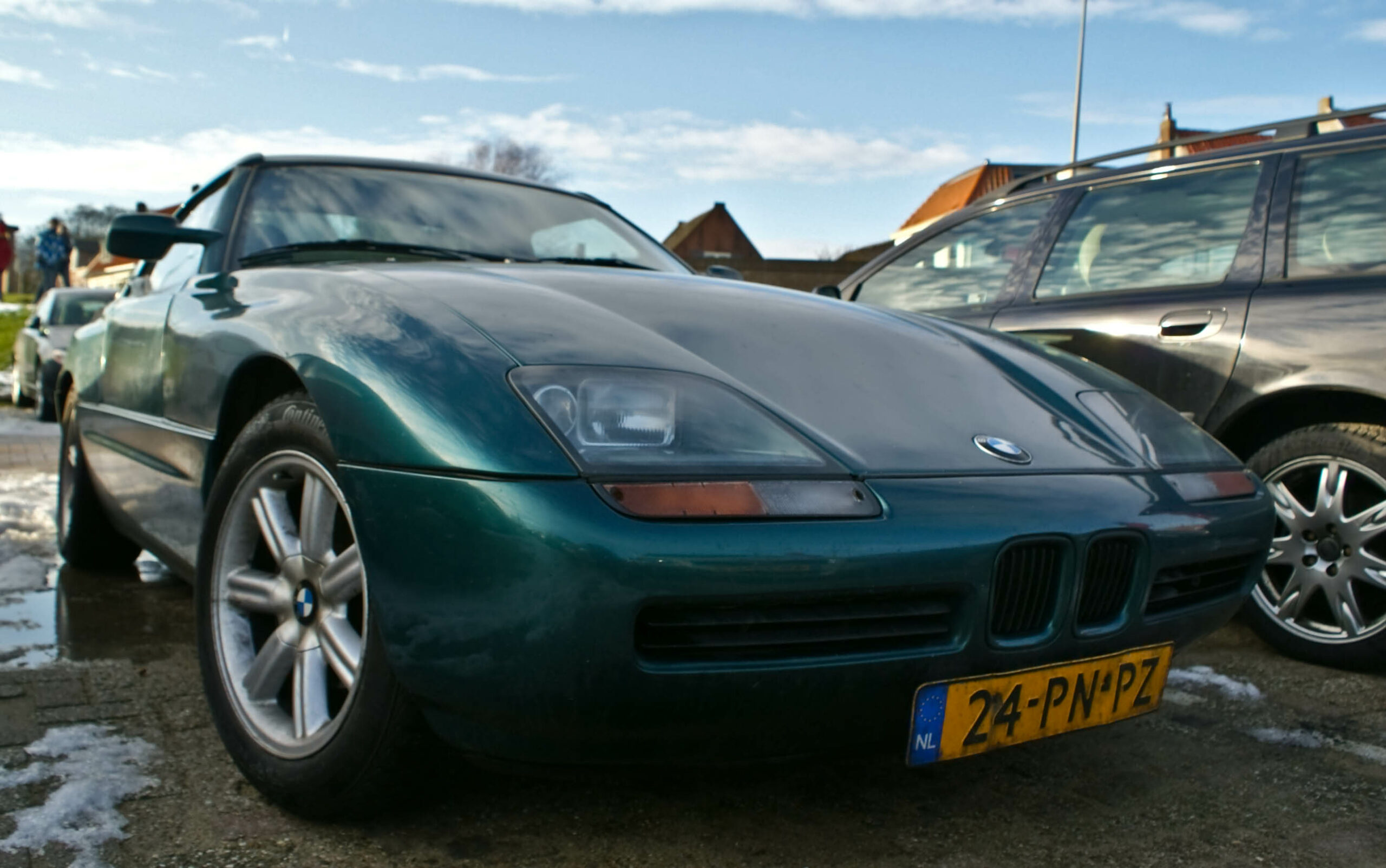
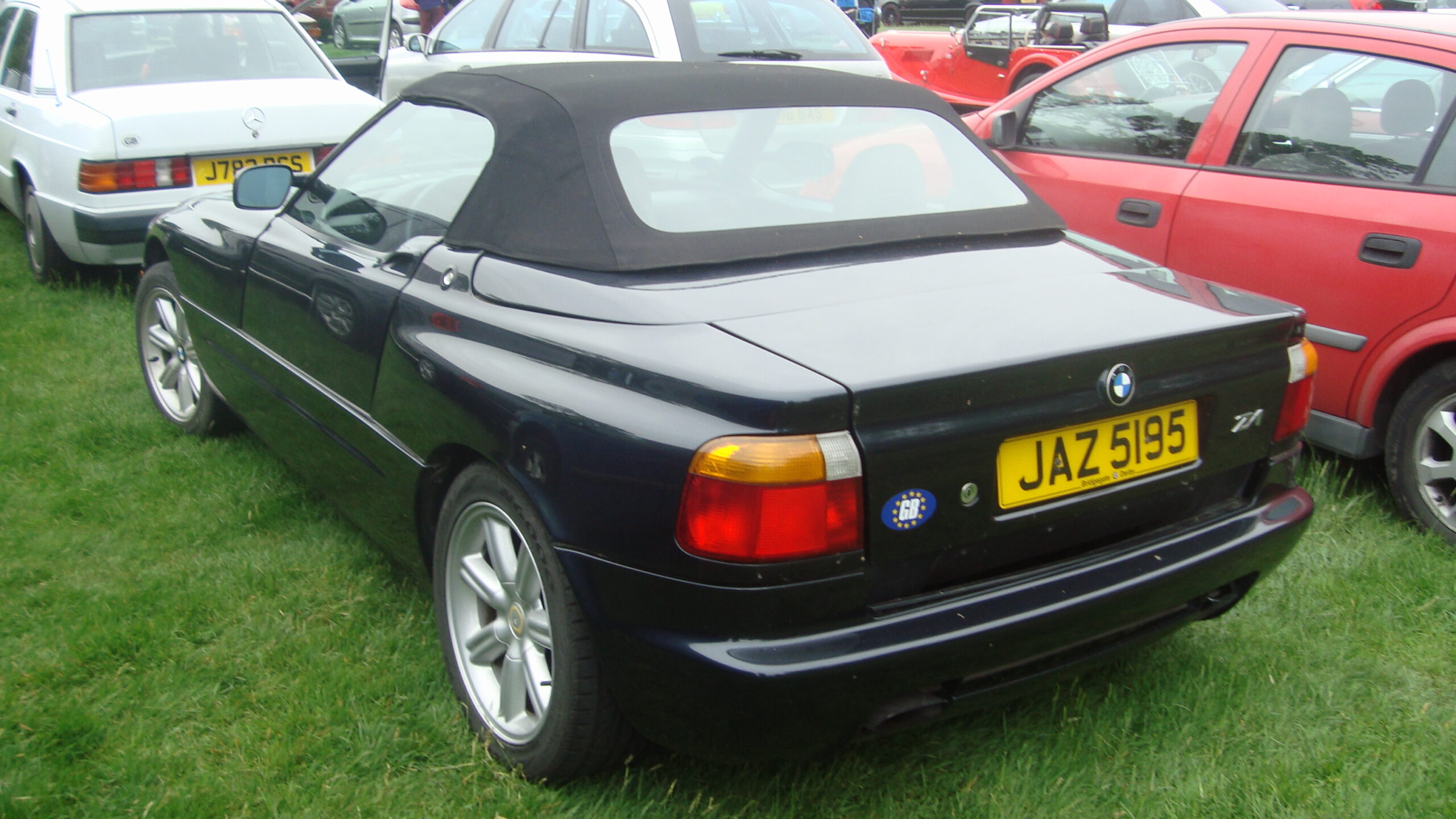
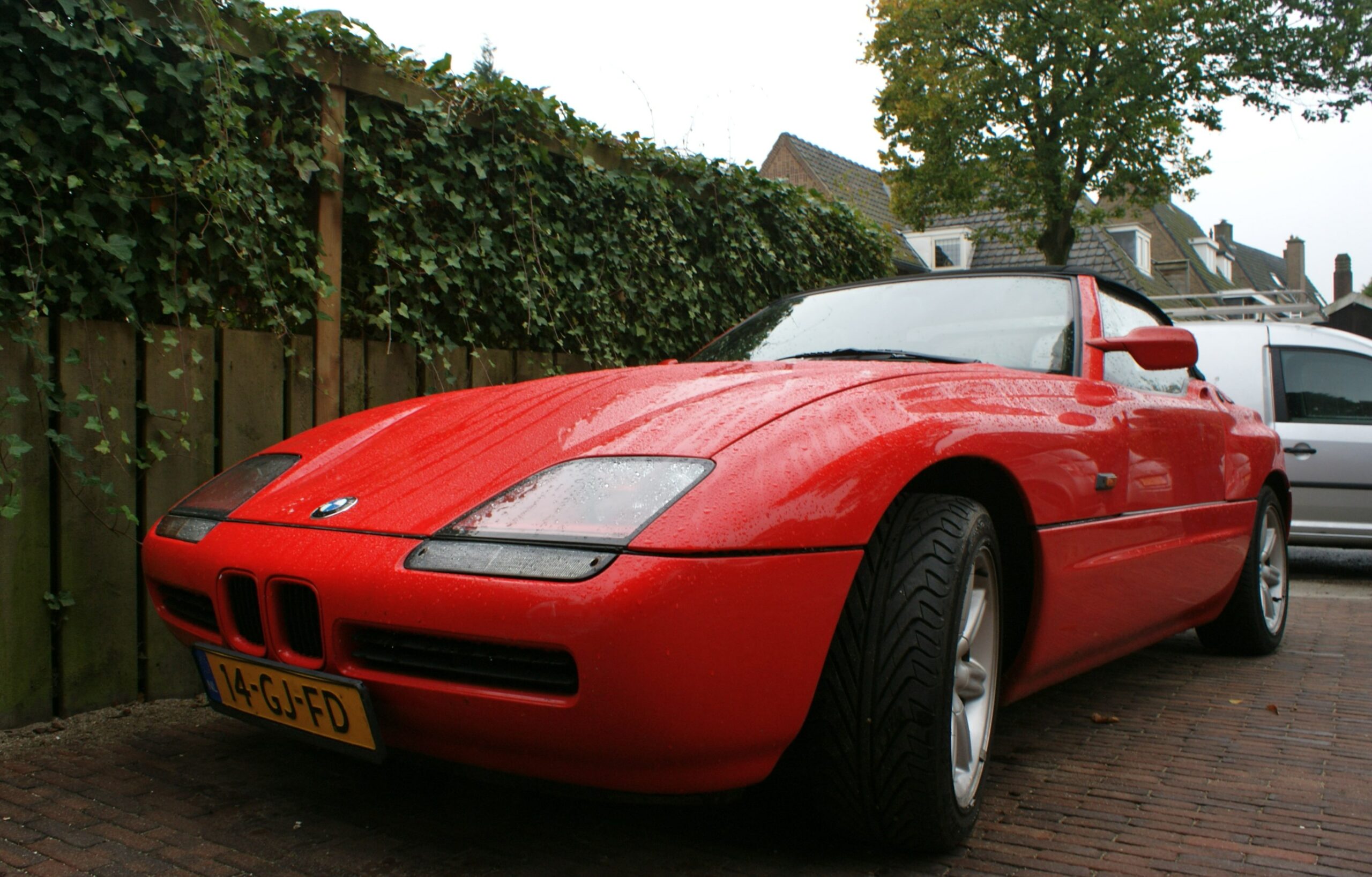
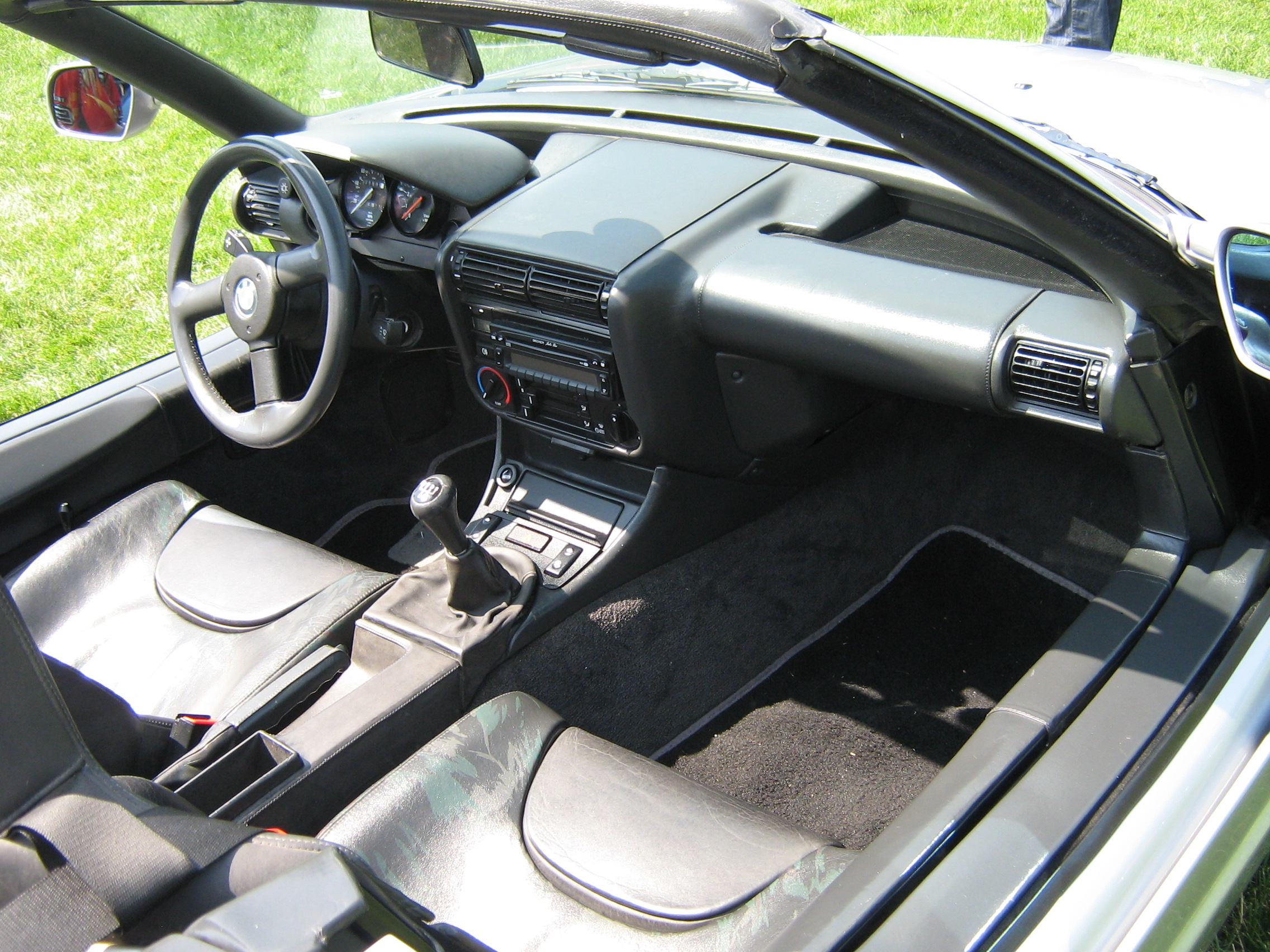
Six paint finishes, retractable doors, the six-cylinder from the 325i.
12 · Quellen
Belege & Literatur
Primary sources are the data tables of the German-language Wikipedia and the image descriptions on Wikimedia Commons. The colour breakdown comes from scene register work; it adds up exactly to 8,000 and is therefore plausible, but not confirmed by the factory.