

01 · Überblick
The car that sparked the design controversy
The E65 replaced the E38 in autumn 2001 — and broke so clearly with its conservative lines that the discussion about it has accompanied the model line to this day. Responsible for this was the then design chief Chris Bangle. The front end and the distinctive boot lid in particular stood as symbols of the new design language.
What is notable is what Bangle retained: the twin headlights and the Hofmeister kink. Both are the constants by which the car remains recognisable as a BMW despite everything.
Technically, the E65 was a pioneer. With it, BMW introduced the iDrive control concept — here for the very first time, before it moved on to the 5 Series, 6 Series and 3 Series. At the top stood the 760i and 760Li respectively, with the N73 twelve-cylinder engine: 5,972 cc, 48 valves, 445 PS.
The model line has four internal designations: E65 for the sedan, E66 for the long version, E67 for the special protection version and E68 for the hydrogen variant, the Hydrogen 7. Base prices ranged from 58,500 euros for the 730d to 127,500 euros for the 760Li.
02 · Historie
Seven years of the 7 Series
From the IAA 2001 to the F01.
- 2001 Formal presentation of the new 7 Series at the IAA in late summer. Sales start with the petrol models 735i and 745i. The generation change from E38 to E65 takes place at the Dingolfing plant.
- 2002 The long-wheelbase versions 735Li and 745Li complete the range.
- 2003 The 760i and 760Li with the N73 twelve-cylinder engine arrive as the flagship model. The 730d starts at 58,500 euros.
- 2005 In April, the first engine generation ends; with the facelift, the petrol engines switch to larger displacements.
- 2008 Production ends in late summer. The successor model, the F01, is presented.
03 · Modellübersicht
The engines of the first series
Figures for the period November 2001 to April 2005. With the facelift, the petrol engines switched to larger displacements.
Quelle: Werks- und Literaturangaben · geprüft
Technische Daten anzeigen — komplette Modellmatrix
| Modell | Motor | Hubraum | Leistung | Bauzeit |
|---|---|---|---|---|
| 730i / 730Li | M54B30 | 2.979 cm³ | 231 PS (170 kW) | 11/2001–04/2005 |
| 735i / 735Li | N62B36 | 3.600 cm³ | 272 PS (200 kW) | 11/2001–04/2005 |
| 745i / 745Li | N62B44 | 4.398 cm³ | 333 PS (245 kW) | 11/2001–04/2005 |
| 760i / 760Li | N73B60 (V12) | 5.972 cm³ | 445 PS (327 kW) | ab 2003 |
| 730d | M57D30TÜ | 2.993 cm³ | 218 PS (160 kW) | 11/2001–04/2005 |
| 740d | M67D40TÜ (V8 diesel) | 3.901 cm³ | 258 PS (190 kW) | 11/2001–04/2005 |
04 · Karosserievarianten
Karosserievarianten
Sedan (E65)

The base body style from autumn 2001, built at the Dingolfing plant.
Long version (E66)

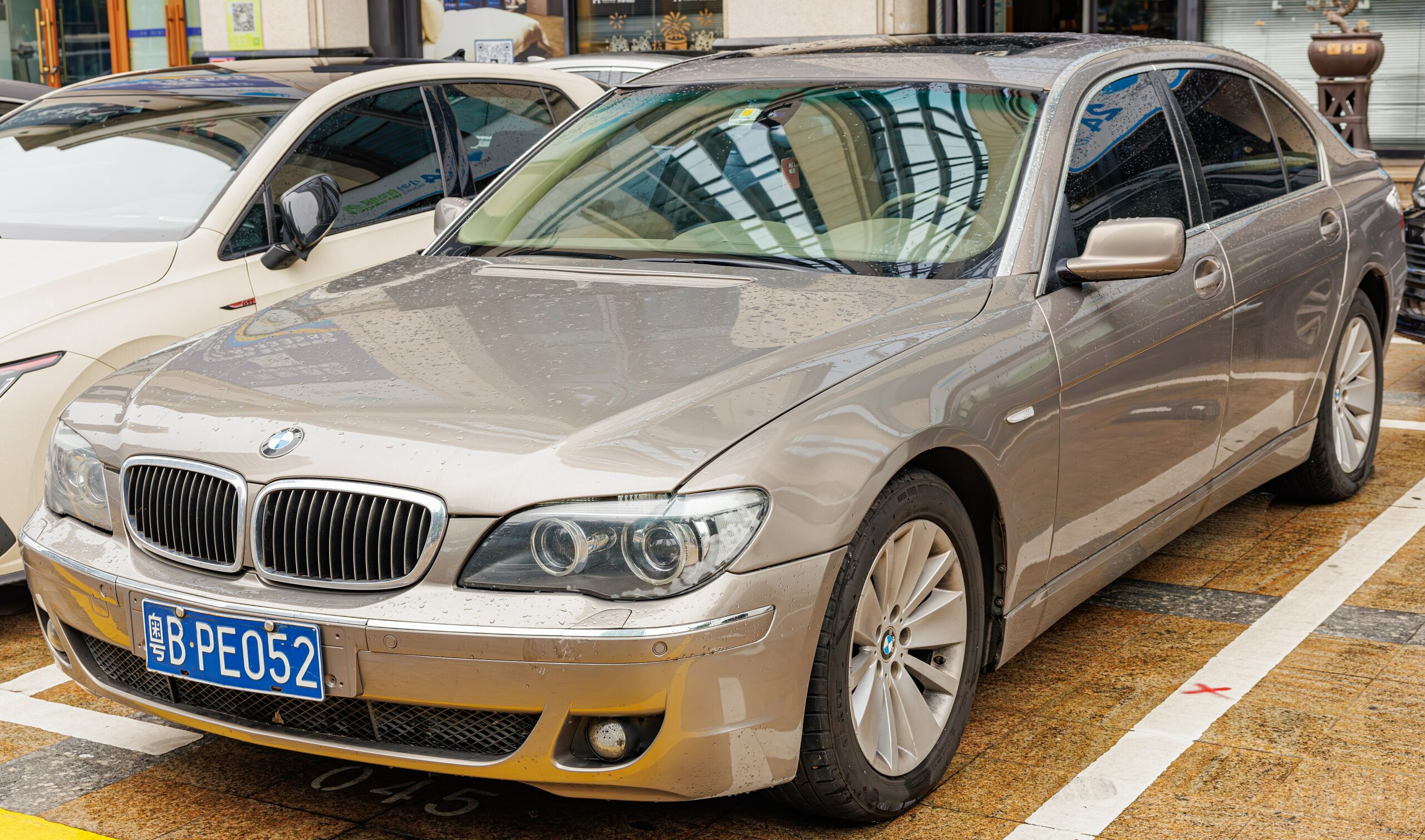
With an extended wheelbase, from 2002 as the 735Li and 745Li. The flagship model 760Li also belongs to this group.
Special protection (E67)

The armoured version. It carries its own internal designation and is not a subsequent conversion but a factory variant.
Hydrogen (E68)

The BMW Hydrogen 7 with hydrogen propulsion. A limited series, technically a twelve-cylinder with bivalent operation.
05 · Motoren
The N73 twelve-cylinder
The 760 differed from the rest of the model line not only in engine but also in braking system and tyres.
N73B60 · 5,972 cc · 445 PS — 760i and 760Li geprüft
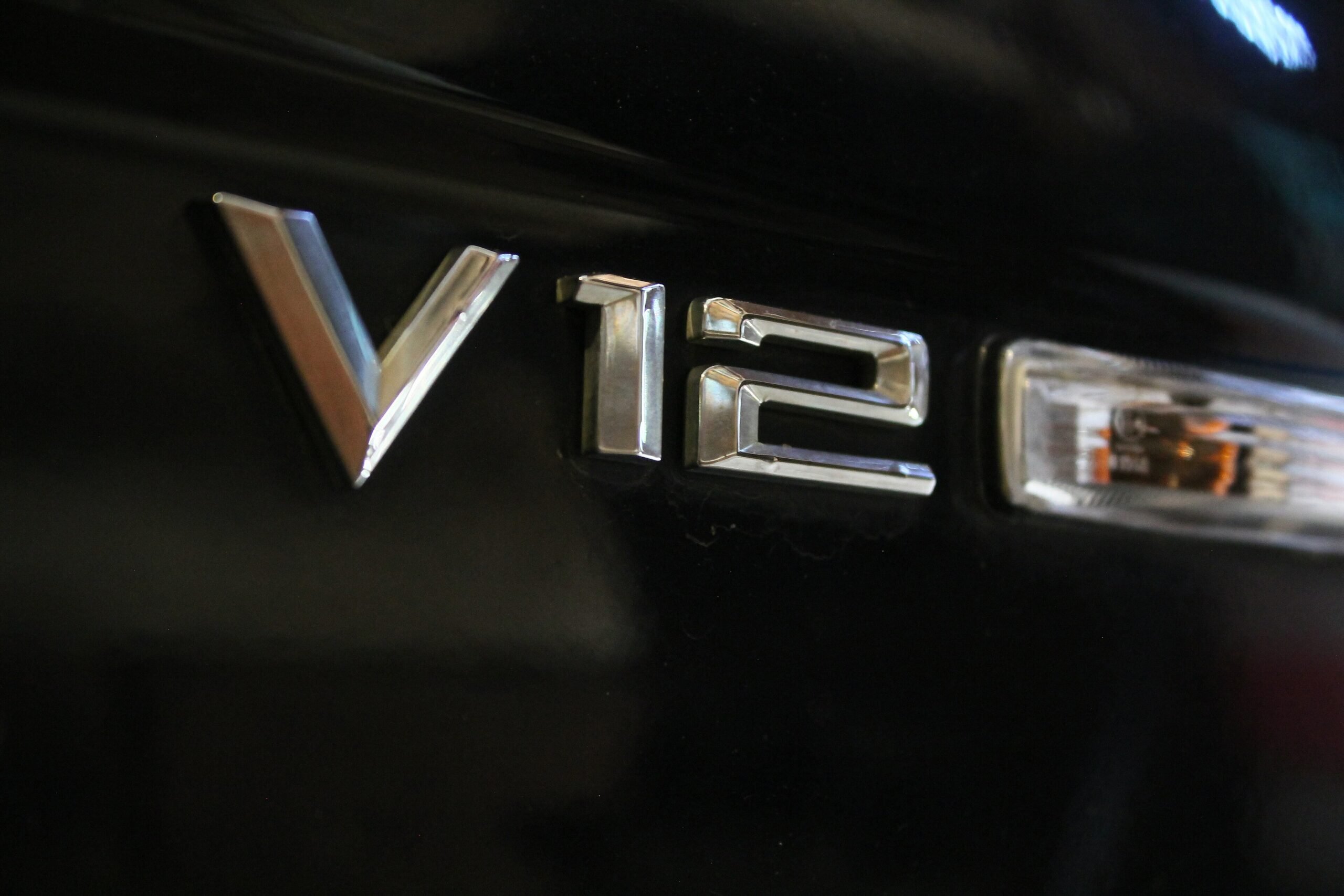
Twelve-cylinder V engine with 5,972 cc and 48 valves, compression ratio 11.3:1, 445 PS at 6,000 rpm. This engine comes with a larger braking system: 374 by 36 millimetres front and 370 by 24 millimetres rear. As a result, 18 inches is the smallest possible wheel size for this model — a point at which a genuine 760 can be distinguished from a converted car.
Technische Daten anzeigen
| Bauart | Twelve-cylinder V engine, 48 valves |
| Einbaulage | front, longitudinal |
| Hubraum | 5.972 cm³ |
| Verdichtung | 11,3:1 |
| Leistung | 327 kW (445 PS) at 6,000 rpm |
| Brake discs front | 374 × 36 mm |
| Brake discs rear | 370 × 24 mm |
| Smallest wheel size | 18 inches, due to the braking system |
Data table, Wikipedia DE on the E65 model line, section on the flagship model 760i/Li
N62B44 · 4,398 cc · 333 PS — 745i and 745Li geprüft
Eight-cylinder with 32 valves and compression ratio 10.5:1, 333 PS at 6,100 rpm. Together with the 735i, it was the model with which sales started in 2001.
Technische Daten anzeigen
| Bauart | V8, 32 valves |
| Hubraum | 4.398 cm³ |
| Verdichtung | 10,5:1 |
| Leistung | 245 kW (333 PS) at 6,100 rpm |
| Bauzeit | 11/2001–04/2005 |
Data table, Wikipedia DE on the E65 model line
M67D40TÜ · 3.901 cm³ · 258 PS — 740d geprüft
An eight-cylinder diesel with 3,901 cc, 32 valves and compression ratio 18.0:1, 258 PS at 4,000 rpm. A V8 diesel in the 7 Series is a rarity today — BMW only offered it in this model line and its predecessor.
Technische Daten anzeigen
| Bauart | V8 diesel engine, 32 valves |
| Hubraum | 3.901 cm³ |
| Verdichtung | 18,0:1 |
| Leistung | 190 kW (258 PS) at 4,000 rpm |
| Bauzeit | 11/2001–04/2005 |
Data table, Wikipedia DE on the E65 model line
M54B30 · 2,979 cc · 231 PS — 730i and 730Li geprüft
The inline six-cylinder as the entry point into the model line. 24 valves, compression ratio 10.2:1, 231 PS at 5,900 rpm and 300 Nm at 3,500. The last naturally aspirated six-cylinder in the 7 Series.
Technische Daten anzeigen
| Bauart | Inline six-cylinder, 24 valves |
| Hubraum | 2.979 cm³ |
| Verdichtung | 10,2:1 |
| Leistung | 170 kW (231 PS) at 5,900 rpm |
| Drehmoment | 300 Nm at 3,500 rpm |
| Bauzeit | 11/2001–04/2005 |
Data table, Wikipedia DE on the E65 model line
06 · Schwachstellen
Reliability & Weak Points
- Electronics are the defining issue. The iDrive computer, on-board network and body control units, as well as the CAN bus, cause most of the workshop visits for this car. Reading the fault memory is mandatory, not optional.
- With the N62 eight-cylinder, the known issues are the valve cover gaskets, crankcase ventilation and, at high mileage, the Alusil cylinder liners. Oil consumption is a warning sign.
- The N73 in the 760 is elaborately built and correspondingly expensive to maintain. Two cylinder banks mean double the parts count for ignition, injection and VANOS.
- The rear air suspension and active roll stabilisation are wear parts with high replacement costs.
- Rust is not a widespread issue with this generation. Anyone who finds bubbling should check the car for accident repairs.
07 · Technik
iDrive — the premiere
What Bangle retained
Amber corners
How to recognise a genuine 760
Four designations, one car
Technische Daten — Achsübersetzungen & Getriebe
- Body styles
- Sedan (E65), long version (E66), special protection (E67), hydrogen (E68)
- Production period
- autumn 2001 to late summer 2008
- Production location
- BMW Group Plant Dingolfing
- Control concept
- iDrive, introduced here for the first time at BMW
- Design chief
- Chris Bangle
- Retained features
- twin headlights, Hofmeister kink
- US version
- amber corners, yellow lenses for the indicator elements
- 760i/Li braking system
- 374 × 36 mm front, 370 × 24 mm rear
- 760i/Li wheels
- at least 18 inches, due to the braking system
- Base prices Germany
- €58,500 (730d, 2003) to €127,500 (760Li, 2008)
- Predecessor
- E38 · Successor: F01
08 · Zwölfzylinder
The 760i and 760Li
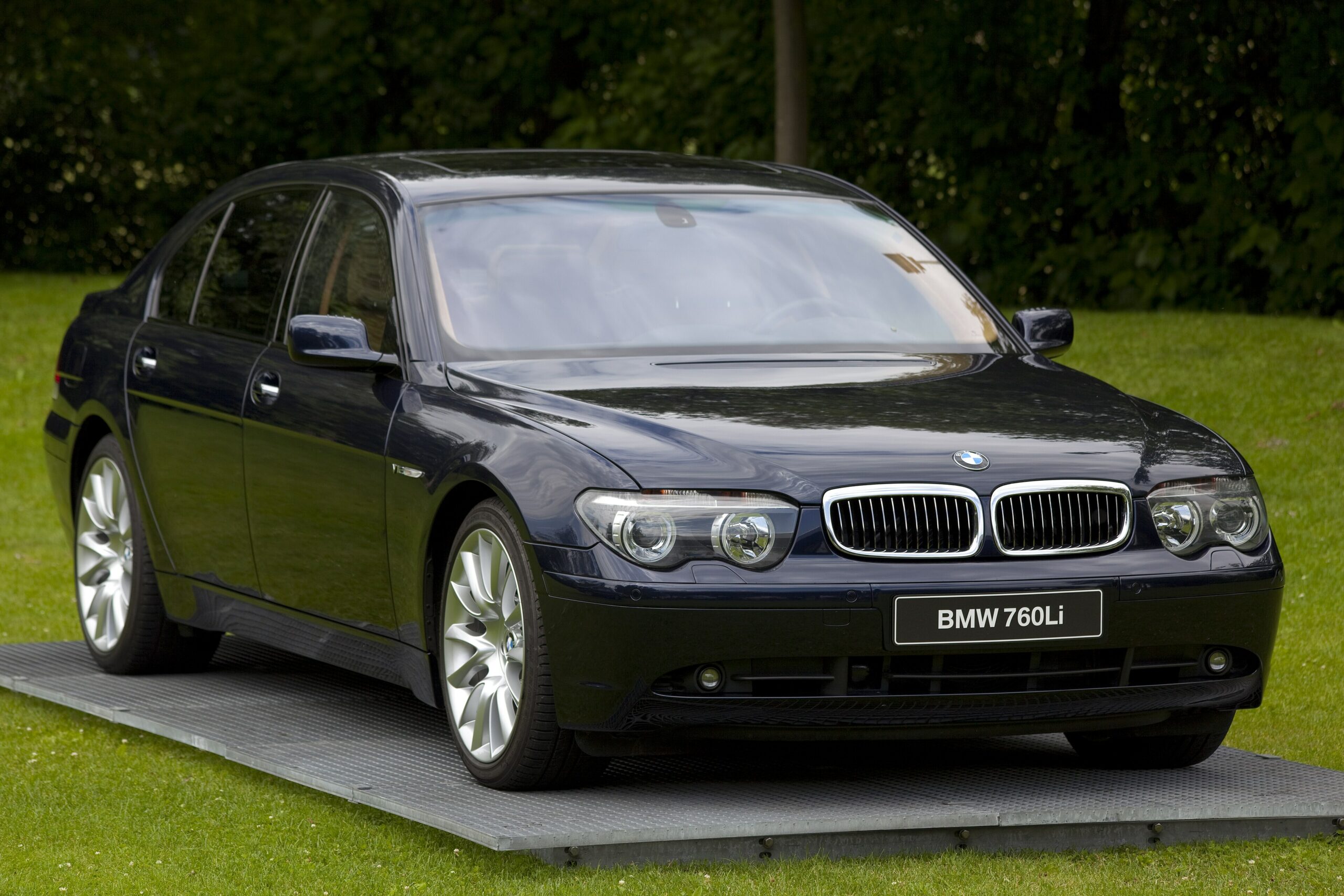
The flagship model of the model line differed from the rest not only through the N73B60 — 5,972 cc, twelve cylinders, 48 valves, 445 PS at 6,000 rpm — but also through numerous equipment features.
The most visible difference is the larger braking system with 374 by 36 millimetres front and 370 by 24 millimetres rear. This has a practical consequence: 18 inches is the smallest possible wheel size. For assessing an advertised 760, this is a useful check point.
At 127,500 euros, the 760Li of 2008 was the most expensive model in the model line — and the last series-production BMW with a naturally aspirated twelve-cylinder engine in this configuration.

09 · Kaufberatung
What matters most: electronics above all
Today, the E65 is very cheap to buy and very expensive to maintain. This gap is wider than with almost any other BMW.
Insist on a full readout of all control units, not just the engine control unit. An E65 without an up-to-date fault log cannot be properly assessed.
Test iDrive, comfort access, seat adjustment and automatic climate control individually. Every function that doesn't work is a separate cost item.
Ask about oil consumption with the N62 and check the valve covers for oil seepage.
Have the air suspension lowered and raised several times while stationary, and test the roll stabilisation while driving.
With the 760, check the braking system and wheel size against the factory specifications — 18 inches is the minimum.
The 730d is the pragmatic E65, the 745i the balanced one. The 760Li is the most impressive car in the range — and the one where a complete service history determines whether it brings joy or trouble.
10 · Die Konkurrenz
The Competition
Mercedes-Benz S-Class (W220)
The direct rival, more conservatively styled and therefore less controversial. Both model lines share one problem: extensive electronics, which are expensive today.
Audi A8 (D3)
From 2002, with an aluminium spaceframe and quattro. The most technically distinctive proposal in the class.
Volkswagen Phaeton W12
From 2002, the outsider with a twelve-cylinder engine. Objectively a direct rival to the 760, but never established in the market.
11 · Galerie
Bilder
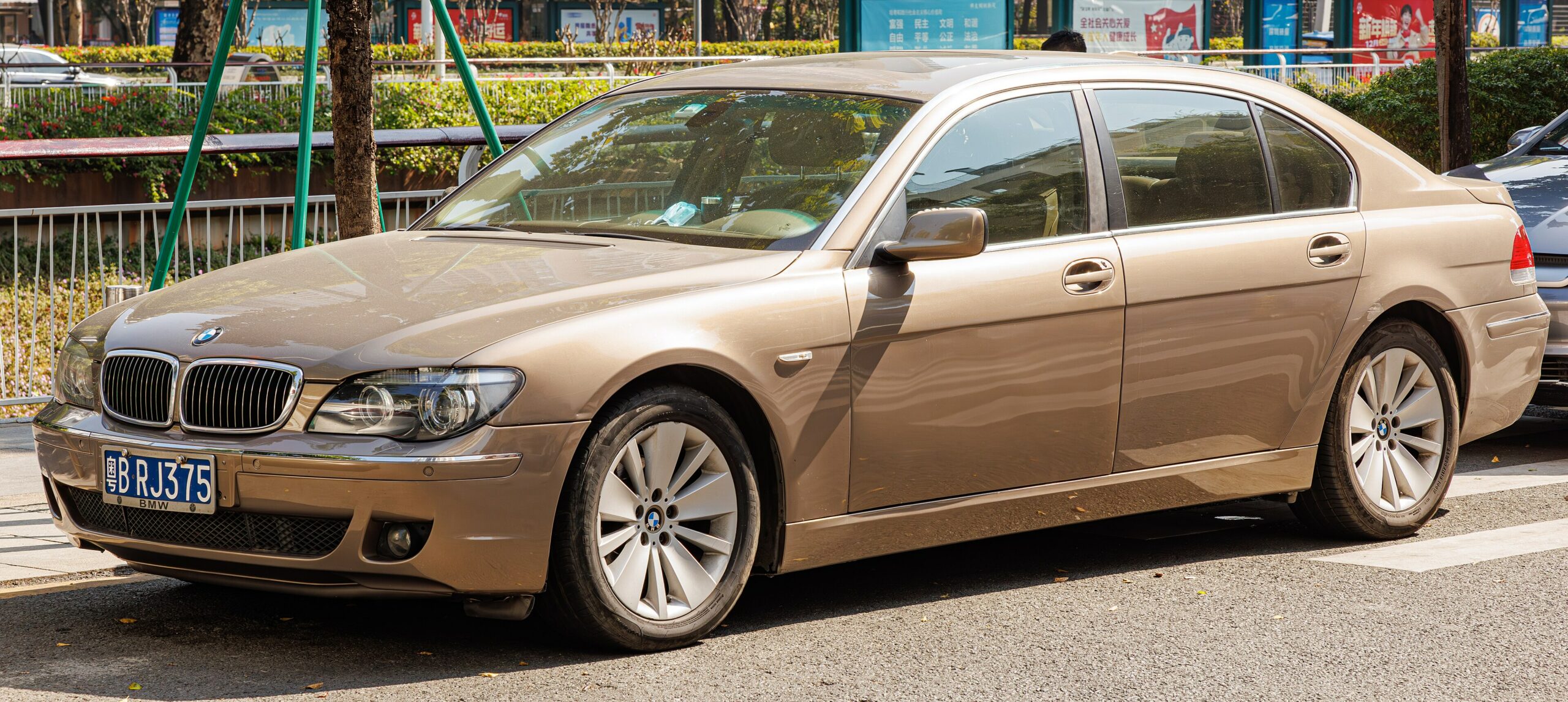
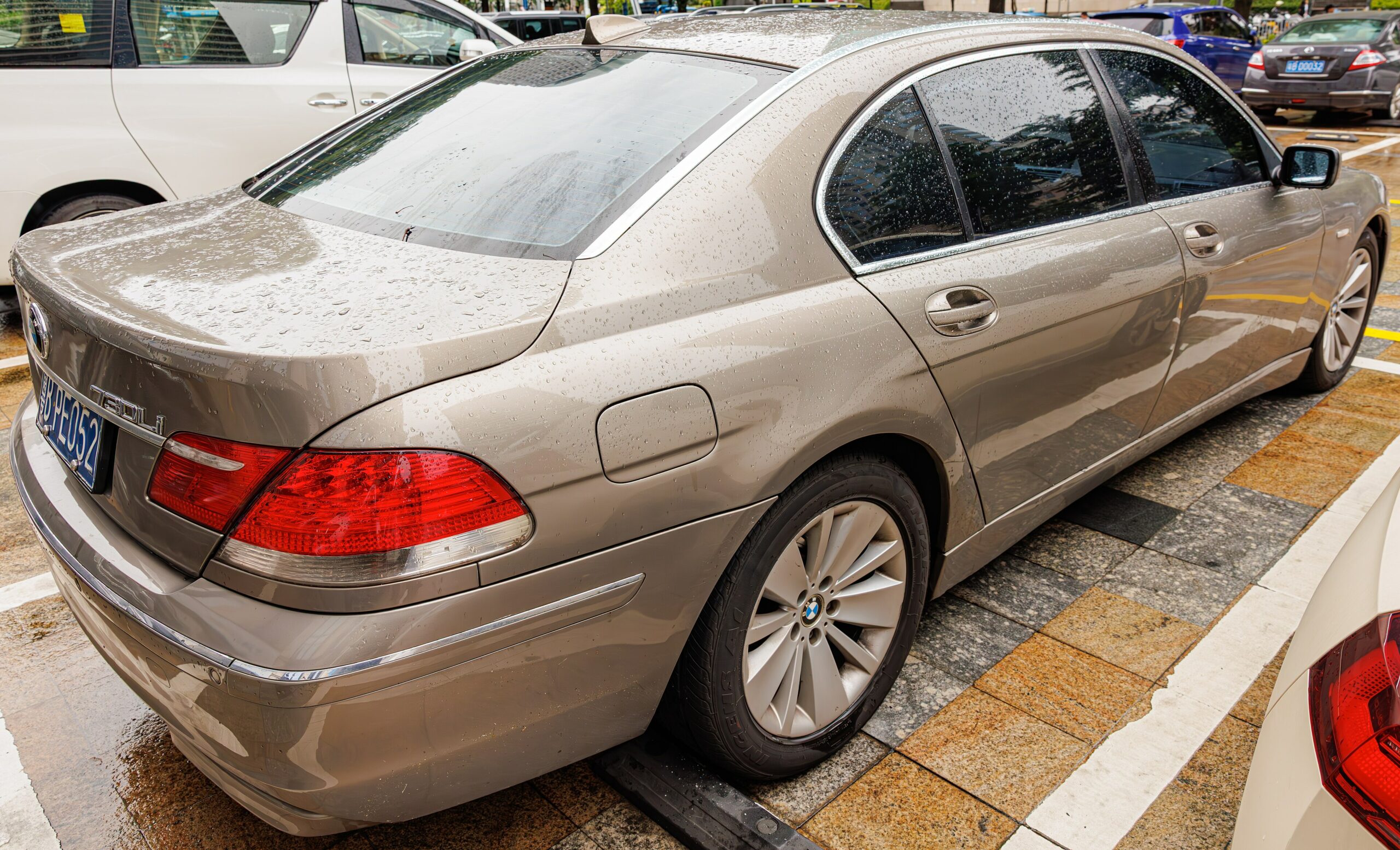
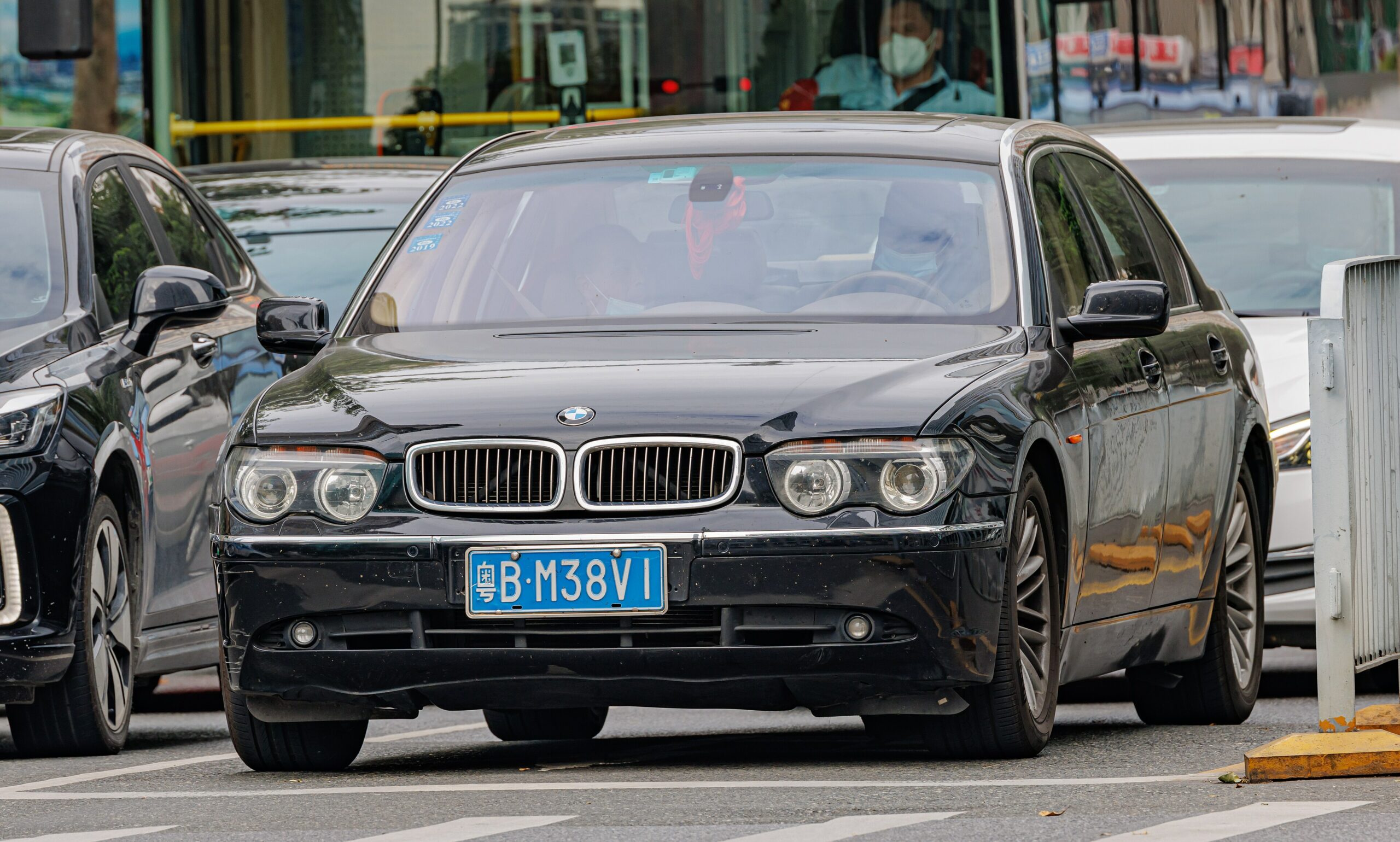
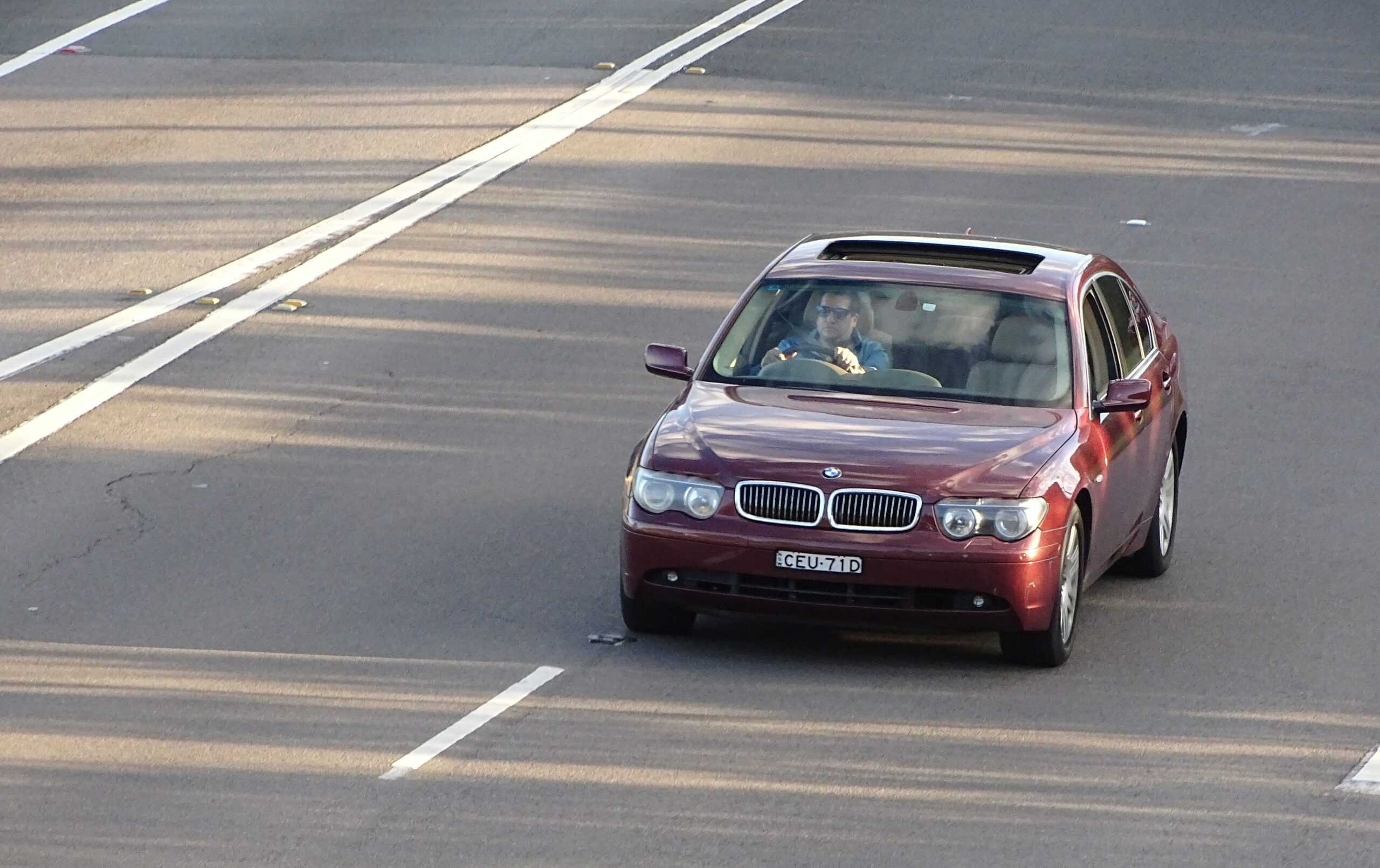
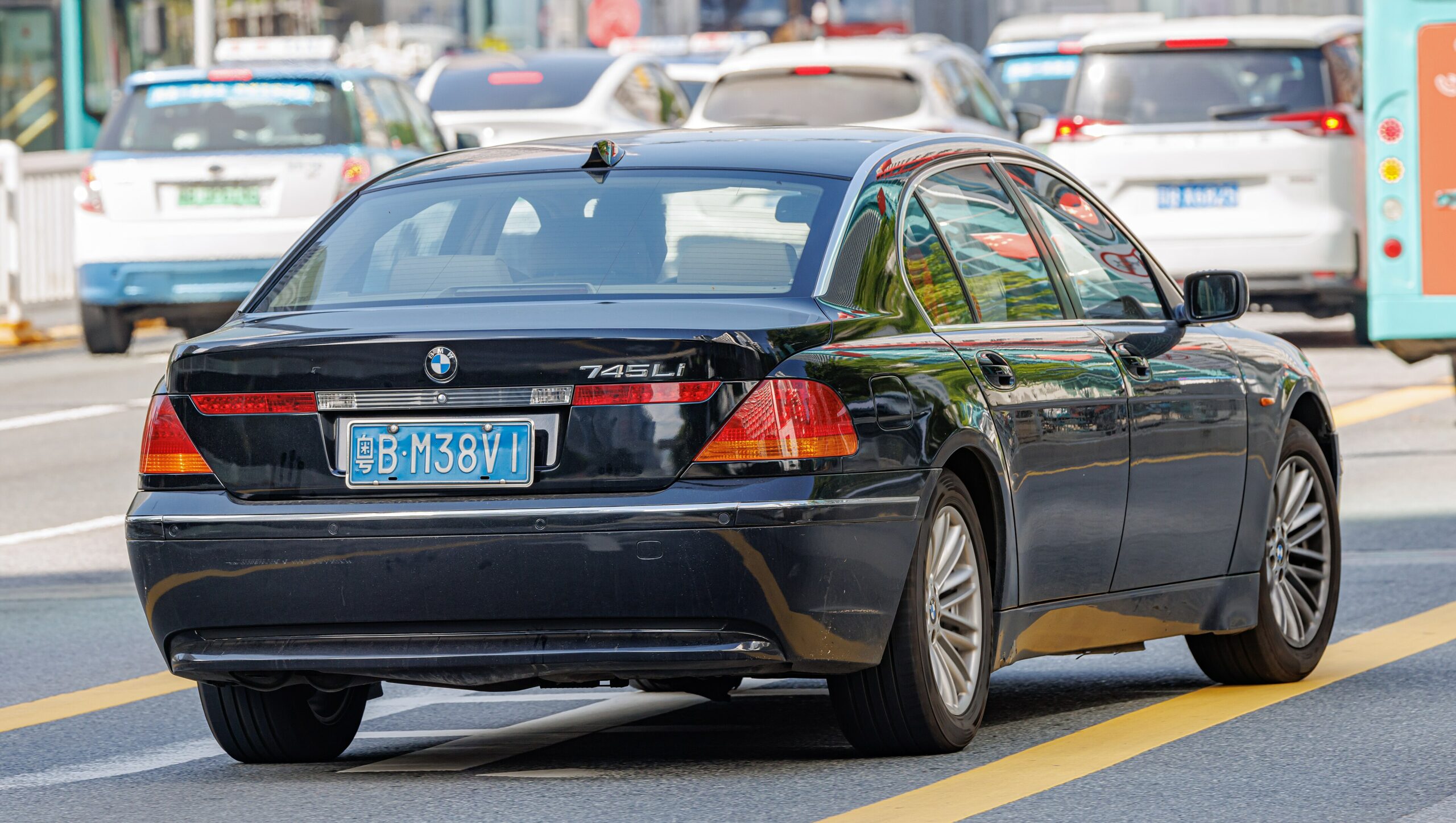
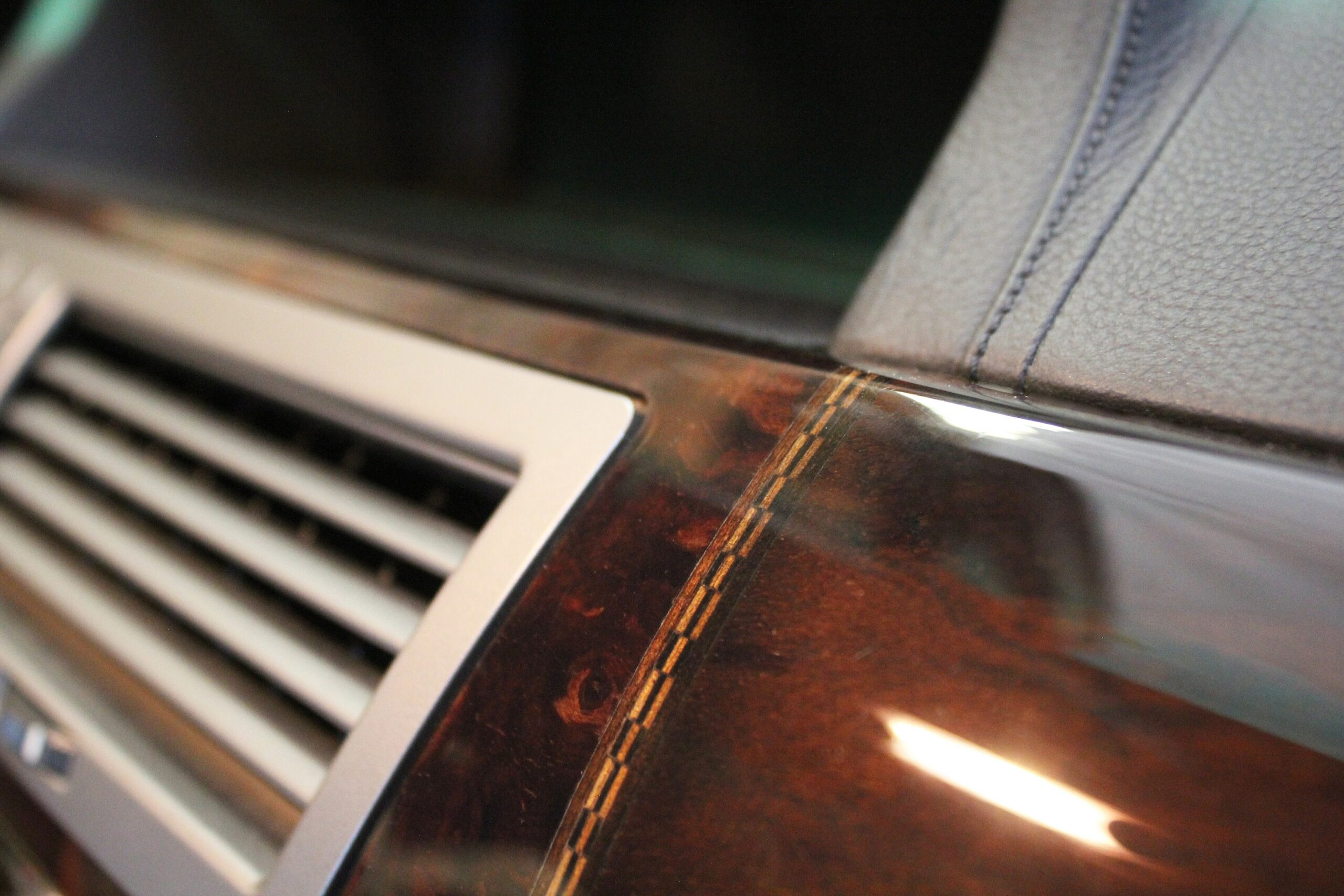
Sedan, long version and the twelve-cylinder flagship model.
Andere BMW 7er Generationen
4 Baureihen mit E-Nummer, von 1977 bis 2008.
12 · Quellen
Belege & Literatur
The primary source is the German-language Wikipedia entry on the E65 model line, whose data table fully lists the engine variants for the period November 2001 to April 2005. Image sources and licences are from Wikimedia Commons.