

01 · Überblick
The brand's first off-road capable car
The E53 was the first vehicle offered by BMW with off-road capability, albeit limited. It was presented at the NAIAS 1999, launched in the USA in autumn 1999, and reached dealers there by the end of 1999. It did not arrive in Germany until May 2000.
The manufacturer’s choice of words is notable. BMW explicitly calls the car neither an SUV nor an off-roader, but an SAV — Sports Activity Vehicle, a term coined specifically for the X5. This is not a marketing gimmick but an honest classification: the engine and transmission concept, designed for road use, makes the X5 unsuitable for heavy off-road use. Among the SUVs of its time, it was considered the sportier vehicle.
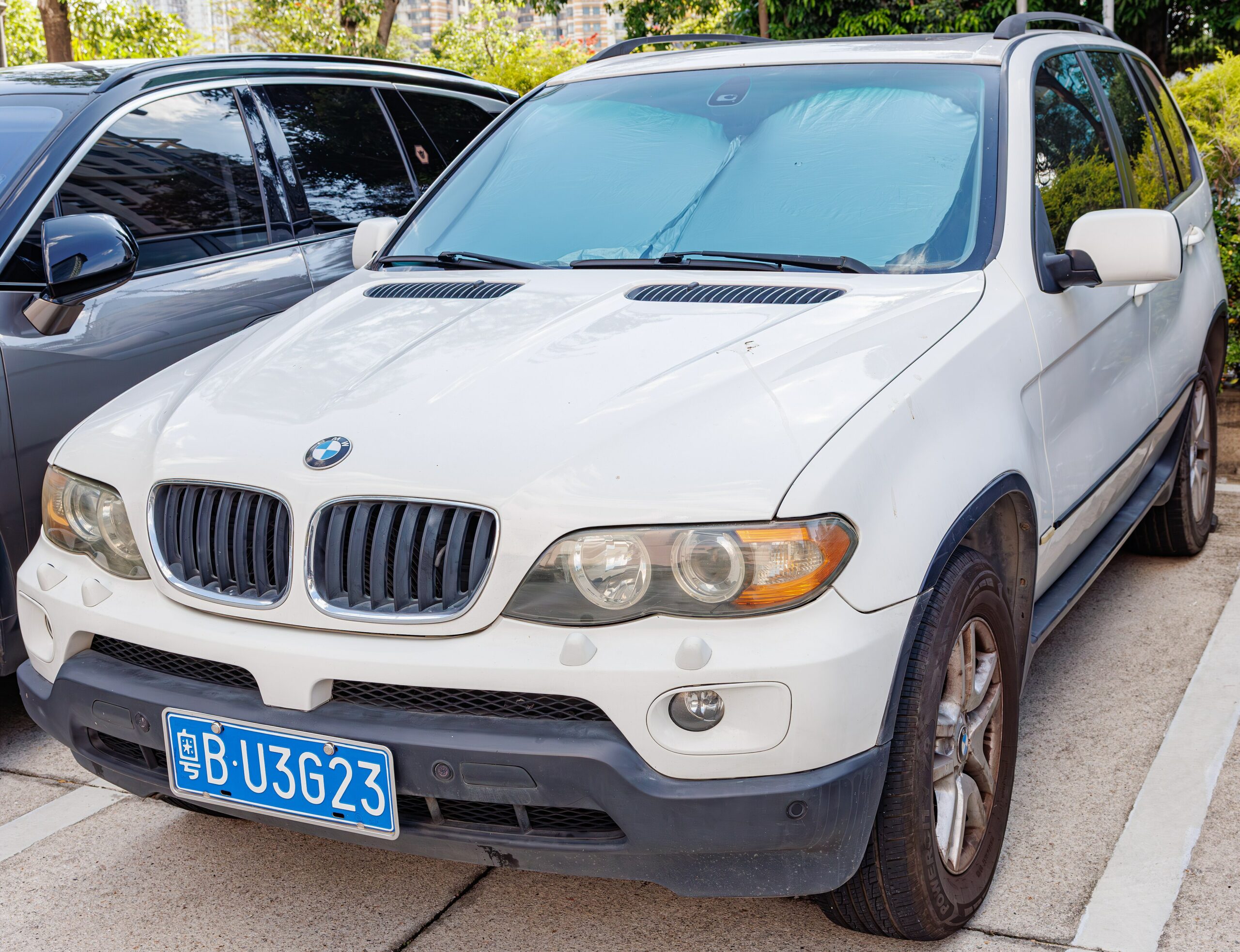
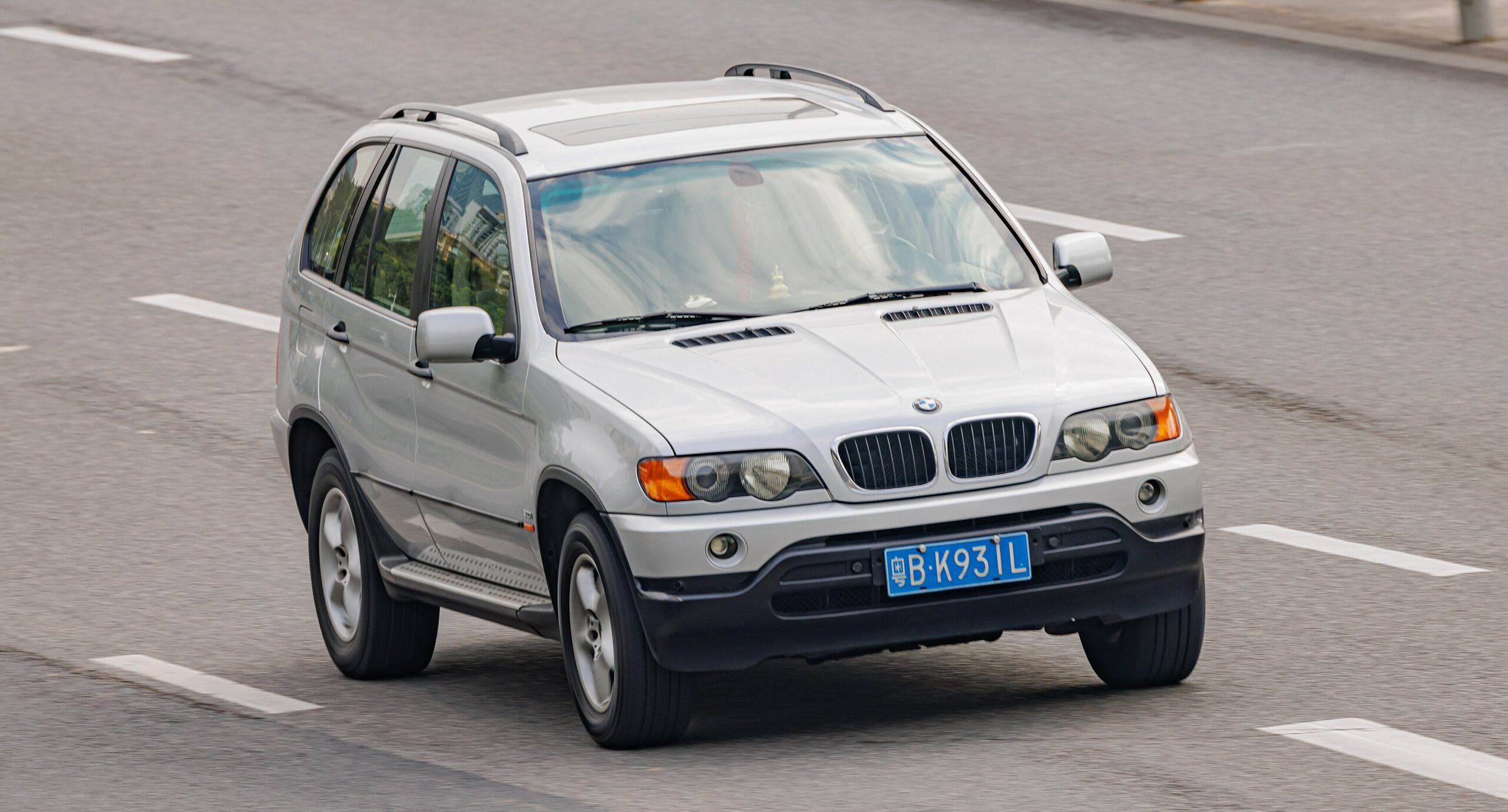
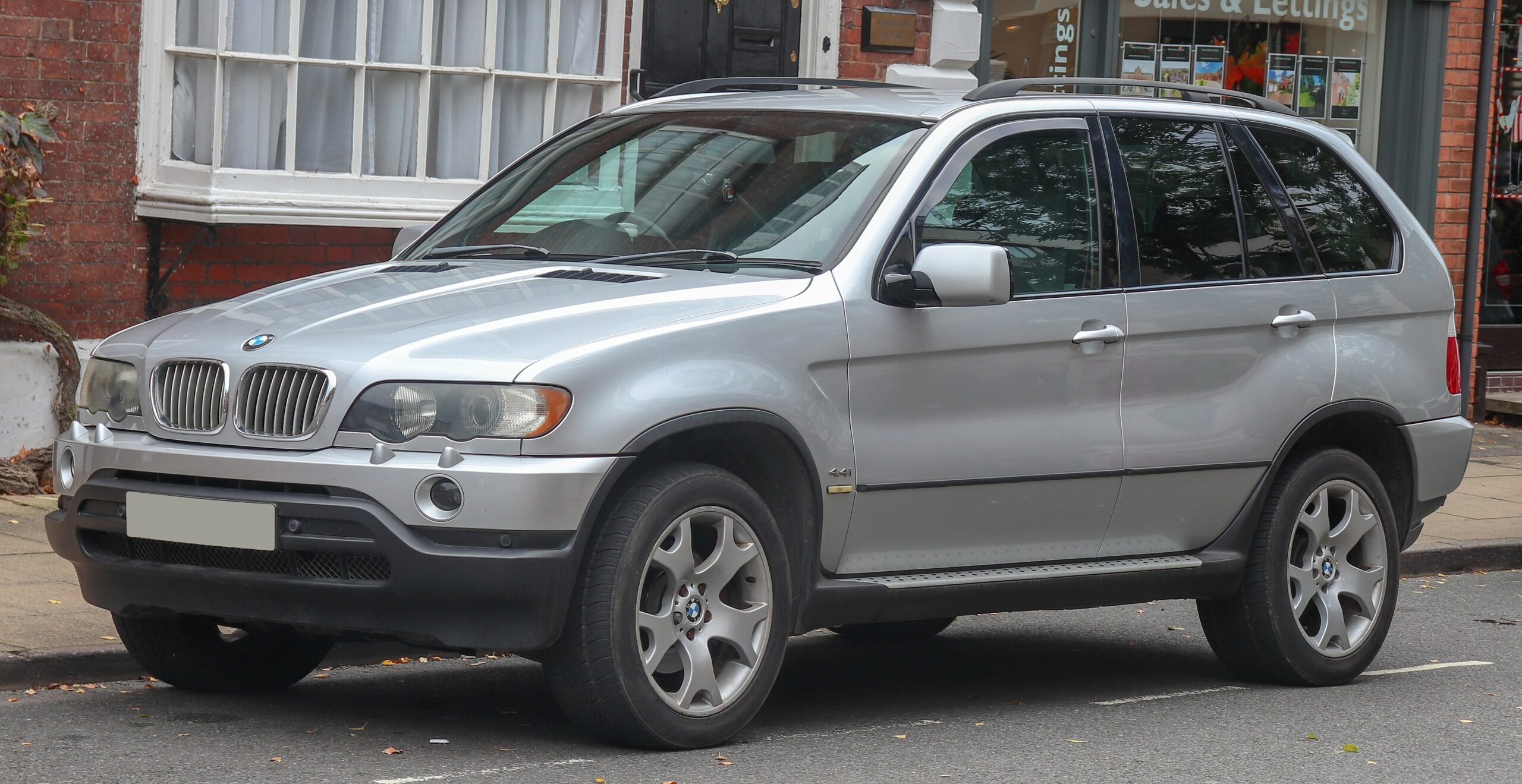
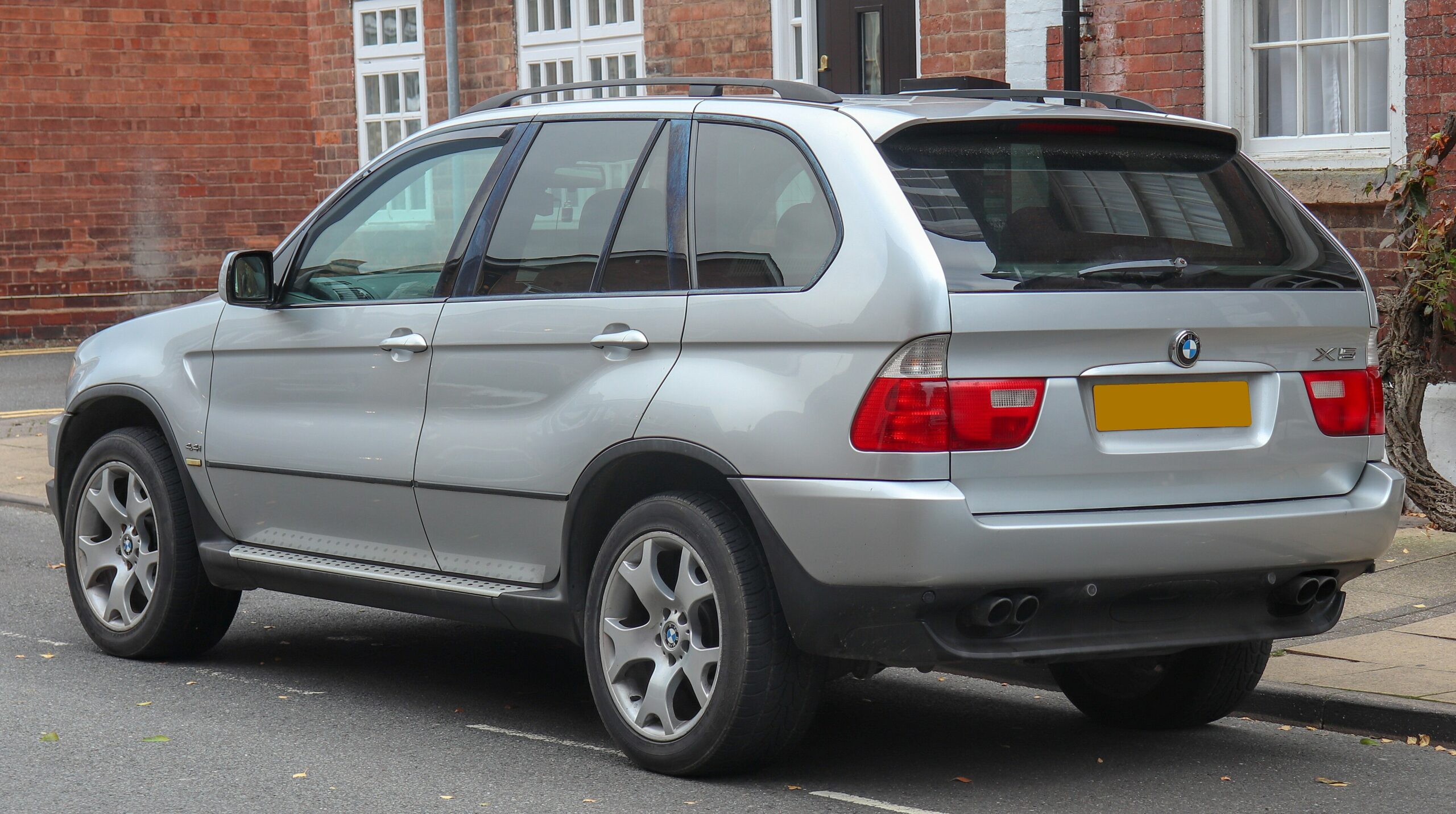
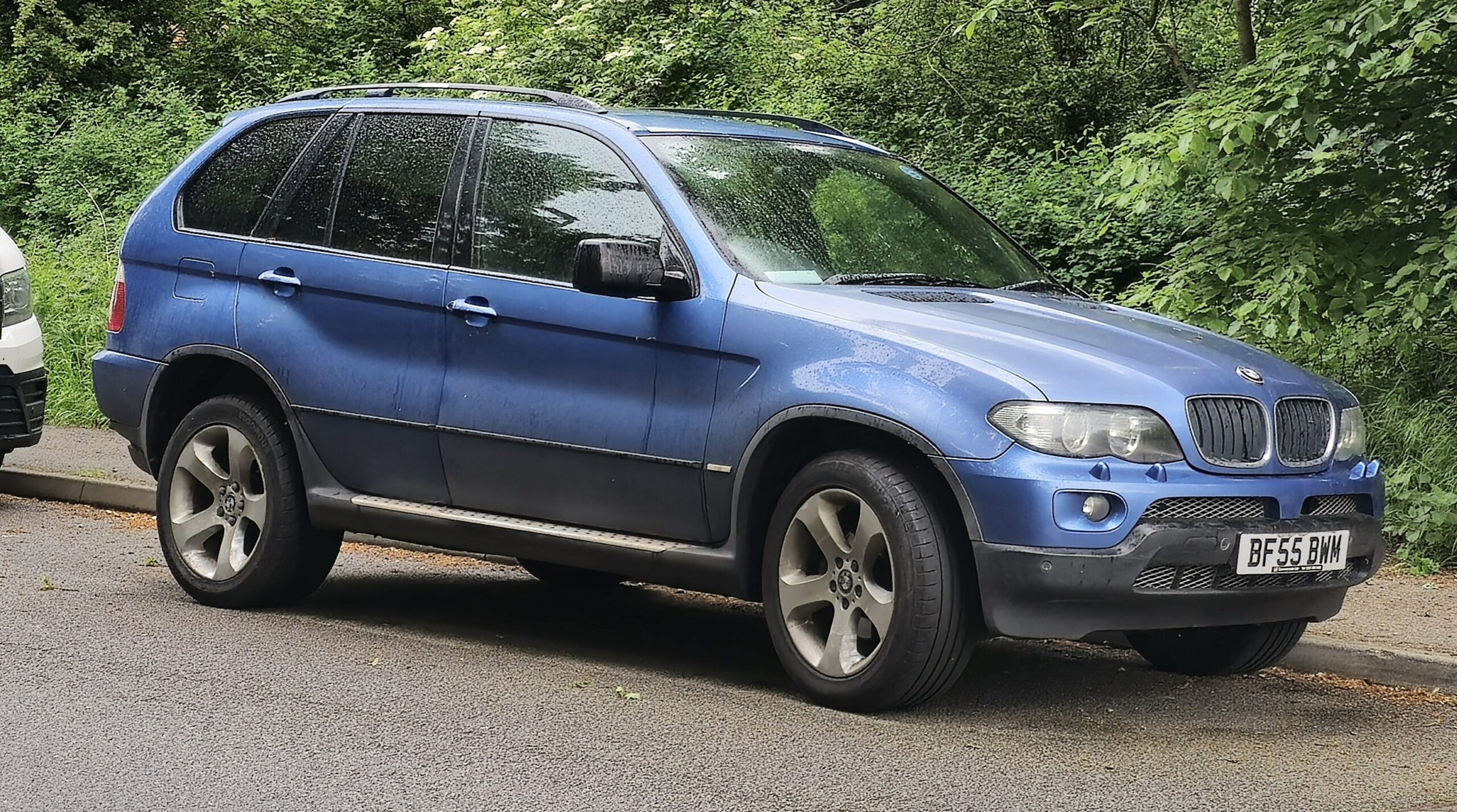
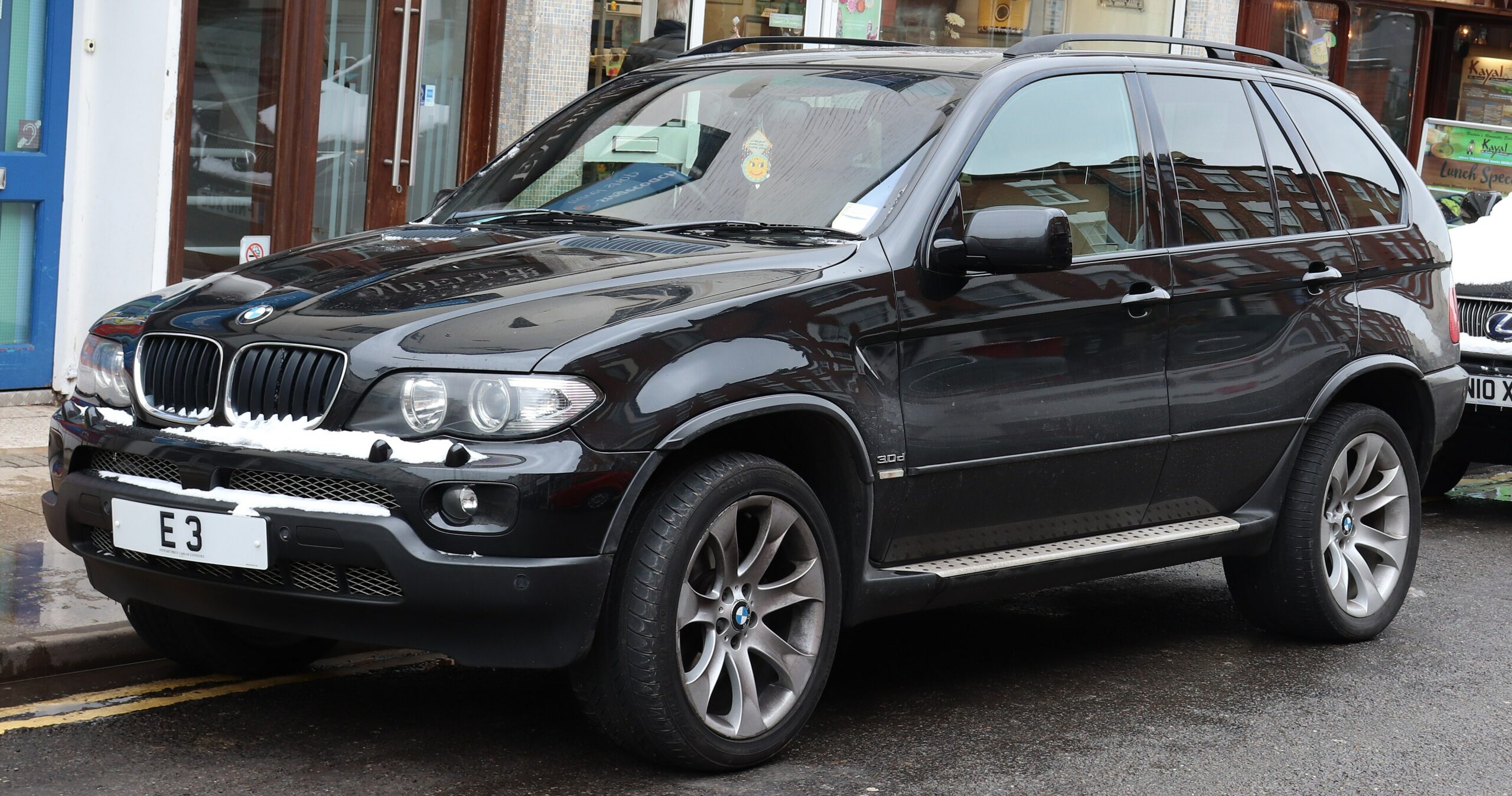
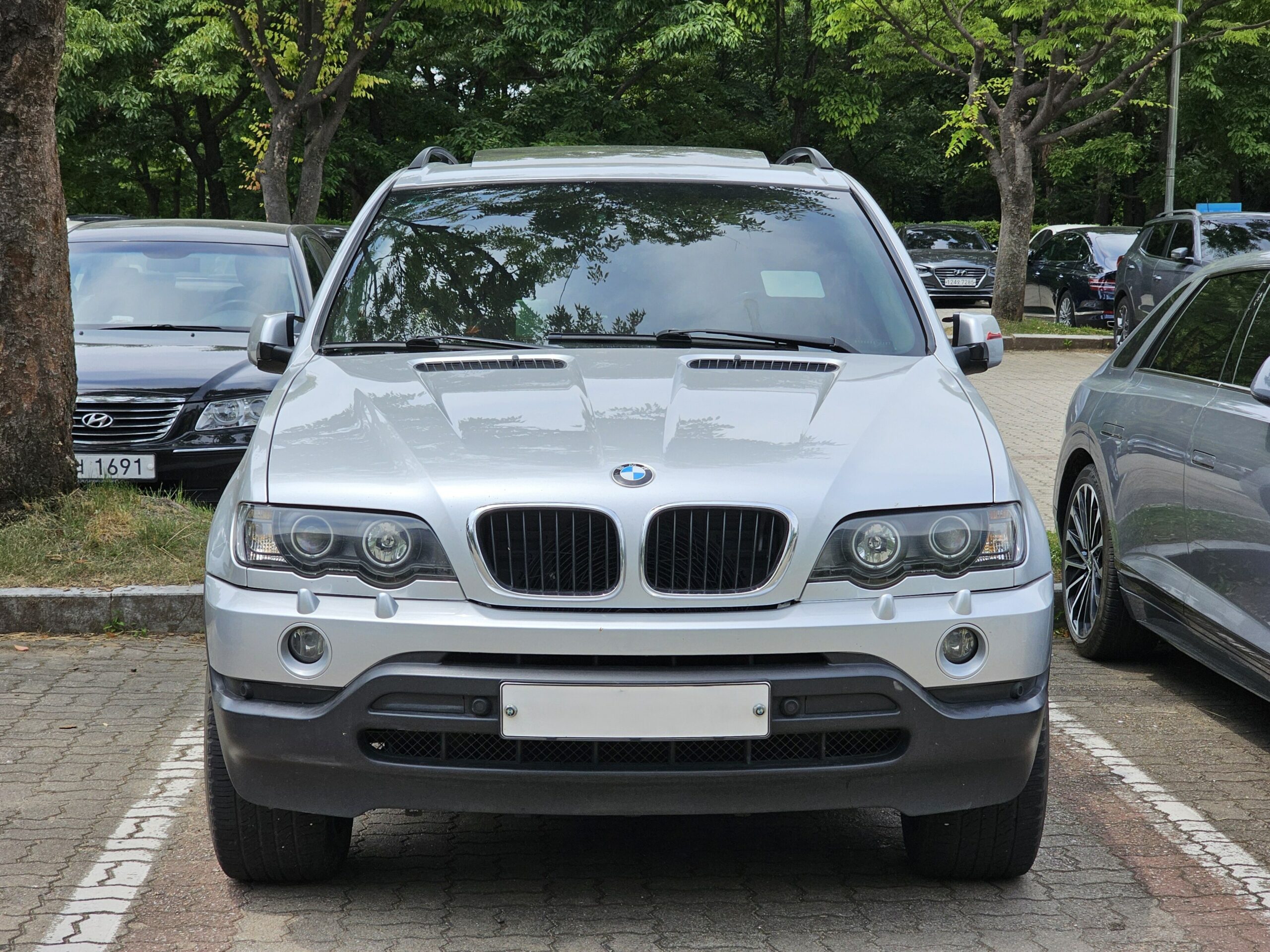
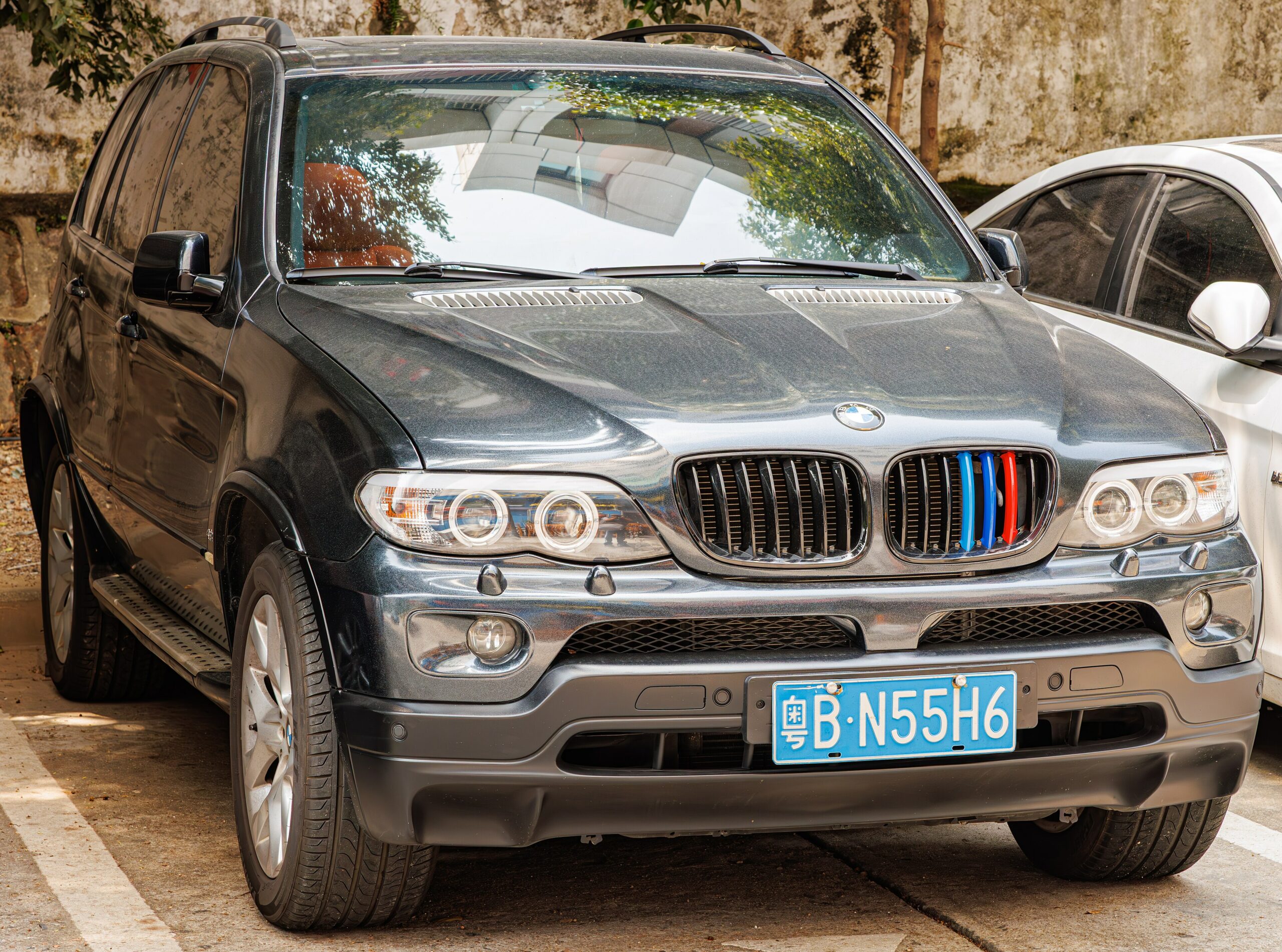
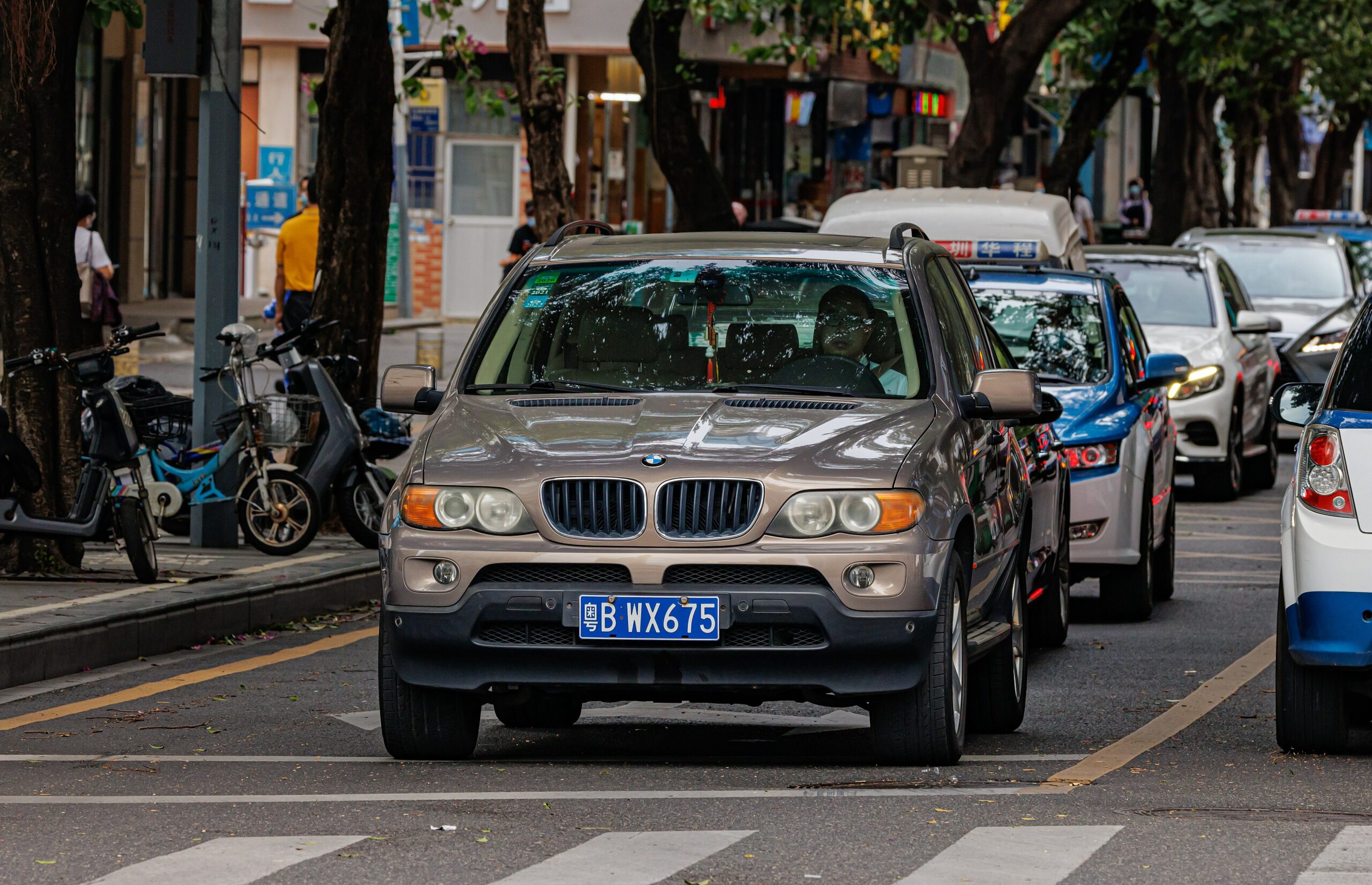
The car was built in Greer, South Carolina — the same plant that later produced the Z4 E85. In September 2003, roughly coinciding with the introduction of the X3, a facelift followed: new front headlights, fog lights, kidney grille, bonnet and tail lights. At the same time, the improved all-wheel-drive system xDrive was introduced.
Production ended in September 2006. The successor E70 arrived in the USA as early as the end of 2006, and in Europe from March 2007.
02 · Historie
Seven years of the X5
From the Detroit premiere to the E70.
- 1999 Premiere at the NAIAS in Detroit. Launched in the USA in autumn, with the first cars reaching American dealers by the end of the year. At launch, only two engines are available: the 3.0i with 231 PS and the 4.4i.
- 2000 In May, the X5 arrives in Germany. BMW presents a concept car at the Geneva Motor Show.
- 2001 In April, the 3.0d with 184 PS is added to the lineup.
- 2002 In February, the 4.6is arrives as the top model with 480 Nm and 240 km/h.
- 2003 In September, a facelift, roughly coinciding with the introduction of the X3. The 3.0d receives second-generation common-rail injection and now produces 218 PS at 500 Nm. xDrive is introduced.
- 2004 In April, the 4.8is replaces the 4.6is: N62B48, 4,799 cm³, 360 PS. BMW introduced the same larger displacement in the 5 Series and 7 Series in 2005.
- 2006 In September, production ends. The E70 is presented in autumn.
03 · Modellübersicht
The engine variants
At market launch, there were only two engines. The range grew over the production period to six variants, two of them diesel.
Quelle: Werks- und Literaturangaben · geprüft
Technische Daten anzeigen — komplette Modellmatrix
| Modell | Motor | Hubraum | Leistung | Bauzeit |
|---|---|---|---|---|
| 3.0i | M54B30 | 2.979 cm³ | 231 PS (170 kW) | 05/2000–09/2006 |
| 4.4i | M62B44TÜ | 4.398 cm³ | 286 PS (210 kW) | from market launch |
| 4.6is | V8 | 4.398 cm³ | 347 PS, 480 Nm at 3,700/min | 02/2002–07/2003 |
| 4.8is | N62B48 | 4.799 cm³ | 360 PS (265 kW) | 04/2004–09/2006 |
| 3.0d (until 2003) | M57D30 | 2.926 cm³ | 184 PS (135 kW) | 04/2001–09/2003 |
| 3.0d (ab 2003) | M57D30TÜ | 2.993 cm³ | 218 PS (160 kW) | 10/2003–09/2006 |
04 · Karosserievarianten
Karosserievarianten
Five-door body with split tailgate

The only body style. The signature feature is the horizontally split tailgate; the lower section folds down and can bear weight. After the 2003 facelift, the tail lights show the L-shape typical of the era. As the BMW X5 security, the car was also available from the factory as a special-protection vehicle of resistance class B4.
05 · Motoren
From 184 to 360 PS
The range spans from the six-cylinder diesel to the 4.8-litre V8. Figures in brackets for top speed, according to the source, apply to vehicles without a limiter.
N62B48 · 4.799 cm³ · 360 PS — X5 4.8is geprüft
The top model from April 2004, replacing the 4.6is. 360 PS at 6,200 rpm, 500 Nm at 3,500, 246 km/h and 6.1 seconds from zero to hundred. The engine is based on the new N62 V8 and received the larger displacement of 4,799 instead of 4,398 cm³ — the same increase that BMW introduced in the 5 Series and 7 Series in 2005.
Technische Daten anzeigen
| Bauart | V8 petrol engine N62 |
| Hubraum | 4.799 cm³ |
| Leistung | 265 kW (360 PS) at 6,200/min |
| Drehmoment | 500 Nm at 3,500/min |
| Höchstgeschwindigkeit | 246 km/h |
| 0–100 km/h | 6,1 s |
| Bauzeit | 04/2004–09/2006 |
Data table, Wikipedia DE, on the E53 model line
M62B44TÜ · 4.398 cm³ · 286 PS — X5 4.4i geprüft
One of the two engines at market launch. 286 PS at 5,400 rpm, 440 Nm at 3,600, 206 km/h limited or 230 km/h without the limiter.
Technische Daten anzeigen
| Bauart | V8-Ottomotor |
| Hubraum | 4.398 cm³ |
| Leistung | 210 kW (286 PS) at 5,400/min |
| Drehmoment | 440 Nm at 3,600/min |
| Höchstgeschwindigkeit | 206 km/h, 230 km/h without the limiter |
Data table, Wikipedia DE, on the E53 model line
M54B30 · 2.979 cm³ · 231 PS — X5 3.0i geprüft
The inline six-cylinder entry-level engine, in the lineup from market launch to the end of production. 231 PS at 5,900 rpm, 300 Nm at 3,500, 202 km/h limited or 215 km/h, zero to hundred in 8.5 seconds.
Technische Daten anzeigen
| Bauart | Reihensechszylinder-Ottomotor |
| Hubraum | 2.979 cm³ |
| Leistung | 170 kW (231 PS) at 5,900/min |
| Drehmoment | 300 Nm at 3,500/min |
| Höchstgeschwindigkeit | 202 km/h, 215 km/h without the limiter |
| 0–100 km/h | 8,5 s |
| Bauzeit | 05/2000–09/2006 |
Data table, Wikipedia DE, on the E53 model line
M57D30TÜ · 2.993 cm³ · 218 PS — X5 3.0d ab 10/2003 geprüft
With the facelift, the diesel received second-generation common-rail direct injection. Output rose from 184 to 218 PS, torque from 410 to 500 Nm between 2,000 and 2,750 rpm. Zero to hundred in 8.3 seconds — quicker than the 3.0i.
Technische Daten anzeigen
| Bauart | Reihensechszylinder-Dieselmotor |
| Hubraum | 2.993 cm³ |
| Leistung | 160 kW (218 PS) at 4,000/min |
| Drehmoment | 500 Nm at 2,000–2,750/min |
| Höchstgeschwindigkeit | 210 km/h |
| 0–100 km/h | 8,3 s |
| Bauzeit | 10/2003–09/2006 |
Data table, Wikipedia DE, on the E53 model line
06 · Schwachstellen
Reliability & Weak Points
- The rear air suspension is the classic wear point on cars equipped with it. Air springs and compressor are spare parts with a notable price.
- On the M62 and N62, valve cover gaskets, crankcase ventilation and, at high mileage, the Alusil cylinder bores are the known issues. Oil consumption is the telltale sign.
- The transfer case and its actuator motor are a known weak point, especially on pre-facelift cars without xDrive.
- Rust occurs at the rear wheel arches, the lower edge of the tailgate and the lower edges of the doors. On a car from the USA, checking the underbody is particularly worthwhile.
- The M57 diesel is considered robust; more critical are peripheral components such as the swirl flaps and, at high mileage, the dual-mass flywheel.
07 · Technik
SAV instead of SUV
Facelift 2003
X5 security
The replica lawsuit
Split tailgate
Technische Daten — Achsübersetzungen & Getriebe
- Body
- five-door, horizontally split tailgate
- Drivetrain
- all-wheel drive, with xDrive from 09/2003
- Built in
- Greer, South Carolina, USA
- Market launch USA
- late 1999 · Germany: May 2000
- Production end
- September 2006
- Facelift
- September 2003 — front headlights, fog lights, kidney grille, bonnet, tail lights
- Manufacturer designation
- SAV (Sports Activity Vehicle)
- Special protection
- BMW X5 security, resistance class B4, from the factory
- Predecessor
- none · Successor: E70 (USA from late 2006, Europe from 03/2007)
08 · Einzelstück
The X5 Le Mans with 700 PS
At the 2000 Geneva Motor Show, BMW presented a one-off called the X5 Le Mans. It was powered by the S70 V12 with 6.1 litres of displacement — the same engine that had proven itself in the BMW V12 LMR and the McLaren F1, and with which BMW won the overall classification at the 24 Hours of Le Mans in 1995.
Without an air restrictor, it produced around 700 PS and 720 Nm at 5,000 rpm. That was enough for 4.7 seconds from zero to hundred and over 300 km/h. Apart from the interior, suspension and brakes, the car was close to series production.
Hans-Joachim Stuck lapped the Nürburgring Nordschleife in this vehicle in 7:49 minutes. For context: as recently as the mid-1990s, only a few road-legal sports cars managed to break the eight-minute barrier.

09 · Kaufberatung
What matters: suspension and underbody
Today, the X5 E53 is an inexpensive car with the running costs of a luxury-class vehicle. When buying, the suspension, transfer case and bodywork are decisive.
With the car stationary, lower and raise the air suspension several times, listening to the compressor.
Check the transfer case while driving: jerking or warning lights when pulling away and manoeuvring are warning signs.
Inspect the rear wheel arches, the lower edge of the tailgate and the lower edges of the doors for rust.
On the V8, ask about oil consumption and check the valve covers for signs of oil seepage.
Determine the model year from the front: headlights, fog lights, grille and bonnet were changed in September 2003.
The 3.0d after the facelift is the sensible X5 — 218 PS, 500 Nm, and quicker to hundred than the 3.0i. The 4.8is is the more interesting but significantly more expensive car.
10 · Die Konkurrenz
The competition
Mercedes-Benz ML (W163)
On the market from 1997, two years earlier. Also built in the USA, designed with greater off-road capability, and initially plagued by significant quality issues.
Porsche Cayenne (955)
From 2002, the direct rival in the sportily designed off-roader segment — with significantly greater off-road capability and a Turbo at the top of the range.
Range Rover (L322)
From 2001, with BMW engines in the early years. Objectively the more off-road capable car, and the benchmark the X5 deliberately chose not to be measured against.
11 · Galerie
Bilder
Before and after the facelift — and the split tailgate.
12 · Quellen
Belege & Literatur
The primary source is the German-language Wikipedia entry on the E53 model line, with the complete data table of engine variants. Image sources and licences are from Wikimedia Commons.