

01 · Überblick
A car invented by tax
The 320is exists for a single reason. BMW Group Classic puts it plainly: “Due to high tax burdens for automobiles with more than 2.0 litres of displacement in Italy, the BMW M3 with 2.3 litres was uneconomical for potential customers.” The same logic applied in Portugal. So BMW took the M3’s S14 and shortened the stroke from 84.0 to 72.6 mm. The bore remained at 93.4 mm, displacement dropped to 1,990 cc — just below the tax threshold. The result was 192 PS at 6,900/min.
The 320is was only ever offered as a facelift model. The four-door was available from dealers from September 1987, the two-door followed in March 1988 — both after the September 1987 facelift. A 320is with chrome bumpers never existed.
The two-door always came from the factory with the M-Technic package, meaning front spoiler, rear spoiler and sill covers. On the four-door, however, the M-Technic package II was optional equipment. All two-doors had the sport suspension, while four-doors received it from September 1989.
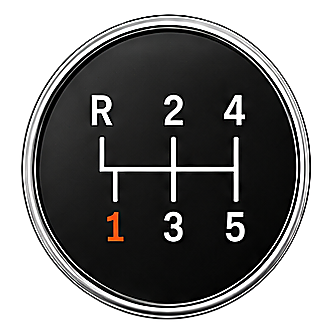
The 320is inherited its drivetrain from the M3: the Getrag 265 with dogleg shift pattern as in the European M3, plus a limited-slip differential with 25 percent lock, though geared shorter at 3.46:1. The M3 instrument cluster was also fitted, with an oil temperature gauge instead of the fuel consumption display.
Body and suspension were not carried over. The 320is retained the standard, narrow E30 body without the widened fenders and without the M3’s suspension-specific changes — and therefore also not its five-bolt hubs. It runs on the four-bolt wheel mount of the standard E30. All vehicles were left-hand drive and had no catalytic converter.
02 · Historie
What is confirmed — and what is not
For the 320is, the source situation is thinner than for any other E30.
- 1987 In September, coinciding with the model line's facelift, the four-door 320is arrives at Italian and Portuguese dealers.
- 1988 In March, the two-door follows — always fitted from the factory with the M-Technic package. BMW Group Classic dates the model's overall launch to this year.
- 1989 From September, the four-door also receives the sport suspension.
- 1991 End of production according to Wikipedia EN. BMW Group Classic, however, states 1990 — the contradiction remains unresolved.
03 · Modellübersicht
The 320is in comparison
The same engine block, three displacements, three different cars. The 320is sits below the M3 in displacement, but above it in specific output.
Quelle: Werks- und Literaturangaben · geprüft
Technische Daten anzeigen — komplette Modellmatrix
| Modell | Motor | Hubraum | Leistung | Bauzeit |
|---|---|---|---|---|
| 320is | S14B20 | 1.990 cm³ | 192 PS (141 kW) at 6,900/min | 1987–1990 |
| M3 (for comparison) | S14B23 | 2.302 cm³ | 195 to 215 PS at 6,750/min | 1986–1991 |
| 325i (for comparison) | M20B25 | 2.494 cm³ | 170 to 171 PS at 5,800/min | 1985–1991 |
04 · Karosserievarianten
Karosserievarianten
Two-door Sedan
2,542 units. Always fitted from the factory with the M-Technic package: front spoiler, rear spoiler, sill covers. Sport suspension standard. Instrument cluster from the M3 with oil temperature gauge.
Four-door Sedan
1,206 units. The four-door never existed for the M3. Here, the M-Technic package II was optional equipment, and the sport suspension was only added from September 1989.
05 · Motoren
The S14B20
The M3 engine with a shortened stroke. Everything else remained: four-valve head, two overhead camshafts, intake manifold injection.
S14B20 · 1.990 cm³ · 192 PS geprüft
Bore 93.4 mm, stroke 72.6 mm, compression ratio 10.8:1. 192 PS at 6,900/min, 212 Nm at 4,900/min. Compared to the M3's S14B23, only the stroke is shortened, from 84.0 to 72.6 mm — the bore remained unchanged. Relative to displacement, this is more specific output than the M3. There was no catalytic converter, and all vehicles were left-hand drive. Top speed according to BMW Group Classic: 227 km/h.
Technische Daten anzeigen
| Bauart | S14 inline four-cylinder, four valves per cylinder, two overhead camshafts |
| Hubraum | 1.990 cm³ |
| Bore × stroke | 93,4 × 72,6 mm |
| Verdichtung | 10,8:1 |
| Leistung | 192 PS (141 kW) at 6,900/min |
| Drehmoment | 212 Nm at 4,900/min |
| Katalysator | nein |
| Lenkung | left-hand drive only |
| Höchstgeschwindigkeit | 227 km/h |
Sources: BMW Group Classic (output, top speed, price), Wikipedia EN (torque, stroke, catalytic converter and left-hand drive), Wikipedia DE (BMW S14) for bore and compression ratio.
06 · Schwachstellen
Reliability & Weak Points
- Model-specific weak points of the 320is could not be verified twice. We therefore list none. The points that apply to every E30 apply here too — above all rust.
- The practically most important particularity is provenance. Many vehicles came to Germany as re-imports and were used in motorsport. Previous ownership history and body condition matter more here than for any other E30.
- The S14 is a high-revving engine. A complete service history is a basis for valuation with this car, not a bonus.
07 · Technik
Suspension, brakes, transmission
Karosserie
M-Technic-Paket
Wheel hubs and wheels
Transmission and axle
Innenraum
Technische Daten — Achsübersetzungen & Getriebe
- Body
- standard narrow E30 body, two-door and four-door, facelift specification only
- M-Technic package
- standard on the two-door, optional on the four-door (M-Technic package II)
- Sport suspension
- all two-doors, four-doors from September 1989
- Wheel hubs
- four bolts as on the standard E30, not the M3's five-bolt hubs
- Transmission
- Getrag 265 with five gears and dogleg shift pattern, as in the European M3
- Limited-slip differential
- 25 percent lock, as in the M3
- Final drive ratio
- 3.46:1 (M3: 3.25:1)
- Brakes
- standard E30, not the M3's system
- Track width
- standard E30
- Instrument cluster
- from the M3, with oil temperature gauge instead of fuel consumption display
- Top speed
- 227 km/h
- Price at market launch
- 51,714 DM
- Not verifiable and therefore not listed
- kerb weight, 0–100 km/h acceleration, factory wheel size and offset, brake disc diameter, track widths in millimetres. No source states the four-bolt wheel mount verbatim; it follows from the German Wikipedia's statement that the 320is uses the standard E30 body without the M3's suspension-specific changes, combined with the generally documented 4×100 bolt pattern for all E30 models except the M3.
08 · Kaufberatung
What matters: provenance and bodywork
The 320is is rare and was never intended for the German market. Anyone buying one is typically buying a re-imported vehicle — and with it a history that has yet to be reconstructed.
Gusset plates behind the front wheels, the transition from A-pillar to sill — the most critical point on the E30.
Battery tray and the area beneath it.
Rear wheel arches.
Sills and jacking points.
Boot: spare wheel well, area behind the tail lights, rear panel.
Frontscheibenrahmen.
Additionally with re-imports: traces of motorsport use — roll cage mounts, re-welded points, modified strut mounts.
The order is: first engine number and paperwork, then bodywork, then mechanicals. A 320is without a verifiable provenance is difficult to assess, because you know neither what it has been through nor whether the engine is the original one.
09 · Die Konkurrenz
The competition
Alfa Romeo 75 2.0 Twin Spark
The main rival in the home market: 1,962 cc, 148 PS, the same tax advantage, rear-wheel drive and transaxle layout. Significantly less power and without four-valve technology — exactly the gap into which BMW pushed with the 320is.
Ford Sierra RS Cosworth
With a two-litre turbo, also below the tax threshold and, with at least 204 PS, more powerful. It shows that a displacement limit did not have to mean forgoing performance. BMW chose the naturally aspirated engine: better throttle response, inferior in pulling power.
Lancia Delta HF Integrale
The third obvious two-litre rival in the Italian market. We could not secure reliable output and performance figures under our sourcing rules; we therefore mention it without figures.
10 · Quellen
Belege & Literatur
Our primary sources are BMW Group Classic and Wikipedia. Information from other sources has been checked at least twice. For the 320is, the overall source situation is thin; we have therefore omitted more than usual and note in each case what is missing.