

01 · Überblick
The most controversial 5 Series
The E60 arrived in July 2003 as successor to the E39 — and met a clientele that considered its predecessor the best 5 Series ever built. The design language under Chris Bangle, with its stepped boot line and rising side crease, was polarising from day one.
Technically, the car was more advanced than the debate suggested. One special feature is the weight-reduced aluminium front end (GRAV): as once on the Porsche 928, the front end is made of aluminium, while the passenger cell and rear end are steel. The weight saved at the front gives the car a 50:50 axle load distribution. Both axles are likewise of aluminium construction.
The E60 also introduced the iDrive control concept to the 5 Series. It is the second major point of contention for the model line — and the reason why many early cars run a control logic that BMW later revised several times.
The best-selling model of the line was the 530d. At the top, from July 2005, stood the M5 with a 4,999 cc V10 — to this day the only ten-cylinder in a production BMW.
02 · Historie
Seven years of the 5 Series
From the succession of the E39 to the F10.
- 07/2003 Introduction of the E60 as successor to the E39. It brings iDrive to the 5 Series.
- 2004 The E61 Touring joins the model line.
- 07/2005 The 545i is replaced by the 550i: N62B48, 4,799 cc, 367 PS. At the same time, the M5 appears with the V10.
- 03/2005 Xenon headlights changed from D2S to D1S, along with a revised ballast unit. A detail that matters when sourcing spare parts.
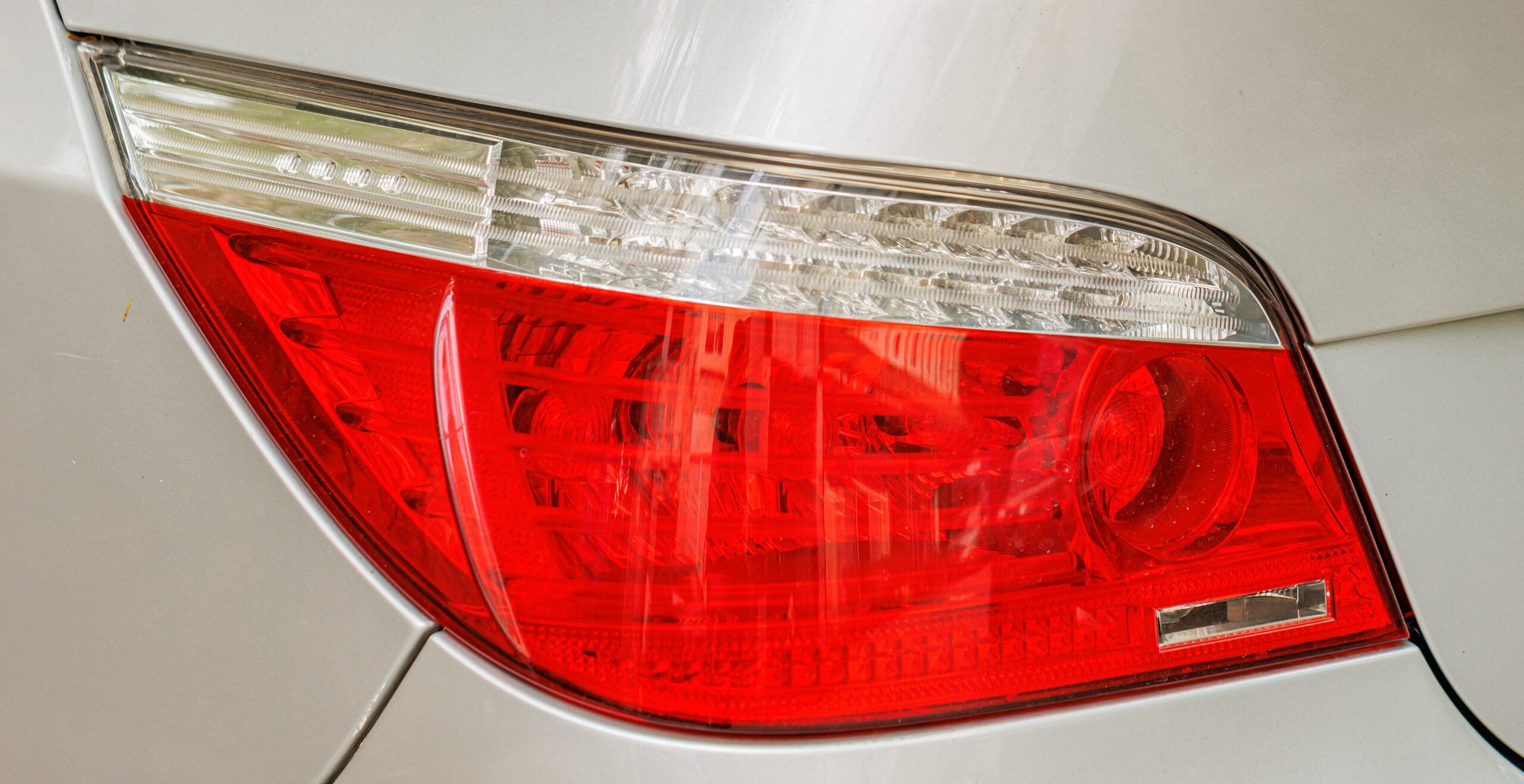
- 2007 From spring, daytime running lights via corona rings; from autumn, cornering lights and LED tail lights.
- 2010 In spring, the F10 replaces the Sedan; in autumn, the F11 replaces the Touring — after 277,588 E61s were built.
03 · Modellübersicht
The model line's engines
Fourteen model designations, twenty-five specification stages — the E60 is the most diverse 5 Series generation. Factory figures for Europe unless otherwise noted. The xDrive derivatives (525xi, 530xi, 530xd) carry the technology of their respective rear-wheel-drive variant and are not listed separately here.
Quelle: Werks- und Literaturangaben · geprüft
Technische Daten anzeigen — komplette Modellmatrix
| Modell | Motor | Hubraum | Leistung | Bauzeit |
|---|---|---|---|---|
| 520i | M54B22 | 2.171 cm³ | 170 PS (125 kW) | 2003–2005 |
| 520i | N43B20, in countries with high-sulphur fuel N46B20 | 1.995 cm³ | 156 or 170 PS | 2007–2010 |
| 523i | N52B25 | 2.497 cm³ | 177 PS (130 kW) | 2005–2007 |
| 523i | N53B25 | 2.497 cm³ | 190 PS (140 kW) | 2007–2010 |
| 525i | M54B25 | 2.494 cm³ | 192 PS (141 kW) | 2003–2005 |
| 525i | N52B25 | 2.497 cm³ | 218 PS (160 kW) | 2005–2007 |
| 525i | N53B30 | 2.996 cm³ | 218 PS (160 kW) | 2007–2010 |
| 528i | N52B30 | 2.996 cm³ | 234 PS (172 kW) | 2007–2010, mainly North America |
| 530i | M54B30 | 2.979 cm³ | 231 PS (170 kW) | 2003–2005 |
| 530i | N52B30 | 2.996 cm³ | 258 PS (190 kW) | 2005–2007 |
| 530i | N53B30 | 2.996 cm³ | 272 PS (200 kW) | 2007–2010 |
| 535i | N54B30, twin-turbo | 2.979 cm³ | 306 PS (225 kW) | 2007–2010 |
| 540i | N62B40 | 4.000 cm³ | 306 PS (225 kW) | 2005–2010 |
| 545i | N62B44 | 4.398 cm³ | 333 PS (245 kW) | 2003–2005 |
| 550i | N62B48 | 4.799 cm³ | 367 PS (270 kW) | 2005–2010 |
| M5 | S85B50, V10 | 4.999 cm³ | 507 PS (373 kW) | 2005–2010 |
| 520d | M47TU2 | 1.995 cm³ | 163 PS (120 kW) | 2005–2007 |
| 520d | N47D20 | 1.995 cm³ | 177 PS (130 kW) | 2007–2010 |
| 525d | M57TU | 2.497 cm³ | 177 PS (130 kW) | 2004–2007 |
| 525d | M57TU2 | 2.993 cm³ | 197 PS (145 kW) | 2007–2010 |
| 530d | M57TU | 2.993 cm³ | 218 PS (160 kW) | 2003–2005 |
| 530d | M57TU | 2.993 cm³ | 231 PS (170 kW) | 2005–2007 |
| 530d | M57TU2 | 2.993 cm³ | 235 PS (173 kW) | 2007–2010 |
| 535d | M57TU, twin-turbo | 2.993 cm³ | 272 PS (200 kW) | 2004–2007 |
| 535d | M57TU2, twin-turbo | 2.993 cm³ | 286 PS (210 kW) | 2007–2010 |
04 · Karosserievarianten
Karosserievarianten
Sedan (E60)

The base body from July 2003. Front end aluminium, passenger cell and rear end steel. Replaced in spring 2010 by the F10.
Touring (E61)

From 2004. 277,588 examples of the Touring were built; it ran until autumn 2010 and was replaced by the F11.
05 · Motoren
Der V10
The S85B50 is the only ten-cylinder BMW ever installed in a production vehicle. It ran in the M5 (E60/E61) and the M6 (E63/E64).
S85B50 · 4.999 cm³ · 507 PS — M5 geprüft
Ten-cylinder V-engine with 4,999 cc. 507 PS at 7,750 rpm and 520 Nm at 6,100 — the torque peak thus arrives higher up than the rated output of some naturally aspirated engines. Zero to a hundred in 4.7 seconds as a Sedan, 4.8 seconds as a Touring, top speed electronically limited to 250 km/h. Built from July 2005 to September 2010.
Technische Daten anzeigen
| Bauart | Zehnzylinder-V-Motor |
| Hubraum | 4.999 cm³ |
| Leistung | 373 kW (507 PS) at 7,750/min |
| Drehmoment | 520 Nm at 6,100/min |
| 0–100 km/h | 4.7 s Sedan, 4.8 s Touring |
| Höchstgeschwindigkeit | 250 km/h, electronically limited |
| Bauzeit | 07/2005–09/2010 |
Data table, Wikipedia DE, E60 model line
N62B48 · 4.799 cm³ · 367 PS — 550i geprüft
The most powerful eight-cylinder below the M5, from July 2005 as successor to the 545i. 367 PS at 6,300 rpm, 490 Nm from as low as 3,400. Zero to a hundred in 5.2 seconds as a Sedan.
Technische Daten anzeigen
| Bauart | Eight-cylinder V-engine N62 |
| Hubraum | 4.799 cm³ |
| Leistung | 270 kW (367 PS) at 6,300/min |
| Drehmoment | 490 Nm at 3,400/min |
| 0–100 km/h | 5.2 s Sedan, 5.3 s Touring (manual transmission) |
| Bauzeit | 07/2005–09/2010 |
Data table, Wikipedia DE, E60 model line
N62B44 · 4.398 cm³ · 333 PS — 545i geprüft
The first-series eight-cylinder from July 2003 to July 2005. Zero to a hundred in 5.8 seconds as a Sedan, 5.9 as a Touring.
Technische Daten anzeigen
| Hubraum | 4.398 cm³ |
| Leistung | 245 kW (333 PS) |
| 0–100 km/h | 5.8 s Sedan, 5.9 s Touring |
| Bauzeit | 07/2003–07/2005 |
Data table, Wikipedia DE, E60 model line
06 · Schwachstellen
Reliability & Weak Points
- The M5’s V10 is the most expensive topic in the model line: connecting rod bearing shells and the VANOS pump are known weak points. A car without proof of renewed bearing shells is a risk, not a bargain.
- On the N62 eight-cylinder in the 545i and 550i, the valve cover gaskets and crankcase ventilation are wear points. At high mileages, the topic of Alusil bores also comes into play.
- The aluminium-steel mixed construction at the front is a point for accident inspection. Improperly repaired front ends are hard to spot and expensive to correct.
- Electronics: the iDrive computer, body electronics control unit and Active Steering are known sources of faults. Reading the fault memory is not optional with this car.
- The M5’s SMG transmission has its own hydraulic pump, which can fail. Replacement is expensive.
07 · Technik
GRAV — the aluminium front end
Chassis and steering
iDrive
The moose test incident
Lichttechnik
No factory motorsport
Technische Daten — Achsübersetzungen & Getriebe
- Bodies
- Sedan (E60) and Touring (E61)
- Front end
- aluminium (GRAV), passenger cell and rear end steel
- Axle load distribution
- 50:50
- Front axle
- double-joint spring strut axle, aluminium construction
- Rear axle
- multi-link axle, aluminium construction
- Steering
- rack-and-pinion steering
- Control concept
- iDrive, first introduced in the 5 Series with the E60
- Touring E61 production
- 277,588
- Production sites
- Dingolfing, Egypt (Bavarian Auto Group), Shenyang (BMW Brilliance)
- Safety
- ABS with brake assist and Cornering Brake Control, ESP, seatbelt pretensioners
- Xenon
- D2S until 03/2005, then D1S with revised ballast unit
08 · M GmbH
The M5 with the V10
From July 2005 to September 2010, M GmbH built the M5 based on the E60 and the Touring based on the E61. The engine is the S85B50, a ten-cylinder with 4,999 cc, 507 PS at 7,750 rpm and 520 Nm at 6,100.
It is the only ten-cylinder BMW ever used in a production vehicle. The same engine ran in the M6 of the E63 and E64 model lines. Zero to a hundred takes 4.7 seconds in the Sedan and 4.8 in the Touring; top speed is limited to 250 km/h.
An M5 Touring is the rarer and today more sought-after variant — BMW never offered it again afterwards, until the return of the M5 Touring in the G99 model line.

09 · Kaufberatung
What matters: engine choice and electronics
With the E60, engine choice determines running costs more than with any other 5 Series. There are worlds between a 530d and an M5 — not in purchase price, but in operation.
Have the fault memory read out, completely and across all control units. For the E60, this is the most important check.
For the M5, ask for the history of the connecting rod bearing shells and the VANOS pump. Without proof, budget for four-figure sums.
Check the front end for accident repairs. Aluminium does not forgive botched work and reveals it in panel gaps.
On the N62, watch for oil consumption and oily residue at the valve covers.
Date the model year by the lighting technology: corona rings from spring 2007, LED tail lights from autumn 2007, D1S xenon from March 2005.
The 530d is the sensible E60 and was, not without reason, the best-selling model. The M5 is the special car — but only with a complete history.
10 · Die Konkurrenz
The competition
Mercedes-Benz E-Class (W211)
The direct rival from 2002. More conservatively styled and therefore less controversial — with its own problems in the Sensotronic brake.
Audi A6 (C6)
From 2004, with quattro and the single-frame grille. The A6 gained market share in this generation that the E60 lost through its design.
Jaguar S-Type R
The outsider of the class with a supercharged V8. Objectively no match for the German volume models, but the more interesting alternative to the 545i.
11 · Galerie
Bilder
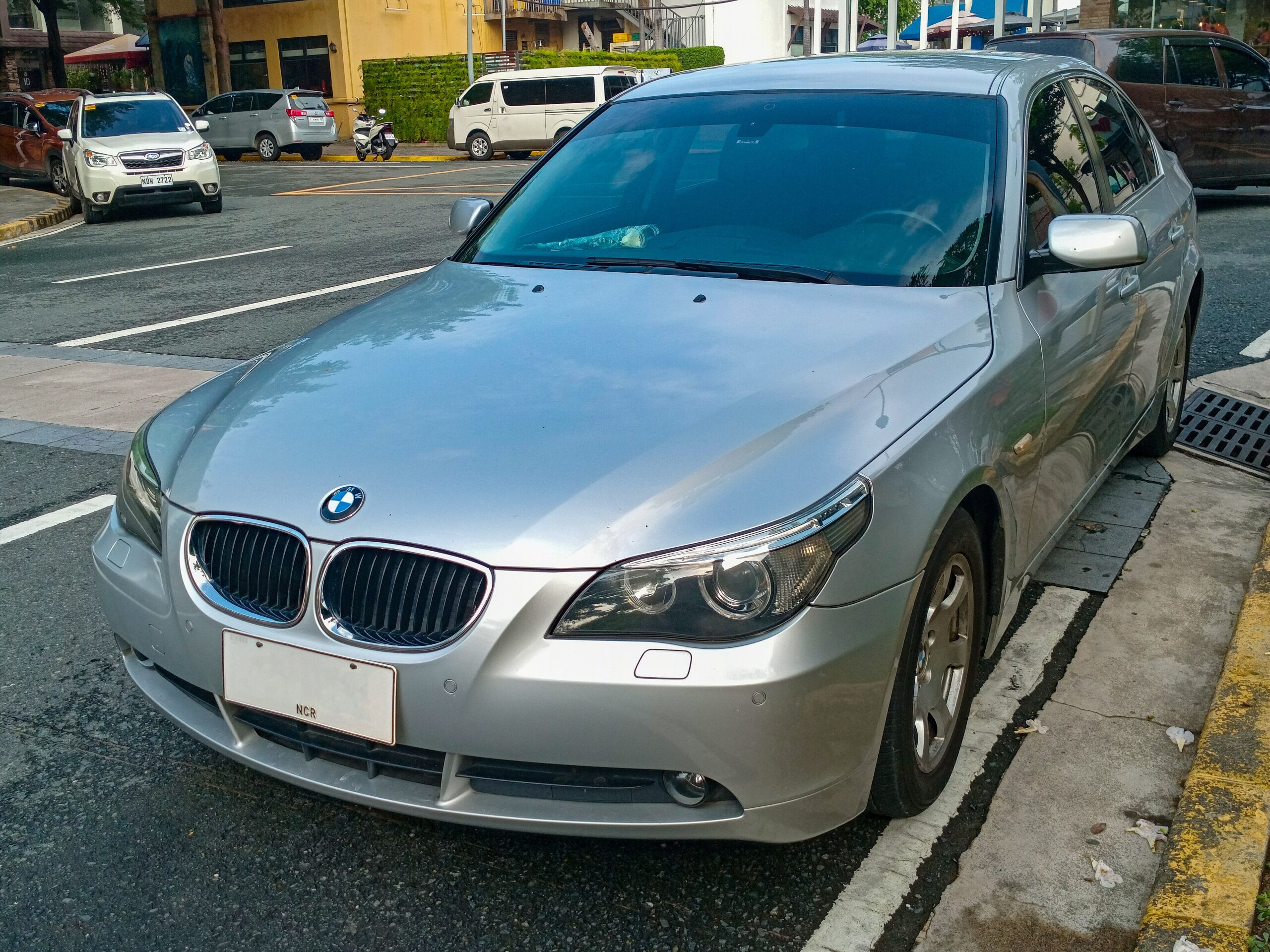
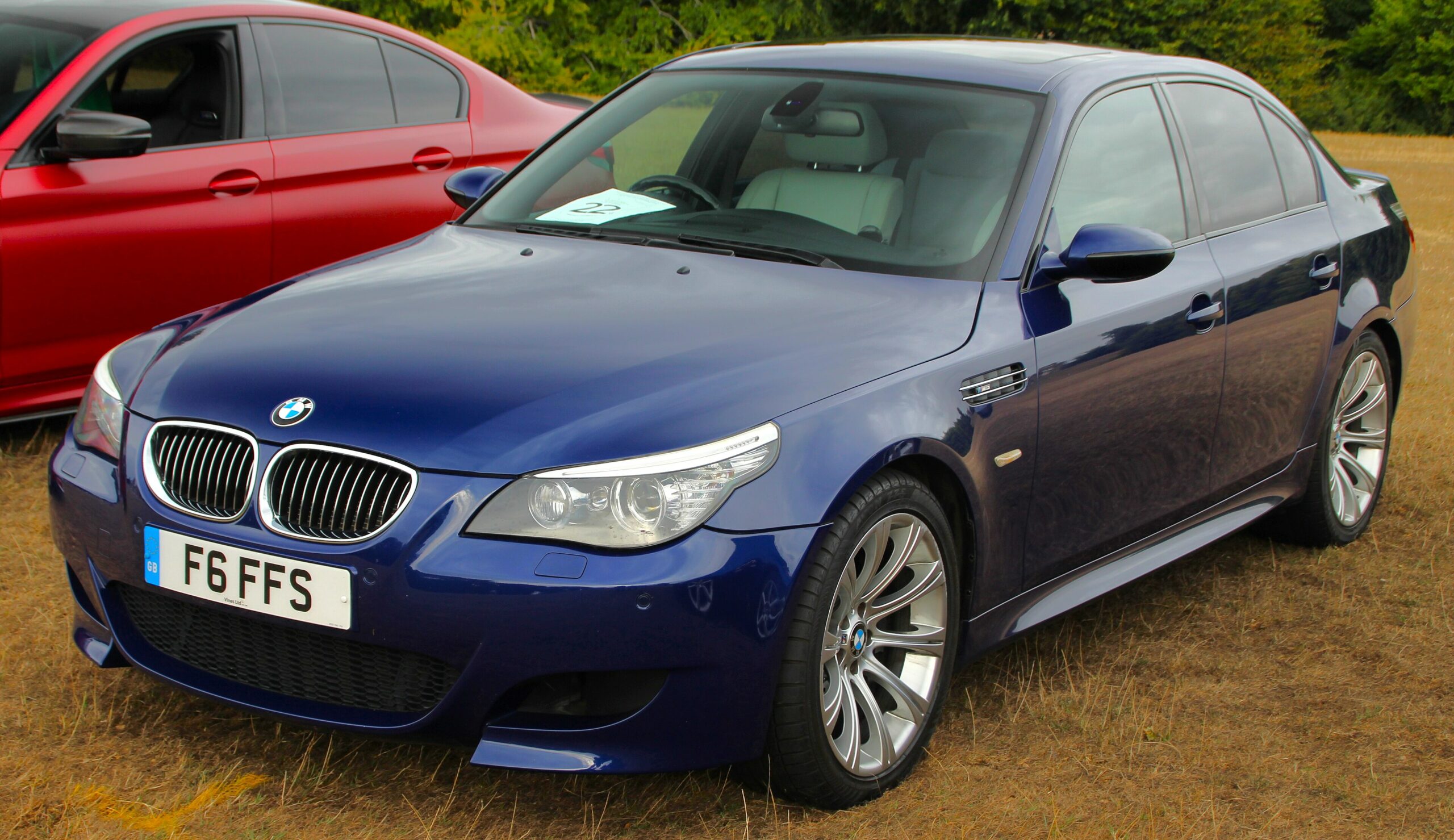
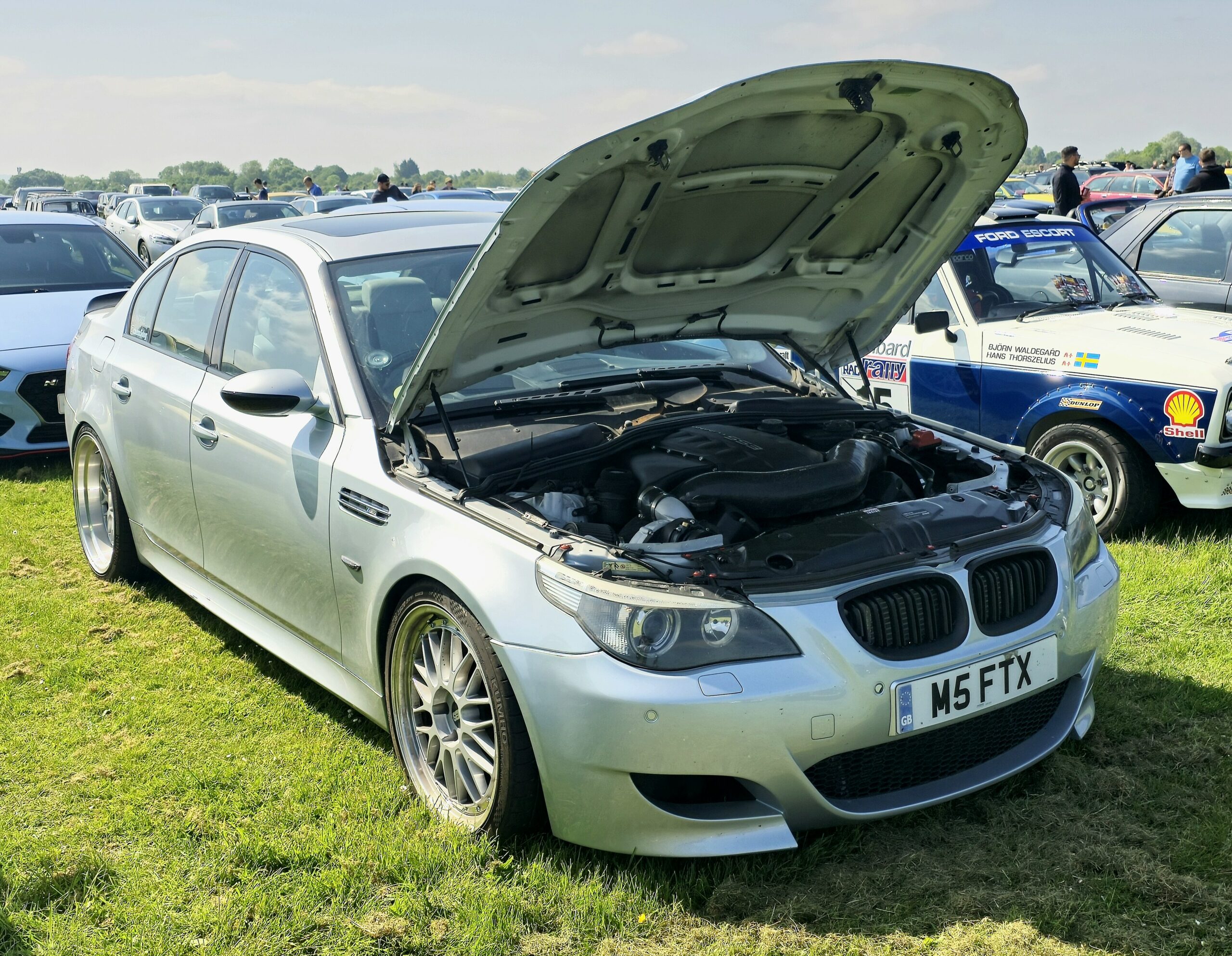
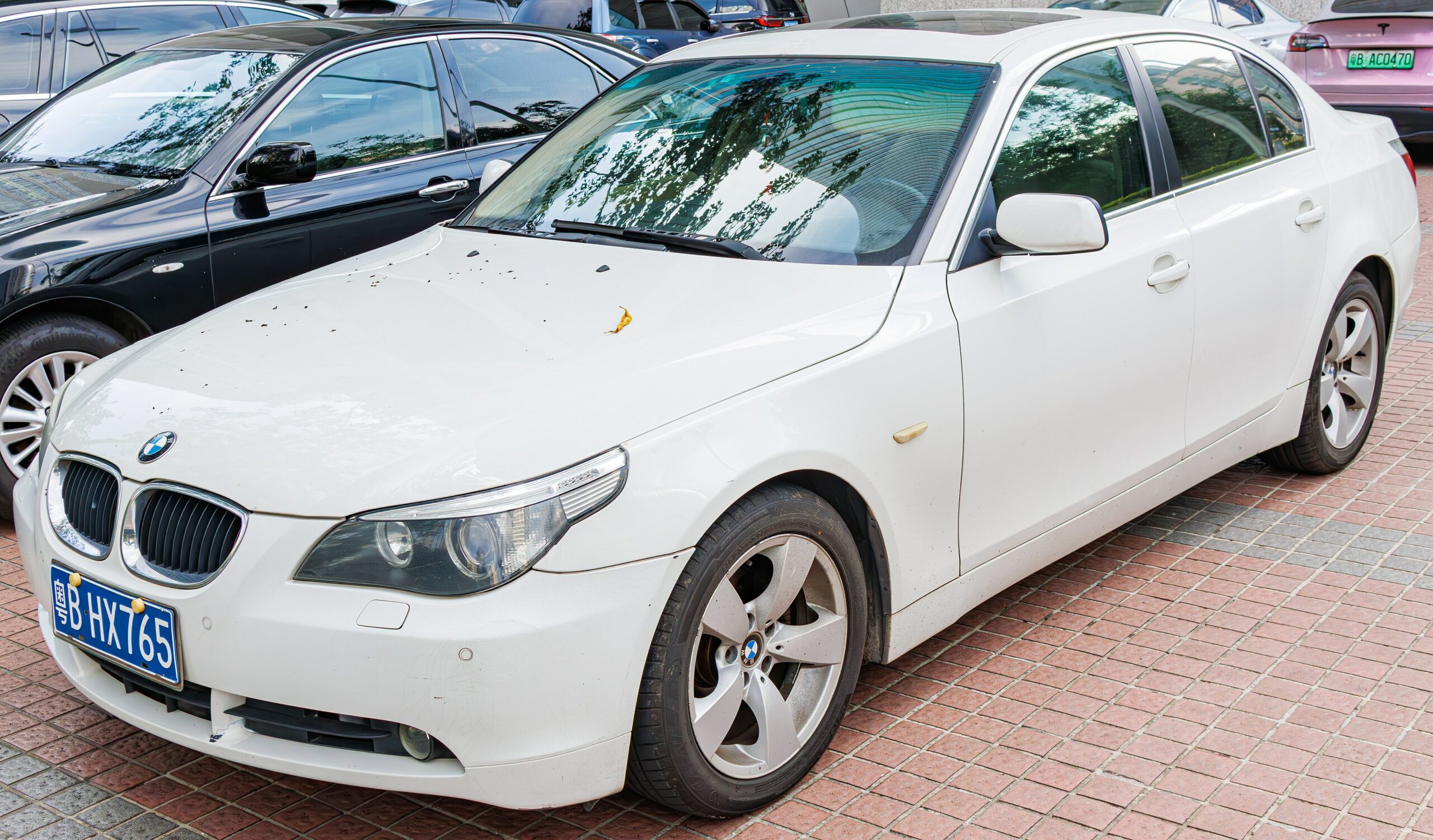
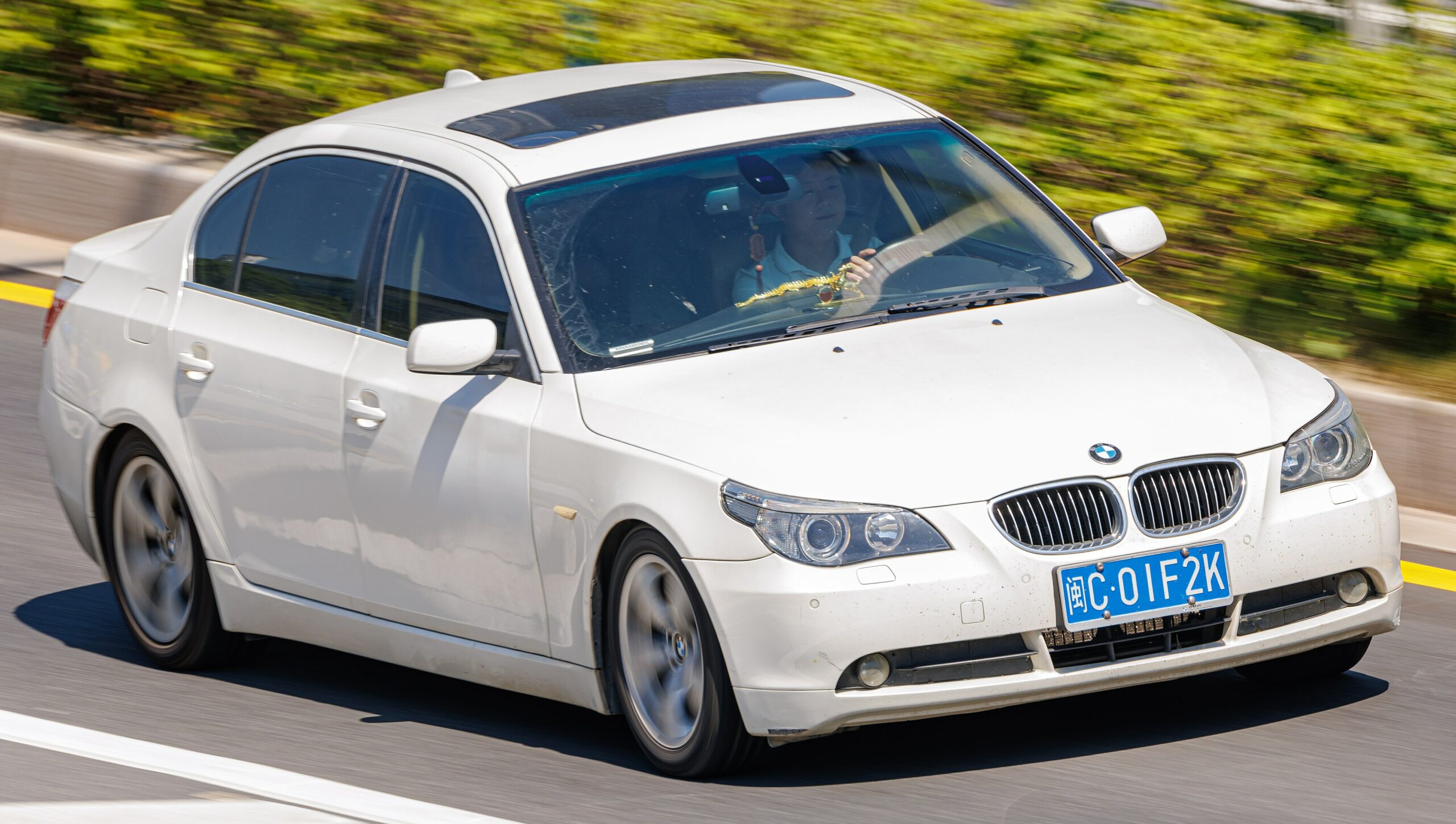
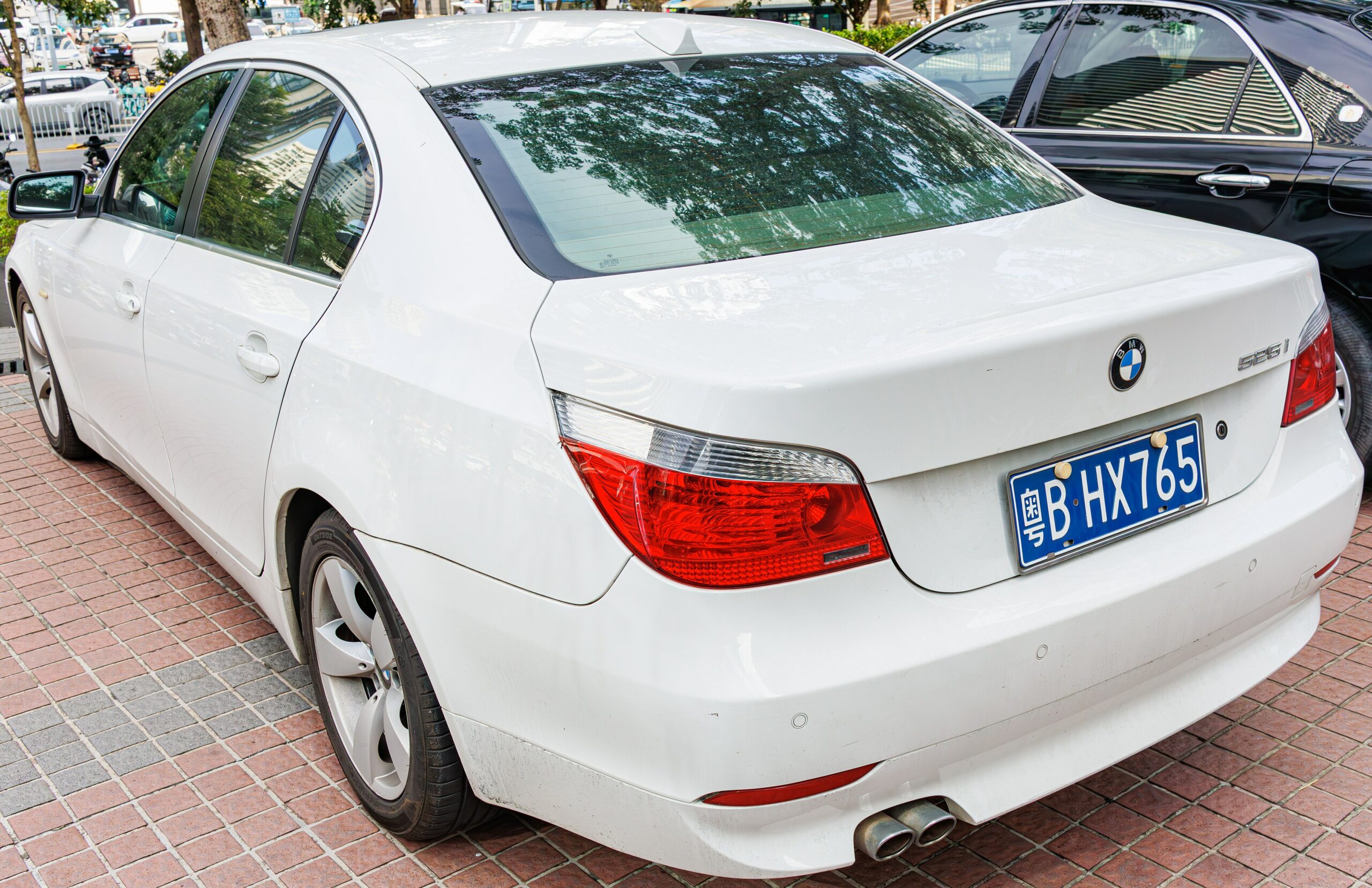
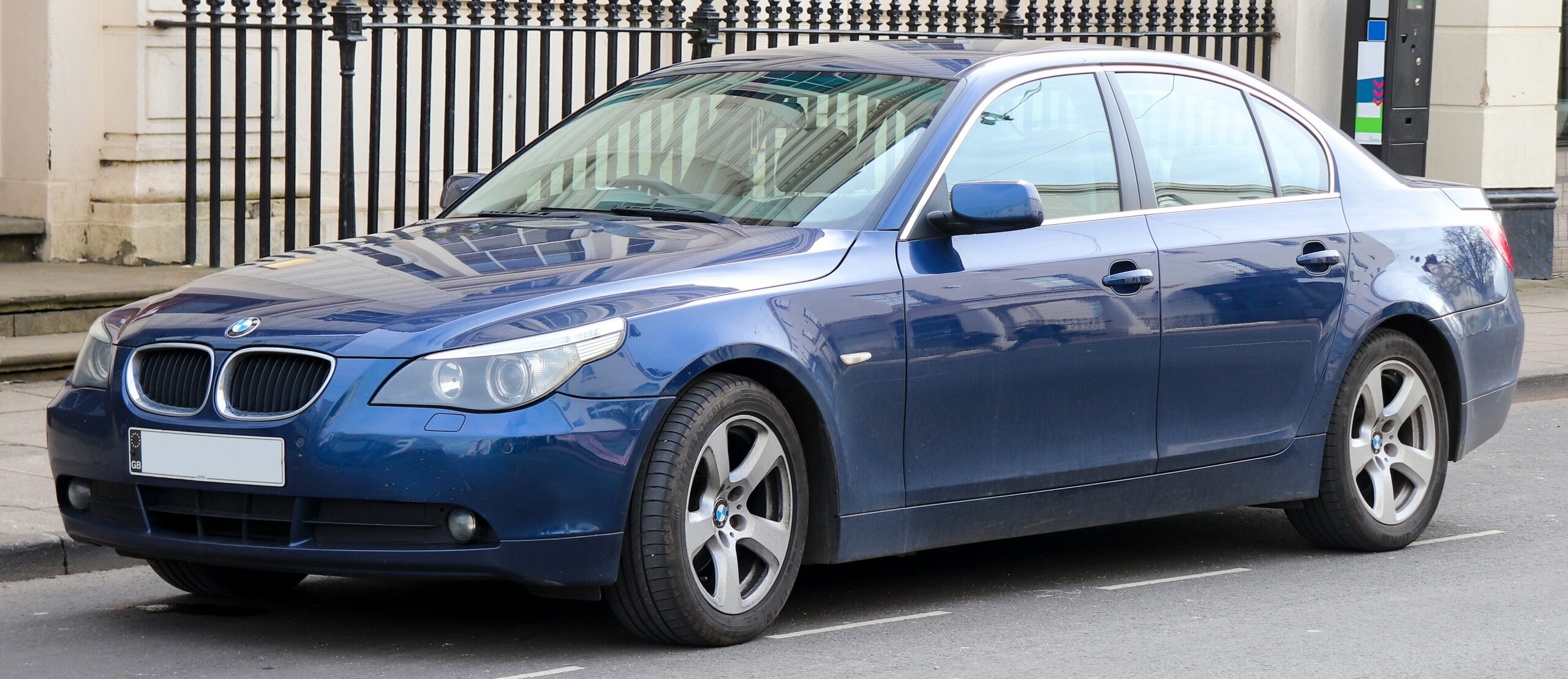
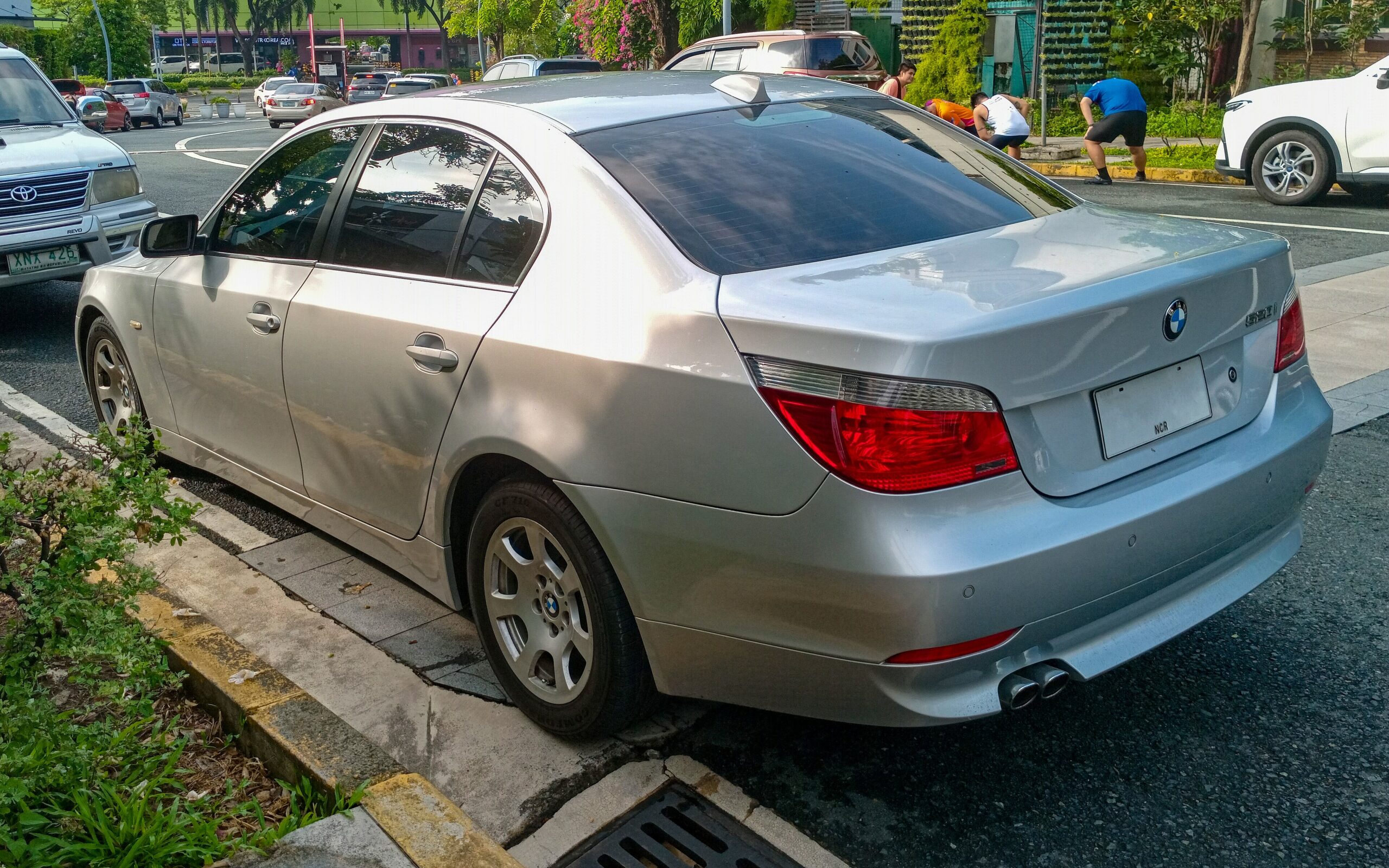
Sedan, Touring and the M5 with the V10.
Andere BMW 5er Generationen
5 Baureihen mit E-Nummer, von 1972 bis 2010.

12 · Quellen
Belege & Literatur
The lead source for production periods, engine codes and performance figures is the German-language Wikipedia entry on the E60 model line, whose data tables list values for Sedan and Touring separately. Image sources and licences are from Wikimedia Commons. What remains unresolved with the E60: for the 535i, the English Wikipedia gives 225 kW (306 PS), auto-data gives 300 PS — we follow the kW figure. The same source states that the 535i was sold exclusively in North America; the European databases, however, list it in the European line-up. The contradiction is not resolved. For the 528i, 234 PS stands against 230 PS. The diesel engine codes are only singly sourced and are therefore given as a family (M57TU, M57TU2) rather than with a full designation.
- Wikipedia — BMW E60 (model history, GRAV, chassis, data tables for petrol and diesel engines)
- Wikipedia — BMW S85 (V10 data)
- Wikimedia Commons — Category:BMW E60 (image sources and licences)
- Wikipedia (EN): BMW 5 Series (E60)
- auto motor und sport: technical data BMW 5 Series E60/E61
- auto-data.net: BMW 5 Series (E60) and E60 LCI