

01 · Überblick
The 6 Series returns — as successor to the 8 Series
In late summer 2003, BMW unveiled the E63 at the IAA in Frankfurt. The car carries the designation 6 Series, last used on the E24 until spring 1989 — but it is in fact the successor to the 8 Series Coupé E31, discontinued in mid-1999. Its design is seen as bearing a resemblance to the Z9 concept of 1999.
Technically, the 6 Series shares its basis with the 5 Series E60: engines, components, the optional Active Steering with variable ratio, and the aluminium-steel mixed construction including the weight-reduced aluminium front end.
At launch, only the Coupé was available, as the 645Ci with 4.4 litres and 333 PS. A few months later, the 630i arrived with three litres and 258 PS, as Coupé and Convertible. In 2005, the 650i with 4.8 litres and 367 PS replaced the 645Ci.
From 2005, the M6 stood at the top of the range with the V10 from the M5. At 4.6 seconds from zero to a hundred, it is a tenth faster than the Sedan. And with the facelift came something the 8 Series never had: a diesel, the 635d with 286 PS and 580 Nm.
02 · Historie
Seven years of the 6 Series
From the IAA 2003 to the last car in 2010.
- 1999 BMW presents the Z9 concept. Its design is regarded as the formal template for the later 6 Series. In the same year, production of the 8 Series E31 ends.
- 2003 Formal unveiling of the E63 at the IAA Frankfurt in late summer. Production begins as a Coupé, initially only as the 645Ci with 333 PS.
- 2004 The Convertible E64 is shown at the North American International Auto Show. The 630i joins the lineup as Coupé and Convertible.
- 2005 The M6 debuts as a Coupé at the Geneva Motor Show. The 650i replaces the 645Ci. In autumn, Alpina presents the B6 based on the E63/E64.
- 2007 Facelift. The 630i receives the N53B30 with 272 PS, the diesel 635d arrives with 286 PS. The EfficientDynamics package reduces consumption by around five percent, the sport automatic replaces the previous automatic transmission.
- 2010 Production ends in July. The successor is the F12/F13.
03 · Modellübersicht
The engine lineup
Five engine options over seven years, plus the Alpina B6. The 635d is noteworthy: a diesel in a coupé of this class was by no means a given in 2007.
Quelle: Werks- und Literaturangaben · geprüft
Technische Daten anzeigen — komplette Modellmatrix
| Modell | Motor | Hubraum | Leistung | Bauzeit |
|---|---|---|---|---|
| 630i (until 2007) | N52B30 | 2.996 cm³ | 258 PS (190 kW) | 07/2004–06/2007 |
| 630i (ab 2007) | N53B30 | 2.996 cm³ | 272 PS (200 kW) | 07/2007–07/2010 |
| 645Ci | N62B44 | 4.398 cm³ | 333 PS (245 kW) | 08/2003–06/2005 |
| 650i | N62B48TÜ | 4.799 cm³ | 367 PS (270 kW) | 07/2005–07/2010 |
| M6 | S85B50 (V10) | 4.999 cm³ | 507 PS (373 kW) | 07/2005–07/2010 |
| 635d | Reihensechszylinder-Diesel | 2.993 cm³ | 286 PS (210 kW) | from the 2007 facelift onward |
04 · Karosserievarianten
Karosserievarianten
Coupé (E63)

The base body style from 2003, initially only as the 645Ci. Aluminium-steel mixed construction with aluminium front end.
Convertible (E64)

From 2004, BMW officially offered a 6 Series Convertible for the first time. Unveiled at the North American International Auto Show 2004.
05 · Motoren
From the straight-six to the V10
The range spans from 258 to 507 PS. All figures are taken from the data table of the German-language Wikipedia; figures in brackets there apply to the automatic transmission.
S85B50 · 4.999 cm³ · 507 PS — M6 geprüft
The same ten-cylinder as in the M5 of the E60 model line: 507 PS at 7,750 rpm, 520 Nm at 6,100. In the lighter Coupé, it accelerates from zero to a hundred in 4.6 seconds, a tenth faster than in the Sedan. Combined consumption is 14.8 litres, 15.2 with the automatic. Built from July 2005 to July 2010.
Technische Daten anzeigen
| Bauart | Zehnzylinder-V-Motor |
| Hubraum | 4.999 cm³ |
| Leistung | 373 kW (507 PS) at 7,750/min |
| Drehmoment | 520 Nm at 6,100/min |
| 0–100 km/h | 4,6 s |
| Verbrauch | 14.8 l/100 km, 15.2 with the automatic |
| Bauzeit | 07/2005–07/2010 |
Data table, Wikipedia DE on the E63 model line
N62B48TÜ · 4.799 cm³ · 367 PS — 650i geprüft
The eight-cylinder from July 2005, succeeding the 645Ci. 367 PS at 6,300 rpm, 490 Nm at 3,400, zero to a hundred in 5.1 seconds. At the facelift it was only slightly revised; the EfficientDynamics package reduced consumption by around five percent.
Technische Daten anzeigen
| Hubraum | 4.799 cm³ |
| Leistung | 270 kW (367 PS) at 6,300/min |
| Drehmoment | 490 Nm at 3,400/min |
| 0–100 km/h | 5,1 s |
| Verbrauch | 11.9 l/100 km, 12.9 with the automatic |
| Bauzeit | 07/2005–07/2010 |
Data table, Wikipedia DE on the E63 model line
N62B44 · 4.398 cm³ · 333 PS — 645Ci geprüft
The launch engine. 333 PS at 6,100 rpm, 450 Nm at 3,600, zero to a hundred in 5.6 seconds. Built from August 2003 to June 2005.
Technische Daten anzeigen
| Hubraum | 4.398 cm³ |
| Leistung | 245 kW (333 PS) at 6,100/min |
| Drehmoment | 450 Nm at 3,600/min |
| 0–100 km/h | 5,6 s |
| Verbrauch | 11.7 l/100 km, 12.8 with the automatic |
| Bauzeit | 08/2003–06/2005 |
Data table, Wikipedia DE on the E63 model line
2.993 cm³ · 286 PS — 635d geprüft
The diesel arrived with the facelift. 286 PS at 4,400 rpm and 580 Nm between 1,750 and 2,250 — more torque than the V10. The car needs less than seven seconds from zero to a hundred. For a coupé of this class, a diesel was an unusual offering in 2007.
Technische Daten anzeigen
| Bauart | Reihensechszylinder-Dieselmotor |
| Hubraum | 2.993 cm³ |
| Leistung | 210 kW (286 PS) at 4,400/min |
| Drehmoment | 580 Nm at 1,750–2,250/min |
| 0–100 km/h | under 7 s |
Data table, Wikipedia DE on the E63 model line
N52B30 and N53B30 · 2,996 cm³ · 258 or 272 PS — 630i geprüft
The entry-level engine. Until June 2007, the N52B30 with 258 PS at 6,600 rpm and 300 Nm between 2,500 and 4,000. From July 2007, the N53B30 with 272 PS at 6,700 and 320 Nm between 2,750 and 3,000, and notably more economical: 7.9 instead of 9.0 litres.
Technische Daten anzeigen
| Hubraum | 2.996 cm³ |
| Power output until 2007 | 190 kW (258 PS) at 6,600/min |
| Power output from 2007 | 200 kW (272 PS) at 6,700/min |
| 0–100 km/h | 6.5 s or 6.2 s |
| Verbrauch | 9.0 or 7.9 l/100 km |
Data table, Wikipedia DE on the E63 model line
06 · Schwachstellen
Reliability & Weak Points
- The M6 has the same issues as the M5 E60: connecting rod bearing shells and the V10’s VANOS pump. Without proof of renewed bearing shells, the purchase is a risk.
- The N62 eight-cylinder in the 645Ci and 650i has known issues with valve cover gaskets, crankcase ventilation, and at high mileage, the Alusil cylinder liners.
- The N53 in the later 630i operates with stratified charge and high-pressure injection. Injectors and NOx sensors are the typical cost items here.
- In the Convertible E64, the roof hydraulics and the drains in the roof compartment are wear points. Water in the footwell or the boot is a clear warning sign.
- The aluminium front end makes assessing accident damage more difficult. Repairs there should be carried out by a specialist workshop.
07 · Technik
Shared basis with the 5 Series
The predecessor is the 8 Series, not the old 6 Series
2007 facelift
The sport package
No factory motorsport
Technische Daten — Achsübersetzungen & Getriebe
- Body styles
- Coupé (E63) and Convertible (E64)
- Body construction
- aluminium-steel mixed construction with aluminium front end (GRAV)
- Steering
- optional Active Steering with variable ratio
- Predecessor
- BMW 8 Series E31 (production ended mid-1999)
- Successor
- BMW 6 Series F12 (Convertible) and F13 (Coupé)
- Navigation
- hard-drive-based CIC system from the facelift onward
- Sport package
- sport exhaust system, dark chrome tailpipes, two ribs on the bonnet, Carbon Black and Imola Red colours, 19-inch double-spoke 288 wheels with mixed tyre sizes
- Production period
- 2003 to July 2010
08 · M GmbH
The M6 — V10 in the Coupé
BMW presented the M6 as a Coupé at the Geneva Motor Show in spring 2005. The engine is the S85B50, the same ten-cylinder as in the M5 of the E60 model line: 4,999 cm³, 507 PS at 7,750 rpm, 520 Nm at 6,100.
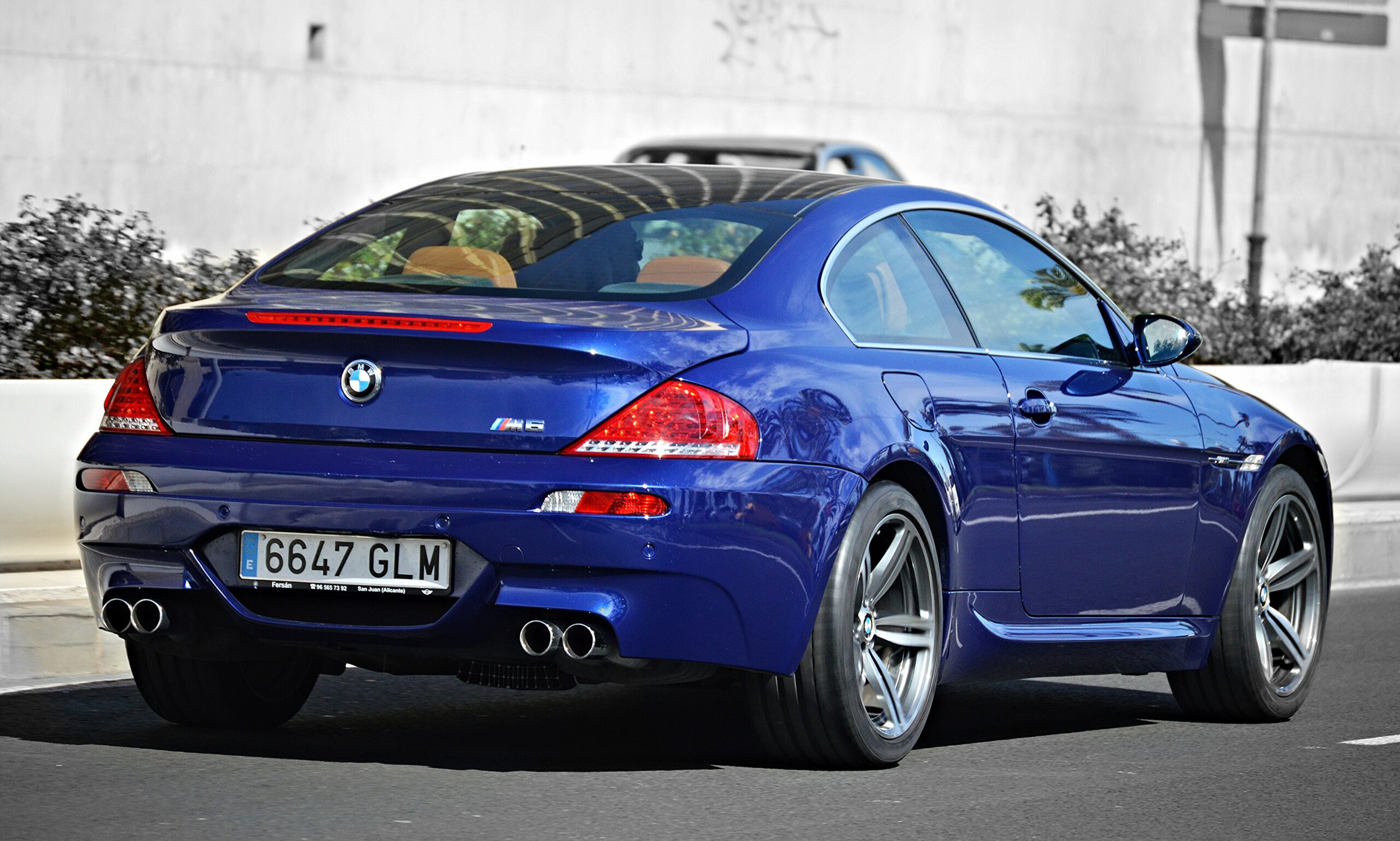
Because the Coupé is lighter than the Sedan, the M6 accelerates from zero to a hundred in 4.6 seconds — a tenth faster than the M5. Combined consumption is 14.8 litres, 15.2 with the automatic. At the rear, it is identified by four tailpipes.
In autumn 2005, Alpina also presented the B6 based on the E63 and E64.

09 · Kaufberatung
What matters: engine choice and roof
Today, the E63 is an affordable entry into a large coupé — and precisely for that reason, a classic case where follow-up costs exceed the purchase price.
Ask for the M6's history regarding connecting rod bearing shells and VANOS. Without proof, expect four-figure costs.
On the N62, check oil consumption and oil seepage, and assess the timing chain acoustically on cold start.
On the Convertible, open and close the roof several times, and check the boot and footwells for moisture.
Inspect the front end for accident repairs — aluminium reveals shoddy work in panel gaps and paint finish.
Document the equipment: sport package, Active Steering and CIC navigation are relevant to value and can hardly be retrofitted.
The 650i is the well-balanced E63, the 635d the sensible one. The M6 is the special car — but only with a complete history for the V10.
10 · Die Konkurrenz
The competition
Mercedes-Benz CL (C215/C216)
Larger, heavier, more comfortable — the classic German luxury coupé. The CL 65 AMG was the answer to the M6, with supercharging instead of revs.
Jaguar XK (X150)
From 2006, with an aluminium body and a more harmonious design. The car many bought when they found the E63 too angular.
Maserati GranTurismo
From 2007, more expensive and exclusive. Objectively the weaker car, emotionally the alternative to the M6.
11 · Galerie
Bilder
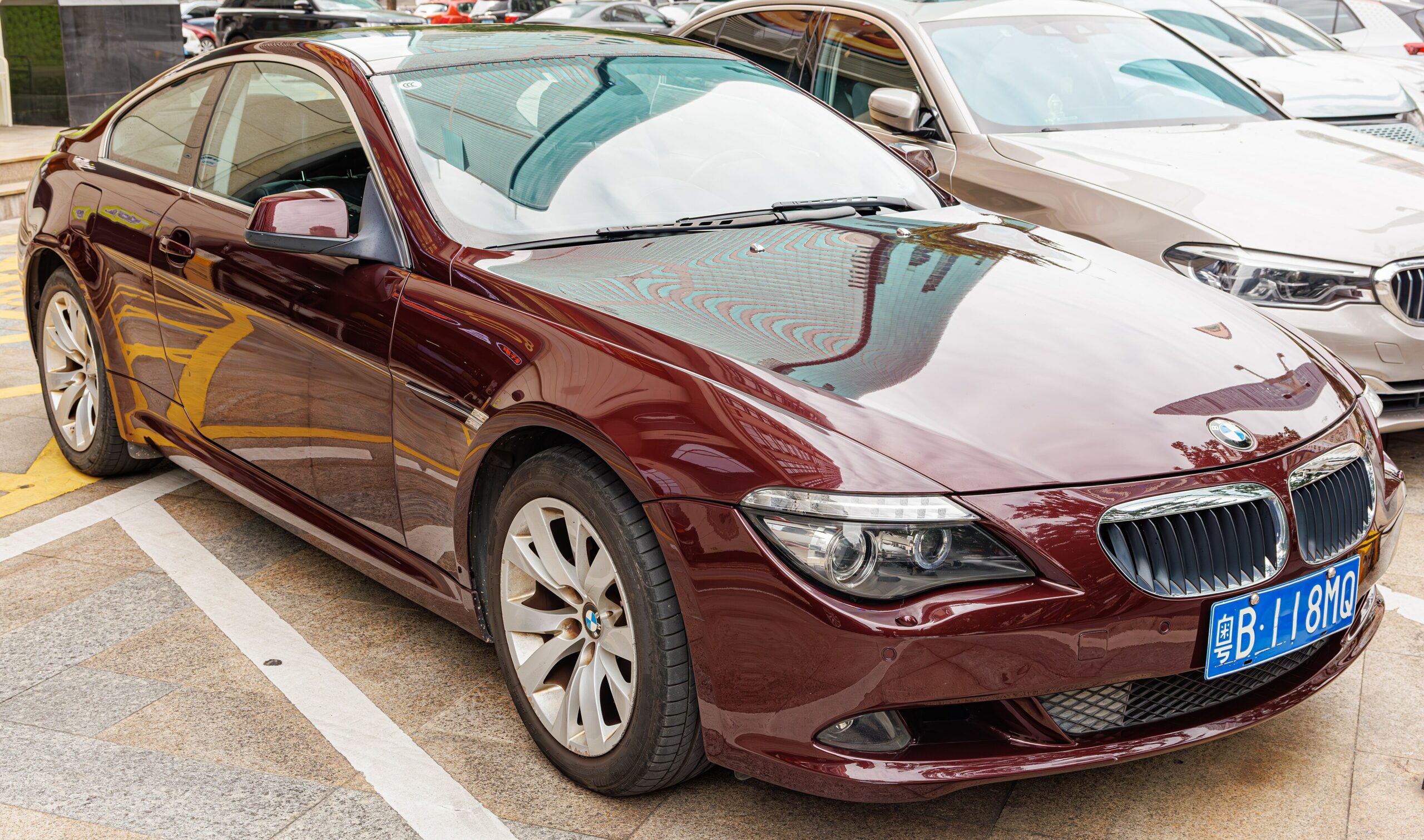
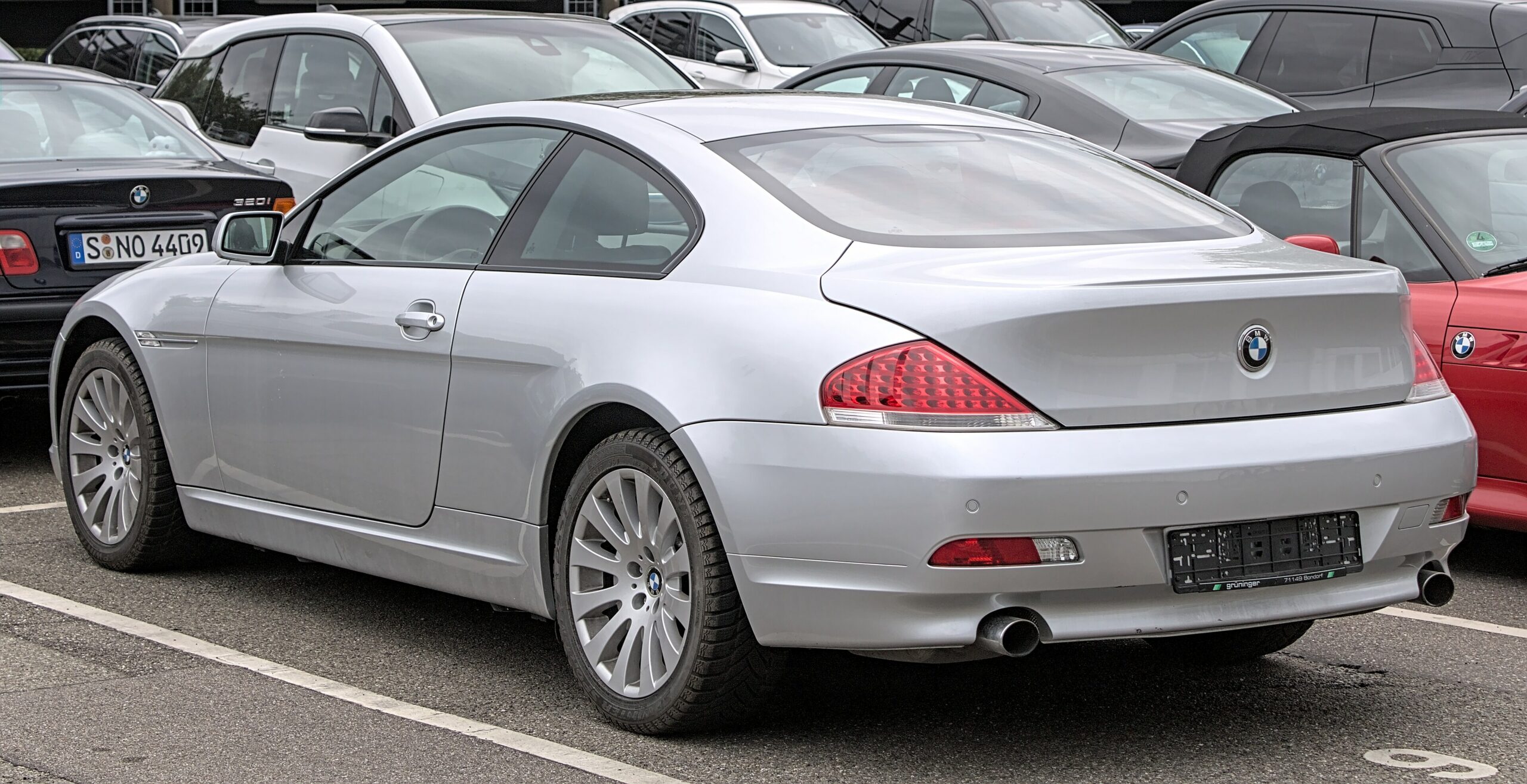
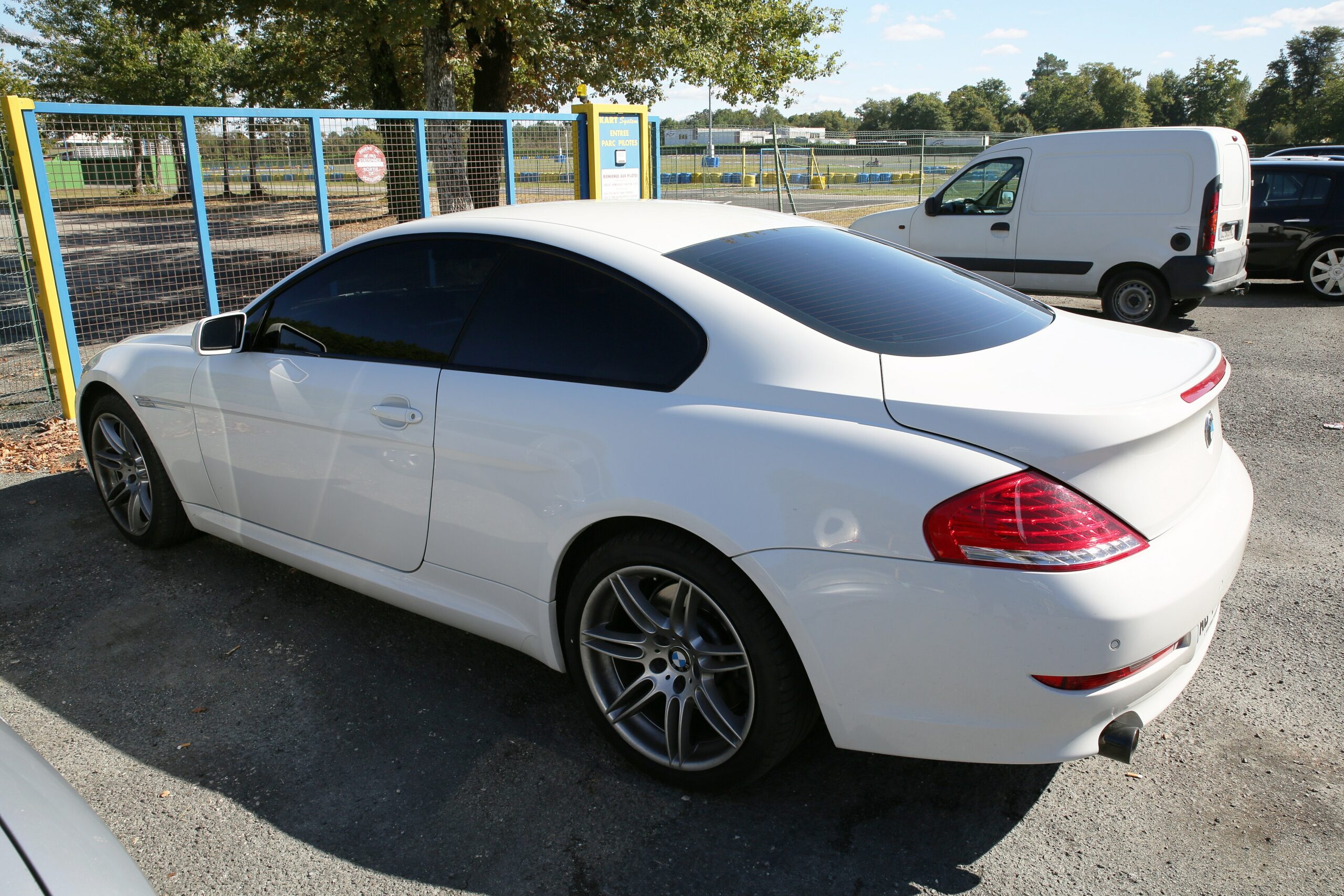
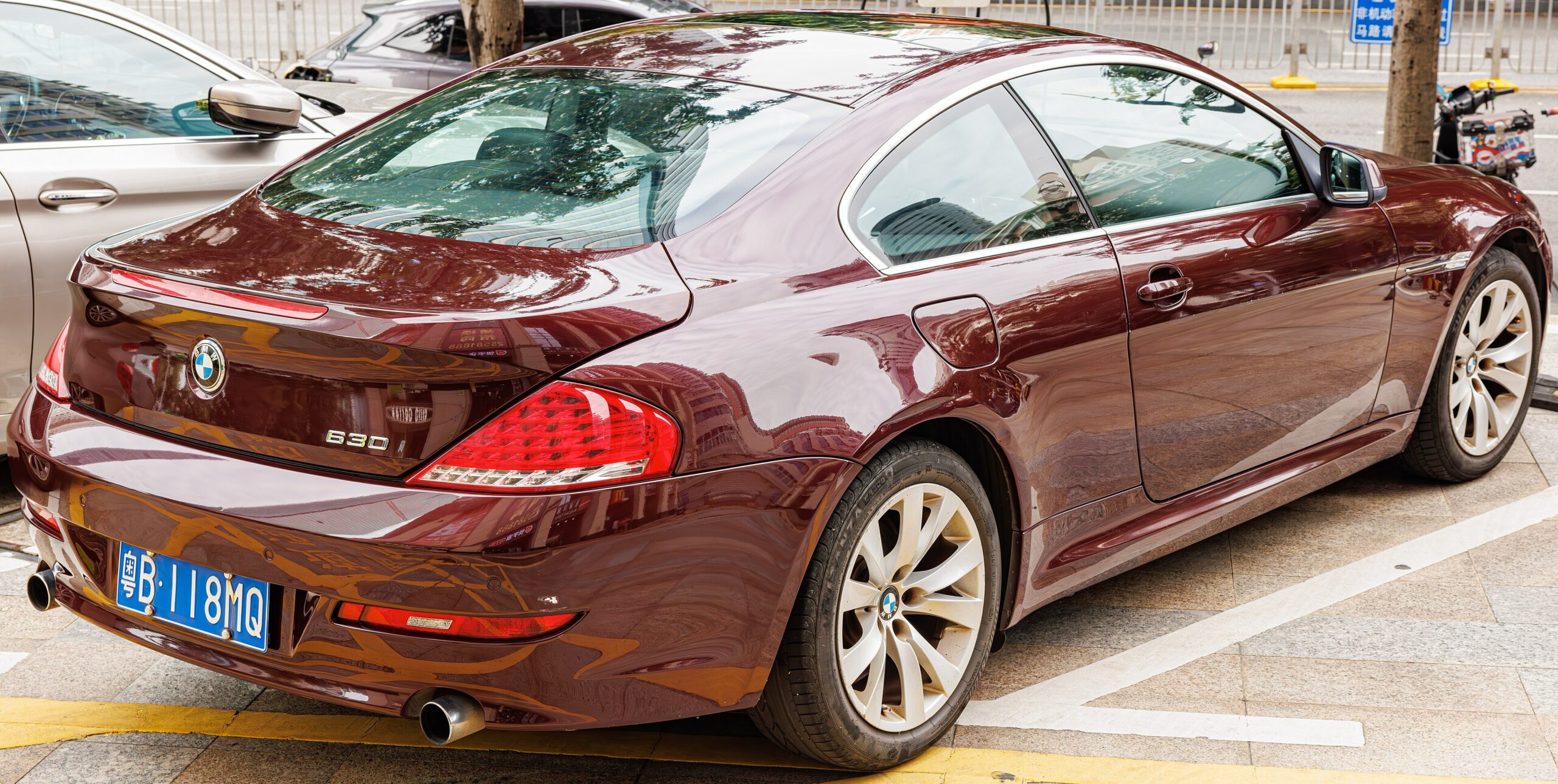
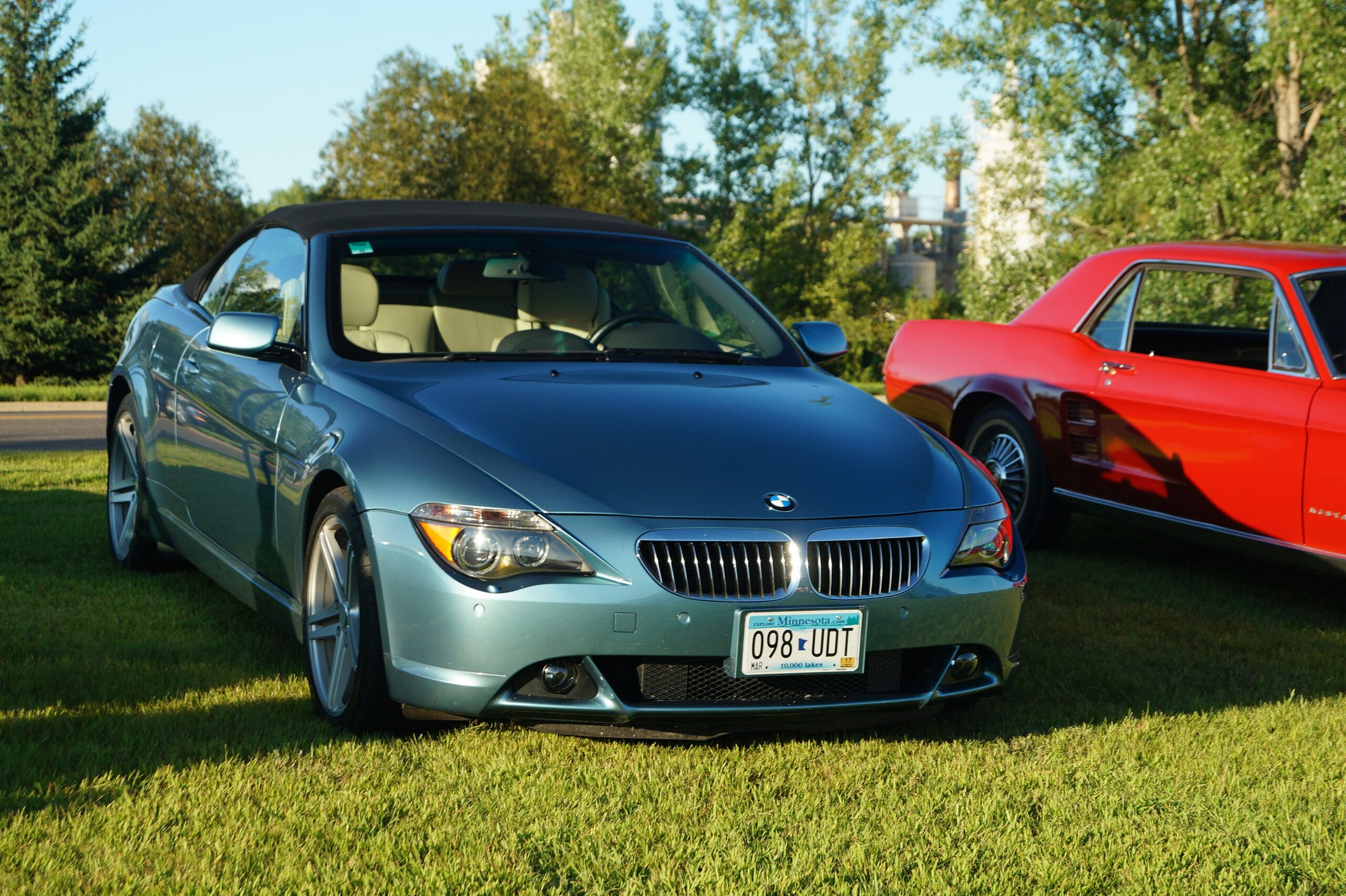
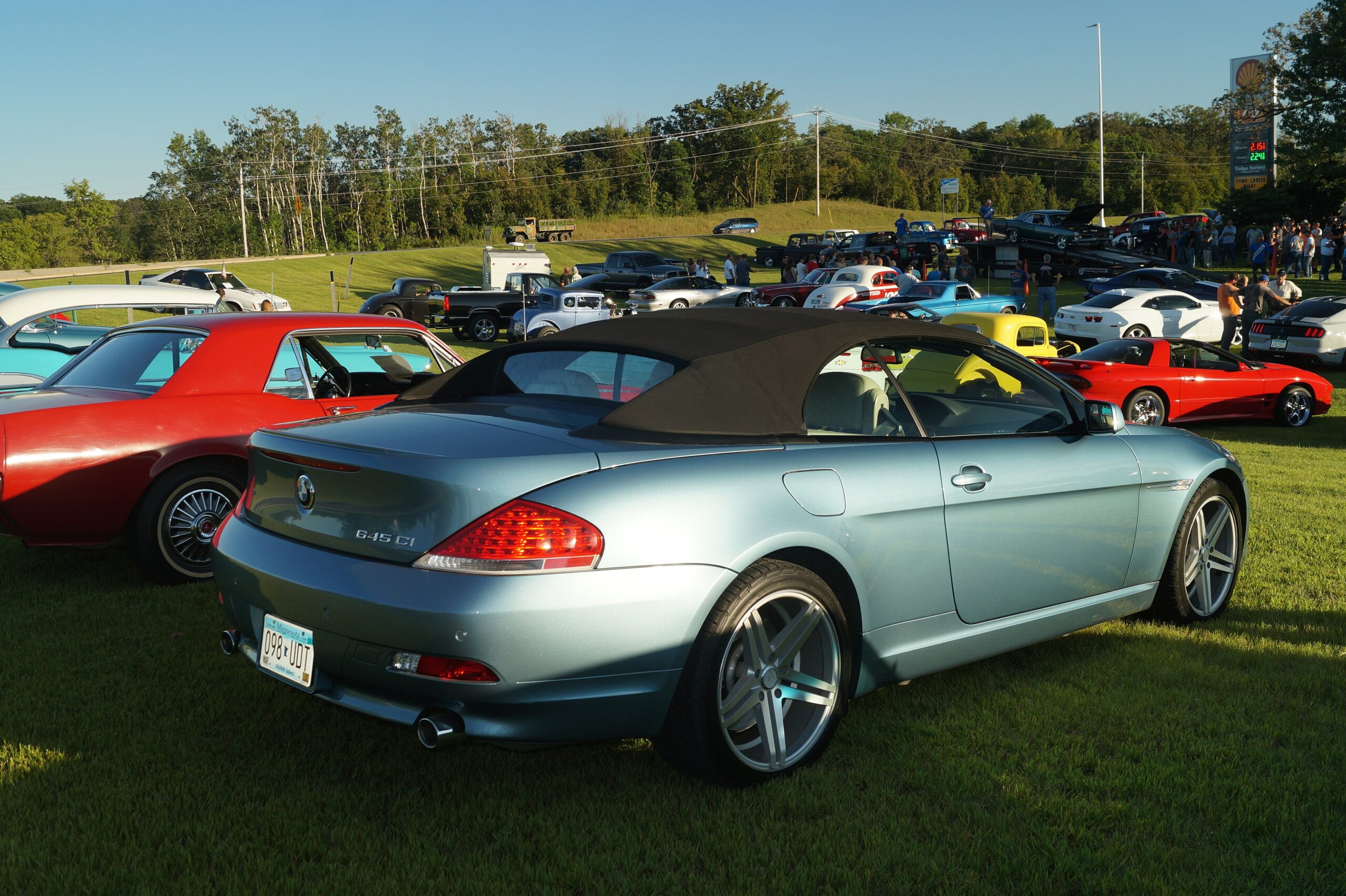
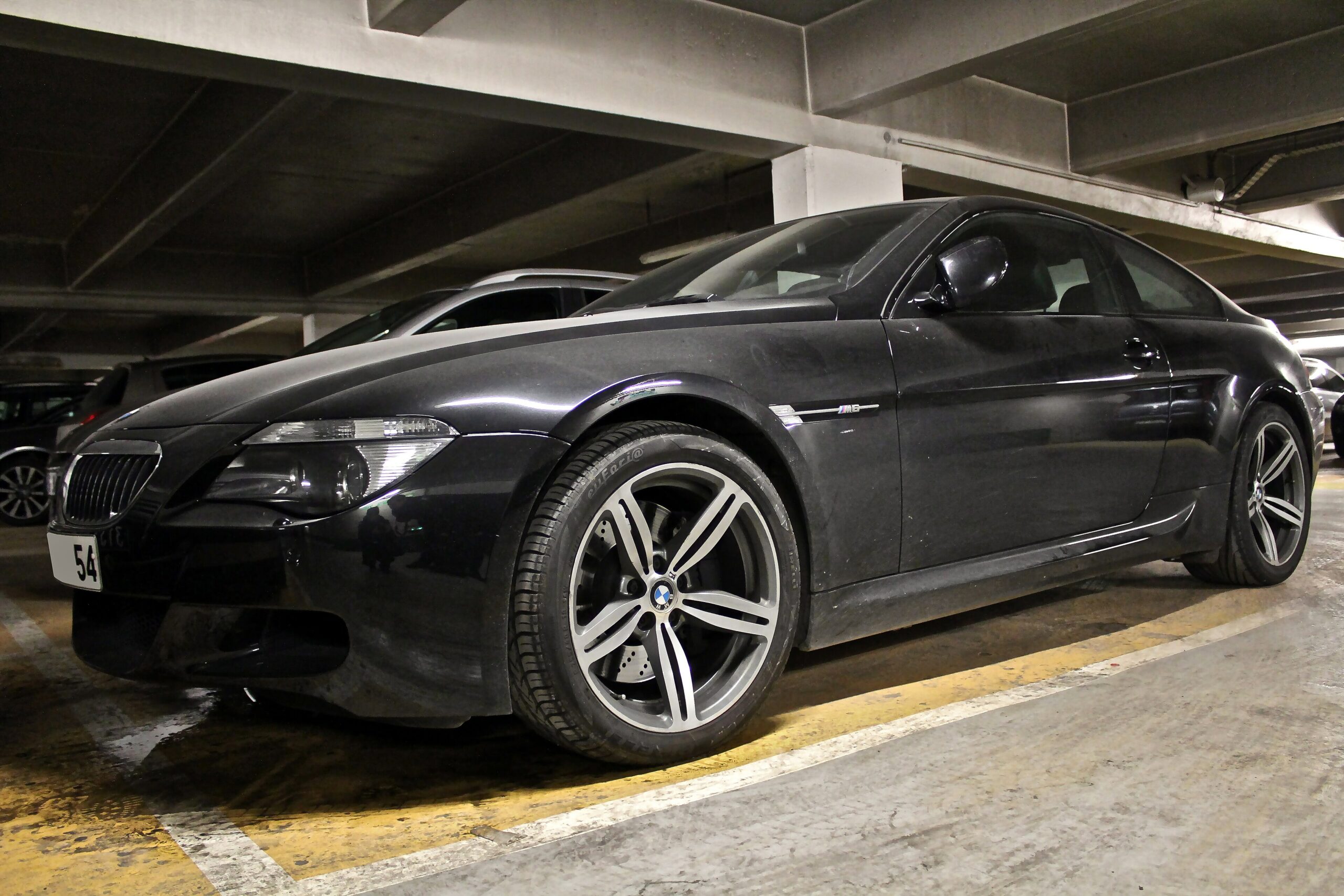
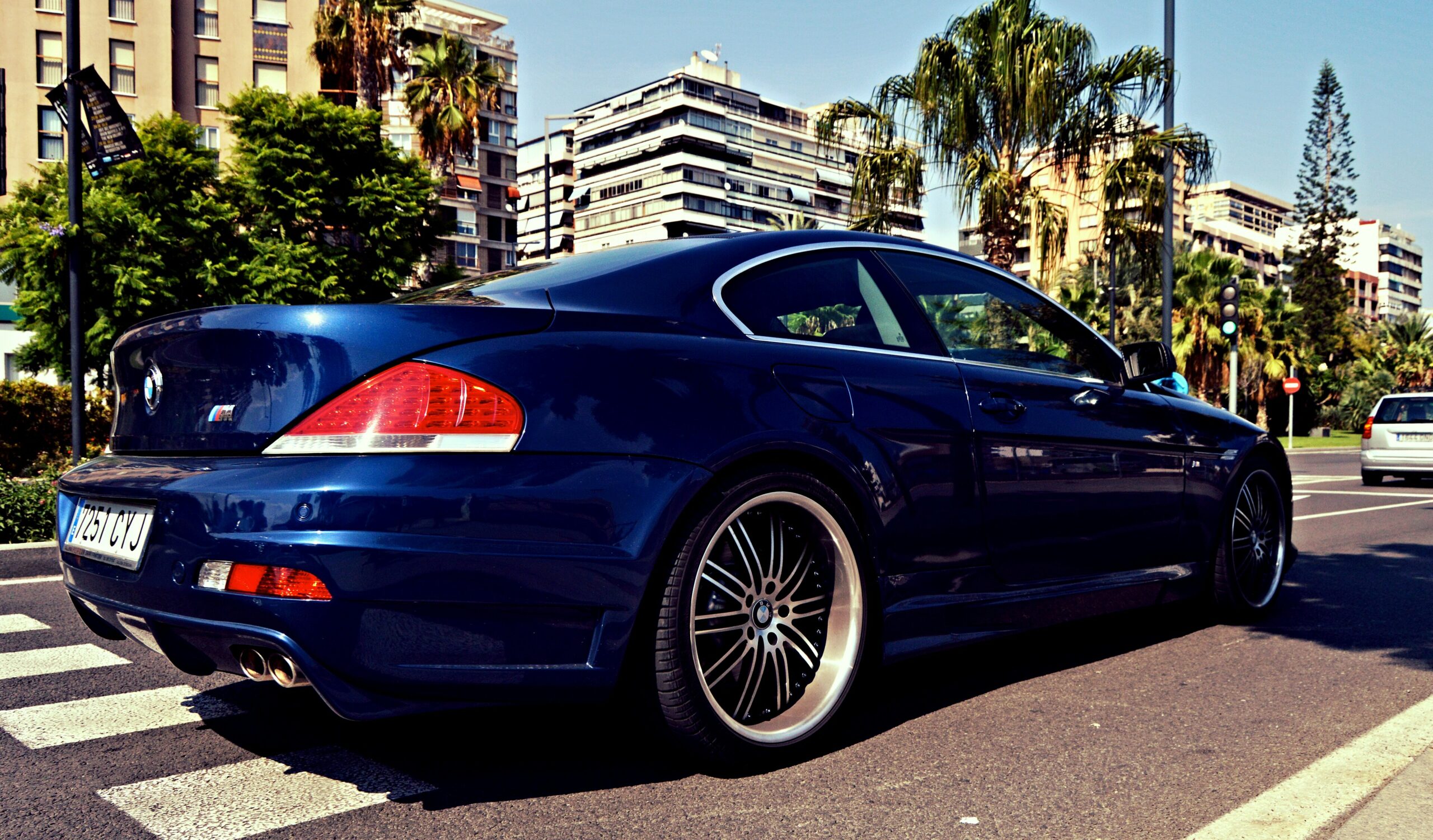
Coupé, Convertible and the M6 with the V10.
Andere BMW 6er Generationen
2 Baureihen mit E-Nummer, von 1976 bis 2010.
12 · Quellen
Belege & Literatur
The primary source for production periods, engine codes, power outputs and performance figures is the data table of the German-language Wikipedia on the E63 model line. Image sources and licences are from Wikimedia Commons.