

01 · Überblick
Four weeks before the oil crisis
The 2002 turbo did not come from series-production development, but from racing. As early as 1969, BMW built a two-litre racing turbo engine, the M121: around 280 PS at 6,500 rpm and 0.98 bar boost pressure. The reason for the turbocharging was mundane — displacement was not allowed to be increased. In the same year, Dieter Quester won the European Touring Car Championship with the 2002 TI.
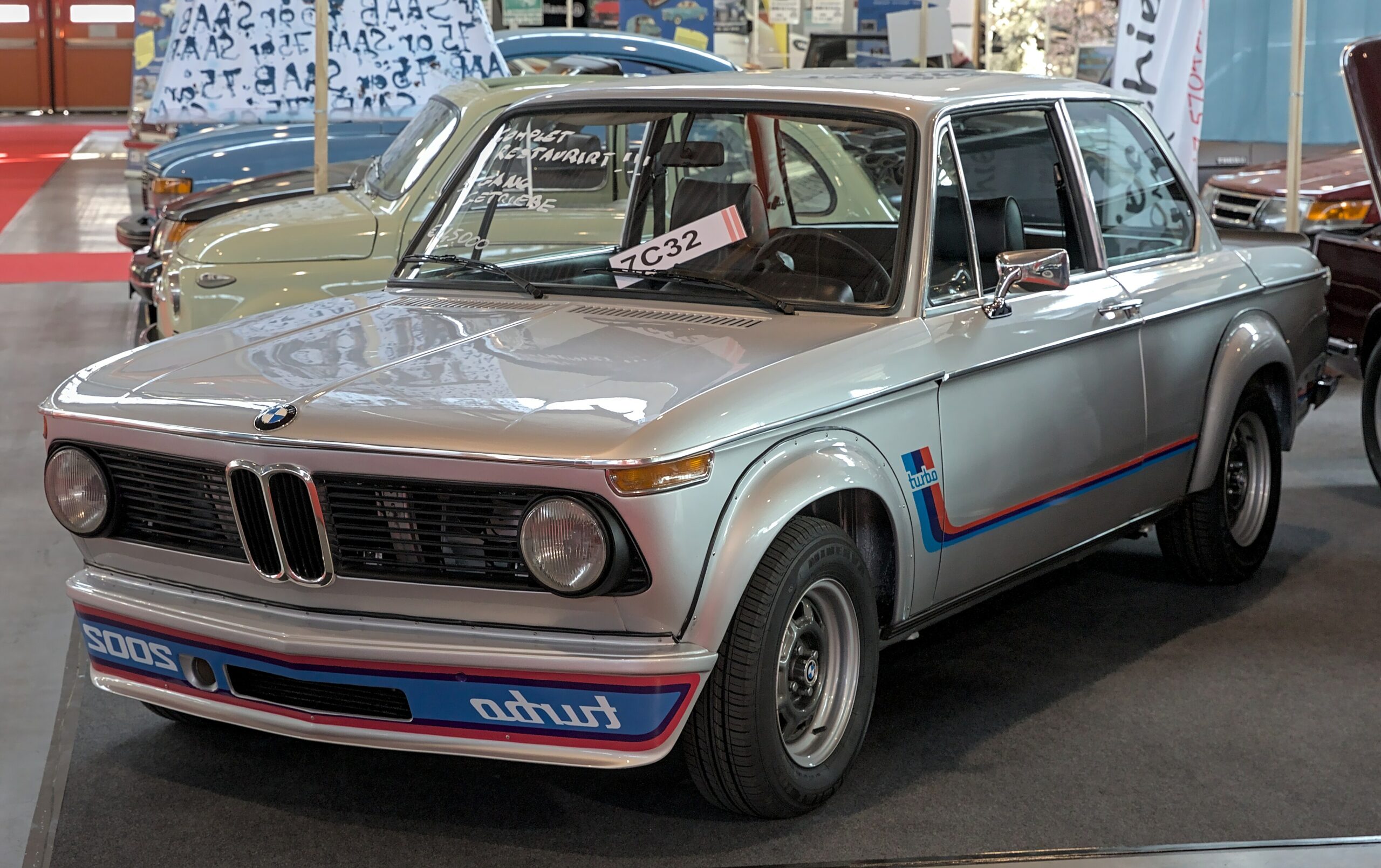
Four years later, BMW fitted a KKK turbocharger to the already fuel-injected engine of the 2002 tii. The result: 40 PS and 63.5 Nm more, for a total of 170 PS and 240 Nm. The standard equipment was radical for 1973 — limited-slip differential, internally vented front disc brakes, wheel arch extensions, front spoiler, sports seats and a boost pressure gauge in the dashboard.
The world premiere took place at the IAA in September 1973. One month later, the first oil crisis began: petrol prices up 20 percent, a 100 km/h speed limit on the motorways, car-free Sundays. BMW Group Classic states matter-of-factly that the car came onto the market during the oil crisis and therefore remained a marginal phenomenon. After 1,672 units, production ended in June 1975.
One dissenting voice should be mentioned: the agency SP-X writes that BMW originally planned only 1,000 units and that sales remained robust despite the oil crisis — the 1,672 would then be an overachievement rather than a flop. This reading is only singly documented and contradicts the standard narrative. We present it as what it is: a plausible counter-position.
02 · Historie
From racing turbo to production turbo
BMW itself draws the line — it begins in 1969.
- 1969 BMW builds the racing turbo engine M121, a two-litre four-cylinder with around 280 PS at 6,500 rpm and 0.98 bar boost pressure. Dieter Quester wins the European Touring Car Championship with the 2002 TI.
- 1973 World premiere at the IAA in Frankfurt in September. Production begins in October — the first oil crisis begins in the same month.
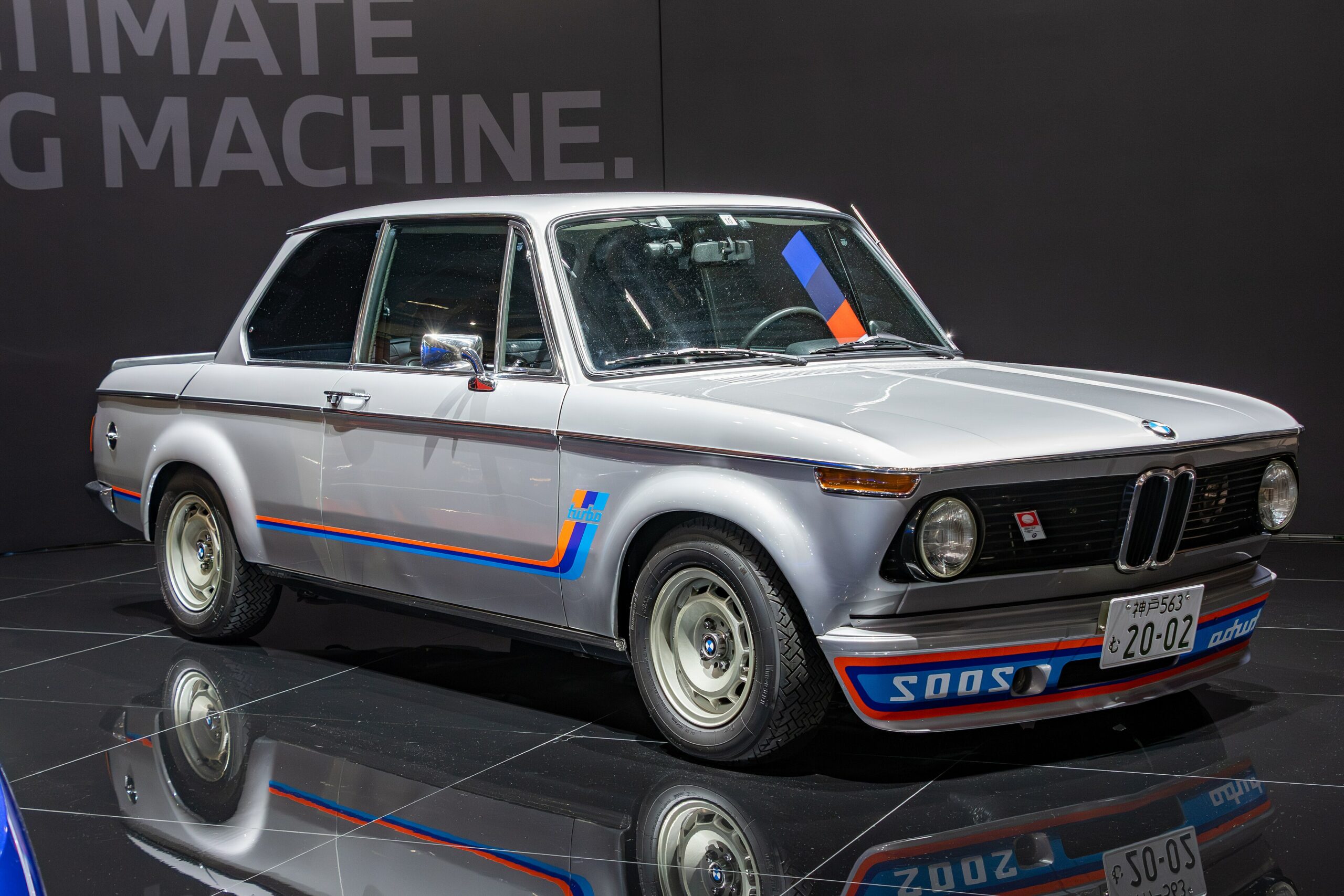
- 1973 Public criticism of the mirror-reversed lettering on the front spoiler. BMW does not deliver it as standard. No source gives an exact date for its discontinuation.
- 1974 Winter with a 100 km/h speed limit and car-free Sundays in Germany. A 170 PS turbo is no easy sell in this climate.
- 1975 Production ends in June after 1,672 units.
- 1975 Porsche brings out the 911 Turbo (930) as the next European production turbo. BMW was first, Porsche won the narrative.
03 · Modellübersicht
One model, one engine
There were no variants. For the engine designation, BMW itself only names a four-cylinder inline engine; the classification within the M10 family comes from the English-language Wikipedia. The circulating designation M31 is only singly documented and is not used here.
Technische Daten anzeigen — komplette Modellmatrix
| Modell | Motor | Hubraum | Leistung | Bauzeit |
|---|---|---|---|---|
| BMW 2002 turbo | M10 base with KKK turbocharger | 1.990 cm³ | 170 PS (125 kW) | 10/1973–06/1975, 1,672 units |
04 · Karosserievarianten
Karosserievarianten
Two-door Sedan

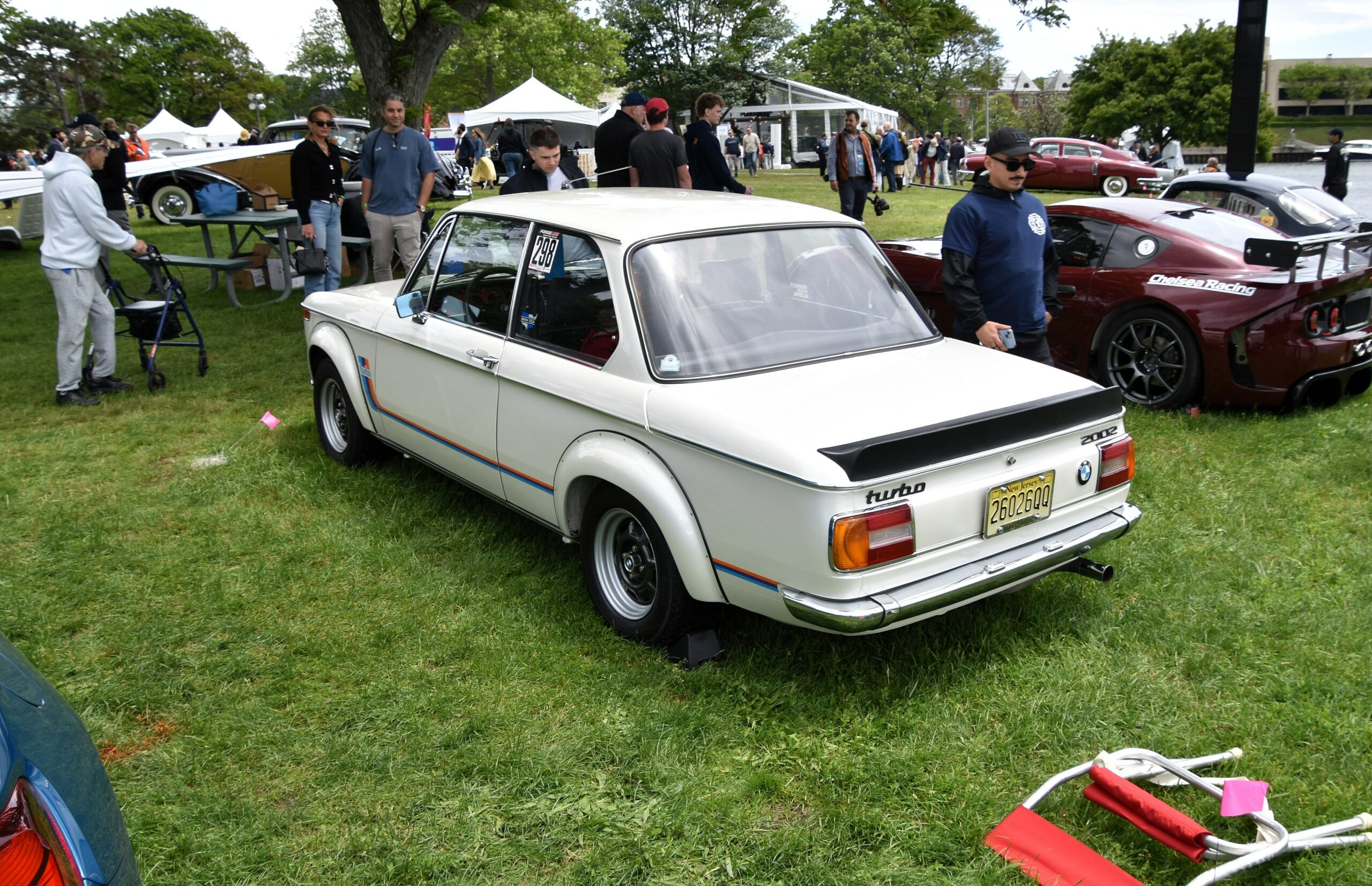
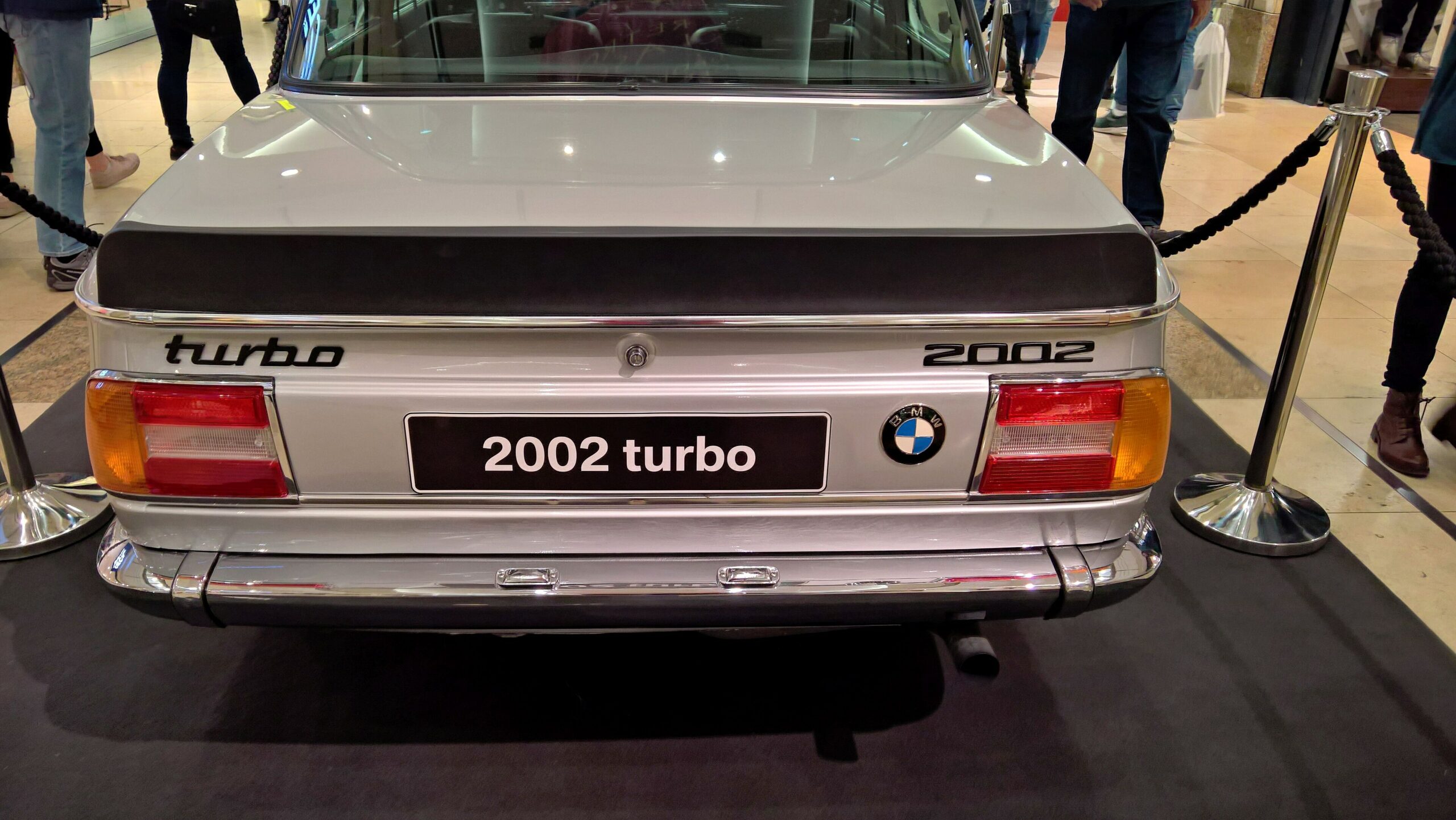
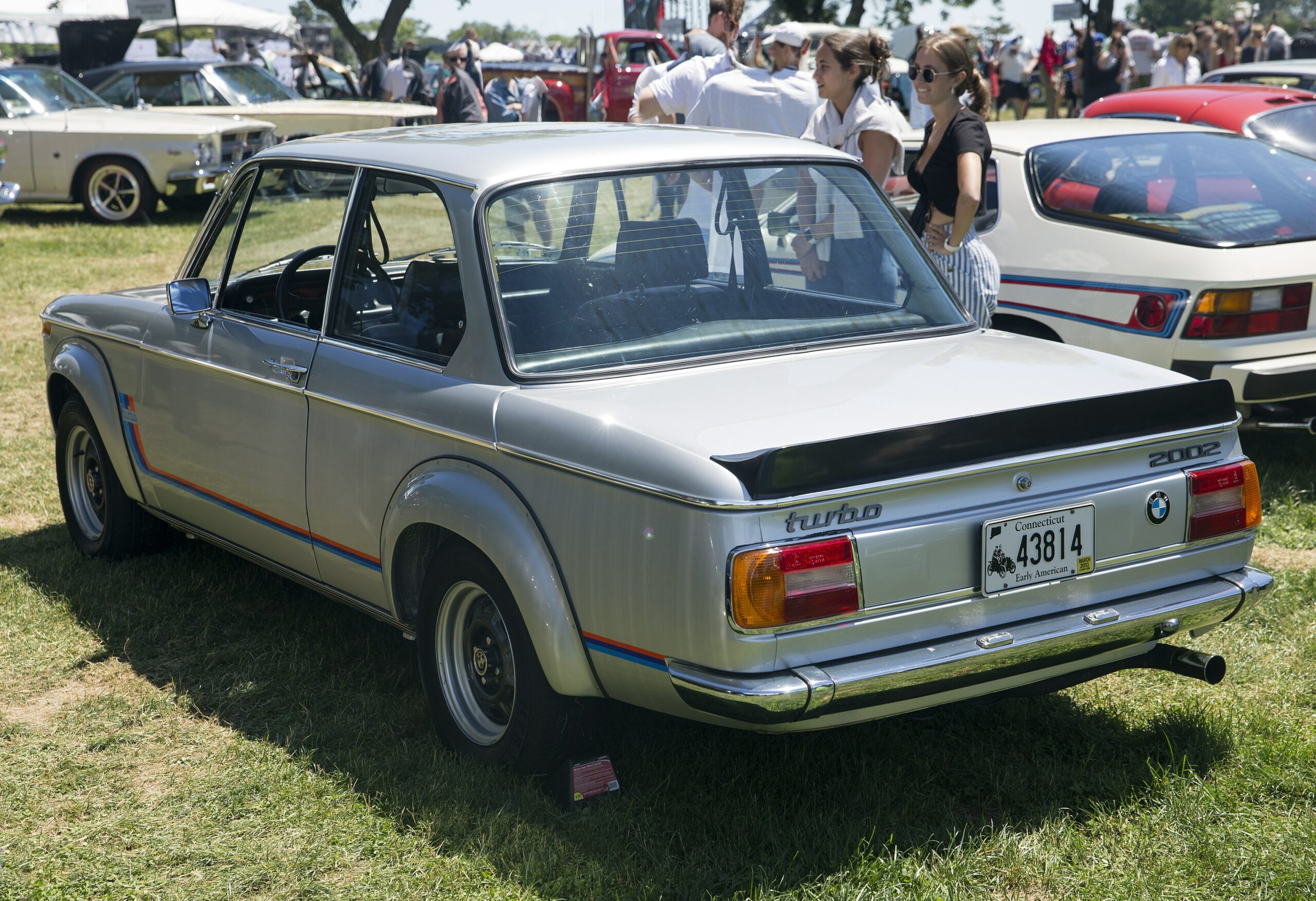
Only one body. The plastic wheel arch extensions were designed to be removable for racing use, along with a front spoiler and a rubber rear spoiler on the boot lid. Available only in Chamonix and Polaris.
05 · Motoren
The turbo engine
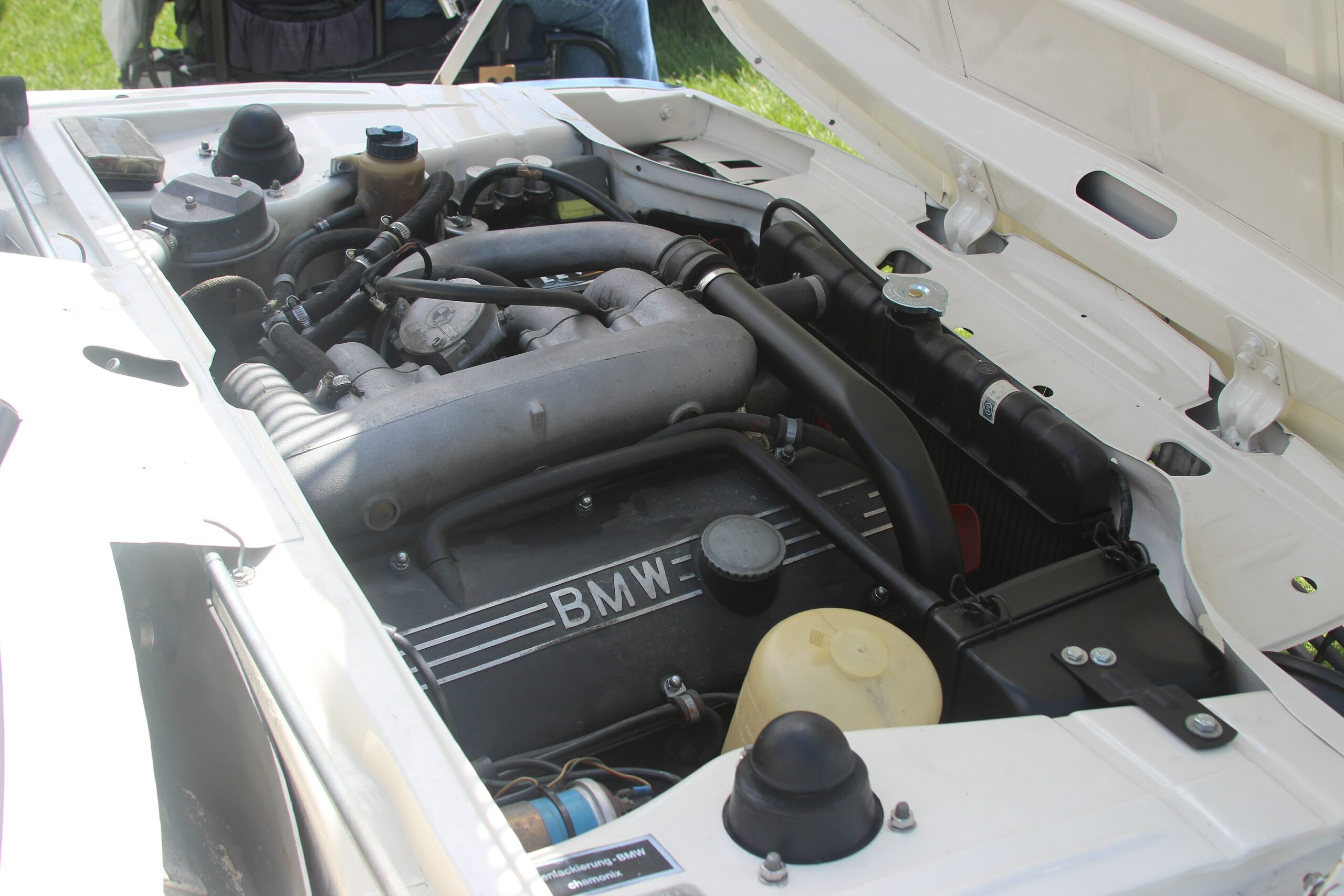
Not a new engine, but the fuel-injected engine of the 2002 tii with a KKK turbocharger and lowered compression ratio. There was no intercooler.
1,990 cc · 170 PS · KKK turbocharger geprüft
Bore 89.0 mm, stroke 80.0 mm. For the turbocharging, BMW lowered the compression ratio from the naturally aspirated engine's 9.5:1 to 6.9:1 — according to the English-language Wikipedia, to prevent knocking. Fuel mixture preparation remained mechanical: a Kugelfischer injection system with integrated boost enrichment. In addition, a larger water radiator and an oil cooler were fitted. Boost pressure was 0.55 bar. Sources cite 6.9 and 7.0 seconds for acceleration; both figures are presented here side by side.
Technische Daten anzeigen
| Bauart | Four-cylinder inline engine based on M10, with exhaust turbocharger |
| Hubraum | 1.990 cm³ |
| Bore × stroke | 89,0 × 80,0 mm |
| Verdichtung | 6.9:1 (naturally aspirated engine of the tii: 9.5:1) |
| Aufladung | KKK exhaust turbocharger, 0.55 bar boost pressure, without intercooler |
| Gemischaufbereitung | mechanical Kugelfischer injection with boost enrichment |
| Leistung | 125 kW (170 PS) at 5,800/min |
| Drehmoment | 240 Nm (24.5 mkp) at 4,000/min |
| Gain over the tii | plus 40 PS and plus 63.5 Nm |
| Höchstgeschwindigkeit | 211 km/h |
| 0–100 km/h | 6.9 s or 7.0 s depending on the source |
BMW Group Classic and bmw-m.com for power, torque and top speed; Wikipedia EN and the BMW 2002 turbo Club for bore, stroke, compression ratio and boost pressure
06 · Schwachstellen
Reliability & weak points
- There is no turbo-specific, multiply documented list of weak points. What is well established is what applies to the 02 series as a whole — and that is above all rust.
- Rust at the rear strut towers. Hagerty and Classics World independently name this spot. This is the most expensive finding on the car.
- Rust on the sills, front longitudinal members and wings, particularly at the top behind the indicators and at the bottom behind the front wheels.
- Weak synchro rings in second gear. A scraping noise on fast upshifts is typical for the model line.
- The Kugelfischer injection pump requires overhaul and is sensitive. Cold and hot starting problems indicate this. On the turbo, there is additionally the boost enrichment, which hardly anyone can adjust.
07 · Technik
Kraftübertragung
Suspension and brakes
Innenraum
Left-hand drive only
The mirror-reversed lettering
The first European production car with a turbocharger?
Technische Daten — Achsübersetzungen & Getriebe
- Length
- 4,220 mm
- Width
- 1,620 mm (bmw-m.com gives 1,630 mm)
- Height
- 1,410 mm
- Wheelbase
- 2,500 mm
- Kerb weight
- 1,080 kg
- Gearbox
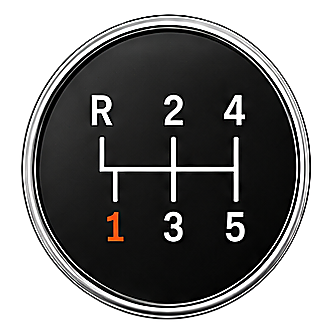
- four-speed gearbox standard, five-speed gearbox optional
- Gearbox type
- Getrag 232 or Getrag 242/3 — sources contradict each other
- Final drive ratio
- 3.36:1
- Limited-slip differential
- standard, ZF, 40 percent lock value
- Front axle
- MacPherson struts, lower wishbones, 20 mm anti-roll bar
- Rear axle
- reinforced semi-trailing arms, 16 mm anti-roll bar
- Front brakes
- discs, internally vented
- Rear brakes
- drums, 250 mm
- Wheels
- 5.5J × 13 steel, tyres 185/70 HR 13
- Steering
- not documented
08 · Motorsport
The prehistory is motorsport, not the car itself
For the production car E20, there is no documented factory racing history. What is documented is the prehistory: the racing turbo engine M121 from 1969 with around 280 PS at 6,500 rpm and 0.98 bar boost pressure, and Dieter Quester’s title in the European Touring Car Championship in the same year with the 2002 TI.
A detail shows that private motorsport use was factored into the design: bmw-m.com explicitly describes the plastic wheel arch extensions as removable for racing use. We were unable to document any concrete results of a 2002 turbo in motorsport.

09 · Kaufberatung
What matters: papers and floor pan
With 1,672 cars built, every 2002 turbo is a vehicle requiring documentation. There are more replicas built from ordinary 02s on the market than originals.
Chassis number and papers first. A 2002 turbo can be replicated from a 1602 — wheel arch extensions, spoiler and stripes are accessories. The engine with turbocharger and the Kugelfischer pump are not.
Check the rear strut towers from the inside, remove the rear seat bench. Repairs there are laborious.
Sills inside and out, front longitudinal members, wing edges.
Have the boost pressure measured under load. 0.55 bar is the target value; significantly more indicates a modified turbocharger and endangers the engine with its 6.9:1 compression ratio.
Check second gear in driving conditions, warm and cold.
The order is: first the papers, then the sheet metal, then the injection system. A replicated turbo is a nice 02 — but not a turbo.
10 · Die Konkurrenz
The competition
Porsche 911 2.7
From 1973, the direct power rival in Germany, more expensive and with a rear engine. The 911 Turbo followed in 1974/75 with 260 PS and commercially achieved what BMW did not manage with the turbo.
Ford Escort RS2000
From 1973, similar concept, lighter and significantly cheaper — without turbocharging. Shows what price argument the 18,720-mark BMW had to compete against.
Alfa Romeo 2000 GT Veloce
Same displacement class, twin camshaft instead of turbo. The sporty alternative of the era for those who did not want a turbocharger.
11 · Galerie
Bilder
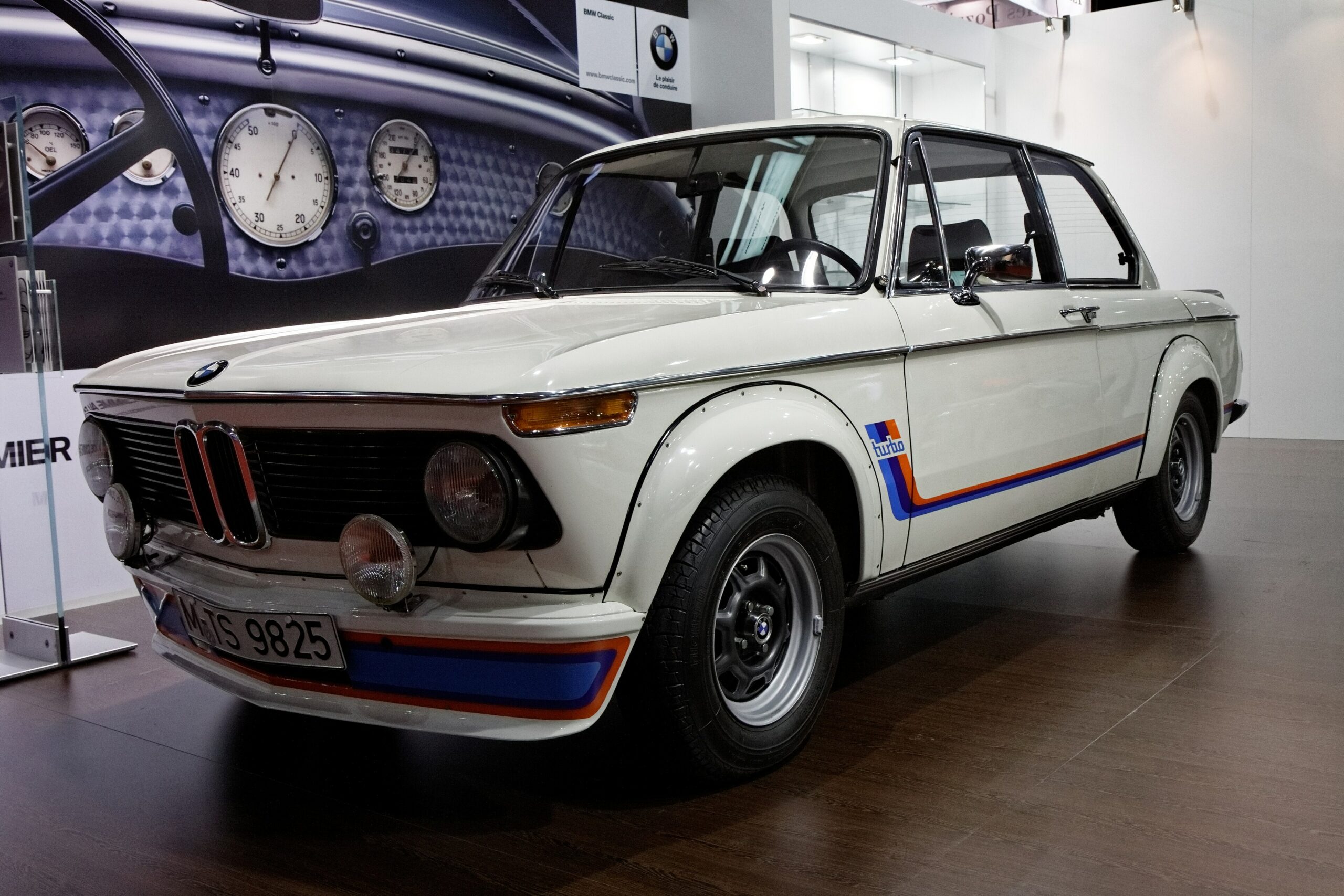
Chamonix and Polaris, the only two colours — plus the engine bay with the KKK turbocharger.


12 · Quellen
Belege & Literatur
Primary sources are BMW Group Classic, the BMW PressClub and bmw-m.com. Anything beyond that is marked as singly or multiply documented. Where BMW itself phrases things differently in different languages, this is noted in the text.
- BMW PressClub — 50 years of BMW 2002 turbo, with the prehistory of the racing turbo engine M121
- bmw-m.com — BMW 2002 turbo, factory figures for power, torque, price and equipment
- Wikipedia — BMW 02 (production period, compression ratio, boost pressure, equipment)
- Wikimedia Commons — image sources and licenses