

01 · Überblick
A car built for a form
The M3 GT is not a special edition in the usual sense. It exists because BMW wanted to homologate parts for racing — aerodynamics, suspension, engine details. This requires a small road-going series, which was built in spring 1995: 350 vehicles with chassis numbers EA40006 to EA40355, plus a handful of pre-series cars. The register records that two of these served the FIA application.
This also resolves the apparent contradiction in the figures. BMW Group Classic writes “limited to 350 units”, BMW M writes “356 units produced” — both are correct, they are simply different ways of counting. Whether there were five or six pre-series cars, however, remains unclear: BMW M states five, the register six.
Exactly which racing series it was homologated for is not clearly documented. BMW M writes “FIA GT series, Division II and IMSA GT series”. However, there was no FIA GT championship in 1995 — the international GT series of those years was the BPR Global GT Series, which only became the FIA GT Championship in 1997. BMW’s wording is therefore retrospective. What did exist were FIA homologation classes, under which the BPR series, among others, raced.
02 · Historie
Half a year of production
- 1994 From December, the pre-series and development vehicles are built. Two of them serve the FIA application and a presentation to the BMW board, which justifies the release of production resources.
- 1995 February to June: series production of the 350 cars. BMW Group Classic dates the production period to March to June, while the German Wikipedia begins with the pre-series cars in December 1994.
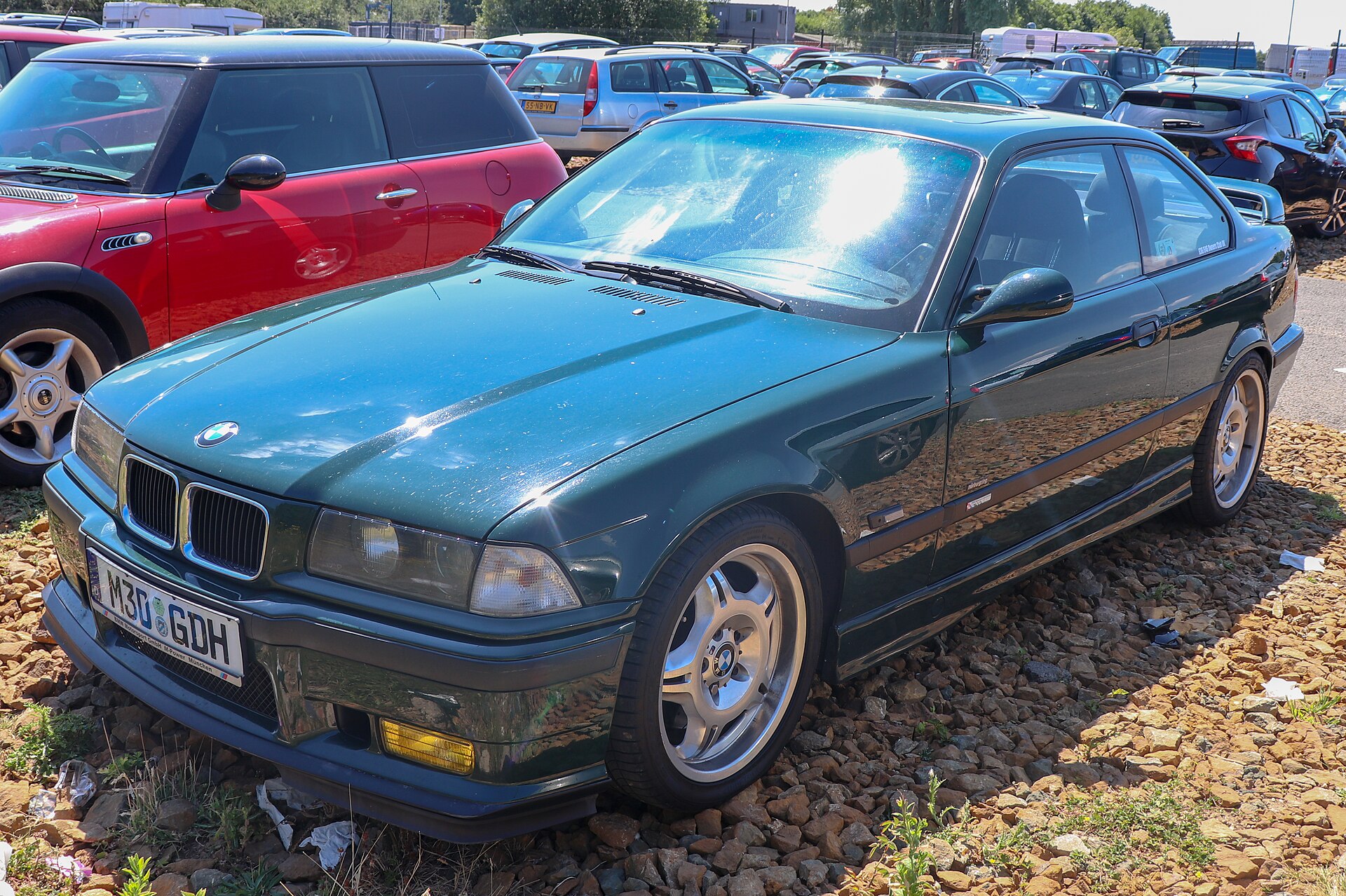
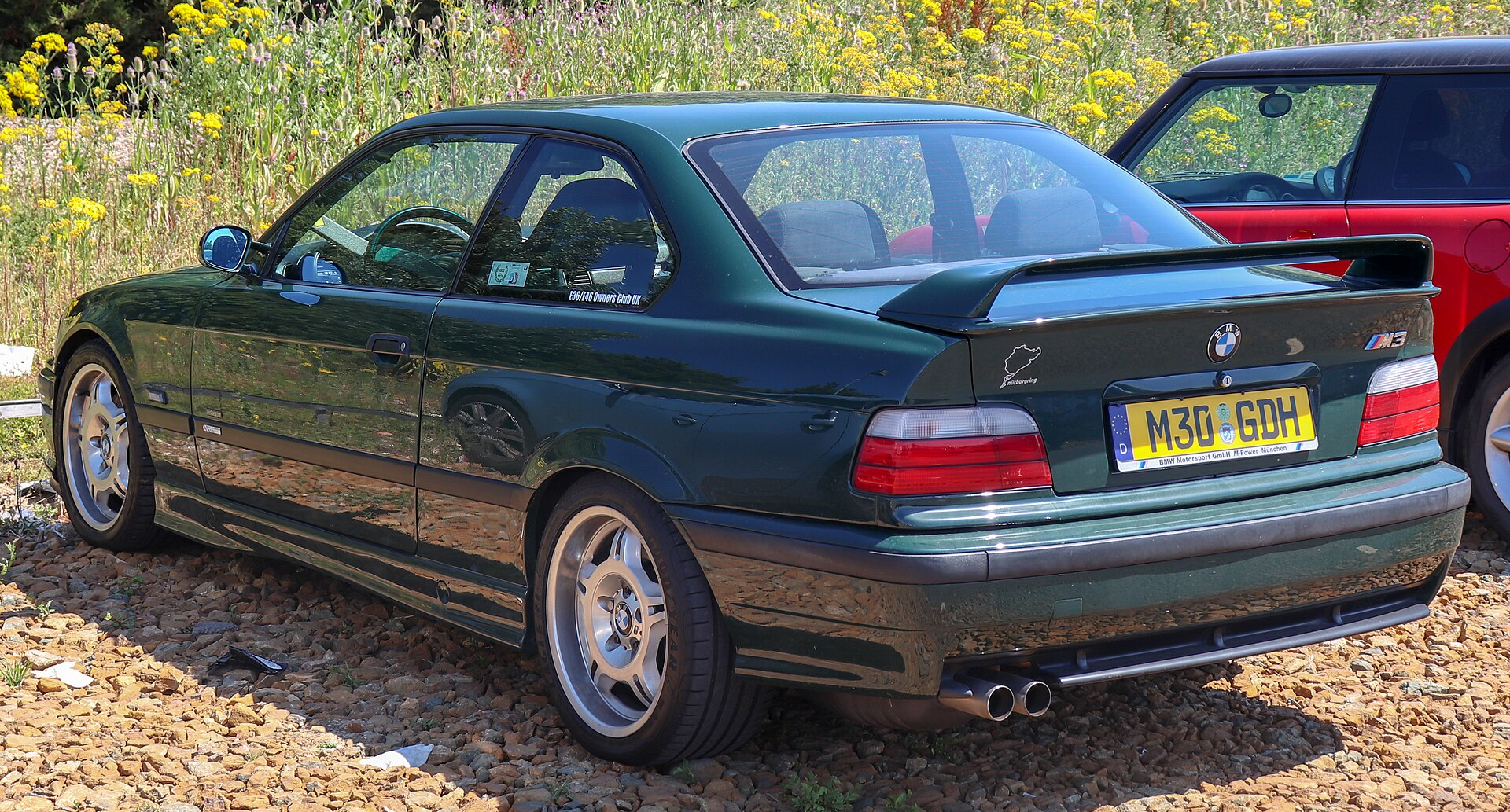
- 1995 In parallel, a separate series of 50 right-hand-drive cars is built for the United Kingdom under the name M3 GT Individual — with the visual and suspension package, but without the engine revisions.
03 · Modellübersicht
The GT versus the series M3
Technische Daten anzeigen — komplette Modellmatrix
| Modell | Motor | Hubraum | Leistung | Bauzeit |
|---|---|---|---|---|
| M3 Coupé (series) | S50B30 | 2.990 cm³ | 286 PS (210 kW) at 7,000/min | 1992–1995 |
| M3 GT | S50B30, revised | 2.990 cm³ | 295 PS (217 kW) at 7,000/min | 1995 |
| M3 GT Individual (UK) | S50B30, series specification | 2.990 cm³ | 286 PS (210 kW) | 1995 |
04 · In detail
In detail
Coupé

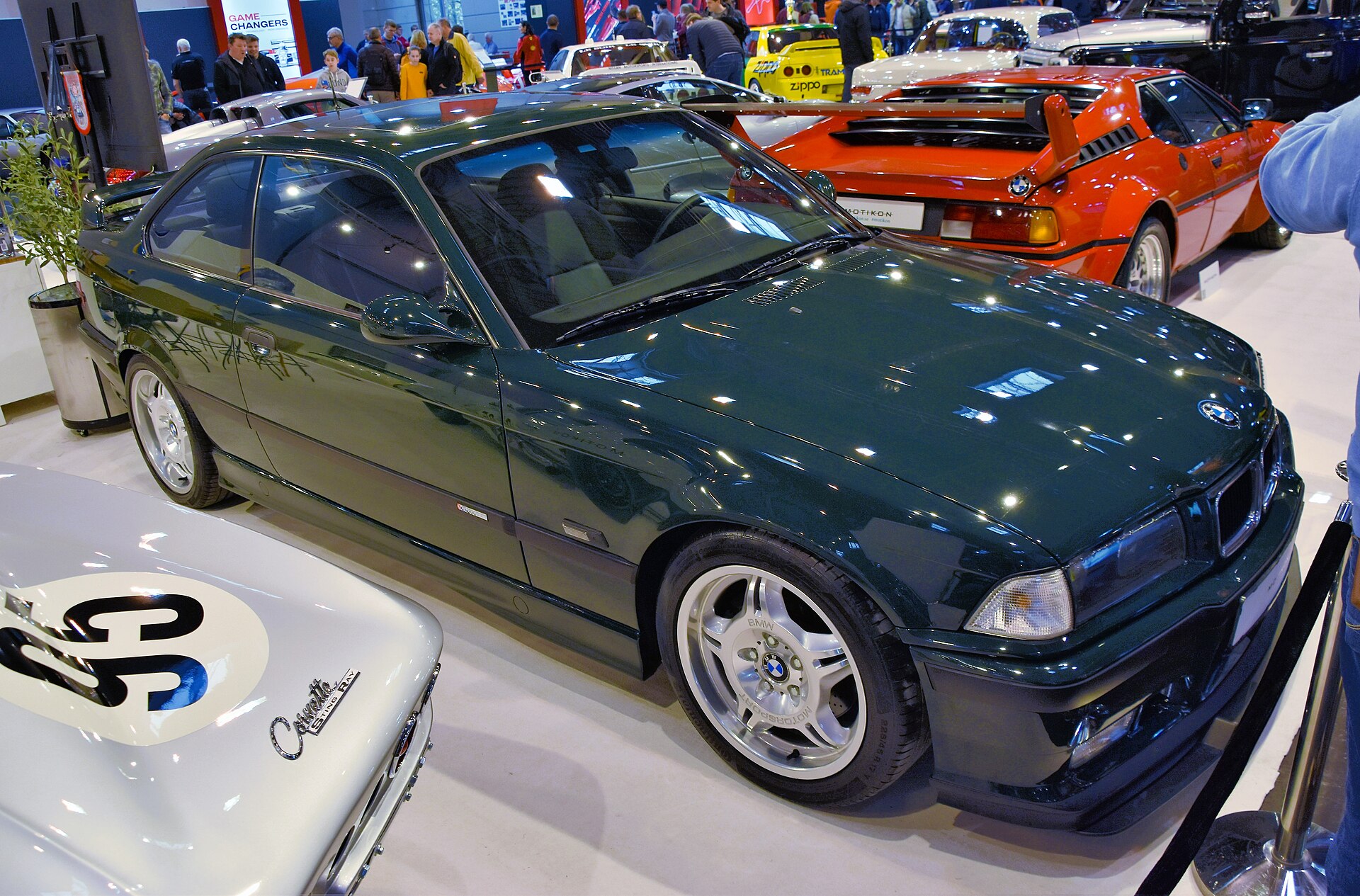
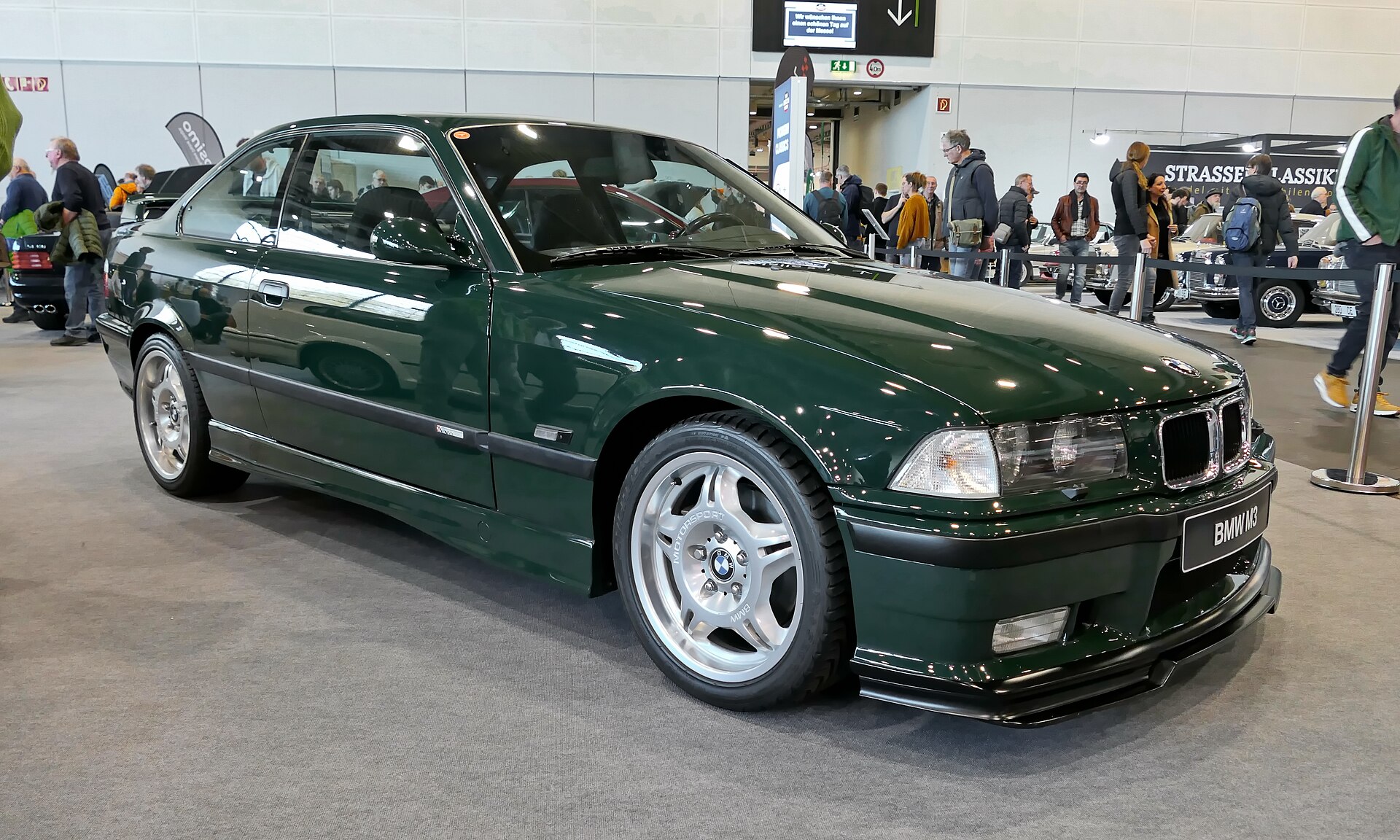
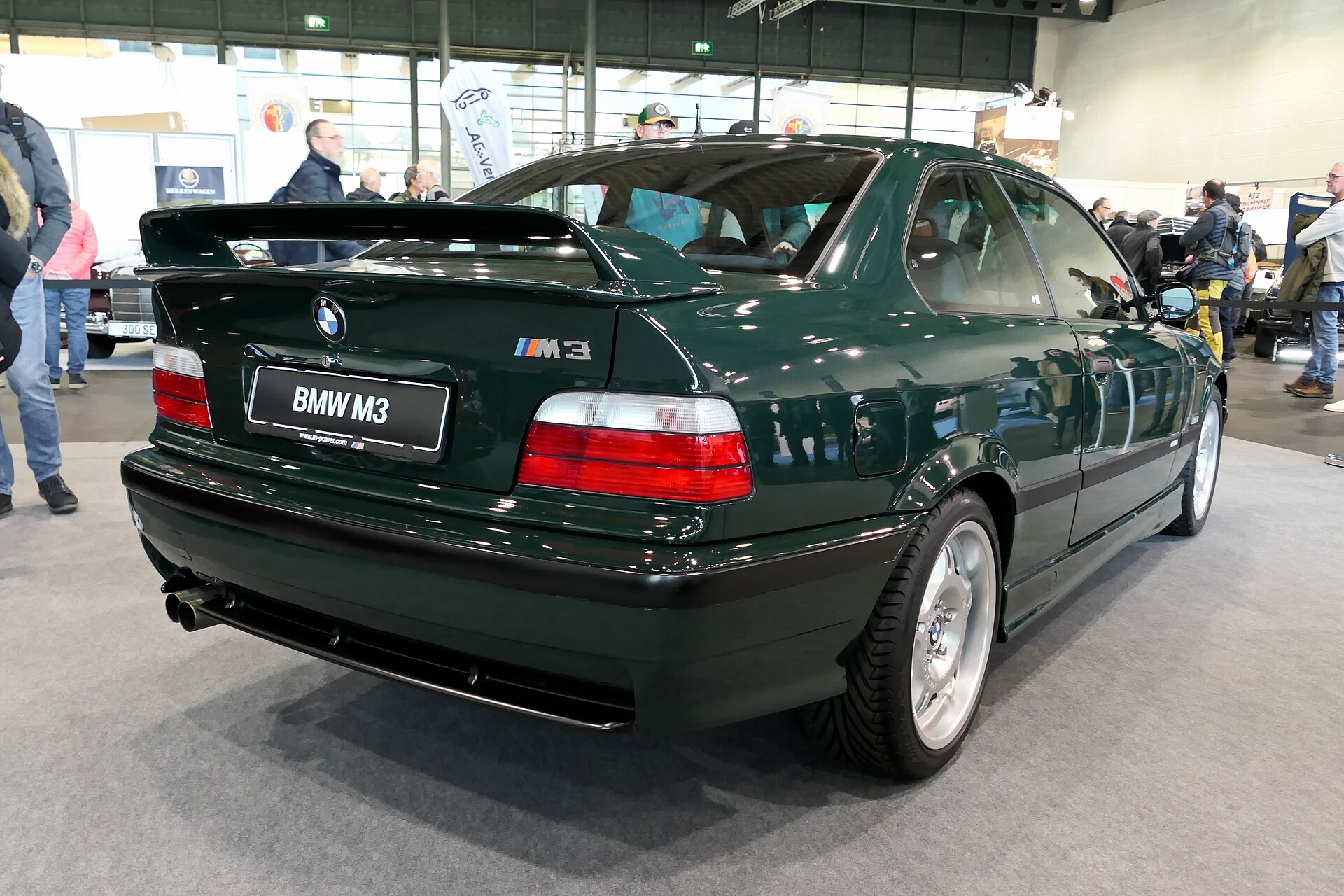
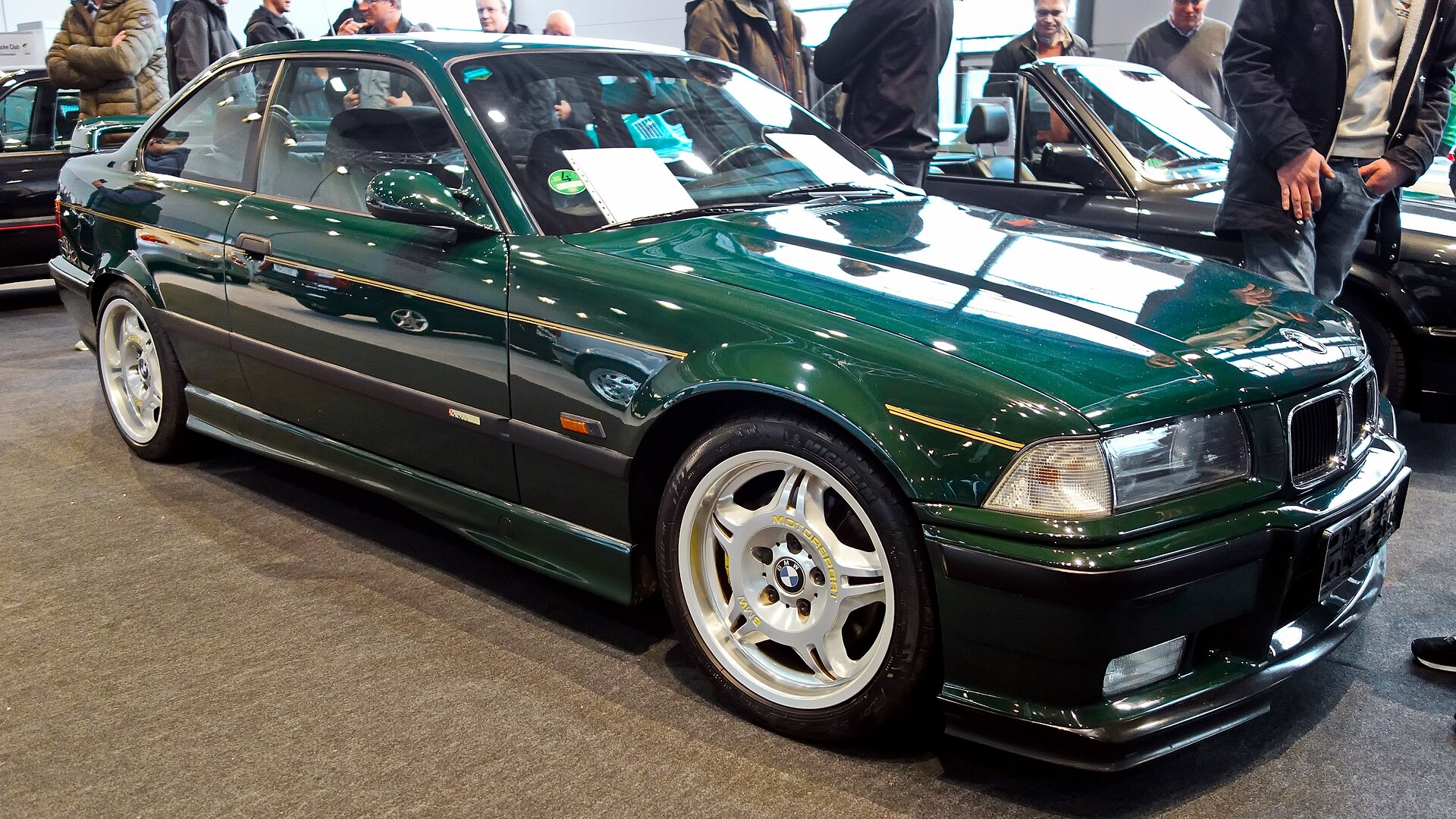
Built only as a Coupé — there was neither a Sedan nor a Convertible as a GT. Aluminium doors, adjustable front splitter, raised twin rear wing, aerodynamically optimised mirrors, white front indicator lenses, exclusively British Racing Green (colour code 312).
05 · Motoren
The engine
S50B30 · 2.990 cm³ · 295 PS geprüft
Nine PS more than the series M3, achieved through a newly profiled 264-degree camshaft, a newly tuned Motronic M3.3, and the short intake manifold of the not-yet-introduced 3.2-litre S50B32. The intake manifold is the only point that BMW M itself explicitly mentions — meaning it appeared in the GT before its series application. In addition, an oil pan with baffle plates and dual oil pickup, which is plausible for a homologation car but is not confirmed by BMW. Whether the compression ratio was increased remains unclear: several sources claim it was, one explicitly states an unchanged 10.8:1, and no BMW source gives a value.
Technische Daten anzeigen
| Hubraum | 2.990 cm³ |
| Leistung | 295 PS (217 kW) at 7,000/min |
| Drehmoment | 323 Nm at 3,900/min |
| 0–100 km/h | 5,9 s |
| Höchstgeschwindigkeit | 250 km/h limited |
| Literleistung | 98.7 PS/l according to BMW M |
BMW M, BMW Group Classic, Wikipedia
06 · Technik
Technik
Aluminium doors and aerodynamics
Suspension — where BMW contradicts the specialist literature
Erkennungsmerkmale
The British M3 GT Individual
Where the car was sold
07 · Identifikation
Identifikation
The M3 GT can be quickly narrowed down by colour and add-on parts — the finer details lie in the specifics.
- Lackierung
- exclusively British Racing Greengeprüft
- Aerodynamik
- adjustable GT front splitter lip and two-piece rear winggeprüft
- Motor
- S50B30 with 295 PS instead of 286 PSgeprüft
- Stückzahl-Logik
- 350 customer cars plus pre-series — 356 documented in totalplausibel
08 · Motorsport
Motorsport
The M3 GT was not itself a racing car, but the homologation base. BMW M states the FIA GT class Division II and the IMSA GT series as its target. This claim is problematic in two respects: there was no FIA GT championship in 1995 — the BPR Global GT Series ran from 1994 to 1996 and only became the FIA GT Championship in 1997. And a car that, according to BMW, was sold only in Germany, is a poor fit for IMSA homologation. The widespread association with the ADAC GT Cup is not supported by any BMW source.
09 · Kaufberatung
What to look out for when buying
With the M3 GT, identity is the most important thing. The chassis number of the series lies between EA40006 and EA40355 and carries the designation BF99; the British GT Individual carries BF92.
There is no BMW figure for the GT engine’s compression ratio, and secondary sources contradict each other. Anyone offered a vehicle with an allegedly increased compression ratio should ask to see the evidence.
10 · Die Konkurrenz
Die Konkurrenz
Porsche 911 Carrera RS (993)
The other major small-batch homologation series of the same years — more expensive, more uncompromising, in a significantly smaller production run.
Mercedes-Benz C 36 AMG
Not a homologation car, but the first series collaboration between Mercedes and AMG. The counter-concept: more displacement, less racing relevance.
11 · Galerie
Galerie
The last two photos show the British M3 GT Individual.
12 · Quellen